Navy Spouse Pamela Hartley Pleaded Guilty to the 2nd Degree Murder of Lt. Verle Lee Hartley in Florida State Court; Served 16 Years of 40 Year Prison Sentence Before Paroled (October 16, 1996)

image1
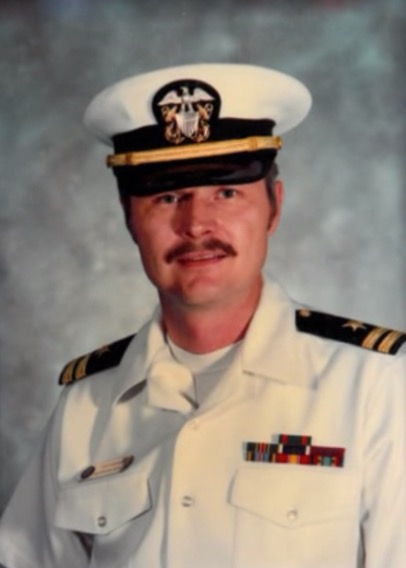
Lt. Verle Lee Hartley, U.S. Navy

NCIS, The Cases They Can’t Forget: Mysterious poisoning of a Navy lieutenant leads to one of NCIS’ most notorious cold cases (May 29, 2019)

Just off the coast of Spain, the U.S.S. Forrestal cruised through open waters on the Mediterranean Sea. This particular aircraft carrier had the ability to unleash total devastation on the enemy. But below deck, one Navy sailor was fighting off an enemy in his body. Lt. Lee Hartley was complaining of diarrhea and lethargy. He also experienced excessive weight loss and there was a grayness to his skin. Hartley was a career Navy sailor, having served nineteen years, and the Lt. in the ship’s disciplinary office. A month into his current deployment, Lee became violently ill with severe stomach pains and a strange tingling in his hands and feet. He was treated by the ship’s medics for gastrointestinal problems. A couple weeks went by and the symptoms reappeared, each time getting progressively worst. The onboard medics thought maybe he was exposed to something in a foreign port.

Lee Hartley also assumed it was food or water he consumed while visiting one of the foreign ports. Whatever the cause, Lee’s symptoms were spiraling out of control. He endured nearly two months of agony. When Lee wasn’t getting better, the Navy decided to ship him off to a hospital so he was medi-vaced to Jacksonville, Florida. Lee’s wife Pamela rushed to his bedside. Pam and Lee were newlyweds; they were married a year earlier. Doctors ran a battery of tests to help make a diagnosis. Some believed he might have liver disease or hepatitis or even some kind of poisoning but they couldn’t come up with a definitive diagnosis. Lee commented to multiple people that he thought he was dying because he was so gravely ill. On November 18, 1982, after nearly five months of terrible suffering, Lt. Lee Hartley succumbed to massive organ failure.

Before he set out on his final deployment, Lee Hartley was living the life he had always dreamed of. Lee loved the Navy and his family was very proud of him. He joined the Navy as an enlisted man and then became an officer. Lee was happy with Pam and was looking forward to the end of long deployments so he could spend more time with her. They didn’t have children of their own but Lee had a daughter from a previous marriage. Pam was now a devastated widow and waited for the autopsy to determine the cause of her husband’s death. When the results came back, they revealed Lee died from arsenic poisoning, nearly 1000 times the normal level. His liver, kidneys and blood was full of arsenic and Lee had enough arsenic in him to kill several people. Arsenic is a odorless, colorless, and tasteless chemical. This information led to a murder investigation.

An investigation was immediately launched to find out how that much arsenic entered Lee’s body. Investigators could not imagine how Lee came into contact with that much arsenic aboard a ship. Special Agents Jerry Whitaker and Walter O’Brien of the Naval Criminal Investigation Services (NCIS) were assigned to the case. The two actually knew Lee Hartley and served side by side on the U.S.S. Forrestal with him. They start with the simplest possibility: was this an accidental poisoning? They checked to see if there were large amounts of arsenic on the ship but that theory was instantly put to rest. The supply officer on the ship maintained records of everything that was onboard the ship and according to him, there was no substance on board the ship that contained arsenic. This meant there was no way Lee came into contact with arsenic onboard the ship, at least not by accident. Agents wondered if someone deliberately dosed Lt. Lee Hartley.

The NCIS agents broke the news to Lee’s family. When Pam found out about the arsenic poisoning, she reacted with shock. Pam’s mother-in-law was the one to break the news to Pam that someone may have killed her husband. The agents didn’t know who killed Lee but they knew how so they launched a search for suspects. They looked at who had something to gain if Lee died and one main suspect emerged, his wife Pamela Hartley. Pam had the motive because she stood to inherit a lifetime of military benefits but how did she poison her husband while he was on a ship thousands of miles away? When agents checked her travel itinerary, they discovered Pam traveled to port in Spain to spend time with Lee. Quite often, when a ship visits a foreign port, it’s common for a group of wives to visit that port. One of those wives was Pam Hartley.

Pam traveled to Spain and met with Lee and another military couple. On one of those days, Pam offered to cook breakfast for everyone and she even made drinks too. Soon after that visit, Lee got violently ill, along with his friend who had eaten breakfast with him. At the time, they both thought they got sick from drinking Spanish water, the friend recovered but Lee kept getting worse. Over the next two weeks, Lee had severe cramps, diarrhea, nausea, and vomiting so he reported to the ship’s medical department. Agents wondered if Pam laced her husband’s food and drink with arsenic during that Spanish shore leave. It was a chilling scenario but one that became more plausible as agents found out about Pam’s unique job experience. They learned that Pam worked at the Department of Energy facility in Akon, South Carolina for one year.

Pam used to be an environmental technician and one of her job duties was to analyze water samples to determine heavy metal levels. At her job site, she came in contact with a range of toxic chemicals, including arsenic. Was Pam the victim of circumstantial evidence or heartless black widow? Agents wanted to perform a polygraph because they were convinced she wouldn’t pass. She was their prime suspect because she had the opportunity to spike her husband’s food and drinks when she went to Spain at his port of call. On the surface, there was nothing suspicious about Pam so agents conducted interviews of Hartley’s neighbors. The pair appeared to have a normal family and were described as nice people. But gossip soon found its way from officer’s wives club and this information painted another picture.

With their husbands overseas, the Navy wives would get together at parties and drink. And after a few drinks, they weren’t afraid to say anything. There was talk among the wives that life was so much better when the men were at sea. Some even suggested they get rid of them. But it was a party atmosphere so nobody really took it seriously, except maybe Pam. In one interview, Pam made a comment to a friend about hiring a hitman to kill Lee but was taken as a joke by the witness because they had been drinking. As special agents dug deeper, they found out Pam and Lee were having some marital problems. Pam was a free spirit who liked to go to the officer’s club and dance with other men. Apparently, this made Lee extremely jealous. And Lee may have had reason to be jealous because Pam admitted to friends that while Lee was off at sea, she found it to be difficult to be faithful.

For NCIS agents, it all added up to a classic scenario: a bored wife feels trapped in her marriage so she poisons her husband… Under questioning, Pam insisted that she loved Lee and swore she has nothing to do with his death. And she agreed to take a polygraph test to prove her innocence. Agents were convinced she wouldn’t pass the polygraph but the results indicated that she wasn’t being deceitful. The agents concluded Pam didn’t have anything to do with Lee’s death. In addition, lab results blew a hole in their theory because the toxicology analysis on Lee’s hair pinpointed the dates he was exposed to the arsenic. His first dose was before Pam’s trip to Spain. Hair grows about a centimeter a month and testing of the hair provided a timeline of when the poison entered his body. The hair samples indicated that Lee was poisoned 5-6 months prior to his death.

The arsenic timeline showed Lee Hartley was first poisoned while Pam was thousands of miles away in Jacksonville, she had a persuasive chemical alibi. Armed with the new evidence that Lee was poisoned while on board the U.S.S. Forrestal, NCIS agents confronted a massive crime scene. The U.S.S. Forrestal was a floating city with 5000 potential suspects. And like any large city, the carrier had personnel dedicated to maintaining law and order. As the ship’s discipline officer, when sailors ran afoul with Navy regulations, it was up to Lee to administer punishment. This likely didn’t make him a lot of friends on board. Because of his work, Lee was exposed to people who might have had a grudge or an axe to grind against the Navy or the legal office or a person. As agents conducted more interviews, they learned of a disturbing rumor involving Lee.

During the investigation, there was an indication that Lee had received an anonymous death threat. The rumor about the death threat was backed up by Lee’s parents. They told agents what Lee shared with them while he was home in Mayport. Lee told them he was walking about the ship when someone angrily confronted him. Now Agents wanted to eliminate or find somebody who may help them understand what happened. A search of Lee’s cabin revealed a clue. They found a collection of letters written by Lee himself. In one of those letters, Lee described a near death confrontation with another sailor aboard the ship. He described how he came across someone who had a sword. But, if there was an altercation, Lee never reported to his superiors. Why would Lee choose to keep it secret but share it with his parents? Was Lee leaving a trail of evidence?

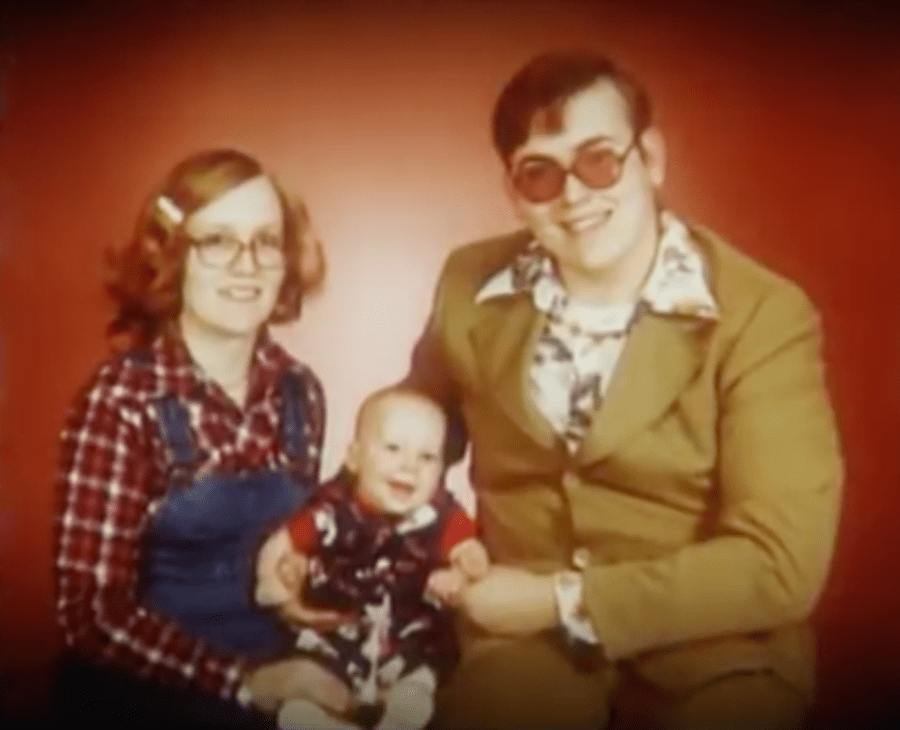
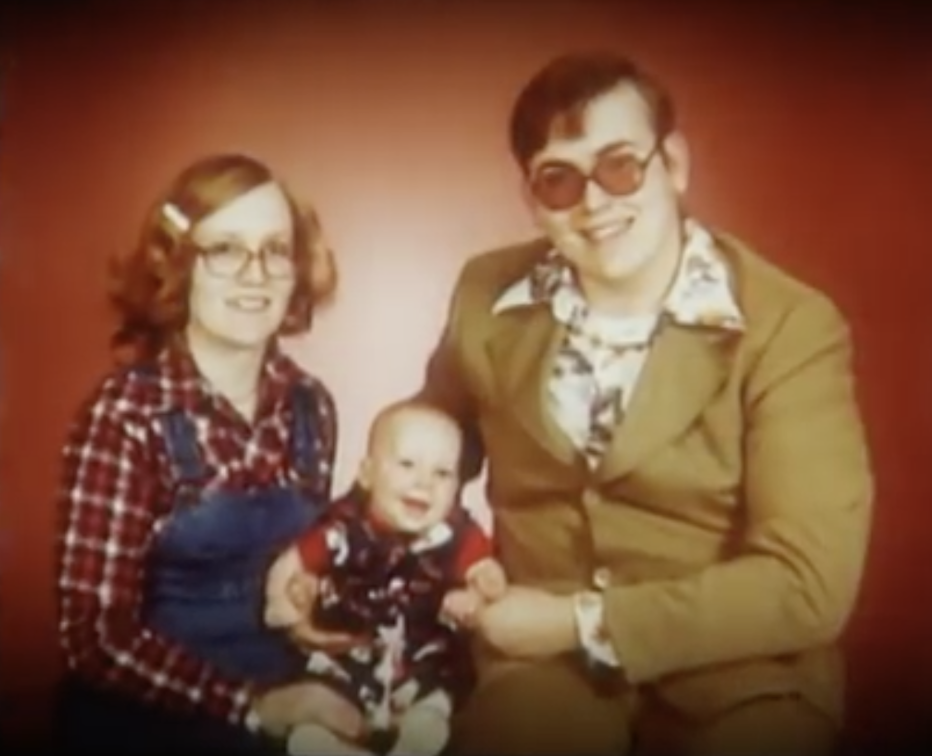
Pamela and Verle Lee Hartley
Pamela and Verle Lee Hartley, U.S. Navy (photo: CBS)

In an effort to track down subjects, agents used Lee’s toxicity reports which showed a continuous pattern of poisoning over a 5-6 month period of time. Agents shared when investigating poisoning deaths, you need to establish an opportunity of who during that time would have had access to both Lee and poison. There were spikes in Lee’s arsenic levels during his deployment at sea, at the port of call in Spain, and even when he was at the hospital in Jacksonville. One person who was at Lee’s side throughout his months of agony was his cabin mate Lt. Samuel Yates. They seemed to get along well but tension builds up month after month when living in close proximity together trapped on a ship. Lee was also in direct competition with his roommate for advancement.

Both Lee Hartley and Lt. Yates wanted desperately to be promoted to Lt. Commander. Was there a feud simmering between them, a rivalry that turned deadly? As agents developed information on the roommate, rumors began to circulate that had already been rampant on the ship. After Lee’s death, Lt. Yates allegedly waisted no time going after his roommate’s young wife who was grieving and vulnerable. At Lee’s funeral, he paid his respects by reportedly seducing the pretty widow. Agents knew they needed to take a closer look at Yates. And when they did, they found a chilling piece of evidence. Lee’s cabin mate was asked to give them a blood sample to see if it tested positive for arsenic or other heavy metals. As a result, they learned Yates had some elevated amounts of arsenic in his blood stream, the same poison that killed Lee.

Lt. Yates’ low level arsenic exposure was consistent with someone who had handled the substance. But the test results were not remarkable because Yates would have been exposed to all the same environmental factors as Lee. If someone was trying to harm Lee, Yates could have easily been exposed to the same food and drinks in foreign ports. Although a lot of circumstantial evidence pointed to the roommate, a thorough search of Yates’ belongings showed no traces of arsenic. They could only conclude that Yates was a collateral victim of whoever was poisoning Lee. As suspects were eliminated one by one, agents had to consider the possibility that the suspect they were looking for may be Lee Hartley himself. One of the NCIS agents said when they don’t have anymore theories, they have to think outside the box. The agents considered that Lee may have ingested the arsenic intentionally.

It appeared Lee Hartley had everything going for him and he loved his job on the U.S.S. Forrestal. He also had a beautiful young wife waiting for him in Florida. But NCIS agents wondered if the image of that perfect life was just a sham. The two agents knew Lee while serving with him on the carrier. When they reflected back on their time with him, they did observe some unusual behavior. After lunch, Lee regularly met up with a small group and he always appeared disgruntled. They learned Lee was drinking heavily before his deployment and thought maybe he was going through some depression. Was Lee suicidal? Did he deliberately consume the arsenic to poison himself? The pair thought the odds were high that Lee ingested the poison and brought in in a psychologist to analyze Lee’s life and letters; they found no suicidal ideation in any of his writings.

The medical evidence in this case didn’t fit the pattern of someone trying to kill themselves. Typically in a suicide case, it would be a major ingestion of poison and then it would drop off. Lee was poisoned consistently over several months. He was in horrible condition to the point that he had an ulcerated esophagus, open sores in his mouth, couldn’t talk, and could’t eat. Would Lee have voluntarily chosen to kill himself in such a slow, agonizing way? They ruled out suicide and wondered if the poisoning was an attempt to help get him off the ship. Lee made some statements to family members that he really didn’t want to go on this last deployment and his heart wasn’t in it anymore. He was upset about having more sea duty. He wanted a stateside desk job close to his wife. Did he use the arsenic to get himself off the ship? Would they send him home?

Agents considered that maybe Lee wanted to take just enough of the poison to get himself sent back home. But arsenic doesn’t leave the body and instead builds up over time. The agents theorized Lee may not have understood its cumulative effect over time. Maybe, Lee didn’t realize it made him sicker and sicker with every dosage. Did his scheme backfire by taking one dose too many? This theory didn’t hold water though because there were no tell tale signs in Lee’s belongings that led anyone to believe he had handled arsenic. And toxicology evidence showed that the poisoning continued even after he got back to Jacksonville. NCIS had no choice but to put the latest theory to rest. At this point, they ran out of theories, suspects, and direction and chose to close the case.

Thirteen years later in 1995, NCIS formed a cold case homicide unit. Lee Hartley’s poisoning case was one of the first cases brought to their attention. Lee’s death was reviewed at headquarters and a new team of special agents were assigned. They quickly learned that all of the physical evidence in the Lee Hartley case had been destroyed. The team had to work the case the old fashioned way so they started re-interviewing people involved in the initial investigation. Agents said its helpful to go back and talk to people because their stories change and some are more willing to tell the truth after 10-15 years has passed. Agents spoke with family, friends, and neighbors and the same name that kept coming back up was the original suspect in the case, Pam Hartley. But their big break came when Lee Hartley’s brother-in-law helped them uncover the truth.

Pam’s brother knew the dynamics of Pam and Lee’s relationship so agents wanted to speak with him. The fact the case had been reopened after all these years, caught Pam’s brother by surprise and he dropped a bombshell no one expected. He shared that Pam tried to hire him to kill Lee and offered him some of the insurance money if he did it. He kept this secret for years and when agents interviewed him this time, he told them the truth. NCIS was now convinced Pam was the killer but building a case against her wasn’t going to be easy. After all, she passed a polygraph test that indicated no deception. When NCIS had the results re-examined by current staff, they found the findings of ‘no deception’ were probably erroneously reached. The results should have been inconclusive. It was more evidence of Pam’s involvement in Lee’s death.

But after so many years, they had no physical proof, no eyewitnesses, and no way to tie Pam to the actual crime. She also had what seemed to be an ironclad alibi. She was on the other side of the world when her husband was poisoned. If she was the killer, how did she do it? Could they get her to confess? They only had one shot and needed to get Pam alone, because thirteen years ago her controlling mother was beside her running interference. The cold case team placed Pam under surveillance and tracked her every move. They learned the years since Lee’s death had not been good to her. Having squandered her inheritance, she lived with her mother and struggled with substance abuse. She treated her addiction at a hospital on a military base. On one of those occasions, she arrived alone for the appointment. The NCIS used the structured environment of the Army base to conduct the interview.

This approach allowed NCIS to conduct an interview without Pam’s mother being there. Pam nervously agreed to answer their questions. They told her there was no doubt in their mind that she did it and most of the problems in her life were most likely attributed to what she had done to her husband. They played on her guilt and told her to put it behind her and tell the truth. Pam Hartley broke down and told them what she did. She told them everything and filled in the missing puzzle pieces. She didn’t want to be married anymore. She said she was miserable and hated how possessive Lee was. But, she really liked the status of being an officer’s wife and didn’t want to lose that lifestyle. She wanted him gone but wanted to maintain her status. It was almost the perfect murder. The last time she saw Lee, she bid him farewell and then ran to a feed store to purchase rat poison. Pam sent Lee poisoned treats while he was deployed at sea.

Like a model wife, Pam created treats for Lee because she knew he had a sweet tooth. Agents learned that both Lee and his cabin mate sampled some whiskey cake that she sent Lee. Yates said he ate one piece, it was too strong, and didn’t like it. Pam wanted Lee to die at sea but the call never came so she upped the anti and traveled to Spain to poison him in person at breakfast. But it still didn’t do the job. When Lee was airlifted to the hospital in Jacksonville, Pam rushed to his side. This time, she poisoned his apple juice. Pam gave Lee the lethal dose the night before he died while pretending to care about him. After Lee died, Pam took the rest of the poison and dumped it in a pond behind their house. Her persistence finally paid off; she collected on a lifetime of military benefits minus the annoying husband. How could she have hatched such a diabolical plot? When asked why poison, she said “ladies have been using poison for years.”

Pam’s confession sealed her fate. On October 16, 1996, Pamela Hartley pleaded guilty to second degree murder in a Florida state court. Agents reminded us that Pam had a psychotic personality. She didn’t think about the cause and effect on other people; she only thought of herself and the effect on her. After nineteen years of service, Lee Hartley didn’t die in battle, his mortal enemy was the one person he loved most. Not long before Lee’s death, Lee and Pam’s brother had a conversation where Lee told him if anything happened to him, his sister would be well taken care of. He died thinking he still needed to take care of Pam. Pamela received $35,000 in life insurance money, $10,000 a year in veterans benefits, and free military medical benefits for life. Lee was a good man and the pain from the loss endures. Pamela Hartley was sentenced to 40 years in a state prison and served 16 years when she was paroled. 

Source: Maritime Murder, Unusual Suspects, Investigation Discovery

Real NCIS: 

When a Navy lieutenant onboard a US aircraft carrier falls victim to a rare case of arsenic poisoning, NCIS investigators must scour both land and sea for his killer. With no crime scene and little physical evidence, agents must separate rumor from truth and use their best interrogative know-how to solve a deadly crime. Follow real NCIS agents as they hunt down suspects on one of the world’s largest ships and after a long 13 years finally uncover the bizarre truth behind the poisoning death of a Lt. Lee Hartley. -Dark Minds in Crime

Investigation Discovery:

John Prudhont as NCIS Special Agent Tom Assimos and John Bridell as NCIS Special Agent Dave Early and Mocean Melvin as the Narrator in an edited clip from Season 4, Episode 13 of the Discovery ID TV show “Unusual Suspects.”

ID Go: In 1982, a Naval Officer dies from a mysterious illness. When toxicology reports reveal he was poisoned, Naval Investigators sift through a ship of thousands, and countless theories before the truth behind the victim’s painful death is revealed. -Maritime Murder, Unusual Suspects (S4,E13)

[CANNOT LOCATE UNUSUAL SUSPECTS SEASON 4 ON-LINE ANYWHERE]

Editor’s note: With a cable subscription, you can download the free ID Go app and watch all of the Investigation Discovery programming at your convenience. And for those who do not have cable, you can watch “unlocked” episodes on the ID Go app including the latest premieres. Download the ID Go app and binge away. For those who prefer commercial free programming during your binge session, Prime Video has an ID channel: ‘True Crime Files by Investigation Discovery” available for $2.99 a month. It’s a compilation of older seasons but totally worth the cost if you are a true crime addict.

Related Links:
2 Charged in Reopened Death Probes
Widow guilty of poisoning death in 1982
After 14 years, woman confessed to killing her husband
Wife sentenced in poisoning death
Widow Sentenced in Death of Husband
Murder-for-hire motive often insurance
Inmates find freedom behind bars
Mayport cases to appear on TV’s ‘The Real NCIS’
‘Unusual Suspects’: Woman Poisoned Navy Husband Over Years Through Care Packages
Pamela Hartley poisoned her husband, Verle Lee Hartley, because she did not want to hurt him with a divorce
Mayport cases to appear on TV’s ‘The Real NCIS’
Mysterious poisoning of a Navy lieutenant leads to one of NCIS’ most notorious cold cases
NCIS: Lt. Hartley’s Wife Got $45,000 After Killing Him with Rat Poison
NCIS: The Cases They Can’t Forget Premiere Season 3 Time & Channel
NCIS: The Cases They Can’t Forget | CBS
NCIS History (October 1998, Vol II, Edition 6)
NCIS: The Cases They Can’t Forget | Amazon
Real NCIS | E02 | Hartley Case
John Prudhont Unusual Suspects Maritime Murder 30 sec Clip
Maritime Murder | Unusual Suspects | Investigation Discovery (S4,E13)


Oklahoma City Bombing: 168 People Died in an Act of Domestic Terrorism at the Alfred P. Murrah Federal Building (April 19, 1995)

Oklahoma City Bombing FBI
Alfred P. Murrah Federal Building, Oklahoma City, Oklahoma (Photo: FBI.gov)

“On the morning of April 19, 1995, an ex-Army soldier and security guard named Timothy McVeigh parked a rented Ryder truck in front of the Alfred P. Murrah Federal Building in downtown Oklahoma City. He was about to commit mass murder.

Inside the vehicle was a powerful bomb made out of a deadly cocktail of agricultural fertilizer, diesel fuel, and other chemicals. McVeigh got out, locked the door, and headed towards his getaway car. He ignited one timed fuse, then another.

At precisely 9:02 a.m., the bomb exploded.”

Read more at Oklahoma City Bombing – FBI.

“The events of April 19, 1995, dramatically changed Oklahoma City and all of us who remember that spring morning. But the stories of the 168 people killed live in our hearts as well as in the Oklahoma City National Memorial & Museum. Learn more about the victims here.” -Oklahoma City National Memorial

Learn what motivated domestic terrorists Timothy McVeigh and Terry Nichols to commit the Oklahoma City Bombing, which killed 168 people on April 19, 1995. Discover the federal and local clean up efforts and the fate of McVeigh and Nichols. -History 

USA: Oklahoma City Bombing Rescue – 1995 | Today in History | 19 Apr 16 -AP Archive

In the News:

The FBI has released long-secret security tapes showing the chaos immediately after the 1995 bombing of the Oklahoma City federal building. The soundless recordings show people rushing from nearby buildings after the fertilizer bomb went off. (Sept. 27) -Associated Press

Don Lemon talks with the child survivors of the Oklahoma City bombing 15 years after the attack. -CNN

20 years after the terror attack, survivors and families of victims look back on the devastating terror attack. -CBS News

20 years ago tomorrow, domestic terrorist Timothy McVeigh and his co-conspirators set off an enormous truck bomb in downtown Oklahoma City. The blast killed 168 people, including 19 children. Anna Werner reports on that awful day after visiting the site. -CBS This Morning

Americans remember the bombing that killed 168 people and injured hundreds more. -ABC News

Remembering the April 19, 1995 tragedy in Oklahoma when a truck bomb exploded outside of the Alfred P. Murrah Federal Building injuring hundreds and leaving 168 people dead. -NBC News

Today marks the 23rd anniversary of the Oklahoma City bombing, a time to remember the 168 lives lost in an act of domestic terrorism that rocked the nation. -CBS News

On the morning of Wednesday, April 19, 1995, a former Army soldier parked a rented Ryder truck in front of the Alfred P. Murrah Federal Building in Oklahoma City, Oklahoma.He got out, locked it and ignited two fuses. At 9:02 a.m., the explosion ripped through the building where 500 people worked and children attended America’s Kids day care. The blast killed 168 people including 19 children under the age of 6. -PennLive.com

USA: Oklahoma City: Remains of Bombed Building to be Demolished. -AP Archive

Oklahoma City National Memorial & Museum:

At the 20th anniversary remembrance for the Oklahoma City bombing, the former president says it’s important for all Americans to remember how much they owe Oklahomans. -CBS News

Video of The Oklahoma City National Memorial and Museum. -CNN

American Experience PBS:

Premiering at the 2017 Sundance Film Festival. Coming to American Experience PBS on February 7, 2017 at 9/8c. -American Experience, PBS

After the Oklahoma City Bombing, Clinton’s ability to reach Americans on a personal level did much to help the nation’s grief. “It’s kind of a throwaway line now, I feel your pain, but he literally could,” says Robert McNeely. “I mean he could take people and just hug them and connect to them in a way and really listen to them.” -American Experience, PBS

Oklahoma City explores how a series of deadly encounters between American citizens and federal law enforcement—including the standoffs at Ruby Ridge and Waco—led to the bombing of the Murrah Building in Oklahoma City in April 1995, the worst act of domestic terrorism in American history. -American Experience, PBS

At the time of the Oklahoma City bombing in 1995, the Alfred P. Murrah Federal Building was home to several government agencies — and a daycare. -American Experience, PBS

During the stand-off between federal agents and the Branch Davidians in Waco, Texas in 1993, people gathered on a hill roughly three miles away to see what was happening at the compound. One of those drawn to Waco was a 24-year-old Army veteran named Timothy McVeigh. -American Experience, PBS

Filmmaker Barak Goodman and editor Don Kleszy discuss their newest documentary, “Oklahoma City” and how it led to the creation of another one-hour film about Ruby Ridge. -American Experience, PBS

The 1995 Oklahoma City Bombing was the largest act of domestic terrorism in U.S. history. A new documentary on the PBS series American Experience takes a fresh look at the events and motivations that led to the attack by Timothy McVeigh, and finds resonance for today. -PBS NewsHour

At the 20th anniversary, we look back at the Oklahoma City bombing. Public television station OETA shares reflections from survivors and victims’ families, and Judy Woodruff talks to former Deputy Attorney General Jamie Gorelick, former Director of Homeland Security of Oklahoma Kerry Pettingill and Barry Grissom, U.S. attorney for the district of Kansas, for lessons learned from the attack. -PBS NewsHour

On April 19, 1995, Timothy McVeigh, a former soldier deeply influenced by the literature and ideas of the radical right, parked a Ryder truck with a five-ton fertilizer bomb in front of the Alfred P. Murrah Federal building in Oklahoma City. Moments later, 168 people were killed and 675 were injured in the blast. OKLAHOMA CITY traces the events — including the deadly encounters between American citizens and law enforcement at Ruby Ridge and Waco — that led McVeigh to commit the worst act of domestic terrorism in American history. With a virulent strain of anti-government anger still with us, the film is both a cautionary tale and an extremely timely warning. -YouTube Movies

Related Links:
Oklahoma City Bombing
Oklahoma City Bombing – FBI
Oklahoma City bombing – HISTORY
Oklahoma City Bombing Fast Facts
The Oklahoma City National Memorial & Museum
Oklahoma City National Memorial (U.S. National Park Service)
American Experience PBS Premiered ‘Oklahoma City’: Timothy McVeigh & Terry Nichols Conspired to Bomb the Alfred P. Murrah Federal Building (February 7, 2017)
Oxygen Premiered ‘In Defense Of Timothy McVeigh’: Convicted Oklahoma City Bomber Executed by Feds in 2001 for Terrorism (June 25, 2018)

YouTube:
Oklahoma City Bombing: Why Did It Occur & Who Was Behind It? | History
USA: Oklahoma City Bombing Rescue – 1995 | Today in History | 19 Apr 16
Raw Video: New Look at Oklahoma City Bombing
Oklahoma City Bombing Anniversary
Oklahoma City Bombing: 15 Years Later
CNN: Don Lemon speaks with the child survivors of Oklahoma City bombing
Remembering the Oklahoma City Bombing
Remembering the Oklahoma City bombing 20 years later
Oklahoma City bombing: 20 years later
Oklahoma City Bombing Remembered 20 Years Later
Oklahoma City Bombing | Flashback | NBC News
The Oklahoma City bombing, April 19, 1995
23 years since 168 people were killed in the Oklahoma City bombing
The Oklahoma City federal building bombing in 1995
How OKC bombing unfolded on live TV 20 years ago
Oklahoma City Bombing: Template of Homegrown Terrorism
How is man who helped build OKC bomb a free man?
Oklahoma City Bombing Memorial
Oklahoma City Bombing Memorial | CNN
Bill Clinton speaks at Oklahoma City National Memorial
USA: Oklahoma City Bombing: Weather Hampers Rescue Efforts
USA: Oklahoma City Bombing: Rescue Workers Update
USA: Oklahoma City Bombing: Search for Bodies Continues Update 2
USA: Oklahoma City Bombing: Official Death Toll Rises to 87
USA: Oklahoma City Bombing Update
USA: Oklahoma City Bombing: Janet Reno News Conference
USA: Oklahoma City Bombing: Reactions
USA: Oklahoma City: Remains of Bombed Building to be Demolished
Oklahoma City Teaser | American Experience | PBS
Oklahoma City | Promo | American Experience | PBS
Oklahoma City Official Trailer 1 (2017) – Documentary
American Experience | The Oklahoma City Bombing | PBS
Chapter 1 | Oklahoma City | PBS
The Murrah Building | Oklahoma City | American Experience | PBS
Timothy McVeigh at Waco | Oklahoma City | American Experience | PBS
Interview: Barak Goodman & Don Kleszy | Oklahoma City & Ruby Ridge
Tracing the roots of the America’s biggest domestic terror attack | PBS NewsHour
‘There was no playbook’ for handling the Oklahoma City bombing | PBS NewsHour
American Experience: Oklahoma City | PBS | YouTube Movies
Clinton | American Experience | PBS

Fort Carson Soldier Christopher Walton Fatally Shot Outside Night Club; Leroy Davis Sentenced to 20 Years in Prison by Military Court (November 21, 1991)

All Hell Breaks Loose In Club Brawl Leaving A Young Solider Dead -Victim Zero, Homicide Hunter (Preview)

Lt. Joe Kenda of the Homicide Hunter series on Investigation Discovery discussed the murder of Fort Carson Army soldier Christopher Walton, 21, outside a night club in Colorado Springs, Colorado on November 21, 1991. What started out as a good night out on the town turned deadly after two rival units started a brawl at a local bar in Colorado Springs. The fight spilled outside of the bar and that’s when Christopher Walton was shot with a gun in the neck. Christopher Walton was getting ready to get out of the Army and move back to North Carolina. He was a described by his friends as a really good guy who took care of people.

As Kenda investigates the case, which is in his jurisdiction, he learns that a few months earlier a couple of soldiers got in a fight over a girl and that’s when everyone chose sides and the rival began. The rival was between the artillery unit and the maintenance unit at Fort Carson. An informant told Kenda that she thought Chris Smith may have committed the murder. Kenda pays Chris Smith a visit and in deed finds a gun similar to the gun they were looking for in his possession. It was later determined by ballistics that this gun matched the bullet recovered from Christopher Walton’s body.

Chris Smith was arrested for the murder of Christopher Walton. He never admitted to the murder and told Kenda that he had given the gun to someone else that night but would not give up the name. While Smith was in custody, the Army’s Criminal Investigation Division (CID) called Lt Joe Kenda to tell them they had a witness to the event and they thought he might have the wrong guy. The witness, Eric Walker, identified Leroy Davis as the actual shooter. Leroy was a member of the artillery unit at Fort Carson which was the rival unit to Christopher Walton’s maintenance unit.

As it turns out, Chris Smith was telling the truth. He did give the gun to someone that night outside the bar after shooting it in the air because he didn’t want it on his person. Eric Walker told Kenda that Chris Smith gave the gun to Leroy Davis who eventually returned the gun back to Smith. Chris Smith refused to implicate his Army brother, even after he was arrested and jailed. According to Walker, Christopher Walton pushed one of the artillery unit members and Leroy Davis acted on emotional impulse, pulled the gun out of his jacket, and shot Walton in the neck causing his fatal injuries.

For some unknown reason, Leroy Davis faced a court martial as opposed to a being tried by the civilian courts in Colorado Springs. Lt Joe Kenda described military discipline as a whole different game, sharing that they are “draconian and ruthless.” The military has its own internal justice system and has been at the center of a controversial debate in Congress for the past few years over the way it handles violent crimes. In this case, Davis was sentenced to twenty years at Fort Leavenworth where he will be expected to do hard, physical labor the entire time. We learned from one of the soldiers present at the scene that fifteen military members from Fort Carson got discharged as a result of their involvement in this incident.

Investigation Discovery:

A massive brawl erupts at a local bar ends with the shooting death of a young army soldier. To unravel the murder, Lt. Joe Kenda must infiltrate a revered military institution, and expose a dangerous vendetta. -Victim Zero, Homicide Hunter (S5,E9)

Editor’s note: With a cable subscription, you can download the free ID Go app and watch Investigation Discovery programming at your convenience. And for those who do not have cable, you can watch “unlocked” episodes on the ID Go app including the latest premieres. For those who prefer commercial free programming during your binge session, Prime Video has an ID channel: ‘True Crime Files by Investigation Discovery” available for $3.99 a month. It’s a compilation of older seasons but totally worth the cost if you are a true crime addict. Download the ID Go app or purchase ID True Crime Files & binge away.

Related Links:
Victim Zero | Homicide Hunter | Investigation Discovery (preview)
Victim Zero | Homicide Hunter | Investigation Discovery (S5,E9)
Victim Zero | Homicide Hunter | Investigation Discovery (website)
Victim Zero | Homicide Hunter | Investigation Discovery (Amazon)
Victim Zero | Homicide Hunter | Investigation Discovery (Hulu)
Lt Joe Kenda of Homicide Hunter Outlines Murder of Army Soldier Christopher Walton
Homicide Hunter Premiered ‘Victim Zero’ on ID: Fort Carson Soldier Christopher Walton Fatally Shot Outside Colorado Springs Night Club (October 20, 2015)
Violent Crime, Suicide & Non Combat Death at Fort Carson, Colorado (US Army)

Military Spouse Julie Snodgrass Found Stabbed to Death in the Philippines; Air Force Sgt. Joseph Snodgrass Sentenced to Life in Prison (February 26, 1991)

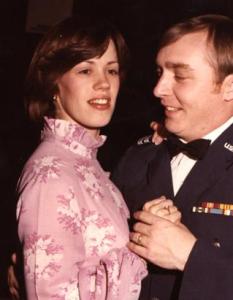
Julie & Joseph Snodgrass
Julie Snodgrass and MSgt Joseph Snodgrass, U.S. Air Force (Photo: Forensic Files)

Military spouse Julie Snodgrass, 33, was found stabbed to death near Clark Air Force Base in the Philippines on February 26, 1991. Julie was discovered in the cab of her pickup truck on an isolated road off base and an autopsy revealed that she was stabbed more than 42 times. The Air Force Office of Special Investigations (AFOSI) had jurisdiction of the case. During the investigation, they found evidence on Air Force Sgt. Joseph Snodgrass’ work computer that linked him to the crime. AFOSI found a letter addressed to his mistress asking for help with the murder of his wife. He also talked about the life insurance policy he had purchased in the event his wife died. The letter disclosed that Snodgrass elicited the help of his housekeeper (and lover), a Philippine native, to hire three hitmen to carry out the crime. The pair could then be together and live off the $400,000 life insurance pay out. During an interview with AFOSI, Sgt. Snodgrass grabbed the floppy disks and cut them to pieces with some shears.

Computer forensic scientists were able to find a way to put the disks back together so the data was readable again. This was the evidence the Air Force needed to make their murder-for-hire case. In the meantime in June 1991, Mount Pinatubo erupted resulting in layers of volcanic ash falling on Clark Air Force Base and Naval Base Subic Bay. Amidst the chaos, Snodgrass attempted a jail break in August 1991 while awaiting trial but lost his bearings in the ashy mess and eventually surrendered. The eruption’s aftermath triggered the decision to withdraw all American Forces from the Philippines. Joseph Snodgrass pleaded guilty to the solicitation of his wife’s murder and was sentenced to life with no parole in a military prison. As a result of the forensic history made by piecing the floppy disk back together making it usable again, the military changed the policies pertaining to the destruction of classified data on floppy disks. The AFOSI’s “catastrophic blunder” was made right and secure communications destruction policy was changed as a result of the lessons learned when forensic scientists made history.

Forensic Files:

Medical Detectives (Forensic Files) – Season 10, Ep 9: Shear Luck

When the wife of a serviceman was brutally murdered in the Philippines, the Air Force Office of Special Investigators swung into action. Clues led to the victim’s husband, but he insisted he was innocent. Investigators would have to do something unprecedented: Reassemble a 5 1/4 inch computer disk which had been cut to pieces with pinking shears. -Shear Luck, Forensic Files (S10,E9)

Editor’s Note: Full episodes of Forensic Files are available on a variety of media platforms. Medical Detectives Channel features full episodes of Forensic Files on YouTube. You can also find full episodes of Forensic Files on both Netflix and Amazon Prime Video. On Netflix, the seasons are grouped as collection 1-9. On Amazon Prime Video, you can find Season 1-10 here; Season 11; Season 12; Season 13; Season 14; Season 15; Season 16; Season 17; Season 18; Season 19; Season 20; and Season 21. Start bingeing and see for yourself why Forensic Files is such a hit!

Update (April 11, 2021:

Today, we were informed that Forensic Files got the narrative wrong and Air Force OSI did not commit a “catastrophic blunder.” MJFA reminded said person that if they weren’t hiding all the crime and death from the public, we’d know more about the case details. We simply are repeating what the crew at Forensic Files said. First this person reminded us, the floppy disk was destroyed in their presence because according to Forensic Files, they were “momentarily distracted.” Then they failed to address the fact an accused killer had a pair of scissors on his person, both a danger to OSI and other Air Force personnel. And finally, Joe Snodgrass worked with AFOSI and knew prior to his interview he was going to be questioned about the floppy disks, so he came prepared to destroy them.

Related Links:
Shear Luck | Forensic Files | IMDb
Shear Luck | Forensic Files | Medical Detectives
Shear Luck | Forensic Files | Netflix (Collection 9,E13)
Shear Luck | Forensic Files | Amazon Prime Video (S19,E7)
American woman found dead in Philippines
The Cataclysmic 1991 Eruption of Mount Pinatubo, Philippines
In the Matter of the Guardianship of Jaime Mary-Jean Snodgrass, a Minor (1997)
AF Computer Forensics Lab nabs criminals, byte by byte
Computer Forensics Investigations: Body of Evidence
Recounting US military’s last days in the Philippines
Information Risk & Security: Preventing & Investigating Workplace Computer Crime
Forensic Files Premiered ‘Shear Luck’: Military Spouse Found Stabbed to Death Near Clark Air Force Base in the Philippines (August 3, 2005)
30 Domestic Abuse Cases in the Military That Ended in the Murder of Female Partners

Air Force Spouse Kathryn Eastburn & Daughters Cara & Erin Found Murdered in Fayetteville, NC Home; Youngest Toddler Jana Discovered Unharmed (May 9, 1985)

The murder of a military wife and two of her young daughters in Fayetteville, North Carolina in 1985 was still making headlines twenty-five years later. The loss of his children and his wife Kathryn would forever haunt former Air Force Captain Gary Eastburn. Katie captivated him from the moment they met and the two got married shortly before Gary joined the United States Air Force. Eleven years later, Captain Eastburn was stationed at Pope Air Force Base in North Carolina as an Air Traffic Control supervisor. By then, the couple had three daughters: five year old Cara, three year old Erin, and Jana who was just under the age of two. They lived on Summerhill Road near the Fort Bragg Army post.

In the spring of 1985, Gary Eastburn was nearing the end of a training program at Maxwell Air Force Base in Alabama. Every Thursday night, Gary called Kathryn from the barrack’s payphone. One week, he couldn’t reached Kathryn and after frantically calling her for a couple days unable to reach her, Gary asked a neighbor to check in on his wife. The neighbors had grown concerned as well when they noticed that the newspaper had not been picked up for a couple days and they heard a child crying. They called the police who went into the Eastburn’s home and discovered Kathryn, Cara, and Erin had been murdered and the youngest toddler, Jana, was crying and severely dehydrated. They would learn that the baby was only hours from death.

The Fayetteville Police Department investigators discovered that Kathryn Eastburn had been raped and murdered. Her underwear had been cut off her, her blouse and bra were ripped opened, her throat was slit, and she had multiple stab wounds. Erin was found in her mother’s room stabbed to death and her throat slashed. And Cara was found in her own bed as if she was hiding underneath a blanket. She too had been stabbed multiple times and her throat was cut. Police believe the surviving toddler was in her crib for nearly three days before neighbors found her. Gary Eastburn received the dreadful call that there had been a death in the family while he was still at Maxwell. Investigators asked him to return home immediately because detectives wanted to give him the news in person.

Desperate police turned to the only living witness, Jana, to see if she remembered anything. The police took Jana to a child psychologist to determine what, if anything, she might know. The police deduced that the child heard the killer but could not identify him; she was just too young. An older Jana admits that she doesn’t remember anything now either. Police theorized that the baby was young and couldn’t identify the intruder which is probably why she was spared. In the meantime, a neighbor came forward claiming he saw a man leaving the Eastburn residence around 3 a.m. and was able to give a description of a suspect who drove a white Chevrolet Chevette. Kathryn also told Gary about a man who came and looked at the family dog they were trying to find a home for. His name was Timothy Hennis and the composite drawing inspired by the neighbor looked just like him.

Timothy Hennis was questioned and asked to give hair, blood, and fingerprint samples. When the detectives escorted Hennis back to his car, they discovered he drove a white Chevrolet Chevette. Later that night, Timothy Hennis was arrested. Hennis was an Army Sergeant stationed at Fort Bragg. Someone had used Kathryn’s stolen ATM card and a witness identified Hennis as the person who used the ATM right before she did at the time of the transaction. At every turn, the evidence overwhelmingly brought them back to Hennis. The prosecutors were puzzled why Hennis would commit such a heinous crime given he had no history of violence. They learned that he had approached a woman for sex that same night and theorized that when he was rejected, he decided to target Kathryn Eastburn.

A trial began roughly a year after the murders in 1986. Hennis’ attorney was quick to point out that the prosecution didn’t have any physical evidence linking Hennis to the murders to include fingerprints, hair, and foot prints. This was at a time before there was any routine DNA testing, therefore even semen found in Kathryn’s body led police nowhere. There was a significant amount of physical evidence showing that a male suspect was in the Summerhill Road house and it wasn’t Gary Eastburn or Timothy Hennis. Hennis’ attorney also pointed out that there was no possible way someone could leave that house without transferring evidence to their personal belongings. On July 4, 1986, the jury returned it’s verdict and Timothy Hennis was found guilty on all counts. Four days later, Hennis was sentenced to death.

While Timothy Hennis was sitting on death row, he received a letter from someone claiming to have committed the crimes. This person appeared to show remorse because Hennis was serving time for his crimes. In spite of the verdict, Hennis’ attorney and wife Angela continued to claim that Hennis was not the killer. As a result, Hennis’ attorney fought to have the murder conviction overturned and filed an appeal. The attorney felt he did not provide adequate representation in the first case and admitted that it was a heavy burden to carry. In a precedent setting decision, the Supreme Court overturned the guilty verdict. It found the prosecutors used information to inflame the jury, a graphic parade of disturbing images taken at the crime scene. After two years on death row, Hennis was awarded a new trial.

The second trial began in 1989, four years after the murders. The prosecution’s case was still strong and the star witness was back to swear that he saw Hennis leaving the Eastburn home on the night in question. In this new trial, the defense delivered compelling theories of their own. They produced a witness who claimed to have seen another man (not matching the description of Timothy Hennis) near the Eastburn home. The defense also reminded the jury there was no physical evidence connecting Hennis to the murders. Additionally, they opined there were others who could have committed the crimes including the person who wrote to Hennis while he was in prison. And in this case, Hennis took the witness stand and denied having anything to do with the murders. On April 19, 1989, a jury found Timothy Hennis not guilty on the triple murder charges and set him free.

Gary Eastburn wasn’t convinced of Hennis’ innocence because he never once apologized to the family for their loss. The verdict just didn’t sit right with Gary and he strongly believed that Hennis was guilty despite the jury’s decision. Gary admits he was angry after the verdict but he knew he had to let it go for his health. A month after Hennis was released from prison, ‘A Current Affair’ paid Hennis and his wife to appear on the program. Hennis suggested the prosecution wanted to pin the murder on anyone so they could get it out of the news; he also denied committing the murders. Timothy Hennis was free and for over twenty years no new suspects emerged. Whoever committed the murders in Fayetteville had gotten away with murder until one day a cold case detective took another look at the case.

After the murders, Gary Eastburn was transferred to a military base north of London, England where he met an English nurse and married her in 1991. Jana was 8 years old and now had a step-mother. Timothy Hennis returned to his family and resumed a career in the Army which often took him away from home. He served in the first Desert Storm war, he served in the war in Somalia, he got promoted multiple times, and had nothing but good marks from military leadership. Journalist Scott Whisnant wrote a book called ‘Innocent Victims’ which was later featured as a television movie. The point of view of the book was that Timothy Hennis was not guilty of these crimes. Investigators never read the book or saw the show. They claimed they were not interested in fiction; instead they were annoyed and pissed.

Twenty years later, new detectives were working on cold cases and decided to take a second look at the Eastburn murders. A cold case investigator found the one clue that could lead them to the killer, a vaginal swab from Kathryn Eastburn. In the 1980s, DNA testing was not available but now it was and they sent it to the lab. The lab testing revealed that the vaginal swab from Kathryn was a match to Timothy Hennis’ DNA. Still, Hennis’ attorney wasn’t convinced because he didn’t understand how someone could commit such a heinous crime then go twenty five years without committing another one and also lead an exemplary life. Billy Richardson believed the sample may have been contaminated and he pointed out that the lab that conducted the testing had been called into question on numerous occasions.

Author Scott Whisnant also believed that something was wrong and Hennis couldn’t have committed these crimes. He asked: “How could he be guilty of this? How could he fool everyone all these years?” Meanwhile, investigators contacted Gary Eastburn to inform him they got a match to Timothy Hennis. Eastburn admitted he had given up hope and the new information was overwhelming. But one thing stood in the way of justice: the Constitution. Hennis had been found not guilty by the State of North Carolina and they were prohibited from trying him a second time because of the double jeopardy clause. But the State found a loophole and because Timothy Hennis was a retired Army soldier, the Army could try him. They ordered Hennis out of retirement and back into uniform to stand trial in the military justice system.

Hennis retired in Washington state in a community near Seattle which was a shock to Gary Eastburn because that’s where he and his wife had settled and Jana and her boyfriend had settled. They learned that Hennis lived 30 minutes away from them. Jana was shocked he lived so closely to them because he was walking free in a community near her. But the Army would soon move Hennis; he was ordered back to Fort Bragg to face triple murder charges. After two decades of freedom, Hennis was being tried for the murders of Kathryn, Cara and Erin Eastburn, a third time for the same crime, except this time in a military court martial. If convicted, Hennis could again face the death penalty again. Hennis’ attorney was stunned that in America, Hennis could be charged for a third time for the same crime.

Billy Richardson referred to the double jeopardy clause in the US Constitution and reminded the public it doesn’t say anything about jurisdiction. He tried to get a federal court to intervene on the issue but failed. And in this third Hennis trial, there would be a new witness, Jana, the only survivor that night. She wanted the jury to know how this crime impacted her life. The trial began in the spring of 2010 and Timothy Hennis’ wife and grown daughter continued to stand by his side. They believed he was innocent. Hennis’ new attorney, Frank Spinner, argued at trial that the facts of Hennis’ life do not paint the portrait of a man who could commit such a heinous crime. He questioned how a man who led such an exemplary life could be the same person who would commit three murders in one night.

Timothy Hennis served his country with distinction, raised his family, and never committed another crime in the twenty five years after the Eastburn murders. And yet on one single night, Hennis slaughtered a family? The prosecutors said the motive didn’t matter because there was DNA linking Hennis to the murders. Spinner reminded jurors that DNA does not mean a case is open and shut. He argued that the DNA does not mean Hennis raped and murdered Kathryn Eastburn because Hennis admitted to consensual sex with her. Hennis suggested Kathryn was lonely while her husband was away at training. Gary Eastburn was angry the defense would have the audacity to suggest that Kathryn was a ‘whore’. Hennis’ old attorney Billy Richardson shared that Hennis denied having sex with Kathryn twenty years ago.

IMG_5116
Kathryn and Gary Eastburn

The military panel didn’t believe Timothy Hennis and they found him guilty of the murders of Kathryn, Cara and Erin Eastburn. Hennis was lead away in handcuffs and for the second time in his life, he was sentenced to death. Timothy Hennis maintains his innocence, filed an appeal, and is fighting for a reversal of his conviction. Gary and his daughter Jana spoke to the press minutes after the verdict and expressed empathy for Timothy’s family despite their belief that justice was finally served. Jana Eastburn admitted she feels more at peace knowing that Hennis is behind bars. As of 2011, Timothy Hennis appealed his conviction and challenged the federal ruling regarding the double jeopardy clause. Timothy Hennis remains on military death row at Fort Leavenworth in Kansas.

Source: 20/20 on ID ‘Witness’

In 1985, a young military wife and two of her three little girls are viciously murdered in their home. In a twisted case filled with unusual suspects, the man who gets convicted goes free. But nothing is what it seems. -20/20 on ID

MJFA Links:
Air Force Spouse Kathryn Eastburn & Daughters Cara & Erin Found Murdered in Fayetteville, NC Home; Youngest Toddler Jana Discovered Unharmed (May 9, 1985)
A Military Jury Delivered a Guilty Verdict in a Death Penalty Trial to Retired Army MSG Timothy Hennis for the Triple Murders of Kathryn, Cara & Erin Eastburn (April 8, 2010)
In 3rd Trial, Retired Army MSG Timothy Hennis Sentenced to Death by Military Court Martial for the Murders of Kathryn, Cara & Erin Eastburn in Fayetteville, NC (April 15, 2010)
Four Service Members on Military Death Row at Fort Leavenworth, Army Private John Bennett was Last Military Execution by Hanging in 1961
Violent Crime, Non Combat Death and Suicide at Fort Bragg, North Carolina (US Army)

Related Links:

1986
Death sentence sought
Jury in Hennis trial visits area where murder victims lived
Hennis Receives Death Sentence

1988
STATE of North Carolina v. Timothy Baily HENNIS

1989
Triple murder retrial to start
Witness firm on identification of murder suspect
Witness shaky on identifying Hennis

1996
Reversal of ‘Victims’: Made-for-TV Justice
ABC explores ex-city man’s prison plight MUG: Hennis BOX: On TV “Innocent Victims” airs at 8 p.m. Sunday and Monday on ABC, Rochester cable channels 5 and 6

2007
GI cleared in 1989 faces murder court-martial
Accusations follow ex-soldier
Expert links soldier to 1985 killings
DNA hearing wraps up
Acquitted of murder, he now faces Army justice
Ex-soldier faces trial in decades-old deaths
Army to try soldier who was acquitted of 1985 slayings

2008
3 capital murder trials to put Army in spotlight

2009
Army holds hearing for soldier charged in 1985 murders

2010
Judge Delays Murder Trial For Recalled Soldier
Rochester native accused in N.C. triple murder
Why ‘exonerated’ needs to be used sparingly
Federal judge: Hennis court-martial can proceed
Soldier acquitted in 3 deaths faces military trial
Hennis court-martial begins at Fort Bragg
Twenty-five years later, third trial begins in triple slaying
Hennis Trial Underway
Army presents its case in trial over 1985 killings
Hennis jury shown clothes of victims
Army expert: DNA from scene matches NC soldier
Friends, family testify for convicted NC soldier
Family testifies in Hennis sentencing
Military jury finds Hennis guilty of murder
Jury considers death for Hennis
Soldier Gets Death Sentence in Military Court after Civil Acquittal
Ex-Lakewood resident gets death in 1985 slayings
Soldier gets death sentence in 1985 Fayetteville triple slaying
Soldier sentenced to die for 1985 triple murder
For 2nd Time, Man Sentenced to Death for Murders
Prosecutor Emphasizes DNA in Hennis Closing
At 3rd Trial, Sergeant Guilty of 1985 Triple Murder
In 3rd Trial, Conviction in Murders From 1985
Military Jury Finds Hennis Guilty of Murder
Hennis found guilty of decades-old murders
Military Jury Convicts Soldier of Murder 20 Years After his Civilian Acquittal
Soldier’s family pleads for jury to spare his life
25 years later, widower recalls slain family
Father, daughter tell of pain 1985 triple murder caused
A murder conviction, but pain still felt
Tim Hennis case to be featured on 20/20

2011
NC soldier: SBI lab problems should mean new trial
Court-martial murder conviction appealed
Ex-Soldier Convicted Twice of Eastburn Triple Murder Appeals Again
Three Trials for Murder: In the name of justice, did the military sidestep double jeopardy?

2012
‘Unusual Suspects’: Military Man Convicted & Sentenced To Death Twice, Acquitted Once 
Court Rules Against Ex-Soldier in NC Triple Murder
Fort Bragg commander approves Timothy Hennis conviction, death sentence
An Execution Draws Closer
Timothy HENNIS, Petitioner–Appellant, v. Frank HEMLICK; Patrick Parrish, Colonel; Lloyd J. Austin, III, General; John McHugh, Honorable, Respondents–Appellees
Timothy Hennis v. Frank Hemlick et al. (US Court of Appeals)

2013
Nidal Hasan, and the 5 other men on the military’s death row

2014
Master sergeant on death row files new petition
Former Fort Bragg soldier again appeals conviction
Master sergeant on death row files new petition
What to Watch on Sunday: CNN’s ‘Death Row Stories’ looks at Hennis case in NC
Triple murder suspect goes from guilty to innocent and back to guilty
NC triple murder suspect goes from guilty to innocent and back to guilty

2015
10 Mysteries Resolved By Unbelievable Surprise Twists
CNN special with local attorney set for tonight
Timothy Hennis seeks relief in federal court; former Fort Bragg soldier questions Army’s jurisdiction in court-martial
Timothy Hennis case: Federal judge dismisses latest appeal
On military death row, execution is anything but guaranteed
Fair and Impartial? Military Jurisdiction and the Decision to Seek the Death Penalty
TIMOTHY B. HENNIS, Petitioner, v. ERICA NELSON, Commandant, USDB-Ft. Leavenworth, Respondent
Setting the Right Example: Removing the Military Death Penalty

2016
Eastburn Murders Expose a Loophole in the Law
Army court upholds death sentence of former Bragg soldier
Appeal by former Fort Bragg soldier who murdered mother and 2 daughters was rejected in military court
Timothy Hennis’ death sentence fits his gruesome crimes, court rules
Army CCA affirms death for Hennis
Army court upholds death sentence of former Bragg soldier
A look at the 6 inmates on US military death row

2017
Court-martialing retirees? ‘Fat Leonard’ cloud still looms for many current and former sailors
Hennis lawyers argue for more resources in murder appeal
Innocent Victims: The Horrific Eastburn Family Murders
The Eastburn Family Murders and The Three Trials of Staff Sergeant Tim Hennis
Army moves closer to first execution in 50 years; Ronald Gray on death row since 1988
Tim Hennis and the Eastburn Murders
Episode 3: The Case of Timothy Hennis | Death’s Door
The Many Trials of Tim Hennis
Episode 28: The Eastburn Family Murders | In Sight Pod
028 The Eastburn Family Murders | In Sight: A True Crime Podcast
United States v. Timothy Hennis | US Court of Appeals for the Armed Forces
US Appellee v. Timothy B. HENNIS, Master Sergeant, United States Army, Appellant | US Court of Appeals for the Armed Forces

Death Penalty Information Center:
Description of Cases for those Sentenced to Death in U.S. Military
Former Death Row Inmate Acquitted in One Court, Now Convicted in Another

Video Links:
3 People on Death Row Who May Be Innocent Part 2
Unusual Suspects: Mother’s Day Murders (Investigation Discovery)
20/20 on ID: Witness | Investigation Discovery
Death Row Stories: Hennis Trailer | CNN
I did the crime…you’re doin’ the time | Death Row Stories | CNN
Death penalty case’s ‘Perry Mason moment’ | Death Row Stories | CNN
Timothy Hennis Double Jeopardy | Death Row Stories | CNN
Timothy Hennis | Death Row Stories | Netflix
Innocent Victims | ABC Television Movie

Book:
Innocent Victims: The True Story of the Eastburn Family Murders (Google)
Innocent Victims: The True Story of the Eastburn Family Murders (Amazon)

Navy Lt. Verle Lee Hartley Died of Arsenic Poisoning in 1982; NCIS Cold Case Squad Solved Murder 13 Years Later; Wife Pamela Served 16 of 40 Years in Prison, Paroled (November 18, 1982)

image1
Lt. Verle Lee Hartley, U.S. Navy

NCIS, The Cases They Can’t Forget: Mysterious poisoning of a Navy lieutenant leads to one of NCIS’ most notorious cold cases (May 29, 2019)

Just off the coast of Spain, the U.S.S. Forrestal cruised through open waters on the Mediterranean Sea. This particular aircraft carrier had the ability to unleash total devastation on the enemy. But below deck, one Navy sailor was fighting off an enemy in his body. Lee Hartley was complaining of diarrhea and lethargy. He also experienced excessive weight loss and there was a grayness to his skin. Lee Hartley was a career Navy sailor, having served nineteen years, and the Lt. in the ship’s disciplinary office. A month into his current deployment, Lee became violently ill with severe stomach pains and a strange tingling in his hands and feet. He was treated by the ship’s medics for gastrointestinal problems. A couple weeks went by and the symptoms reappeared, each time getting progressively worst. The onboard medics thought maybe he was exposed to something in a foreign port.

Lee Hartley also assumed it was food or water he consumed while visiting one of the foreign ports. Whatever the cause, Lee’s symptoms were spiraling out of control. He endured nearly two months of agony. When Lee wasn’t getting better, the Navy decided to ship him off to a hospital so he was medi-vaced to Jacksonville, Florida. Lee’s wife Pamela rushed to his bedside. Pam and Lee were newlyweds; they were married a year earlier. Doctors ran a battery of tests to help make a diagnosis. Some believed he might have liver disease or hepatitis or even some kind of poisoning but they couldn’t come up with a definitive diagnosis. Lee commented to multiple people that he thought he was dying because he was so gravely ill. On November 18, 1982, after nearly five months of terrible suffering, Lt. Lee Hartley succumbed to massive organ failure.

Before he set out on his final deployment, Lee Hartley was living the life he had always dreamed of. Lee loved the Navy and his family was very proud of him. He joined the Navy as an enlisted man and then became an officer. Lee was happy with Pam and was looking forward to the end of long deployments so he could spend more time with her. They didn’t have children of their own but Lee had a daughter from a previous marriage. Pam was now a devastated widow and waited for the autopsy to determine the cause of her husband’s death. When the results came back, they revealed Lee died from arsenic poisoning, nearly 1000 times the normal level. His liver, kidneys and blood was full of arsenic and Lee had enough arsenic in him to kill several people. Arsenic is a odorless, colorless, and tasteless chemical. This information led to a murder investigation.

An investigation was immediately launched to find out how that much arsenic entered Lee’s body. Investigators could not imagine how Lee came into contact with that much arsenic aboard a ship. Special Agents Jerry Whitaker and Walter O’Brien of the Naval Criminal Investigative Services (NCIS) were assigned to the case. The two actually knew Lee Hartley and served side by side on the U.S.S. Forrestal with him. They start with the simplest possibility: was this an accidental poisoning? They checked to see if there were large amounts of arsenic on the ship but that theory was instantly put to rest. The supply officer on the ship maintained records of everything that was onboard the ship and according to him, there was no substance on board the ship that contained arsenic. This meant there was no way Lee came into contact with arsenic onboard the ship, at least not by accident. Agents wondered if someone deliberately dosed Lt. Lee Hartley.

The NCIS agents broke the news to Lee’s family. When Pam found out about the arsenic poisoning, she reacted with shock. Pam’s mother-in-law was the one to break the news to Pam that someone may have killed her husband. The agents didn’t know who killed Lee but they knew how so they launched a search for suspects. They looked at who had something to gain if Lee died and one main suspect emerged, his wife Pamela Hartley. Pam had the motive because she stood to inherit a lifetime of military benefits but how did she poison her husband while he was on a ship thousands of miles away? When agents checked her travel itinerary, they discovered Pam traveled to port in Spain to spend time with Lee. Quite often, when a ship visits a foreign port, it’s common for a group of wives to visit that port. One of those wives was Pam Hartley.

Pam traveled to Spain and met with Lee and another military couple. On one of those days, Pam offered to cook breakfast for everyone and she even made drinks too. Soon after that visit, Lee got violently ill, along with his friend who had eaten breakfast with him. At the time, they both thought they got sick from drinking Spanish water, the friend recovered but Lee kept getting worse. Over the next two weeks, Lee had severe cramps, diarrhea, nausea, and vomiting so he reported to the ship’s medical department. Agents wondered if Pam laced her husband’s food and drink with arsenic during that Spanish shore leave. It was a chilling scenario but one that became more plausible as agents found out about Pam’s unique job experience. They learned that Pam worked at the Department of Energy facility in Akon, South Carolina for one year.

Pam used to be an environmental technician and one of her job duties was to analyze water samples to determine heavy metal levels. At her job site, she came in contact with a range of toxic chemicals, including arsenic. Was Pam the victim of circumstantial evidence or heartless black widow? Agents wanted to perform a polygraph because they were convinced she wouldn’t pass. She was their prime suspect because she had the opportunity to spike her husband’s food and drinks when she went to Spain at his port of call. On the surface, there was nothing suspicious about Pam so agents conducted interviews of Hartley’s neighbors. The pair appeared to have a normal family and were described as nice people. But gossip soon found its way from officer’s wives club and this information painted another picture.

With their husbands overseas, the Navy wives would get together at parties and drink. And after a few drinks, they weren’t afraid to say anything. There was talk among the wives that life was so much better when the men were at sea. Some even suggested they get rid of them. But it was a party atmosphere so nobody really took it seriously, except maybe Pam. In one interview, Pam made a comment to a friend about hiring a hitman to kill Lee but was taken as a joke by the witness because they had been drinking. As special agents dug deeper, they found out Pam and Lee were having some marital problems. Pam was a free spirit who liked to go to the officer’s club and dance with other men. Apparently, this made Lee extremely jealous. And Lee may have had reason to be jealous because Pam admitted to friends that while Lee was off at sea, she found it to be difficult to be faithful.

For NCIS agents, it all added up to a classic scenario: a bored wife feels trapped in her marriage so she poisons her husband… Under questioning, Pam insisted that she loved Lee and swore she has nothing to do with his death. And she agreed to take a polygraph test to prove her innocence. Agents were convinced she wouldn’t pass the polygraph but the results indicated that she wasn’t being deceitful. The agents concluded Pam didn’t have anything to do with Lee’s death. In addition, lab results blew a hole in their theory because the toxicology analysis on Lee’s hair pinpointed the dates he was exposed to the arsenic. His first dose was before Pam’s trip to Spain. Hair grows about a centimeter a month and testing of the hair provided a timeline of when the poison entered his body. The hair samples indicated that Lee was poisoned 5-6 months prior to his death.

The arsenic timeline showed Lee Hartley was first poisoned while Pam was thousands of miles away in Jacksonville, she had a persuasive chemical alibi. Armed with the new evidence that Lee was poisoned while on board the U.S.S. Forrestal, NCIS agents confronted a massive crime scene. The U.S.S. Forrestal was a floating city with 5000 potential suspects. And like any large city, the carrier had personnel dedicated to maintaining law and order. As the ship’s discipline officer, when sailors ran afoul with Navy regulations, it was up to Lee to administer punishment. This likely didn’t make him a lot of friends on board. Because of his work, Lee was exposed to people who might have had a grudge or an axe to grind against the Navy or the legal office or a person. As agents conducted more interviews, they learned of a disturbing rumor involving Lee.

During the investigation, there was an indication that Lee had received an anonymous death threat. The rumor about the death threat was backed up by Lee’s parents. They told agents what Lee shared with them while he was home in Mayport. Lee told them he was walking about the ship when someone angrily confronted him. Now Agents wanted to eliminate or find somebody who may help them understand what happened. A search of Lee’s cabin revealed a clue. They found a collection of letters written by Lee himself. In one of those letters, Lee described a near death confrontation with another sailor aboard the ship. He described how he came across someone who had a sword. But, if there was an altercation, Lee never reported to his superiors. Why would Lee choose to keep it secret but share it with his parents? Was Lee leaving a trail of evidence?

In an effort to track down subjects, agents used Lee’s toxicity reports which showed a continuous pattern of poisoning over a 5-6 month period of time. Agents shared when investigating poisoning deaths, you need to establish an opportunity of who during that time would have had access to both Lee and poison. There were spikes in Lee’s arsenic levels during his deployment at sea, at the port of call in Spain, and even when he was at the hospital in Jacksonville. One person who was at Lee’s side throughout his months of agony was his cabin mate Lt. Samuel Yates. They seemed to get along well but tension builds up month after month when living in close proximity together trapped on a ship. Lee was also in direct competition with his roommate for advancement.

Both Lee Hartley and Lt. Yates wanted desperately to be promoted to Lt. Commander. Was there a feud simmering between them, a rivalry that turned deadly? As agents developed information on the roommate, rumors began to circulate that had already been rampant on the ship. After Lee’s death, Lt. Yates allegedly waisted no time going after his roommate’s young wife who was grieving and vulnerable. At Lee’s funeral, he paid his respects by reportedly seducing the pretty widow. Agents knew they needed to take a closer look at Yates. And when they did, they found a chilling piece of evidence. Lee’s cabin mate was asked to give them a blood sample to see if it tested positive for arsenic or other heavy metals. As a result, they learned Yates had some elevated amounts of arsenic in his blood stream, the same poison that killed Lee.

Lt. Yates’ low level arsenic exposure was consistent with someone who had handled the substance. But the test results were not remarkable because Yates would have been exposed to all the same environmental factors as Lee. If someone was trying to harm Lee, Yates could have easily been exposed to the same food and drinks in foreign ports. Although a lot of circumstantial evidence pointed to the roommate, a thorough search of Yates’ belongings showed no traces of arsenic. They could only conclude that Yates was a collateral victim of whoever was poisoning Lee. As suspects were eliminated one by one, agents had to consider the possibility that the suspect they were looking for may be Lee Hartley himself. One of the NCIS agents said when they don’t have anymore theories, they have to think outside the box. The agents considered that Lee may have ingested the arsenic intentionally.

It appeared Lee Hartley had everything going for him and he loved his job on the U.S.S. Forrestal. He also had a beautiful young wife waiting for him in Florida. But NCIS agents wondered if the image of that perfect life was just a sham. The two agents knew Lee while serving with him on the carrier. When they reflected back on their time with him, they did observe some unusual behavior. After lunch, Lee regularly met up with a small group and he always appeared disgruntled. They learned Lee was drinking heavily before his deployment and thought maybe he was going through some depression. Was Lee suicidal? Did he deliberately consume the arsenic to poison himself? The pair thought the odds were high that Lee ingested the poison and brought in in a psychologist to analyze Lee’s life and letters; they found no suicidal ideation in any of his writings.

The medical evidence in this case didn’t fit the pattern of someone trying to kill themselves. Typically in a suicide case, it would be a major ingestion of poison and then it would drop off. Lee was poisoned consistently over several months. He was in horrible condition to the point that he had an ulcerated esophagus, open sores in his mouth, couldn’t talk, and could’t eat. Would Lee have voluntarily chosen to kill himself in such a slow, agonizing way? They ruled out suicide and wondered if the poisoning was an attempt to help get him off the ship. Lee made some statements to family members that he really didn’t want to go on this last deployment and his heart wasn’t in it anymore. He was upset about having more sea duty. He wanted a stateside desk job close to his wife. Did he use the arsenic to get himself off the ship? Would they send him home?

Agents considered that maybe Lee wanted to take just enough of the poison to get himself sent back home. But arsenic doesn’t leave the body and instead builds up over time. The agents theorized Lee may not have understood its cumulative effect over time. Maybe, Lee didn’t realize it made him sicker and sicker with every dosage. Did his scheme backfire by taking one dose too many? This theory didn’t hold water though because there were no tell tale signs in Lee’s belongings that led anyone to believe he had handled arsenic. And toxicology evidence showed that the poisoning continued even after he got back to Jacksonville. NCIS had no choice but to put the latest theory to rest. At this point, they ran out of theories, suspects, and direction and chose to close the case.

Thirteen years later in 1995, NCIS formed a cold case homicide unit. Lee Hartley’s poisoning case was one of the first cases brought to their attention. Lee’s death was reviewed at headquarters and a new team of special agents were assigned. They quickly learned that all of the physical evidence in the Lee Hartley case had been destroyed. The team had to work the case the old fashioned way so they started re-interviewing people involved in the initial investigation. Agents said its helpful to go back and talk to people because their stories change and some are more willing to tell the truth after 10-15 years has passed. Agents spoke with family, friends, and neighbors and the same name that kept coming back up was the original suspect in the case, Pam Hartley. But their big break came when Lee Hartley’s brother-in-law helped them uncover the truth.

Pam’s brother knew the dynamics of Pam and Lee’s relationship so agents wanted to speak with him. The fact the case had been reopened after all these years, caught Pam’s brother by surprise and he dropped a bombshell no one expected. He shared that Pam tried to hire him to kill Lee and offered him some of the insurance money if he did it. He kept this secret for years and when agents interviewed him this time, he told them the truth. NCIS was now convinced Pam was the killer but building a case against her wasn’t going to be easy. After all, she passed a polygraph test that indicated no deception. When NCIS had the results re-examined by current staff, they found the findings of ‘no deception’ were probably erroneously reached. The results should have been inconclusive. It was more evidence of Pam’s involvement in Lee’s death.

But after so many years, they had no physical proof, no eyewitnesses, and no way to tie Pam to the actual crime. She also had what seemed to be an ironclad alibi. She was on the other side of the world when her husband was poisoned. If she was the killer, how did she do it? Could they get her to confess? They only had one shot and needed to get Pam alone, because thirteen years ago her controlling mother was beside her running interference. The cold case team placed Pam under surveillance and tracked her every move. They learned the years since Lee’s death had not been good to her. Having squandered her inheritance, she lived with her mother and struggled with substance abuse. She treated her addiction at a hospital on a military base. On one of those occasions, she arrived alone for the appointment. The NCIS used the structured environment of the Army base to conduct the interview.

This approach allowed NCIS to conduct an interview without Pam’s mother being there. Pam nervously agreed to answer their questions. They told her there was no doubt in their mind that she did it and most of the problems in her life were most likely attributed to what she had done to her husband. They played on her guilt and told her to put it behind her and tell the truth. Pam Hartley broke down and told them what she did. She told them everything and filled in the missing puzzle pieces. She didn’t want to be married anymore. She said she was miserable and hated how possessive Lee was. But, she really liked the status of being an officer’s wife and didn’t want to lose that lifestyle. She wanted him gone but wanted to maintain her status. It was almost the perfect murder. The last time she saw Lee, she bid him farewell and then ran to a feed store to purchase rat poison. Pam sent Lee poisoned treats while he was deployed at sea.

Like a model wife, Pam created treats for Lee because she knew he had a sweet tooth. Agents learned that both Lee and his cabin mate sampled some whiskey cake that she sent Lee. Yates said he ate one piece, it was too strong, and didn’t like it. Pam wanted Lee to die at sea but the call never came so she upped the anti and traveled to Spain to poison him in person at breakfast. But it still didn’t do the job. When Lee was airlifted to the hospital in Jacksonville, Pam rushed to his side. This time, she poisoned his apple juice. Pam gave Lee the lethal dose the night before he died while pretending to care about him. After Lee died, Pam took the rest of the poison and dumped it in a pond behind their house. Her persistence finally paid off; she collected on a lifetime of military benefits minus the annoying husband. How could she have hatched such a diabolical plot? When asked why poison, she said “ladies have been using poison for years.”

Pam’s confession sealed her fate. On October 16, 1996, Pamela Hartley pleaded guilty to second degree murder in a Florida state court. Agents reminded us that Pam had a psychotic personality. She didn’t think about the cause and effect on other people; she only thought of herself and the effect on her. After nineteen years of service, Lee Hartley didn’t die in battle, his mortal enemy was the one person he loved most. Not long before Lee’s death, Lee and Pam’s brother had a conversation where Lee told him if anything happened to him, his sister would be well taken care of. He died thinking he still needed to take care of Pam. Pamela received $35,000 in life insurance money, $10,000 a year in veterans benefits, and free military medical benefits for life. Lee was a good man and the pain from the loss endures. Pamela Hartley was sentenced to 40 years in a state prison and served 16 years when she was paroled. 

Source: Maritime Murder, Unusual Suspects, Investigation Discovery

Real NCIS: 

When a Navy lieutenant onboard a US aircraft carrier falls victim to a rare case of arsenic poisoning, NCIS investigators must scour both land and sea for his killer. With no crime scene and little physical evidence, agents must separate rumor from truth and use their best interrogative know-how to solve a deadly crime. Follow real NCIS agents as they hunt down suspects on one of the world’s largest ships and after a long 13 years finally uncover the bizarre truth behind the poisoning death of a Lt. Lee Hartley. -Dark Minds in Crime

Investigation Discovery:

John Prudhont as NCIS Special Agent Tom Assimos and John Bridell as NCIS Special Agent Dave Early and Mocean Melvin as the Narrator in an edited clip from Season 4, Episode 13 of the Discovery ID TV show “Unusual Suspects.”

ID Go: In 1982, a Naval Officer dies from a mysterious illness. When toxicology reports reveal he was poisoned, Naval Investigators sift through a ship of thousands, and countless theories before the truth behind the victim’s painful death is revealed. -Maritime Murder, Unusual Suspects (S4,E13)

Editor’s note: With a cable subscription, you can download the free ID Go app and watch all of the Investigation Discovery programming at your convenience. And for those who do not have cable, you can watch “unlocked” episodes on the ID Go app including the latest premieres. Download the ID Go app and binge away. For those who prefer commercial free programming during your binge session, Prime Video has an ID channel: ‘True Crime Files by Investigation Discovery” available for $2.99 a month. It’s a compilation of older seasons but totally worth the cost if you are a true crime addict.

Related Links:
2 Charged in Reopened Death Probes
Widow guilty of poisoning death in 1982
After 14 years, woman confessed to killing her husband
Wife sentenced in poisoning death
Widow Sentenced in Death of Husband
Murder-for-hire motive often insurance
Inmates find freedom behind bars
Mayport cases to appear on TV’s ‘The Real NCIS’
‘Unusual Suspects’: Woman Poisoned Navy Husband Over Years Through Care Packages
Pamela Hartley poisoned her husband, Verle Lee Hartley, because she did not want to hurt him with a divorce
Mayport cases to appear on TV’s ‘The Real NCIS’
Mysterious poisoning of a Navy lieutenant leads to one of NCIS’ most notorious cold cases
NCIS: Lt. Hartley’s Wife Got $45,000 After Killing Him with Rat Poison
NCIS: The Cases They Can’t Forget Premiere Season 3 Time & Channel
NCIS: The Cases They Can’t Forget | CBS
NCIS History (October 1998, Vol II, Edition 6)
NCIS: The Cases They Can’t Forget | Amazon
Real NCIS | E02 | Hartley Case
John Prudhont Unusual Suspects Maritime Murder 30 sec Clip
Maritime Murder | Unusual Suspects | Investigation Discovery (S4,E13)