ID Go: When a Naval Officer is apparently raped and stabbed by a coworker, a mysterious VHS tape suggests the victim may have been silenced to prevent a scandal. Dogged investigation and cutting edge forensic science reveals a shocking murder plot. -Deadly Accusations, Unusual Suspects (S7,E4)
Navy Petty Officer Elise Makdessi worked as an Air Traffic Controller at Naval Air Station Oceana in Virginia. Elise was married to Eddie Makdessi for five years and they lived off base in Virginia Beach. Elise unknowingly helped plan, organize, and carry out her own murder and it is unclear if she was a willing participant in the original plot with Eddie to scam the government out of money or if she was controlled by Eddie. Eddie Makdessi murdered Elise Makdessi and Navy Petty Officer Quincy Brown on May 14, 1996 as part of an elaborate scam. The whole thing was a set up. Elise thought she was part of an arrangement where she would invite Quincy Brown to the house, have sex with him, then accuse him of rape. She also manufactured evidence to make it look like she was documenting sexual abuse in an effort to sue the Navy and make millions. She had journals and created what looked like a rehearsed video outlining what four Navy men, including Quincy Brown, did to her on the job.
Editor’s note: With a cable subscription, you can download the free ID Go app and watch all of the Investigation Discovery programming at your convenience. And for those who do not have cable, you can watch “unlocked” episodes on the ID Go app including the latest premieres. Download the ID Go app and binge away. For those who prefer commercial free programming during your binge session, Prime Video has an ID channel: ‘True Crime Files by Investigation Discovery” available for $2.99 a month. It’s a compilation of older seasons but totally worth the cost if you are a true crime addict.
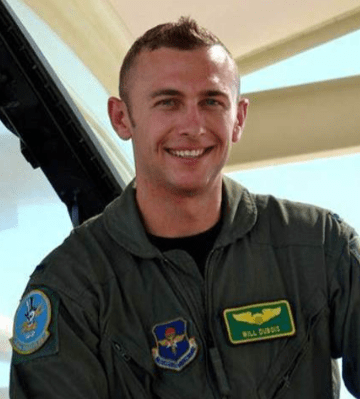
Air Force Captain William DuBois, 30, of New Castle, Colorado died December 1, 2014 when his F-16 aircraft crashed near a coalition air base in Jordan. Captain DuBois was supporting Operation Inherent Resolve on behalf of the 77th Fighter Squadron, Shaw Air Force Base in South Carolina. Captain DuBois grew up in New Castle, Colorado and graduated from the Reserve Officer Training Corps at the University of Colorado at Boulder. The accident was investigated and the Air Force accident investigation board reported that a rapid descent caused the fatal F-16 crash.
Because he was flying so low, DuBois was unable to recognize and recover from the descent. After pulling out of the turn, about one second before hitting the ground, DuBois apparently was able to see he was too low and attempted a 4G level pull away from the ground, but it was too late. –Air Force Times
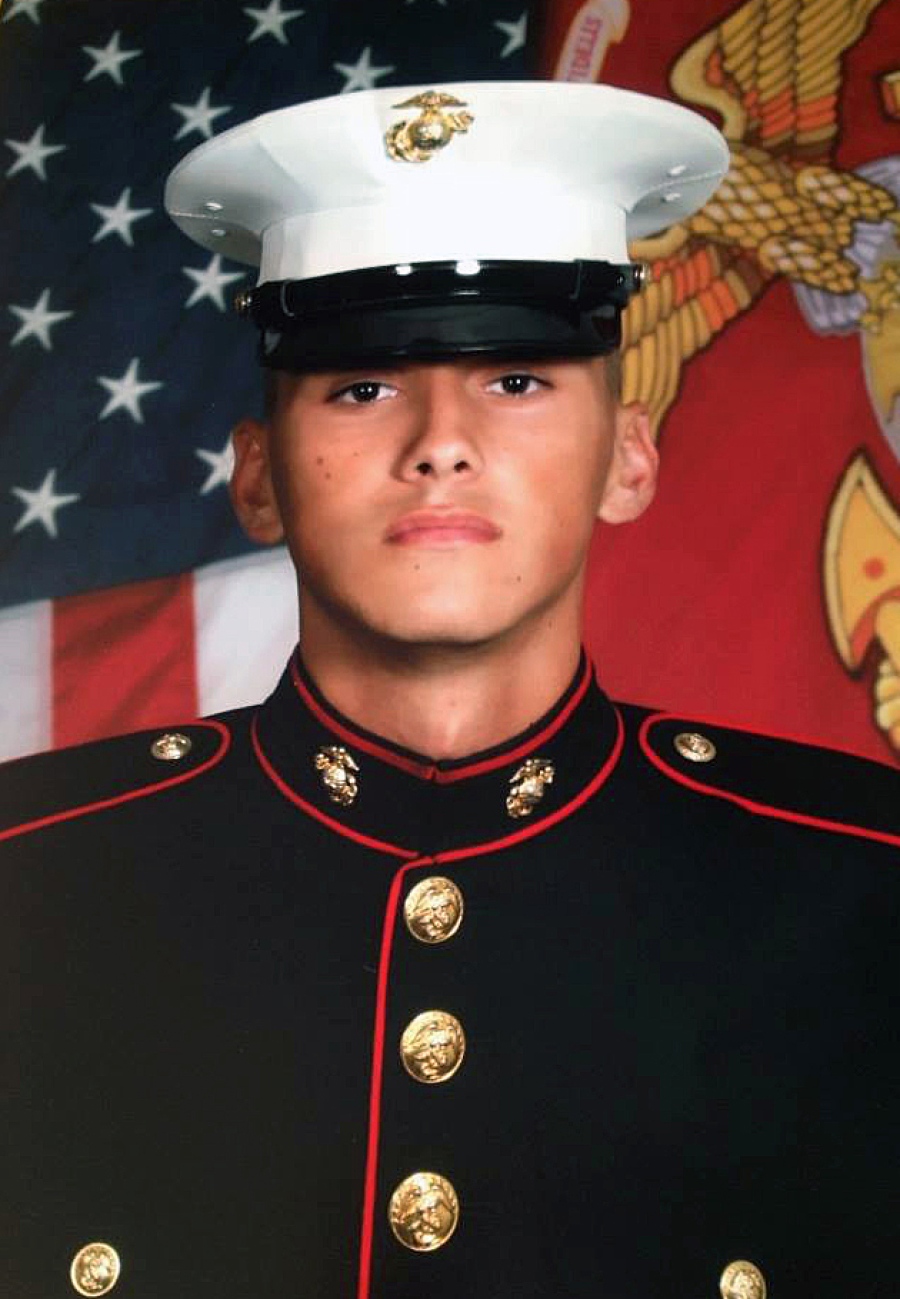
Marine Lance Cpl. Sean Neal, 19, of Riverside, California died from a non-combat related incident on October 23, 2014 in Baghdad, Iraq. Lance Cpl. Neal was supporting Operation Inherent Resolve on behalf of the 2nd Battalion, 7th Marine Regiment, Special Purpose Marine Air Ground Task Force – Crisis Response – Central Command, whose headquarters element deploys from Camp Pendleton, California. At the time of the DoD press release, the incident was under investigation. The official cause of death is unknown.
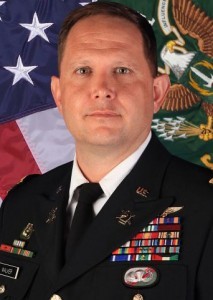
Army Major Jonathan Walker, 44, of Merriam, Kansas died of a non-combat related incident on October 1, 2014 at Camp As Sayliyah in Doha, Qatar. He was supporting Operation Inherent Resolve on behalf of Headquarters and Headquarters Company, 4th Psychological Operations Group (Airborne) at Fort Bragg in North Carolina. At the time of the DoD press release, the incident was under investigation. The official cause of death is unknown.
ID Go: For these women, one good man wasn’t enough. A middle-aged woman used looks to prey on elderly gentleman; an army wife didn’t want a soldier but a squad; and a serial wife cooks up meals to die for. These Deadly Women married for the money, honey. -Deadly Women (S8, E11)
Editor’s note: With a cable subscription, you can download the free ID Go app and watch Investigation Discovery programming at your convenience. And for those who do not have cable, you can watch “unlocked” episodes on the ID Go app including the latest premieres. For those who prefer commercial free programming during your binge session, Prime Video has an ID channel: ‘True Crime Files by Investigation Discovery” available for $3.99 a month. It’s a compilation of older seasons but totally worth the cost if you are a true crime addict. Download the ID Go app or purchase ID True Crime Files & binge away.
Robert Hansen was a mild-mannered family man with a passion for hunting. A master at his trade, Hansen sought a more challenging prey – his fellow human. Hansen kidnapped women, set them loose in the Alaskan wilderness, and hunted them down for sport. -Hunting Humans, Ice Cold Killers (S1, E1)
Serial killer and Army Reserves veteran Robert C. Hansen confessed to the murder of 17 women and the kidnapping and rape of another 30 women in Alaska. But the authorities believe there are many more victims and their cases are still open. Hansen was officially charged with the abduction and rape of Cindy Paulson and the murders of Joanna Messina, Sherry Morrow, Paula Goulding, and the unidentified body known as “Eklutna Annie.” On February 28, 1984, Robert Hansen was sentenced to 461 years plus life in prison with no parole. Hansen led the police to 17 grave sites he marked on a map but only 12 of his victims bodies were recovered. Robert Hansen’s health was declining for over a year when he died of natural causes on August 21, 2014 at the age of 75.
In 1982, two off-duty police officers were hunting for wild game. As darkness fell and they headed home, they made a gruesome discovery. They knew enough to back away and dispatched the Alaska State Troopers to the scene. The crime scene investigators unearthed the partial bones of a woman buried in a shallow grave. They also found bones scattered around the surrounding area. In Alaska, wild game won’t hesitate to drag off the evidence. They also found a 223 caliber bullet casing. The victim was bound and blind folded at the time of death, and she was shot three times. She was identified as Sherry Morrow; Sherry was drawn to Alaska for the easy money. She worked as an exotic dancer in a seedy area of Anchorage known as ‘Fourth Avenue’. Police looked to see if anyone else in that community had disappeared under similar circumstances. Before the discovery of Sherry’s body, none of the missing persons reports were linked or suggestive of murder. Morrow’s case inspired police to take a look at the cold case files.
Two years before Morrow’s body was found, construction workers found the partial remains of a woman buried in a shallow grave; her body was desecrated by wild life and her bones were scattered. Police couldn’t make an identification and dubbed their Jane Doe “Eklutna Annie”. Nobody ever came forward with information about Annie. Police were concerned they were dealing with a brutal killer so they started canvassing the area where the dancers spent their time. Sherry’s co-workers feared the worst because a number of women had gone missing and they were never heard from again. Over the next several years, five more dancers went missing. Police suspected Sherry and Annie’s cases were connected. They were all victims from the beginning because everyone preyed on these girls, including the bar owners and pimps. Several dancers reported seeing the same man and provided police with a physical description. Police learned of a third body found in a gravel pit near where Eklutna Annie’s body was found.
The victim was identified as Joanna Messina. She was a canary worker who was last seen leaving the dock with her dog and a red haired man her co-workers couldn’t identify. Messina was shot and killed with a 22, not a 223. Two more women vanished and were never seen or heard from again. The blindfolds at the crime scenes told the police a lot about the killer. He was a sexual sadist who wanted complete control. He derived pleasure from his victim’s fear and pain and disposed of their bodies in isolated areas in Alaska. Nine months later, a truck driver found a frantic hand-cuffed woman running in the road; someone with a gun ducked out of site. The trucker took her to a nearby hotel where she was safe and called the Anchorage police. The police found a 17-year-old woman still in handcuffs and in shock. She told the officers she was a topless dancer down on 4th Avenue; she said she was propositioned by a red haired man in his 40s the night before. She confessed that she accepted the stranger’s offer.
Once inside the man’s car, she said the man pulled a gun on her. He kidnapped her, handcuffed her, and told her if she cooperated and did what he wanted, she wouldn’t be harmed. He took her to a middle class house in Muldoon. He held her hostage in a basement filled with mounted heads of animals. He brutalized her for hours. He chained her to beam in the basement and repeatedly sexually assaulted her. She told the police he was going to fly her to his cabin in the woods, promising to release her if she cooperated. Once at the airport, the kidnapper shoved her in a small plane and began loading supplies. The second he turned his back, she made her escape. Hoping to corroborate her account, investigators took her to the airfield to find the plane. She identified a plane owned by Robert Hansen; he was a 50 year-old avid hunter and local business man. Hansen owned a well established bakery, had lot of friends, and went to church. By all accounts, he was an upstanding member of the community.
When questioned by police, Hansen was outraged and insisted the dancer was lying to extort money from him. He also questioned whether it was even possible to rape a prostitute. He claimed he had an alibi and told investigators his wife and children were in Europe and he spent the night playing poker with friends. When questioned, the two men substantiated his story. Hansen allowed authorities to search his home but they didn’t find evidence of what the victim described. She also refused to take a polygraph and this made the police wonder if she fabricated the story. It was a “he said, she said” case because they had no evidence. Citing a lack of evidence, the prosecutor dropped the case. Three months later, Alaska State Troopers discovered the partially decomposed remains of another woman in a shallow grave. She was identified as a missing dancer from the Fourth Avenue district. Investigators found a blindfold buried among the remains. An autopsy revealed Paula Goulding had also been shot by a 223 caliber bullet.
Initially, the police didn’t link the cases but the use of the 223 caliber bullet helped them realize they were dealing with a serial killer who was targeting exotic dancers in Anchorage. Troopers contacted the Federal Bureau of Investigation for assistance; agents created a behavioral profile of the serial killer. The killer believed he was invincible because he picked the perfect victims. He chose the dancers on Fourth Ave because he thought no one would care if they were missing. They started looking into Robert Hansen’s past. They learned he was abused as a child and had very low self-esteem. He was always considered small and had few friends; he was often ridiculed by his peers. After graduating from high school, Hansen enlisted in the Army Reserve and went to basic training at Fort Dix. He later received advanced training as a military police officer at Fort Knox. While enlisted in the Army, he was known to frequent prostitutes. He told fellow soldiers, he found them dissatisfying and yearned to take control of the situation.
Despite his strict up bringing and disciplined military structure, the profilers learned Hansen had a number of run-ins with the law. He served time for arson and theft but he appeared to have long since left that life behind. In 1967, he married and moved to Alaska. He was a functioning member of society. They believe his low self-esteem would drive him to live in a place like Alaska. His former neighbor told investigators he loved the thrill of the hunt; and he was always looking for the bigger hunt. He was an avid trophy hunter. Hansen’s weak point was women because he was unsuccessful with them. He hunted where most of the victims were found. “Perhaps Hansen tired of game and turned to more interesting prey like humans.” Humans create a much greater challenge to the hunter. Police deduced he most likely had trophies from his hunts for humans. The killer was a sexual sadist, proficient, and more successful over time. Authorities threatened the two men who alibied him with jail time if they didn’t come clean about the night the dancer was abducted.
Both friends quickly broke down and said they were covering for him because they thought he was a legitimate guy. They believed him when he said he thought the dancers were trying to extort him. The police asked Hansen to come down to the station and executed a search warrant. An officer searched the attic and in the rafters he found a bag of jewelry. And nestled with his bag of trophies, they found IDs belonging to the victims and newspaper clippings. Authorities also found a trophy map with locations of where he killed his victims. Hansen tracked his kills. The most critical find was a 223 caliber mini 14 rifle. The rifle was sent to the crime lab for further analysis. The 223 matched perfectly with the round they found in Eklutna. Robert Hansen was charged with assault and kidnapping. Despite his pleas of innocence, the evidence was mounting against him. The District Attorney agreed to charge Hansen with four murders: Sherry Morrow, Eklutna Annie, Joanna Messina, and Paula Goulding. Hansen accepted a plea deal. Police believe he chose prostitutes because they represent the evil in humans.
Robert Hansen chose prostitutes because they will go anywhere for anything and when they disappear, no one cares. He admitted he controlled the game from the point of abduction. He was the predator and they were they prey. He killed Eklutna Annie first. Then he abducted Sherry Morrow. He took most of his victims to his remote cabin and brutalized them for hours before he stripped them naked, blindfolded them and then released them in the woods. He turned them loose, gave them a head start, and hunted them down. He was a trophy hunter. He then collected things off the girls so he could re-live the events. Robert Hansen’s killing spree lasted twelve years in Alaska. Hansen confessed to 17 killings but it is believed he had many more victims. He eventually lead police to 15 gravesites unknown to investigators. Unfortunately, investigators only recovered 7 bodies likely due to the veracious animal activity in the Alaskan wilderness. Robert Hansen was sentenced to 461 years plus life in prison with no chance of parole.
A Killer Among Us: Inside the Hunt for an Alaska Serial Killer (June 11, 2017, KTUU-Channel 2, Anchorage, Alaska)
The Frozen Ground Movie (2012)
THE FROZEN GROUND Official Trailer (2013)
The Frozen Ground – Clip 3 | Lionsgate
The Frozen Ground (2012) – Chained Scene (1/10) | Movieclips
The Frozen Ground (2012) – The Lucky One Scene (2/10) | Movieclips
The Frozen Ground (2012) – Pole Dancing Scene (3/10) | Movieclips
The Frozen Ground (2012) – Hunting Her Scene (4/10) | Movieclips
The Frozen Ground (2012) – On the Run Scene (5/10) | Movieclips
The Frozen Ground (2012) – Shock at the Strip Club Scene (6/10) | Movieclips
The Frozen Ground (2012) – The Interrogation Scene (7/10) | Movieclips
The Frozen Ground (2012) – From Bad to Worse Scene (8/10) | Movieclips
The Frozen Ground (2012) – He’s Coming Scene (9/10) | Movieclips
The Frozen Ground (2012) – Truth Comes Out Scene (10/10) | Movieclips
Based on a true story. An Alaskan State Trooper (Nicholas Cage) must partner with a near victim and the only witness to escape the clutches of the serial killer in order to bring the murderer to justice. -The Frozen Ground
Frozen Ground – Examining the Frozen Ground
Editor’s note: With a cable subscription, you can download the free ID Go app and watch all of the Investigation Discovery programming at your convenience. And for those who do not have cable, you can watch “unlocked” episodes on the ID Go app including the latest premieres. Download the ID Go app and binge away. For those who prefer commercial free programming during your binge session, Prime Video has an ID channel: ‘True Crime Files by Investigation Discovery” available for $2.99 a month. It’s a compilation of older seasons but totally worth the cost if you are a true crime addict.
ID Go: The Phillips’ family moves to a quiet seafront town in Maine to escape a crime wave in Indiana. But their dream home comes with a not so dreamy ex-military neighbor. A barrage of gunfire between the houses one night shatters both families forever. -Red Picket Fences, Fear Thy Neighbor (S1, E2)
On August 29, 1989, Navy veteran Richard Uffelman and his two sons opened fire from their living room window and shot and killed their neighbors Michael and Florence Phillips in Machiasport, Maine. The Phillips family moved back to Maine so they could be closer to their family and the ocean, and they wanted to escape crime in Indiana. Shortly before they moved to Maine, a murder occurred outside their home and this was it for them; they wanted to raise their son Michael in a safe environment. Richard and Anita Uffelman and their two sons were the new neighbors of the Phillips in Maine. Richard was described as an authoritarian and a believer in good order and discipline. He worked at the local post office and taught his two children to shoot guns. Initially the neighbors were good friends and their boys played together. At some point, family came to visit the Phillips for a week. The happy family reunited outside on the front lawn while they barbecued, drank some beers, and enjoyed one another’s company. Apparently Richard found a broken bottle on his lawn during the event and automatically assumed the Phillips threw the bottle on his lawn. Richard called the police to complain about the incident but there was no proof since the Phillips denied doing it. This was it for Richard; the Phillips home interfered with his view of the ocean and he was going to exact his revenge.
After this first broken bottle incident, Richard continued to call the police complaining that the neighbors were throwing bottles on his property. He would bag them up and give them to the police as evidence. The Phillips continued to deny the allegations. The police were beginning to get concerned for the Phillips. Then Richard’s wife Anita called the Phillips family and told them that Richard did not want their two sons playing with Michael anymore. Florence was confused. Soon Richard began harassing them while they were outside on their lawn. He used a megaphone and yelled at them until they went back into their house. The Phillips became fearful of him because he was quite literally bullying them. Richard upped the anti and put up some bright lights that shined directly on their home. He also shot guns in front of his home with his two boys on a regular basis which to the Phillips began feeling threatening. They called the police to ask Uffelman to stop shooting the guns because it felt like he was flexing his muscles but their was nothing illegal about shooting guns for target practice in Maine. The police couldn’t do anything. They needed evidence so Michael and Florence set up a video camera to start taping the behavior because they were not the gun types.
Tension and fear was building daily. The Phillips called the police on Richard Uffelman and Uffelman called the police on them. Now Richard wanted a protection order. It was obvious to police that Richard was getting paranoid and he had some fear that could not be alleviated by the police. Uffelman wanted to play war. Uffelman began dressing in full military fatigues with his two sons and they all carried guns and marched together as if they were in the military or a militia. The kids were impacted by Richard’s paranoia as well; as a matter of fact the whole family was brainwashed. Eventually the Phillips were afraid of Uffelman and his two sons. The Phillips left the city to get away from violence and now they were in the middle of it. They decided to file a harassment suit to get Richard Uffelman to stop. At this point, they felt trapped in their own home and they continued to videotape because it was their only option. One day Richard and his two sons armed with guns started chasing the Phillip’s son after school as if he was prey. The trio scared the entire Phillips family and they called the police again. The cops took it seriously and knew things were not going to turn out right. The Phillips got a protection order and then went on a vacation to Indiana to visit family in July 1989.
While the Phillips were visiting with family, they began viewing the videotapes. All of them were terrified at what they were witnessing but the Phillips were stuck financially. They assured their family they would be fine but in reality they were afraid Richard Uffelman would kill them when they got back. They asked their family to raise their son Michael if Uffelman killed them. They left for Maine the next day because it was their home and they had no other option. They got back to the war zone and the front lines had moved closer to home. When they got out of their vehicle, they realized that someone had dumped gasoline on their front porch. They witnessed someone running in the shadows from their home to Uffelman’s home. They called the police again but they didn’t have any proof that Uffelman had done it. They all recognized that Uffelman was raising the stakes. Unfortunately the system was at a stand still until someone made an overt act. On August 29, 1989, family visited the Phillips because they were celebrating a pregnancy in the family. The Phillips revealed to them that dealing with Uffelman was very stressful because they hadn’t caught anything of value for their harassment case. In this case, the best evidence would come too late.
Michael and Florence Phillips left the house that evening for a walk, just like every other night. This time Michael was carrying a gun as they walked in an effort to let Richard know that they were not going to take it. Then all of a sudden Richard and both of his sons began shooting at both of them from the living room of their home as they walked. The remaining family in the home were fearful that they were going to kill young Michael next. Meanwhile, Michael and Florence are struggling to move to safety in the woods to escape the barrage of gunfire. Uffelman did go to the Phillips home but turned around and left. After this near miss, the three family members in the home left to protect young Michael. They were not sure how Michael and Florence were doing at this point; they were not sure if they had been murdered or if they were still alive. Police arrived on the scene and knocked on Richard Uffelman’s door. They found him sitting at his kitchen table which was covered with handguns and firearms. The police were worried about their own safety but Uffelman surrendered without incident and he was taken into police custody. Michael and Florence Phillips both died at the scene in the woods where they attempted to escape the gunman.
Richard Uffelman, US Navy Veteran
Richard Uffelman was arrested for murder after the Phillips’ bodies were found. His two sons participated in the shootings as well and together they fired twenty-five rounds or so from the inside of their home. Investigators concluded the two boys were doing what they were told to do; they were victims too and as a result were not charged. Upon search of the property, police learned that Uffelman’s land was rigged with trip wire and his home was riddled with explosives. Bomb technicians were called in to remove the undetonated devices. Police also found secret passageways and tunnels. Uffelman tried to claim self-defense at his trial but the video coverage the Phillips had showed otherwise. The videotapes revealed that Uffelman went outside to check to see if his prey were dead; his murderous intent was all captured on film. Richard Uffelman was sentenced to life in prison for the first degree murders of Michael and Florence Phillips. Young Michael sued Richard Uffelman in Maine Superior Court and was awarded a wrongful death judgement for $513,320 but he has never received a dime. According to a YouTube site called Abandonment of Maine, shortly after new owners moved into the Uffelman home, the house caught on fire and burned to the ground.
Editor’s note: With a cable subscription, you can download the free ID Go app and watch all of the Investigation Discovery programming at your convenience. And for those who do not have cable, you can watch “unlocked” episodes on the ID Go app including the latest premieres. Download the ID Go app and binge away. For those who prefer commercial free programming during your binge session, Prime Video has an ID channel: ‘True Crime Files by Investigation Discovery” available for $2.99 a month. It’s a compilation of older seasons but totally worth the cost if you are a true crime addict.
Preview: In the rolling hills of Lenoir, North Carolina, retired Vietnam veteran Roland Younce sells off a patch of his land to Tony Moore and his young family to build their forever home on. Unfortunately, things turn ugly. -Lies, Lawns & Murder, Fear Thy Neighbor (S1, E1)
“Roland Younce, 63, of Caldwell County, North Carolina, allowed his pit bull to roam free in the small rural neighborhood. This decision would prove to have deadly consequences. In January 2008, Younce’s pit bull bit the two young daughters of his 44-year-old neighbor, Tony Moore. As a result, Moore sued Younce for the cost of the medical bills. The judge ruled in Younce’s favor and dismissed the lawsuit. This caused an 18-month feud between the two men. They called the police on each other over frivolous actions and filed several lawsuits against each other.”
Tony and Amy Moore and their two daughters moved into a new home in Lenoir, North Carolina in 2007. Tony and Amy bought their home from Roland Younce, a Vietnam veteran in his 60s, and also their neighbor. Roland was a single man with a dog he considered family and his daughter and her husband lived with him. Tony survived a tragedy and lost one of his legs in a vehicle accident. As a result, Tony stayed home with the girls and Amy worked full-time to support the family. Tony depended on his 4-wheeler to get around the property. Tony and Amy loved their new home and appreciated all their kind neighbors. They all depended on one another to make it work. At first the Moores were friendly with Roland Younce. The neighbors would occasionally BBQ together but they noticed Roland didn’t leave his home very much. Roland’s daughter Alicia on the other hand was a breath of fresh air. She played with the girls and they had a lot of fun. One day, Alicia invited the two girls over to her home to check out her movie collection. The girls stayed on the porch while Alicia went inside Roland’s home to retrieve the movies. One of the girls admitted to opening the door and Roland’s dog Harley lunged towards them and began biting both of them. They were seriously hurt with puncture wounds and had to be taken to the hospital. Roland agreed to pay the hospital bills.
As the hospital bills started rolling in, Tony brought them over to Roland and Roland paid for the first bill he received. Meanwhile, the kids got back to playing and having fun in their backyard. According to Alicia, Tony brought Roland another hospital bill that was for the exact amount as the first one. Roland thought Tony was trying to get him to pay the same bill twice so he refused to pay it. Tony and Amy didn’t feel they should have to pay for any of the bills so Tony filed a judgement against Roland in civil court. Things only got worse when the court sided with Roland on the matter. Nevertheless, Roland asked his son-in-law to tell Tony he would pay $20 a month until it was paid off. Apparently, Tony said no to the offer and demanded all of it. This was when everything went to hell and the tension continued to simmer between the once friendly neighbors. At this point, the friendship was dead so Tony built a property border using some trees to help create more privacy. Roland didn’t like it because he felt they were getting too close to his property line. One day, Tony discovered his disability checks stopped showing up in the mail. He immediately suspected Roland of taking them from the mailbox but he couldn’t prove it. So in retaliation, he would get on his ATV, drive around the property, and make a bunch of noise.
The ATV noise annoyed Roland because he wanted peace and quiet at his home. Tony was on his ATV almost everyday and the blaring engine was getting on Roland’s last nerves. Alicia said Roland was triggered by the noise and he would have flashbacks from his time in the Vietnam war. His dog Harley helped comfort him but both sides were gearing up for combat and no one was backing down. Tony’s disability checks still hadn’t shown up so he asked Roland about it. Of course, Roland denied having any information about the missing checks. Then Roland started bringing his dog outside in what felt like an intimidation tactic to scare the Moore family. And not only was the Moore’s mail disappearing but some trees they planted on their property were missing too. The Moores put up a surveillance camera to see if they could catch the person who was removing the trees from their property. The video captured what looked like Roland Younce’s figure so they took it to the police. But the video wasn’t clear enough for the police to take action. They needed concrete evidence before they could do anything about it. Then one day, Roland went to his mailbox to get the mail only to discover it had been glued shut. He was not able to get the key in the keyhole to open the mailbox. Roland called the police department but they told him the same thing. If he didn’t see Tony do it then their hands were tied.
The police were frustrated by now because they were unable to get these two neighbors to settle down. It appeared both of them wanted to keep things going. Then in another act of intimidation, Roland would take his dog out when Tony’s two daughters came home from school. They were scared to get off the bus knowing the dog had hurt them in the past. Roland would allow the dog to lunge at them and then pull him back. They literally felt terrorized by Roland and the dog. In response, Tony threatened to kill the dog if the intimidation continued. Roland loved his dog and was deeply attached. Roland’s daughter Alicia felt like Tony was the one pushing buttons. Roland expressed concerned to Alicia and her husband that he was going to explode one day. Just months after Tony and Amy Moore bought their new home, they were locked in a war with their neighbor Roland Younce. In another act of aggression, Tony was out on his ATV one day with his daughters and ran over a board with nails in it. It flew up and hit the back of the ATV. Tony was furious because the nails could have seriously injured one of the girls. Tony reported the incident and once again because Tony didn’t see Roland put it there, there was nothing they could do. The Moore family felt isolated and alone in their battle with Roland because no one could help them. They thought Roland could do whatever he liked with no consequences.
Most thought Tony would back down for the sake of his kids but that’s not how things went down. Tony didn’t like feeling like a prisoner in his own home. The police tried to give them advice but neither side would budge. Then one day, the kids went outside and noticed someone had thrown logs in their yard. They alerted their father and all three of them threw the logs back on Roland’s property. Tony and the girls were caught red handed so Roland and his family started throwing the logs back on Tony’s property. Then Roland’s son-in-law Ricky threw a log that almost hit one of the girls. As a result, Tony pulled out a gun and threatened Ricky. He said if he hurt his daughters, he would shoot him. Ricky didn’t back down and told Tony to shoot him because he wasn’t scared. Tony indeed shot near them so Ricky threw a log at him and it hit and injured Tony. The police were called and Roland and Ricky got arrested for assault on a handicap person and a child. Ricky understood why the police arrested him but he didn’t understand why they arrested Roland. Roland didn’t have anything to do with this incident. It also seemed strange that Roland went to jail but Tony didn’t. Apparently, Tony didn’t get arrested because he was in a wheelchair. The two were jailed with no bond and couldn’t get anyone to help them. It took two weeks for Roland and Ricky to get out of jail and both came home with a new level of anger.
Ricky admitted he wanted to hurt people and eliminate the threat. And each time Roland was arrested, it just made him madder and madder. One day Roland threatened to kill Tony so Tony called 911 and the police suggested he leave the home. Roland blocked him in his driveway with his truck and Tony felt trapped. So he made the decision to back up anyways in an attempt to get out of the driveway and wrecked Roland’s truck. After this, Alicia and Ricky moved out of Roland’s home because the whole thing got to be too much and the situation was escalating. Alicia said Roland felt abandoned and the neighborhood feud with Tony continued. Both men were armed and dangerous. Tony felt like Roland was waiting for a confrontation and as a result Tony was always armed. Roland was pushing Tony’s limits too. The two just didn’t like one another. One day Amy left for an overnight trip with work. She said she hated leaving her family because she couldn’t make sure everything was okay at home. On May 27, 2009, Tony heard something on the back porch and when he looked to see what was going on, he was facing Roland’s angry dog at his door. In response, Tony shot the dog. Roland heard the shot and immediately went looking for his dog. Roland threatened Tony and told him if he shot his dog, he was going to kill him. Amy was in Springfield, Missouri (over 1000+ miles away) when she received a phone call from Tony who told her he shot the dog.
Amy knew right away this was not good because Tony took Roland’s best friend away from him. She knew things were fixing to get really bad. Roland called the police to report that Tony shot his dog and he begged the police to get to the scene as quickly as possible because he was going to kill Tony. Tony had called the police as well. When the police arrived at the scene, they didn’t observe anything unusual initially. When the Moores realized the police were there, they started coming out of the home and immediately they all heard gunfire. Roland was shooting at them with a rifle and Tony and one of the girls had been shot. They ran back into their home. Unbeknownst to them, one of the police officers had been shot as well. Roland continued shooting through the windows of Tony’s home. More police were dispatched to the scene. The unharmed daughter contacted her mom and told her what happened. Amy Moore told her to call the police because Roland was still at large. Once the additional officers arrived at the scene, they immediately started treating the officer who had been shot. Dispatch informed the police that Tony and one of the girls had been shot as well and needed their help. The police decided to chance it so they could get to Tony and Ashley. They did not know where Roland was but time was ticking because Tony and his daughter were losing blood. The police decided to use the car as a shield so they could get to them.
The police went towards the home and Tony’s daughter summoned them from the garage. Roland started shooting at them again and this time he hit another police officer. The police shot back in the dark until all of a sudden the shooting stopped. The Police rescued Tony and his girls and took them to the hospital. Amy Moore got emergency flights back to North Carolina so she could get home to her family. Alicia headed to her father’s place after she heard about the chaos only to learn that her dad had been killed in an officer involved shooting. The police didn’t want to kill Roland but had no choice. The next day, Alicia and Ricky went to Roland’s home to see if they could figure out what happened. They found the dog certificate torn up and could see where he cried on those pieces of paper. Roland was devastated by the loss of his dog and he decided to take justice into his own hands. All those injured on the scene lived but they were seriously harmed with lasting impacts. One of the police officers lost his career because of the injuries. And after about a year on the job, the other injured police officer realized he just couldn’t do the work anymore. This one night of violence impacted all involved. It was traumatizing, preventable, and tragic that anyone had to lose their life because they couldn’t work out their differences.
ID Go: In North Carolina, a retired Vietnam veteran sells off a piece of his land to a young family. No one can predict the modern day Hatfield McCoy neighbor feud that will ensue and the midnight shootout that will end it. -Lies, Lawns & Murder, Fear Thy Neighbor (S1, E1)
Editor’s note: With a cable subscription, you can download the free ID Go app and watch all of the Investigation Discovery programming at your convenience. And for those who do not have cable, you can watch “unlocked” episodes on the ID Go app including the latest premieres. Download the ID Go app and binge away. For those who prefer commercial free programming during your binge session, Prime Video has an ID channel: ‘True Crime Files by Investigation Discovery” available for $2.99 a month. It’s a compilation of older seasons but totally worth the cost if you are a true crime addict.











 MILITARY JUSTICE FOR ALL