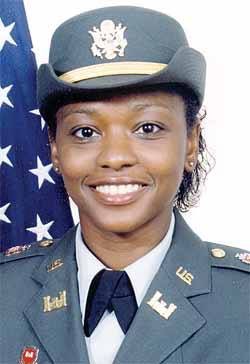
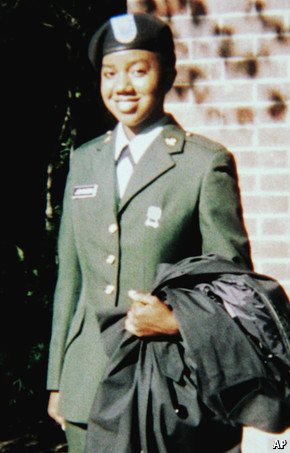
Army Major Gloria Davis, 47, died in a non combat related incident in Baghdad, Iraq on December 12, 2006. Major Davis was supporting Operation Iraqi Freedom on behalf of the Defense Security Assistance Agency in Washington, D.C. At the time of the press release, the Department of Defense announced the incident was under investigation. Reports later indicate Major Davis committed suicide hours after she provided names and testimony to the Army Criminal Investigation Division (CID) investigators in Iraq. Logistics soldiers were being accused of involvement in a bribery scheme in Kuwait and she was a witness to the crimes and would have been a witness for the prosecution in the Cockerham Case. She was one of three people in the same logistics group in Kuwait tied to the bribery scheme investigation that committed suicide. Both Denise Lannaman, Army (2006) and Lt. Col. Marshall Gutierrez, Army (2006) deaths were also ruled suicides by the Army. Did they commit suicide? Was homicide ever considered? How could this have been prevented? Were any of these cases investigated as homicides? Did anyone question why three soldiers tied to one bribery investigation killed themselves?
Col. Kevin Davis, 52 years old, is the highest-ranking officer to be implicated in a scheme known among federal investigators as the Cockerham Case, for Major John Cockerham, who pleaded guilty last year to receiving more than $9 million in illegal payments for defense contracts, primarily to service the Camp Arifjan military base in Kuwait. Early in the probe, Major Gloria Dean Davis, came under suspicion by investigators in the case. She committed suicide in Baghdad in December 2006, hours after confirming she received more than $225,000 from the same contractor Col. Davis later joined as a civilian, LDI. The two officers weren’t related, however investigators familiar with the case say they were involved romantically. ~Wall Street Journal
Sgt. Denise Lannaman, New York Army National Guard
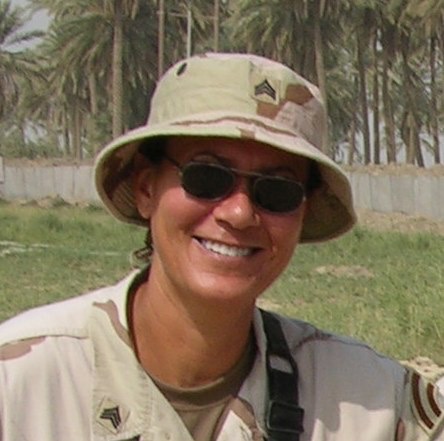
Army National Guard Sgt. Denise Lannaman, 46, died in a non combat related incident at Camp Arifjan, Kuwait on October 1, 2006. Sgt. Lannaman was supporting Operation Iraqi Freedom on behalf of the New York Army National Guard’s 1569th Transportation Company in Newburgh, New York. Reports indicate that Lannaman was found dead in a jeep with a gunshot wound. At the time of the press release, the Department of Defense announced that the incident was under investigation. Sgt. Lannaman’s death was ruled a suicide by the Army. She was one of three people in the same logistics group in Kuwait tied to a bribery scheme investigation that allegedly died by suicide. Major Gloria Davis, Army (2006) and Lt. Col. Marshall Gutierrez, Army (2006) deaths were also ruled suicides by the Army.
In the space of three months last year (2006), three members of the U.S. Army who had been part of a logistics group in Kuwait committed suicide. Two of them — a colonel and a major — had power over contract awards and had been accused of taking bribes just before they killed themselves. The third was Sgt. Denise A. Lannaman of Queens. ~New York Times
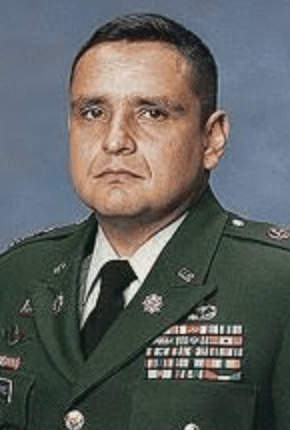
Army Lt. Col. Marshall Gutierrez died of non combat related injuries in Camp Virginia, Kuwait on September 4, 2006. Lt. Col. Gutierrez was supporting Operation Iraqi Freedom on behalf of the Area Support Group in Arijan, Kuwait. At the time of the Department of Defense press release, the incident was under investigation. The Army ruled Lt. Col. Gutierrez’ death a suicide by prescription pills and anti-freeze. Lt. Col. Gutierrez was initially a whistleblower in a wide spread bribery scheme in Kuwait but after he reported the illegal activity, he soon found himself accused of bribery by a Kuwaiti contractor. Reports indicate the allegations left his military career and his marriage in ruins. Three soldiers connected to the bribery scheme investigations allegedly committed suicide. Major Gloria Davis was a witness for the prosecution and was found dead of a gunshot wound in Iraq. Sgt. Denise Lannaman was also involved in the investigation and she was found dead of a gunshot wound in her jeep on post at Camp Arijan, Kuwait.
We are not exactly sure when Army Pfc. LaVena Johnson’s CID Report was dumped on-line by the government but it appears to have shown up after the death of Vanessa Guillen. (Source: US Army CID)
Dr. John Johnson clarified in an interview on the Donny Walker Morning Show that wound statin was found on LaVena’s genitals. Listen to the full interview here.
Army Pfc. Tina Priest, 20, died from a non-combat related injury in Taji, Iraq on March 1st, 2006. She was supporting Operation Iraqi Freedom on behalf of the 4th Support Battalion, 1st Brigade Combat Team, 4th Infantry Divison at Fort Hood, Texas. The Army ruled the death an apparent suicide but Tina’s parents dispute that finding based on the evidence and believe that she was raped and murdered; Tina reported a rape two weeks prior to her death. This case is no longer under investigation by the Army but considered an unsolved cold case because of the concerns the family has with the death investigation and cause of death ruling by the Army. Forty-one (41) female service members died of non combat related injuries while serving in Iraq; and twenty-three (23) were labeled homicide, suicide, or the cause of death is unknown. Tina’s suspicious death was discussed in the Silent Truth Documentary and on the Crime Junkie Podcast.
“What happened to LaVena Lynn Johnson and so many others speaks to a Pentagon culture which more closely resembles a rogue government–than a legitimate branch serving under civilian control. It is highly telling that this family, along with the Tillman family each had to have a documentary film made JUST TO ALERT THE PUBLIC TO THE TRUTH OF PENTAGON COVER-UPS. I urge everyone to view this important documentary – before the local military recruiter mandated under No Child Left Behind –‘friends’ their child at school. God forbid, they could wind up coming home in a body bag – like LaVena.” Read more from Truthouthere.
The Silent Truth Documentary:
Ninety-four US military women in the military have died in Iraq or during Operation Iraqi Freedom (OIF). ‘The Silent Truth’ tells the story of one of these women, PFC LaVena Lynn Johnson, who was found dead on Balad Air Force Base in Iraq. The army claimed she shot herself with her own M16 rifle, but forensic evidence, obtained by the Johnson family through the Freedom of Information Act, brings the army’s findings into question. The Army refuses to re-open LaVena Johnson’s case, leaving the family in limbo. ‘The Silent Truth’ follows the Johnson’s pursuit of justice and truth for their daughter. -The Silent Truth Documentary (July 1, 2014)
Editors Note: Need to get up to speed quick with the unsolved case of Fort Campbell Army Pfc. Lavena Johnson, please check out Episode 40 on the Military Murder Podcast.
Army Pfc. LaVena Johnson, 19, died of non combat related injuries in Balad, Iraq on July 19, 2005. Pfc. Johnson was supporting Operation Iraqi Freedom on behalf of the Army’s 129th Corps Support Battalion in Fort Campbell, Kentucky. Unlike most, the Department of Defense did not announce that LaVena’s death was under investigation in their press release. The Army Criminal Investigation Division later determined that Pfc. Johnson’s cause of death was suicide by self inflicted gunshot wound. The Army tried telling the family that LaVena used her own M-16 to commit the suicide. The family immediately suspected foul play and ordered an independent autopsy for LaVena. LaVena was not depressed and showed no signs of suicidal ideation. As a matter of fact, she was happy and bubbly and looking forward to going home for Christmas. After the family saw LaVena’s body and obtained investigative documents from the Army, they quickly realized that LaVena did not die by suicide, she was raped and murdered.
According to the family, the Army never investigated LaVena’s death as a homicide nor did they do a rape kit test or autopsy. The family gleaned from the paperwork that Army investigators first considered LaVena’s death a homicide and recorded that in their paperwork, but within a short window of opportunity were suddenly ordered to cease their investigation and reclassify her death as a suicide. Ten years later, LaVena’s father, Dr. John Johnson, continues to fight for justice for his daughter. And, although he has had struggles getting media coverage, he has forged out on his own to speak the truth for LaVena. Dr. Johnson is featured in a documentary called The Silent Truth which presents the heartbreaking story of his daughter LaVena. Pfc. LaVena Johnson was betrayed by the very people she depended on for her life, and the military industrial complex who would rather silence the truth then harm their reputation.
Nineteen year-old Army PFC LaVena Johnson, was found dead on a military base in Balad, Iraq in 2005. The U.S. Army ruled Lavena’s death a suicide, but an autopsy report and photographs revealed Johnson had a broken nose, black eye, loose teeth, burns from a corrosive chemical on her genitals, and a gunshot wound that seemed inconsistent with suicide. LaVena’s father, John Johnson, shares his family’s fight to get answers from the military about his daughter’s death. -Protect Our Defenders (July 14, 2012)
Pfc. LaVena Johnson died in Iraq on July 19th, 2005 and her family needs your help. -Unsolved Mysteries (September 26, 2014)
Many have heard about the efforts for justice in the case of Army PFC LaVena Johnson. In 2005 after only 6 weeks of her deployment in Iraq, PFC LaVena Johnson was found dead. The Army says suicide, but after close evaluation and discovering a plethora of discrepancies in the Army’s report, LaVena’s father Dr. John H. Johnson began the fight for justice for his daughter. On this episode of The Rock Newman Show our special guest are LaVena’s father, Dr. John H. Johnson and attorney Donald V. Watkins. We warn our viewers that this episode of The Rock Newman Show goes into deep detail concerning the evidence and death of PFC LaVena Johnson. Dr. John H. Johnson and Donald V. Watkins contend that by no means is this case a suicide, and say they even know the name of the culprit. -The Rock Newman Show (February 11, 2016)
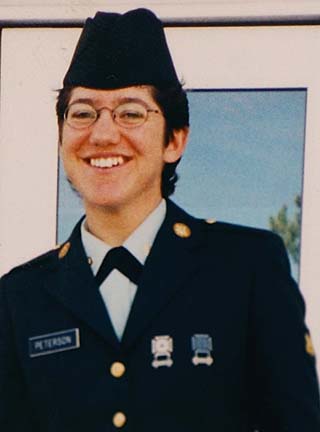
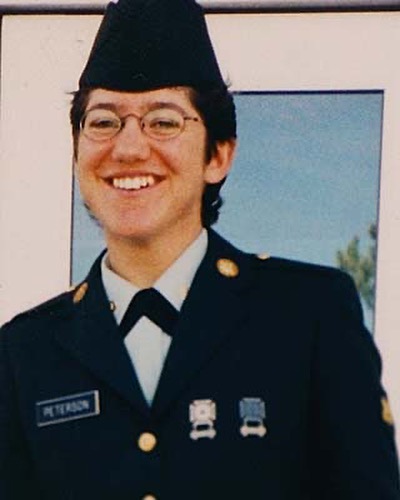
Army Spc. Alyssa Peterson, 27, died from a non-combat weapons discharge in Telafar, Iraq on September 15, 2003. Spc. Peterson was supporting Operation Iraqi Freedom on behalf of the C Company, 311th Military Intelligence Battalion, 101st Airborne Division (Air Assault) at Fort Campbell, Kentucky. At the time of the Department of Defense press release, the incident was under investigation. Media reports indicate that Spc. Peterson’s death was ruled a suicide.
“Appalled when ordered to take part in interrogations that, no doubt, involved what most would call torture — another wrong turn by the United States following 9/11 — Alyssa Peterson refused, then killed herself a few days later, on September 15, 2003…Spc. Alyssa Peterson was one of the first female soldiers who died in Iraq. Her death under these circumstances should have drawn wide attention. It’s not exactly the Tillman case, but a cover-up, naturally, followed.” –Greg Mitchell Huffpost (October 12, 2014)
Army Pfc. Gary S. Kalinofski, 21, died of a gunshot wound at Camp Magrath near Pristina, Kosovo on March 4, 2002. The military casualty announcement confirmed the gunshot wound was not a result of engagement with hostile forces. Pfc. Kalinofski’s home of record was listed as Fayetteville, North Carolina. Pfc. Kalinofski served in Kosovo since November 2001 in a peacekeeping mission role on behalf of A Company, Task Force 1-32nd Infantry Regiment at Fort Drum, New York. According to the book Army Wives by Tanya Biank, the Army Criminal Investigation Division (CID) ruled that Pfc. Gary Kalinofski died as a result of a self-inflicted gunshot wound. Gary was survived by his parents; his dad also served in the Army and was in Kosovo at the time Gary took his own life. The Army Wives author shared that Gary’s parents were interviewed by Army CID but they didn’t have any insight or knowledge to help Army CID understand why Gary chose to die by suicide.
Editor’s Note: There was no Department of Defense press release for the announcement of the death of Army casualty Pfc. Gary S. Kalinofski in Kosovo.
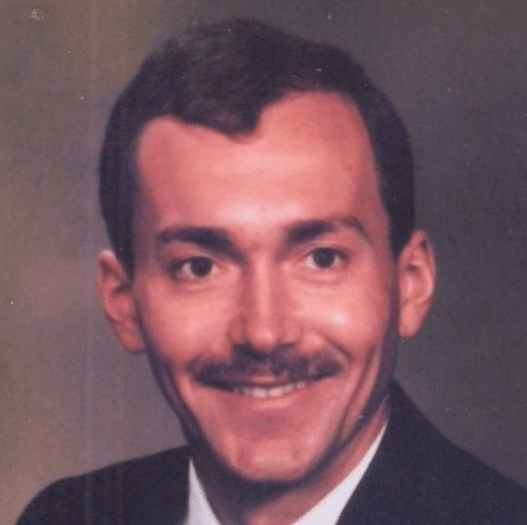
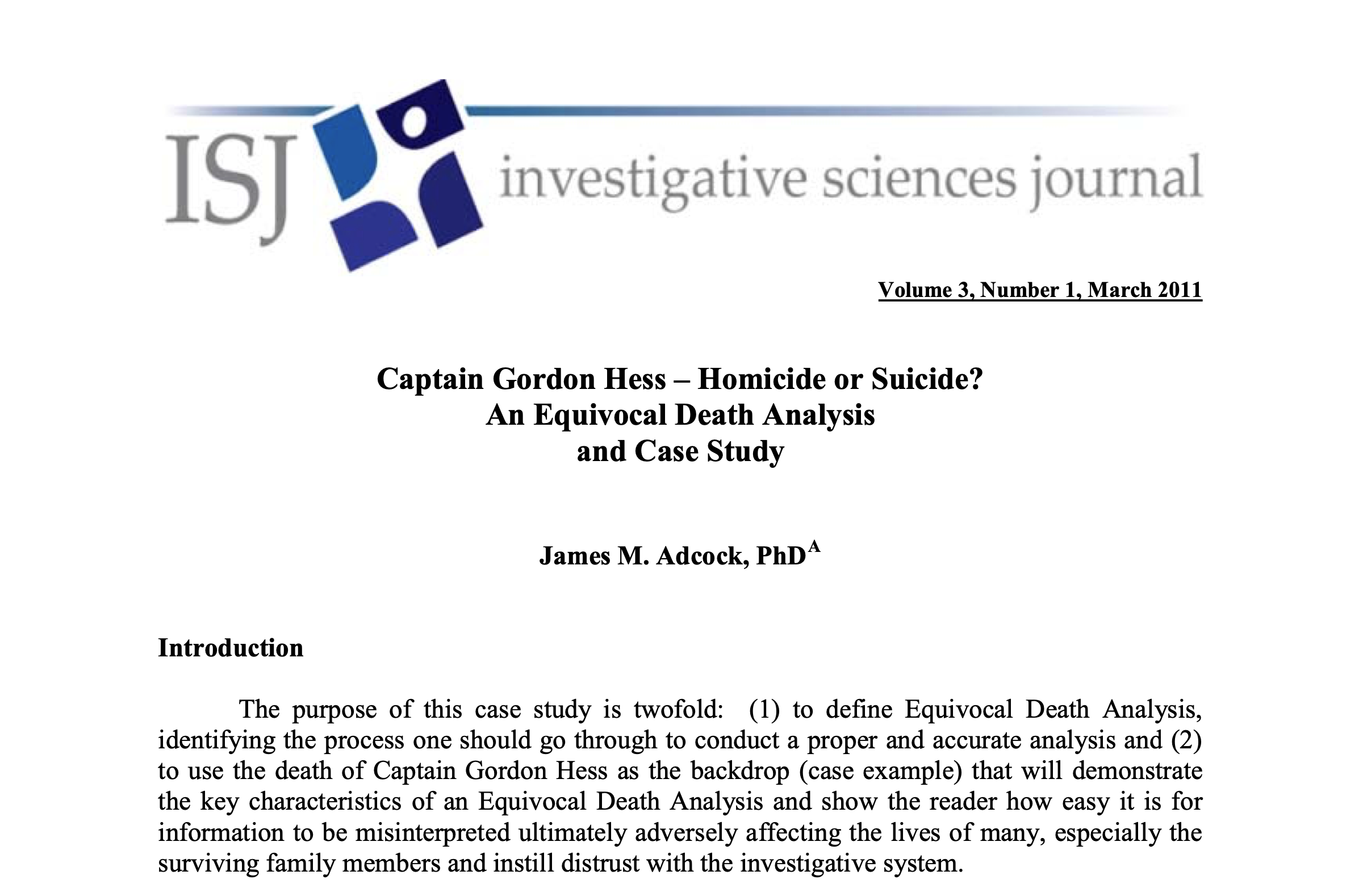
Army Captain Gordon Hess was found dead in a creek bed at Fort Knox, Kentucky on March 4, 1998 while there on temporary duty with the New York Army National Guard. Army investigators ruled the cause of death was ‘suicide’ but the family and an outside forensic pathologist dispute those findings given the autopsy revealed that Captain Hess had twenty-six stab wounds to the neck and chest area.
Doreen Hess shared with the LA Times: “Even as we attempted to bury his mutilated body, the Army stabbed him again with a suicide ruling.” The Army claims that it fully investigates all undetermined deaths as a homicide initially but after a thorough investigation of this case, including hundreds of interviews, they determined that Captain Hess died by suicide.
The family vehemently disagrees with the Army investigator’s findings based on the forensic evidence and a history of the Army ruling a soldier’s death a suicide when in fact it was most likely a homicide. An important fact to remember is that if an Army investigation determines the cause of death is suicide, they never have to investigate it again despite the impact on the families left behind.
“Absolutely no way did this man commit suicide. This gentleman was murdered.” -Charles DeAngelo, Esq.
“In time the historic aspects or victimology relating to Hess began to unveil itself to the investigators. That, coupled with the Psychological Autopsy, provided much needed data. Gordon Hess was dedicated and devoted to his family, friends and community. He loved his family and children and was a dedicated father and husband. Hess had been described by many as a ‘Perfectionist.’ He consistently strived to be the best and to do things better. “He was competitive and struggled to be number one while he begrudgingly tolerated second best.” According to the report his career path was erratic and frustrating. For a competitive and dedicated man he struggled early in his career after leaving the Army, working at several jobs.”
“Although he was personally successful, this all led to financial strain due to the failures of several employers. He always wanted to be on a winning team which finally seemed to have happened when he became a fireman. Hess appeared at this time to excel at all his endeavors and likely expected nothing less from himself. It was indicated that earlier in his life Hess loved the Army and initially did not want to get out but family issues and concerns made it happen. Therefore, his affiliation and participation with the National Guard was probably one of the most cherished endeavors in his life. He enjoyed status and achievement in a structured environment that was team oriented and was a respected leader.”
“It also reflected that becoming a company commander was viewed by him as a significant achievement. The Army and this status was a big part of his identity; one that he did not just turn off after a training cycle because he continued to be involved by being at the Armory frequently well beyond the expectations of his supervisors and his stated responsibilities. The Army was a part of him. Yet he was not depressive and did not appear to suffer from any psychiatric disorder or medical problem. While he had conquered much adversity in the past, Hess was a man who struggled with feelings of inferiority that ‘fueled his drive to prove to others and to himself that he was competent and worthy of his achievements.’ He strongly identified with his roles as a fireman and an Army Captain. However, he had difficulty tolerating self perceived failure in the audience of those he sought and received affirmation.”





 MILITARY JUSTICE FOR ALL