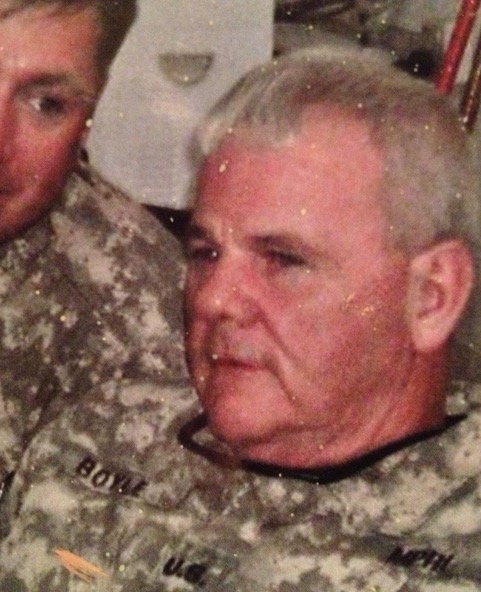
Thomas J. Boyle, Jr. died in Kandahar Province, Afghanistan on June 19, 2012.
“Obviously, suspicions are not proof of wrong doing, but Pauline Boyle has discovered enough evidence to warrant an all-out independent investigation. The problem is that asking the Army to investigate itself is asking the Fox to guard the hen house. The result will always be questionable. The Boyle family does have hard facts that clearly indicates there was an overt attempt to cover-up the circumstances of Thomas J. Boyle’s death.
Was there a military drug cartel that no one wanted to talk about, or was it a conspiracy of some of the soldiers on base to stop the change of command and keep the lieutenant colonel in command for as long as possible.”
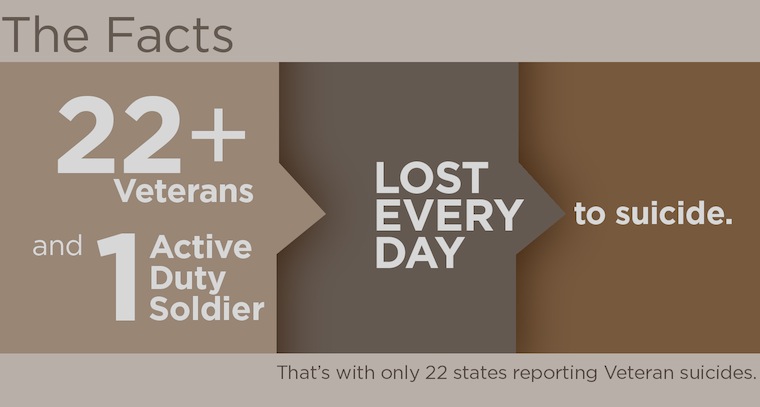
The U.S. military is grappling with a disturbing trend—soldiers are killing themselves at an alarming rate. So far this year, an average of one soldier a day is committing suicide. The suicide rate is outpacing the number of soldiers killed in Afghanistan this year by some 50-percent. -Fox 31 Denver
DENVER – The U.S. military is grappling with a disturbing trend—soldiers are killing themselves at an alarming rate. So far this year, an average of one soldier a day is committing suicide.
The suicide rate is outpacing the number of soldiers killed in Afghanistan this year by some 50-percent. And there have been high-profile cases here in Colorado.
It’s gotten so bad, that the defense department has even set up a suicide prevention office. Soldiers we talk to say the reasons for their life-threatening depression are many.
Katherine Morris, 22, was found dead in her car near the Arundel Mills Mall in Maryland on May 6, 2012. Katherine was a University of Maryland student and married to Army spouse, Isaac Goodwin, who was stationed at Fort Bragg in North Carolina. According to a website dedicated to Katherine Morris, she died from carbon monoxide poisoning from charcoal grills lit in her car. Katherine’s family questioned the ruling of suicide by the Army and the Anne Arundel County police department immediately and were eventually successful at getting some retired civilian detectives to look into their suspicions of homicide motivated by life insurance fraud. Interestingly, Anne Arundel County police department also had jurisdiction of the homicide investigation of Army soldier Karlyn Ramirez, who was murdered in 2015. Karlyn’s husband Maliek Kearney and his new girlfriend Doris Delgado face federal murder charges. Karlyn’s homicide is similar in motive to the theories Katherine’s family has about her suspicious death. Karlyn and Katherine both appear to have been targeted and became the victims of domestic violence and/or life insurance fraud. The true motivation behind the Karlyn Ramirez and Katherine Morris deaths is unknown at this time but given how many homicides occur in the military with the common motive of domestic violence and/or life insurance, the Katherine Morris case deserves a second look.
Three families have asked for similar law changes for victims of domestic violence in the military since 2011. Representative Bruce Braley introduced the Holley Lynn James Act on behalf of Fort Bragg Lt. Holley Wimunc who was murdered by her Marine husband John Wimunc in 2008. The bill was advocating for the removal of the Commander and the Chain of Command from the investigation and adjudication of felony crimes like domestic violence because of their inexperience with the modus operandi of offenders. Unfortunately the bill was never even considered and this bill may have had the power to prevent what happened to Katherine Morris, Michelle Miller, and Karlyn Ramirez. Michelle Miller’s family believes she was targeted by an Army recruiter at her Rockville, Maryland high school and became the victim of domestic violence and homicide, despite the Army’s ruling of a double suicide. As a result, Michelle’s family is advocating for Michelle’s Law, which is an effort to encourage Congress to pass a law that would try military abuse and murder cases in civilian court. Katherine’s family is currently advocating for the Katherine Morris Military Spouse Protection Act. All of these law proposals ask that the Chain of Command be removed from the investigation and adjudication of felony crimes because of their inexperience at handling these complex cases. Similar bills have also been introduced to Congress to include the Sexual Assault Training, Oversight, and Prevention Act and the Military Justice Improvement Act. The military needs experienced investigators to get to the bottom of the truth in an effort to prevent crime and save lives.
In the News:
Family of Katherine Morris wants Dept. of Justice to investigate death. -WMAR-2 News (August 10, 2015)
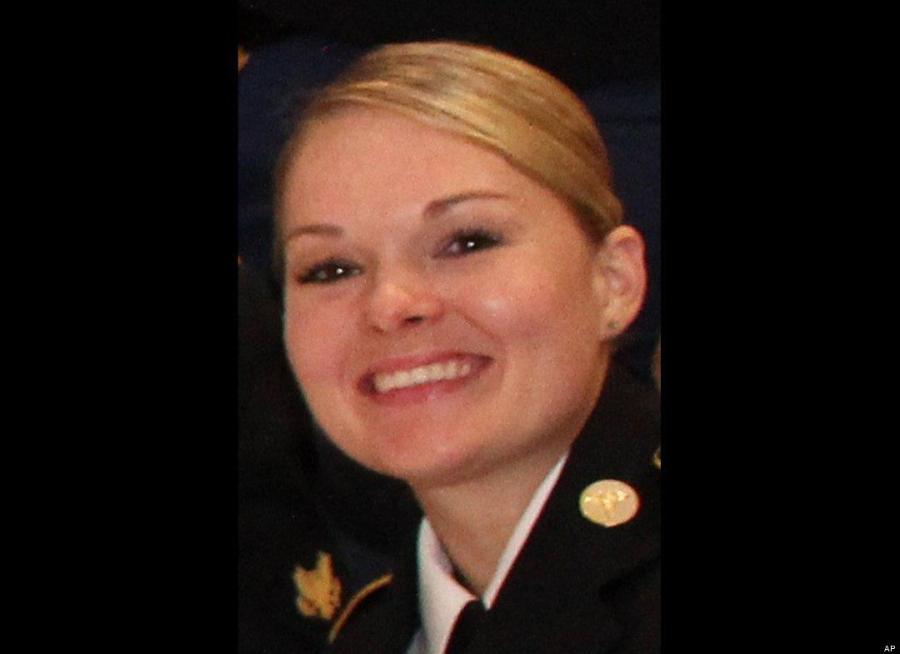
The cold case of missing US Army soldier Kelli Bordeaux was featured on Investigation Discovery‘s show Swamp Murders (“Murder of the Medic”). Kelli was stationed at Fort Bragg in North Carolina when she disappeared in 2012. The Army contacted the local Fayetteville Police Department and asked them to check on her in her off-base housing because she didn’t show up for work. She was considered Absent Without Leave (AWOL) which is an arrestable offense in the military. She was not located at her home and eventually considered a missing persons case. Her family, friends, and volunteers searched tirelessly for her around the Fayetteville area. Detectives continued their investigation while private investigator David Marshburn began conducting his own investigation. After a lengthy investigation by both the Fayetteville detectives and Marshburn, it was determined that she was murdered by Nick Holbert.
Nick was supposed to give Kelli a ride home the night she went missing and was the last person to see her alive. Holbert was also a convicted sex offender listed on the sex offender registry and out on probation. As a result Holbert was a suspect in the case from the very beginning but the case stalled because the detectives didn’t have any evidence. Although Holbert was arrested and jailed for not keeping his address up to date on the sex offender registry while detectives continued to dig for evidence. Eventually they had to let him out. A couple years later in 2014, Nick finally admitted to David Marshburn that he killed Kelli. He shared that he made a sexual advance towards her and she rejected him which made him angry. She walked away. So he then struck her from behind and beat her to death. He buried her in a shallow grave behind the Froggy Bottoms in a marshy area. Thanks to the persistence of the local Fayetteville investigators and David Marshburn, Kelli’s body was found and the case was solved. Nicholas Michael Holbert was sentenced to life in prison without parole and signed away his right to appeal the sentence.
In The News:
A new photo of Kelli Bordeaux, taken just hours before she disappeared, is released. -HLN (April 26, 2012)
The remains of a Fort Bragg soldier who had been missing for more than two years were found Wednesday. WESH 2 News (May 14, 2014)
Nicholas Holbert, the man accused of killing Fort Bragg soldier Kelli Bordeaux, pleaded guilty on Friday afternoon, bringing to a conclusion a three-year case of a missing young soldier. -CBS 17 (August 7, 2015)
When a young U.S. Army combat medic goes missing, a bounty hunter takes on his biggest case ever. -48 Hours (October 21, 2105)
Olivia Cox and Matt Henson share what they miss most about their “fearless” younger sister and how they are keeping her memory alive. -48 Hours (October 22, 2015)
David Marshburn, a bounty hunter-turned-P.I., tells “48 Hours” correspondent Troy Roberts about his mission and how he became involved in the search for Kelli Bordeaux, a missing Fort Bragg combat medic. -48 Hours (October 23, 2015)
In never-before-seen video recorded by Fayetteville Police on May 14, 2014, prime suspect Nick Holbert describes in chilling detail what happened the night Kelli Bordeaux vanished. -48 Hours (October 24, 2015)
In never-before-seen video recorded by Fayetteville,, N.C., Police on May 14, 2014, prime suspect Nick Holbert describes in chilling detail what happened the night Kelli Bordeaux vanished. -48 Hours (October 24, 2015)
Gilbert Baez was the only person to interview Nick Holbert before his arrest for the murder of the Fort Bragg soldier. Baez explains how he got the interview and what Holbert had to say. -48 Hours (October 24, 2015)
A week before she disappeared, Kelli Bordeaux and Justin Thompson went to Froggy Bottoms bar in Fayetteville, N.C. Thompson shares his first impressions of Holbert and why he was worried about Kelli the night she vanished. -48 Hours (October 24, 2015)
Matt Henson and Olivia Cox tell “48 Hours” why they immediately suspected Nick Holbert had hurt their sister and what it was like to come face to face with him. -48 Hours (October 24, 2015)
While her husband is away, a vivacious Army Medic enjoys a night out at a dive bar near Fort Bragg, NC. But she never makes it home. And though dogs pick up her scent in a nearby swamp, her fate baffles police. Until a local PI takes up the case. -Murder of the Medic, Swamp Murders (September 30, 2015)
Army Staff Sgt. William Wilson III, 27, was the victim of an insider attack perpetrated by a local Afghanistan policeman in Paktika province, Afghanistan on March 26, 2012. Staff Sgt. Wilson was supporting Operation Enduring Freedom on behalf of the 2nd Battalion, 28th Infantry Regiment, 172nd Infantry Brigade in Grafenwoehr, Germany. According to Department of Defense, “His death was originally reported by the International Security Assistance Force, which characterized it as the result of gunshot wounds inflicted by an alleged member of the Afghan Local Police. ”
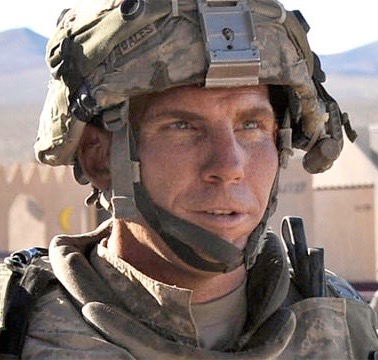
According to early reports by media, Afghanistan citizens reported that on March 11, 2012 multiple US military members were involved in what is now referred to as The Kandahar Massacre. This was considered the worst war crime ever committed by a US soldier since Vietnam. First the media claimed that 17 then 16 Afghanistan civilians were murdered in their homes in the middle of the night. Shortly after military authorities learned of the murders, SSG Robert Bales was swiftly flown back to the United States despite protest by Afghanistan citizens who wanted him tried in Afghanistan. They wanted him to hang. The US Army transferred SSG Bales to Fort Leavenworth two days after arriving back in the US. They eventually charged SSG Bales with the murder of 16 Afghanistan civilians and announced that they were seeking the death penalty.
Prior to the courts martial, Bales lawyer negotiated with the prosecution and asked that they take the death penalty off the table in exchange for Bales pleading guilty to the crimes. It was accepted and Bales was sentenced to life in prison without the possibility of parole. Since then the media has examined the court documents and deduced that the Army missed the warning signs. Bales was on his fourth deployment when this incident occurred. There were previous concerns about his mental health but no real follow up. Others noticed that his behavior was erratic. And Afghanistan officials were concerned that the Army was not monitoring their personnel and equipment. And after examining all the media accounts, one can’t help wonder if SSG Bales was a lone gunman or a scapegoat. In response to this case, the Army announced in 2015 they came up with a new plan to help soldiers with PTSD.
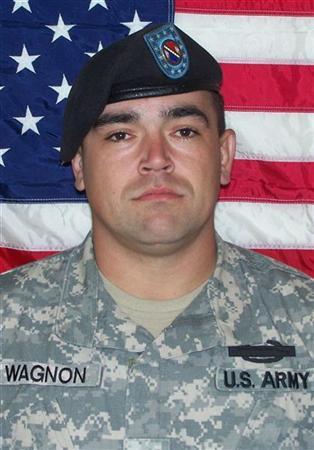
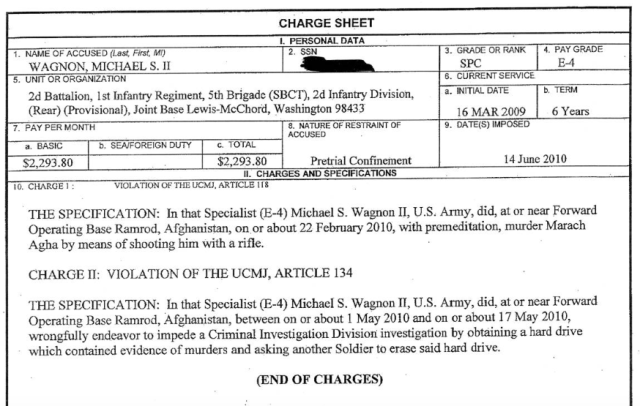
Army dropped charges against Spc. Michael Wagnon in Afghan civilian murder case on February 3, 2012.
Equal parts infuriating and illuminating, THE KILL TEAM looks at the devastating moral tensions that tear at soldiers’ psyches through the lens of one highly personal and emotional story. Private Adam Winfield was a 21-year-old soldier in Afghanistan when he attempted with the help of his father to alert the military to heinous war crimes his platoon was committing. But Winfield’s pleas went unheeded. Left on his own and with threats to his life, Private Winfield was himself drawn into the moral abyss, forced to make a split-second decision that would change his life forever. -The Kill Team
Army veteran Steven Russell, Jr. was convicted of the capital murder of his girlfriend Joy Owen on January 27, 2012. Russell was sentenced to life in prison without the possibility of parole. Prosecutors say Russell killed Joy because she tried to leave him. In the middle of the night on November 3, 2009, Russell cocked his gun and fired it four times at Owen with no apparent provocation. The North Little Rock Police Department found Joy Owen’s body around 4:30 a.m. In the course of the homicide investigation, police learned that Russell had received 5-years probation in Clark County, Arkansas for the second-degree domestic battery of another girlfriend in 2008. According to reports, the U.S. Army said Russell was a mechanic stationed at Fort Sill, Oklahoma and he enlisted in the Army in 2001; the year he left the Army was not available.
Steven Russell’s defense team admitted he killed Owen but blamed the shooting on post-traumatic stress disorder brought on by his war service in Iraq in 2003. The attorneys appealed the decision claiming he “had the dubious task of recovering bodies and equipment after they had come in contact with improvised explosive devices.” But the state Supreme Court disagreed with the defense saying the judge was confronted with conflicting forensic evaluations. While two mental health professionals “found that Russell lacked capacity as a result of mental disease or defect to conform his conduct to the requirements of the law or to appreciate the criminality of his conduct, the court also had before it (another doctor’s) opinion to the contrary.” The Supreme Court upheld a Pulaski County jury’s 2012 conviction of capital murder.
“You would have to believe [Owen] did something that reminded him of his Iraqi war experience … and I can’t make that jump. To me, it was too convenient, and there was too much purposeful action.” –Dr. Brad Diner, psychologist
Army Staff Sgt. Joshua Eisenhauer was sentenced to 10 to 18 years in prison for shooting at police and firefighters from his apartment in Fayetteville, North Carolina.
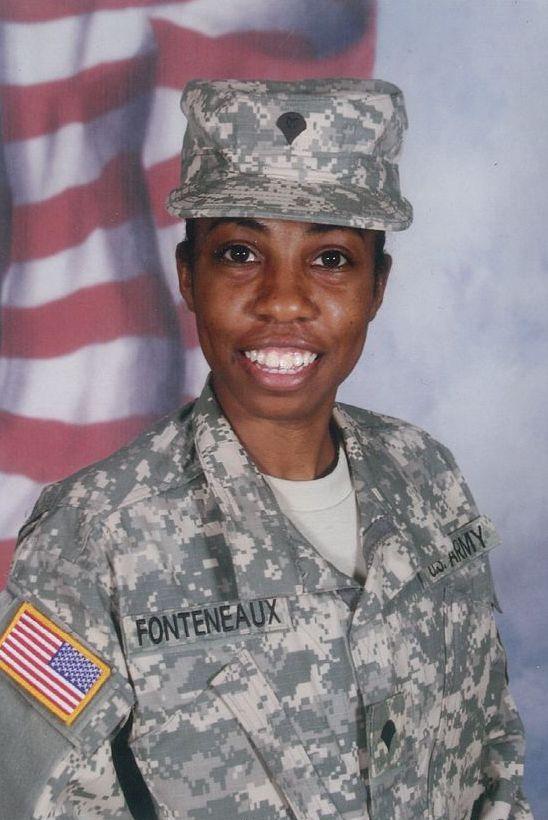
Army soldier Sgt. Brandy Fonteneaux was found stabbed to death in her barracks room at Fort Carson in Colorado on January 9, 2012. An autopsy revealed that she was stabbed 74 times and choked to death. After an investigation, co-worker and Army Sgt. Vincinte Jackson was charged with her murder. Both Sgt. Jackson and Brandy were assigned to the 4th Engineer Battalion at Fort Carson but they were not close. According to Brandy’s family, she knew him but they were not friends and didn’t hang out. Brandy shared with family that Sgt. Jackson would often talk about his crumbling marriage.
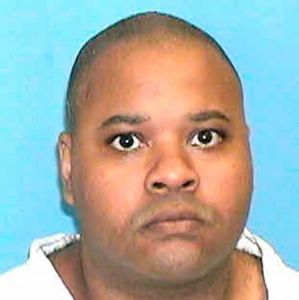
Sgt. Jackson was accused of going to the barracks, looking for a door that was unlocked, entering, and killing Brandy Fonteneaux. The prosecution argued that Jackson made a conscience decision to leave his home, go to the barracks, enter Brandy’s room, and murder her. The defense argued that Jackson was not aware of his actions due to a combination of heavy alcohol use and anti-depressants. Sgt. Jackson was found guilty of murder on December 13, 2012 and a military jury sentenced him to life without parole. Jackson was acquitted of premeditated murder.