While investigating a tragic murder, Wisconsin police must work their way through a complex web, spanning across the nation, with alleged mafia ties and scandalous text messages. -Donna Matthews, Snapped, Oxygen (March 4, 2019)
Municipal construction workers making a house call discover a foul odor coming from a residence near their work site. -Donna Matthews, Snapped, Oxygen (March 4, 2019)
Law enforcement, legal counsel and friends describe Donna Matthews’ calculated murder plan of her former boyfriend Michael Gayan. -Snapped, Oxygen (March 6, 2019)
Derrick Matthews, brother of Donna Matthews is interviewed by police. -Donna Matthews, Snapped, Oxygen (March 7, 2019)
Tristine Fleming, friend of Donna Matthews, explains there are always two sides to every story. -Snapped, Oxygen (March 8, 2019)
Full Episode: While investigating a tragic murder, Wisconsin police must work their way through a complex web, spanning across the nation, with alleged mafia ties and scandalous text messages. -Donna Matthews, Snapped, Oxygen (March 3, 2019)
In the News:
WGTD covered the highly discussed Donna Matthews Murder Trial that occurred from June 25th-July 10th, 2018. Matthews was convicted of murder July 10th. The closing arguments are attached. -WGTD (July 11, 2018)
Crime Watch Daily spoke with the parents of missing Army soldier Shadow McClaine. Shadow disappeared from Fort Campbell, Kentucky on September 2, 2016. Shadow’s parents were concerned her life may be in danger prior to her disappearance. They shared that someone cut her vehicle break lines on base and Shadow posted a picture of it on social media. They also said she reported the incident to her Chain of Command but felt dismissed. The Army Criminal Investigation Division (CID) conducted an investigation and reported two soldiers were being held as person of interests and the case was under investigation.
On November 29, 2016, Sgt. Jamal Williams-McCray and Spc. Charles Robinson were charged with conspiracy, premeditated murder, and kidnapping under the Uniform Code of Military Justice (UCMJ). On January 23, 2017, the remains of Pfc. Shadow McClaine were discovered off the I-24 highway near Exit 19 in Kentucky. It was confirmed that Shadow was in fact a victim of kidnapping and homicide. A year after Shadow went missing in September 2017, Spc. Charles Robinson pleaded guilty to murder. He claimed he helped Shadow’s estranged husband Williams-McCray kidnap and murder her. On March 1, 2019, Sgt. Jamal Williams-McCray was sentenced to life in prison after pleading guilty to premeditated murder.
Private First Class Soldier Shadow McClaine has mysteriously gone missing and theories are swirling on what happened to her and why. Now, new details could help them. -True Crime Daily (October 24, 2016)
Shadow McClaine, a young soldier, mysteriously disappears — some say she left, while others say someone was out to get her. -True Crime Daily (October 24, 2016)
Two soldiers were taken into custody in connection to the case of missing female soldier, Shadow Branice McClaine. -News Channel 5 (October 25, 2015)
Shadow McClaine, 25, has been missing for nearly two months after disappearing from Fort Campbell. -CBS Sacramento (October 26, 2016)
Some thought Shadow McClaine was running away from her problems. But it now appears she was the victim of something sinister. -True Crime Daily (December 6, 2016)
Missing Yuba City soldier’s body found in Tennessee. -KCRA News (January 25, 2017)
First Class Private Shadow McClaine’s body was discovered earlier this week and investigators arrested two fellow soldiers. -CBS Sacramento (January 28, 2017)
The body of Shadow McClaine, a soldier who was murdered near Fort Campbell in Tennessee, was returned to her family in Yuba City Friday evening. -KCRA News (February 3, 2017)
Shadow McClaine’s remains touched down at the Sacramento International Airport Friday night greeted by dozens of local service men and women along with her grieving family. -CBS Sacramento (February 3, 2017)
A look at the scene as Shadow McClaine came home on Friday. -CBS Sacramento (February 4, 2017)
Missing soldier Shadow McClaine’s body has been found. Crime Watch Daily talks to McClaine’s mother London Wegrzyn, who says that her daughter had a fraught relationship with ex-husband Sgt. Jamal Williams-McCray. Specialist Charles Robinson and Williams-McCray were charged with her murder. Crime Watch Daily also speaks to McClaine’s friend Trystan Harding about what happened to McClaine. -True Crime Daily (March 9, 2017)
Family and friends came together for a vigil to honor a murdered Fort Campbell soldier. -News Channel 5 (April 11, 2017)
Private First Class Shadow McClaine was found dead 2,000 miles away from her home, allegedly at the hands of two men who will face premeditated murder, kidnapping and conspiracy charges. -CBS Sacramento (April 11, 2017)
Army specialist Charles Robinson says he slashed Shadow McClain’s throat, then broke her neck to make sure she was dead. He says McClaine’s ex-husband, Jamal Williams-McCray hired him to murder her. -True Crime Daily (October 3, 2017)
Two years ago this week, the body of Shadow McClaine was discovered in Robertson County along Interstate 24. -News Channel 5 (January 23, 2019)
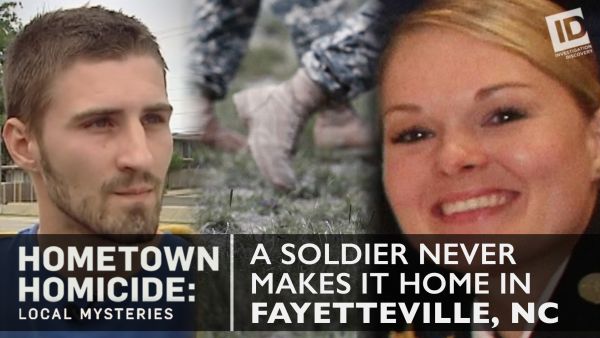
Full Episode: In April of 2012, when Fort Bragg medic Kelli Bourdeaux failed to report for duty her family, friends, and the army knew that something was terribly wrong. The entire town of Fayetteville, North Carolina came together to search for the missing 26-year-old soldier who had recently separated from her husband. After the case went cold, a private investigator believed a local bar worker would be the key to cracking the case. What came next was a shocking confession and gruesome discovery. -Kelli Bordeaux, Hometown Homicide: Local Mysteries (S1,E2)
Editor’s note: With a cable subscription, you can download the free ID Go app and watch Investigation Discovery programming at your convenience. And for those who do not have cable, you can watch “unlocked” episodes on the ID Go app including the latest premieres. For those who prefer commercial free programming during your binge session, Prime Video has an ID channel: ‘True Crime Files by Investigation Discovery” available for $3.99 a month. It’s a compilation of older seasons but totally worth the cost if you are a true crime addict. Download the ID Go app or purchase ID True Crime Files & binge away.
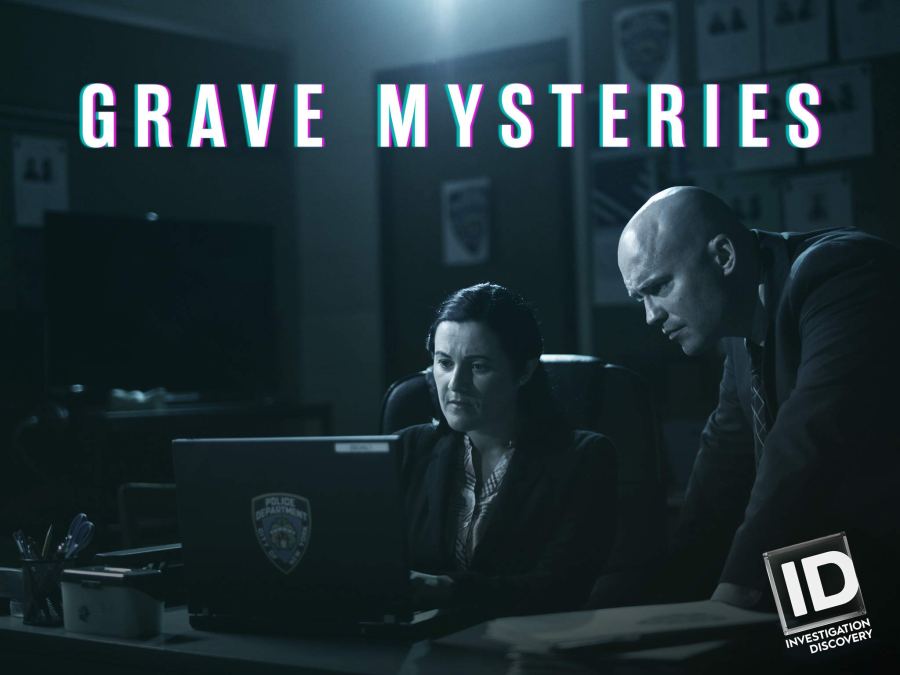
27 year-old Ashley Melnyczok is a single mother. Her daughter is her life’s joy. In June 2015, Ashley is murdered in her Colorado Springs home. While hunting for clues, police hunt down a cast of dangerous characters and uncover a heinous plot. -Murder Behind Closed Doors, Grave Mysteries (S2,E3)
Editor’s note: With a cable subscription, you can download the free ID Go app and watch Investigation Discovery programming at your convenience. And for those who do not have cable, you can watch “unlocked” episodes on the ID Go app including the latest premieres. For those who prefer commercial free programming during your binge session, Prime Video has an ID channel: ‘True Crime Files by Investigation Discovery” available for $3.99 a month. It’s a compilation of older seasons but totally worth the cost if you are a true crime addict. Download the ID Go app or purchase ID True Crime Files & binge away.
Rookie police officers Regina Smith and John Matthews gained intelligence from the sex workers on their beat. -Oxygen (February 7, 2019)
A prostitute in the Dallas spoke to police about a man who attempted to attack her, and his possible link to the string of other murders in the Dallas area. -Oxygen (February 11, 2019)
Elizabeth Peacock discovered Charles Albright’s victim had had her eyeballs cut out. -Oxygen (February 11, 2019)
Dallas Police find one of Charles Albright’s victims lying nude in the street, with a gunshot to the head. -Oxygen (February 11, 2019)
Dallas police discover three women murdered with their eyes surgically removed. Police believe they have a deranged doctor on the loose until two rookie cops find themselves on the trail of a man with a Psycho-esque mother, a talent for taxidermy, and a hatred for women. -Oxgen (February 12, 2019)
Serial killer, Charles Albright, removed the eyeballs of sex workers in Dallas,Texas. -Oxygen (February 14, 2019)
Dr. Michael Stone explains Charles Albright’s narcissistic behavior. -Oxygen (February 14, 2019)
Officer Regina Smith recounts the night she drove Charles Albright to the Dallas Homicide Division after he had murdered several sex workers in the Dallas area. -Oxygen (February 15, 2019)
Psychologist Dr. Michael Stone makes note that there are passages in the New Testament that talk about eyes in a special way. -Oxygen (February 15, 2019)
Forensic Files:
Full Episode: A serial killer is prowling the streets of Dallas, targeting prostitutes. All the police know is that the killer has a bizarre signature. See No Evil, Forensic Files
Investigation Discovery:
Dallas has its dark side, but nothing compares the horror of a series of women found murdered with their eyeballs surgically removed. A pair beat cops use their street savvy to lead detectives to a sadistic killer and his bizarre motive. -The Eyeball Killer, Murder by Numbers (S2, E5)
Editor’s note: With a cable subscription, you can download the free ID Go app and watch Investigation Discovery programming at your convenience. And for those who do not have cable, you can watch “unlocked” episodes on the ID Go app including the latest premieres. For those who prefer commercial free programming during your binge session, Prime Video has an ID channel: ‘True Crime Files by Investigation Discovery” available for $3.99 a month. It’s a compilation of older seasons but totally worth the cost if you are a true crime addict. Download the ID Go app or purchase ID True Crime Files & binge away.
Constance Tomich called 911 to report finding her husband dead in their home. -Snapped, Oxygen (February 11, 2019)
Melissa Zitterman, charged with conspiracy to murder Ronald Tomich, at 16 years old, discusses life after her release. -Snapped, Oxygen (February 12, 2019)
Former Indiana State Police Detective, Jeffrey Deckard confirms Zitterman was actually the shooter. -Snapped, Oxygen (February 13, 2019)
Law Enforcement, reporters, friends of the victim and Melissa Zitterman comment on Tomich’s sentencing. -Snapped, Oxygen (February 14, 2019)
Full Episode (YouTube):
The peace of an Indiana town is interrupted on Valentine’s Day 2003, when police receive a report of a violent murder. -Constance Tomich, Snapped, Oxygen (February 10, 2019)
This is footage from the deck of the USS Fitzgerald, a U.S. Navy destroyer, of the moments immediately after it was struck by cargo ship MV ACX Crystal, in the South China Sea around 1:30 a.m. on June 17, 2017. The picture goes dark for a second as the Crystal hits, then the Fitz is knocked into a 360-degree rotation. 7 sailors died. Our investigation found that the collision was preventable. Read the investigation here -ProPublica
An investigation with our reporting partners at ProPublica into the 2017 collisions of U.S.S. Fitzgerald and U.S.S. McCain suggest that the Navy had ignored warnings, and postponed critical training and repairs before those deadly accidents. -NBC News
A ProPublica investigation revealed new details into two separate collisions of the U.S.S. Fitzgerald and John S. McCain that led to the deaths of 17 sailors. Robert Faturechi was one of the authors of the investigation, and joined CBSN to discuss their findings. -CBS News
“Today, the Department of Defense released the Annual Report on Sexual Harassment and Violence at the Military Service Academies, Academic Program Year 2017-2018…There were 117 reports of sexual assault received across all three academies. This is an increase of five from the prior academic program year, indicating confidence in response measures, however, surveyed measures of unwanted sexual contact and sexual harassment increased compared to rates last measured in 2016. There was also an overall increase in sexual harassment.” Read more here. -Department of Defense (January 31, 2019)
A vacationing couple’s disappearance exposes the horrific crimes of a murderous husband and wife. -Erika and BJ Sifrit, Killer Couples (S11,E2)
A young woman’s scrapbook offers insight into a shocking crime. -Erika Sifrit, Snapped (S8,E11)
Oxygen (Previews & Bonus Clips):
Erica Sifrit was your typical girl next door during high school, but experienced issues with anxiety and OCD at Mary Washington College. -Erika & BJ Sifrit, Killer Couples (January 29, 2019)
Erika and Benjamin Sifrit’s marriage ended in thrill killings, pain, and anguish. -Erika & BJ Sifrit, Killer Couples (January 29, 2019)
Scott Bernal, Ocean City Lead Detective discusses the murder trials of Erika and Benjamin Sifrit’s for the death two tourists. -Erika & BJ Sifrit, Killer Couples (January 30, 2019)
Ocean City Detectives Brett Case and Scott Bernal reflect on the murder of Joshua Edward Ford and the acquittal of Benjamin Sifrit, and his potential release. -Erika & BJ Sifrit, Killer Couples (January 30, 2019)
Kristen Heinbaugh, a high school friend of Erika Sifrit, reflects on the character of the person she used to know before the murders of Joshua Edward Ford and Martha Margene Crutchley. -Erika & BJ Sifrit, Killer Couples (January 30, 2019)
Forensic Files:
Full Episode: The couple spent Memorial Day weekend at the beach, and then they simply vanished. Their clothes and personal items were still in the rented condo, their car was parked outside, and there were no signs of forced entry or foul play. A week later, police would get an unexpected lead from a robbery in progress, and the evidence they found helped them to solve a crime of unparalleled violence and brutality. -Dirty Little Seacret, Forensic Files (S13, E46)
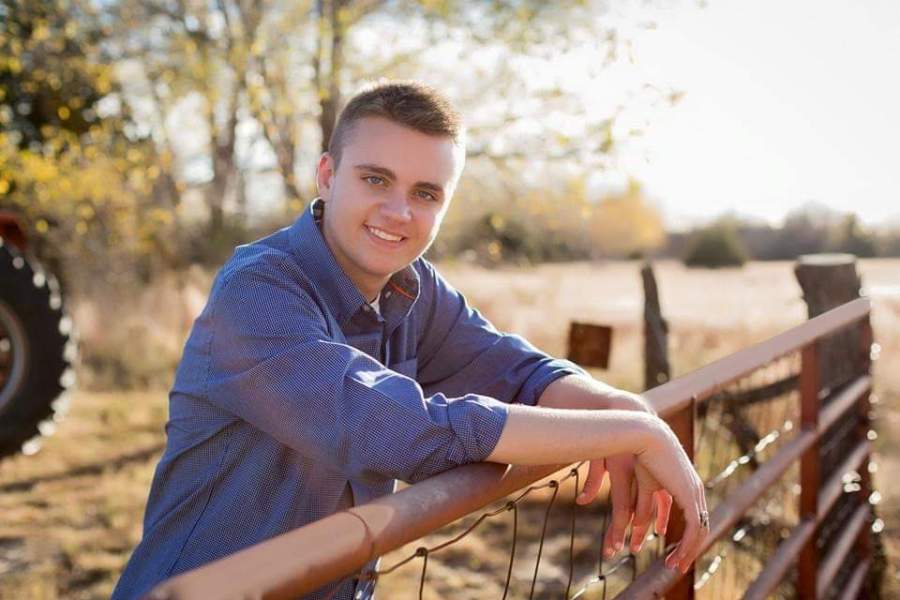
Kansas Army National Guard veteran Zachary Schaffer, 21, was found unresponsive in his Kansas City, Kansas home on January 23, 2019. According to theDodge City Daily Globe, Zachary fatally overdosed only a few days after he was punished and discharged from the Kansas Army National Guard. According to his mother, Wendy Mottas, Zachary, or Zach, as he was known to most, was accused of failing to show up for multiple weekend drills and discharged with an “other than honorable.” In the midst of losing his military career and eventually his security clearance, Zach was flagged by his command for the prescribed use of Adderall to treat ADHD, even after he was reassured it was okay for him to take the prescription. Wendy doesn’t know if her son’s death was intentional, but stated Zach began suffering with depression and substance abuse during his time in service with the Kansas Army National Guard. Zach went from being a stellar soldier at the age of 19 to being hired as a full time military technician to losing that same position less than one year later for reasons undisclosed. Six months after being fired by the Kansas Army National Guard, he was also passed over for deployment to Afghanistan, having been told he was ‘red flagged’ for the use of Adderall. Six months later, Zach would also experience sadness and grief after losing his friend, 24 year-old Kansas Army National GuardsmanKhamis Naser, who died by suicide on July 31, 2018.
Zach grew up in the Hutchinson, Kansas area and joined the Kansas Army National Guard in May 2014. Zach’s mother, also an Army veteran, said he was born in Germany when she was in the military. Zach came from a military family and it was a natural fit for him too. Wendy shared Zach was always intelligent and she knew he would be successful because he was very skilled in anything related to computers and coding. After Zach completed Army basic training and specialty training, he progressed quickly as a soldier and eventually got a full-time job with the Kansas Army National Guard at age 19. Zach was a federal military technician (Personnel Security Technician: GS-7) during the week and on Guard weekends, he was an Intelligence Analyst (E-4). Zach’s downward spiral began when he lost his full-time job as a federal technician and was made to feel incompetent by those who also originally built him up to be a great soldier with a bright future in the military. Zach’s mother does not know why Zach was fired during the probationary period, but she does suspect that Zach had information about other National Guard members whose misconduct were overlooked during routine background checks so they could maintain their security clearances.
Once Zach lost his full-time position, he went from being a professional soldier to not caring about anything anymore. He moved from his home in Topeka, Kansas to Lawrence, Kansas and became somewhat estranged from the family. Zach became secretive, fell in with the wrong crowd, stopped going to therapy and became reliant on self-medicating to take care of the pain of depression he was feeling. Realizing this lifestyle was not healthy, Zach moved back home to Junction City and tried to get his life together in early January 2018. After about three months of living at home, he discovered the Kansas Army National Guard unit in Junction City, Kansas was tasked with a deployment to Afghanistan, to which he inquired and expressed interest to the unit’s leadership. The leadership put him through mobilization procedures for nearly a month and then his deployment orders to Afghanistan were cancelled citing he had been flagged during the pre-deployment process for Adderall use. Zach was prescribed Adderall for the diagnosis ADHD and his mother states he was prescribed the drug due to a struggle with concentration and focus. Once Zach was flagged, someone made the decision to prevent him from deploying to Afghanistan and his mother does not know if his National Guard unit influenced the decision at that time or not.
Zach was looking forward to the deployment. Instead his orders to Afghanistan were cancelled and it was then Zach started meeting regularly with mental health personnel for depression. It is unknown what Zach may have shared with health care professionals, but his family realized something changed in Zach’s life. Shortly after, Zach moved from Junction City to Kansas City with a friend with which his family was not familiar. He remained distant from his family and friends. Worse yet, the same military officer (O-4) who made the decision to fire Zachary from his full-time military technician position also influenced National Guard unit leadership to end Zach’s military career in its entirety. Leadership observed the changes in Zach’s attendance and behavior. Instead of helping him, they used it to revoke his security clearance knowing he needed a security clearance for his job as an intelligence specialist in the National Guard and his full-time job with the Marine Corps. During this time, the only thing done to assist Zach or try to get to the root of the issues he was having was to refer him to the unit’s social work office. At some point, this social worker was told to ‘stand down’ and allow the unit’s part-time civilian social worker to take care of his issues. To his mother’s knowledge, this individual never contacted Zach to offer support and he was never offered any type of assistance including participation in the Army Substance Abuse Program.
In early July 2018, Zach contacted his mom and stated he wanted to go to an inpatient rehabilitation program. He self-admitted to the substance abuse program to help him stop his drug dependency and get his life back on track. The day after Zach left the rehabilitation program and returned to Kansas City, he learned his best friend and fellow National Guardsman, Khamis Naser, had died by suicide. Zach told his mother he had talked to Khamis only five hours before he was found dead in his apartment. Zach attended the August 2018 drill weekend and his mother said he told her he was met with disdain from his leadership. Zach’s mother states she has text messages from her son indicating the NCOs in his unit were bullying him. Zach told her they said his best friend would still be alive if he ‘wouldn’t have been high’ and ‘would’ve been there for him’ (Khamis). After Zach was blamed for the death of his friend, he got in a physical confrontation with one of his NCOs. During another drill weekend, word got around the unit that leadership wanted to ‘get rid of that “shitbag”’ (referring to Zach) because he made the unit ‘look bad.’ Despite the ill treatment by the Kansas Army National Guard, Zach picked himself up and got a new job as a civilian contractor for the Marine Corps in Kansas City at age 21. Unfortunately, a short time after he got the job, he was terminated when he learned the National Guard had suspended his security clearance. At this point, Zach had no income, including from his drill weekends, due to a status discrepancy. Zach was still considered in ‘active duty’ status because of the deployment orders to Afghanistan and no one in his military leadership would assist him to get transferred back to his original unit. His mother states he discussed this with someone at his unit who agreed with him — why bother going to weekend drill if he was getting bullied and not receiving any pay? He stopped attending drill after September of 2018 and once again became estranged from his family. He would never return to the National Guard.
According to the Kansas Adjutant General’s Department, the Kansas Army National Guardsuicide prevention programis “based on the premise that suicide prevention will be accomplished through the positive action of unit leaders and implementation of command policy. The key to the prevention of suicide is positive leadership and honest concern by supervisors for military personnel who are at risk of suicide and appropriate intervention for all such personnel.” Khamis Naser died by suicide in July 2018 and six months later in January 2019, Zach Schaffer died of a fatal drug overdose. How did the Kansas Army National Guard’s suicide prevention program help Khamis and Zach? Although we don’t know why Khamis Naser chose to die by suicide, we do know he was a current member of the Kansas Army National Guard. One would think losing a fellow comrade would initiate a more proactive suicide prevention approach yet instead we learn the very people tasked with a “positive and honest concern by supervisors” for military personnel at risk of suicide and appropriate intervention was not implemented in the last couple of years. Zach was a soldier dealing with the loss of his full-time job, grief from the loss of his friend, the loss of his military career, and the loss of his security clearance. Military leadership knew Zach was not well and they knew he was a risk to himself.
Thetop 10 most stressfullife events include death of a loved one, separation, starting a new job, workplace stressors, financial problems, and chronic illness/injury. Zach’s mom shares he was dealing with six out of ten of those stressful life events at the age of 21. Wendy wonders why the military wouldn’t be especially cognizant of the fact they are molding young kids into warriors at a very impressionable time in life. At a time when young adults need guidance most, instead in the military environment, they are forced to deal with additional stressors, caused by military leadership in Zach’s case. Why would the same organization at the root of the cause of the downward spiral of young lives be interested in also pretending to care about suicide prevention of those same personnel? The moment Zach was let go from his full-time job was the moment he started to struggle. Why did he get let go? Why did it contribute to a need to use drugs to self-medicate? And one can only imagine the kind of grief Zach experienced after losing a close friend in such a tragic way. Did anyone refer Khamis or Zachary to mental health programs or theDepartment of Veterans Affairs?
It appears Zach’s source of pain or original stressor began when he lost his full-time federal military technician position as a Personnel Security Technician. After Zach lost Khamis, another high-paying job and his military career, his downward spiraled accelerated. Zach was dead less than six months after his friend passed. How can the National Guard implement a suicide prevention program when they are the suspected cause of the unit members’ downward spiral? Why did the National Guard choose to characterize ADHD treatment as a ‘mental health risk’? The prescription was used to assist with concentration and focus. Why would Adderall negatively impact a deployment when it is a fact the active duty deploy personnel on all kinds of prescribed medications? Why not help Zach transfer from Active Duty status back to his National Guard unit so he would be paid for drill weekends? How did Zach go from successfully holding great positions of responsibility within the unit to losing his entire military career? Why did they give Zach an ‘other than honorable’ discharge knowing it will negatively impact the rest of one’s working life, never mind the impact losing a security clearance has on anyone’s future financial security. Why did Zach have to lose everything? How does that help his mental health?
Wendy Mottas told theDodge City Daily Globethat there is a stigma to be tough in the military. And this was confirmed the day the National Guard decided Zach was a “mental health risk” because he had a prescription for ADHD he wasn’t even currently taking. Each Commander has the ultimate say on whether or not an individual can still perform despite taking medication. The prescription was for concentration and focus and not something that had to be a military career ender. Wendy said her son could have used extra support following Khamis’s death and that she would like to see mental health be taken more seriously by the Kansas Army National Guard. While she realizes there were many factor’s influencing Zach’s death, she doesn’t understand why the National Guard wouldn’t offer to help him like so many soldiers with substance abuse are assisted. In Zachary’s case it appears leadership actively contributed to the decline of Zach’s mental health. Who at the Kansas Army National Guard would offer help to Zach after the chain of command (supervisors and leadership) decides a soldier is a “shitbag”? How does the Kansas Army National Guard implement a command driven suicide prevention program when they are the same leadership contributing to a downward spiral? How can the same people tasked with punishing their personnel with a heavy hand simultaneously help prevent a suicide or untimely death of young soldiers? At the very least, in this situation, the National Guard needs to upgrade this soldier’s other than honorable discharge to honorable to make this right for Zach and his family. It’s one thing to let someone go, it’s an entirely different thing when a person’s life and future is destroyed.
“The military still has to take some responsibility for this, I think, and I think more could have been done to be preventative and be proactive instead of reactive. They have a responsibility to these young men and women. It’s not to live their lives for them or to be mommy or daddy or anything like that, but the soldiers still have to live by the army creed, and in order to do that, they have a role in that.” -Wendy Mottas (quote in Dodge City Daily Globe)







 “Today, the Department of Defense released the Annual Report on Sexual Harassment and Violence at the Military Service Academies, Academic Program Year 2017-2018…There were 117 reports of sexual assault received across all three academies. This is an increase of five from the prior academic program year, indicating confidence in response measures, however, surveyed measures of unwanted sexual contact and sexual harassment increased compared to rates last measured in 2016. There was also an overall increase in sexual harassment.” Read more