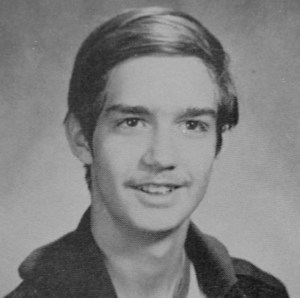
Air Force Spouse Kathryn Eastburn & Daughters Cara & Erin Found Murdered in Fayetteville, NC Home; Youngest Toddler Jana Discovered Unharmed (May 9, 1985)

The murder of a military wife and two of her young daughters in Fayetteville, North Carolina in 1985 was still making headlines twenty-five years later. The loss of his children and his wife Kathryn would forever haunt former Air Force Captain Gary Eastburn. Katie captivated him from the moment they met and the two got married shortly before Gary joined the United States Air Force. Eleven years later, Captain Eastburn was stationed at Pope Air Force Base in North Carolina as an Air Traffic Control supervisor. By then, the couple had three daughters: five year old Cara, three year old Erin, and Jana who was just under the age of two. They lived on Summerhill Road near the Fort Bragg Army post.

In the spring of 1985, Gary Eastburn was nearing the end of a training program at Maxwell Air Force Base in Alabama. Every Thursday night, Gary called Kathryn from the barrack’s payphone. One week, he couldn’t reached Kathryn and after frantically calling her for a couple days unable to reach her, Gary asked a neighbor to check in on his wife. The neighbors had grown concerned as well when they noticed that the newspaper had not been picked up for a couple days and they heard a child crying. They called the police who went into the Eastburn’s home and discovered Kathryn, Cara, and Erin had been murdered and the youngest toddler, Jana, was crying and severely dehydrated. They would learn that the baby was only hours from death.

The Fayetteville Police Department investigators discovered that Kathryn Eastburn had been raped and murdered. Her underwear had been cut off her, her blouse and bra were ripped opened, her throat was slit, and she had multiple stab wounds. Erin was found in her mother’s room stabbed to death and her throat slashed. And Cara was found in her own bed as if she was hiding underneath a blanket. She too had been stabbed multiple times and her throat was cut. Police believe the surviving toddler was in her crib for nearly three days before neighbors found her. Gary Eastburn received the dreadful call that there had been a death in the family while he was still at Maxwell. Investigators asked him to return home immediately because detectives wanted to give him the news in person.

Desperate police turned to the only living witness, Jana, to see if she remembered anything. The police took Jana to a child psychologist to determine what, if anything, she might know. The police deduced that the child heard the killer but could not identify him; she was just too young. An older Jana admits that she doesn’t remember anything now either. Police theorized that the baby was young and couldn’t identify the intruder which is probably why she was spared. In the meantime, a neighbor came forward claiming he saw a man leaving the Eastburn residence around 3 a.m. and was able to give a description of a suspect who drove a white Chevrolet Chevette. Kathryn also told Gary about a man who came and looked at the family dog they were trying to find a home for. His name was Timothy Hennis and the composite drawing inspired by the neighbor looked just like him.

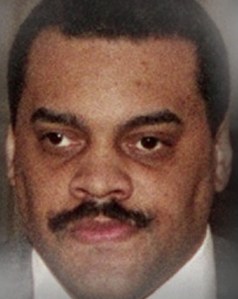
Timothy Hennis was questioned and asked to give hair, blood, and fingerprint samples. When the detectives escorted Hennis back to his car, they discovered he drove a white Chevrolet Chevette. Later that night, Timothy Hennis was arrested. Hennis was an Army Sergeant stationed at Fort Bragg. Someone had used Kathryn’s stolen ATM card and a witness identified Hennis as the person who used the ATM right before she did at the time of the transaction. At every turn, the evidence overwhelmingly brought them back to Hennis. The prosecutors were puzzled why Hennis would commit such a heinous crime given he had no history of violence. They learned that he had approached a woman for sex that same night and theorized that when he was rejected, he decided to target Kathryn Eastburn.

A trial began roughly a year after the murders in 1986. Hennis’ attorney was quick to point out that the prosecution didn’t have any physical evidence linking Hennis to the murders to include fingerprints, hair, and foot prints. This was at a time before there was any routine DNA testing, therefore even semen found in Kathryn’s body led police nowhere. There was a significant amount of physical evidence showing that a male suspect was in the Summerhill Road house and it wasn’t Gary Eastburn or Timothy Hennis. Hennis’ attorney also pointed out that there was no possible way someone could leave that house without transferring evidence to their personal belongings. On July 4, 1986, the jury returned it’s verdict and Timothy Hennis was found guilty on all counts. Four days later, Hennis was sentenced to death.

While Timothy Hennis was sitting on death row, he received a letter from someone claiming to have committed the crimes. This person appeared to show remorse because Hennis was serving time for his crimes. In spite of the verdict, Hennis’ attorney and wife Angela continued to claim that Hennis was not the killer. As a result, Hennis’ attorney fought to have the murder conviction overturned and filed an appeal. The attorney felt he did not provide adequate representation in the first case and admitted that it was a heavy burden to carry. In a precedent setting decision, the Supreme Court overturned the guilty verdict. It found the prosecutors used information to inflame the jury, a graphic parade of disturbing images taken at the crime scene. After two years on death row, Hennis was awarded a new trial.

The second trial began in 1989, four years after the murders. The prosecution’s case was still strong and the star witness was back to swear that he saw Hennis leaving the Eastburn home on the night in question. In this new trial, the defense delivered compelling theories of their own. They produced a witness who claimed to have seen another man (not matching the description of Timothy Hennis) near the Eastburn home. The defense also reminded the jury there was no physical evidence connecting Hennis to the murders. Additionally, they opined there were others who could have committed the crimes including the person who wrote to Hennis while he was in prison. And in this case, Hennis took the witness stand and denied having anything to do with the murders. On April 19, 1989, a jury found Timothy Hennis not guilty on the triple murder charges and set him free.

Gary Eastburn wasn’t convinced of Hennis’ innocence because he never once apologized to the family for their loss. The verdict just didn’t sit right with Gary and he strongly believed that Hennis was guilty despite the jury’s decision. Gary admits he was angry after the verdict but he knew he had to let it go for his health. A month after Hennis was released from prison, ‘A Current Affair’ paid Hennis and his wife to appear on the program. Hennis suggested the prosecution wanted to pin the murder on anyone so they could get it out of the news; he also denied committing the murders. Timothy Hennis was free and for over twenty years no new suspects emerged. Whoever committed the murders in Fayetteville had gotten away with murder until one day a cold case detective took another look at the case.

After the murders, Gary Eastburn was transferred to a military base north of London, England where he met an English nurse and married her in 1991. Jana was 8 years old and now had a step-mother. Timothy Hennis returned to his family and resumed a career in the Army which often took him away from home. He served in the first Desert Storm war, he served in the war in Somalia, he got promoted multiple times, and had nothing but good marks from military leadership. Journalist Scott Whisnant wrote a book called ‘Innocent Victims’ which was later featured as a television movie. The point of view of the book was that Timothy Hennis was not guilty of these crimes. Investigators never read the book or saw the show. They claimed they were not interested in fiction; instead they were annoyed and pissed.

Twenty years later, new detectives were working on cold cases and decided to take a second look at the Eastburn murders. A cold case investigator found the one clue that could lead them to the killer, a vaginal swab from Kathryn Eastburn. In the 1980s, DNA testing was not available but now it was and they sent it to the lab. The lab testing revealed that the vaginal swab from Kathryn was a match to Timothy Hennis’ DNA. Still, Hennis’ attorney wasn’t convinced because he didn’t understand how someone could commit such a heinous crime then go twenty five years without committing another one and also lead an exemplary life. Billy Richardson believed the sample may have been contaminated and he pointed out that the lab that conducted the testing had been called into question on numerous occasions.

Author Scott Whisnant also believed that something was wrong and Hennis couldn’t have committed these crimes. He asked: “How could he be guilty of this? How could he fool everyone all these years?” Meanwhile, investigators contacted Gary Eastburn to inform him they got a match to Timothy Hennis. Eastburn admitted he had given up hope and the new information was overwhelming. But one thing stood in the way of justice: the Constitution. Hennis had been found not guilty by the State of North Carolina and they were prohibited from trying him a second time because of the double jeopardy clause. But the State found a loophole and because Timothy Hennis was a retired Army soldier, the Army could try him. They ordered Hennis out of retirement and back into uniform to stand trial in the military justice system.

Hennis retired in Washington state in a community near Seattle which was a shock to Gary Eastburn because that’s where he and his wife had settled and Jana and her boyfriend had settled. They learned that Hennis lived 30 minutes away from them. Jana was shocked he lived so closely to them because he was walking free in a community near her. But the Army would soon move Hennis; he was ordered back to Fort Bragg to face triple murder charges. After two decades of freedom, Hennis was being tried for the murders of Kathryn, Cara and Erin Eastburn, a third time for the same crime, except this time in a military court martial. If convicted, Hennis could again face the death penalty again. Hennis’ attorney was stunned that in America, Hennis could be charged for a third time for the same crime.

Billy Richardson referred to the double jeopardy clause in the US Constitution and reminded the public it doesn’t say anything about jurisdiction. He tried to get a federal court to intervene on the issue but failed. And in this third Hennis trial, there would be a new witness, Jana, the only survivor that night. She wanted the jury to know how this crime impacted her life. The trial began in the spring of 2010 and Timothy Hennis’ wife and grown daughter continued to stand by his side. They believed he was innocent. Hennis’ new attorney, Frank Spinner, argued at trial that the facts of Hennis’ life do not paint the portrait of a man who could commit such a heinous crime. He questioned how a man who led such an exemplary life could be the same person who would commit three murders in one night.

Timothy Hennis served his country with distinction, raised his family, and never committed another crime in the twenty five years after the Eastburn murders. And yet on one single night, Hennis slaughtered a family? The prosecutors said the motive didn’t matter because there was DNA linking Hennis to the murders. Spinner reminded jurors that DNA does not mean a case is open and shut. He argued that the DNA does not mean Hennis raped and murdered Kathryn Eastburn because Hennis admitted to consensual sex with her. Hennis suggested Kathryn was lonely while her husband was away at training. Gary Eastburn was angry the defense would have the audacity to suggest that Kathryn was a ‘whore’. Hennis’ old attorney Billy Richardson shared that Hennis denied having sex with Kathryn twenty years ago.
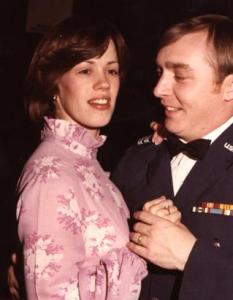
IMG_5116
Kathryn and Gary Eastburn

The military panel didn’t believe Timothy Hennis and they found him guilty of the murders of Kathryn, Cara and Erin Eastburn. Hennis was lead away in handcuffs and for the second time in his life, he was sentenced to death. Timothy Hennis maintains his innocence, filed an appeal, and is fighting for a reversal of his conviction. Gary and his daughter Jana spoke to the press minutes after the verdict and expressed empathy for Timothy’s family despite their belief that justice was finally served. Jana Eastburn admitted she feels more at peace knowing that Hennis is behind bars. As of 2011, Timothy Hennis appealed his conviction and challenged the federal ruling regarding the double jeopardy clause. Timothy Hennis remains on military death row at Fort Leavenworth in Kansas.

Source: 20/20 on ID ‘Witness’

In 1985, a young military wife and two of her three little girls are viciously murdered in their home. In a twisted case filled with unusual suspects, the man who gets convicted goes free. But nothing is what it seems. -20/20 on ID

MJFA Links:
Air Force Spouse Kathryn Eastburn & Daughters Cara & Erin Found Murdered in Fayetteville, NC Home; Youngest Toddler Jana Discovered Unharmed (May 9, 1985)
A Military Jury Delivered a Guilty Verdict in a Death Penalty Trial to Retired Army MSG Timothy Hennis for the Triple Murders of Kathryn, Cara & Erin Eastburn (April 8, 2010)
In 3rd Trial, Retired Army MSG Timothy Hennis Sentenced to Death by Military Court Martial for the Murders of Kathryn, Cara & Erin Eastburn in Fayetteville, NC (April 15, 2010)
Four Service Members on Military Death Row at Fort Leavenworth, Army Private John Bennett was Last Military Execution by Hanging in 1961
Violent Crime, Non Combat Death and Suicide at Fort Bragg, North Carolina (US Army)

Related Links:

1986
Death sentence sought
Jury in Hennis trial visits area where murder victims lived
Hennis Receives Death Sentence

1988
STATE of North Carolina v. Timothy Baily HENNIS

1989
Triple murder retrial to start
Witness firm on identification of murder suspect
Witness shaky on identifying Hennis

1996
Reversal of ‘Victims’: Made-for-TV Justice
ABC explores ex-city man’s prison plight MUG: Hennis BOX: On TV “Innocent Victims” airs at 8 p.m. Sunday and Monday on ABC, Rochester cable channels 5 and 6

2007
GI cleared in 1989 faces murder court-martial
Accusations follow ex-soldier
Expert links soldier to 1985 killings
DNA hearing wraps up
Acquitted of murder, he now faces Army justice
Ex-soldier faces trial in decades-old deaths
Army to try soldier who was acquitted of 1985 slayings

2008
3 capital murder trials to put Army in spotlight

2009
Army holds hearing for soldier charged in 1985 murders

2010
Judge Delays Murder Trial For Recalled Soldier
Rochester native accused in N.C. triple murder
Why ‘exonerated’ needs to be used sparingly
Federal judge: Hennis court-martial can proceed
Soldier acquitted in 3 deaths faces military trial
Hennis court-martial begins at Fort Bragg
Twenty-five years later, third trial begins in triple slaying
Hennis Trial Underway
Army presents its case in trial over 1985 killings
Hennis jury shown clothes of victims
Army expert: DNA from scene matches NC soldier
Friends, family testify for convicted NC soldier
Family testifies in Hennis sentencing
Military jury finds Hennis guilty of murder
Jury considers death for Hennis
Soldier Gets Death Sentence in Military Court after Civil Acquittal
Ex-Lakewood resident gets death in 1985 slayings
Soldier gets death sentence in 1985 Fayetteville triple slaying
Soldier sentenced to die for 1985 triple murder
For 2nd Time, Man Sentenced to Death for Murders
Prosecutor Emphasizes DNA in Hennis Closing
At 3rd Trial, Sergeant Guilty of 1985 Triple Murder
In 3rd Trial, Conviction in Murders From 1985
Military Jury Finds Hennis Guilty of Murder
Hennis found guilty of decades-old murders
Military Jury Convicts Soldier of Murder 20 Years After his Civilian Acquittal
Soldier’s family pleads for jury to spare his life
25 years later, widower recalls slain family
Father, daughter tell of pain 1985 triple murder caused
A murder conviction, but pain still felt
Tim Hennis case to be featured on 20/20

2011
NC soldier: SBI lab problems should mean new trial
Court-martial murder conviction appealed
Ex-Soldier Convicted Twice of Eastburn Triple Murder Appeals Again
Three Trials for Murder: In the name of justice, did the military sidestep double jeopardy?

2012
‘Unusual Suspects’: Military Man Convicted & Sentenced To Death Twice, Acquitted Once 
Court Rules Against Ex-Soldier in NC Triple Murder
Fort Bragg commander approves Timothy Hennis conviction, death sentence
An Execution Draws Closer
Timothy HENNIS, Petitioner–Appellant, v. Frank HEMLICK; Patrick Parrish, Colonel; Lloyd J. Austin, III, General; John McHugh, Honorable, Respondents–Appellees
Timothy Hennis v. Frank Hemlick et al. (US Court of Appeals)

2013
Nidal Hasan, and the 5 other men on the military’s death row

2014
Master sergeant on death row files new petition
Former Fort Bragg soldier again appeals conviction
Master sergeant on death row files new petition
What to Watch on Sunday: CNN’s ‘Death Row Stories’ looks at Hennis case in NC
Triple murder suspect goes from guilty to innocent and back to guilty
NC triple murder suspect goes from guilty to innocent and back to guilty

2015
10 Mysteries Resolved By Unbelievable Surprise Twists
CNN special with local attorney set for tonight
Timothy Hennis seeks relief in federal court; former Fort Bragg soldier questions Army’s jurisdiction in court-martial
Timothy Hennis case: Federal judge dismisses latest appeal
On military death row, execution is anything but guaranteed
Fair and Impartial? Military Jurisdiction and the Decision to Seek the Death Penalty
TIMOTHY B. HENNIS, Petitioner, v. ERICA NELSON, Commandant, USDB-Ft. Leavenworth, Respondent
Setting the Right Example: Removing the Military Death Penalty

2016
Eastburn Murders Expose a Loophole in the Law
Army court upholds death sentence of former Bragg soldier
Appeal by former Fort Bragg soldier who murdered mother and 2 daughters was rejected in military court
Timothy Hennis’ death sentence fits his gruesome crimes, court rules
Army CCA affirms death for Hennis
Army court upholds death sentence of former Bragg soldier
A look at the 6 inmates on US military death row

2017
Court-martialing retirees? ‘Fat Leonard’ cloud still looms for many current and former sailors
Hennis lawyers argue for more resources in murder appeal
Innocent Victims: The Horrific Eastburn Family Murders
The Eastburn Family Murders and The Three Trials of Staff Sergeant Tim Hennis
Army moves closer to first execution in 50 years; Ronald Gray on death row since 1988
Tim Hennis and the Eastburn Murders
Episode 3: The Case of Timothy Hennis | Death’s Door
The Many Trials of Tim Hennis
Episode 28: The Eastburn Family Murders | In Sight Pod
028 The Eastburn Family Murders | In Sight: A True Crime Podcast
United States v. Timothy Hennis | US Court of Appeals for the Armed Forces
US Appellee v. Timothy B. HENNIS, Master Sergeant, United States Army, Appellant | US Court of Appeals for the Armed Forces

Death Penalty Information Center:
Description of Cases for those Sentenced to Death in U.S. Military
Former Death Row Inmate Acquitted in One Court, Now Convicted in Another

Video Links:
3 People on Death Row Who May Be Innocent Part 2
Unusual Suspects: Mother’s Day Murders (Investigation Discovery)
20/20 on ID: Witness | Investigation Discovery
Death Row Stories: Hennis Trailer | CNN
I did the crime…you’re doin’ the time | Death Row Stories | CNN
Death penalty case’s ‘Perry Mason moment’ | Death Row Stories | CNN
Timothy Hennis Double Jeopardy | Death Row Stories | CNN
Timothy Hennis | Death Row Stories | Netflix
Innocent Victims | ABC Television Movie

Book:
Innocent Victims: The True Story of the Eastburn Family Murders (Google)
Innocent Victims: The True Story of the Eastburn Family Murders (Amazon)
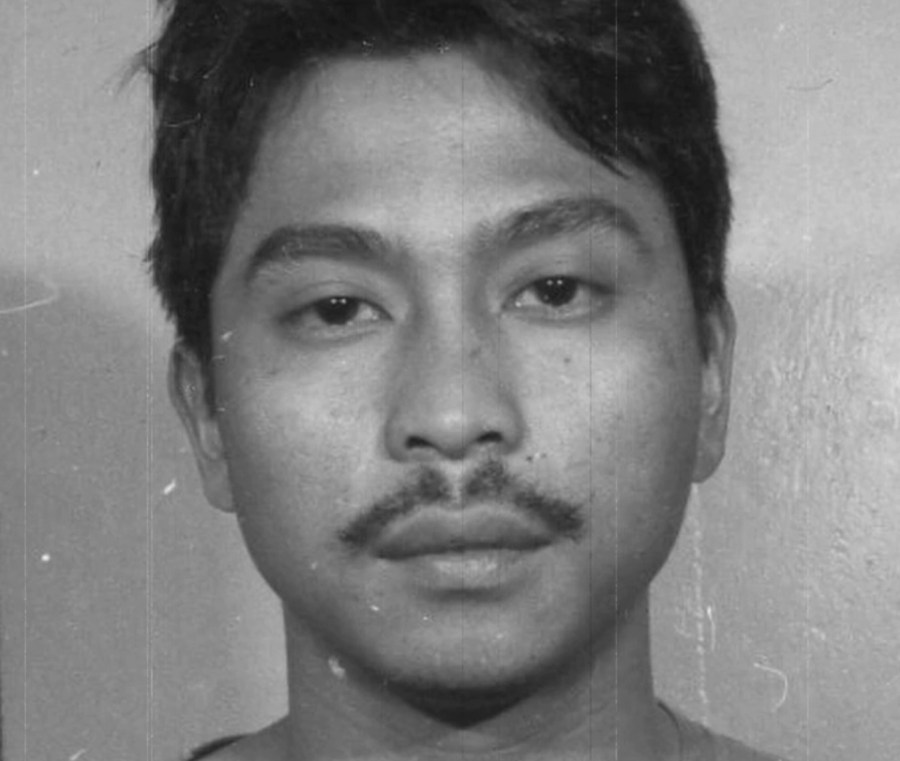
Fort Carson Army Soldier Nolly Depadua Killed Air Force Spouse Lourdes Riddle to Silence Sextortion Threats; Sentenced to 14 Years in Prison, Out in 7 (March 26, 1985)

ID Go: After Lourdes Riddle in found strangled to death in the trunk of her car, homicide detective Joe Kenda follows the trail through a twisting maze of military and cultural secrets. Just what was Lourdes doing behind her husband’s back? -Secret Life, Homicide Hunter (S1, E5)

Investigation Discovery featured back to back episodes of Homicide Hunter with Lt. Joe Kenda. Kenda is a retired detective from the Colorado Springs Police Department. Colorado Springs is also the home of US Army base Fort Carson and Peterson Air Force Base. As a result, Lt. Kenda worked closely with investigating authorities at both bases throughout the years when one of his murder cases involved a member of the military or their dependents. If a crime against a military member or their dependents occurred off-base within the jurisdiction of Colorado Springs, Lt. Joe Kenda had the legal authority to investigate the strangling death of an Air Force wife found in the jurisdiction of Colorado Springs.

Construction workers found an abandoned car that had been set on fire on their property on March 26, 1985. The scene looked suspicious so they contacted the police to investigate the situation. The police found Air Force spouse Lourdes Riddle strangled to death in the trunk of her own car. Lt. Joe Kenda was called to the scene to investigate the crime further and determined that whoever killed Lourdes also tried to cover up their crime. They found that an accelerant (gasoline) was used to burn the car and a brick was on the driver’s side floor of the car (as if it was used to hold down the gas pedal). As Kenda was processing the crime scene, two Air Force Office of Special Investigations (AFOSI) personnel showed up and claimed they were taking charge of the investigation. They informed Kenda they had the husband, TSgt Mark Riddle, who worked at NORAD, Cheyenne Mountain, in custody on Peterson AFB.

Kenda’s response to the Air Force Office of Special Investigations personnel was priceless and proves that he truly is a fierce detective that all law enforcement should emulate. He was not intimidated by the feds in the least bit when the crime occurred in his jurisdiction. He shared that even it was their house, how dare they walk into his crime scene. Kenda was absolutely shocked when they shared they had enlisted soldier, Mark Riddle, in their office at Peterson AFB. Their attitude was that it was obvious who did it because in most cases it was the husband or boyfriend. When in fact, Kenda was disappointed that they may have tainted the case by initiating an ‘immediate arrest’. He was afraid that this outside agency, who had no jurisdiction, had advised Mark Riddle of his rights and he would want a lawyer now. His guilt was not obvious to Kenda who did not automatically assume that the husband committed the crime. He simply wanted to talk to him, not accuse him. Kenda felt that their actions may prevent him from doing an interview which could really damage the case. Kenda admitted to making mistakes in his lifetime but he also shared that he gets really upset when someone else makes them for him. If all investigators operated like Kenda and made assumptions based on fact finding, we could better protect the due process rights of individuals.

Kenda gains access to Mark Riddle and learns that Lourdes is a 31 year old from the Philliphines who has been married to him for nine years. There was in fact trouble in paradise and Mark admitted that his wife had been spending time with and maybe even sleeping with other men. They were not happily married. He claimed he was home the night of the murder and had no alibi. Mark asked for a polygraph test to prove his innocence and passed it, then let the investigators search his home. Although adultery is a motive for murder, Kenda determined that Mark Riddle was honest, credible, and was no longer considered a suspect. This case was not a sex crime but it was a personal and angry crime as evidenced by the ligature strangulation. Kenda felt that this person wanted to punish her and wanted to feel her die. This person was deemed the “Pantyhose Strangler” in the media. After talking to Lourdes family, Kenda learned that Lourdes was threatened by more then one person. Kenda wasn’t sure if she was a target because of Mark’s work at a secret military base or if it was because of her own secret life.

The Air Force couple lived on Peterson AFB. Kenda learned that Lourdes went to night clubs that soldiers frequented. She was into the nightlife, partying, and dancing. Her neighbors reported that she was in and out of the house all the time, usually dressed up with high heels, short skirts and make-up. During Kenda’s investigation into the circumstances of Lourdes secret life, rumors began to circulate at the enlisted men’s club on Fort Carson that she was extorting Army soldiers. In the meantime because of media coverage, an eye witness came forward with a description of a suspect that was found near the scene of the crime that night. He was a black male about 6’8. Kenda asked those who frequented the enlisted club on base if she was dating anyone matching the description. He learned that she only dated Phillipino men and wouldn’t give any other guy the time of day. The rumor was that she draws soldiers in like a Venis flytrap. She specifically sought out Phillipino soldiers. She would have a relationship with them, claim that she was pregnant, and threaten to go to their military Commander if they did not give her money for an abortion.

Lt. Kenda learned of blackmail accusations involving Nolly Depadua, a Phillipino soldier stationed at Fort Carson. Nolly had a friend named Brian Hawkins, also a Fort Carson soldier, who matched the description of the suspect described near the scene of the crime the night Lourdes was murdered. Kenda spoke to Brian with the approach that the facts would give him a theory. Initially Hawkins denied any involvement but Kenda believed that he was lying based on his body language during the interview. He requested he undergo a polygraph test and Hawkins failed miserably. When confronted with the results, Hawkins begins to cry. Hawkins told Kenda that Lourdes wanted money from Nolly Depadua. She claimed she was pregnant and was going to contact the Commander if he didn’t give her money. Nolly was concerned that his family would be ashamed of him if he got kicked out of the military. Nolly strangled Lourdes with the pantyhose.

FullSizeRender-2
Nolly Depadua, U.S. Army

Kenda arrested Nolly and learned from him that they had sex, and she wanted $1000 for an abortion. According to Nolly, Lourdes took his Army dress uniform, used it as ransom, and threatened to burn it if he didn’t give her the money. His career and that uniform meant everything to him. The night of the murder, Nolly asked Lourdes to meet him and give him back his uniform. Lourdes showed up without the uniform. He snapped and strangled her to death in an effort to solve his extortion problems and save his career. Nolly elicits the help of Brian to help him get rid of the body. Unlike in the movies, the car did not explode in a ball of flames like the pair was expecting. The evidence at the scene of the crime was mostly unharmed. According to Kenda, both of the soldiers appeared to show remorse for the crime. Although Lourdes Riddle was a participant in her own death and her behavior caused this reaction, she did not deserve to die. Nolly Depadua made a decision to take a life and you can’t do that. Due to the circumstances surrounding the homicide, he was found guilty of second degree murder and sentenced to fourteen years in prison. He was released after seven. Lt. Kenda ended the show with: “saying she got what she deserved is not fair.”

A couple issues come to mind when it comes to the way the military handles investigations of felony crimes. Why did the Air Force Office of Special Investigations want to take jurisdiction of this case? Why did they do an ‘immediate arrest’ instead of investigating the circumstances and basing their decisions on fact finding? Why don’t they realize that their actions actually hinder the thorough investigations of cases. Research does in fact support that most spouses are murdered by their significant others but we have this thing called due process in the civilian world. The way Kenda felt about OSI interfering and possibly damaging the case was legitimate. And Kenda approached the investigation of the case in the way that detectives should move forward. He simply wanted to talk to the spouse, not accuse of him of the crime. So far there was no evidence to prove that Mark Lourdes had committed the crime. The way the Air Force OSI handled this case is part of the reason that the military justice system is under fire. They have been accused of overreach to include not affording due process rights to both victims of crime and those accused of a crime. They have been accused of railroading military members with an iron fist and as Joe Kenda would say ‘draconian and ruthless’ tactics. They have been accused of making a victim fearful of coming forward if they were involved in a military crime, like adultery or drinking underage. Nolly Depadua is yet another example of a crime involving the motive of fear when someone threatens to go to a military commander.

This is the heart of the military justice system debate. A commander hears each person’s story and determines who is guilty and who is not guilty based on that evidence alone usually. Commanders make the decision whether to prosecute someone in the military. If felony cases were handled by prosecutors who understood the modus operandi of sociopaths, psychopaths, and predators, would our soldiers feel more comfortable reporting a crime without the fear of damaging or losing their own career. It’s a theme that comes up over and over in military cases and needs to be examined. Are soldiers hesitant to report crimes perpetrated against them to their Commander if they have engaged in illegal behavior of any kind to include drinking under age and adultery? If this is the case, we must remove this barrier so that our soldiers feel safe to report felony crimes perpetrated against them without fear of losing their careers because they committed a misdemeanor.

If Nolly had a safe place to report that Lourdes was extorting him despite the adultery issue, could we have prevented this murder? We don’t want our soldiers to feel like they have nowhere to turn if they are targeted by those who know how to manipulate unsuspecting Commanders. It’s important to recognize that both male and female soldiers can be targeted by male or female sociopaths and predators. Reporting crimes to your commander is currently a battle of whose story is more believable and what they feel or don’t feel like dealing with. Commanders hold the key to moving forward with a case or not in our current military justice system. Do they have the skills necessary to investigate and determine who should be prosecuted for crimes? Commanders may not realize that they could tip people off who need to be questioned simply by prematurely inquiring into something which creates an opportunity for collusion.

In the civilian world, you most likely will not lose your career for adultery. Yet in the military, adultery is treated like any other crime in the courts martial process and soldiers can and do lose their careers. It’s not worth a life when people feel that they have to take matters into their own hands to protect what should never been taken from them to begin with. This is why the reporting of felony crimes needs to be moved away from the Commander and to a trained investigator who can help the prosecution determine whether a crime has been committed or not. Prosecutors cannot win cases if the defendants are not afforded due process rights. And this is what gives civilian law enforcement the advantage because they are forced to work within a justice system that protects the constitutional rights of the accused. We want to respect those rights in our pursuit of justice because that is how we will get justice. We should ensure our soldiers that if a felony offense is committed against them that they can safely report the crime without the fear of losing their career.

Source: ‘Secret Life’ Homicide Hunter, Investigation Discovery

Editor’s note: With a cable subscription, you can download the free ID Go app and watch Investigation Discovery programming at your convenience. And for those who do not have cable, you can watch “unlocked” episodes on the ID Go app including the latest premieres. For those who prefer commercial free programming during your binge session, Prime Video has an ID channel: ‘True Crime Files by Investigation Discovery” available for $3.99 a month. It’s a compilation of older seasons but totally worth the cost if you are a true crime addict. Download the ID Go app or purchase ID True Crime Files & binge away.

Related Links:
Army CID warns Soldiers to beware of ‘sextortion’ scams
Secret Life | Homicide Hunter | Investigation Discovery (S1, E5)
Secret Life | Homicide Hunter | Investigation Discovery (website)
Secret Life | Homicide Hunter | Investigation Discovery (Amazon)
Secret Life | Homicide Hunter | Investigation Discovery (Hulu)
Nowhere to Turn: Soldier Extorted by a Military Wife Ends in Murder
Fort Carson Army Soldier Nolly Depadua Killed Air Force Spouse Lourdes Riddle to Silence Sextortion Threats; Sentenced to 14 Years in Prison, Out in 7 (March 26, 1985)
Homicide Hunter Premiered ‘Secret Life’ on ID: Fort Carson Soldier Strangled Lourdes Riddle to Silence Sextortion Threats (November 22, 2011)
Violent Crime, Suicide & Non Combat Death at Fort Carson, Colorado

Army Brigadier General Bobby Robinson Found Dead by Gunshot Wounds at Washington DC Home, Death Believed to be Suicide (1985)

US Army
BG Bobby Robinson, US Army

Related Links:
Army General’s Shotgun Death Believed Suicide
Army General Is Found Dead In Apparent Virginia Suicide
Gas Stockpile Detonates Residents` Nerves
Agencies Deny Man’s Charges of POWS, Chemical Arms, Murder in Southeast Asia
A History of Chemical Warfare by Coleman (2005)

Army Reservist & Drexel University Security Guard David Dickson Murdered Deborah Wilson on Campus; Sentenced to Life in Prison (November 30, 1984)

Deborah Wilson
Deborah Wilson, Pennsylvania

On November 30, 1984, student Deborah Wilson was found strangled to death in a stairwell outside a computer lab at Drexel University in Philadelphia, Pennsylvania. There was no sign of rape and her purse wasn’t taken but her socks and shoes were missing. For eight years Philadelphia police detectives were stumped because no circumstantial or forensic evidence matched any of the prime suspects including a campus security guard who had done a stint in prison for robbery. The convicted felon conveniently left that important detail off his university employment application but apparently the university didn’t do a background check. Eight years later, Philadelphia cold case investigators began looking at the case. They reinterviewed campus employees and recognized a discrepancy in testimony. In the first homicide investigation, campus security guard David Dickson told detectives that he heard the printer working in the computer lab at 1:30 a.m. so he decided not to disturb the busy student. When he came back a couple hours later, she was gone. But in the second investigation they learned from a university employee that the printers stop working at 10 p.m.

Detectives zeroed in on Sgt. David Dickson, who was a Army Reserves Sergeant heading up a recruiting station. According to investigators, Dickson left his campus security guard position shortly after the crime and entered the active duty Army again. When they dug into his military record, they learned that his first active duty stint ended with a courts martial and a discharge from the Army in 1979 for burglary. He was accused of breaking into a female Army soldier’s home in Korea and stealing her sneakers. He was also suspected of a string of shoe thefts at the Philadelphia Naval Base where he lived. Multiple spouses reported that their white sneakers and gym socks where stolen from their homes but it was revealed that military leadership disregarded them. Apparently, the military thought the spouses were ‘crazy’ and ‘acting up’ while their husbands were away. In addition, a local newspaper noted that Dickson was fired from a pharmaceutical company for sending a co-worker a sexually explicit letter and whispering over the phone that he was going to rape her.

fullsizerender-2-copy-2
David Dickson, U.S. Army Reserve

When police searched Dickson’s home, they found multiple videotapes containing ‘foot pornography’ and more then twenty pairs of individually wrapped white sneakers in a storage unit. Cold case investigators theorized that Deborah Wilson stayed late in a computer room in Randell Hall to work on a project due the next day. Dickson worked the midnight to 8 a.m. shift at Randell Hall. One of the outgoing security guards asked Dickson to escort Deborah to her car but instead Dickson’s ego was bruised and he decided that he was going to take Deborah’s sneakers. He used a few karate chops on her head and neck area, lunged at her, and then hit her on the forehead with a security clock. After he realized what he did, he decided he had to kill her to cover up his actions so he strangled her to death, dragged her body to the stairwell, and took her socks and sneakers. In September 1993, Dickson was arrested for killing Deborah Wilson but he remained stubbornly silent. Dickson’s first trial ended in a deadlocked hung jury but the second trial’s outcome would be the result of Dickson’s own actions. Dickson proclaimed his innocence throughout the entire first trial but prosecutors learned from a snitch that he bragged about killing the ‘rich bitch’ while he was in jail. The investigators also learned more about the details of the crime and the information provided corroborated the evidence found at the autopsy including the bruises on her feet.

David Dickson was found guilty of second degree murder in December 1995 and was sentenced to life in prison. A psychiatrist testified that Dickson’s obsession with white sneakers ‘crossed a sick sociopathic line.’ It’s important to note that Dickson’s criminal behavior is what prompted him to move between the active duty Army and the Army Reserves. Dickson was able to escape each location without detection but the behavior followed him from base to base. This case is an excellent argument for the use of the FBI national database in the use of documenting crime in the U.S. military that can be easily accessed by military law enforcement officials in the world. Burglary is considered a felony therefore it would be an appropriate action to enter the crime into the world wide system whether you know who did it or not. The FBI national database would help us track the clues to solve the crimes perpetrated by transient military personnel.

Investigation Discovery:

After an all-night study session in a university lab, math student Deborah Wilson is found strangled, missing her shoes and socks. Years later, Philadelphia investigators unearth the shocking obsession that drove a killer to take her life. -Barefoot Homicide, Unusual Suspects (S7,E13)

Editor’s note: With a cable subscription, you can download the free ID Go app and watch Investigation Discovery programming at your convenience. And for those who do not have cable, you can watch “unlocked” episodes on the ID Go app including the latest premieres. For those who prefer commercial free programming during your binge session, Prime Video has an ID channel: ‘True Crime Files by Investigation Discovery” available for $3.99 a month. It’s a compilation of older seasons but totally worth the cost if you are a true crime addict. Download the ID Go app or purchase ID True Crime Files & binge away.

Related Links:
Find a Grave: Deborah Lynn Wilson (1963-1984)
Fetish Murder? Killed By Foot Fetishist? Drexel Student Was Slain In ’84
Slowly Making A Case A Lengthy Hearing On 1984 Homicide
Witness: Suspect Told Of Killing Skill
Murder Suspect’s Wife Tells Court Of His Sexual Fascination With Feet
Love Letter, Sneaker Fetish Linked At Murder Hearing
Accused Coed-killer Tries To Hang Self In Jail
Woman Who Lived Above Murder Suspect Tells Of Shoe Thefts 
’84 Drexel Security Called Lax By Witness Slaying Trial Told Guards Drunk, Stoned
Inmate: He Killed Her, Then Played With Her Feet Claims Shoe Fetishist Told Story In Prison
Defense Lawyer: Foot Fetish Doesn’t Make Him A Killer
Self-confessed shoe fetishist retried in student’s murder
Cold Case Squad: Modern-Day ‘Sherlock Holmes’ Team Takes on Oregon Slaying
Snitch Work: Death Penalty Information Center
Unusual Suspects Premiered ‘Barefoot Homicide’ on ID: Drexel University Student Deborah Wilson Found Murdered on Campus (April 5, 2015)
Barefoot Homicide | Unusual Suspects | Investigation Discovery (S7,E13)
Barefoot Homicide | Unusual Suspects | Investigation Discovery (website)
Barefoot Homicide | Unusual Suspects | Investigation Discovery (Prime Video)

Army Veteran Michael Silka Died After a Stand Off with Police; Silka Murdered Eight Manley Hot Springs Residents & Trooper Troy L. Duncan (May 19, 1984)

Michael Alan Silka
Michael Alan Silka, U.S. Army Veteran

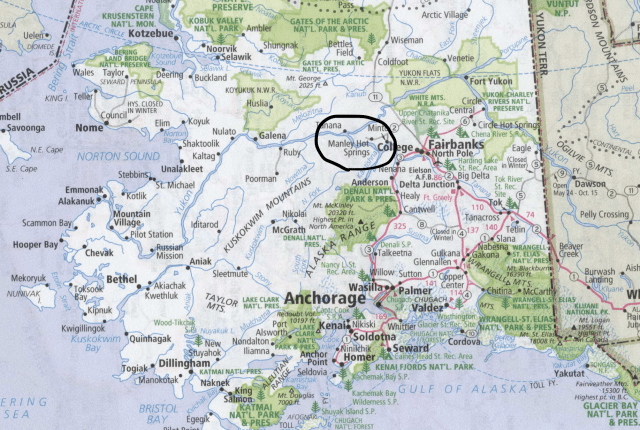
Manley Hotsprings, Alaska is in the middle of nowhere and at the end of the road. In 1984, Manley had a population of maybe 50. Fairbanks was the closest city and roughly a five hour drive or 150 miles away. In the spring of 1984, the residents of Manley were anxiously awaiting for spring. When the rivers start flowing, transportation on the river became available and that’s important to the Manley Springs community. On May 17, 1984, Vietnam veteran Larry Joe McVey, 37, and Dale Madajski, 24, went to the boat landing about a quarter mile out of town. Later that afternoon when the men failed to return, the wives began to wonder what was keeping them. They drove to the landing and found Joe’s boat still on the trailer. They knew something was wrong because the pair left their beer in the truck. One of the wives also noticed another local’s car at the landing. Albert Hagen Jr., 27, was visiting his parents in Manley and went to the river that morning after he cleared out some brush from their land. Given the unusually warm weather, maybe the three of them went somewhere together…

But by noon the next day, there was no sign of the three men. That afternoon friends and family of the missing gathered together out of concern. They were terrified something horrible happened to their loved ones. They realized others in Manley had vanished too. The families were worried about the Kleins because no one had heard from them. They were last seen riding their four wheeler to the landing. Their four-wheeler was parked at the landing but they were not there. Community members assumed they went to their property up river. The family left town on occasion but always asked someone to take care of their dog while they were gone. Frantic, several of the towns people went to the Kleins to check in on them, and they found the dog. They knocked on their door and nobody answered. Meanwhile, others headed to the boat launch in hopes the missing had returned. And while there, they noticed an unattended vehicle, that of a stranger who had arrived in Manley Springs only a few days earlier.

The stranger had been in town for a few days so everyone got used to him; he set up camp at the landing. It wasn’t unusual to see him at the landing or in town. But the newcomer was among the many who were missing. Six people were missing, nearly 1/10 of the town was unaccounted for, and the alarm bells were going off. Meanwhile, folks in Manley had no idea what happened down river in the tiny town of Hopkinsville. Roger Culp had called the place home for years but no one had seen or heard from Roger in more than a week. Roger’s neighbor also noticed their moose hide was missing from the line at her cabin. She was immediately suspicious that Michael Silka had taken it. She went to his cabin to confront him. While she was there, she noticed a funny mound of snow at his place. She found another mound of fresh snow behind the cabin too. Silka was nowhere to be found. She questioned neighbors about his whereabouts but nobody saw him. The neighbor left and returned to the cabin again and this time she saw blood.

The neighbor ran back to her cabin to get her husband because she knew something was wrong. When they arrived at Silka’s cabin, their first thought was he probably killed an animal but they were uneasy about why he would hide it. They took another look in Michael’s cabin; this time he answered the door. He said he took the moose hide with the understanding that they gave it to him and he said he would return it. Later that day, authorities checked out Silka’s cabin but there was no response. They found blood and fresh mounds of snow too, When they investigated the mounds, they found the moose hide. They knocked on Silka’s door once more and this time he answered; he had been there all along. Silka said he shot a moose and the hide dripped blood. The police didn’t find anything suspicious and assumed the case was closed and left. It was not uncommon for people to go missing in Alaska but this many missing in one little Alaska town was alarming. Six people disappeared in Manley and residents were going to look for them.

They found Michael Silka’s vehicle at the landing and turned his license number over to police; they thought he was suspect. The police learned Silka, 25, was the same man who raised eyebrows in nearby Hopkinsville. In Hopkinsville, Roger Culp was missing. Police searched the community after a resident saw blood in the snow. A week later, another resident told the police about a scary incident they had with Michael Silka. Roger and Michael had words and Roger followed Silka back to his cabin, then the resident heard gun shots. There was no 911 where she lived so she locked herself in her cabin. Armed with the new information, police wanted to talk to Michael Silka again. When the police arrived at his cabin, he was gone and his car was gone. The police spent two days combing the area around Silka’s cabin and found patches of blood. A lab confirmed it was human blood. The police didn’t have a body but they wanted to speak with Silka. They were going to start with a conversation with him about the missing Roger Culp.

Map of Alaska
State of Alaska Map

The community suspected Michael Silka had evil intentions and it was going to be hours before a team of Alaska State Troopers would show up. In the early morning hours of May 19, 1984, Alaska State Troopers arrive at Manley by helicopter and auto. The troopers set up a roadblock at the only road that left town. When the helicopter took off and landed, it stirred up the snow and pools of blood began to emerge. They also found some 44 caliber shells. They knew this was the crime scene. Near the river bank troopers found the Klein’s four wheeler hidden in the brush and Joe’s hat. They also found drag marks to the water’s edge. At this point, they don’t know if the missing are dead or if Silka was holding them hostage. They took to the sky and ground to search for Silka. Shortly after they started searching, the troopers unexpectedly stumbled upon a woman at the river’s edge waving for help. She told them her husband had gone to town and didn’t return home; she last saw her husband Fred Burk, 27, two days ago.

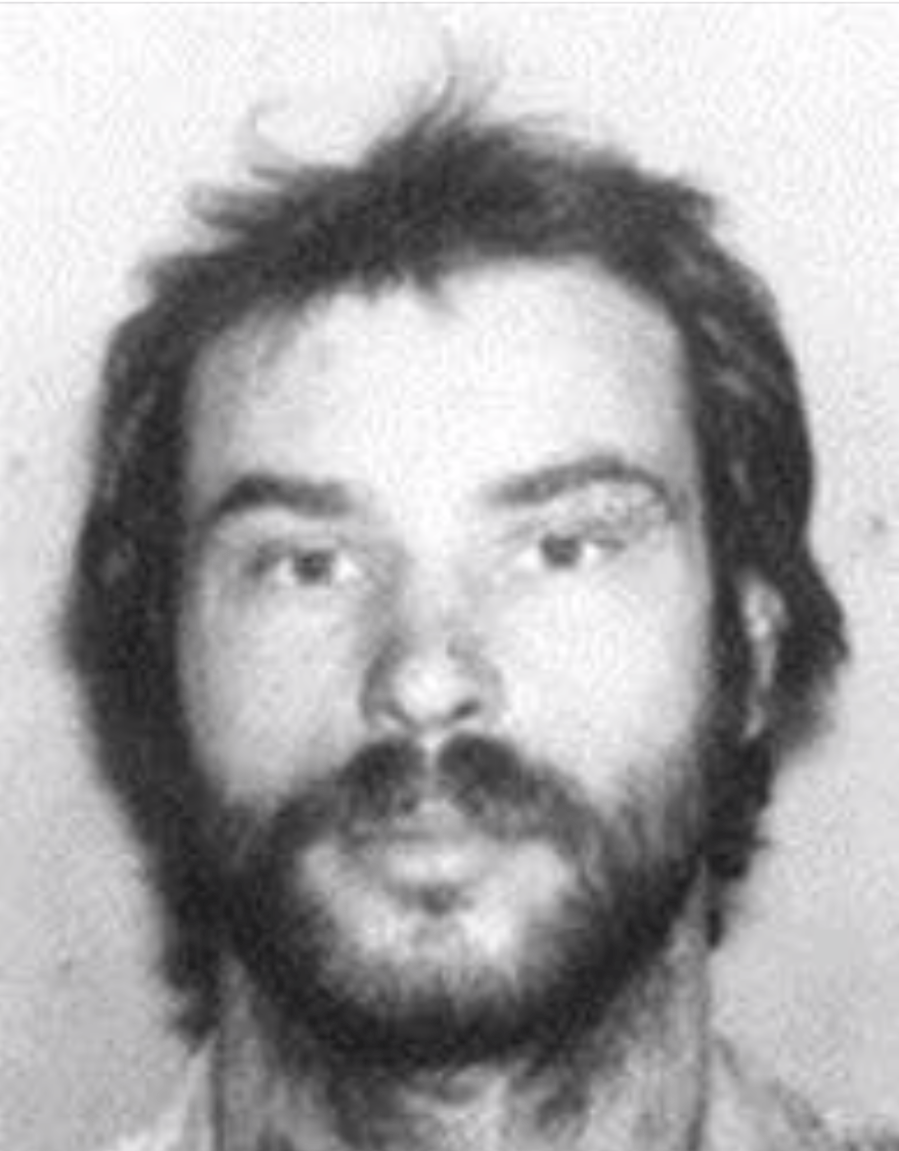
Over a dozen Alaska State Troopers armed with weapons and combat gear converged on Manley Hot Springs. But they had no idea the suspected killer they were seeking was a former military man. After running his plates, they learned Michael Silka joined the Army after he graduated from high school in Illinois. He did a tour of duty at Fort Wainwright in Fairbanks. Before making his way to Manley, he spent a few months holed up in a remote Canadian town. He lived in a hotel room, used cash for everything, and stayed to himself. People noticed he carried a number of shotguns in his vehicle. Silka had minor criminal offenses for fire arms in his past. He loved fire arms but came from a place guns were frowned upon. His dream was to move to Manley Hot Springs to live off the land. The troopers learned he had trouble with law enforcement all the way from Illinois, to Canada, and in Alaska. As troopers set out to find Michael Silka, they were keenly aware they were up against a dangerous set of circumstances. They were dealing with a dangerous suspect who used the brush as cover.

The troopers scour the area and suddenly the pilot spotted a man in a flat bottom boat towing a canoe. The pilot recognized Michael Silka. He also observed an arsenal of weapons in the boat. Armed with M-16s, the troopers orchestrated a plan. They used two helicopters to keep him surrounded but Silka got out of the boat on the edge of the river bank. He immediately picked up a weapon and began shooting at the troopers. Silka had the upper hand so the helicopter pulled back. He shot at the helicopter quite a few times and positioned himself for a gun battle. The troopers were not going to act unless acted upon. But Silka strategically positioned himself by taking cover in the thick brush as he shot at the helicopter again. As the helicopter was backing away, they realized they had been hit and that Trooper Troy Duncan, 34, was shot. Seconds later, another trooper started shooting back with a M-16 in fully auto. Silka was hit five times and died instantly. They then turned their attention to their comrade but he was already gone.

Trooper Duncan was the fourth trooper to die in the line of duty in Alaska. In the days after the carnage, the residents set out to find the missing. Divers attempted to look in the river but the silt pulled them down to the bottom. It was impossible to find them if they were in the river. Investigators contended that Silka got in an argument with Joe and Dale down at the boat dock and the argument most likely led to Silka using his gun to settle the score. He lost his temper and shot them. The other residents showed up when he was dragging the bodies to the river. He had to keep killing people to get rid of the evidence. Fred Burk had the unfortunate experience of running into Silka too. Michael shot him so he could take his boat. Thankfully by the end of the summer, the river had given up the bodies of Joe, Dale, Lyman Klein, 31, and Fred Burk. All of them had been shot in the head. Lyman’s pregnant wife Joyce and their son Marshall were never found and the bodies of Albert Hagan Jr. and Roger Culp never surfaced either.

The total number of Silka’s victims may never be known. In the days before Silka was making his way to Manley, Fred Burk and his mother-in-law saw the drifter’s vehicle parked some 30 miles outside of town. They noticed three people in the front seat, one they later identified as Silka. They observed that the two people with him look petrified. To this day, no one knows what happened to those two people or who they were. At the request of his father, Michael Silka was buried in the National Cemetery in Sitka, Alaska. He was an honorably discharged soldier and had that right. But what’s even more ironic about that is the State Trooper Training Academy is right next door to the cemetery. A retired Alaska State Trooper said they had to unmark the grave for whatever reason.

Source: Frozen Carnage, Ice Cold Killers, Investigation Discovery

Podcast:

This week we focus on a heinous & horrific crime as well as the killing spree committed by a wandering “mountain man”. Get ready for scary mysteries Twisted Two’s. -Michael Silka, Scary Mysteries Podcast (July 4, 2018)

Investigation Discovery:

Manley Hot Springs, Alaska is a remote mountain hide-a-way known for simplicity and solitude. But, that innocent existence is shattered when a newcomer goes on rampage and guns down residents one by one, ultimately taking out one tenth of the town. -Frozen Carnage, Ice Cold Killers (S1,E5)

Editor’s note: With a cable subscription, you can download the free ID Go app and watch Investigation Discovery programming at your convenience. And for those who do not have cable, you can watch “unlocked” episodes on the ID Go app including the latest premieres. For those who prefer commercial free programming during your binge session, Prime Video has an ID channel: ‘True Crime Files by Investigation Discovery” available for $3.99 a month. It’s a compilation of older seasons but totally worth the cost if you are a true crime addict. Download the ID Go app or purchase ID True Crime Files & binge away.

Related Links:
Obituary: Michael Alan Silka (1968-1984)
Murderpedia: Michael Alan Silka
Manley Victim is Found
Mass murder in Alaska: Suspect, 9 others dead
Massacre: Slain drifter believed mass murderer in Alaskan town
Alaska town is still haunted by the horror of mass murder
Memories of Springtime Murders Chill Small Alaskan Town
Violent crime in Alaska:Are loners and outcasts drawn to America’s frontier?
At Road’s End, There’s No One Left to Flee From
Michael Alan Silka and the Firefight at Manley
Gunfights on Guns.com: Wilderness Manhunts
The Tiny Town In Alaska With A Terribly Creepy Past
Murder in Alaska: Crazy in the ’80’s
Murders at Manley Hot Springs
Today in Horror History: Michael Alan Silka (May 19, 1984)
10 Ice Cold Killers From Alaska That Will Make You Fear The Last Frontier
Here’s a look at rampage killings that have occurred in the United States since the 1940s
Here’s a look at rampage killings that have occurred in the United States since the 1940s 2
By the numbers: America’s deadliest mass shootings | CBS News
Man killed by police after killing spree
Yours in Murder: Michael Silka | Apple Podcasts
10 Small Towns Devastated By Sudden Killing Sprees
5 Devastating Small Town Crimes
Becoming a Practical Rifleman
Murders In The United States: Crimes, Killers And Victims Of The Twentieth Century
Manley Hot Springs Rampage: Michael Alan Silka killed at least 9 people in a three hour rampage
A history of Alaska State Troopers’ line-of-duty deaths
Trooper Troy Lynn Duncan | Officer Down Memorial Page
Frozen Carnage | Ice Cold Killers | Investigation Discovery (S1,E5)
Frozen Carnage | Ice Cold Killers | Investigation Discovery (website)
Frozen Carnage | Ice Cold Killers | Investigation Discovery (Amazon)
Twisted 2s #33 Damon & Devon Routier & Michael Silka | Scary Mysteries Podcast
Book: Murder at 40 Below: True Crime Stories from Alaska by Tom Brennan
Ice Cold Killers Premiered ‘Frozen Carnage’ on Investigation Discovery: Army Veteran Michael Silka Went on Killing Spree in Alaska (January 8, 2013)

Army Reserve Veteran Robert C. Hansen Sentenced to 461 Years Plus Life in Prison, No Parole for Murders of Multiple Women in Alaska (February 28, 1984)

Robert Hansen was a mild-mannered family man with a passion for hunting. A master at his trade, Hansen sought a more challenging prey – his fellow human. Hansen kidnapped women, set them loose in the Alaskan wilderness, and hunted them down for sport. -Hunting Humans, Ice Cold Killers (S1, E1)

Serial killer and Army Reserves veteran Robert C. Hansen confessed to the murder of 17 women and the kidnapping and rape of another 30 women in Alaska. But the authorities believe there are many more victims and their cases are still open. Hansen was officially charged with the abduction and rape of Cindy Paulson and the murders of Joanna Messina, Sherry Morrow, Paula Goulding, and the unidentified body known as “Eklutna Annie.” On February 28, 1984, Robert Hansen was sentenced to 461 years plus life in prison with no parole. Hansen led the police to 17 grave sites he marked on a map but only 12 of his victims bodies were recovered. Robert Hansen’s health was declining for over a year when he died of natural causes on August 21, 2014 at the age of 75.

In 1982, two off-duty police officers were hunting for wild game. As darkness fell and they headed home, they made a gruesome discovery. They knew enough to back away and dispatched the Alaska State Troopers to the scene. The crime scene investigators unearthed the partial bones of a woman buried in a shallow grave. They also found bones scattered around the surrounding area. In Alaska, wild game won’t hesitate to drag off the evidence. They also found a 223 caliber bullet casing. The victim was bound and blind folded at the time of death, and she was shot three times. She was identified as Sherry Morrow; Sherry was drawn to Alaska for the easy money. She worked as an exotic dancer in a seedy area of Anchorage known as ‘Fourth Avenue’. Police looked to see if anyone else in that community had disappeared under similar circumstances. Before the discovery of Sherry’s body, none of the missing persons reports were linked or suggestive of murder. Morrow’s case inspired police to take a look at the cold case files.

Two years before Morrow’s body was found, construction workers found the partial remains of a woman buried in a shallow grave; her body was desecrated by wild life and her bones were scattered. Police couldn’t make an identification and dubbed their Jane Doe “Eklutna Annie”. Nobody ever came forward with information about Annie. Police were concerned they were dealing with a brutal killer so they started canvassing the area where the dancers spent their time. Sherry’s co-workers feared the worst because a number of women had gone missing and they were never heard from again. Over the next several years, five more dancers went missing. Police suspected Sherry and Annie’s cases were connected. They were all victims from the beginning because everyone preyed on these girls, including the bar owners and pimps. Several dancers reported seeing the same man and provided police with a physical description. Police learned of a third body found in a gravel pit near where Eklutna Annie’s body was found.

The victim was identified as Joanna Messina. She was a canary worker who was last seen leaving the dock with her dog and a red haired man her co-workers couldn’t identify. Messina was shot and killed with a 22, not a 223. Two more women vanished and were never seen or heard from again. The blindfolds at the crime scenes told the police a lot about the killer. He was a sexual sadist who wanted complete control. He derived pleasure from his victim’s fear and pain and disposed of their bodies in isolated areas in Alaska. Nine months later, a truck driver found a frantic hand-cuffed woman running in the road; someone with a gun ducked out of site. The trucker took her to a nearby hotel where she was safe and called the Anchorage police. The police found a 17-year-old woman still in handcuffs and in shock. She told the officers she was a topless dancer down on 4th Avenue; she said she was propositioned by a red haired man in his 40s the night before. She confessed that she accepted the stranger’s offer.

Once inside the man’s car, she said the man pulled a gun on her. He kidnapped her, handcuffed her, and told her if she cooperated and did what he wanted, she wouldn’t be harmed. He took her to a middle class house in Muldoon. He held her hostage in a basement filled with mounted heads of animals. He brutalized her for hours. He chained her to beam in the basement and repeatedly sexually assaulted her. She told the police he was going to fly her to his cabin in the woods, promising to release her if she cooperated. Once at the airport, the kidnapper shoved her in a small plane and began loading supplies. The second he turned his back, she made her escape. Hoping to corroborate her account, investigators took her to the airfield to find the plane. She identified a plane owned by Robert Hansen; he was a 50 year-old avid hunter and local business man. Hansen owned a well established bakery, had lot of friends, and went to church. By all accounts, he was an upstanding member of the community.

When questioned by police, Hansen was outraged and insisted the dancer was lying to extort money from him. He also questioned whether it was even possible to rape a prostitute. He claimed he had an alibi and told investigators his wife and children were in Europe and he spent the night playing poker with friends. When questioned, the two men substantiated his story. Hansen allowed authorities to search his home but they didn’t find evidence of what the victim described. She also refused to take a polygraph and this made the police wonder if she fabricated the story. It was a “he said, she said” case because they had no evidence. Citing a lack of evidence, the prosecutor dropped the case. Three months later, Alaska State Troopers discovered the partially decomposed remains of another woman in a shallow grave. She was identified as a missing dancer from the Fourth Avenue district. Investigators found a blindfold buried among the remains. An autopsy revealed Paula Goulding had also been shot by a 223 caliber bullet.

Initially, the police didn’t link the cases but the use of the 223 caliber bullet helped them realize they were dealing with a serial killer who was targeting exotic dancers in Anchorage. Troopers contacted the Federal Bureau of Investigation for assistance; agents created a behavioral profile of the serial killer. The killer believed he was invincible because he picked the perfect victims. He chose the dancers on Fourth Ave because he thought no one would care if they were missing. They started looking into Robert Hansen’s past. They learned he was abused as a child and had very low self-esteem. He was always considered small and had few friends; he was often ridiculed by his peers. After graduating from high school, Hansen enlisted in the Army Reserve and went to basic training at Fort Dix. He later received advanced training as a military police officer at Fort Knox. While enlisted in the Army, he was known to frequent prostitutes. He told fellow soldiers, he found them dissatisfying and yearned to take control of the situation.

Despite his strict up bringing and disciplined military structure, the profilers learned Hansen had a number of run-ins with the law. He served time for arson and theft but he appeared to have long since left that life behind. In 1967, he married and moved to Alaska. He was a functioning member of society. They believe his low self-esteem would drive him to live in a place like Alaska. His former neighbor told investigators he loved the thrill of the hunt; and he was always looking for the bigger hunt. He was an avid trophy hunter. Hansen’s weak point was women because he was unsuccessful with them. He hunted where most of the victims were found. “Perhaps Hansen tired of game and turned to more interesting prey like humans.” Humans create a much greater challenge to the hunter. Police deduced he most likely had trophies from his hunts for humans. The killer was a sexual sadist, proficient, and more successful over time. Authorities threatened the two men who alibied him with jail time if they didn’t come clean about the night the dancer was abducted.

Both friends quickly broke down and said they were covering for him because they thought he was a legitimate guy. They believed him when he said he thought the dancers were trying to extort him. The police asked Hansen to come down to the station and executed a search warrant. An officer searched the attic and in the rafters he found a bag of jewelry. And nestled with his bag of trophies, they found IDs belonging to the victims and newspaper clippings. Authorities also found a trophy map with locations of where he killed his victims. Hansen tracked his kills. The most critical find was a 223 caliber mini 14 rifle. The rifle was sent to the crime lab for further analysis. The 223 matched perfectly with the round they found in Eklutna. Robert Hansen was charged with assault and kidnapping. Despite his pleas of innocence, the evidence was mounting against him. The District Attorney agreed to charge Hansen with four murders: Sherry Morrow, Eklutna Annie, Joanna Messina, and Paula Goulding. Hansen accepted a plea deal. Police believe he chose prostitutes because they represent the evil in humans.

Robert Hansen chose prostitutes because they will go anywhere for anything and when they disappear, no one cares. He admitted he controlled the game from the point of abduction. He was the predator and they were they prey. He killed Eklutna Annie first. Then he abducted Sherry Morrow. He took most of his victims to his remote cabin and brutalized them for hours before he stripped them naked, blindfolded them and then released them in the woods. He turned them loose, gave them a head start, and hunted them down. He was a trophy hunter. He then collected things off the girls so he could re-live the events. Robert Hansen’s killing spree lasted twelve years in Alaska. Hansen confessed to 17 killings but it is believed he had many more victims. He eventually lead police to 15 gravesites unknown to investigators. Unfortunately, investigators only recovered 7 bodies likely due to the veracious animal activity in the Alaskan wilderness. Robert Hansen was sentenced to 461 years plus life in prison with no chance of parole.

Source: Hunting Humans, Ice Cold Killers, Investigation Discovery

Victims:
Andrea “Fish” Altiery (disappeared 12/2/81, unknown if body recovered)
Roxanne Easlund, 24 (disappeared 6/28/1980, unknown if body recovered)
Megan Emerick, 17 (suspected abduction on 7/7/73, body never recovered)
Angela Feddern, 24 (disappeared February 1983, body found)
DeLynn “Sugar” Frey (disappeared September 1983, body found)
Lisa “Betty” Futrell, 41 (disappeared 9/7/1980, body found)
Malai Larsen, 28 (disappeared June 1981, body found)
Paula Goulding (disappeared 4/25/83, body found)
Sue Luna, 23 (disappeared 5/16/82, body found)
Joanna Messina (disappeared 5/19/1989, body found)
Sherry Morrow, 23 (disappeared 11/17/81, body found)
Tamara Pederson, 20 (disappeared August 1982, body found)
Mary Kathleen Thill, 23 (suspected abduction on 7/5/75, body never recovered)
Cecelia “Beth” Van Zanten, 17 (suspected abduction on 12/22/71, body found)
Theresa Watson (disappeared 4/29/83, body found)
“Eklutna Annie” (real name unknown, disappeared 11/1979, body found)
Cindy Paulson (abducted & raped on 6/13/1983, escaped & survived)

List compliments of The Frozen Ground.

In the News:

A Killer Among Us: Inside the Hunt for an Alaska Serial Killer (June 11, 2017, KTUU-Channel 2, Anchorage, Alaska)

The Frozen Ground Movie (2012)

THE FROZEN GROUND Official Trailer (2013)

The Frozen Ground – Clip 3 | Lionsgate

The Frozen Ground (2012) – Chained Scene (1/10) | Movieclips

The Frozen Ground (2012) – The Lucky One Scene (2/10) | Movieclips

The Frozen Ground (2012) – Pole Dancing Scene (3/10) | Movieclips

The Frozen Ground (2012) – Hunting Her Scene (4/10) | Movieclips

The Frozen Ground (2012) – On the Run Scene (5/10) | Movieclips

The Frozen Ground (2012) – Shock at the Strip Club Scene (6/10) | Movieclips

The Frozen Ground (2012) – The Interrogation Scene (7/10) | Movieclips

The Frozen Ground (2012) – From Bad to Worse Scene (8/10) | Movieclips

The Frozen Ground (2012) – He’s Coming Scene (9/10) | Movieclips

The Frozen Ground (2012) – Truth Comes Out Scene (10/10) | Movieclips

Based on a true story. An Alaskan State Trooper (Nicholas Cage) must partner with a near victim and the only witness to escape the clutches of the serial killer in order to bring the murderer to justice. -The Frozen Ground

Frozen Ground – Examining the Frozen Ground

Editor’s note: With a cable subscription, you can download the free ID Go app and watch all of the Investigation Discovery programming at your convenience. And for those who do not have cable, you can watch “unlocked” episodes on the ID Go app including the latest premieres. Download the ID Go app and binge away. For those who prefer commercial free programming during your binge session, Prime Video has an ID channel: ‘True Crime Files by Investigation Discovery” available for $2.99 a month. It’s a compilation of older seasons but totally worth the cost if you are a true crime addict.

Related Links:
If film makes Hansen’s victims real, the story’s worth retelling
Photos: Alaska serial killer Robert Hansen and his victims
Serial killer Hansen dies; ‘World is better without him,’ trooper says
Robert Hansen: A Serial Killer in Alaska
Robert Hansen, the ‘Butcher Baker’ hid his evil side to lure, hunt and murder at least 17 women in Alaska
The Frozen Ground: Gruesome True Story of Serial Killer Robert Hansen
Alaska Serial Killer Robert Hansen Dies at 75
‘Frozen Ground’ serial killer Hansen dead
Alaska serial killer Robert Hansen dies at 75
Robert Hansen, convicted serial killer in Alaska, dies at 75
Robert Hansen dead: Alaska’s ‘butcher baker’ murderer who hunted his female victims dies in prison of natural causes
Alaska serial killer Robert Hansen, ‘the Butcher Baker,’ dies at 75
Infamous Alaska serial killer the ‘Butcher Baker’, who murdered 17 women and raped 30 others in the 1970s, dies
Robert Hansen, notorious Alaska serial killer, dead at 75
Alaska serial killer Robert Hansen dies, decades after confessing to murders
Robert Hansen — The Serial Killer Who Hunted His Victims Like Animals
This Serial Killer Hunted His Victims Like Animals in the Alaskan Wilderness
The Twisted Case of Robert Hansen, an Alaskan Serial Killer Who Hunted Down His Victims
Robert Christian Hansen (February 15, 1939 – August 21, 2014), known in the media as the “Butcher Baker“, was an American serial killer.
10 Ice Cold Killers From Alaska That Will Make You Fear The Last Frontier
50 horrifying serial killers from each state
Serial KIller: *Butcher Baker* Robert Hansen killed at least 17 women, sentenced to years in prison; Died 8/21/2014
Robert Hansen | Murderpedia
EP.#11: Robert Hansen “The Butcher Baker” | True Crime Guys Podcast
Ep 80 Robert Hansen | True Crime Podcast
Serial Killer Robert Hansen “The Butcher Baker” – Murder With Friends
Ep. 19 Robert C Hansen | The Strange Land Podcast
44 – The Butcher Baker Robert Hansen | Make Me a Fan Podcast
Robert Hansen | SERIAL KILLER FILES #5
Episode 309: Robert Hansen Part II – Gross Truncations | The Last Podcast on the Left
A Killer Among Us: Inside the Hunt for an Alaska Serial Killer
Robert Hansen – Serial Killer Documentary
Robert Hansen (The Butcher Baker) – Serial killer who hunted humans
15 Disturbing Facts About ‘The Butcher Baker’ Robert Hansen
The Frozen Ground – Teaser Trailer
The Frozen Ground – Trailer
THE FROZEN GROUND Official Trailer (2013)
The Frozen Ground Official Trailer #1 (2013) – Nicolas Cage, Vanessa Hudgens Movie HD
The Frozen Ground – Official Trailer (2013) HD
The Frozen Ground Movie CLIP – She Stays On The List (2013) – Nicolas Cage Movie HD
The Frozen Ground Movie CLIP – I Didn’t Shoot Anybody (2013) – Nicolas Cage Movie HD
The Frozen Ground Movie CLIP – The Archive (2013) – Nicolas Cage Movie HD
The Frozen Ground Exclusive Official Clip (2013) – Vanessa Hudgens, Nicolas Cage movie HD
The Frozen Ground- Clip 3- Opening Nationwide In Theaters and On Demand August 23!
The Frozen Ground (2012) – Chained Scene (1/10) | Movieclips
The Frozen Ground (2012) – The Lucky One Scene (2/10) | Movieclips
The Frozen Ground (2012) – Pole Dancing Scene (3/10) | Movieclips
The Frozen Ground (2012) – Hunting Her Scene (4/10) | Movieclips
The Frozen Ground (2012) – On the Run Scene (5/10) | Movieclips
The Frozen Ground (2012) – Shock at the Strip Club Scene (6/10) | Movieclips
The Frozen Ground (2012) – The Interrogation Scene (7/10) | Movieclips
The Frozen Ground (2012) – From Bad to Worse Scene (8/10) | Movieclips
The Frozen Ground (2012) – He’s Coming Scene (9/10) | Movieclips
The Frozen Ground (2012) – The Truth Comes Out Scene (10/10) | Movieclips
The Frozen Ground | YouTube Movies
The Frozen Ground | Amazon Prime Video
Nicolas Cage Interview – The Frozen Ground (JoBlo.com)
Nicolas Cage – The Frozen Ground Exclusive Interview
Vanessa Hudgens Interview – The Frozen Ground (JoBlo.com)
The Frozen Ground: Vanessa Hudgens Interview
Frozen Ground – Examining the Frozen Ground
Hunting Humans | Ice Cold Killers | Investigation Discovery (S1,E1)
Hunting Humans | Ice Cold Killers | Investigation Discovery (website)
Hunting Humans | Ice Cold Killers | Investigation Discovery (Amazon)
Army Reserve Veteran Robert C. Hansen Sentenced to 461 Years Plus Life in Prison, No Parole for Murders of Multiple Women in Alaska (February 28, 1984)
Ice Cold Killers Premiered ‘Hunting Humans’ on ID: After Multiple Disappearances, Alaska Authorities on Hunt for Serial Killer (January 24, 2012)

Navy Chief Petty Officer Mervin ‘Sonny’ Grotton Shot & Killed at Home in Maine; Wife Norma Small Convicted of Murder for Hire & Sentenced to 60 Years in Prison (1983)

GROTTON
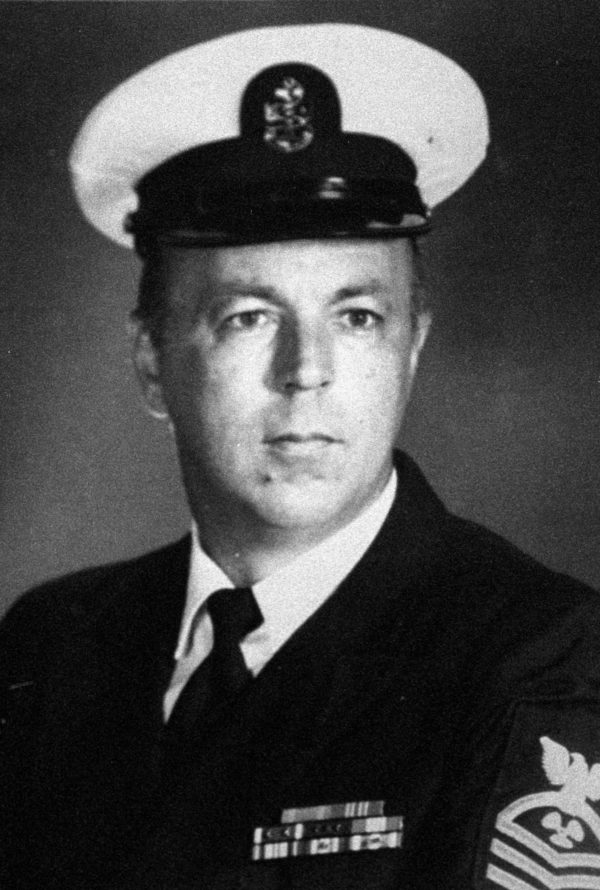
Sonny Grotton, US Navy

Norma Small was arrested in May 2001 and then charged with murder for the shooting death of her husband US Navy Chief Petty Officer Sonny Grotton, at his home in Belfast, Maine on December 16, 1983. She was accused of hiring someone for $10,000 to murder him, convicted, and sentenced to 60 years in prison. Norma felt Sonny was worth more dead than alive. Investigators believed the crime was financially motivated. If Sonny died, Norma would get a death benefit from the Navy, the real estate that she owned with Sonny, and she received a monthly payment from the VA that over 15 or 17 years had amounted to almost $100,000.

Related Links:
“48 Hours: NCIS” sneak peek: The Sting
Sneak peek: 48 Hours: NCIS
“48 Hours: NCIS”: The Sting | CBS News
Preview – Broken Honor | The Investigators
Broken Honor | The Investigators
Belfast case on ‘48 Hours: NCIS’ June 13
48 Hours Premiered ’48 Hours: NCIS – The Sting’ on CBS (2017)
CBS “48 Hours” Episode Investigates Notorious Belfast Murder
TV crew visits Belfast for episode on infamous 1980s murder for hire case
‘48 Hours’ to air episode tonight on murder of Belfast’s Sonny Grotton
‘Cosmic joke’: Son doesn’t want another depiction of his father’s murder
Brooks man pleads innocent to murder in 17-year-old fatal shooting
CBS to air program on NCIS investigation into infamous Belfast murder
48 Hours: NCIS – Firm Resolve and Dedication!
State of Maine v. Norma Small (2003)


A tattooed NCIS agent with a black belt goes undercover to find the killer of a Navy petty officer — can he get what he needs without getting caught? Watch Tuesday, June 13 at 10 p.m. ET/PT on CBS. -48 Hours

Air Force TSgt Thomas Bunday Died By Suicide in Texas on Day of Arrest; Bunday Confessed to 5 Murders Near Eielson AFB, Alaska (March 15, 1983)

Thomas Bunday.jpg
TSgt Thomas Richard Bunday, U.S. Air Force (photo: Investigation Discovery)

Honoring the victims:

  1. Glinda Sodemann, 19, Fairbanks, Alaska (August 29, 1979)
  2. Doris Oehring, 11, North Pole, Alaska (June 13, 1980)
  3. Marlene Peters, 21, Tanana, Alaska (January 31, 1981)
  4. Wendy Wilson, 16, Eielson, Alaska (March 5, 1981)
  5. Lori King, 18, Fairbanks, Alaska (May 16, 1981)
  6. Cassandra Goodwin, 22, Henrietta, Texas (never admitted to homicide)

On June 13, 1980, 11-year-old Doris Oehring went missing from North Pole, Alaska; they found her bike in the ditch. Luckily, a witness saw a blue vehicle near the area where the bicycle was found and helped the police create a composite sketch; but no leads were generated. To make matters worse, this was the second known abduction in less than a year. Eight months earlier, on August 29, 1979, a boy hunting in the woods found the decomposing body of 19-year-old Glinda Sodemann; she had been strangled and shot. Nine months after Doris Oehring mysteriously went missing; 16-year-old Wendy Wilson disappeared; her friend last saw her talking to a man in a white truck. Wendy’s body was found three days later; she had been strangled and shot in the head as well. Police wondered if there was more than one predator. As the police scrambled to find leads, another body of a woman turned up dead near Eielson Air Force Base. The victim was identified as 21-year-old Marlene Peters; Marlene was strangled and shot in the head too.

The police were panicking because of the number of murders in one location, and then a fifth woman vanished. Troopers teamed up with military and civilian search teams to find the missing and then one day while soldiers were out hunting, they found the body of Lori King; she too was strangled and shot in the head. Unable to calculate the next move of the serial killer, state troopers tried another tactic. They staked out the killer’s dumping grounds within a 10 mile radius of Eielson AFB. And then the killings stopped. And then in November 1982, troopers received a call from Henrietta, Texas informing them a woman had been murdered in the same fashion as their suspected serial killer. Police worked with the military to see if they couldn’t narrow down the suspects based on who owned a blue car or white pick-up truck. And finally, the police came up with a name: Thomas Richard Bunday was a TSgt in the Air Force who transferred to Sheppard AFB shortly after the murder of the fifth victim in Alaska.

Alaska investigators learned Bunday owned a blue car and a white truck, and he was on the Air Force’s radar list because there were several complaints made about his inappropriate sexual remarks to women in the workplace. Alaska investigators also learned Bunday served in the military for fifteen years and was a married, father of two. On March 7, 1983, Alaska investigators talked to Bunday for three hours about everything but the murders and they did this for several days hoping he would confess; but he refused to talk. Bunday didn’t deny the crimes; but refused to confess. After a week of interrogation, the troopers obtained a search warrant to search Bunday’s property. They found a lot of incriminating evidence that directly tied him to the crime in Alaska but had to obtain an arrest warrant from Alaska. Alaska Troopers had no power to arrest outside of Alaska. The Governor offered a private leer jet to bring Bunday back to Alaska. The arrest was the next day but he failed to show up as promised.

Unfortunately, Thomas Bunday slipped past surveillance on his motorcycle. Instead of meeting with the Alaska investigators again, Bunday instead killed himself. Police learned Bunday died by suicide after he crossed the center line and slammed into a truck at a 100 mph. Police were really hoping they would get more information from him before he died. They wanted to know where Doris’ body was so they could give the family closure. In August 1986, three years after Bunday died, Doris’ skull was found in a remote section of Eielson Air Force Base. It was later learned that Bunday’s job in the Air Force most likely allowed him to view his dump sites via surveillance cameras and relive his sadistic behavior. Bunday was most likely watching investigators at the crime scene. Alaska state investigators are convinced that Thomas Richard Bunday was responsible for the five murders in Alaska. And they believe Bunday denied the murder in Texas to avoid the death penalty before opting instead to kill himself on March 15, 1983.

Source: North Pole Slay Ride, Ice Cold Killers, Investigation Discovery

“From 1979 to 1981, Thomas Richard Bunday, a technical sergeant who was stationed at the Eilson Air Force Base near Fairbanks, Alaska, murdered four women and an 11-year-old girl. With the help of a psychological profile provided by the FBI and a description from an eyewitness, the authorities were eventually able to close in on Bunday. By the time police identified Bunday as their prime suspect, however, he had already been transferred to another base near Wichita Falls, Texas.

When officials from Alaska traveled to Texas to interview Bunday, he admitted to the killings, but the officers didn’t have the jurisdiction to arrest him. The police from Alaska scrambled to get a warrant, and when they went to apprehend Bunday, his wife informed the officials that he had taken off on his motorcycle. Tragically, the officers learned that on March 16, 1983, just hours after they’d obtained an arrest warrant, Bunday drove his motorcycle into the path of an oncoming truck, ending his life.”

Learn more at Ranker.

Investigation Discovery:

Ice Cold Killers: North Pole Slay Ride from Stephanie Kovac on Vimeo.

The tiny town of North Pole, Alaska is a quiet, safe haven best known for Santa Claus. But when the bodies of young women begin turning up one by one, investigators slowly piece together the clues and discover the unlikeliest of killers. -North Pole Slay Ride, Ice Cold Killers (S1,E4)

Editor’s note: With a cable subscription, you can download the free ID Go app and watch Investigation Discovery programming at your convenience. And for those who do not have cable, you can watch “unlocked” episodes on the ID Go app including the latest premieres. For those who prefer commercial free programming during your binge session, Prime Video has an ID channel: ‘True Crime Files by Investigation Discovery” available for $3.99 a month. It’s a compilation of older seasons but totally worth the cost if you are a true crime addict. Download the ID Go app or purchase ID True Crime Files & binge away.

Related Links:
Thomas Richard Bunday | Murderpedia
Bunday A Suspect in Murder Cases (1983)
Murder suspect killed in crash (1983)
Man Confesses to Five Slayings
Serial Killer: Thomas Richard Bunday | Bonnies Blog of Crime
Murder at 40 Below: True Crime Stories from Alaska by Tom Brennan (excerpt)
Murder at 40 Below: True Crime Stories from Alaska by Tom Brennan (Amazon)
10 Ice Cold Killers From Alaska That Will Make You Fear The Last Frontier
Ice Cold Killers: North Pole Slay Ride | Vimeo
North Pole Slay Ride | Ice Cold Killers | Investigation Discovery (S1,E4)
North Pole Slay Ride | Ice Cold Killers | Investigation Discovery (website)
North Pole Slay Ride | Ice Cold Killers | Investigation Discovery (Amazon)
Ice Cold Killers Premiered ‘North Pole Slay Ride’ on ID: Five Women Found Murdered Near Eielson Air Force Base in Alaska (January 1, 2013)

Navy Lt. Verle Lee Hartley Died of Arsenic Poisoning in 1982; NCIS Cold Case Squad Solved Murder 13 Years Later; Wife Pamela Served 16 of 40 Years in Prison, Paroled (November 18, 1982)

image1
Lt. Verle Lee Hartley, U.S. Navy

NCIS, The Cases They Can’t Forget: Mysterious poisoning of a Navy lieutenant leads to one of NCIS’ most notorious cold cases (May 29, 2019)

Just off the coast of Spain, the U.S.S. Forrestal cruised through open waters on the Mediterranean Sea. This particular aircraft carrier had the ability to unleash total devastation on the enemy. But below deck, one Navy sailor was fighting off an enemy in his body. Lee Hartley was complaining of diarrhea and lethargy. He also experienced excessive weight loss and there was a grayness to his skin. Lee Hartley was a career Navy sailor, having served nineteen years, and the Lt. in the ship’s disciplinary office. A month into his current deployment, Lee became violently ill with severe stomach pains and a strange tingling in his hands and feet. He was treated by the ship’s medics for gastrointestinal problems. A couple weeks went by and the symptoms reappeared, each time getting progressively worst. The onboard medics thought maybe he was exposed to something in a foreign port.

Lee Hartley also assumed it was food or water he consumed while visiting one of the foreign ports. Whatever the cause, Lee’s symptoms were spiraling out of control. He endured nearly two months of agony. When Lee wasn’t getting better, the Navy decided to ship him off to a hospital so he was medi-vaced to Jacksonville, Florida. Lee’s wife Pamela rushed to his bedside. Pam and Lee were newlyweds; they were married a year earlier. Doctors ran a battery of tests to help make a diagnosis. Some believed he might have liver disease or hepatitis or even some kind of poisoning but they couldn’t come up with a definitive diagnosis. Lee commented to multiple people that he thought he was dying because he was so gravely ill. On November 18, 1982, after nearly five months of terrible suffering, Lt. Lee Hartley succumbed to massive organ failure.

Before he set out on his final deployment, Lee Hartley was living the life he had always dreamed of. Lee loved the Navy and his family was very proud of him. He joined the Navy as an enlisted man and then became an officer. Lee was happy with Pam and was looking forward to the end of long deployments so he could spend more time with her. They didn’t have children of their own but Lee had a daughter from a previous marriage. Pam was now a devastated widow and waited for the autopsy to determine the cause of her husband’s death. When the results came back, they revealed Lee died from arsenic poisoning, nearly 1000 times the normal level. His liver, kidneys and blood was full of arsenic and Lee had enough arsenic in him to kill several people. Arsenic is a odorless, colorless, and tasteless chemical. This information led to a murder investigation.

An investigation was immediately launched to find out how that much arsenic entered Lee’s body. Investigators could not imagine how Lee came into contact with that much arsenic aboard a ship. Special Agents Jerry Whitaker and Walter O’Brien of the Naval Criminal Investigative Services (NCIS) were assigned to the case. The two actually knew Lee Hartley and served side by side on the U.S.S. Forrestal with him. They start with the simplest possibility: was this an accidental poisoning? They checked to see if there were large amounts of arsenic on the ship but that theory was instantly put to rest. The supply officer on the ship maintained records of everything that was onboard the ship and according to him, there was no substance on board the ship that contained arsenic. This meant there was no way Lee came into contact with arsenic onboard the ship, at least not by accident. Agents wondered if someone deliberately dosed Lt. Lee Hartley.

The NCIS agents broke the news to Lee’s family. When Pam found out about the arsenic poisoning, she reacted with shock. Pam’s mother-in-law was the one to break the news to Pam that someone may have killed her husband. The agents didn’t know who killed Lee but they knew how so they launched a search for suspects. They looked at who had something to gain if Lee died and one main suspect emerged, his wife Pamela Hartley. Pam had the motive because she stood to inherit a lifetime of military benefits but how did she poison her husband while he was on a ship thousands of miles away? When agents checked her travel itinerary, they discovered Pam traveled to port in Spain to spend time with Lee. Quite often, when a ship visits a foreign port, it’s common for a group of wives to visit that port. One of those wives was Pam Hartley.

Pam traveled to Spain and met with Lee and another military couple. On one of those days, Pam offered to cook breakfast for everyone and she even made drinks too. Soon after that visit, Lee got violently ill, along with his friend who had eaten breakfast with him. At the time, they both thought they got sick from drinking Spanish water, the friend recovered but Lee kept getting worse. Over the next two weeks, Lee had severe cramps, diarrhea, nausea, and vomiting so he reported to the ship’s medical department. Agents wondered if Pam laced her husband’s food and drink with arsenic during that Spanish shore leave. It was a chilling scenario but one that became more plausible as agents found out about Pam’s unique job experience. They learned that Pam worked at the Department of Energy facility in Akon, South Carolina for one year.

Pam used to be an environmental technician and one of her job duties was to analyze water samples to determine heavy metal levels. At her job site, she came in contact with a range of toxic chemicals, including arsenic. Was Pam the victim of circumstantial evidence or heartless black widow? Agents wanted to perform a polygraph because they were convinced she wouldn’t pass. She was their prime suspect because she had the opportunity to spike her husband’s food and drinks when she went to Spain at his port of call. On the surface, there was nothing suspicious about Pam so agents conducted interviews of Hartley’s neighbors. The pair appeared to have a normal family and were described as nice people. But gossip soon found its way from officer’s wives club and this information painted another picture.

With their husbands overseas, the Navy wives would get together at parties and drink. And after a few drinks, they weren’t afraid to say anything. There was talk among the wives that life was so much better when the men were at sea. Some even suggested they get rid of them. But it was a party atmosphere so nobody really took it seriously, except maybe Pam. In one interview, Pam made a comment to a friend about hiring a hitman to kill Lee but was taken as a joke by the witness because they had been drinking. As special agents dug deeper, they found out Pam and Lee were having some marital problems. Pam was a free spirit who liked to go to the officer’s club and dance with other men. Apparently, this made Lee extremely jealous. And Lee may have had reason to be jealous because Pam admitted to friends that while Lee was off at sea, she found it to be difficult to be faithful.

For NCIS agents, it all added up to a classic scenario: a bored wife feels trapped in her marriage so she poisons her husband… Under questioning, Pam insisted that she loved Lee and swore she has nothing to do with his death. And she agreed to take a polygraph test to prove her innocence. Agents were convinced she wouldn’t pass the polygraph but the results indicated that she wasn’t being deceitful. The agents concluded Pam didn’t have anything to do with Lee’s death. In addition, lab results blew a hole in their theory because the toxicology analysis on Lee’s hair pinpointed the dates he was exposed to the arsenic. His first dose was before Pam’s trip to Spain. Hair grows about a centimeter a month and testing of the hair provided a timeline of when the poison entered his body. The hair samples indicated that Lee was poisoned 5-6 months prior to his death.

The arsenic timeline showed Lee Hartley was first poisoned while Pam was thousands of miles away in Jacksonville, she had a persuasive chemical alibi. Armed with the new evidence that Lee was poisoned while on board the U.S.S. Forrestal, NCIS agents confronted a massive crime scene. The U.S.S. Forrestal was a floating city with 5000 potential suspects. And like any large city, the carrier had personnel dedicated to maintaining law and order. As the ship’s discipline officer, when sailors ran afoul with Navy regulations, it was up to Lee to administer punishment. This likely didn’t make him a lot of friends on board. Because of his work, Lee was exposed to people who might have had a grudge or an axe to grind against the Navy or the legal office or a person. As agents conducted more interviews, they learned of a disturbing rumor involving Lee.

During the investigation, there was an indication that Lee had received an anonymous death threat. The rumor about the death threat was backed up by Lee’s parents. They told agents what Lee shared with them while he was home in Mayport. Lee told them he was walking about the ship when someone angrily confronted him. Now Agents wanted to eliminate or find somebody who may help them understand what happened. A search of Lee’s cabin revealed a clue. They found a collection of letters written by Lee himself. In one of those letters, Lee described a near death confrontation with another sailor aboard the ship. He described how he came across someone who had a sword. But, if there was an altercation, Lee never reported to his superiors. Why would Lee choose to keep it secret but share it with his parents? Was Lee leaving a trail of evidence?

In an effort to track down subjects, agents used Lee’s toxicity reports which showed a continuous pattern of poisoning over a 5-6 month period of time. Agents shared when investigating poisoning deaths, you need to establish an opportunity of who during that time would have had access to both Lee and poison. There were spikes in Lee’s arsenic levels during his deployment at sea, at the port of call in Spain, and even when he was at the hospital in Jacksonville. One person who was at Lee’s side throughout his months of agony was his cabin mate Lt. Samuel Yates. They seemed to get along well but tension builds up month after month when living in close proximity together trapped on a ship. Lee was also in direct competition with his roommate for advancement.

Both Lee Hartley and Lt. Yates wanted desperately to be promoted to Lt. Commander. Was there a feud simmering between them, a rivalry that turned deadly? As agents developed information on the roommate, rumors began to circulate that had already been rampant on the ship. After Lee’s death, Lt. Yates allegedly waisted no time going after his roommate’s young wife who was grieving and vulnerable. At Lee’s funeral, he paid his respects by reportedly seducing the pretty widow. Agents knew they needed to take a closer look at Yates. And when they did, they found a chilling piece of evidence. Lee’s cabin mate was asked to give them a blood sample to see if it tested positive for arsenic or other heavy metals. As a result, they learned Yates had some elevated amounts of arsenic in his blood stream, the same poison that killed Lee.

Lt. Yates’ low level arsenic exposure was consistent with someone who had handled the substance. But the test results were not remarkable because Yates would have been exposed to all the same environmental factors as Lee. If someone was trying to harm Lee, Yates could have easily been exposed to the same food and drinks in foreign ports. Although a lot of circumstantial evidence pointed to the roommate, a thorough search of Yates’ belongings showed no traces of arsenic. They could only conclude that Yates was a collateral victim of whoever was poisoning Lee. As suspects were eliminated one by one, agents had to consider the possibility that the suspect they were looking for may be Lee Hartley himself. One of the NCIS agents said when they don’t have anymore theories, they have to think outside the box. The agents considered that Lee may have ingested the arsenic intentionally.

It appeared Lee Hartley had everything going for him and he loved his job on the U.S.S. Forrestal. He also had a beautiful young wife waiting for him in Florida. But NCIS agents wondered if the image of that perfect life was just a sham. The two agents knew Lee while serving with him on the carrier. When they reflected back on their time with him, they did observe some unusual behavior. After lunch, Lee regularly met up with a small group and he always appeared disgruntled. They learned Lee was drinking heavily before his deployment and thought maybe he was going through some depression. Was Lee suicidal? Did he deliberately consume the arsenic to poison himself? The pair thought the odds were high that Lee ingested the poison and brought in in a psychologist to analyze Lee’s life and letters; they found no suicidal ideation in any of his writings.

The medical evidence in this case didn’t fit the pattern of someone trying to kill themselves. Typically in a suicide case, it would be a major ingestion of poison and then it would drop off. Lee was poisoned consistently over several months. He was in horrible condition to the point that he had an ulcerated esophagus, open sores in his mouth, couldn’t talk, and could’t eat. Would Lee have voluntarily chosen to kill himself in such a slow, agonizing way? They ruled out suicide and wondered if the poisoning was an attempt to help get him off the ship. Lee made some statements to family members that he really didn’t want to go on this last deployment and his heart wasn’t in it anymore. He was upset about having more sea duty. He wanted a stateside desk job close to his wife. Did he use the arsenic to get himself off the ship? Would they send him home?

Agents considered that maybe Lee wanted to take just enough of the poison to get himself sent back home. But arsenic doesn’t leave the body and instead builds up over time. The agents theorized Lee may not have understood its cumulative effect over time. Maybe, Lee didn’t realize it made him sicker and sicker with every dosage. Did his scheme backfire by taking one dose too many? This theory didn’t hold water though because there were no tell tale signs in Lee’s belongings that led anyone to believe he had handled arsenic. And toxicology evidence showed that the poisoning continued even after he got back to Jacksonville. NCIS had no choice but to put the latest theory to rest. At this point, they ran out of theories, suspects, and direction and chose to close the case.

Thirteen years later in 1995, NCIS formed a cold case homicide unit. Lee Hartley’s poisoning case was one of the first cases brought to their attention. Lee’s death was reviewed at headquarters and a new team of special agents were assigned. They quickly learned that all of the physical evidence in the Lee Hartley case had been destroyed. The team had to work the case the old fashioned way so they started re-interviewing people involved in the initial investigation. Agents said its helpful to go back and talk to people because their stories change and some are more willing to tell the truth after 10-15 years has passed. Agents spoke with family, friends, and neighbors and the same name that kept coming back up was the original suspect in the case, Pam Hartley. But their big break came when Lee Hartley’s brother-in-law helped them uncover the truth.

Pam’s brother knew the dynamics of Pam and Lee’s relationship so agents wanted to speak with him. The fact the case had been reopened after all these years, caught Pam’s brother by surprise and he dropped a bombshell no one expected. He shared that Pam tried to hire him to kill Lee and offered him some of the insurance money if he did it. He kept this secret for years and when agents interviewed him this time, he told them the truth. NCIS was now convinced Pam was the killer but building a case against her wasn’t going to be easy. After all, she passed a polygraph test that indicated no deception. When NCIS had the results re-examined by current staff, they found the findings of ‘no deception’ were probably erroneously reached. The results should have been inconclusive. It was more evidence of Pam’s involvement in Lee’s death.

But after so many years, they had no physical proof, no eyewitnesses, and no way to tie Pam to the actual crime. She also had what seemed to be an ironclad alibi. She was on the other side of the world when her husband was poisoned. If she was the killer, how did she do it? Could they get her to confess? They only had one shot and needed to get Pam alone, because thirteen years ago her controlling mother was beside her running interference. The cold case team placed Pam under surveillance and tracked her every move. They learned the years since Lee’s death had not been good to her. Having squandered her inheritance, she lived with her mother and struggled with substance abuse. She treated her addiction at a hospital on a military base. On one of those occasions, she arrived alone for the appointment. The NCIS used the structured environment of the Army base to conduct the interview.

This approach allowed NCIS to conduct an interview without Pam’s mother being there. Pam nervously agreed to answer their questions. They told her there was no doubt in their mind that she did it and most of the problems in her life were most likely attributed to what she had done to her husband. They played on her guilt and told her to put it behind her and tell the truth. Pam Hartley broke down and told them what she did. She told them everything and filled in the missing puzzle pieces. She didn’t want to be married anymore. She said she was miserable and hated how possessive Lee was. But, she really liked the status of being an officer’s wife and didn’t want to lose that lifestyle. She wanted him gone but wanted to maintain her status. It was almost the perfect murder. The last time she saw Lee, she bid him farewell and then ran to a feed store to purchase rat poison. Pam sent Lee poisoned treats while he was deployed at sea.

Like a model wife, Pam created treats for Lee because she knew he had a sweet tooth. Agents learned that both Lee and his cabin mate sampled some whiskey cake that she sent Lee. Yates said he ate one piece, it was too strong, and didn’t like it. Pam wanted Lee to die at sea but the call never came so she upped the anti and traveled to Spain to poison him in person at breakfast. But it still didn’t do the job. When Lee was airlifted to the hospital in Jacksonville, Pam rushed to his side. This time, she poisoned his apple juice. Pam gave Lee the lethal dose the night before he died while pretending to care about him. After Lee died, Pam took the rest of the poison and dumped it in a pond behind their house. Her persistence finally paid off; she collected on a lifetime of military benefits minus the annoying husband. How could she have hatched such a diabolical plot? When asked why poison, she said “ladies have been using poison for years.”

Pam’s confession sealed her fate. On October 16, 1996, Pamela Hartley pleaded guilty to second degree murder in a Florida state court. Agents reminded us that Pam had a psychotic personality. She didn’t think about the cause and effect on other people; she only thought of herself and the effect on her. After nineteen years of service, Lee Hartley didn’t die in battle, his mortal enemy was the one person he loved most. Not long before Lee’s death, Lee and Pam’s brother had a conversation where Lee told him if anything happened to him, his sister would be well taken care of. He died thinking he still needed to take care of Pam. Pamela received $35,000 in life insurance money, $10,000 a year in veterans benefits, and free military medical benefits for life. Lee was a good man and the pain from the loss endures. Pamela Hartley was sentenced to 40 years in a state prison and served 16 years when she was paroled. 

Source: Maritime Murder, Unusual Suspects, Investigation Discovery

Real NCIS: 

When a Navy lieutenant onboard a US aircraft carrier falls victim to a rare case of arsenic poisoning, NCIS investigators must scour both land and sea for his killer. With no crime scene and little physical evidence, agents must separate rumor from truth and use their best interrogative know-how to solve a deadly crime. Follow real NCIS agents as they hunt down suspects on one of the world’s largest ships and after a long 13 years finally uncover the bizarre truth behind the poisoning death of a Lt. Lee Hartley. -Dark Minds in Crime

Investigation Discovery:

John Prudhont as NCIS Special Agent Tom Assimos and John Bridell as NCIS Special Agent Dave Early and Mocean Melvin as the Narrator in an edited clip from Season 4, Episode 13 of the Discovery ID TV show “Unusual Suspects.”

ID Go: In 1982, a Naval Officer dies from a mysterious illness. When toxicology reports reveal he was poisoned, Naval Investigators sift through a ship of thousands, and countless theories before the truth behind the victim’s painful death is revealed. -Maritime Murder, Unusual Suspects (S4,E13)

Editor’s note: With a cable subscription, you can download the free ID Go app and watch all of the Investigation Discovery programming at your convenience. And for those who do not have cable, you can watch “unlocked” episodes on the ID Go app including the latest premieres. Download the ID Go app and binge away. For those who prefer commercial free programming during your binge session, Prime Video has an ID channel: ‘True Crime Files by Investigation Discovery” available for $2.99 a month. It’s a compilation of older seasons but totally worth the cost if you are a true crime addict.

Related Links:
2 Charged in Reopened Death Probes
Widow guilty of poisoning death in 1982
After 14 years, woman confessed to killing her husband
Wife sentenced in poisoning death
Widow Sentenced in Death of Husband
Murder-for-hire motive often insurance
Inmates find freedom behind bars
Mayport cases to appear on TV’s ‘The Real NCIS’
‘Unusual Suspects’: Woman Poisoned Navy Husband Over Years Through Care Packages
Pamela Hartley poisoned her husband, Verle Lee Hartley, because she did not want to hurt him with a divorce
Mayport cases to appear on TV’s ‘The Real NCIS’
Mysterious poisoning of a Navy lieutenant leads to one of NCIS’ most notorious cold cases
NCIS: Lt. Hartley’s Wife Got $45,000 After Killing Him with Rat Poison
NCIS: The Cases They Can’t Forget Premiere Season 3 Time & Channel
NCIS: The Cases They Can’t Forget | CBS
NCIS History (October 1998, Vol II, Edition 6)
NCIS: The Cases They Can’t Forget | Amazon
Real NCIS | E02 | Hartley Case
John Prudhont Unusual Suspects Maritime Murder 30 sec Clip
Maritime Murder | Unusual Suspects | Investigation Discovery (S4,E13)

Eric Witte Manipulated by Mother Hilma Witte to Murder Abusive Father at Age 15; Joined Navy to Prevent Grandmother from Dying (September 1, 1981)

FullSizeRender
Eric Witte, U.S. Navy

Eric Witte was 15 years old when he shot and killed his father Paul Witte while he lay sleeping on the couch in his Porter County, Indiana home. His mother Hilma had been poisoning him for years but her plan was not working so she elicited the help of her oldest son Eric to kill him. Although Eric has good memories of his father, he also has scars from the regular physical abuse he received if he made the slightest mistake. It wasn’t hard to convince Eric to kill his father so he could make the physical abuse stop. Eric and his mother Hilma were able to convince the police that it was an accident and they all went about their lives. Then Eric noticed that Hilma was poisoning his grandmother Elaine Witt as well.

Eric wanted no part in her murderous plans so he joined the Navy to escape his mother’s relentless pressure to kill. Eric thought that if he left, she would have no one to kill Elaine. But Hilma pressured her youngest son John to kill Elaine instead. John shot her with a crossbow and then they dismembered her body and put it in a refrigerator. Elaine and John then asked Eric to come home from the Navy to help them deal with the body. Eric wanted no part in his mother’s plan and left to go back to San Diego, California where he was stationed. Unbeknownst to him, his mother put his grandmother’s dismembered body in his vehicle and he didn’t notice until it was too late. He panicked and brought the body to California and put it in a storage locker.

It wasn’t long before other’s demanded to know where Elaine was. Hilma panicked and drove from Indiana to California to seek out Eric’s help. Eric left with his family and went Absent Without Leave (AWOL) so they could figure it out together. Eric was taught as a child to always protect his family and it was natural for him to do it again. In a bizarre twist, Hilma was arrested for forging Elaine’s signature on a social security check she stole from her. It was this arrest and investigation that led to the stories behind both murders. John and Eric admitted to investigators that their mother manipulated and pressured them to kill their father and grandmother. Hilma Witte was convicted and sentenced to 90 years in prison for murder. John and Eric Witte were given 20 and five year sentences for their roles and were released in 1996.

Source: She Made Me Do It, Evil Lives Here, Investigation Discovery

Investigation Discovery:

Preview: Growing up, Eric Witte’s father taught him to protect his family. But when his father became increasingly violent, Eric realised that his father was the evil his family needed protection from. -She Made Me Do It, Evil Lives Here (S2, E2)

As a boy, Eric Witte’s father taught him to protect his family. But as his father grows increasingly violent, Eric realizes that he is the evil his family needs protection from. -She Made Me Do It, Evil Lives Here (S2, E2)

Editor’s note: With a cable subscription, you can download the free ID Go app and watch Investigation Discovery programming at your convenience. And for those who do not have cable, you can watch “unlocked” episodes on the ID Go app including the latest premieres. For those who prefer commercial free programming during your binge session, Prime Video has an ID channel: ‘True Crime Files by Investigation Discovery” available for $3.99 a month. It’s a compilation of older seasons but totally worth the cost if you are a true crime addict. Download the ID Go app or purchase ID True Crime Files & binge away.

Related Links:
Double Murder: A Family Affair?
Woman Charged in Crossbow Death Appears in Shooting Case
Family Plot Police Say Wife Had Sons Kill Husband, Mom-in-law
Mother Told Me To Murder Grandmother, Boy Tells Jury
Hilma Witte v State of Indiana (1987)
Hilma Witte v State of Indiana (1990)
Woman convicted for role in murders seeks early release
Murder conspirator to remain in prison
Witte Denied Modified Sentence
A teenage boy murders his father
This Day in History: Paul Witte murder 9/1/1981 Michigan City, IN
‘Deadly Woman’: Mother Manipulated Sons Into Killing Their Family Members
Mommy’s Little Helpers | Deadly Women | Investigation Discovery (S6, E15)
Mommy’s Little Helpers | Deadly Women | Investigation Discovery (website)
Mommy’s Little Helpers | Deadly Women | Investigation Discovery (Amazon)
Mommy’s Little Helpers | Deadly Women | Investigation Discovery (Hulu)
Eric Witte | Evil Lives Here | Investigation Discovery UK (Preview)
She Made Me Do It | Evil Lives Here | Investigation Discovery (S2, E2)
She Made Me Do It | Evil Lives Here | Investigation Discovery (website)
She Made Me Do It | Evil Lives Here | Investigation Discovery (Amazon)
Evil Lives Here Premiered ‘She Made Me Do It’ on Investigation Discovery: Teenager Eric Witte Kills Abusive Father Paul Witte for Mother Hilma Marie Witte (January 9, 2017)