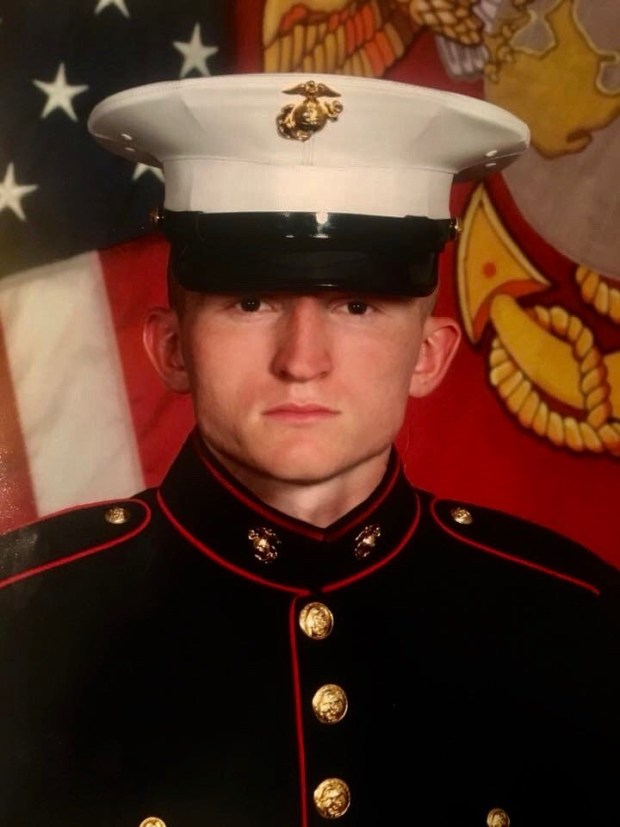
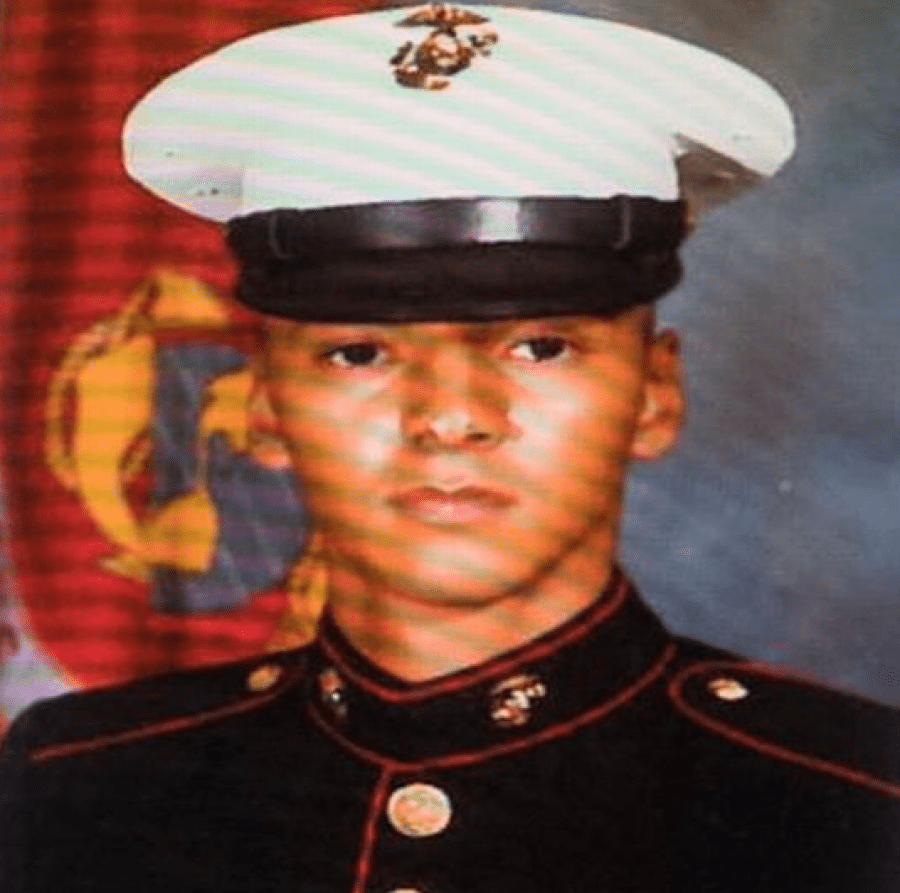
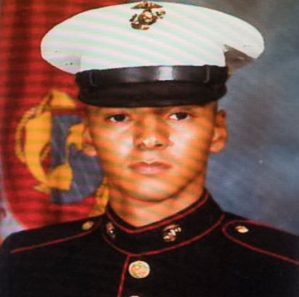
In the early morning hours of March 15, 2019, Marine Corps Lance Corporal Riley Schultz was found dead near a guard shack with a gunshot wound in his head. Nineteen-year-old Lance Corporal Schultz was on guard duty at Camp Pendleton in California when this tragic incident occurred. Riley was discovered by a Marine who was assigned to replace him at this entry control point. The Naval Criminal Investigative Services (NCIS) were assigned to investigate Riley’s suspicious death but their investigation appeared to conclude when the medical examiner ruled that Lance Corporal Riley Schultz died by suicide via a self-inflicted gunshot wound. Riley’s family isn’t going to simply accept the outcome of the investigation. His family knows him better than anyone and his brother said Riley was the happiest he had ever been. Riley’s mom told the press that becoming a Marine was his dream and he worked hard and prepared for his enlistment before joining the USMC at the age of 17. Riley’s mom said he loved being a Marine and things were going well in his personal life when he died. Although this investigation appears to be an open and closed case with the Marine Corps, Riley’s family disputes the cause of death and plans to continue to fight for justice for Riley.
In the News:
The Marine from Colorado found dead at a Southern California base earlier this month died by suicide, according to 1st Lt. Cameron Edinburgh, a Marine Corps spokesperson. Rob Low reports. -FOX31 Denver (March 27, 2019)
The Navy is investigating after a Marine from Colorado was shot to death while on guard duty at Southern California’s Camp Pendleton. -CBS Denver (March 27, 2019)
Lance Cpl. Riley Schultz was discovered dead around 4 a.m. March 15 with a gunshot wound to the head. -Denver7 – The Denver Channel (March 27, 2019)
This is footage from the deck of the USS Fitzgerald, a U.S. Navy destroyer, of the moments immediately after it was struck by cargo ship MV ACX Crystal, in the South China Sea around 1:30 a.m. on June 17, 2017. The picture goes dark for a second as the Crystal hits, then the Fitz is knocked into a 360-degree rotation. 7 sailors died. Our investigation found that the collision was preventable. Read the investigation here -ProPublica
An investigation with our reporting partners at ProPublica into the 2017 collisions of U.S.S. Fitzgerald and U.S.S. McCain suggest that the Navy had ignored warnings, and postponed critical training and repairs before those deadly accidents. -NBC News
A ProPublica investigation revealed new details into two separate collisions of the U.S.S. Fitzgerald and John S. McCain that led to the deaths of 17 sailors. Robert Faturechi was one of the authors of the investigation, and joined CBSN to discuss their findings. -CBS News
Kansas Army National Guard veteran Zachary Schaffer, 21, was found unresponsive in his Kansas City, Kansas home on January 23, 2019. According to theDodge City Daily Globe, Zachary fatally overdosed only a few days after he was punished and discharged from the Kansas Army National Guard. According to his mother, Wendy Mottas, Zachary, or Zach, as he was known to most, was accused of failing to show up for multiple weekend drills and discharged with an “other than honorable.” In the midst of losing his military career and eventually his security clearance, Zach was flagged by his command for the prescribed use of Adderall to treat ADHD, even after he was reassured it was okay for him to take the prescription. Wendy doesn’t know if her son’s death was intentional, but stated Zach began suffering with depression and substance abuse during his time in service with the Kansas Army National Guard. Zach went from being a stellar soldier at the age of 19 to being hired as a full time military technician to losing that same position less than one year later for reasons undisclosed. Six months after being fired by the Kansas Army National Guard, he was also passed over for deployment to Afghanistan, having been told he was ‘red flagged’ for the use of Adderall. Six months later, Zach would also experience sadness and grief after losing his friend, 24 year-old Kansas Army National GuardsmanKhamis Naser, who died by suicide on July 31, 2018.
Zach grew up in the Hutchinson, Kansas area and joined the Kansas Army National Guard in May 2014. Zach’s mother, also an Army veteran, said he was born in Germany when she was in the military. Zach came from a military family and it was a natural fit for him too. Wendy shared Zach was always intelligent and she knew he would be successful because he was very skilled in anything related to computers and coding. After Zach completed Army basic training and specialty training, he progressed quickly as a soldier and eventually got a full-time job with the Kansas Army National Guard at age 19. Zach was a federal military technician (Personnel Security Technician: GS-7) during the week and on Guard weekends, he was an Intelligence Analyst (E-4). Zach’s downward spiral began when he lost his full-time job as a federal technician and was made to feel incompetent by those who also originally built him up to be a great soldier with a bright future in the military. Zach’s mother does not know why Zach was fired during the probationary period, but she does suspect that Zach had information about other National Guard members whose misconduct were overlooked during routine background checks so they could maintain their security clearances.
Once Zach lost his full-time position, he went from being a professional soldier to not caring about anything anymore. He moved from his home in Topeka, Kansas to Lawrence, Kansas and became somewhat estranged from the family. Zach became secretive, fell in with the wrong crowd, stopped going to therapy and became reliant on self-medicating to take care of the pain of depression he was feeling. Realizing this lifestyle was not healthy, Zach moved back home to Junction City and tried to get his life together in early January 2018. After about three months of living at home, he discovered the Kansas Army National Guard unit in Junction City, Kansas was tasked with a deployment to Afghanistan, to which he inquired and expressed interest to the unit’s leadership. The leadership put him through mobilization procedures for nearly a month and then his deployment orders to Afghanistan were cancelled citing he had been flagged during the pre-deployment process for Adderall use. Zach was prescribed Adderall for the diagnosis ADHD and his mother states he was prescribed the drug due to a struggle with concentration and focus. Once Zach was flagged, someone made the decision to prevent him from deploying to Afghanistan and his mother does not know if his National Guard unit influenced the decision at that time or not.
Zach was looking forward to the deployment. Instead his orders to Afghanistan were cancelled and it was then Zach started meeting regularly with mental health personnel for depression. It is unknown what Zach may have shared with health care professionals, but his family realized something changed in Zach’s life. Shortly after, Zach moved from Junction City to Kansas City with a friend with which his family was not familiar. He remained distant from his family and friends. Worse yet, the same military officer (O-4) who made the decision to fire Zachary from his full-time military technician position also influenced National Guard unit leadership to end Zach’s military career in its entirety. Leadership observed the changes in Zach’s attendance and behavior. Instead of helping him, they used it to revoke his security clearance knowing he needed a security clearance for his job as an intelligence specialist in the National Guard and his full-time job with the Marine Corps. During this time, the only thing done to assist Zach or try to get to the root of the issues he was having was to refer him to the unit’s social work office. At some point, this social worker was told to ‘stand down’ and allow the unit’s part-time civilian social worker to take care of his issues. To his mother’s knowledge, this individual never contacted Zach to offer support and he was never offered any type of assistance including participation in the Army Substance Abuse Program.
In early July 2018, Zach contacted his mom and stated he wanted to go to an inpatient rehabilitation program. He self-admitted to the substance abuse program to help him stop his drug dependency and get his life back on track. The day after Zach left the rehabilitation program and returned to Kansas City, he learned his best friend and fellow National Guardsman, Khamis Naser, had died by suicide. Zach told his mother he had talked to Khamis only five hours before he was found dead in his apartment. Zach attended the August 2018 drill weekend and his mother said he told her he was met with disdain from his leadership. Zach’s mother states she has text messages from her son indicating the NCOs in his unit were bullying him. Zach told her they said his best friend would still be alive if he ‘wouldn’t have been high’ and ‘would’ve been there for him’ (Khamis). After Zach was blamed for the death of his friend, he got in a physical confrontation with one of his NCOs. During another drill weekend, word got around the unit that leadership wanted to ‘get rid of that “shitbag”’ (referring to Zach) because he made the unit ‘look bad.’ Despite the ill treatment by the Kansas Army National Guard, Zach picked himself up and got a new job as a civilian contractor for the Marine Corps in Kansas City at age 21. Unfortunately, a short time after he got the job, he was terminated when he learned the National Guard had suspended his security clearance. At this point, Zach had no income, including from his drill weekends, due to a status discrepancy. Zach was still considered in ‘active duty’ status because of the deployment orders to Afghanistan and no one in his military leadership would assist him to get transferred back to his original unit. His mother states he discussed this with someone at his unit who agreed with him — why bother going to weekend drill if he was getting bullied and not receiving any pay? He stopped attending drill after September of 2018 and once again became estranged from his family. He would never return to the National Guard.
According to the Kansas Adjutant General’s Department, the Kansas Army National Guardsuicide prevention programis “based on the premise that suicide prevention will be accomplished through the positive action of unit leaders and implementation of command policy. The key to the prevention of suicide is positive leadership and honest concern by supervisors for military personnel who are at risk of suicide and appropriate intervention for all such personnel.” Khamis Naser died by suicide in July 2018 and six months later in January 2019, Zach Schaffer died of a fatal drug overdose. How did the Kansas Army National Guard’s suicide prevention program help Khamis and Zach? Although we don’t know why Khamis Naser chose to die by suicide, we do know he was a current member of the Kansas Army National Guard. One would think losing a fellow comrade would initiate a more proactive suicide prevention approach yet instead we learn the very people tasked with a “positive and honest concern by supervisors” for military personnel at risk of suicide and appropriate intervention was not implemented in the last couple of years. Zach was a soldier dealing with the loss of his full-time job, grief from the loss of his friend, the loss of his military career, and the loss of his security clearance. Military leadership knew Zach was not well and they knew he was a risk to himself.
Thetop 10 most stressfullife events include death of a loved one, separation, starting a new job, workplace stressors, financial problems, and chronic illness/injury. Zach’s mom shares he was dealing with six out of ten of those stressful life events at the age of 21. Wendy wonders why the military wouldn’t be especially cognizant of the fact they are molding young kids into warriors at a very impressionable time in life. At a time when young adults need guidance most, instead in the military environment, they are forced to deal with additional stressors, caused by military leadership in Zach’s case. Why would the same organization at the root of the cause of the downward spiral of young lives be interested in also pretending to care about suicide prevention of those same personnel? The moment Zach was let go from his full-time job was the moment he started to struggle. Why did he get let go? Why did it contribute to a need to use drugs to self-medicate? And one can only imagine the kind of grief Zach experienced after losing a close friend in such a tragic way. Did anyone refer Khamis or Zachary to mental health programs or theDepartment of Veterans Affairs?
It appears Zach’s source of pain or original stressor began when he lost his full-time federal military technician position as a Personnel Security Technician. After Zach lost Khamis, another high-paying job and his military career, his downward spiraled accelerated. Zach was dead less than six months after his friend passed. How can the National Guard implement a suicide prevention program when they are the suspected cause of the unit members’ downward spiral? Why did the National Guard choose to characterize ADHD treatment as a ‘mental health risk’? The prescription was used to assist with concentration and focus. Why would Adderall negatively impact a deployment when it is a fact the active duty deploy personnel on all kinds of prescribed medications? Why not help Zach transfer from Active Duty status back to his National Guard unit so he would be paid for drill weekends? How did Zach go from successfully holding great positions of responsibility within the unit to losing his entire military career? Why did they give Zach an ‘other than honorable’ discharge knowing it will negatively impact the rest of one’s working life, never mind the impact losing a security clearance has on anyone’s future financial security. Why did Zach have to lose everything? How does that help his mental health?
Wendy Mottas told theDodge City Daily Globethat there is a stigma to be tough in the military. And this was confirmed the day the National Guard decided Zach was a “mental health risk” because he had a prescription for ADHD he wasn’t even currently taking. Each Commander has the ultimate say on whether or not an individual can still perform despite taking medication. The prescription was for concentration and focus and not something that had to be a military career ender. Wendy said her son could have used extra support following Khamis’s death and that she would like to see mental health be taken more seriously by the Kansas Army National Guard. While she realizes there were many factor’s influencing Zach’s death, she doesn’t understand why the National Guard wouldn’t offer to help him like so many soldiers with substance abuse are assisted. In Zachary’s case it appears leadership actively contributed to the decline of Zach’s mental health. Who at the Kansas Army National Guard would offer help to Zach after the chain of command (supervisors and leadership) decides a soldier is a “shitbag”? How does the Kansas Army National Guard implement a command driven suicide prevention program when they are the same leadership contributing to a downward spiral? How can the same people tasked with punishing their personnel with a heavy hand simultaneously help prevent a suicide or untimely death of young soldiers? At the very least, in this situation, the National Guard needs to upgrade this soldier’s other than honorable discharge to honorable to make this right for Zach and his family. It’s one thing to let someone go, it’s an entirely different thing when a person’s life and future is destroyed.
“The military still has to take some responsibility for this, I think, and I think more could have been done to be preventative and be proactive instead of reactive. They have a responsibility to these young men and women. It’s not to live their lives for them or to be mommy or daddy or anything like that, but the soldiers still have to live by the army creed, and in order to do that, they have a role in that.” -Wendy Mottas (quote in Dodge City Daily Globe)
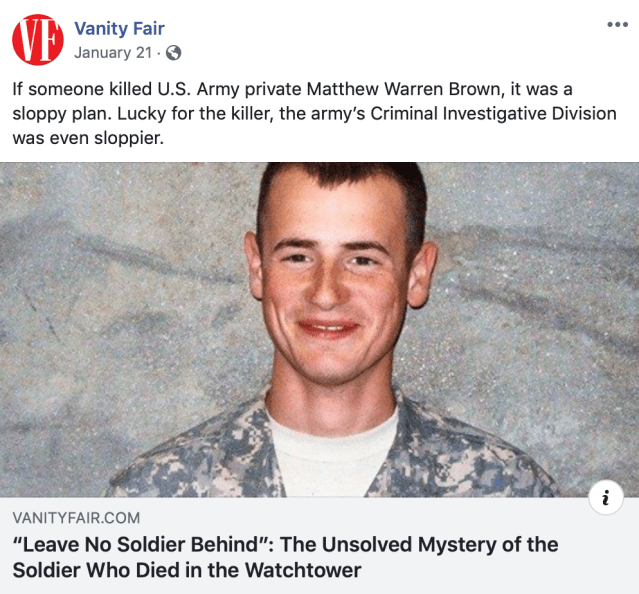
Is the Army botching its investigations into noncombatant deaths?
I. The Gun Tower
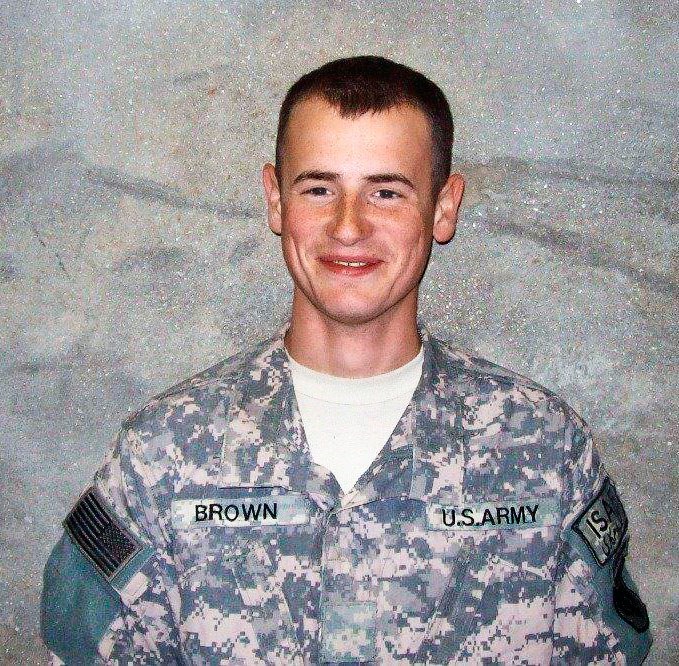
“On the morning of May 11, 2008, a U.S. Army private second class named Matthew Warren Brown died of a single gunshot wound to the head while manning a watchtower at a forward operating base in Afghanistan. Brown was 20 years old. He was a skinny, all-American kid, a bit aimless but affable and unassuming. He was a good guy. You could see it in his face. At his funeral back home in Pennsylvania, some 200 people showed up. In the aftermath of Brown’s death, army investigators created files about the circumstances. The bullet that killed him was fired from his own weapon, an M4 carbine. He was working the six A.M. shift, alone in the watchtower by the fortified main gate to the base. The tower was known as the Gun Tower. It was made of concrete, and looked medieval when viewed from the outside. It was three stories tall. On the second and third floors it had openings covered with two-piece Plexiglas windows, some of which had broken off and been left lying in shards on the floors.” Read more from Vanity Fairhere.
“April 16, 2003. San Antonio, Texas. Colonel Michael Philip Shue said goodbye to his wife and was supposed to drive to Lackland Air Force Base where he worked. But he was seen driving erratically on the highway away from both his work and his home later on. The Colonel’s car then smashed into a tree, killing him. But he sustained injuries prior to the accident that suggested that he may have been the victim of a crime. Some of these injuries included: duct tape on his wrists and ankles, a six inch wound down the center of his chest and his nipples had been cut off. A world renowned medical examiner surprisingly deemed the Colonel’s death a suicide. After Col. Shue’s wife hired two other experts a different picture came into focus. One of abduction and torture. What exactly happened to Col. Shue? Was he suicidal? Or did someone want him dead? Can Justin & Aaron get to the bottom of this mystery?” –Death of Colonel Shue, The Generation Why Podcast (November 4, 2018)
Andrew Urdiales, U.S. Marine Corps [photo: Mirror]Former Camp Pendleton Marine Andrew Urdiales died by suicide at San Quentin State Prison in California on November 2, 2018. His death came less than a month after he was sentenced to death for five murders of women in California. Urdiales also received a life sentence in Illinois for the murders of three other women. One of his victims Jennifer Asbenson got away in 1992 and was able to testify against him during his death penalty trial in California. Four of the murders were committed while he was an active duty Marine stationed at Camp Pendleton between 1986 and 1989. After Urdiales was discharged, he killed four more women in a two year span, one in California and three in Illinois, between 1995-1996.
Honoring the Victims:
This slideshow requires JavaScript.
January 18, 1986: Robbin Brandley, 23, Saddleback CC, California
July 17, 1988: Julie McGhee, 30, Cathedral City, California
September 25, 1988: Mary Ann Wells, 31, San Diego, California
April 15, 1989: Tammie Erwin, 18, Palm Springs, California
March 11, 1995: Denise Maney, 32, Palm Springs, California
April 14, 1996: Laura Uylaki, 25, Chicago, Illinois
July 14, 1996: Cassandra Corum, 21, Pontiac, Illinois
August 2, 1996: Lynn Huber, 22, Chicago, Illinois
In the News:
A jury recommended the death penalty for former Marine and convicted serial killer Andrew Urdiales on Wednesday. -ABC 7 (June 13, 2018)
An Orange County Superior Court jury Wednesday recommended the death penalty for a former Marine and Chicago triple-murderer who was convicted last month of murdering five women in Southern California from 1986 to 1995. -CBS Los Angeles (June 13, 2018)
A survivor was overcome with emotion as she came face to face with the monster who abducted and tortured her…It happened when she missed her bus in Palm Springs, California and Andrew Urdiales offered her a ride. He drove her to a remote desert location where he tied her with rope and her bra. -Inside Edition (June 13, 2018)
News conference following the penalty phase verdict in the case of the People v. Andrew Urdiales case featuring surviving victim Jennifer Asbenson, Tammie Erwin’s father Charles Erwin, Mary Ann Wells’ son Steve Wells, and OCDA Senior Deputy District Attorneys Matt Murphy and Eric Scarbrough of the Homicide Unit. -Orange County DA (June 14, 2018)
Serial killer Andrew Urdiales, who was convicted of the first-degree murders of five Southern California women between 1986 and 1995, was sentenced to death Friday. -ABC 7 (October 5, 2018)
The murders occurred when Andrew Urdiales was stationed at various Marine Corps facilities in Southern California. -CBS Los Angeles (October 5, 2018)
A woman who was kidnapped by an eight-time serial killer shares why she believes her life was spared and she was able to escape. -Dr. Phil (March 7, 2019)
Cuomo speaks with Urdiales on the day he’s being sent to death row and tries to understand why this madman chose to kill multiple women in cold blood. Was he insane? Did he hate women? Were there clues in his childhood? -Inside Evil with Chris Cuomo, HLN (June 18, 2019)
Oxygen’s two hour special event on Israel Keyes airs Sunday, October 28th. -Method of a Serial Killer, Oxygen (S1, E1)
Reporters, investigators and family friends reflect on the kidnapping of Samantha Koenig. -Israel Keyes, Method of a Serial Killer, Oxygen (S1, E1)
Israel Keyes is arrested after a minor traffic infraction. -Method of a Serial Killer, Oxygen (S1, E1)
Follow FBI special agents as they investigate the kidnapping and murder of Samantha Koenig. -Israel Keyes, Method of a Serial Killer, Oxygen (S1, E1)
Investigators say that some conversations with Israel Keyes were very “normal.” -Method of a Serial Killer, Oxygen (S1, E1)
Investigators discuss the power dynamics and the fight for Keyes to reveal information. -Israel Keyes, Method of a Serial Killer (S1, E1)
Israel Keyes admitted that he is “two different people.” -Method of a Serial Killer, Oxygen (S1, E1)
The kill kits recovered by the FBI reveal the meticulous planning of Israel Keyes. -Method of a Serial Killer, Oxygen (S1, E1)
Keyes said the randomness of his victims is what kept him “successful.” -Israel Keyes, Method of a Serial Killer, Oxygen (S1, E1)
Keyes could have many more victims than those that have been accounted for. -Israel Keyes, Method of a Serial Killer, Oxygen (S1, E1)
FBI Special Agents discuss Israel Keyes’ possible involvement in another murder case. -Method of a Serial Killer, Oxygen (S1, E1)
FBI special agents and a forensic psychologist reflect on Israel Keyes’ personality. -Method of a Serial Killer, Oxygen (S1, E1)
Israel Keyes fascination with serial killers reveals patterns in his MO. -Method of a Serial Killer, Oxygen (S1, E1)
Israel Keyes revealed he created kill kits and buried them in various locations. -Method of a Serial Killer, Oxygen (S1, E1)
FBI special agents and a forensic psychologist discuss Israel Keyes’ training and suppression of killing sprees. -Method of a Serial Killer, Oxygen (S1, E1)
Mary Wood, reflects on the time her family employed Israel Keyes for a bathroom remodel. -Method of a Serial Killer, Oxygen (S1, E1)
Former reporter, Casey Grove, describes his journey as a crime journalist. -Israel Keyes, Method of a Serial Killer, Oxygen (S1, E1)
“In 2010, statistics came out that 120 female U.S. soldiers stationed in Iraq had died. Half of those deaths were reported to be non-combat related. 30 those non-combat related deaths were ruled suicides, but there is evidence to suggest many of them may have actually been murders. In this episode, we dive into the case of LaVena Johnson and other women of the U.S. military who died very suspicious deaths during Operation Iraqi Freedom.” –Conspiracy: Women in the US Military, Crime Junkie Podcast (10/22/18)
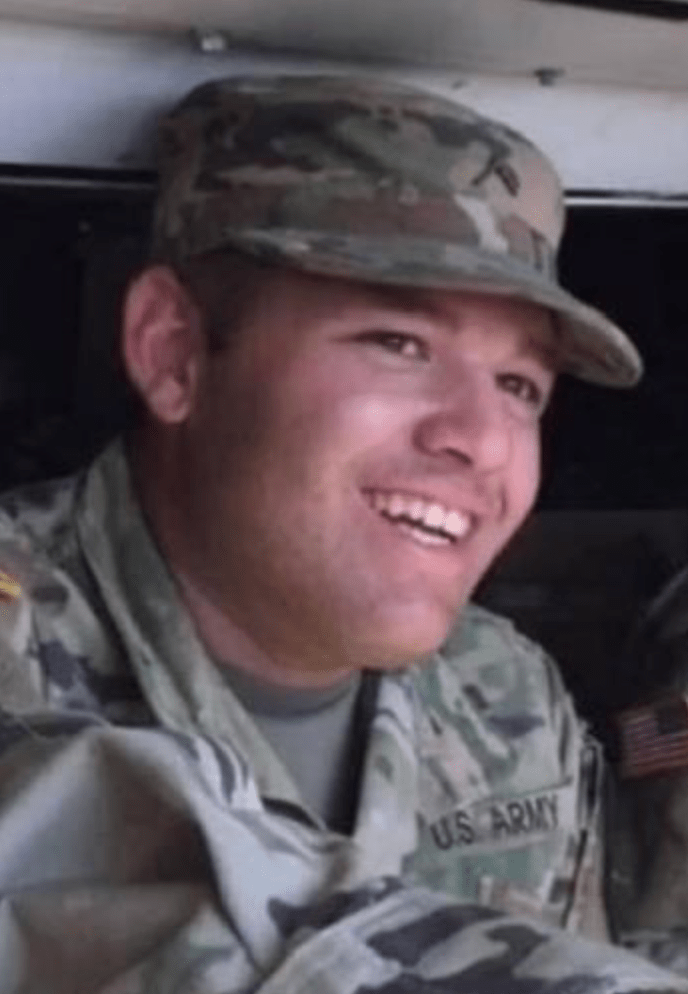
Obituary: Pfc. Jason Matthew Decker, U.S. Army, age 25, of Slidell, LA, passed away on Saturday, September 15, 2018. Beloved husband of Emily Fuller Decker. Survived by his grandparents, who nurtured and raised him from birth, Buddy and Colette Decker, his birth mother Lacey Smith, his birth father, Adam Galloway. Brother of Madison Lara, Rylee Lara, Taylor Galloway, Megan Galloway, Matthew Galloway. Also survived by many Aunt’s, uncles, nieces, nephews, and friends. Jason was born in Slidell where he graduated from Slidell High school in 2011. Jason was an avid outdoorsman, loved baseball and his family. He will be greatly missed and remain in our hearts forever.
In the News:
A grieving father on his way to bury his son rushed to officer Jason Seals’ side after the crash. -WWLTV (September 26, 2018)












 MILITARY JUSTICE FOR ALL