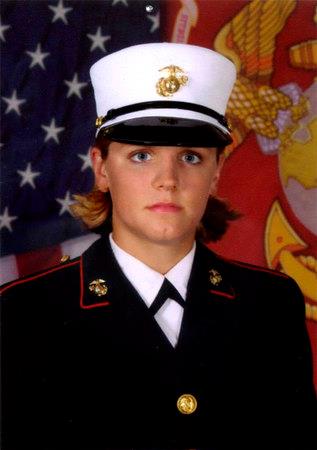
The family of slain Marine Lance Cpl. Maria Lauterbach is hailing recent provisions in the National Defense Authorization Act that profoundly change the way the Department of Defense will handle sexual assault charges.
The Defense STRONG Act has cleared both the House and the Senate and is awaiting President Barack Obama’s signature. Provisions include access to legal counsel for victims and the right to request a base transfer.
Lauterbach’s mother, Mary Lauterbach of Vandalia, said the new law would have made the difference in the case of her daughter, who was denied a base transfer after accusing fellow Marine Cesar Laurean of sexual assault. “Maria would be alive today if the base transfer had been available to her,” she said.
Turner concurred, “In civilian life you have complete control of your movements, and if you’re in an unsafe situation you can remove yourself. In military life, the victim needs permission to take even basic self-preservation actions.”
In the News:
New provisions handed down from the Department of Defense are giving sexual assault victims in the military rights they never had before. It’s all thanks to the fight from Congressman Mike Turner and a local mother Mary Lauterbach. The provisions make certain that a victim has legal counsel throughout the whole process so they understand what their legal rights are and how to protect themselves. The provisions also remove the accused from the situation and not the victim. -WKEF/WRGT (August 15, 2013)
A major hurdle cleared for sexual assault victims in the military. Congress passed a bill that would give victims rights and protection they never had before. The push came after the tragic murder of local marine Maria Lauterbach and her unborn son. Congress approved a bill that would give military sexual assault victims legal counsel and criminalize retaliation against any victim. “If Maria had had this, she would be alive today, it’s very important.” The bill now heads to President Barack Obama for his signature. -WKEF/WRGT (December 20, 2013)
Law protecting military victims of sexual assault discussed. -WDTN-TV (May 1, 2018)
Key changes in military policy
By executive order, communication between victims and victim advocates will now be privileged. Previously conversations between victim and victim advocates can be subpoenaed in court, making victims reluctant to come forward. Pending legislation HR 1540, passed by both the House and Senate, provides for:
Legal assistance for victims of sexual assault. Previously, only defendants in the military have been guaranteed access to a lawyer.
Stricter training guidelines and greater oversight for Sexual Assault Response Coordinators and Sexual Assault Victim Advocates.
Retention of sexual assault records with lifetime access for service members.
The victim’s right to a base transfer or unit transfer. Under the new law, these requests will be expedited, with decisions being made within 72 hours and the bias should be in favor of the victim.
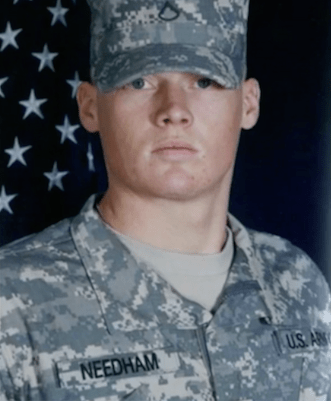
U.S. Army Ranger John Needham, who was awarded two purple hearts and three medals for heroism, wrote to military authorities in 2007 reporting war crimes that he witnessed being committed by his own command and fellow soldiers in Al Doura, Iraq. His charges were supported by atrocity photos which, in the public interest, are now released in this video. John paid a terrible price for his opposition to these acts. His story is tragic. –On the Dark Side in Al Doura (December 17, 2011)
After watching the 2011 documentary ‘On the Dark Side in Al Doura’ which profiles the case of Army Private John Needham, one can clearly observe the similarities to ‘The Kill Team’ PBS documentary released in 2014. On the Dark Side in Al Doura interviewed Michael Needham, the father of John Needham, who was an Army whistleblower from Fort Carson, Colorado and reported witnessing war crimes and atrocities in Iraq; The Kill Team profiled Adam Winfield, an Army whistleblower from Fort Lewis, Washington who witnessed and tried to report the same war crimes and atrocities in Afghanistan. For the sake of preservation, both John Needham and Adam Winfield admitted feeling pressured to conform or risk their own lives if they didn’t. They both felt like they were being set up to die or participate in the war crimes. Both soldiers at times felt like suicide was their only way out because there was no safe place for them to report overseas nor could they escape the situation. If they made it out of the war zone alive, the return home didn’t fair well for them. The PBS documentary ‘The Wounded Platoon’ released in 2010 reveals the impacts the wars overseas had on Fort Carson soldiers. After watching these three documentaries, it’s clear why our soldier’s combat experiences traumatized and changed some of them. They not only had to fight a credible threat on the battlefields but some were betrayed by the very team they depended on for their lives.
Michael Needham takes us through the series of events that occurred in the course of John’s short Army career. He shared how John was the fifth generation in the family to fight in a war. John volunteered to join the Army in the spring of 2006, went to Fort Benning, Georgia for training, and then got stationed at Fort Carson. John was an Army Ranger assigned to the 212th, 2nd Combat Team, 12th Regiment, 2nd Infantry Division. He was part of the infamous team known as the ‘Lethal Warriors’ which now appears to be disbanded. Part of his initiation into his new band of brothers was fighting other soldiers to determine where one fell in the pecking order. John held his own in the fights and was respected for his wins. According to John, the soldiers that didn’t fair so well in the fights were ‘smoked’ by leadership and peers, which ultimately forced them to leave, quit, or commit suicide. In October of 2006 John was deployed with his Fort Carson team to Al Doura, Iraq. His team was assigned to the Quarter Cav which was known for having some of the deadliest fights in the Iraq war.
Private John Needham, U.S. Army
John was a good soldier. He worked hard, saved lives in Iraq, and was awarded three medals for heroism and two Purple Hearts. John excelled as part of team, was brave, and his resilience was admirable. But during the course of John’s deployment, he witnessed war crimes and other atrocities committed by leadership and his fellow soldiers that affected his morale. John would also admit that initially he wasn’t quiet about it and when he did question superiors, he was told he didn’t have the right to question leadership. He didn’t dare report the war crimes via e-mail or telephone because he knew leadership could monitor everything. So for the sake of preservation and life’s sake, he did what he had to do to get by and stay alive. John would share that the Army was short of personnel so most of the soldiers got driven into the ground and deprived of sleep. After awhile John felt that he was forced into committing war atrocities that were illegal but feared if he didn’t do it, he would become a liability to the team and ultimately a casualty of his own people.
One night John was sent out on a mission with a Lieutenant (who did not commit war crimes yet remained silent). John thought this was unusual because they didn’t usually get sent out in pairs. They were ambushed by three shooters in the middle of the night who were determined to see them dead. When the shooting began, John pushed the Lieutenant to safety and kept the shooters at bay. He shot every round he had and when he was almost out of ammunition, he called the 212th for back-up on the radio but nobody answered him. Luckily another team was nearby who did answer him and was able to extract the soldiers from the situation and save their lives. It would be this incident that would break John’s spirit. He immediately suspected that he and the other soldier were sent on this mission to be killed. When he got back to the base, he began yelling “Why did you set us up?” And “If you want to kill me, kill me to my face!” But nobody acknowledged him so he went back to his tent where he decided that he would commit suicide. John was exhausted, irate, and he saw no way out. He didn’t want to live anymore. He felt that committing suicide was his only way out. John put a handgun to his head but just as he got ready to pull the trigger, his roommate dove and pushed the gun away from his head. The gun discharged and put a hole in the wall. Soldiers immediately began ascending upon the area. According to John, once leadership learned what happened, they held him down and beat him then locked him in captivity in a small room. The Battalion Commander was the one who kept John captive yet he didn’t press any formal charges.
John’s father Michael learned through John’s friends in Afghanistan that John was being held captive by the Battalion Commander. They were concerned about him. John’s family was already concerned about John’s earlier e-mails and posts on MySpace because it sounded like he had given up, which was not like him. With this information Michael Needham contacted Army commands, Fort Carson, Congressional leaders and the Army Inspector General (IG). He reports that the only office that took him seriously at the time was the IG. Michael was trying to save his son’s life. He told the IG that he didn’t want him to die. The IG’s office shared a list of rights for both John and Michael. And it was at this time Michael learned that he had third party rights and could intervene and act on John’s behalf. Michael was finally able to get in touch with the Battalion Commander only to learn that John was being treated like a criminal. The Battalion Commander informed Michael that John committed crimes and was being sent to prison in Kuwait. But Michael was able to intervene and get the Command to send him to medical instead. Medical determined that John was severely injured both physically and mentally. He had significant back injuries from the multiple explosions and blasts, shrapnel in his body, Traumatic Brain Injury, and Post Traumatic Stress Disorder. Army medical in Iraq referred John to medical in Germany and from there he would be sent to Walter Reed Army Medical Center in the states. But not before the Battalion Commander would put up one more roadblock. Instead, Michael Needham won this battle and John was flown to Germany.
Eventually, John was sent to Ward 54 which is the psychiatric ward at Walter Reed. Michael shared that John appeared to like the psychiatric help he was getting. A month into John’s stay at Walter Reed, he was informed that the Iraq Battalion Commander contacted the 212th Command in Colorado and requested that John be sent back to Fort Carson where he was facing criminal charges including unlawful discharge of a weapon. They were making him go and sent armed guards to accompany him back to Fort Carson. Michael Needham tried to intervene with the 212th at Fort Carson but they said they couldn’t do anything because they had orders from the Battalion Commander. John was sent back to Fort Carson and the harassment he endured in Iraq continued with the 212th in Colorado. John shared that they mentally tortured him, banged on his barracks door, stole his things, and isolated him. It was at this time Michael elicited the help of a veteran advocate Andrew Pogany who went to the command in Colorado and held these people personally accountable. Andrew helps soldiers in John’s situation because he understands how important it is to intervene. John could not get the kind of help that he needed at Fort Carson. Michael shared that the soldiers could see a professional once a week if they were suicidal and once a month if they were not. John’s father wanted him transferred to a Naval Medical Center in San Diego for intensive treatment and so he could be closer to home. Andrew helped make that happen.
Michael began to understand the impacts the war had on his son after John got back to California. John couldn’t handle driving above 35 mph, was suspicious of trash on the side of the road, and was easily startled by loud noises. He could not function in public and suffered with what is known as flashbacks. The Naval Medical Center in San Diego recommended that John get surgery on his back right away. They warned him that he could become paralyzed if he didn’t get the surgery. In the meantime Johns father spoke candidly with one of the Navy doctors about the treatment John received both in Iraq and at Fort Carson. He reiterated that he was concerned about his well being and asked him to help him find a way to prevent John from being sent back to Fort Carson, Colorado. Michael Needham feared that if John got sent back to Fort Carson that he would not return. This doctor agreed to help John. And Andrew Pogany recommended that John report the war crimes to the Army in an effort to protect John from being complicit and implicated in the future. John reported to the Army that he witnessed both leadership and peers killing innocent Iraqi civilians during the October 2006 to October 2007 timeframe in and around Al Doura. It wasn’t long after John made the report that all the charges against him were dropped and Fort Carson gave the necessary approval to transfer him to Balboa Naval Command. John went in front of the medical board and was medically retired for Post Traumatic Stress Disorder, Traumatic Brain Injury, and back injuries. He was discharged honorably from the Army. The Army investigated John’s claims but concluded that no war crimes were committed.
Michael and John won a lot of battles with the US Army but soon they would lose the war. Just days after John was discharged from the Army, he would be accused of beating his new girlfriend to death with his bare hands. John Needham was charged with the murder of Jacqwelyn Villagomez and jailed for ten months until his family raised enough money to get him out on bail. John was not given treatment while jailed so the family was motivated to get him out so he could get the treatment he needed. John did in fact follow through with getting treatment and he learned a lot about himself in the process. He spent some time on camera talking about how the combat stress and the betrayal from his team impacted him. He talked about how he didn’t realize the significant impacts from Post Traumatic Stress Disorder and Traumatic Brain Injury. John recognized how PTSD and TBI did in fact play a role in his fight or flight response mechanisms and that it may be because these conditions went untreated that he disocciated, snapped and beat his girlfriend to death. The two were in a heated argument after Jacqwelyn attacked one of John’s female friends. Both of them were volatile but unfortunately there were no witnesses to the event as John’s friend was outside the home calling the police to report Jacqwelyn. While John was awaiting trial, he went to Arizona to get another surgery and visit with his mom. On February 19, 2010 following treatment at the Department of Veterans Affairs, John would be found dead in his room from an overdose on painkillers. The cause of death at autopsy was considered undetermined and it is unclear if John accidentally overdosed or committed suicide.
Brig. Gen. Stephen Xenakis, M.D. (Ret.), a former top military psychiatrist who until recently was a consultant to the Joint Chiefs of Staff, told us: “[TBI ]most sensitively affects executive functioning, that part of the brain that we use for judgment and we use for decision making … when we are in situations of intense emotion. So if a person is affected neurologically … they don’t have the controls that they had before. … They can’t think as clearly. …They are really vulnerable to just reacting, overreacting, particularly maybe doing something that they had done when they’d been in combat.” –The Wounded Platoon
As a parent, Michael Needham has questions for the Army. Why don’t they even recognize the problem? Why don’t they take care of the soldiers? And why did they leave his son John Needham behind? The documentary ‘On the Dark Side in Al Doura’ concludes with the reminder that since the Patriot Act was passed and Dick Cheney declared that we needed to go into the shadows, the definition of torture has been blurred. The Abu Ghraib prisoner torture and abuse scandal erupted under the Bush administration in 2003 but no war crimes have been investigated under President Barack Obama’s administration. If the rule of law has been lost, what do we have? Our military personnel have a responsibility to abide by the rules established by the Geneva Conventions. John Needham and Adam Winfield both reported witnessing innocent civilians murdered by their fellow leadership and peers in Iraq and Afghanistan. They both also shared the impact the crimes had on their mental health and morale. They wished they could have reported the crimes to someone who would have listened and understood that their lives were in danger. We can learn a lot from John Needham and Adam Winfield; they have experienced what it’s like to be a whistleblower in the US Army. They have clearly illustrated what toxic leadership in the Army looks like and how whistleblowers in the US military have nowhere to turn.
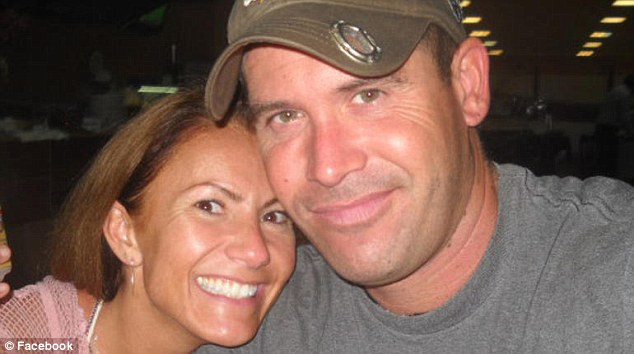
Yvonne Baldelli and Brian Brimager, US Marine Corps Veteran
Retired Marine Brian Brimager pleaded guilty on February 24, 2016 to murdering his girlfriend Yvonne Baldelli in Panama on November 27, 2011. Brimager admitted in a California US District Court that he had viciously beat, stabbed, dismembered and dumped Yvonne in the jungle. In his guilty plea, Brimager also admitted to obstructing the investigation into her murder by destroying, concealing and disposing of evidence, including a blood-stained mattress, clothes and jewelry; killing Baldelli’s two dogs; accessing Baldelli’s email account after her murder and impersonating Baldelli in emails sent from her account to friends and family; withdrawing money from Baldelli’s bank account in Costa Rica after her death; and providing false statements to an FBI agent in an attempt to make it seem as though Baldelli were alive and well and traveling with another man in Costa Rica. The prosecutor told the court that Brimager killed Baldelli in order to silence her because she discovered he had a girlfriend and daughter in San Diego, California. Brimager was afraid Baldelli would ruin his relationship with his new girlfriend by revealing their relationship to her. In an interesting twist, Brimager married his girlfriend in San Diego two weeks after he killed Yvonne. Brian Brimager was sentenced in federal court to twenty-six years for second degree murder and ordered to pay $11,132 in restitution to Baldelli’s father and a $10,000 fine.
“This murder was particularly cruel and depraved…The lengths Mr. Brimager went to to avoid detection were particularly brazen and ultimately shattering to the Bardelli family. I dare say they will never recover. A day may never go by without them thinking of Ms. Baldelli’s murder and the images seared in to their psyches.” –US District Judge Jeffrey T. Miller
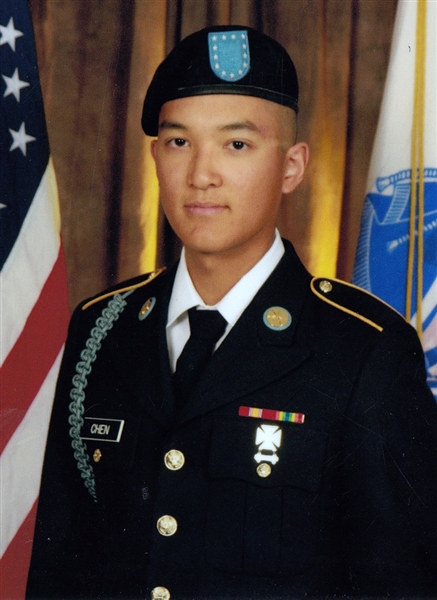
Pvt. Danny Chen, 19, US Army, died of a non combat-related incident in Kandahar province, Afghanistan on October 3, 2011. Pvt Chen was supporting Operation Enduring Freedom on behalf of the 3rd Battalion, 21st Infantry Regiment, 1st Stryker Brigade Combat Team, 25th Infantry Division in Fort Wainwright, Alaska.
It was a case that resonated with just about everyone who followed it. On New Year’s Day 2008, Meredith Emerson set out for a vigorous hike up Union County’s Blood Mountain with her black Labrador retriever mix, Ella. There she encountered a grizzled, toothless drifter searching for his next victim. AJC’s Rhonda Cook and Christian Boone talk about covering that story years ago, as well as talk to the lead GBI agent on the case John Cage, who is still moved by the very thought of Emerson, ten years later. Atlanta Journal-Constitution (December 31, 2017)
Oxygen’s Dateline: Secrets Uncovered featured ‘Mystery on Blood Mountain’ which is the true crime story of the ‘National Forest Serial Killer’ Gary Michael Hilton. The show started with the missing Meredith Emerson of Buford, Georgia who set out on a hike at Blood Mountain in the Chattahoochee National Forest with her rescue dog Ella. Meredith’s roommate became concerned when she never came back home and never showed up to work the next day. Meredith was reliable and never missed work so her roommate called the police department. Meredith’s friends and family and the local sheriffs office began a search for Meredith who was initially considered a missing hiker. Although the police found some disturbing items during their search for Meredith. The items were located in an area where the ground was disturbed, possibly a sign of a struggle and they were especially concerned about the expandable police baton they found. Witnesses reported seeing Meredith with a strange looking man with a white van. A hiker took a picture of the van and the police sent out a be on the lookout for the van. Police learned that Meredith wasn’t the only missing hiker.
A witness, John Tabor, suspected the description of the unsavory character police were looking for was Gary Hilton and he reported this information to the police. The police showed Hilton’s picture to the hikers who saw Meredith and they identified Gary Hilton as the man they saw with Meredith. The manhunt was on. In the meantime, police learned that Cheryl Dunlap of Florida was missing as well. Cheryl’s daughter-in-law called the police after Cheryl didn’t show up for work. After a search was initiated, the police found Cheryl’s car abandoned and parked well off the highway. It appeared, one of the tires had been purposefully flattened. More people gathered to look for Cheryl after it was confirmed something was definitely. In the meantime, the police looked at Cheryl’s financial activity and found that a male subject was using her ATM card. The police staked out the ATMs, but the man never reappeared. In mid-December 2007, hikers found a female body missing it’s head and hands. The police took a DNA sample and it matched Cheryl Dunlap. Authorities learned of two more homicides in the National Forest in North Carolina and this detective suspected Hilton was involved in these unsolved murders to.
John and Irene Bryant retired in North Carolina close to the hiking trails they loved. They traveled extensively and both loved hiking; John hiked the entire Appalachian Trail from Georgia to Maine. The couple went for a day hike in the Pisgah National Forest and they never came back. One of their sons started looking for them and eventually found their car. And not long after they began their search, they found Irene Bryant’s remains not far from their vehicle. She was bludgeoned to death. The search continued for John Bryant. During the course of the investigation, detectives discovered a male subject was successfully using the Bryant’s ATM card. Meanwhile, detectives in North Carolina noticed similarities in the Bryant’s case and Meredith Emerson’s case. They observed the crimes were all occurring in the National Forests. Gary Hilton was a suspect in the disappearance of Meredith Emerson and a person of interest in other homicides in the National Forest. John Tabor worked with Gary Hilton and he saw things change with him drastically in 2007. Hilton was missing several teeth and claimed he removed his own teeth with a pair of pliers. Tabor fired Hilton and Hilton threatened to kill him. Tabor armed himself and took every precaution including contacting the police and a couple days later, Hilton left.
Tabor said he spent 10 years with Gary Hilton and it wasn’t until the end of their friendship that he noticed the deterioration. A lawyer who represented Hilton claimed he was a conman but admitted that Hilton assisted him with making horror movies. One of the movies they worked on together was called Deadly Run. It featured women who were taken to the woods and murdered. Hilton wanted to make things dark and include rape and more murder. Coincidentally, they shot a scene in the Chattahoochee National Forest where Meredith went missing. The pair eventually had a falling out after Hilton stole his dog. After Meredith’s murder, Gary Hilton called his old boss John Tabor and acted like he knew nothing about the manhunt for him. He said he wanted to get back to work and was looking for money he felt was owed to him. John Tabor agreed to meet with him to give him the money and then called the police. On January 4, 2008, the U.S. Marshall’s Service discovered activity on Meredith’s bank card. They were failed attempts which most likely meant Meredith didn’t give Hilton the right code. Gary didn’t show up to pick up the money. Meanwhile, the Georgia Bureau of Investigation (GBI) got involved with Meredith Emerson’s missing persons case. Then one day someone reported that a dog was roaming around with no owner. The dog looked like Ella and an identity chip confirmed it.
While police were canvassing the location, they discovered some of Meredith’s belongings in a dumpster including her identification and her bloody clothing. Meanwhile, another person reported a sighting of Gary Hilton and his white van at a gas station. Police quickly arrived a the scene and arrested Hilton. Detectives attempted to interview Gary Hilton so they could find Meredith but he lawyered up. So investigators offered to cut a deal with Gary so they could retrieve Meredith Emerson’s body for her family. Hilton told them where she was located and the police found her remains in a wooded area. Investigators were stunned by Gary Hilton’s confession. He said he ambushed Meredith as she was walking down the trail. She fought back using her martial arts and was able to get two weapons out of his control, a knife and a police baton. Hilton admitted he fought back hard to subdue her. After he wore Meredith down, he tied her to a tree, and told her he was going to shoot her. Later he led her back to his van, tied her up, and then took her ATM cards. Meredith didn’t give him the right numbers, probably in an attempt to stay alive. He made camp with his captive in a remote forest. He tried the ATM card again the next day and still nothing so he returned to his van. He let Ella the dog go because he didn’t have the heart to kill the dog.
Gary Hilton admitted that he bludgeoned Meredith to death, decapitated her, and dumped bleach all over her body. In a stunning twist, Hilton would not talk about any of the other homicides the police believed he was involved in. Hilton was found guilty of Meredith’s murder and sentenced to life in prison in the State of Georgia. The prosecutor honored the plea agreement and removed the death penalty off the table. State and federal investigators in Florida and North Carolina continued their investigation. They learned Hilton was more than a vagrant in a van. He was an Army veteran, a college graduate, he got a pilot’s license on the GI Bill, and was married three times before the wheel’s came off. Hilton was raised by his mother and a step-father he claimed to not get along with. When he was 14 years old, he shot his step-father who lived; Gary was institutionalized. He later joined the Army and admitted his time in the Army was the only time he worked full-time. He admitted to being a career criminal; he was a scam artist. In his interview with the GBI, he had grandiose conversation about his life and touted his exceptionalism. Gary has a very high IQ and believed he was smarter than the investigators.
In January 2008, Mr. Bryant’s remains were discovered in the National Forest in North Carolina. And investigators in Florida believed Cheryl Dunlap’s case fit Gary Hilton’s modus operandi. The State of Florida indicted Gary Hilton in a capital murder trial for Cheryl Dunlap’s homicide but they were not allowed to enter any of the other suspected homicides or the Meredith Emerson case into evidence even to establish a pattern. In addition, the prosecution was not allowed to refer to the horror movie Hilton was involved with. A month after Cheryl went missing, Meredith went missing. So investigators went deep in the woods hoping to find additional evidence and they stumbled upon the head and hands of Cheryl Dunlap in a fire. It appeared someone had worked hard to destroy evidence. Unfortunately, no witnesses came forward to put Cheryl Dunlap with Gary Hilton so the prosecution had to make a connection in some other way. After they found the knife that Meredith wrestled away from Hilton, they found the link they needed to make the connection between Gary and Cheryl. The knife used in the Meredith Emerson abduction was the same knife used to decapitate Cheryl Dunlap.
Hilton’s homicide case for the murder of Cheryl Dunlap in Florida started in February 2011. This was a capital murder case and a death penalty case. Investigators left no stone unturned. They searched all of Gary Hilton’s belongings and his van and were able to make another connection. Cheryl’s DNA was found on Gary’s boots and his sleeping bag. In his defense, Gary Hilton declined to take the stand and his attorney claimed there was no direct evidence linking Gary Hilton to Cheryl Dunlap’s murder. The prosecution’s argument was compelling because Hilton was found guilty of first degree murder. And the prosecution was allowed to talk about Meredith Emerson’s homicide in the sentencing phase of the trial. The defense claimed Hilton suffered a Traumatic Brain Injury when he was a child and was also abused as a child. He was diagnosed with anti-social personality disorder and schizoaffective disorder. The prosecution’s rebuttal witnessed claimed Hilton was a psychopath who knew right from wrong. Gary Hilton was sentenced to death to by lethal injection in the State of Florida on April 21, 2011. Hilton was indicted in federal court in North Carolina for the murders of John and Irene Bryant and was a person of interest in other cases. Hilton filed an appeal in the State of Florida to have his death sentenced conviction overturned but the appeal was denied.
UPDATE: Gary Michael Hilton was found guilty of murdering Rossana Miliani, 26, Cheryl Hodges Dunlap, 46, John, 80, and Irene Bryant, 84, Michael Scot Louis, 27, and Meredith Hope Emerson, 24, between December 7, 2005 and January 4, 2008. Gary Hilton was sentenced to life in prison in Georgia on January 31, 2008, sentenced to death in Florida on April 21, 2011, and sentenced to four life sentences in North Carolina on April 25, 2013.
Source: ‘Mystery on Blood Mountain’ Dateline
Authorities met Tuesday to discuss possible links between Georgia murder suspect Gary Michael Hilton and cases in other states. -Associated Press (January 16, 2008)
Authorities say they have linked Gary Michael Hilton to the the slaying of a N.C. hiker and the disappearance of her husband. Earlier this month, he w as charged with killing a 24-year old female Georgia hiker. – Associated Press (January 17, 2008)
The man accused of killing a Hendersonville couple in the Pisgah National Forest was in court Monday morning. -WYFF News 4 (July 25, 2011)
A confessed serial killer, who pleaded guilty to killing two hikers from Henderson County, is sentenced to two consecutive life sentences without parole. Last year, Gary Hilton admitted to killing John and Irene Bryant as they hiked in the Pisgah National Forest in October 2007. -WLOS News 13 (April 25, 2013)
Gary Hilton was sentenced today for killing John and Irene Bryant from Henderson County in the Pisgah National Forest back in 2007. A federal judge gave Hilton four more life terms without parole. That’s on top of his Florida death sentence for a killing there, and a life term for a killing in Georgia. -WLOS News 13 (April 26, 2013)
A double murder case in the mountains involving a serial killer finally comes to a close almost six years later. Gary Hilton was sentenced today for killing John and Irene Bryant from Henderson County in the Pisgah National Forest back in 2007. A federal judge gave Hilton four more life terms without parole. -WLOS News 13 (April 29, 2013)
The Lackland Air Force Base Basic Military Training instructor sex scandal in San Antonio, Texas was one of the biggest sex scandals in military history. In the end, 62 recruits were identified in the scandal and 35 basic military training personnel were courts martialed for alleged abuse of trainees or sex related offenses. The majority of the alleged abuse occurred between 2009 and 2011. SSgt Luis Walker and MSgt Michael Silva were the only instructors found guilty of rape and each was sentenced to twenty years in prison. Prior to their convictions, on January 23, 2013, the House Armed Services Committee conducted an investigation into the sexual assault misconduct at Lackland Air Force Base and heard from General Mark Welsh (Chief of Staff), General Edward Rice (AETC Commander), two retired USAF women, and Dr. David Lisak (a consultant hired by General Welsh). This was also the same day that then Secretary of Defense Leon Panetta announced the military was lifting the ban on women in combat. As a result of this announcement, the media’s focus was distracted from the hearing on sexual assault in the military to the celebration of equality for women in the military.
No substantial legislation was enacted to address the successful prosecution of and prevention of these alleged abuses of power. The military officer’s authority to choose whether to investigate and prosecute felony crimes and how continues to go unchecked. Legislation introduced in May 2013 would have helped provide due process to both the accused and accuser by giving a military prosecutor the authority to move forward with a case. Unfortunately this legislation has been blocked by the Senate, primarily led by Senator Claire McCaskill, since 2013 until present. Whistleblowers have since disclosed that the Air Force investigations at Lackland trampled on due process rights. And individuals were railroaded with collateral charges which forced them to take plea deals to avoid excessive punishments. The Air Force is being accused of going on a “witch hunt” after being politically motivated to clean up the basic training facility while under the watchful eye of the media, advocates, and Congress.
The solution to help both the accused and accuser get a fair investigation and trial is to have a justice system that more closely resembles that of the civilian court systems or to simply use the civilian court systems. In the civilian legal system, victims of crimes report to the police where the name of the individual they are reporting is entered into a national crime database. Impartial detectives conduct independent investigations and provide the results of their investigations to a prosecutor. A prosecutor determines whether or not there is enough evidence to move forward with the successful prosecution of a case. The accused has the right to remain silent, right to be represented by an attorney, right to the opportunity to plead “not guilty” or “guilty”, and the right to request a jury trial. In other words, soldiers should have the same constitutional rights as their civilian counterparts. Soldiers have no choice over how things get handled in the military justice system because the Commander has all the control.
Passing military justice reform that guarantees due process rights for the accused and accuser and overturning the Feres Doctrine should be our highest priority.
[Former] Rep. Bruce Braley introduces the Holley Lynn James Act — a bill to help victims of sexual assault and domestic violence in the military get justice. The bill is named after Holley Lynn James, a constituent of [former] Rep. Braley who was killed by her husband while both were in the service. -[Former] Rep. Bruce Braley (April 12, 2011)
“The U.S. military could crack down on internal cases of sexual and domestic abuse. That’s if a bill that [former] Congressman Bruce Braley has written becomes law. The bill is named after this former Dubuque [Iowa] woman. In 2008, Holley Lynn James’ husband killed her at their home at a military base in North Carolina. Both James and her husband John Wimunc were in the military. [KCRG spoke with James’ father] Call it a gut feeling or a father’s intuition, during the spring of 2008 Jesse James knew something wasn’t right with his daughter’s marriage. ‘We were constantly calling the unit, calling the unit and they would do something but it didn’t last very long’ (Jesse James) Two months before her death, Army 2nd Lt. Holley James filed a domestic violence complaint with police against her estranged husband Marine Corporal John Wimunc.
[Wimunc] later killed Holley, dismembered her body, then set her apartment on fire. ‘The military has never had a system of investigating and prosecuting these cases’(Jesse James). But [former] Congressman Braley’s new bill aims to change all that. It would create an Inspector General’s office to handle abuse cases. There would be a resource department for victims and would include a neutral third party investigator. ‘This isn’t an indictment on military leaders, it’s just that people who are more qualified with the life experiences to investigate and prosecute these things need to be doing it’ (Jesse James). James says he’ll never know but a department like this may have saved his daughter’s life…John Wimunc pleaded guilty to Holley James murder and a judge sentenced him to life in prison without parole. James had two children from a previous relationship. Jesse James says the children are doing well and living with their father…”
“Last year the Department of Defense reported more than 3000 instances of sexual assault in the military. Now [former] Iowa Congressman Bruce Braley has introduced legislation that aims to bring that number down. ‘When it has to do with woman serving their country in the military, I can’t think of a better reason for people to come together and come up with a solution to an alarming problem’ (Rep. Bruce Braley). In Dubuque today, Braley spoke about the Holley Lynn James Act. It would help victims of sexual and domestic abuse in the military. The bill is named after the Dubuque native and Army 2nd Lt. [Holley Lynn James] who was killed by her husband [John Wimunc] in 2008. The bill would enlist the office of Inspector General to provide independent oversight in reported cases.” –KCRG-TV (April 12, 2011)
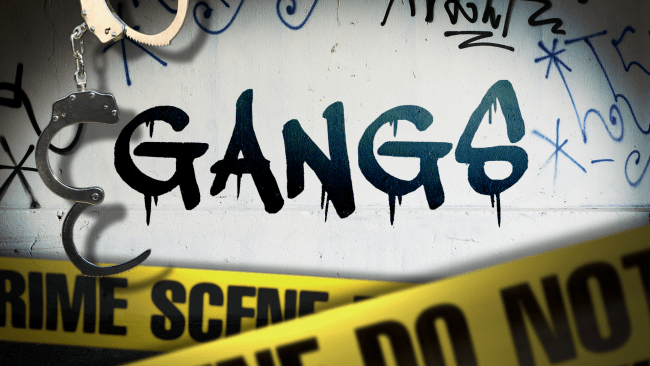
The United States military is arguably the most powerful force in the world. But according to the FBI 15,000 men and women in uniform have ties to notorious American gangs such as MS-13, the Crips, the Bloods, and the Gangster Disciples — that’s a population that’s bigger than that of any military installation. -Part 1, RT America (December 23, 2010)
Gangs in the Military: Armed & Dangerous Forces -Part 2, RT America (December 23, 2010)
Sworn to protect us from every enemy, foreign and domestic, and every day the majority of soldiers do just that ! yet some units are being compromised and turn into street gangs. An FBI report recently showed an increased gang activity within US soldiers. -Gangs in the U.S. Army Documentary


 MILITARY JUSTICE FOR ALL
