ID Go: The promise of peaceful life in Tamarac, Florida is broken when the son of a newly arrived family befriends the neighborhood’s most unruly kids. Bad blood between the neighbors boils over until things come to a horrifically violent end on Halloween. -Nail in the Coffin, Fear Thy Neighbor (S3, E1)
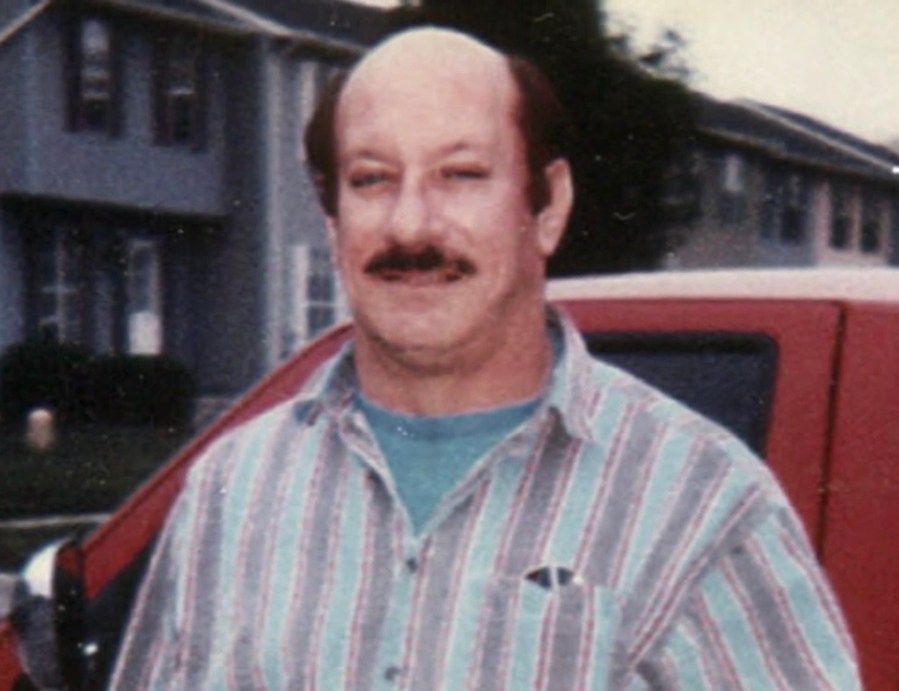
Date: October 31, 2001 Victim: Robert Campbell Offender: Richard Day, Air Force veteran, auto body mechanic, disabled Location: Tamarac, Florida Circumstances: Richard Day’s step-son Walter discovered a pocket knife missing from his tackle box, Walter confronted the Rossier boys and they denied it so he let it go, Richard had a quadruple bypass and was forced to give up his job during his recovery, Richard was down because he couldn’t provide for his family, Richard had diabetes, he would get very irritable, Walter brought his game boy to school and Andrew Rossier took it and wouldn’t give it back to him, Andrew threatened to steal his bike next, Adele Day got a guidance counselor involved to help resolve the bullying issues, Connie Rossier refused to admit that her sons did anything wrong, Walter and the boys continued to hang out, Richard accused the boys of stealing items from their house, after that incident, Richard forbid Walter to hang out with the Rossier boys, Walter continued to sneak over to the boy’s house and discovered the they had some of his game boy games so Walter took them, Connie called Richard and accused Walter of stealing the games, Walter admitted taking the games back because they were his, they were labeled so Richard believed Walter, Richard went over to Connie’s house to confront her about the theft, Richard screamed at Connie as loud as he could and they went back and forth, they were both angry, one night, Richard and family returned home to discover that someone had broke into their home and trashed it and Walter’s bike was missing, Richard was certain the Rossier boys did it and reported the break-in to the police, the police found a fingerprint but never followed up on it with Richard, the Rossier boys taunted Richard from the road near his property, Walter’s parents bought him a new bike, Walter makes new friends but can’t avoid the Rossier boys, Andrew tried to take off on Walter’s new bike but Walter stopped him, Andrew threatened to get back at him for humiliating him, Andrew tried to elicit the help of his brothers to get back at Walter, Uncle Rob tried to keep the peace but the Rossier kids were out for revenge, Walter and Richard were washing the truck in the driveway and the Rossier boys started taunting them and trying to get a rise out of them, Richard was ready to beat these boys but Adele stopped him, the Rossier boys continued to antagonize Richard, Richard felt helpless in dealing with the Rossier boys and called the police but there really wasn’t anything they could do to stop them, Richard moved to Florida for peace but the Rossier boys were determined to make his life miserable, on Halloween things reached a boiling point, Richard ate too much candy for someone who had diabetes, when they returned home, they found that their yard had been egged and doused with shaving cream, it was on the driveway, home and garage, Richard and Walter suspected the Rossier boys so they drove to the Rossier home and threw eggs at their home and the situation quickly got ugly, the Rossier family confronted them and Richard and Walter jumped in the truck to escape the situation, Uncle Rob was dragged from 100-150 feet by the truck but Walter kept driving, the Rossier family found Uncle Rob and he was badly injured and bled to death, Richard Day was arrested for homicide, the police said he used his truck as his murder weapon, the untimely death took a toll on both families mental health Disposition: Richard Day was found guilty of second degree murder and sentenced to life in prison on May 9, 2003, Richard died in prison on April 2, 2009 from diabetes complications
Editor’s note: With a cable subscription, you can download the free ID Go app and watch all of the Investigation Discovery programming at your convenience. And for those who do not have cable, you can watch “unlocked” episodes on the ID Go app including the latest premieres. Download the ID Go app and binge away. For those who prefer commercial free programming during your binge session, Prime Video has an ID channel: ‘True Crime Files by Investigation Discovery” available for $2.99 a month. It’s a compilation of older seasons but totally worth the cost if you are a true crime addict.
In a complicated, twisted tale of alleged corruption and betrayal over budgetary wars, a presumed cover-up simmers at a colossal scale between the Army and the National Guard. Soldiers are the exploited pawns in the largest politically motivated fraud investigation ever conducted by a military component against its own forces. This may sound like suspenseful fiction, but as many National Guardsmen and women can attest, this is all too real. An estimated 24,000 National Guard soldiers have been caught in the dragnet, which all stems from a successful military-enlistment recruiting program that financially compensated citizen-soldiers who aided in efforts to boost military strength. Documents and public records obtained through the Freedom of Information Act along with credible sources points to a disturbing persecution of soldiers and veterans as well as the batch processing of mass indictments.
At a time when US forces were scattered among Iraq, Kuwait and Afghanistan, the overall end strength numbers were low. Army National Guard Director, Lt. General Clyde A. Vaughn (ret), and his staff had an idea to resupply the branches with fresh bodies—make anyone a potential recruiter by offering a financial incentive of $2,000.00 for each successful enlistment. Vaughn deeply felt that a peer-enlistment program might ease the hemorrhaging of a nationwide manpower shortage. And he was correct. The program, dubbed G-RAP (Guard Recruiting Assistance Program), ran from 2005-2012 and was an enormous success, as it replenished the ranks. Other branches of the military ultimately mirrored that recruiting program, but none to the magnitude of the NGB (National Guard Bureau). And none of them received the amount of government money that the Guard received to achieve this success.
Though G-RAP stood as a great achievement in strengthening the reserve forces, by 2012, all RAPs (Recruiting Assistance Programs) were suspended indefinitely, primarily due to media publicity of widespread fraud. NGB took the most heat, consistently projected as having lost upwards of $100 million. The truth, however, has been largely obscured. After four years of costly investigations, only $2 to 3 million “has been successfully prosecuted in civil courts.” But what is more disconcerting is that NGB, routinely criticized for its lack of oversight, no longer had the supervision in their control. Based on a previously unpublished Army Inspector General Report, a closed door meeting took place in May 2007 where it was decided by an ad hoc committee comprised of representatives from Army Criminal Investigation Division (CID), Defense Criminal Investigation Service (DCIS) and the Air Force Office of Special Bureau (AFSOI) “that Docupak would turn over any suspected occurrences of fraud directly to CID,” and that NGB, specifically the State Adjutants General (TAG), would be deliberately left out of the information loop. The rationale given at the time was that the DCIS did not want interference from high-ranking Guard officials.
There is evidence, however, that some TAGs were successfully handling all reported incidents of fraud internally in their own states up until that point with detection and prevention controls. It was not until these controls were halted in the May 2007 meeting that the Guard lost the ability to monitor, discipline and correct such incidents of fraud. Perplexingly, all of this was done without the Guard’s knowledge. In a recent interview in the Washington Times, General Vaughn reported that “he was kept in the dark” about the occurrence of fraud in the field and that CID purposely did not inform him about fraud cases. “No one can correct a problem if you do not know it exists,” stated Vaughn.
The CID did not have any prerogative to make such changes to regulation, as it would require a Congressional act; yet, in 2009 (and again in 2014), changes were made to the CID Manual that removed the language to report crimes through the TAG. But simply changing the manual did not mean it was constitutional to do so under the sovereign rights of each state and US territories. What’s more, there has been discussion in legal circles as to whether or not CID is operating outside its jurisdiction in the investigation of National Guard members. According to the Constitution as well as Department of Defense Directives (DoDD) 5105.77, the NGB is under the direct command of the state TAG and ultimately the governor unless a battalion has been mobilized for federal duty, at which point they then fall under Title 10 (active duty status) and the command of the President. The majority of those indicted are known as “M-day soldiers.” In other words, they are “weekend warriors” working for the Guard once a month and two weeks a year in official drill status (aka, Title 32). If an individual under Title 32 were to come under some criminal deed, it is the role of the TAG to take action. In fact, the TAGs have guidance on enforcing discipline and protecting soldier’s rights as it is articulated in the 2015 Commander’s Legal Handbook. The CID, as a faction of the big Army, only has command over Title 10 soldiers; it does not, to this day, have any authority over most members of the National Guard in these investigations, save a select few individuals who were deployed on active duty while participating in G-RAP.
This then raises the question, why is the regular Army harassing National Guard soldiers and violating their constitutional rights in the first place? Most of the soldiers under suspicion for theft of government property are not subject to regular Army discipline. Before that question can be answered, there is another piece of the puzzle to be scrutinized—the alarming results of CID’s investigations.
The U.S. Army Audit Agency had concern regarding the potential of individual fraud within RAPs. After reviewing over 150,000 enlistments ($339 million in payments), the June 2012 Audit identified 3,200 soldiers in the fraud-risk assessment. They found 1,256 recruiters suspicious of medium to high risk for fraud. Additionally, there were 2,022 RAs that “potentially violated program rules.” Of those RAs, only a quarter of them were found to be intentional acts. The remaining 1,400 recruiting assistants appeared to have unknowingly and unintentionally violated the rules of G-RAP, which is entirely plausible considering there were 60 changes to G-RAP rules during its seven years in existence .
This report fueled an investigation of another style from the Senate Subcommittee on Financial and Contracting Oversight. Despite the Audit’s fraud findings, the Army CID quickly dispatched approximately 200 field investigators under “Task Force Raptor” to scrutinize all 106,364 individuals who participated in G-RAP for any possibility of fraud. Senator Claire M. McCaskill (D, MO) set a directive that CID should flood the nation’s landscape and courageously return ill-gotten dollars to the American taxpayers. CID agents were encouraged to flash badges, obtain DNA swabs, issue polygraph tests and secure fingerprints in an effort to scare soldiers into revealing any useful material that could be later used against them. One former CID agent admitted that they were urged to lie to potential witnesses and persons-of-interest if usable information could be extracted. They were then instructed to report the numbers of potential indictments back to Senator McCaskill’s office on a quarterly basis, ostensibly to ensure they were meeting her demands of accountability. But a federal indictment of fraud is a crime requiring specific intent. In other words, conviction relies on the government’s ability prove the individual knew of the specific rules and guidelines and intentionally broke them for monetary enrichment.
Nevertheless, CID’s report prepared for the February 2014 Senate Subcommittee hearing led by Senator McCaskill found over 22,000 soldiers associated with payments that were at risk for fraud. This number is over seven times greater than the original Army Audit estimation at a rate of 1.7-3%. The FBI estimates that insurance fraud—one of the highest areas of civilian fraud—is at a rate of 3-10% of all insurance cases. Conversely, CID is now suggesting that those who proudly wear the uniform are felons at a rate of over 20%. Put differently, 1 in 5 soldiers are alleged criminals, 2 to 7 times more likely to commit fraud than the civilian population. This is clear evidence that these claims are audacious.
How is it possible that so many service members are accused of fraud? How is it that the CID investigations found an additional 18,000-20,000 offenders from the Audit’s estimation? Is it possible that this is a witch-hunt? This fishing expedition turned into a conspiracy theory as Sen. McCaskill stated, “I mean, it is almost like word got out and nobody was paying attention, and all of a sudden everybody was, okay, the bank is open. Let us go for it.” The moderate democrat further opined, “I mean there is no way that there was not a culture of people saying, hey, here is the deal. There is a bounty and we know these people are signing up.” But rather than a vast number of soldiers intentionally scamming the government they swore to protect, a much more plausible answer would be that most all were following a set of murky rules as they understood them.
Senator McCaskill’s supposed effort directed to bring about justice for the American people instead turned into a catastrophe where the wrath eventually rolled downhill to the most vulnerable of peoples, our service members. Let off the hook were Docupak and military Brass who were responsible for the proper administration and oversight of G-RAP. One possible explanation for the morass is a skirmish over federal defense dollars when the Guard received the lion share of contract monies to operate G-RAP. Or perhaps it is something as simple as an attempt to justify the military drawdown of troops currently underway. This time, the scapegoat would be the American soldier, more specifically National Guardsman, as McCaskill’s goons sought to manufacture felons. Unfortunately, those are the casualties of politics, but these service members deserve more. They deserve answers and accountability from our leaders.
[1] Unpublished U.S. Army Inspector General Agency Report of Investigation (ROI) (Recruiting Assistance Program) 2014. [2] Memorandum from U.S. Army Audit Agency to Recruiting Assistance Program Task Force Regarding Audit of Recruiting Assistance Programs – Reserve Components (June 4, 2012) (Report A 2012 0115 IEF), Enclosure 1. [3] CID Investigators report (G-RAP Training) Nov, 2013.
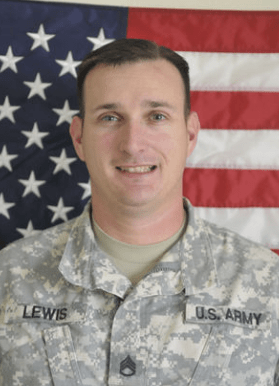
Army Staff Sgt. Steven Lewis, 33, was found dead in his off-post residence in Killeen, Texas on March 22, 2016. According to reports, the Killeen police department said Lewis’ wound was self-inflicted. He was working as an intelligence specialist and assigned to the 1st Battalion, 12th Cavalry Regiment, 3rd Brigade Combat Team, 1st Cavalry Division at Fort Hood. Lewis deployed to Iraq twice from November 2008 to September 2009 and again from December 2010 to October 2011. His home of record was Tulare, California. He first joined the Navy in 2002 and later joined the Army in 2007; he had been stationed at Fort Hood since 2013.
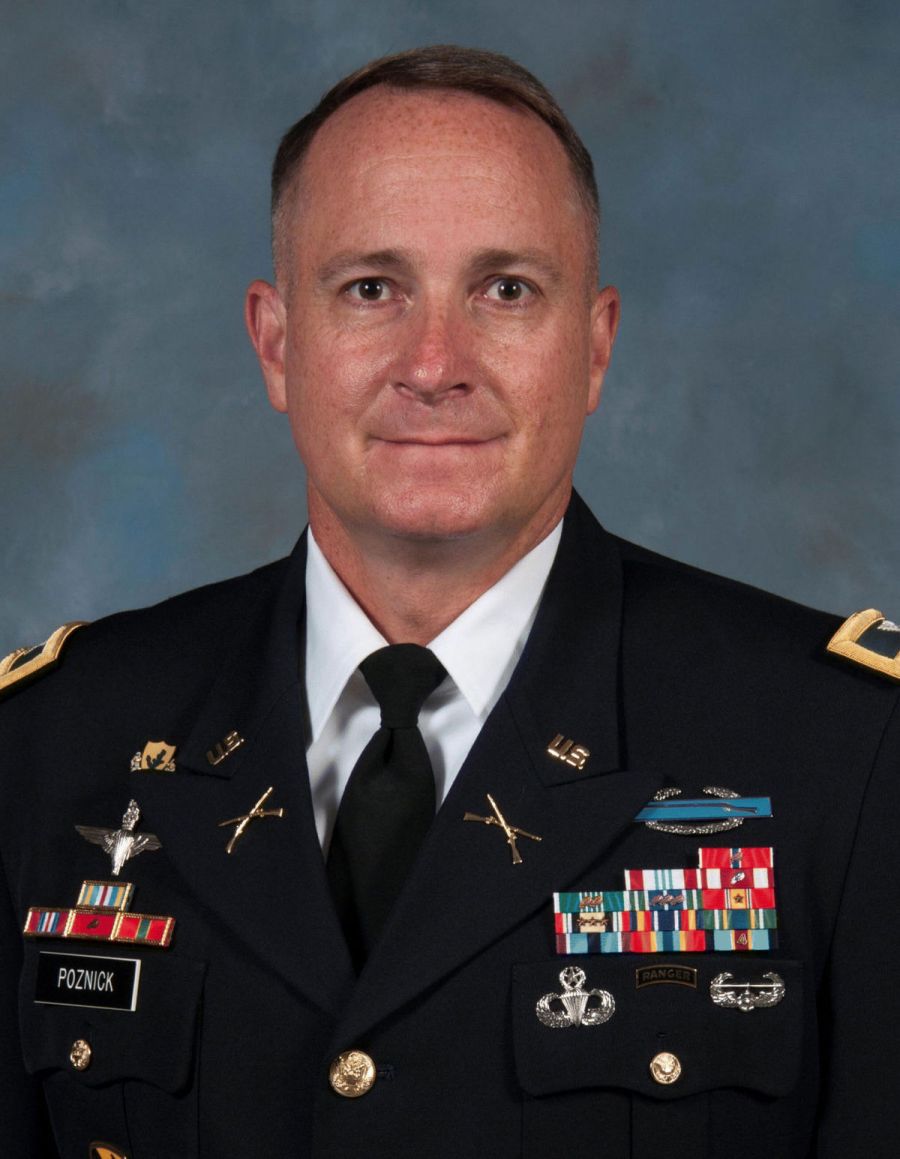
Former Fort Hood Battalion Commander Col. Andrew Poznick was found dead at his off-post residence near Carlisle Barracks, Pennsylvania on March 20, 2016. Col. Poznick was scheduled to join the faculty at the Army War College. Col. Poznick was born on the Fort Bragg, North Carolina post and was considered an Army brat. He himself joined the Army in 1993 as an infantry officer after graduating from Auburn University in Alabama. At Fort Hood, Col. Poznick commanded the 1st Battalion, 12th Cavalry Regiment, 3rd Brigade Combat Team, 1st Cavalry Division. He deployed in support of Operation Iraqi Freedom twice, once in 2006 and again in 2011, where he commanded the last combat troops to exit Iraq on December 18, 2011. Media reports indicate Col. Poznick took his own life.
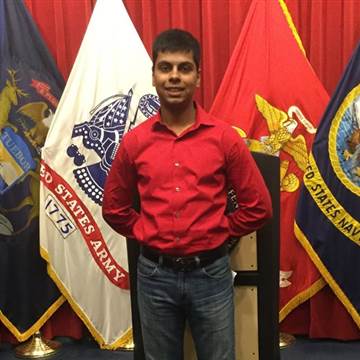
Why did a 20-year-old recruit jump to his death at the Marine Corps training facility at Parris Island? That question spurred an internal investigation, which uncovered a larger pattern of hazing and abuse. William Brangham joins Judy Woodruff to offer a closer look at the investigation. -PBS NewsHour
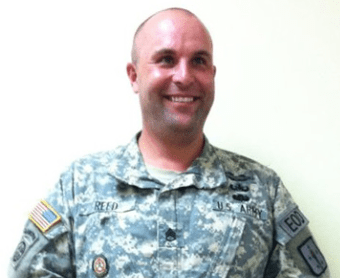
Army Staff Sgt. Brian Michael Reed, 40, was found dead of a gunshot wound at his off-post residence in Copperas Cove, Texas on March 14, 2016. Staff Sgt. Reed’s home of record is listed as Corpus Christi and he entered the Army in August 2005 as an infantryman. He later changed jobs to an explosive ordnance disposal specialist and was assigned to the 79th Ordnance Battalion at Fort Hood. Staff Sgt. Reed deployed to Iraq from August 2006 to September 2007 and to Afghanistan from April 2011 to April 2012. Copperas Cove police reported there were no immediate signs of foul play but an autopsy was ordered to determine the cause of death. The circumstances surrounding his death and official cause of death are unknown.
On March 10, 2016 the United States Air Force Court of Criminal Appeals upheld United States v. Jane Neubauer, United States Air Force. Is this another case of federal government overreach and denial of due process rights? I think John Q Public‘s assessment of this case speaks volumes of the real issues behind the Command directed prosecution of an airman who blew the whistle after being recruited as an Office of Special Investigations (OSI) confidential informant. The same OSI office she exposed ended up investigating and assisting with her prosecution. This is yet another example of the importance of letting an impartial law enforcement official and prosecutor make decisions about whether to investigate, who should investigate, who to investigate, and whether or not they have the evidence to move forward with a case. The moment a military member asks for an attorney, all criminal justice communications with Commanders and their investigators must cease. Every accused military member should be represented by counsel and afforded their due process rights throughout the entire investigation including collection of evidence. Learn more about your due process rights here.
“There have been many sexual assault accusations far less credible than the accusation made by this Airman. Many that were enthusiastically pursued by prosecutors despite their frailty … many that did not result in disciplinary actions when they were revealed to have been false.
So, what was so special about this accusation?
Well, she was an OSI informant, and the situation cast OSI in an extremely negative light at a time when the OSI informant program was already under fire. The same organization that recruited her right out of BMT to help investigate drug activity at Keesler AFB conducted the investigation that eventually resulted in her prosecution.
If she’s wrong … if she’s bad … if she’s a liar … then obviously she’s the problem. She’ll absorb the negative attention and culpability … leaving OSI and its shady actions in this debacle comfortably out of the limelight.
Another example of prosecutorial inconsistency and arbitrariness in the USAF … demonstrating that it’s not operating an impartial justice system, but a score-settling control device on behalf of the chain of command.” ~John Q Public
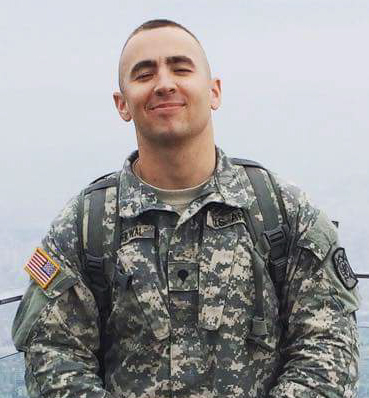
Sgt. Sean Van Der Wal, 25, US Army, was killed in a vehicle crash on Interstate 35 near Georgetown, Texas on March 6, 2016. Sgt. Van Der Wal was in the passenger seat of a vehicle driven by Spc. Timothy Corder that collided with the back of a parked semitrailer (hazards were on). The two other crash victims including the driver were hospitalized. Sgt. Van Der Wal was a military policeman assigned to the 720th Military Police Battalion, 89th Military Police Brigade at Fort Hood. Sgt. Van Der Wal joined the Army in 2014 and his home of record is listed as New Castle, Pennsylvania. Spc. Timothy Corder, 24, has been charged with intoxication manslaughter and intoxication assault. Corder was booked and released from the County Jail on a $100,000 bond on April 11, 2016. Spc. Timothy Corder found guilty of felony and the final disposition was probation.
Data from Corder’s vehicle showed he was traveling at a steady 78 miles per hour just prior to the crash, with no braking or cruise control, the affidavit states. The speed limit at the crash location is 55 mph. –KXAN
IF YOU HAVE ANY INFORMATION, PLEASE CONTACT THE HERMOSA BEACH POLICE DEPARTMENT: Detective Joshua Droz at (310) 318-0334 or jdroz@hermosapolice.org
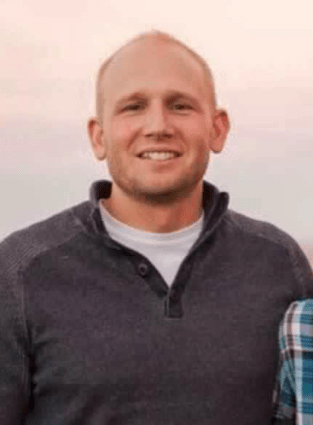
Air Force veteran Michael Vanzandt, 36, was living in Lancaster, California at the time of his disappearance. Michael was originally from Pleasant Lake, Michigan where he was raised by his mom. He has two brothers and one step brother. After graduation in 1999, Michael enlisted in the Air Force. It wasn’t long after that in 2000 when he met a fellow Air Force member at Yakota Air Base in Japan. They were both from Michigan and grew up about an hour and a half from one another. They married in 2001 and by 2006, they had three children. Michael was stationed at Edwards Air Force Base in California. While stationed there, he deployed to Iraq twice in support of Operation Iraqi Freedom (OIF).
After twelve years of service, Michael left the Air Force and got a civilian job in human resources at Edwards AFB. In 2014, Michael and his wife decided to separate and divorce. His wife says they just grew apart. But despite the break-up, the two had a good relationship for the sake of the three children. They had shared custody. Michael tried dating a couple people after the divorce but the relationships didn’t last because he just wasn’t ready yet. Although he remained friends with the two women. It was clear Michael was focused on moving out of his small apartment and getting a house for his family. In early 2016, Michael was approved for a mortgage.
On March 5, 2016, Michael dropped the three children off at his ex-wife’s house because he had plans to go out with some friends that night. He drove from Lancaster to Hermosa Beach where he was meeting his friends. They were going to watch a UFC event and Michael was excited about that because he loves the UFC. Michael parked his car in a parking garage and they ubered it to the Underground. After the UFC event was over, they all decided to go to the American Junkie bar. While they were waiting in line, Michael said he was going to use the bathroom at the liquor store. This is the last time anyone saw Michael Vanzandt again.
When friends decided to abandon their plan to go to the American Junkie, they left and went bar hopping. The last time they spoke to Michael, he said he was going to the bathroom at the liquor store and would be right back. They were starting to get concerned so they texted and called him but got no response. The phone calls were going straight to voicemail. After leaving the bars in Hermosa Beach, they went back to the parking garage to see if Michael had retrieved his car and he had not. The next day, one of his friends started making phone calls with no luck. Another friend went to his apartment and learned that he was not there. His car wasn’t either.
Michael’s ex-wife grew concerned when Michael didn’t show up to drop off an insurance form for one of the kids who was having a medical procedure done. She called one of his ex-girlfriends who offered to go to his apartment and see if she couldn’t find Michael and/or the insurance form. She looked around the apartment but nothing appeared to be out of place and nothing looked suspicious. Michael’s ex-wife called his place of employment at Edwards AFB and learned that he never showed up for work which was totally out of character. They knew now that Michael was missing.
One of Michael’s friends attempted to file an official missing persons report but were quickly disheartened when they realized the police were not as concerned. Michael’s friend went to Hermosa Beach to look for him. She learned that Michael’s car was still in the parking garage. Michael’s ex-wife tells the kids at this point that Michael is officially missing. And they didn’t waste any time trying to garner attention for Michael’s disappearance on social media. The information spread like wild fire. On March 8, Michael’s friends met with a detective in Hermosa Beach who laid out a game plan for launching a missing person’s investigation.
After the investigation was launched, friends and family put up fliers in Hermosa Beach and spoke with local businesses but no one had seen Michael. Investigators talked with all the friends Michael was out with on March 5th but none of them provided any new leads. Investigators looked at cell phone records and the last time the phone was used, it pinged in Hermosa Beach. It appears the phone went dead around 9 p.m. Next investigators looked thru surveillance video around the bars the group frequented. It was at this point, news outlets also began covering Michael’s disappearance. Family and friends hoped for the lead that would be a breakthrough in the case.
After the investigators and Michael’s family and friends were unable to locate Michael in downtown Hermosa Beach, they all shifted the search efforts to the shoreline. Michael’s family hired a helicopter to search up and down the coast line. Meanwhile, the police positively identified Michael on video surveillance. They witnessed Michael come out of the door at the liquor store and then he went southbound on Hermosa Avenue. They could see how the group kept missing Michael in the crowds by a matter of seconds as they searched for each other. The police speculated that Michael was probably looking for a bathroom. Michael went back to the liquor store and bought some whiskey. It was here that police were able to confirm his cell phone was in fact dead.
The last confirmed sighting for Michael Vanzandt was at 11:27 p.m. in Hermosa Beach. Friends and family hoped he ran into someone else while out, maybe an unknown group of people. They felt helpless because there were no new leads despite their exhaustive efforts. Michael’s brother Tyler walked the coast line again and again until he couldn’t walk anymore but eventually realized that his time on the ground was not effective. The Hermosa Beach P.D. confirmed that the investigation is still open but were at a loss after taking all the proactive measures. Michael’s brother thought maybe he went swimming while drinking but deep down inside prays that he’s out there in the world in an effort to maintain hope. Michael had a good job, he was planning on getting a new home, and starting a new chapter in his life for his children.
Source: Just Out of Sight, Disappeared, Investigation Discovery
When Michael VanZandt, a veteran and father of three, disappears one night in Hermosa Beach, Ca., police suspect a group of strangers may be involved. But his loved ones are haunted by suspicions about his thrill seeking when considering his fate. -Disappeared




 MILITARY JUSTICE FOR ALL