A Month in Review: In the News on Military Justice for All (May 2018)

May 2018

Missing:
Family pleads for missing soldier battling PTSD to come home
Vets group calls for ‘CAMO Alert’
What really happened to Middlebrook’s Sgt. Gene Shultz?
Missing: Michael VanZandt (Hermosa Beach Police Department – 310-318-0308)
Missing in Hermosa Beach: What happened to Mike VanZandt?
He Left to Go to the Bathroom and Never Came Back: Where is Michael Vanzandt?
Missing: Trevor Nichols (US Army), New York
Soldier receives orders to Fort Riley, goes AWOL
Disappeared: Air Force Veteran Michael Vanzandt Vanishes During a Night Out with Friends in Hermosa Beach, California (March 5, 2016)
Jean-Marc Faubert has been missing since the early morning of Friday, May 25th

Cold Cases:
Georgia Marine’s murder in Belize remains unsolved one year later
No arrests made 3 years after soldier’s murder
New Hampshire unsolved case file: David and Deborah Carreau
Warwick murder case still unsolved, reward offered 5 years later
Cold Case: Army Spc. Darlene Krashoc Sexually Assaulted, Murdered, and Dumped in Parking Lot in Colorado Springs; CID Offers $10,000 Reward (1987)

Fugitives:
Reward Offered for Armed & Dangerous Fugitive: Army Recruiter John Blauvelt Wanted for Allegedly Murdering Estranged Wife in South Carolina (2017)

Petitions:
Presidential Pardon Petition | Free Lt. Clint Lorance
Fire Iron River, Michigan City Manager David Thayer For Firing Police Chief Laura Frizzo!

Continue reading “A Month in Review: In the News on Military Justice for All (May 2018)” →

Department of Veterans Affairs Becomes First Hospital System to Release Opioid Prescribing Rates (January 11, 2018)

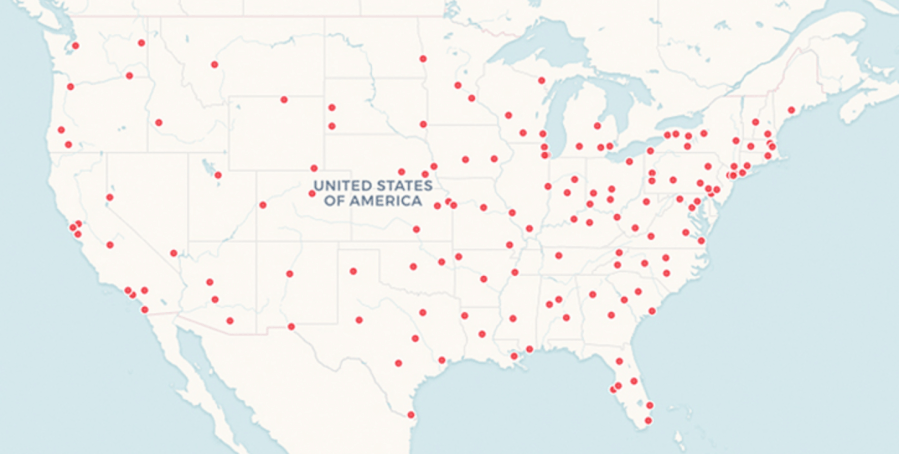
VA Opioid Interacive Map
Interactive map expands transparency, shows opioids dispensed among VA health care centers.

Timeline of Veteran Suicides, Legislative Efforts, and Nationwide Negligence at the Department of Veterans Affairs

Today U.S. Secretary of Veterans Affairs Dr. David J. Shulkin announced that VA has begun publicly posting information on opioids dispensed from VA pharmacies, along with VA’s strategies to prescribe these pain medications appropriately and safely.

With this announcement, VA becomes the only health-care system in the country to post information on its opioid-prescribing rates.

The disclosure is part of VA’s promise of transparency to Veterans and the American people, and builds on VA’s strong record of transparency disclosures — including on wait times, accountability actions, employee settlements and the Secretary’s travel — under the leadership of President Donald J. Trump over the past year.

“Many Veterans enrolled in the VA health-care system suffer from high rates of chronic pain and the prescribing of opioids may be necessary medically,” Secretary Shulkin said. “And while VA offers other pain-management options to reduce the need for opioids, it is important that we are transparent on how we prescribe opioids, so Veterans and the public can see what we are doing in our facilities and the progress we have made over time.”

Counselor to the president Kellyanne Conway said, “Declaring the opioid crisis a nationwide public health emergency was a call to action by the president.  His administration is exploring all tools and authorities within their agencies to address this complex challenge costing lives. Veterans Affairs Secretary Dr. Shulkin is heeding that call; the VA is now the first hospital system in the country to post information on its opioid prescribing rates.  This is an innovative way to raise awareness, increase transparency and mitigate the dangers of over-prescribing.”

The interactive map shows data over a five-year period (2012-2017) and does not include Veterans’ personal information. The posted information shows opioid-dispensing rates for each facility and how much those rates have changed over time.

It is important to note that because the needs and conditions of Veterans may be different at each facility, rates may also be different for that reason, and cannot be compared directly.

The prescribing rate information will be updated semi-annually, on January 15 and July 15 of each year.

As a learning health system using the current best evidence to learn and improve, VA continually develops and refines best practices for the care of Veterans. Releasing this data will facilitate the sharing of best practices in pain management and opioid prescribing among doctors and medical center directors.

Highlights from the data include:

  • A 41-percent drop in opioid-prescribing rates across VA between 2012 and 2017
  • Ninety-nine percent of facilities decreased their prescribing rates.
  • San Juan, Puerto Rico, and Cleveland, Ohio, top the list of medical centers with the lowest prescribing rates, at 3 percent.
  • El Paso, Texas, and Fayetteville, North Carolina, are most improved, and decreased prescribing rates by more than 60 percent since 2012. El Paso’s prescribing rate decreased by 66 percent, and Fayetteville’s decreased by 65 percent.

VA currently uses a multifaceted approach to reduce the need for the use of opioids among Veterans. Since 2012, the Opioid Safety Initiative has focused on the safe use and slow and steady decrease in VA opioid dispensing. VA also uses other therapies, including physical therapy and complementary and integrative health alternatives, such as meditation, yoga and cognitive-behavioral therapy.

Information about the VA Opioid Safety Initiative may be found here. A link to the interactive map on VA’s opioid use across the nation may be found here.

Source: VA becomes first hospital system to release opioid prescribing rates

Related Links:
VA doctors freely handed out pain medications to veterans for years.
Then they stopped. The results have sometimes turned tragic

The VA Hooked Veterans on Opioids, Then Failed Them Again
VA Says 68,000 Vets Addicted to Opioid Painkillers
Veterans Face Greater Risks Amid Opioid Crisis
How the VA Fueled the National Opioid Crisis and Is Killing Thousands of Veterans
The Best Effort To Fight Opioid Addiction May Be At This VA Hospital In The Center Of America’s Epidemic
VA OIG Releases Report on Opioid Prescribing Habits
H.R. 5829 (115th): VA Opioid Prescribing Rates Accountability Act
Missouri’s VA Medical Centers Reduced Opioid Prescriptions—McCaskill Applauds Efforts, Seeks Additional Details
Who Overdoses on Opioids at a VA Emergency Department?
VA becomes first hospital system to release opioid prescribing rates
Department of Veterans Affairs Opioid Prescribing Data
Department of Veterans Affairs Opioid Prescribing Data 2
VA Health Services Research & Development: Opioids
Progress Made Towards Improving Opioid Safety, but Further Efforts to Assess Progress and Reduce Risk Are Needed
GAO Recommendations for Executive Action at Department of Veterans Affairs
VA publicly releases opiate prescribing rates for all its hospitals for the first time
VA publicly posts opioid prescription rates for all facilities
San Diego VA cuts opioid prescribing rate from 18% to 10%
How the Military Health System Registry Targets the Opioid Epidemic
Vets on painkillers: See opioid prescribing rates at VA hospitals in NY
Fighting Pain and Addiction for Veterans | The White House
How the VA Is Battling Opioid Use Disorder | PEW
The VA is Prescribing Fewer Opioids – But Not for the Reason You Think
Watchdog: VA cuts opioid prescription rate by 41 percent in past 5 years
Study finds VA prescribes far more opioids to rural veterans than urban counterparts
Charleston VA hospital reducing opioid use for chronic pain treatment
Study shows veterans obtaining opioids from multiple health systems experience higher rates of unintentional overdose
As Opioids Kill More Veterans, Study Shows Treatment Needs
As more veterans die of opioid overdoses, study shows need to focus beyond prescription opioids
Stop persecuting doctors for legitimately prescribing opioids for chronic pain
Millions of opioid pills passed through SC as drug makers allegedly targeted veterans
Local veteran struggles to get prescribed medication in light of drug epidemic
VA mail-out pharmacy responsible for high number of opioids in Charleston Co., data shows
VA Working to Slash Opioid Use Amid New Research on Painkiller Alternatives
VA opioid prescriptions are down but there’s still work to be done
Amarillo VA has highest opioid prescribing rate in Texas, working to cut back
Data shows Roseburg VA has highest opioid prescribing rate in U.S.
El Paso VA leads US in cutting opioid prescribing
Fayetteville VA leading efforts to reduce opioid prescriptions
Opioid prescribing rate drops at Buffalo VA, other medical centers
Opioid prescriptions down at Salt Lake VA hospital since 2012
Tex. Veterans Affairs Doctors Prescribing Less Opioids
Federal Investigation Finds Tomah VA Not Prescribing Opioids ‘Like Candy’
Military veterans defy Jeff Sessions, fight for medical marijuana to kick opioid addiction
Report: Prescriptions Aren’t Causing The Opioid Epidemic
Opioid Abuse in the U.S. Military – PCSS

Veteran says Fort Harrison VA is not qualified; Gatlin: Office near Helena ‘incompetent’

Veterans AffairsVeteran says Fort Harrison VA is not qualified; Gatlin: Office near Helena ‘incompetent’

WASHINGTON –  The Veterans Board of Appeals heard oral arguments Wednesday by a disabled vet who charged that the Fort Harrison Veterans Affairs office near Helena is “organizationally incompetent.”

Charles Gatlin, a 38-year-old graduate student at the University of Montana, is a Ranger-certified Army captain retired on a disability. After being awarded the Bronze Star and Purple Heart, Gatlin was retired from active duty with a 70 percent disability rating for traumatic brain injury (TBI) suffered in Iraq by a vehicle-borne improvised explosive device (VBIED).

But the VA at Fort Harrison ignored three batteries of neuropsychological testing by the Department of Defense and dropped Gatlin’s 70 percent TBI disability to 10 percent and then added another 30 percent for post-traumatic stress disorder (PTSD).

Read more: http://www.greatfallstribune.com/article/20131017/NEWS01/310170012?odyssey=mod%7Cmostcom&nclick_check=1

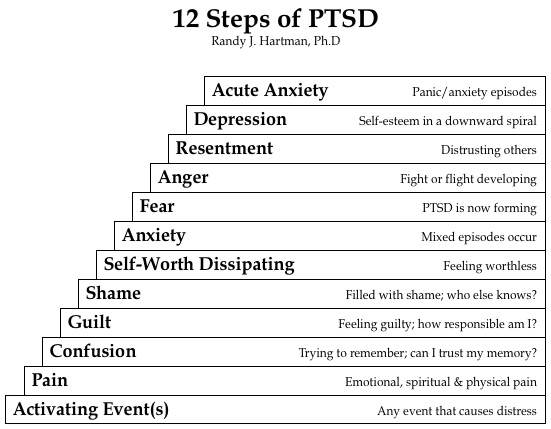
12 Steps of PTSD by Randy Hartman, Ph.D

12 Steps of PTSD by Randy Hartman, Ph.D

Burned in surgery, Army vet fights VA for PTSD pay

Veterans AffairsBurned in surgery, Army vet fights VA for PTSD pay

These days, former Army Spc. Stephen Anthony sleeps on his sister’s couch, struggling with the depression, nightmares and anger symptomatic of post-traumatic stress disorder.


Read more: http://www.armytimes.com/article/20130903/BENEFITS06/309030004/Burned-surgery-Army-vet-fights-VA-PTSD-pay