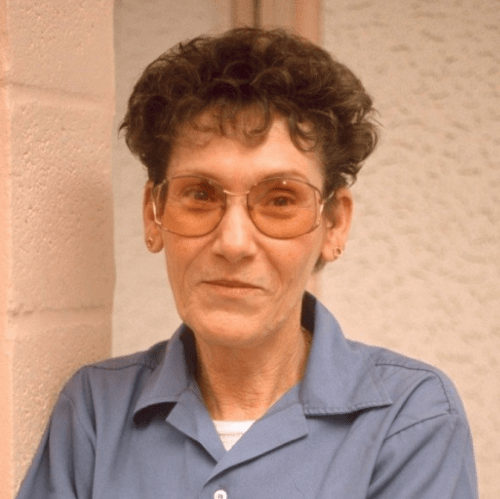
Norma Small was arrested in May 2001 and then charged with murder for the shooting death of her husband US Navy Chief Petty Officer Sonny Grotton, at his home in Belfast, Maine on December 16, 1983. She was accused of hiring someone for $10,000 to murder him, convicted, and sentenced to 60 years in prison. Norma felt Sonny was worth more dead than alive. Investigators believed the crime was financially motivated. If Sonny died, Norma would get a death benefit from the Navy, the real estate that she owned with Sonny, and she received a monthly payment from the VA that over 15 or 17 years had amounted to almost $100,000.
A tattooed NCIS agent with a black belt goes undercover to find the killer of a Navy petty officer — can he get what he needs without getting caught? Watch Tuesday, June 13 at 10 p.m. ET/PT on CBS. -48 Hours
Officers find the lifeless body of furniture salesman behind the wheel. But Faast didn’t die in the wreck – he was shot point-blank in the temple. Lt. Joe Kenda must track a killer whose promising career took a dark and deadly turn. -Death Grip, Homicide Hunter (S4, E4)
On February 16, 1979, police found Michael Faast shot and killed in his vehicle in a parking lot at an apartment complex in Colorado Springs, Colorado. They also found a traumatized Lori Firth in the vehicle who was transported to the hospital for treatment. After an investigation, Lt. Joe Kenda learned from Lori Firth that Air Force Captain Ronnie Ball was the shooter. Captain Ball was an up and coming military officer stationed at the North American Aerospace Defense Command (NORAD) at Peterson Air Force Base. Lt. Kenda learned from Lori that she started dating Ronnie about three years prior and followed him out to Colorado. After realizing that Ronnie was married to his career in an attempt to make rank and not really interested in marrying her and creating a life, Lori dumped him. Apparently this is what triggered Captain Ball’s downward spiral. Ronnie was devastated by the break-up. This was the first time he had ever been rejected and he didn’t like it. Ronnie tried to propose marriage to Lori over the phone and left her a couple letters saying that his life was not worth living without her. Ronnie just didn’t get it; Lori was done with him.
On February 16, Ronnie showed up to Lori’s apartment. Lori described his behavior as erratic and he smelled of alcohol. His behavior was scaring her. Ronnie accused her of sleeping with her friend Michael and Lori told him to get out. Shortly after that encounter Michael Faast showed up to Lori’s place to pick her up. They jumped in the vehicle and were confronted by Ronnie Ball on the driver’s side of the vehicle with a gun in the apartment complex parking lot. Michael rolled down his window in an attempt to make peace. Ronnie asked Lori to get out of the vehicle, she refused. Ronnie told Michael to leave Lori, he refused. Lori asked Michael to get out of there and that’s when Ronnie Ball shot Michael Faast from about a foot away in the head. Faast died instantly. Michael’s vehicle then crashed into the side of the apartment building and rolled back into the parking lot with Lori in it. Ronnie Ball took off. Ronnie Ball was arrested after police secured a formal statement from Lori Firth.
The Colorado Spring Police Department never found the murder weapon therefore they needed a confession from Captain Ball to make the first degree murder charges stick. Right from the get go, Ronnie Ball exercised his right to remain silent and asked for an attorney. While he was waiting for his attorney, Lt. Kenda observed unusual behavior, extremely bizarre behavior; Ball was talking to himself and going on and on. Captain Ronnie Ball never admitted to committing the crime and despite exercising his right to remain silent was discharged from the US Air Force before he was even left the police station where he was being questioned and fingerprinted. Captain Ball then hired one of the best defense attorneys money could buy. He was found guilty but insane for the murder of Michael Faast by the civilian justice system. Ronald Ball was sent to a treatment program and given no prison time. He has since been released.
Captain Ronnie Ball’s case is an excellent example of the value of exercising the right to remain silent in an attempt to help protect a defense. Lt. Joe Kenda and the court systems definitely protected Ball’s due process rights. But the Air Force on the other hand ended his career before they even knew the facts of the case. They learned that he had been charged with first degree murder and made a decision to end his career without providing him with any due process rights as a military officer or a government employee. At the time of the charge, they had the testimony of an ex-girlfriend and that is it. In a fair, just, and ethical world, the Air Force should have waited until he was found guilty before they discharged him from the service. According to military leadership at NORAD, Captain Ronnie Ball was admired and his work was admired. He was bright and intelligent. It wasn’t until after Ronnie was rejected for the first time in his life that he began to downward spiral. The obsessive, erratic, and paranoid behavior is indicative of a personality disorder triggered by rejection which may be why Captain Ball was deemed insane. This is what justice looks like in the civilian courts; the injustice lies in the hasty actions of the US Air Force.
Editor’s note: With a cable subscription, you can download the free ID Go app and watch Investigation Discovery programming at your convenience. And for those who do not have cable, you can watch “unlocked” episodes on the ID Go app including the latest premieres. For those who prefer commercial free programming during your binge session, Prime Video has an ID channel: ‘True Crime Files by Investigation Discovery” available for $3.99 a month. It’s a compilation of older seasons but totally worth the cost if you are a true crime addict. Download the ID Go app or purchase ID True Crime Files & binge away.
When a pregnant mother and her young sons are brutally slain, pressure mounts for the CSPD to catch the monster who did it. After a city-wide manhunt, Kenda begins to tighten the noose on a prime suspect, but what happens next will shock him to his core. -The Master Key, Homicide Hunter (S4,E8)
The neighbor was supposed to watch Yvonne Cisneros’ two children Carlos and Benjamin but they never showed up. She was concerned and went to check on them but there was no answer. Yvonne, 22, and the two children were found dead with multiple stab wounds by Ben Cisneros in their Colorado Springs apartment on January 12, 1979. Kenda was called to investigate the triple homicide. Yvonne was strangled and stabbed 60 times in the chest, back and abdomen; there was evidence of a sexual assault. Two-year-old Benjamin had been stabbed 22 times. And 4-year-old Carlos was stabbed 19 times; he also had crushing injuries to the head made with a barbell. This was a vicious frenzied attack. They were stabbed with a tool; the evidence lead to one perpetrator.
Ben Cisneros was the number one suspect initially. Ben Cisneros was in the military. He met Yvonne when she was 16. They were planning on having another child. Yvonne was 3 months pregnant when she was murdered. Ben was assigned to the Butts Army Air Field at Fort Carson; he was an air traffic controller. Ben Cisneros was at work at the time of the crime and was quickly ruled out by Kenda. Ben was concerned when Yvonne didn’t answer the phone so when his shift ended he went straight home. The Army could back up his alibi. The coroner determined the deaths were between 9 and 11 a.m. There was no forced entry so the killer had the key or was let into the apartment. Then a witness reported to Kenda that he saw the maintenance man enter Ben and Yvonne Cisneros’ apartment the morning of the homicides.
Kenda got a warrant to search the premises of James Joseph Perry. His common law wife said he was not home at the time of the crime. She was employed as a cleaner at the apartment building and had a master key but when she went to retrieve it, it was missing. In the laundry room, Kenda found a bottle of bleach and the clothes that matched the description provided by the witness. Kenda took the clothes for analysis at the crime lab but he knew it most likely would not show anything because bleach destroys evidence. Kenda needed to directly connect Perry to the crime. They found a pen with paint splatter at the scene of the crime. Kenda wanted to compare the paint Perry used on his last job to the paint on the pen they found. Kenda confiscated the paint cans from the maintenance building as evidence.
When detectives met up with Jimmy, they noticed paint on his watch too. Perry was arrested and immediately asked for an attorney. Kenda believed Perry took the master key, quietly entered the Cisneros’ apartment, and then attacked Yvonne first. Perry raped her, attacked her with a weapon, and killed her. He then attacked and killed the children because they witnessed what he did. He went home, bleached his clothes and went about his day. The lab results supported the prosecutions theory. The paint from the pen matched the paint Perry last used. At Perry’s trial, the jury reached a verdict and found the defendant not guilty on all counts. The investigators were shocked and felt like they let Ben, Yvonne and the children down. After the trial, James Perry moved back to New York City. Several months later, Kenda learned someone threw James Joseph Perry out of a 10th floor window at an apartment in the Bronx. He was dead. Karma?
Editor’s note: With a cable subscription, you can download the free ID Go app and watch Investigation Discovery programming at your convenience. And for those who do not have cable, you can watch “unlocked” episodes on the ID Go app including the latest premieres. For those who prefer commercial free programming during your binge session, Prime Video has an ID channel: ‘True Crime Files by Investigation Discovery” available for $3.99 a month. It’s a compilation of older seasons but totally worth the cost if you are a true crime addict. Download the ID Go app or purchase ID True Crime Files & binge away.
The elderly owners of a beloved local grocery are brutally attacked and left for dead. Working with little beyond a vague witness description, Lt. Joe Kenda leads a state-wide manhunt to catch a pair of cold-blooded killers before they disappear for good. -Blood Red Highway, Homicide Hunter (S3,E8)
On November 14, 1978, store owners, Sam & Rosa Melena, were robbed and left for dead in Colorado Springs, Colorado. Sam Melena was found with multiple stab wounds and Rosa was badly beaten but both were alive. But Sam Melena later died of his injuries in the hospital and Rosa was still in critical condition. In the course of an official murder investigation, Lt. Kenda learned the persons who robbed the grocery store got away with $32 and witnesses described two people running from the scene, a black man and a white woman with red hair. Kenda went to the hospital to interview Rosa Melena while she was alert and observed the pattern of a sole on her face. They took pictures. Rosa told Kenda she heard someone ask to use the store phone and then heard a loud crash. When she went to investigate, she witnessed a black man stabbing Sam and when he saw her, he attacked her too. After the interview, Kenda ordered a canvas of the area and found a new lead.
One neighbor said the description of the suspects sounded like the couple who lived in a basement apartment in his building. Lawrence Eugene Todd was in the Army. On the day of the crime, Lawrence and Vicki Locklin asked for 20 cents to make a phone call at the grocery store. Kenda determined the phone call was a distraction device used to help Lawrence catch the grocery store owners off guard. Kenda went looking for the pair in their basement apartment but they were gone. Although, during the search of the abandoned apartment, they found some important documents. The two were from Visalia, California. Todd was in the Army stationed at Fort Carson. Kenda issued an all points bulletin statewide and nationwide to help find them right away. Meanwhile, Kenda learned from a background search that Vicki Locklin had a minor record of shoplifting in Visalia, California. And Lawrence Todd had one record, an assault with a deadly weapon in California. (Why does the Army recruit Todd?)
“When people become desperate, it’s very easy to do desperate things.” -Lt. Joe Kenda
Meanwhile Kenda got some information from Fort Carson and learned from a sergeant in his unit that Todd had a lot of problems in the last several months because he hated the Army. He wanted out any way he could get out, then he went AWOL. The sergeant told Kenda he believed he knew where they would go. They wanted to go back to California. It was all the pair could talk about; they wanted to go back home to Visalia. Kenda asked the Denver Police Department to check all the truck stops in the area but the deadly duo had already hitched a ride with a trucker. Someone witnessed them catch a ride with a trucker and called the cops. The same trucker was pulled over and in deed Lawrence Todd and Vicki Locklin were in the truck. During the interrogation, Vicki Locklin told Kenda what happened. She said they were poor and needed money. Lawrence grabbed Sam from behind and started strangling him.
Vicki said Lawrence demanded she throw him a knife and he stabbed Sam multiple times. He cut his hand on the knife when he did it. He then went after Rosa, strangled her, and kicked her in the head. He went back to Sam and kicked him repeatedly before they grabbed the money and left the store. There was no interrogation with Lawrence Todd as he asked for a lawyer. Kenda compared Lawrence’s shoes to the bruise on Rosa’s face and it was a match. They also found the knife Vicki told them they ditched after the crime. Both defendants were indicted for aggravated robbery, attempted murder, and first degree murder. Vicki Locklin cut a deal with the prosecution in exchange for her testimony and leniency; she was sentenced to ten years in prison. Lawrence Todd was found guilty and he was sentenced to life plus 98 years in prison. Kenda was disgusted Lawrence Todd took a life for $32 and said he needed to be in a cage and never get out.
“You bastards, these are little old people, running a bread and milk store in the middle of nowhere, and you’re going to attack them for the contents of the register. I was angry to the core. You’re not going to do this in my city, you’re just not.” -Lt. Joe Kenda
Editor’s note: With a cable subscription, you can download the free ID Go app and watch Investigation Discovery programming at your convenience. And for those who do not have cable, you can watch “unlocked” episodes on the ID Go app including the latest premieres. For those who prefer commercial free programming during your binge session, Prime Video has an ID channel: ‘True Crime Files by Investigation Discovery” available for $3.99 a month. It’s a compilation of older seasons but totally worth the cost if you are a true crime addict. Download the ID Go app or purchase ID True Crime Files & binge away.
When a mysterious explosion rocks a sleepy suburb, it’s up to Kenda to ID a pile of charred remains and find the killer who triggered the blast. Then…a young mother’s murder leads the CSPD on a harrowing car chase that ends in a violent showdown. -Point of No Return, Homicide Hunter (S5,E13)
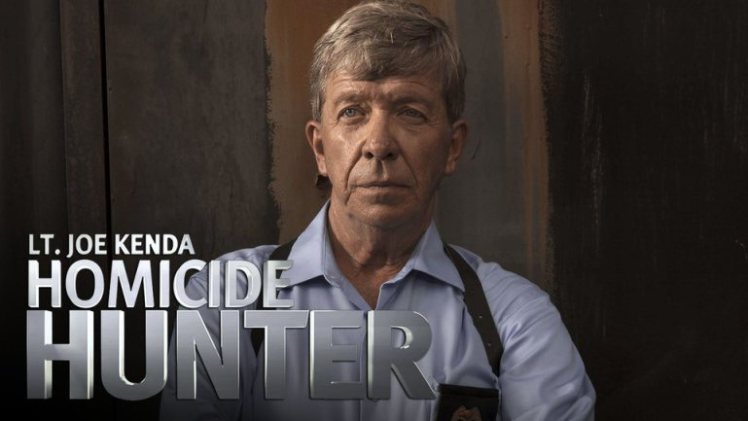
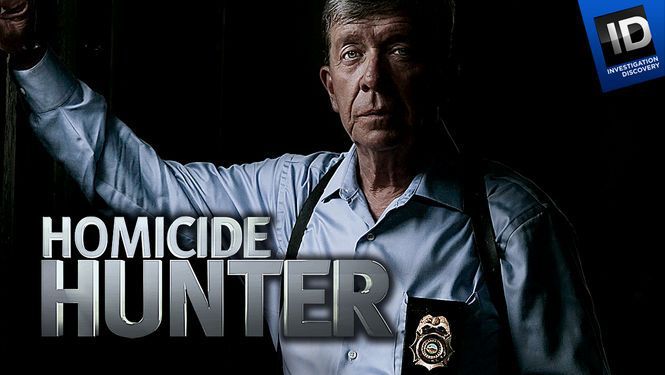
Homicide Hunter is an Investigation Discovery show featuring retired police Detective Lt. Joe Kenda (1973-1996). Lt. Kenda worked for the Colorado Springs Police Department for years and investigated and solved hundreds of cases during his employment. Now in his retirement, he outlines the cases that he encountered on the job and explains how he eventually solved the case. Colorado Springs is home of Fort Carson, an Army base with about 30,000 soldiers. This show is especially interesting given the fact that Lt. Kenda worked in a city with a close proximity to a large base. We have learned over time just how intertwined his job was with a military base known for an active role in fighting wars overseas over the years.
Exercises and deployments continually hone the skills of the Fort Carson Soldiers. When not deployed, Soldiers train annually at Pinon Canyon Maneuver Site and the National Training Center in California. Additionally, units participate in joint exercises around the world, including Central and South Africa, Europe, and Southwest Asia. In 2003, most Fort Carson units were deployed in support of Operations Enduring Freedom and Iraqi Freedom. ~Fort Carson History
Last night, Lt Joe Kenda discussed an explosives case that had been assigned to him. A powerful explosion occurred in a suburban neighborhood of Colorado Springs on November 12, 1978. He was actually working on paperwork on a Sunday when he received a call from police on the scene. They think they found human remains in the remnants of a detached garage near a single dwelling home. Joe was asked to investigate because this could be an intentional act of murder. Joe shared that the scenes he has investigated over the years have been horrific and quite shocking to include this one. As a result, he admitted that he has a hard time eating and sleeping, which are both signs of Post Traumatic Stress of which he admitted he has. This is a normal response for anyone who witnesses these acts of horror, especially over a long period of time.
After Joe arrived on the scene, he deduced that the damage looked like shrapnel damage. But his immediate thought was that it was most likely a gas explosion. He notices in the garage what looks like a large pile of human remains. Based on the remains, he assumed that it was most likely an adult male who was killed. If it’s not a gas explosion, what is it? A couple theories began to emerge including maybe the man lit a cigarette in an area with gas cans and exposed fuel or the victim was booby trapped with hidden wire. This could have been a murder.
Based on his fears of more explosives on scene, he decided to call the Colorado Springs Police Department (CSPD) Bomb Squad to investigate further to determine whether there were any more active munitions. He explained how explosive technicians truly understand explosives and other various devices. As soon as the Bomb Squad arrived at the scene, they immediately recognized the explosive had the smell of a military explosive. Fort Carson had this kind of ammunition on their base since before World War II. The Bomb Squad theorized that somebody from the base most likely smuggled it from Fort Carson and brought it to the current location. A CSPD detective explained how now we have robots to investigate bomb scares but back then we didn’t have that. Explosive technicians put their lives on the line everyday but more so before the advent of robots and other technologies to help minimize the danger of their jobs.
The CSPD Bomb Squad found another hand grenade in the garage that appeared to be live. An ordinance specialist entered the garage and not only found another grenade but he also found evidence of the dead man who was blown up by the first grenade. The second grenade appeared to be untampered with and there were no other explosives found at that location. Police suspected that the victim could have been in the building when someone threw the grenade in. They needed to learn more about the victim to determine if he had any enemies that would do something like this. They learned that the house is a rental and the current tenants only moved in a couple of months ago. The neighbor shared that a man named Estevan had recently retired and moved into this location. While on scene, a police officer found a human index finger quite a distance from the remnants of the garage. This discovery changed the whole direction of the case because the finger was found with a wire around it and this was the pin ring from the hand grenade. The victim may have pulled the pin and detonated the explosive. This could have been an accident.
Joe needed to identify the victim so he started with taking the victim’s finger to the lab so they could attempt to identify him by finger print. The lab technicians told him that without a name, it could take months before they get a match. In the meantime, Estevan’s wife showed up at the police station after learning what happened at her residence. Joe had to tell her that her husband was dead. She shared that his name was Estevan Maestas and he was a custodian at the school with finger prints on file. Estevan was simply going to clean out the garage because the people who lived their before left a bunch of junk in there. She left the house after he went out to the garage. Because his past did not indicate that this could have been a suicide attempt, it was theorized that this was in fact a tragic accident. Estevan most likely found the grenade, had no idea that it was live and maybe he thought it was a toy. He pulled the pin and he never felt a thing, he never knew what hit him.
The CSPD speculated that the grenades had been stolen from Fort Carson and brought into this rental home by a soldier. They assumed that most likely this guy didn’t want to deal with having to dispose of the grenades so he just left them there to become the next person’s problem. This was a hard pill to swallow given a man lost his life over this reckless act. Why was it not followed up on? Given how the military has strict regulations and is supposed to have strict chain of custody records to help them track all explosives, it should be easy to determine whether or not this grenade came from this base. It could have been brought home as a souvenir from World War II, Vietnam, or the Gulf War era. Were they able to cross reference the rental records at the location of the explosion with Fort Carson soldiers? This case revealed more mystery then resolve. If a soldier did smuggle the grenades from the base, why was there no investigation for theft, and now maybe even manslaughter? It is assumed that this person intentionally left them behind because they didn’t want to properly dispose of them.
In theory, no soldier should have been able to get these grenades on a plane or off the base without a search or a documentation trail given how the military usually conducts business. Much like communications security equipment (COMSEC), ammunition is inventoried and kept under lock and key in an effort to prevent compromises with dangerous repercussions. In most circumstances, if Fort Carson recognized that ammunition was missing, they would shut down the base until they found it. If someone dropped the ball at Fort Carson, a man lost his life because of careless documentation and security practices. And the Colorado bomb squad and Lt. Joe Kenda risked their lives in an effort to prevent anyone else from getting hurt or killed. Hopefully, soldiers learn a valuable lesson from this circumstance given it could have been a harmless act that went terribly wrong. Whoever left the grenades behind may not have intended for Estevan Maestas to die but he did. If a military member was responsible, it would be nice to know that the military has implemented safety and security procedures that can help prevent this kind of a tragedy from ever happening in our communities again.
Editor’s note: With a cable subscription, you can download the free ID Go app and watch Investigation Discovery programming at your convenience. And for those who do not have cable, you can watch “unlocked” episodes on the ID Go app including the latest premieres. For those who prefer commercial free programming during your binge session, Prime Video has an ID channel: ‘True Crime Files by Investigation Discovery” available for $3.99 a month. It’s a compilation of older seasons but totally worth the cost if you are a true crime addict. Download the ID Go app or purchase ID True Crime Files & binge away.
Air Force Sergeant James Goodyear, 37, died on September 16, 1971 in Orlando, Florida. Sergeant Goodyear died just three months after completing a year long tour of duty in Vietnam. He left behind his wife Judy Buenoano Goodyear and her son Michael Buenoano. Judy received $28,000 in military life insurance benefits and military death benefits to help support the family. When her son Michael turned eighteen, he joined the US Army. On his way to his post in Georgia, he stopped in to visit his mother Judy, she fed him, and afterwards he became ill. The illness led to a crippling condition that left him paralyzed in his lower extremities and he was subsequently discharged from the Army as a Private. Michael was disabled and Judy was taking care of him. On May 13, 1980 Judy took Michael for a canoe ride. Judy reported to local authorities that her canoe capsized and her son Michael had drowned. She collected $125,000 in military life insurance benefits for her son’s death.
Judy Buenoano was executed in the State of Florida on March 30, 1998.
In June 1983, Judy was suspected in the car bombing of her fiancé John Gentry of Pensacola, Florida. She stood to gain $500,000 in life insurance money for this death. Judy Buenoano was first convicted of the attempted murder of John Gentry. As a result of her involvement in the attempted murder of John, investigators looked into the ‘accidental deaths’ of her husband James Goodyear and her son Michael. They exhumed John’s body a decade later and an autopsy revealed he had been poisoned with arsenic. Testimony revealed long-term arsenic poisoning had actually caused her son Michael’s disability. And when Judy drowned him, he was wearing an extra 15 pounds of weighted braces. Judy reportedly admitted to being involved in the 1978 death of her boyfriend Bobby Joe Morris as well. She received $50,000 in life insurance benefits for his death. Judy Buenoano was found guilty of first degree murder and sentenced to death. She was executed by the electric chair in Florida on March 30, 1998. Judy Buenoano was motivated by money, profit, and greed.
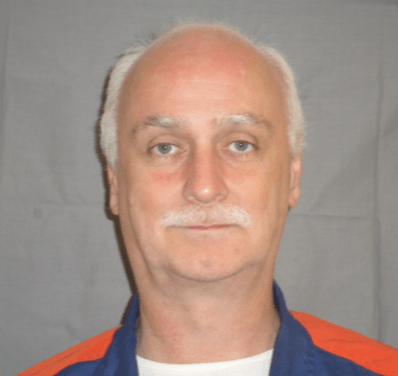
Brothers Larry and Danny Ranes grew up in Kalamazoo, Michigan. They were the product of a divorce after their father abandoned them and left one day to start a new relationship with a woman in Florida. In high school, Larry and Danny dated the same girl, Paula. She went back and forth between the two brothers. She really liked Larry and Danny really liked her but after graduation, Larry enlisted in the Army in 1962. One night, Larry got drunk and because one of his buddies stole his chips, he flipped out on all his friends. It was reported that he ran after them with a knife, was hauled off by the military police, and spent the rest of his stint in the brig until he was discharged. When he got home, he had nowhere to go and no sense of direction; he felt disgraced. Paula was now dating his brother Danny so he started dating someone else, an older woman. He eventually proposed to her but she rejected him. He was devastated and felt completely aimless and done with life.
Gary Smock, 34, was found tied up and murdered in his vehicle on the side of the road in Kalamazoo, Michigan on May 30, 1964. Gary’s wife reported him missing and while she was at the police station, she learn that his car has been spotted on the side of the road and he was dead. He had been tied up, robbed, and shot in the head with a 22 caliber. Detectives begin their investigation by piecing together the last hours of Gary’s life. That same morning, a group of fisherman found Charles Snyder, a gas station attendant who had been shot in Elkhart, Indiana. It appeared to be another robbery/homicide. Investigators wondered if the two murders were connected considering the motive was robbery and a 22 caliber was used in both crimes. On April 6, 1964 Vernon LeBenne, 23, was found robbed and shot at a Battle Creek, Michigan gas station he worked at part-time. Vernon was an active duty Air Force member stationed at the Fort Custer Training Center in Michigan. When he was found the next day, he was still alive but in a coma; he died twelve hours later. The police were never able to question him but were concerned all three murders were connected.
Five days later, Larry Ranes called the police claiming that he wanted to commit suicide. Police arrived at his home and found him alive. He was taken to the police station, questioned, and admitted to killing Gary Smock and Charles Snyder. Larry admitted killing Gary because he was upset that he was making noise in the trunk of his own car. He then admitted to driving to Elkhart and robbing and killing a gas station attendant Charles Synder. Ironically, he was waved through a police roadblock with Gary’s body in his trunk. The police didn’t suspect him because he was cool, calm and collected. Larry also admitted to killing airman Vernon LeBenne. Initially he declined a defense attorney so the prosecution ordered a psychiatric evaluation. He told the psychiatrist that he never thought his life would amount to much especially after getting discharged from the military. He had no sense of direction. He admitted feeling worthless and that it sent him into a bad place. He tried to take his own life before and was sent to a hospital for two weeks but he felt that nobody paid attention to his needs.
In September 1964, Larry was charged with Gary Smock’s murder. The defense claimed he was temporarily insane at the time of the crime. They claimed that he was taking his resentment’s towards his abusive, alcoholic dad who abandoned him out on Gary Smock. The jury didn’t buy it and he was found guilty of murder in 1964 and sentenced to life in prison. Meanwhile with Larry out of the picture, Danny married his high school sweetheart Paula. They had two children but Paula still daydreamed about Larry and wrote to him while he was in prison. Danny eventually found the love letters between his brother and wife and the two of them begin fighting regularly; Danny left the marriage. Danny decided to move to Wyoming and while there, he committed a crime. He abducted a couple of teenagers, released them and then turned himself in. It is believed that he secretly hoped Paula would like him more now that he committed a crime like his brother Larry. Paula and Danny tried the relationship again and had a third child but it didn’t work. After divorcing Paula, Danny committed another crime and was arrested for felonious assault of a child.
In 1971, seven years after Larry’s murder conviction, he appealed his case and was granted a re-trial. Meanwhile Danny is released from prison in 1972 for his felony crimes and moved back to Kalamazoo, Michigan. Danny learned Larry was back in the papers because of his re-trial and within a month, he committed another crime. A man reported his wife and child were missing and the next day a woman reported that she found a baby walking around unsupervised covered in blood. The police found his mother Patricia Howk stabbed to death in the woods; she had been murdered but there were no suspects. A few months later, some citizens found a car in the woods with two dead decomposed bodies inside: Linda Clark and Claudia Bidstrup from Chicago, Illinois. They were on their way to Ann Arbor, Michigan. Police were concerned that these two murders were connected to Patricia Howk. Finally, Kalamazoo Police received a tip that helped them solve the cases. Brent Koster informed investigators that he was an accomplice to the violent rapes and murders of Linda Clark and Claudia Bidstrup with Danny Ranes.
Brent Koster testified that Danny bragged about killing Patricia Howk. He claimed he admitted to attacking her as she was getting in her car. Patricia fought back so he stabbed her in the back and twisted the knife until she was dead. On July 6, 1972, Linda Clark and Claudia Bidstrip pulled into the gas station where Danny Ranes was working. Danny pretended to check their oil but instead took one of the spark plug wires out. The car wouldn’t start so he told them to pull around the back of the gas station. After they were isolated, the pair pulled knives on them and took turns raping them. They murdered them a few hours later and dumped their bodies near the Kalamazoo River. Brent Koster agreed to a plea deal in exchange for his full cooperation and during this exchange admitted to one more murder. The two picked up, raped, and murdered Patricia Fearnow who was hitchhiking on the campus of Western Michigan University. Brent Koster was sentenced to life for the second degree murder of Linda Clark. Danny Ranes changed his ‘not guilty’ plea to ‘no contest’ and received two additional life sentences for the murders of Linda Clark and Claudia Bidstrup. And finally Larry Ranes’ insanity defense fell apart and he pleaded guilty to the murder of Gary Smock and was sentenced to life.
For one family in Michigan, winning isn’t everything, it is the only thing. But when one competition heats up, they end up doing the unthinkable. The small, Midwestern town the family calls home will come face to face with multiple rounds of pure evil. -Investigation Discovery
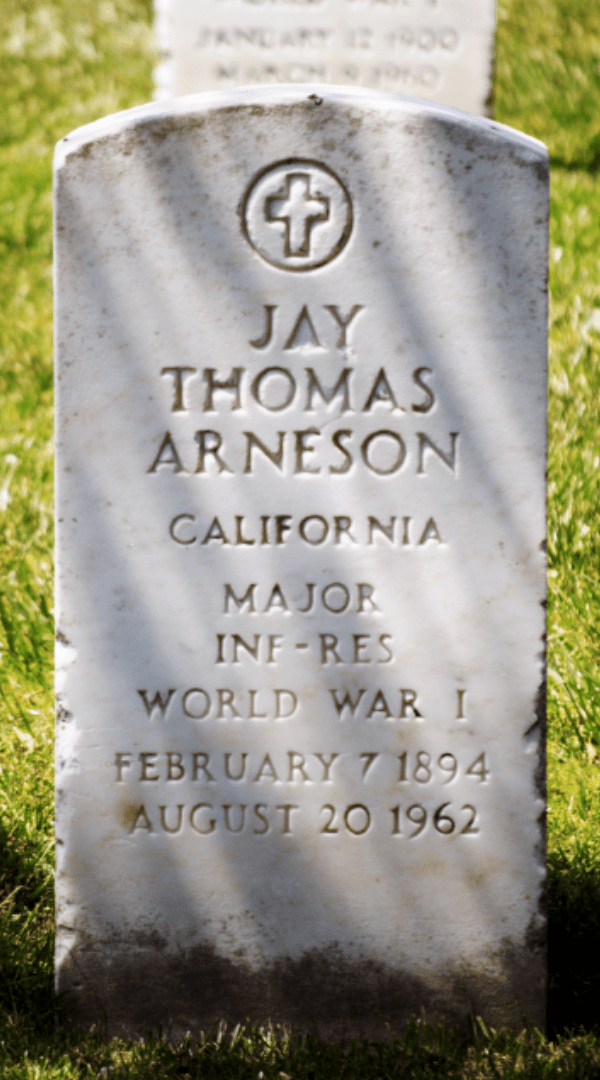
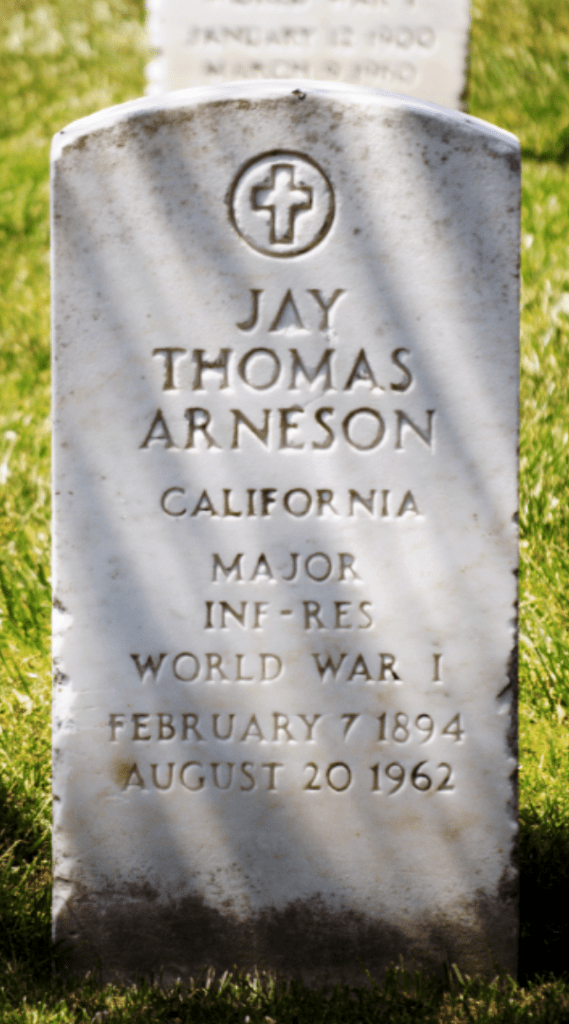
Jay Arneson, U.S. Army Veteran (photo courtesy of Find a Grave)
“Iva Kroeger was a housewife with dreams of owning her own business, and took over her friend Mildred Arneson’s motel in Santa Rosa, California. Iva murdered Mildred and buried the body in her basement, then claimed Mildred moved to Brazil and left her the motel. Shortly afterward, she also murdered Mildred’s husband, Jay. Iva and her husband Ralph, whose role in the murders is unknown, were both convicted of first degree murder. Ralph died in prison, and Iva was released after serving 13 years.”
Dates: December 15, 1961, January 1962, August 20, 1962 Location: Santa Rosa, California and San Franciso, California Offenders: Iva Kroeger & Ralph Kroeger Victims: Mildred Arneson (motel owner), Jay Arneson (68 y.o. disabled Army veteran) Motive: Greed, money Pathology: Murder by strangulation, dug a hole in the basement of her San Franciso home, and buried two victims Disposition: Iva Kroeger sentenced to death for 2 counts of first degree murder, later changed to life imprisonment with parole, served 13 years; Ralph Kroeger convicted of 2 counts of first degree murder on March 26, 1963, sentenced to life in prison Status: Iva Kroeger paroled in 1974, deceased in 2000; Ralph Kroeger died in prison Red Flags: Claims she fled an abusive marriage, dutiful wife to new husband Ralph Kroeger, kept everything neat & clean, engaging personality, sweet, kind, and caring but it was a front, obsession with nursing, worked in nursing homes with the vulnerable, first arrest was for impersonating a nurse, pulled a gun on a repairman because she didn’t want to pay her bill, stole $1,400 from a nursing home in San Jose in 1954, used aliases in various scams, master of the sob story, faked a limp, told people she had cancer, claimed she was crippled in a streetcar accident, said she was going blind, kidnapped her own son’s two children & then abandoned them on the streets of Oakland, California, stole $8,000 from a joint account with husband Ralph Kroeger, quoted as saying “If you act crazy, you can get away with anything because people will think you are eccentric,” during murder trial, claimed to be the mother of God, sang, threw things and constantly interrupted the witnesses and judge, psychiatrists testified that she was sane, but deceitful and manipulative, arrested in 1985 for threatening a man with a gun in Florida, two stolen nurses IDs found in her possession, wanted the life Mildred had, strangled her victims, abuser, user, strong desire not to pay for anything, psychopath but not always cool, calm and collected, lied constantly with complete conviction, won’t admit to any wrongdoing, and police record going back to 1945
Naughty by Monte Schulz (Book):
This crime noir novel, set in the 1950s, was inspired by the real life story of Iva Kroeger and her husband, indicted for the murders of Mildred and Jay Arneson in 1962. -Monte Schulz, Mr. Media Interviews By Bob Andelman
Investigation Discovery:
Selfish women will sometimes sell their souls to the devil to get what they want. A scorned lover weaves a web of lies, a teenage Goth orders a reign of terror, and a gold-digger buries secrets in her basement. -Souls of Stone, Deadly Women (S7, E18)
Editor’s note: With a cable subscription, you can download the free ID Go app and watch all of the Investigation Discovery programming at your convenience. And for those who do not have cable, you can watch “unlocked” episodes on the ID Go app including the latest premieres. Download the ID Go app and binge away. For those who prefer commercial free programming during your binge session, Prime Video has an ID channel: ‘True Crime Files by Investigation Discovery” available for $2.99 a month. It’s a compilation of older seasons but totally worth the cost if you are a true crime addict.
“John Bennett, a black man, was hanged for rapinga white girl in Austria. During the six years between his trial and death, eight other soldiers were executed, all of them black. Six white prisoners were on death row during those years. Some had killed little girls or had killed more than once. None were executed. President Dwight Eisenhower commuted the sentences of four. Two were spared by the courts. Today, six soldiers are on military death row–four black, one Asian, one white.” (update: 4 soldiers are on death row now)
“Evidence in Bennett’s case revealed mental defects in the young man and his family, defects that today would probably spare his life. He also almost certainly suffered from epilepsy, which his defenders cited as further evidence of mental illness. Even Dr. Karl Menninger, the country’s preeminent psychiatrist, twice sought to save the life of this ‘undistinguished epileptic Negro soldier.‘ The court-martial was held in Austria. The trial lasted five days, with little defense. The jury deliberated just 25 minutes.“
Read more from Richard A. Serrano (LA Times) here or here and check out Serrano’s book ‘Summoned at Midnight: A Story of Race and the Last Military Executions at Fort Leavenworth’here.
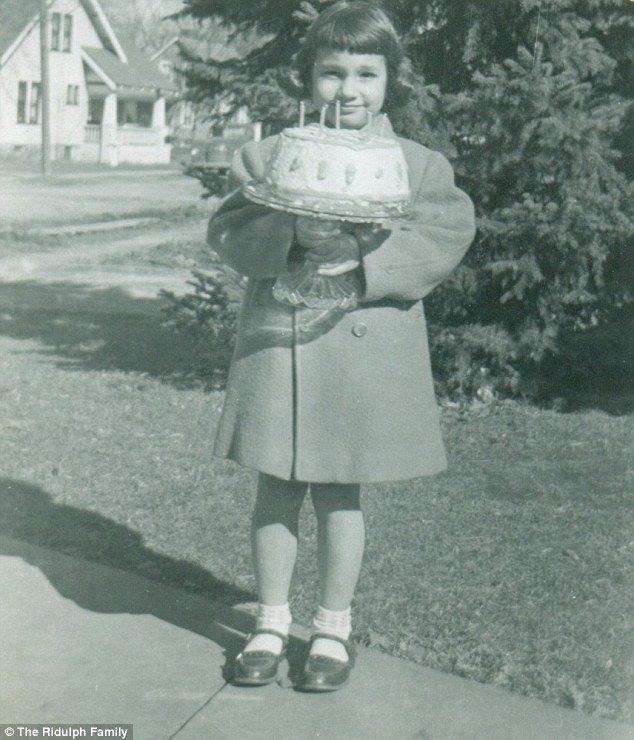
Maria Ridulph, 7, disappeared on December 3, 1957 in Sycamore, Illinois. She was found stabbed to death a few months later. Air Force veteran John Tessier (aka Jack McCullough) of Seattle, Washington, 17 at the time, was convicted in 2012 of the kidnapping and murder of Maria and sentenced to life in prison. It was the oldest cold case in the country to be solved but soon that victory would be lost and conviction overturned on appeal. A prosecutor found evidence that supported McCullough’s long-held alibi that he had been 40 miles away at the time of the disappearance. As a matter of fact, the former Captain was enlisting in the Air Force and left for active duty service a few days later. A certificate of innocence was issued and Jack McCullough was set free on April 15, 2016. Despite the past sexual abuse of minors allegations, which McCullough doesn’t deny, he wants to clear his name of the homicide. McCullough is suing the State of Illinois for wrongful conviction. The case remains unsolved to this day.




 MILITARY JUSTICE FOR ALL