48 Hours Premiered ‘Rodney Alcala: The Killing Game’ on CBS (2018)


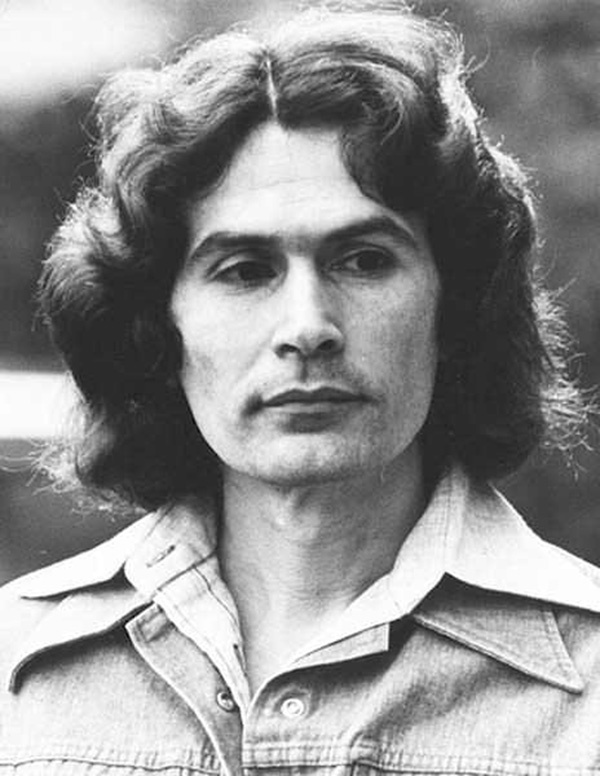
A photographer who was on “The Dating Game” became one of the nation’s deadliest serial killers. Eight years after “48 Hours”‘ first report, new victims emerge. Correspondent Peter Van Sant has the latest Saturday, Feb. 17 at 10/9c on CBS.

Rodney Alcala was born in San Antonio, Texas in 1943. His father abandoned the family when he was young. At 17, Alcala enlisted in the Army but there were problems, allegations of sexual misconduct, a nervous breakdown…the Army discharged him. “The military realized in 1963 that they had him, that he was a sexual deviant.” -Stefano Braccini, Former Cold Case Detective, NYPD (48 Hours)

Related Links:
Sneak peek: Rodney Alcala – The Killing Game
Former FBI profiler on the psychology of a sexual serial killer
48 Hours Mystery: The Killing Game (2010)
Serial Killer Rodney Alcala TV Gameshow Appearance
Rodney Alcala: On the trail of a serial killer
Serial Killer Rodney Alcala’s Photos Released: Can You ID Any Of These Women?
Judge Cries During Sentencing of Serial Killer Rodney Alcala
The Horrifying Story Of Rodney Alcala, The Serial Killer Who Won ‘The Dating Game’ During His Murder Spree
Decades-old photo links serial killer Rodney Alcala to yet another slaying, this one in Wyoming, prosecutors say
How a Serial Killer and Rapist Ended up on The Dating Game — and Was Chosen by the Girl
Flashback: Serial Killer Appears on ‘The Dating Game’ Mid-Spree
Rodney Alcala The Dating Game Killer: A Psychological Profile
The Haunting Photography of a Serial Killer
Rodney Alcala: The Killing Game (CBS Website)

Oxygen Premiered ‘Killing Versace: The Hunt for a Serial Killer’ (February 11, 2018)

“Killing Versace: The Hunt For A Serial Killer” re-examines the infamous manhunt for Cunanan through new and revisited expert insider interviews. Watch new episodes of Killing Versace, premiering February 11th at 7/6c, only on Oxygen.

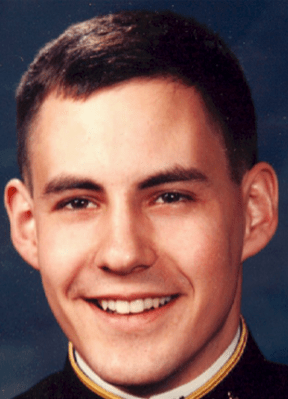
1) Jeffrey Trail was [Andrew] Cunanan’s friend.

According to Newsweek, Cunanan told friends in April 1997 he was headed to Minneapolis “to visit an old friend with whom he had unfinished business.” The old friend was Trail, who had previously been a naval officer. Vanity Fair reports Cunanan described Trail as his best and “my brother.”

CBS News reported Trail was a Gulf War veteran and a graduate of the U.S. Naval Academy in Annapolis. Friends called him “an upbeat, fun-loving, compassionate man.” Trail’s father told The Washington Post in July 1997, “Jeff was the kind of guy who was always trying to help people out… He went out of his way to be helpful to people.”

Read more from Harpers Bazaar here.

Related Links:
Five Lives Cut Short (1997)
Friends Remember Cunanan Victim (1997)
First Killing May Offer Clues to Four Others (1997)
Killing Versace: Hunt For a Serial Killer | Oxygen
The Gianni Versace Case, Explained – Very Real | Oxygen
Killing Versace: The Hunt for a Serial Killer – Premiering February 11th at 7/6c | Oxygen
Inside look at the Gianni Versace murder | ABC News
American Crime Story Season 2: The Assassination of Gianni Versace Trailer (HD)
Andrew Cunanan, the Versace Killer | The Crime Network
A Look Back at the Murder of Gianni Versace, 20 Years Later | Inside Edition
Versace’s murderer Andrew Cunanan kills his first two victims
Why Did Andrew Cunanan Go on a Killing Spree? American Crime Story Explores His Motives
Who Were Jeffrey Trail and David Madson? American Crime Story Explores Andrew Cunanan’s First Victims
Who Were Jeffrey Trail And David Madson, Andrew Cunanan’s First Victims?
Who Was Jeffrey Trail? ‘The Assassination Of Gianni Versace’ Explores Andrew Cunanan’s Alarming Fixation On Him
Who Is Jeff Trail In ‘The Assassination Of Gianni Versace: American Crime Story’?
Versace: Watch Jeff Trail’s Real-Life Interview About Being Gay in the Military
‘American Crime Story’: Watch Jeff Trail’s Real ’48 Hours’ Don’t Ask Don’t Tell Interview (Video)

Reporting abuse was risking my life – US veteran & rape victim | Sophie and Co | RT (January 12, 2018)

Reporting abuse was risking my life – US veteran & rape victim

Correction: Jennifer Norris is not an advocate for MRCC. She left the organization in March 2014.

We hear a lot about #weinstein and the latest, but Jennifer Norris, who served in the US Air Force, has been talking about sexual assault for years. And in the military, reporting rape means endangering yourself. Watch this brave woman speak here https://t.co/1ipeI3SWP6 pic.twitter.com/TAjiVjmdDS — SophieCo (@SophieCo_RT) January 12, 2018

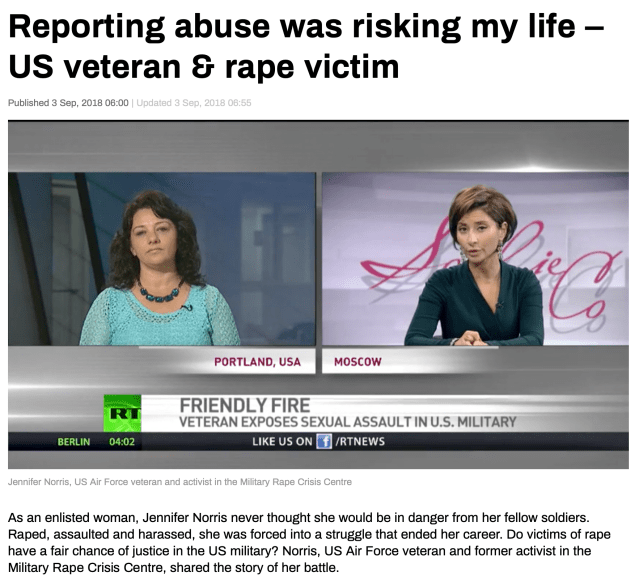
As an enlisted woman, Jennifer Norris never thought she would be in danger from her fellow soldiers. Raped, assaulted and harassed, she was forced into a struggle that ended her career. Do victims of rape have a fair chance of justice in the US military? Norris, US Air Force veteran and former activist in the Military Rape Crisis Centre, shared the story of her battle.

Sophie Shevardnadze: Jennifer Norris, retired U.S. Air Force veteran, former activist in the Military Rape Crisis Centre, who herself had firsthand experience of sexual assault in the military, thank you for joining us on this programme. I want to start right away, the first time this happened, you were drugged by your recruiter – did he trick you into having sex with him? Do you have any recollections of how the incident happened?

Jennifer Norris: When I look back on this incident I realise that I was actually tricked by this man into going to the party to begin with. He had told me that there was a new recruit party for other recruits. I was excited to go and meet them because they would understand exactly how I felt. So he had ill intentions from the gitgo. When I got there there were no new recruits, I was the only one.

SS: How many times were you subjected to sexual assault or abuse? Was it just one case?

JN: It started with that one case and I thought that maybe it would be over after that, that I was just unlucky at the wrong place at the wrong time, so I pushed forward. But, unfortunately, as I entered the military service it happened again and again, and again within the first two years of service. 

SS: Tell me this – why didn’t you report it straight away, after that first time?

JN: I didn’t report the first time because I hadn’t even gone to basic training yet and I didn’t really know what to say. I didn’t even know where to go: if I was supposed to go to a commander in the military, if I was supposed to go to the police department. I was completely clueless as to what sexual assault, rape and harassment were at that time. So I just tried to soldier on, move on with the career that I was looking for doing for at least twenty years.     

SS: So what happened after you were assaulted? What did you feel? Was it guilt? Was it shame, uncertainty? 

JN: It used to be shame because I used to feel like an idiot for going to this person’s party. But after years of counseling and working with rape victims’ advocates I learnt that predators operate in much the same way: they are very manipulative and they will set you up for an attack or they will take advantage of an opportunity. So now I realise it was a calculated crime but it took me years to realise that.  

SS: So for those who haven’t faced this kind of ordeal, but danger is always there, tell us how these manipulators actually trick their victims into it? How do they lure you in?  

JN: I think, they do what you would call ‘grooming’, they make you believe that they are trustworthy and that they are going to take care of you, and it almost seems that it is too good to be true. When you are naive, you don’t necessarily realise that not everybody is speaking at face value. So as an 18-year-old or even a 24-year-old it’s easy to fall prey to the niceties because you don’t know that there’s evil lurking behind it. And I think that’s the real danger of this kind of people and how they operate is that they are able to get to us based on the trust that’s been established. In the military we are depending on each other in every way, especially in trust.   

SS: So how old were you when that happened? Like, eighteen?

JN: No, I was actually 24. I had already graduated from college, as a social worker I worked in the field for a couple of years. As a case manager I worked on a suicide crisis hotline, then I decided I wanted to go and get my master’s degree and the military offered the GI Bill that could help me accomplish those goals. So that’s the No.1 reason why I joined aside from being patriotic and wanting to give back and being involved in something that was bigger than myself. I was completely clueless as to what was in store.    

SS: Ok. One woman who went through a similar ordeal – Air Force Sergeant Marti Ribeiro said, “The military has a way of making females believe they brought this upon themselves.” Did you feel that as well? 

JN: Yes.

SS: Did you blame yourself for what happened?

JN: I did for the longest time especially with the recruiters incident. If I knew as soon as I walked through that door that there was danger but it was too late to turn back… That particular incident taught me a lot of how to take care of myself in the future. Unfortunately, if you are working for someone who’s assaulting you you can’t escape them. So now I don’t have shame or blame or any of that stuff any more as far as what I did. All I did is go to work in uniform and these people took advantage of their power and opportunity. That’s what we’re trying to change, it’s taking more seriously if someone does in fact abuse their power in that kind of setting.

SS: I’m trying to figure out the psychological aspect of it – how did the military structure make you feel guilty about what had happened and not the other way round? 

JN: I understand. So, given the way that you report currently in the military is not that you go to a police office to report a crime. You are supposed to report it to your commander. In my particular case and in a lot of soldiers’ cases the commander also has a relationship with the perpetrator and he may have known the perpetrator way longer than he knows you. So what it does it creates an atmosphere of intimidation that when you see your commander hanging out with the guy who assaulted you, then you feel like “Oh, wow, he’s not going to take me seriously, it looks like they both are really good friends”. And then when you do go ahead and do a report the first thing the defense attorney start looking into is whether or not you did this, you did that, how did you conduct yourself. They immediately go into that you shouldn’t have been in this place, if you hadn’t that wouldn’t have happened. They could have done that to me too. But it’s not our fault that we thought we were attending what we were supposed to be.        

SS: Jennifer, I’m thinking, there are also other women in the military, they are compassionate  creatures, you could have shared your story with them, they certainly would have understand what you went through, especially if this happens all the time. Maybe there were other women alongside you who were actually subjected to sexual assaults – did you share your story with any of your female peers?

JN: What I’ve learnt is that, first of all, I was one of very few women in my squadron. There may have been, if we were lucky, three of them and one of them is administration personnel, and maybe there was another one in another shop. But I was the only female working for satellite communications in combat communications. So, no, I didn’t have other females that I could turn to and say “hey, this has happened to me”. As the matter of fact, I didn’t want anyone to know that this had happened to me because I didn’t want to be judged. Unfortunately, it appears that once people learn that you’ve reported a sexual assault or may have been involved in an incident they become scared of you instead of being scared of the perpetrator. They think that you are going to be hypersensitive too if they swear or if they say something, you know, offensive when in fact it’s not going to be that way at all. So there’s a culture of fear built up in the military. And I think that’s why they want to automatically blame it on a woman because if she goes away the problem goes away and they can get back to work as normal. 

SS: Human Rights Watch reports a very dire picture of what happens to the victims of sexual assault. They say that these people are being “spat on, deprived of food, assailed with obscenities, threatened with ‘friendly fire’ during deployment…discharged for misconduct”. Is it true? Is it really that dangerous to come forward?

JN: It is. In some cases it just depends on your situation. If you are isolated you are in a way more danger than, say, other people would be on some big base that has security forces in a JAG office. But if you are in some place like the Azores or some other random location across the world all you have is the people that are with you. Then yes, you could be in grave danger if in fact someone harms you and threatens you and says that if you say anything they will kill you. It happens, I’ve researched this. We have had non-combats deaths occur overseas that include homicide and unsolved cases that nobody is talking about. That’s what we are trying to tell people is…

SS: Did you get any threats? Were you threatened?

JN: Yes, not only was I threatened, but I was physically beaten after I reported by one of the perpetrators’ friends. The entire squadron turned on me. I was automatically the liar. Even though they didn’t know the circumstances and even though we did have proof and we were able to move forward with two of the four cases the other people in the squadron didn’t know what happened and they believed the perpetrator who was able to tell them the story while I was at some other squadron waiting for the case to go through.

Reporting abuse was risking my life – US veteran & rape victim

SS: But see, for me it’s just mind-bogglingthat you were standing there harassed, assaulted in the open with other people standing by and not interfering. How come no one interfered? Why didn’t troops come forward for a fellow soldier? 

JN: Well, I did have a couple of people that had my back along the way. But it felt more like it was a culture of fear, like, nobody dared to stand up to those who were higher-ranking if they were the ones that were doing the harm because they were afraid it would have backlash on their career. Now I don’t have respect for those people who didn’t stand by and take a stand and support the ones who were actually being harmed. But along the way there were some silent people that came up to me and said that this person had done this to them, that that person had done that to them etc. So people would open up along the way but they wouldn’t take it as far as I did and actually report. Although I must say it was because of the senior master sergeant that I finally confided in. He’s the one that finally convinced me to report the four individuals to the commander. 

SS: Iraq veteran Chantelle Henneberry says she was less scared of enemy fire than the men she served with. She recalls she would drink less water to avoid going to the bathroom in the night, she was so terrified of being harassed – why do women even join the army despite hearing all these horrific stories?

JN: I think that it boils down to that people don’t think it would happen to them. And that’s just typical of society, you don’t think that bad things are going to happen to you. I had the same mentality before I joined too. So they want to follow their dreams and they want to do what they want to do and some of us dream of being in the military, retire, do great things and move women forward. So I think that’s normal, that’s ok.

SS: The United Nations is speaking out about the problem of sexual assault in the U.S military, saying it needs to ‘ensure effective prosecution of offenders’. Is this going to make any difference?

JN: Absolutely. Right now, the prosecution rate for sexual assault is less than 10% compared to the civilian world which is at least 40%. That’s what we are trying to say – if people are raped or assaulted and then report we would like these cases to be taken seriously. Right now, like I spoke to you earlier, you have to report the crime to your commander. They are not legal professionals, they are no Special Victims Unit. They do not understand how these things work. And what we want is to be able to report to a police department or a law enforcement professional, someone who understands how these people are working and cannot be manipulated by them. 

SS: For years, activists and lawmakers in the United States have tried to change this protocol – but leaders in the military are against bringing civilians into bases to investigate alleged assaults – why are they against it? And why are they winning this debate?

JN: Because they are able to protect their institutions if they are able to keep everything in house, and that’s exactly what they do. They want to stamp it out before it gets out to the public whereas we want this out in the public so that people know who these offenders are and can be on alert. They don’t just offend people in the military, they offend people in our communities as well – their wives, their children… So it’s not just a military issue, it’s a societal issue and I think, it would be way more effective if everyone reported to a police department where all the crime data was kept in one place.

SS: Do you think completely removing sexual assault cases from the military chain of command would actually solve the problem?

JN: I think standardizing the justice process in general to have it synced with the civilian society, meaning data basis connected, whether it’s the civilians that try the perpetrator or it’s the military that tries the perpetrator… Everyone should be talking so that we can connect the dots on who’s doing what where because it makes it a little bit more complicated with the military personnel who can transfer all over the country and to different parts of the world. We need all the data collection to be put into a system so we can actually track what these people have done through the course of time and be able to move forward with cases that may win as opposed to he-said, she-said incident. 

SS: So, Jennifer, I’m thinking, maybe there should be more women in the U.S. military? If there were more women in high-ranking positions being able to kick butt especially to the men who are potential assaulters? What do you think? Should there be more women in the U.S. military?

JN: That would be ideal. Although we have to take into account that over a half of victims in the military, actually 53% of them are males. So this is not a female issue necessarily. We are at higher risk because we’re seen as a weaker sex. But predators do not discriminate: they are harming both men and women in the military. A lot of media have been trying to cover the issue but we have just not been able to get the footing with it, but people need to know that over half of the victims are men in the military. 

SS: There are crazy numbers: according to HRW, only 5 percent of sexual assault cases in the U.S. military lead to convictions of the perpetrators. What happened to the man who assaulted you? Was he punished?

JN: Yes. The recruiter skipped town after I threatened to report him to the commander, unfortunately. So we couldn’t do anything with that case. The technical instructor that assaulted me in Keesler, Mississippi – we had no jurisdiction over because he was active-duty and I was considered National Guard. And the other two were both National Guard members who worked with me, and we were able to move forward with cases. But by the time it went up the chain of command it got minimized from sexual assault to sexual harassment they both retired with full benefits after 20 years of service. 

SS: The Pentagon keeps saying that programs are implemented, changes are being made, and the problem is being solved – is it all a lie?

JN: I don’t think it’s all a lie, but I definitely think they sway the media to see things in a certain way. For example, although the numbers may have gone down from 26 thousand to roughly 19 thousand in the last couple of years and they’re bragging about a 30% increase in the reporting it means nothing. And what the civilian world doesn’t understand is that in the military you can report a crime under two different guises: either restricted or unrestricted. If it’s restricted that means that nobody is supposed to know about it including your commander so you can go forward and get some help. If it’s unrestricted then it turns into a full-blown investigation if, in fact, your commander agrees to move forward with the case which is another sticking point. So people need to realise that although the reporting has gone up it’s been restricted reporting which is not helping us catch these criminals. They are still not being reported. You might get some help but they are still moving along in their careers assaulting other people while the latest victim is just getting help. 

SS: You now work with those who went through the same as you did – are you seeing more cases of women speaking out, has the situation gotten better?

JN: I think awareness has definitely gotten better around the issue. There’s way more talk within the military and outside in the veteran community to address getting help after someone has been traumatized by an incident like this. So that has definitely improved. I actually benefited greatly from programmes that have come up as a result of our advocacy with military sexual assaults. So for that I’m thankful. As far as the military justice system and policy goes it’s the same thing it has always been – nothing has changed whatsoever. As far as the court issue we’ve been trying to address which is taking the commander out of the decision-making process as far as you can move forward with the case. We just want law enforcement professionals, detectives and investigators to deal with these cases, not a commander who’s great at war but has absolutely no idea how the legal process works and what sexual assault is. I shouldn’t have reported it to my boss.

SS: What do you do for the victims, how are you helping them?

JN: What I do is I empower them. When I did worked as an advocate I actually would help them deal with their cases as they were moving along in the process and I noticed the same patterns over and over. What I do now (and it was actually hard to do it before we could change things) is focus on helping them to heal despite not being able to get justice, trying to find a place of faith and comfort in yourself to know that you didn’t do anything wrong. It’s just the system that isn’t working well and it needs to be changed, and there’s nothing we can do about it right now except to take care of ourselves and hope for the best in the future. 

SS: You mentioned earlier that it’s not just men-women problem and that 51% percent of those assaulted being men. I’ve read a recent survey by the American Psychological Association that says the number of men facing sexual assault in the military is 15 times higher than reported by the Pentagon. That would mean up to 210 thousand men are assaulted in one year. Is that number correct? Is it a right calculation? And do you help men as well? 

JN: Yes, whoever needs help and comes to me – I will assist them as best as I can. That actual study from the American Psychological Association was retracted. They used not a very good way to determine those numbers. It wasn’t correct so it was retracted. It’s not actually that high. But it doesn’t really matter. It’s still high enough that it should be a concern. The actual number that I shared with you is that roughly 53% of victims of military sexual assault are males. It’s not a female soldier issue, it’s a predator issue and that’s what we’re trying to tell people. 

SS: Jennifer, thank you so much for sharing this story with us. Thank you so much for empowering women who want to do the same thing that you did. Thank you so much for being so brave and outspoken. And I hope that you’ll win over Pentagon. 

JN: Thank you.

Related Links:

American Monster Premiered ‘Family Snapshot’ on ID: Bob Yates’ Family Shocked Military Hero Father & Spouse is a Serial Killer (July 16, 2017)

The Yates family moves to Spokane, WA only to find it besieged by a serial killer who’s targeting young women and confounding the police. Now, the family’s never-before-aired home videos provide a chilling look of one of America’s most notorious killers. -Family Snapshot, American Monster (S2,E2)

Editor’s note: With a cable subscription, you can download the free ID Go app and watch Investigation Discovery programming at your convenience. And for those who do not have cable, you can watch “unlocked” episodes on the ID Go app including the latest premieres. For those who prefer commercial free programming during your binge session, Prime Video has an ID channel: ‘True Crime Files by Investigation Discovery” available for $3.99 a month. It’s a compilation of older seasons but totally worth the cost if you are a true crime addict. Download the ID Go app or purchase ID True Crime Files & binge away.

Related Links:
The Spokane Murders | TIME
Death Sentence Upheld for Spokane Serial Killer
Social worker who served Yates’ victims supports end of death penalty
Robert Lee Yates | Murderpedia, the encyclopedia of murderers
Retired Army National Guard Pilot & Serial Killer Robert Lee Yates, Jr. Convicted of 2 More Murders of Women in Washington (September 19, 2002)
Unusual Suspects Premiered ‘Monster in Spokane’ on ID: Serial Killer in Washington is Retired National Guard Pilot Robert Lee Yates, Jr. (July 19, 2010)
Scene of the Crime w/ Tony Harris Premiered ‘Down by the River’ on ID: Retired Army Pilot Robert Lee Yates is the Monster in Spokane (June 3, 2018)
Washington State Supreme Court Outlawed Death Penalty; Serial Killer Robert Yates’ Death Sentence Converted To Life in Prison (October 11, 2018)
Family Snapshot | American Monster | Investigation Discovery (S2,E2)
Family Snapshot | American Monster | Investigation Discovery (website)
Family Snapshot | American Monster | Investigation Discovery (Prime Video)
American Monster takes a look at Spokane serial killer Robert Lee Yates

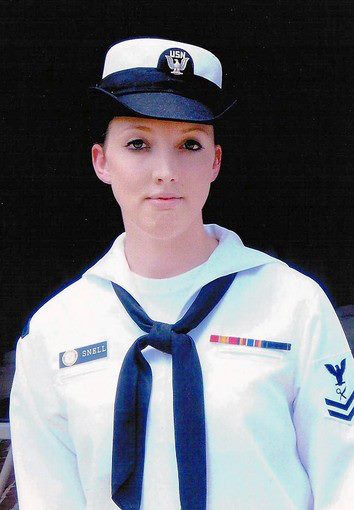
Osama El-Atari, One-Time Informant Who Got Marine Jorge Torrez to Confess to 3 Murders Including Amanda Snell, Found Dead in Vehicle; Three Suspects Arrested for Murder (February 16, 2016)

“A Virginia man found murdered in Maryland over the weekend was an informant who successfully got a Marine to confess to three murders in prison. Osama El-Atari had been reported missing by his family…Two days later, El Atari was found dead inside his truck…In August of 2010, the feds wanted to see if El-Atari could get Jorge Torrez, a Marine, to confess on tape to the murder of Amanda Jean Snell, a sailor who was found murdered in Fort Myer. El-Atari and Torrez were in the same cellblock in Arlington County Jail. The two talked for hours with El-Atari getting Torrez to admit to the vicious crime…El-Atari was also able to get Torrez to admit to the 2005 killing of two little girls in his hometown of Zion, Illinois. It is a crime in which a suspect had already confessed. Also, DNA evidence pointed to Torrez.” Read more from Fox 5 DC here.

Related Links:
Slain Va. man was one-time informant who got Marine to confess to murders
Admitted bank scammer who turned into jailhouse informant in terror, murder cases found slain in truck on Maryland street
VA Man Convicted of Scamming Banks for Millions Found Dead in MD
Police arrest 2 in slaying of freed jailhouse informant
Arrests made in murder of informant who got Marine to confess to murders
Third man arrested in Leesburg bank scammer’s death
Third man arrested in death of scam artist turned informant
3rd Suspect Arrested for Convicted Loudoun Restauranteur’s Murder
Robbery Cited as Motive in El-Atari Homicide
The King of Ashburn: The life and murder of a con man
Navy Petty Officer Amanda Snell Murdered by Marine Jorge Torrez in Barracks at Joint Base Myer-Henderson Hall, Virginia; Sentenced to Death by Federal Judge (July 13, 2009)

Serial Killer & Army Reserve Veteran Robert C. Hansen Died of Natural Causes While Serving Out a Life Sentence in Alaska State Prison (August 21, 2014)

Robert Hansen was a mild-mannered family man with a passion for hunting. A master at his trade, Hansen sought a more challenging prey – his fellow human. Hansen kidnapped women, set them loose in the Alaskan wilderness, and hunted them down for sport. -Hunting Humans, Ice Cold Killers (S1, E1)

Serial killer and Army Reserves veteran Robert C. Hansen confessed to the murder of 17 women and the kidnapping and rape of another 30 women in Alaska. But the authorities believe there are many more victims and their cases are still open. Hansen was officially charged with the abduction and rape of Cindy Paulson and the murders of Joanna Messina, Sherry Morrow, Paula Goulding, and the unidentified body known as “Eklutna Annie.” On February 28, 1984, Robert Hansen was sentenced to 461 years plus life in prison with no parole. Hansen led the police to 17 grave sites he marked on a map but only 12 of his victims bodies were recovered. Robert Hansen’s health was declining for over a year when he died of natural causes on August 21, 2014 at the age of 75.

In 1982, two off-duty police officers were hunting for wild game. As darkness fell and they headed home, they made a gruesome discovery. They knew enough to back away and dispatched the Alaska State Troopers to the scene. The crime scene investigators unearthed the partial bones of a woman buried in a shallow grave. They also found bones scattered around the surrounding area. In Alaska, wild game won’t hesitate to drag off the evidence. They also found a 223 caliber bullet casing. The victim was bound and blind folded at the time of death, and she was shot three times. She was identified as Sherry Morrow; Sherry was drawn to Alaska for the easy money. She worked as an exotic dancer in a seedy area of Anchorage known as ‘Fourth Avenue’. Police looked to see if anyone else in that community had disappeared under similar circumstances. Before the discovery of Sherry’s body, none of the missing persons reports were linked or suggestive of murder. Morrow’s case inspired police to take a look at the cold case files.

Two years before Morrow’s body was found, construction workers found the partial remains of a woman buried in a shallow grave; her body was desecrated by wild life and her bones were scattered. Police couldn’t make an identification and dubbed their Jane Doe “Eklutna Annie”. Nobody ever came forward with information about Annie. Police were concerned they were dealing with a brutal killer so they started canvassing the area where the dancers spent their time. Sherry’s co-workers feared the worst because a number of women had gone missing and they were never heard from again. Over the next several years, five more dancers went missing. Police suspected Sherry and Annie’s cases were connected. They were all victims from the beginning because everyone preyed on these girls, including the bar owners and pimps. Several dancers reported seeing the same man and provided police with a physical description. Police learned of a third body found in a gravel pit near where Eklutna Annie’s body was found.

The victim was identified as Joanna Messina. She was a canary worker who was last seen leaving the dock with her dog and a red haired man her co-workers couldn’t identify. Messina was shot and killed with a 22, not a 223. Two more women vanished and were never seen or heard from again. The blindfolds at the crime scenes told the police a lot about the killer. He was a sexual sadist who wanted complete control. He derived pleasure from his victim’s fear and pain and disposed of their bodies in isolated areas in Alaska. Nine months later, a truck driver found a frantic hand-cuffed woman running in the road; someone with a gun ducked out of site. The trucker took her to a nearby hotel where she was safe and called the Anchorage police. The police found a 17-year-old woman still in handcuffs and in shock. She told the officers she was a topless dancer down on 4th Avenue; she said she was propositioned by a red haired man in his 40s the night before. She confessed that she accepted the stranger’s offer.

Once inside the man’s car, she said the man pulled a gun on her. He kidnapped her, handcuffed her, and told her if she cooperated and did what he wanted, she wouldn’t be harmed. He took her to a middle class house in Muldoon. He held her hostage in a basement filled with mounted heads of animals. He brutalized her for hours. He chained her to beam in the basement and repeatedly sexually assaulted her. She told the police he was going to fly her to his cabin in the woods, promising to release her if she cooperated. Once at the airport, the kidnapper shoved her in a small plane and began loading supplies. The second he turned his back, she made her escape. Hoping to corroborate her account, investigators took her to the airfield to find the plane. She identified a plane owned by Robert Hansen; he was a 50 year-old avid hunter and local business man. Hansen owned a well established bakery, had lot of friends, and went to church. By all accounts, he was an upstanding member of the community.

When questioned by police, Hansen was outraged and insisted the dancer was lying to extort money from him. He also questioned whether it was even possible to rape a prostitute. He claimed he had an alibi and told investigators his wife and children were in Europe and he spent the night playing poker with friends. When questioned, the two men substantiated his story. Hansen allowed authorities to search his home but they didn’t find evidence of what the victim described. She also refused to take a polygraph and this made the police wonder if she fabricated the story. It was a “he said, she said” case because they had no evidence. Citing a lack of evidence, the prosecutor dropped the case. Three months later, Alaska State Troopers discovered the partially decomposed remains of another woman in a shallow grave. She was identified as a missing dancer from the Fourth Avenue district. Investigators found a blindfold buried among the remains. An autopsy revealed Paula Goulding had also been shot by a 223 caliber bullet.

Initially, the police didn’t link the cases but the use of the 223 caliber bullet helped them realize they were dealing with a serial killer who was targeting exotic dancers in Anchorage. Troopers contacted the Federal Bureau of Investigation for assistance; agents created a behavioral profile of the serial killer. The killer believed he was invincible because he picked the perfect victims. He chose the dancers on Fourth Ave because he thought no one would care if they were missing. They started looking into Robert Hansen’s past. They learned he was abused as a child and had very low self-esteem. He was always considered small and had few friends; he was often ridiculed by his peers. After graduating from high school, Hansen enlisted in the Army Reserve and went to basic training at Fort Dix. He later received advanced training as a military police officer at Fort Knox. While enlisted in the Army, he was known to frequent prostitutes. He told fellow soldiers, he found them dissatisfying and yearned to take control of the situation.

Despite his strict up bringing and disciplined military structure, the profilers learned Hansen had a number of run-ins with the law. He served time for arson and theft but he appeared to have long since left that life behind. In 1967, he married and moved to Alaska. He was a functioning member of society. They believe his low self-esteem would drive him to live in a place like Alaska. His former neighbor told investigators he loved the thrill of the hunt; and he was always looking for the bigger hunt. He was an avid trophy hunter. Hansen’s weak point was women because he was unsuccessful with them. He hunted where most of the victims were found. “Perhaps Hansen tired of game and turned to more interesting prey like humans.” Humans create a much greater challenge to the hunter. Police deduced he most likely had trophies from his hunts for humans. The killer was a sexual sadist, proficient, and more successful over time. Authorities threatened the two men who alibied him with jail time if they didn’t come clean about the night the dancer was abducted.

Both friends quickly broke down and said they were covering for him because they thought he was a legitimate guy. They believed him when he said he thought the dancers were trying to extort him. The police asked Hansen to come down to the station and executed a search warrant. An officer searched the attic and in the rafters he found a bag of jewelry. And nestled with his bag of trophies, they found IDs belonging to the victims and newspaper clippings. Authorities also found a trophy map with locations of where he killed his victims. Hansen tracked his kills. The most critical find was a 223 caliber mini 14 rifle. The rifle was sent to the crime lab for further analysis. The 223 matched perfectly with the round they found in Eklutna. Robert Hansen was charged with assault and kidnapping. Despite his pleas of innocence, the evidence was mounting against him. The District Attorney agreed to charge Hansen with four murders: Sherry Morrow, Eklutna Annie, Joanna Messina, and Paula Goulding. Hansen accepted a plea deal. Police believe he chose prostitutes because they represent the evil in humans.

Robert Hansen chose prostitutes because they will go anywhere for anything and when they disappear, no one cares. He admitted he controlled the game from the point of abduction. He was the predator and they were they prey. He killed Eklutna Annie first. Then he abducted Sherry Morrow. He took most of his victims to his remote cabin and brutalized them for hours before he stripped them naked, blindfolded them and then released them in the woods. He turned them loose, gave them a head start, and hunted them down. He was a trophy hunter. He then collected things off the girls so he could re-live the events. Robert Hansen’s killing spree lasted twelve years in Alaska. Hansen confessed to 17 killings but it is believed he had many more victims. He eventually lead police to 15 gravesites unknown to investigators. Unfortunately, investigators only recovered 7 bodies likely due to the veracious animal activity in the Alaskan wilderness. Robert Hansen was sentenced to 461 years plus life in prison with no chance of parole.

Source: Hunting Humans, Ice Cold Killers, Investigation Discovery

Victims:
Andrea “Fish” Altiery (disappeared 12/2/81, unknown if body recovered)
Roxanne Easlund, 24 (disappeared 6/28/1980, unknown if body recovered)
Megan Emerick, 17 (suspected abduction on 7/7/73, body never recovered)
Angela Feddern, 24 (disappeared February 1983, body found)
DeLynn “Sugar” Frey (disappeared September 1983, body found)
Lisa “Betty” Futrell, 41 (disappeared 9/7/1980, body found)
Malai Larsen, 28 (disappeared June 1981, body found)
Paula Goulding (disappeared 4/25/83, body found)
Sue Luna, 23 (disappeared 5/16/82, body found)
Joanna Messina (disappeared 5/19/1989, body found)
Sherry Morrow, 23 (disappeared 11/17/81, body found)
Tamara Pederson, 20 (disappeared August 1982, body found)
Mary Kathleen Thill, 23 (suspected abduction on 7/5/75, body never recovered)
Cecelia “Beth” Van Zanten, 17 (suspected abduction on 12/22/71, body found)
Theresa Watson (disappeared 4/29/83, body found)
“Eklutna Annie” (real name unknown, disappeared 11/1979, body found)
Cindy Paulson (abducted & raped on 6/13/1983, escaped & survived)

List compliments of The Frozen Ground.

In the News:

A Killer Among Us: Inside the Hunt for an Alaska Serial Killer (June 11, 2017, KTUU-Channel 2, Anchorage, Alaska)

The Frozen Ground Movie (2012)

THE FROZEN GROUND Official Trailer (2013)

The Frozen Ground – Clip 3 | Lionsgate

The Frozen Ground (2012) – Chained Scene (1/10) | Movieclips

The Frozen Ground (2012) – The Lucky One Scene (2/10) | Movieclips

The Frozen Ground (2012) – Pole Dancing Scene (3/10) | Movieclips

The Frozen Ground (2012) – Hunting Her Scene (4/10) | Movieclips

The Frozen Ground (2012) – On the Run Scene (5/10) | Movieclips

The Frozen Ground (2012) – Shock at the Strip Club Scene (6/10) | Movieclips

The Frozen Ground (2012) – The Interrogation Scene (7/10) | Movieclips

The Frozen Ground (2012) – From Bad to Worse Scene (8/10) | Movieclips

The Frozen Ground (2012) – He’s Coming Scene (9/10) | Movieclips

The Frozen Ground (2012) – Truth Comes Out Scene (10/10) | Movieclips

Based on a true story. An Alaskan State Trooper (Nicholas Cage) must partner with a near victim and the only witness to escape the clutches of the serial killer in order to bring the murderer to justice. -The Frozen Ground

Frozen Ground – Examining the Frozen Ground

Editor’s note: With a cable subscription, you can download the free ID Go app and watch all of the Investigation Discovery programming at your convenience. And for those who do not have cable, you can watch “unlocked” episodes on the ID Go app including the latest premieres. Download the ID Go app and binge away. For those who prefer commercial free programming during your binge session, Prime Video has an ID channel: ‘True Crime Files by Investigation Discovery” available for $2.99 a month. It’s a compilation of older seasons but totally worth the cost if you are a true crime addict.

Related Links:
If film makes Hansen’s victims real, the story’s worth retelling
Photos: Alaska serial killer Robert Hansen and his victims
Serial killer Hansen dies; ‘World is better without him,’ trooper says
Robert Hansen: A Serial Killer in Alaska
Robert Hansen, the ‘Butcher Baker’ hid his evil side to lure, hunt and murder at least 17 women in Alaska
The Frozen Ground: Gruesome True Story of Serial Killer Robert Hansen
Alaska Serial Killer Robert Hansen Dies at 75
‘Frozen Ground’ serial killer Hansen dead
Alaska serial killer Robert Hansen dies at 75
Robert Hansen, convicted serial killer in Alaska, dies at 75
Robert Hansen dead: Alaska’s ‘butcher baker’ murderer who hunted his female victims dies in prison of natural causes
Alaska serial killer Robert Hansen, ‘the Butcher Baker,’ dies at 75
Infamous Alaska serial killer the ‘Butcher Baker’, who murdered 17 women and raped 30 others in the 1970s, dies
Robert Hansen, notorious Alaska serial killer, dead at 75
Alaska serial killer Robert Hansen dies, decades after confessing to murders
Robert Hansen — The Serial Killer Who Hunted His Victims Like Animals
This Serial Killer Hunted His Victims Like Animals in the Alaskan Wilderness
The Twisted Case of Robert Hansen, an Alaskan Serial Killer Who Hunted Down His Victims
Robert Christian Hansen (February 15, 1939 – August 21, 2014), known in the media as the “Butcher Baker“, was an American serial killer.
10 Ice Cold Killers From Alaska That Will Make You Fear The Last Frontier
50 horrifying serial killers from each state
Serial KIller: *Butcher Baker* Robert Hansen killed at least 17 women, sentenced to years in prison; Died 8/21/2014
Robert Hansen | Murderpedia
EP.#11: Robert Hansen “The Butcher Baker” | True Crime Guys Podcast
Ep 80 Robert Hansen | True Crime Podcast
Serial Killer Robert Hansen “The Butcher Baker” – Murder With Friends
Ep. 19 Robert C Hansen | The Strange Land Podcast
44 – The Butcher Baker Robert Hansen | Make Me a Fan Podcast
Robert Hansen | SERIAL KILLER FILES #5
Episode 309: Robert Hansen Part II – Gross Truncations | The Last Podcast on the Left
A Killer Among Us: Inside the Hunt for an Alaska Serial Killer
Robert Hansen – Serial Killer Documentary
Robert Hansen (The Butcher Baker) – Serial killer who hunted humans
15 Disturbing Facts About ‘The Butcher Baker’ Robert Hansen
The Frozen Ground – Teaser Trailer
The Frozen Ground – Trailer
THE FROZEN GROUND Official Trailer (2013)
The Frozen Ground Official Trailer #1 (2013) – Nicolas Cage, Vanessa Hudgens Movie HD
The Frozen Ground – Official Trailer (2013) HD
The Frozen Ground Movie CLIP – She Stays On The List (2013) – Nicolas Cage Movie HD
The Frozen Ground Movie CLIP – I Didn’t Shoot Anybody (2013) – Nicolas Cage Movie HD
The Frozen Ground Movie CLIP – The Archive (2013) – Nicolas Cage Movie HD
The Frozen Ground Exclusive Official Clip (2013) – Vanessa Hudgens, Nicolas Cage movie HD
The Frozen Ground- Clip 3- Opening Nationwide In Theaters and On Demand August 23!
The Frozen Ground (2012) – Chained Scene (1/10) | Movieclips
The Frozen Ground (2012) – The Lucky One Scene (2/10) | Movieclips
The Frozen Ground (2012) – Pole Dancing Scene (3/10) | Movieclips
The Frozen Ground (2012) – Hunting Her Scene (4/10) | Movieclips
The Frozen Ground (2012) – On the Run Scene (5/10) | Movieclips
The Frozen Ground (2012) – Shock at the Strip Club Scene (6/10) | Movieclips
The Frozen Ground (2012) – The Interrogation Scene (7/10) | Movieclips
The Frozen Ground (2012) – From Bad to Worse Scene (8/10) | Movieclips
The Frozen Ground (2012) – He’s Coming Scene (9/10) | Movieclips
The Frozen Ground (2012) – The Truth Comes Out Scene (10/10) | Movieclips
The Frozen Ground | YouTube Movies
The Frozen Ground | Amazon Prime Video
Nicolas Cage Interview – The Frozen Ground (JoBlo.com)
Nicolas Cage – The Frozen Ground Exclusive Interview
Vanessa Hudgens Interview – The Frozen Ground (JoBlo.com)
The Frozen Ground: Vanessa Hudgens Interview
Frozen Ground – Examining the Frozen Ground
Hunting Humans | Ice Cold Killers | Investigation Discovery (S1,E1)
Hunting Humans | Ice Cold Killers | Investigation Discovery (website)
Hunting Humans | Ice Cold Killers | Investigation Discovery (Amazon)
Army Reserve Veteran Robert C. Hansen Sentenced to 461 Years Plus Life in Prison, No Parole for Murders of Multiple Women in Alaska (February 28, 1984)
Ice Cold Killers Premiered ‘Hunting Humans’ on ID: After Multiple Disappearances, Alaska Authorities on Hunt for Serial Killer (January 24, 2012)

Dark Minds Premiered ‘The Secrets of Isreal Keyes’ on ID: M. William Phelps Investigates One of the Most Prolific Serial Killers in America (April 2, 2014)

Preview: Israel Keyes stitched his victims eye’s open, so that it appeared as if she was still alive. -The Secrets of Isreal Keyes, Dark Minds (December 11, 2014)

Israel Keyes may be one of the worst serial killers we’ve ever seen. He took great care in hiding his victims, which means finding them has become a new nightmare. Can the Dark Minds team unearth some of this case’s biggest secrets? -The Secrets of Israel Keyes Part 1, Dark Minds (S3,E1)

The Secrets of Israel Keyes- Part 2 | Dark Minds | Investigation Discovery (S3,E2)

The funeral for Israel Keyes, who says he killed four people in Washington and four others across the country, was held Sunday. Keyes’ family and their pastor drove to the funeral home from east Texas, but no one else attended. -4 News Now (December 12, 2012)

Israel Keyes is believed to have committed multiple kidnappings and murders across the country between 2001 and March 2012. The FBI is seeking assistance in developing more information about his travels in order to identify additional victims. -Federal Bureau of Investigation (August 13, 2013)

In 2012, police arrested a man named Israel Keyes in connection with the death of a barista in Alaska. But this wasn’t an isolated incident in the life of Keyes; It turns out he was a serial killer who may have been responsible for at least 10 additional deaths. Maureen Callahan, author of “American Predator: The Hunt for the Most Meticulous Serial Killer of the 21st Century,” thinks the number may be much higher. “He killed all over the United States.” -Inside Edition (July 20, 2019)

Podcasts:

Israel Keyes is a horror-movie villain come to life: a killer who haunts remote areas in search of random prey, and who kills for no reason other than the fun of it. -Crime Vault Podcast

In this episode Lance Reenstierna & Tim Pilleri are joined by Chloe Canter to talk about serial killer Israel Keyes. And more specifically if he could have been in New Hampshire on February 9th, 2004. -Missing Maura Murray Podcast

Welcome to Crawlspace. Tim Pilleri and Lance Reenstierna chat with Josh Hallmark of True Crime Bullshit about serial killer Israel Keyes. -Crawlspace Podcast

On this episode of the Unresolved Podcast, I take a look at Israel Keyes, a man that many investigators have labelled “one of the most methodical serial killers of all-time.” This is a slight twist on the typical “unsolved mystery,” because the killer is known beforehand, but the victims and the crimes still remain a mystery. -The Unresolved Podcast

Editor’s note: With a cable subscription, you can download the free ID Go app and watch Investigation Discovery programming at your convenience. And for those who do not have cable, you can watch “unlocked” episodes on the ID Go app including the latest premieres. For those who prefer commercial free programming during your binge session, Prime Video has an ID channel: ‘True Crime Files by Investigation Discovery” available for $3.99 a month. It’s a compilation of older seasons but totally worth the cost if you are a true crime addict. Download the ID Go app or purchase ID True Crime Files & binge away.

Related Links:
Dark Minds: What Israel Keyes Did To This Woman Will Shock You (Preview)
The Secrets of Israel Keyes Part 1 | Dark Minds | Investigation Discovery (S3,E1)
The Secrets of Israel Keyes Part 1 | Dark Minds | Investigation Discovery (website)
The Secrets of Israel Keyes Part 1 | Dark Minds | Investigation Discovery (Amazon)
The Secrets of Israel Keyes Part 2 | Dark Minds | Investigation Discovery (S3,E2)
The Secrets of Israel Keyes Part 2 | Dark Minds | Investigation Discovery (website)
The Secrets of Israel Keyes Part 2 | Dark Minds | Investigation Discovery (Amazon)
Funeral held for admitted serial killer | 4 News Now
Seeking Information Regarding Serial Killer Case | FBI
The Most Terrifying Serial Killer You’ve Never Heard Of
Israel Keyes – Crime Documentary | Crime Vault Podcast
Ep 72: Israel Keyes Profile | Missing Maura Murray Podcast
Serial Killer Israel Keyes | Crawlspace Podcast
The Story of Israel Keyes | The Unresolved Podcast
Police Release Detailed Account Of Koenig Murder | Alaska Public Media
How a Vermont couple ended up in a serial killer’s gruesome chain of carnage
Book: American Predator: The Hunt for the Most Meticulous Serial Killer of the 21st Century by Maureen Callahan
Method of a Serial Killer: Authorities Believe Israel Keyes Trained to Kill & Suppressed Desire to Murder While Serving in the Army (October 28, 2018)
Ice Cold Killers: Five Military & Veteran Homicide Cases Featured on Investigation Discovery

Ice Cold Killers Premiered ‘Frozen Carnage’ on Investigation Discovery: Army Veteran Michael Silka Went on Killing Spree in Alaska (January 8, 2013)

Manley Hot Springs, Alaska is a remote mountain hide-a-way known for simplicity and solitude. But, that innocent existence is shattered when a newcomer goes on rampage and guns down residents one by one, ultimately taking out one tenth of the town. -Frozen Carnage, Ice Cold Killers (S1,E5)

This week we focus on a heinous & horrific crime as well as the killing spree committed by a wandering “mountain man”. Get ready for scary mysteries Twisted Two’s. -Michael Silka, Scary Mysteries Podcast (July 4, 2018)

Editor’s note: With a cable subscription, you can download the free ID Go app and watch Investigation Discovery programming at your convenience. And for those who do not have cable, you can watch “unlocked” episodes on the ID Go app including the latest premieres. For those who prefer commercial free programming during your binge session, Prime Video has an ID channel: ‘True Crime Files by Investigation Discovery” available for $3.99 a month. It’s a compilation of older seasons but totally worth the cost if you are a true crime addict. Download the ID Go app or purchase ID True Crime Files & binge away.

Related Links:
Frozen Carnage | Ice Cold Killers | Investigation Discovery (S1,E5)
Frozen Carnage | Ice Cold Killers | Investigation Discovery (website)
Frozen Carnage | Ice Cold Killers | Investigation Discovery (Amazon)
Twisted 2s #33 Damon & Devon Routier & Michael Silka | Scary Mysteries Podcast
Book: Murder at 40 Below: True Crime Stories from Alaska by Tom Brennan
Army Veteran Michael Silka Died After a Stand Off with Police; Silka Murdered Eight Manley Hot Springs Residents & Trooper Troy L. Duncan (May 19, 1984)
Ice Cold Killers: Five Military & Veteran Homicide Cases Featured on Investigation Discovery

Ice Cold Killers Premiered ‘North Pole Slay Ride’ on ID: Five Victims Found Murdered Near Eielson Air Force Base in Alaska (January 1, 2013)

The tiny town of North Pole, Alaska is a quiet, safe haven best known for Santa Claus. But when the bodies of young women begin turning up one by one, investigators slowly piece together the clues and discover the unlikeliest of killers. -North Pole Slay Ride, Ice Cold Killers (S1,E4)

Editor’s note: With a cable subscription, you can download the free ID Go app and watch Investigation Discovery programming at your convenience. And for those who do not have cable, you can watch “unlocked” episodes on the ID Go app including the latest premieres. For those who prefer commercial free programming during your binge session, Prime Video has an ID channel: ‘True Crime Files by Investigation Discovery” available for $3.99 a month. It’s a compilation of older seasons but totally worth the cost if you are a true crime addict. Download the ID Go app or purchase ID True Crime Files & binge away.

Related Links:
North Pole Slay Ride | Ice Cold Killers | Investigation Discovery (S1,E4)
North Pole Slay Ride | Ice Cold Killers | Investigation Discovery (website)
North Pole Slay Ride | Ice Cold Killers | Investigation Discovery (Amazon)
Air Force TSgt Thomas Richard Bunday Died By Suicide in Texas on Day of Arrest; Bunday Confessed to 5 Murders Near Eielson Air Force Base, Alaska from 1979-1981 (March 15, 1983)
Ice Cold Killers: Five Military & Veteran Homicide Cases Featured on Investigation Discovery

Ice Cold Killers Premiered ‘Hunting Humans’ on ID: After Multiple Disappearances, Alaska Authorities on Hunt for Serial Killer (January 24, 2012)

Robert Hansen was a mild-mannered family man with a passion for hunting. A master at his trade, Hansen sought a more challenging prey – his fellow human. Hansen kidnapped women, set them loose in the Alaskan wilderness, and hunted them down for sport. -Hunting Humans, Ice Cold Killers (S1,E1)

Victims:
Andrea “Fish” Altiery (disappeared 12/2/81, unknown if body recovered)
Roxanne Easlund, 24 (disappeared 6/28/1980, unknown if body recovered)
Megan Emerick, 17 (suspected abduction on 7/7/73, body never recovered)
Angela Feddern, 24 (disappeared February 1983, body found)
DeLynn “Sugar” Frey (disappeared September 1983, body found)
Lisa “Betty” Futrell, 41 (disappeared 9/7/1980, body found)
Malai Larsen, 28 (disappeared June 1981, body found)
Paula Goulding (disappeared 4/25/83, body found)
Sue Luna, 23 (disappeared 5/16/82, body found)
Joanna Messina (disappeared 5/19/1989, body found)
Sherry Morrow, 23 (disappeared 11/17/81, body found)
Tamara Pederson, 20 (disappeared August 1982, body found)
Mary Kathleen Thill, 23 (suspected abduction on 7/5/75, body never recovered)
Cecelia “Beth” Van Zanten, 17 (suspected abduction on 12/22/71, body found)
Theresa Watson (disappeared 4/29/83, body found)
“Eklutna Annie” (real name unknown, disappeared 11/1979, body found)
Cindy Paulson (abducted & raped on 6/13/1983, escaped & survived)

List compliments of The Frozen Ground.

Editor’s note: With a cable subscription, you can download the free ID Go app and watch Investigation Discovery programming at your convenience. And for those who do not have cable, you can watch “unlocked” episodes on the ID Go app including the latest premieres. For those who prefer commercial free programming during your binge session, Prime Video has an ID channel: ‘True Crime Files by Investigation Discovery” available for $3.99 a month. It’s a compilation of older seasons but totally worth the cost if you are a true crime addict. Download the ID Go app or purchase ID True Crime Files & binge away.

Related Links:
Hunting Humans | Ice Cold Killers | Investigation Discovery (S1,E1)
Hunting Humans | Ice Cold Killers | Investigation Discovery (website)
Hunting Humans | Ice Cold Killers | Investigation Discovery (Amazon)
Army Reserve Veteran Robert C. Hansen Sentenced to 461 Years Plus Life in Prison, No Parole for Murders of Multiple Women in Alaska (February 28, 1984)
Serial Killer & Army Reserve Veteran Robert C. Hansen Died of Natural Causes While Serving Out a Life Sentence in Alaska State Prison (August 21, 2014)
Ice Cold Killers: Five Military & Veteran Homicide Cases Featured on Investigation Discovery