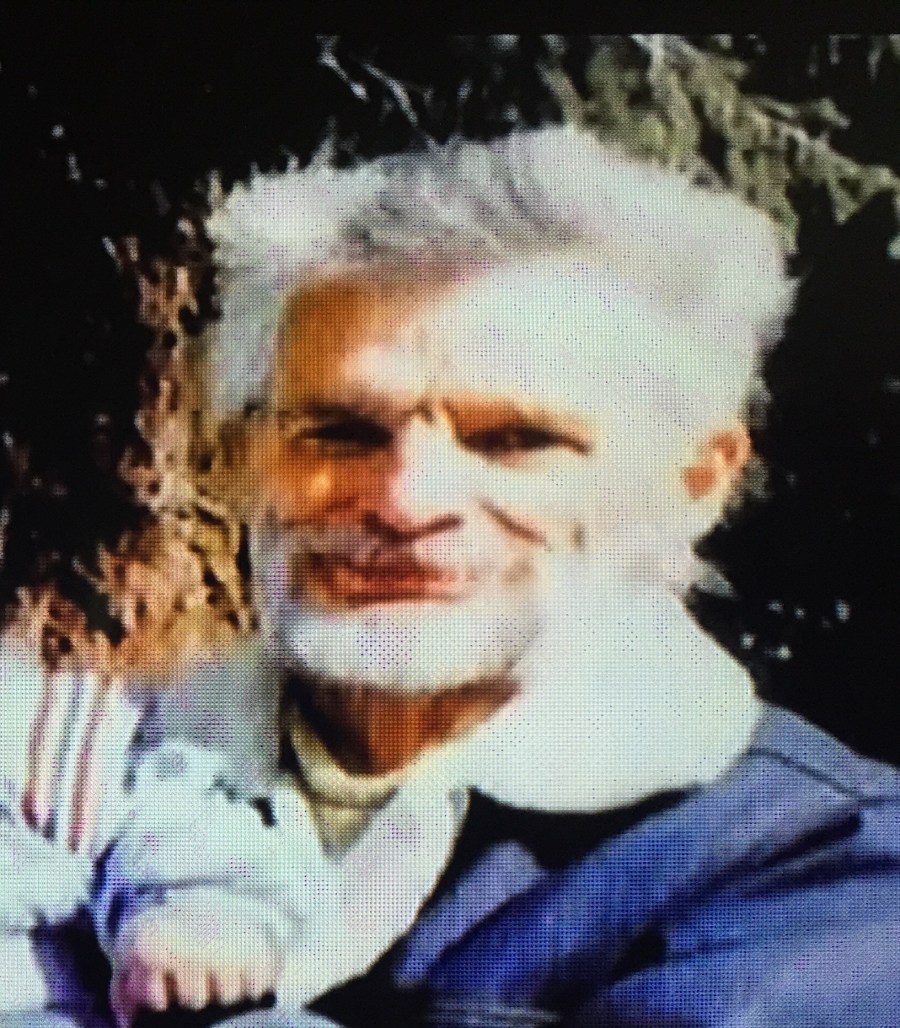
Disabled Army veteran Jack Irwin, 71, went missing from Upland, California on September 13, 1999. About nine months earlier, Jack sold his cabin at Mt. Baldy to Judy Gellert and Marcia Johnson who also befriended him. Apparently he let them make payments on the mortgage at the cabin because they were low on cash and he wanted to move to a warmer climate. At one point he had confided in some close family friends that the couple were no longer making payments and the whole situation was making him feel uncomfortable. Then Marcia reported Jack missing. She told police he went on a trip to Seattle, Washington to visit the Space Needle.
Jack’s other friends informed police they suspected Judy and Marcia because of their large purchases since moving to Mt. Baldy, including a corvette. At the time of Jack’s disappearance in 1999, he had about $230,000 in the bank. By January 2000, his bank account was down to $14. Police learned the couple sold Jack’s home in Upland and bought a luxury home in San Diego. And the cabin at Mt. Baldy burned to the ground in August 2000 resulting in an insurance pay out of $170,000. The pair had access to half a million dollars and spent almost all of it. Detectives also discovered Marcia sued a therapist for emotional distress and was awarded a $30,000 settlement.
Marcia became involved in a sexual relationship with another therapist after claiming she broke up with her girlfriend. Her partner Judy found out about the affair and convinced Marcia to file yet another lawsuit against a therapist. In the course of the depositions for the lawsuit the therapist claimed Marcia was delusional because she admitted to killing her brother and sister and an old man who lived on Mt. Baldy. As a result of this information, detectives put a wire tap on Marcia and Judy’s phones and started turning up the heat. As a result, Judy Gellert was arrested for accessory to murder because she admitted to knowing about what happened.
Marcia Johnson was arrested for murder after acknowledging she murdered Jack Irwin. Marcia told detectives Jack Irwin showed up to the Mt. Baldy cabin, mostly likely to confront Marcia about the money she owed him. Marcia admitted that she got angry and just wanted him to shut up. So she went into the house, grabbed a gun, and shot him in the back of his head. She then grabbed a chainsaw and cut off his head, hands, and feet. Afterwards, Marcia sealed the body parts in plastic bags and dumped them in a remote location on Mt. Baldy. On November 2, 2004, Marcia Johnson was found guilty on twenty-six counts including first degree murder, arson, grand theft, elder abuse, and insurance fraud.
On December 15, 2004, Marcia Johnson was sentenced to life without the possibility of parole. Judy Gellert accepted a plea bargain in exchange for her testimony against Marcia Johnson and was sentenced to 180 days in jail, five years probation, and ordered to pay $150,000 in restitution. The detectives considered this one of the most cold blooded crimes they had ever heard of. Marcia Johnson was a con. She was greedy and didn’t care about anyone but herself. She is the type who does not accept responsibility for their actions and everything is always someone else’s fault. Jack Irwin was an unsuspecting victim who didn’t realize that he had been targeted for his disability benefits, bank account, and assets from the get go.
Four years after a 71 year-old Korean War hero goes missing near Upland, California, a DA’s investigator picks up a trail of clues that seem to lead to the victim’s closest friends. -Come Back Jack, Murder Book (S2, E13)
Editor’s note: With a cable subscription, you can download the free ID Go app and watch all of the Investigation Discovery programming at your convenience. And for those who do not have cable, you can watch “unlocked” episodes on the ID Go app including the latest premieres. Download the ID Go app and binge away. For those who prefer commercial free programming during your binge session, Prime Video has an ID channel: ‘True Crime Files by Investigation Discovery” available for $2.99 a month. It’s a compilation of older seasons but totally worth the cost if you are a true crime addict.
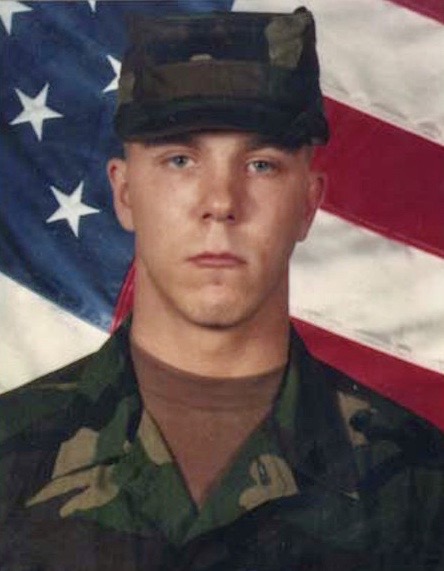
Vanity Fair Confidential featured an episode called Don’t Ask Don’t Kill on Investigation Discovery highlighting the case of Army Pfc. Barry Winchell at Fort Campbell, Kentucky in 1999. Winchell was bludgeoned to death by a fellow soldier while he lay asleep in his cot on July 5 in the barracks. Winchell was described by his friends as someone who would give the shirt off his back for you. He was a model soldier and had dreams of becoming a Warrant Officer. He was a member of the elite Screaming Eagles, 101st Airborne and was considered a perfect fit for the military. He was described by fellow soldiers as a 50 caliber expert.
After Barry Winchell died, the military immediately began downplaying what had occurred on base at Fort Campbell. They initially claimed it was a fight that had gone too far. They told the family that Barry Winchell had been kicked in the head with a boot but his injuries did not match that theory. As a result, the family and media outlets were convinced the military was hiding the real story and believed they were trying to cover up the crime. Why? The military concluded that this was a rare soldier on soldier attack in their barracks but the claim that he was kicked in the head did not match the crime scene either. Although the military was tasked with the investigation of the murder, they declined to speculate on a motive.
The Army was not cooperating with anyone. ~Vanity Fair Confidential
When Barry’s girlfriend Calpernia Addams learned about what happened to Barry, he was on life support and considered brain dead. He died twelve hours after the attack and she didn’t get an opportunity to see him. Calpernia learned that he had been murdered on base and believed that there was more to this story then what the Army was sharing. As a result, she set out to make sure both Barry’s parents and the media knew what she knew and suspected had happened. Calpernia was born a boy. She served in the US Navy as a transsexual and then once she got out of the military, she began her transition from man to woman. When Calpernia and Barry met, they hit it off immediately and started dating. When she met Barry, she was halfway to becoming a woman. She lovingly shared that Barry accepted her for who she was and supported her in her transition from man to woman.
Calpernia strongly believed that people were blurring the lines between whether Barry was gay or straight. She wanted people to know that he was straight and he liked women. Calpernia believed that Barry’s troubles began with an anonymous accusation that Barry was gay. She claimed that a fellow soldier said he saw Barry giving oral sex to a man in a Nashville gay bar. But no one believed it and his military comrades didn’t think he was gay. Calpernia believed that it was Barry’s roommate, Justin Fisher, who started spreading the rumors in an effort to cause harm to Barry. In 1999 the Don’t Ask Don’t Tell policy was in effect and a soldier could in fact lose their career if they were found out. Justin Fisher didn’t have the best reputation. He was described as someone who thought he was a gangster even though he was from Nebraska. And some believed that Justin never should have been allowed to join the military.
According to Calpernia, Justin Fisher and Barry Winchell had a love/hate relationship. Fisher tormented him, joked about his sexuality, about him being a homosexual, and kept calling him a faggot. He told others that he didn’t trust him and eventually openly spread rumors that Barry was gay. Fisher also blackmailed Barry with his alleged homosexuality. He told their Non Commissioned Officers (NCOs) about him being gay knowing that Barry could lose his career under the Don’t Ask Don’t Tell (DADT) policy. Back in those days, once accused of being gay, you were dead in the water in a military setting. Some believe this case reveals that if gone unchecked the military can become an incubator for hate. At the time of DADT, it was virtually impossible to report anti-gay harassment and Barry’s family and friends were not quite sure how he dealt with the regular doses of harassment. As evidenced in this case and many others, he had nowhere to turn without fear of losing his cherished career.
At the time of DADT, it was virtually impossible to report anti-gay harassment without fear of losing your career. ~Vanity Fair Confidential
The military was in charge of the investigation because the crime occurred on a federal base. As with many cases, family, friends, and the media forced the Army to be accountable for what happened on their base on their watch. So as the investigation into Barry’s Winchell’s death continued, we learned what actually happened. Calvin Glover, an eighteen year old new recruit, was ultimately charged with the murder of Barry Winchell. Observers felt that he did it because of a combination of too many men, too much alcohol, and too little to do. The day before the murder, Calvin and Winchell got into a fight. Apparently Winchell dealt him one punch in the face and he went down. Calvin who was highly intoxicated swore he would get him back but Winchell apologized to him the next day and it appeared that everything was fine. Unfortunately, Justin Fisher (Winchell’s roommate) was provoking Calvin all day long asking him if he was going to take Winchell’s abuse.
That same night after Calvin Glover had consumed seventeen beers, he decided he was going to bed. Fisher went to his room and told him that Barry was telling everyone that he beat him up and they were all laughing about it. Fisher handed Calvin a wooden bat, suggested he hit Barry with it, and Calvin said he felt compelled to use it. In a drunken, peer pressured stupor, Calvin hit Barry Winchell multiple times in the head with the wooden bat. Barry Winchell was asleep and couldn’t defend himself. After Calvin was done hitting Barry, Fisher was laughing, jumping up and down, and told Calvin that they would keep it in the family. Then Calvin immediately began to destroy evidence. Fisher acted like he stumbled upon Winchell on the cot and was trying to help him. The soldiers tried calling 911 but they were not able to get through to emergency services on a base phone. Barry was taken to the hospital and twelve hours later, he was dead. Everyone in the barracks was wondering who would come in the barracks and kill them.
The soldiers tried calling 911 but they were not able to get through to emergency services on a base phone. ~Vanity Fair Confidential
In the course of the investigation, Justin Fisher eventually identified Calvin Glover as the culprit. As a result of Calpernia Addams and others that stepped forward, we learned that there was more to the story underneath the surface. We learned that Justin Fisher had a much larger role in the crime then he was willing to admit. Justin Fisher introduced Calpernia Addams to Barry Winchell. Apparently Justin Fisher was interested in Calpernia Addams and after she chose Barry, he asked her if she would hook him up with one of her drag queen friends. Justin ended up hooking up with Kimmie Mayfield, who was a man. Everyone suspected that Justin was interested in guys because of his relationship with Kimmie. They hooked up several times in the course of a few months. We also learned this wasn’t Justin’s first walk on the wild side. He had a history of experimentation. Barry shared with Calpernia that one time he woke up to Justin playing with his feet. Calpernia deduced that Justin may have been jealous of Calpernia being with Barry or vice versa. It was noted that people tend to hate those who remind them of something they don’t want to face.
In the end about 90% of the soldiers who served with Barry Winchell, Calvin Glover, and Justin Fisher didn’t think this was a hate crime but instead a crime of passion. They did not witness any anti-gay rage; but they did witness too much alcohol. One of the soldiers believed that Justin Fisher also hit Barry Winchell with the bat because of the blood spatter evidence left at the crime scene. It matched someone who was left handed and Fisher was left handed. One of the soldiers mentioned this to Fisher and Fisher told him he was in the wrong career and should be a detective instead. The soldiers who served with them believed that Justin Fisher was the murderer and Calvin Glover was the murder weapon. Calvin felt pressured by Justin Fisher to hit Winchell while he was intoxicated. It is suspected that Fisher hit Winchell with the bat as well and may have been the one that dealt the fatal blows. Calvin participated in the Vanity Fair programming by phone from prison and did in fact express remorse for his role in Barry Winchell’s death.
Both Calvin Glover and Justin Fisher were court martialed. In the end, Calvin Glover was convicted of pre-meditated murder and was sentenced to life in prison with an opportunity for parole. Justin Fisher was charged as an accessory and restricted to his barracks while he was going through trial. Observers felt that it was ridiculous that Fisher was restricted to his barracks when in fact he was the mastermind of the murder. He too was convicted and sentenced to twelve and half years but was released early in 2006 after only serving seven years. Observers felt that Justin Fisher’s sentence was a miscarriage of justice considering it never would have happened if it wasn’t for him pushing Calvin Glover to hit Barry Winchell with the baseball bat that night. Justin Fisher now lives in the Mid-West and declined to comment on this Vanity Fair episode. He walks as a free man. In retrospect, Calvin Glover shared that he feels like this was a love triangle gone wrong and he wishes that he could take it all back.
At the end of the programming, Pat and Wally Kutteles (Barry’s parents) shared that they sent their son off to serve in the military, they did not send him off to be beaten to death with a bat while he was sleeping. Dixon Osborn from the Servicemen’s Legal Defense Network (SLDN) believed that the military simply wanted to sweep it under the rug with no connection to the gay reference. The military hoped the general public, the media, and Barry’s parents would just accept that it was a drunken brawl. All those involved felt like the military investigation was a joke. Calpernia Addams, Barry’s parents and friends, and the SLDN wanted to honor Barry’s memory by exposing the truth about Barry’s untimely death. They used Barry Winchell’s case as a catalyst to lift the dangerous Don’t Ask Don’t Tell policy. According to those involved, President Bill Clinton’s DADT policy was the biggest mistake ever for the military because it taught people to lie. At the peak of DADT, there were 3-4 soldiers discharged per day for their sexual orientation. DADT was a failure of the Clinton administration.
All those involved felt like the military investigation was a joke. ~Vanity Fair Confidential
In an interesting twist, the Commander who was in charge at the time of the death of Barry Winchell sparked protest in Washington DC in 2000 when he was reassigned to the Joint Chiefs of Staff at the Pentagon. In response, Eric Shinseki, the Army’s Chief of Staff, stated that General Clark’s command at Fort Campbell had been “distinguished by great competence and compassionate leadership. The Army has placed its trust and confidence in Major General Clark and I am confident he will continue to excel in service to our nation.” The military concluded in a public statement that this was the first gay bashing murder in over ten years and that soldier on soldier violence was rare. In October 1999, President Clinton signed an executive order increasing penalties for hate crimes in the military justice code and allowed a sentencing authority to hear evidence that a violent crime was based on race, color or sexual orientation. However, the order only applied to crimes committed after Nov. 30, 1999.
Barry Winchell’s parents lobbied with the SLDN to help change the DADT policy after losing their son. Even though their son was not gay, he was accused of being gay which eventually led to his death. Roughly ten years later in 2010, President Barack Obama signed a historic bill ending the DADT policy, a policy that compelled gay and lesbian service members to hide their sexual orientation. The ending of the policy made it official for gays and lesbians to serve openly in the Armed Forces. President Obama said he “hopes all those who left the service because of the policy will seek to re-enlist. And he encouraged all gays to consider service.” Although, gays and lesbians were cautioned to keep their identity to themselves until the law was official in 2011. This comes as one of the first major actions by Secretary Defense Leon Panetta, who had been on the job for three weeks. SecDef Panetta also lifted the ban on women in combat in 2013. Our military is now officially equal in all respects.
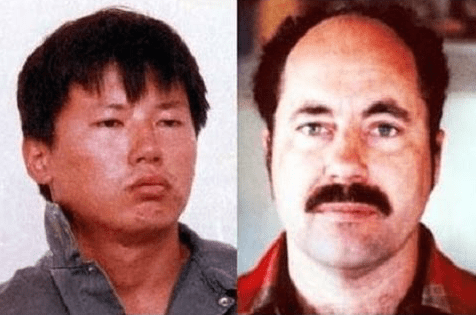
Oxygen premiered It Takes a Killer ‘Partners in Evil” and this episode highlighted the sadistic crimes committed by Marine veterans Charles Ng and Leonard Lake. In the early 1980s, the San Francisco bay area was under siege as more than twelve people vanished without a trace. Police would eventually learn that Ng and Lake were responsible for murdering them and so much more. What police uncovered during their investigation would prove invaluable in the prosecutor’s decision to pursue the death penalty. Charles Ng and Leonard Lake were psychopaths.
In December 1982, Army veteran Donald Lake, 32, was living with his mother in San Francisco, California. At their surprise, his brother Leonard Lake stopped by on a road trip up north and asked Donald to tag along. Donald was described as a very nice, gentle man but Leonard treated Donald terribly when they were growing up and even referred to him as a leech in conversations with his ex-wife Claralyn Balazs. Donald is never seen again and his mother Gloria is concerned so she reports him missing. Leonard Lake is nowhere to be found but he resurfaced on New Years Day in 1983 to rent a room in a house in Golden Gate Park.
Four months later, Lake moved in with his buddy Charles Gunnar of Morgan Hill. They had a lot in common as they both valued survival skills and the weaponry world. On May 22, 1983, Lake invited Gunnar to go on a road trip to Vegas or Tahoe for some much needed rest and relaxation after his divorce. Charles Gunnar decided to go in an effort to cope with his tough times; he left his two daughter’s with a babysitter. A couple days later, Charles Lake returned alone in Gunnar’s van and told the babysitter that Charles ran off with a woman. Charles Gunnar was never seen again.
On July 11, 1984, Donald Giulietti, 36, a radio personality from San Francisco, California was spending time in his apartment expecting a visitor. Donald was an openly gay man who lived with a man named Richard Carrazza. Giulietti placed a personal ad in a low key newspaper offering to give oral sex to straight men. That night a stranger knocked on the door and Giulietti assumed it was someone taking him up on his offer. As soon as Donald opens door, the man whips out pistol and shoots him in the head at close range. Carrazza runs from the back room into the study and finds Giulietti on the floor. Carrazza is immediately shot in the chest and left for dead. The shooter fled and Carrazza survived the attack. Richard Carazza called 911 and when the police questioned him, he was able to give a description of the shooter.
Richard Carrazza described being shot by a small Chinese man wearing prescription glasses. Police searched for an Asian suspect but came up empty. What no one knows is that the killer was already searching the classifieds for his next victim. On July 24, 1984 in San Francisco, California, Harvey Dubs, 29, was home with his wife Deborah, 33, and their 16 month old son Sean. Harvey worked for a printing company but on the side, he videotaped special events and rented out his equipment. There was an individual who responded to the ad and came to his home. The family was never seen again. The following morning, a neighbor went to check on them and found keys in the door and dirty dishes in the sink but no sign of the Dubs family.
When the police did house to house canvassing and questioned the neighbors, they reported seeing a small Asian man leaving the property. The suspect was seen carrying a large duffel bag and a large flight bag both stuffed full and he tossed the bags into the trunk of a car that was waiting. The Asian man gets into the front passenger seat of the car with the burly man with a beard and they speed away. Some witnesses in the neighborhood get a good description of the Asian man. No one could give a good description of the bearded man but an eye witness was able to draw a description of the Asian man.
In San Francisco, California on October 31, 1984, entrepreneur Paul Cosner, 39, was selling his 1980 Honda Prelude which he had recently advertised in the local newspaper. A burly bearded man took the car for a test drive and a couple days later called Paul to tell him that he would like to purchase the Honda from him. On November 2, 1984, Paul drove the car to meet the potential buyer and he was never seen again. When Cosner’s sister Sharon didn’t hear from him for 24 hours, she filed a missing person’s reports and a missing vehicle report. Sharon was relentless and maintained heavy pressure on the police but they really had no clues or suspects at this point.
In San Francisco on January 18, 1985, Cliff Peranteau, 24, was at a local bar tossing back a few drinks with a co-worker. Cliff worked at a moving company and he shared with friends that he was going to work on Saturday. Cliff never showed up for the job but apparently was seen partying on Sunday after a 49er’s super bowl victory. He’s last seen by a bartender after winning a $400 bet. The bartender said he appeared to be going off to celebrate with an Asian friend. He was never seen again.
Investigators would learn that Peranteau’s Asian friend was his colleague Charles Ng who had been at the moving company for about four months. Charles was described as an odd character that Cliff Peranteau normally tried to avoid. Charles Ng wasn’t well-liked at the moving company because he had poor boundaries and said inappropriate things to others. Two weeks after Cliff’s disappearance, his boss received a short typed letter apparently from Cliff informing him that he had a new job. The writer also requested that Cliff’s last check be sent to an address in northeastern California near Wilseyville. The note wasn’t that far fetched until another moving company employee, Jeff Gerald, 25, went missing on February 23, 1985. Jeff got an offer to work with Charles Ng on a small moving job on the side. Jeff went to do the job and this was the last time he was seen.
In San Francisco on April 12, 1985, Kathleen Allen, 18, and her boyfriend Michael Carroll, 23, were spending time in a motel room where they were temporarily living. At 10 pm at night, Michael tells Kathleen that he has to do something and would be back in the morning. Michael never returned. A few days later Kathleen received a horrifying phone call at work. The caller told her that her boyfriend Michael may have been involved in a shooting. She immediately told her boss that she had to leave. She was last seen meeting a bearded man in the parking lot of the Safeway where she worked. Kathleen got into the car and was never seen again.
In April 1985, four more people vanished without a trace. Robert Scott Stapley, 26, lived in San Francisco but frequently took road trips to Wilseyville, California to spend time with friends. Scott Stapley stayed with Lonnie Bond and his live-in girlfriend Brenda O’Connor, and their 18 month old son. Lonnie and Brenda loved living in their cabin in the foothills of the Sierra-Nevada mountains. The only thing they don’t like was their neighbor. He was a burly, bearded man who they felt was extremely obnoxious, rude, and demented. This neighbor constantly fired weapons on his property and Brenda felt really uncomfortable with him because he would not stop asking her to pose naked for him. On April 19, 1985, Scott Stapley was present when Lonnie decided to confront his neighbor. Lonnie decided to deal with the problem once and for all, and none of them were ever seen again.
In San Francisco, California on June 2, 1985, two men entered a lumber yard to buy some building supplies. A burly bearded man and an Asian man with glasses decided they wanted a vice but were not going to pay for it. The Asian man swiped the $75 vice, exited the store, and placed the stolen vice into the trunk of a Honda Prelude in the parking lot. But the Asian man didn’t realize that an off duty police officer spotted him with the stolen merchandise and called in his description. The off-duty police officer approached the Asian man but he took off and disappeared. The officer searched the vehicle and found the stolen vice and a back pack, which contained a pistol with a silencer in it. Just then a stocky bearded man exited the lumber yard and approached the Honda Prelude.
The burly bearded man told the police officer that his name was Scott Stapler (the name of the man who vanished two months prior). He told the officer not to worry about the vice because he paid for it. The officer reminded him there was a gun with a silencer in the trunk of the car and placed the burly, bearded man under arrest. He was taken to the police station for questioning. Back at the station, investigators learned that everything the man was telling them was a lie. A background check on the Honda Prelude revealed that it was registered to Paul Cosner, who went missing months before. Then they learned the license plates belonged to Lonnie Bond, another person who went missing. As the officer confronted the man with this new evidence, the big burly bearded man began to cry and admitted his real name was Leonard Lake. And that his accomplice was Charles Ng.
At one point during the investigation, Lake asked the detectives for a glass of water and a pen and paper to write a letter to his ex-wife. Police uncuffed him expecting a full confession. After he got done writing the letter to his ex-wife, he reached up under his collar where he sewed a cyanide pill into the fabric and quickly shoved it down his throat. He fell onto the floor gagging and seizing. He was rushed to the hospital where he slipped into a coma and died a few days later. In June 1985, Leonard Lake suddenly killed himself with a cyanide pill taking his secrets to the grave with him. But he did leave behind a clue when he gave up the name of his sidekick Charles Ng who was now on the run. Leonard Lake had been on the run since April 1982 when the FBI raided his place on a stolen weapons tip.
Police wanted to know who Leonard Lake was. They learned he was born in San Francisco, California and was bright yet sadistic. He developed an infinity for pornography early on in his life. He apparently took nude photos of his sisters when they were young and used them to extort sexual favors. He joined the US Marine Corps in 1965 at age 19 and served two terms in Vietnam. In Da Nang in 1970, Leonard had a complete mental breakdown and was sent back to the United States. He was admitted to a psychiatric ward for two months and then discharged from the Marines upon his release. Lake spent the next eight years in a hippie commune. In the late summer of 1980, Leonard met his wife Claralyn Balazs and they married in 1981. They both had a love of making pornographic videos of themselves and enjoyed kinky sex.
After Leonard’s death in 1985, Claralyn was the critical piece to help police break the case wide open. Police investigated Leonard Lake and did a complete forensic search of the Honda Prelude in his possession. They found blood spatter in the car, bullet holes in the headliner, IDs of missing persons, and an electric bill with Claralyn’s address. On June 3, 1985, police manage to track down Claralyn. Claralyn told detectives that she and Leonard divorced in November 1982 but maintained a close relationship. She also mentioned to the police that her family owned property in Wilseyville but no one had been living there recently. Police were curious and Claralyn agreed to take them to the property on June 4, 1985. The police found what they could only describe as a compound for killing.
The police found the drivers license of Mike Carroll who disappeared with his girlfriend Kathleen Allen in 1985. They also found possessions of others who were missing including the Dubs family. Police found videotapes of women being tortured, signs of men being killed, and outside in the yard, police came across a tool shed that acted as a false front. There they found a large bunker where tortures had occurred and where Leonard Lake kept his sex slaves. Detectives unearthed Leonard Lake’s hide out and learned that he had this planned since he was a teenager. Lake read a book at age 17 called The Collector which was about a man who had a sex slave named Miranda. Lake became obsessed with a clear plan called Operation Miranda. He wanted to enslave young girls and these fantasies became a reality when Charles Ng entered his life.
The police found overwhelming evidence of Lake and Ng’s barbarism inside in the bunker. There were videotapes of Leonard Lake building the bunker. One tape labeled the M Ladies showed Ng and Lake raping, torturing, and abusing a number of women. Law enforcement didn’t know who any of the M Ladies were until weeks later when they discovered a mass grave on the Wilseyville property. Police found approximately 45 pounds of human remains scattered about the yard. They found many of the human remains of the missing people; they had been killed, burned, tortured, and dismembered. Among the remains, investigators found the IDs of Brenda O’Connor and Kathleen Allen.
Police recognized Kathleen Allen from the M Ladies videotape. Kathleen was selected by Lake as the perfect M Lady and was kept prisoner in his bunker. He treated her as a complete slave in every way. He forced her to dress up, have sex on demand, and pose for him. It took investigators weeks to go through the crime scene and as they do they discover more and more bodies. Then on July 8, 1985 they find two males stacked on top of each other in a make shift grave. They were identified as Lonnie Bond and Scott Stapley. Investigators knew Charles Ng played an integral part in all this and they wanted to find him.
In June and July 1985, investigators learned that Marine veterans Charles Ng and Leonard Lake murdered multiple people and dug them in a mass grave at the property in Wilseyville, California. At this point in the investigation, Leonard Lake had committed suicide and Charles Ng was on the run. Charles Ng was born in Hong Kong. His father was a strict disciplinarian who literally beat him with a cane. Ng didn’t really show any interest in school and was expelled from a number of them. He was described as anti-social and had a history of fire setting and stealing. Ng eventually ended up at Notre Dame University on a student visa but dropped out after getting in a hit and run accident.
Charles Ng joined the US Marine Corps in October 1979 as a means to pay restitution for his hit and run crime in Indiana. Ng told recruiters he was born in Indiana and nobody bothered to check his citizenship status. Ng was trained as a gunner in the Marine Corps and immersed himself in martial arts. Ng was obsessed with violence and boasted that he was born to fight in hand-to-hand combat. Ng said he would kill anyone that was foolish enough to fight him. In October 1981, Ng was court martialed for stealing weaponry from an armory and went Absent without Leave (AWOL).
Ng found out that Leonard Lake, another Marine, was managing a hotel in northern California. He flew to California and in December 1981 moved in with Leonard and his wife Claralyn. Lake was fourteen years his senior and acted as a father figure. They both shared a mutual love of weapons and sexual deviance. Lake realized that Ng was the perfect person to help him make his sexual fantasies become reality.
On July 6, 1985 in Calgary, Canada, Charles Ng attempted to steal food from a department store and got caught. He shot a security guard in the hand and was captured immediately. Charles Ng was charged with attempted murder and theft, and was jailed in the Canadian system. On December 18, 1985, Charles Ng went to court and was found not guilty on the attempted murder charge but guilty of assault and robbery. He was entenced to 4.5 years in an Edmonton prison. US officials petitioned to have him extradited back to America to stand trial. His deportation was held up in court until 1991.
Charles Ng is finally extradited to California to face charges for the horrific crimes he and Lake committed there. Ng didn’t actually go to trial for another seven years. In Santa Ana, California on September 14, 1988, Charles Ng’s murder trial proceeded in the Orange County Superior Court. Prosecutors argued that Ng and Lake stalked and targeted their victims, stole their money, then tortured and killed them. The trial lasts for 8 months. Some of the most compelling evidence came from dozens of cartoons drawn by Ng. The cartoons depicted women being tortured and abused and people being burnt. But the M Ladies videotapes were the prosecutions most disturbing evidence.
The M Ladies videotapes showed women who were tortured and sexually abused. Ng took the stand in his own defense and blamed everything on Lake. He denies any knowledge of the murders. He eventually admitted to being involved in the abduction of some of the women, and some of the rapes and tortures, but did not admit to killing anyone. In late February 1999, Charles Ng was convicted on 11 of 12 counts of murder. Four months later, he was sentenced to death. Investigators agree that both Leonard Lake and Charles Ng were both psychopaths but Leonard was the more dominant and goal oriented of the two. Ng went along with Lake’s plan because it allowed him to carry out his torturous and sexually deviant behaviors.
ID Go: When an off-duty police officer in San Francisco happens upon a minor theft at a lumberyard one Sunday afternoon, he unwittingly jumpstarts an investigation into one of California’s deadliest, most depraved serial killers: Leonard Lake and Charles Ng. -Dungeon of Dread, Pandora’s Box: Unleashing Evil (S1,E1)
Editor’s note: With a cable subscription, you can download the free ID Go app and watch all of the Investigation Discovery programming at your convenience. And for those who do not have cable, you can watch “unlocked” episodes on the ID Go app including the latest premieres. Download the ID Go app and binge away. For those who prefer commercial free programming during your binge session, Prime Video has an ID channel: ‘True Crime Files by Investigation Discovery” available for $2.99 a month. It’s a compilation of older seasons but totally worth the cost if you are a true crime addict.
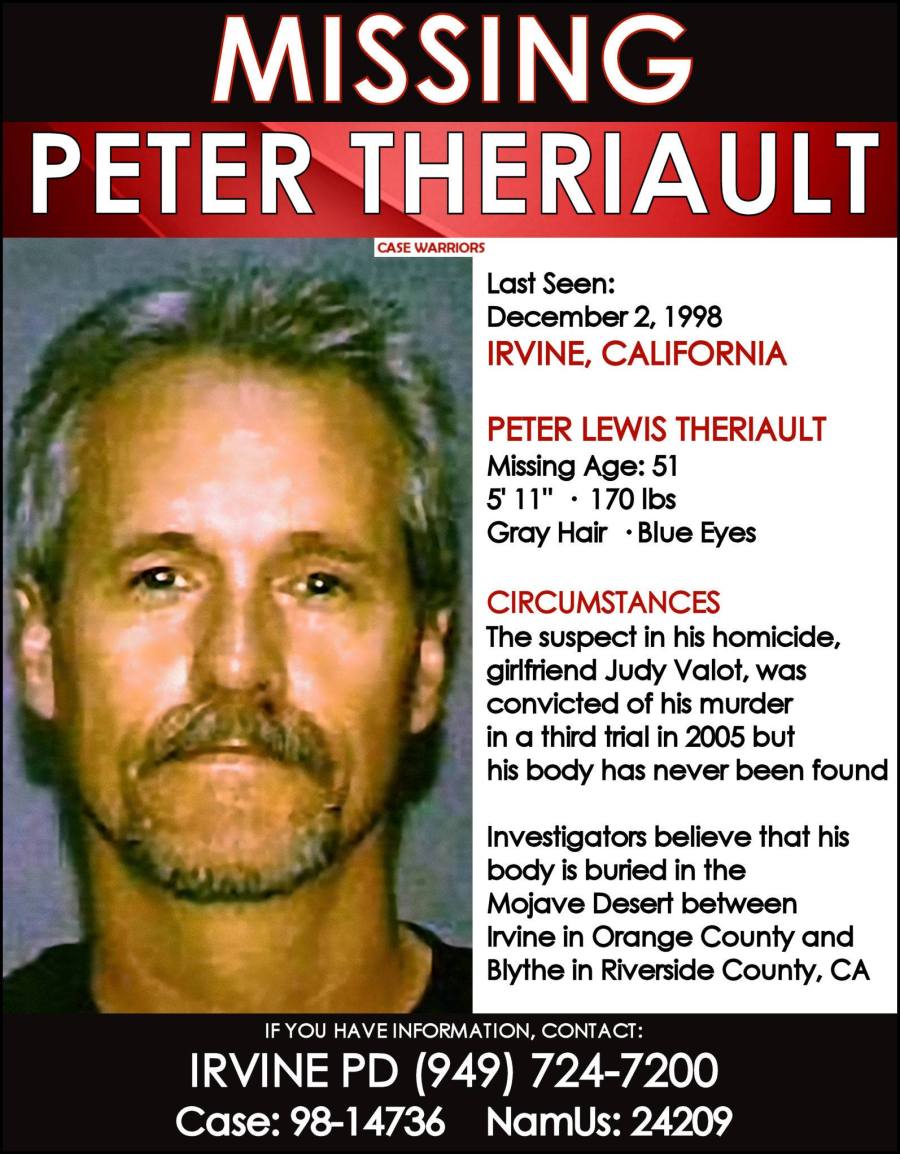
Army veteran Peter Theriault went missing on December 2, 1998 from Irvine, California. Live-in girlfriend Judy Valot, 54, was charged and convicted of second degree murder in January 2000 despite a body, weapon, or any physical evidence. She was found guilty of murdering Peter Theriault and disposing of his body in a California desert because she was convinced he was cheating on her. There was no evidence that Peter was in fact cheating on her. Valot appealed her conviction and was granted a new trial. And again in 2005, Judy Valot was found guilty of second degree murder. She was sentenced to fifteen years to life in prison. Judy Valot was denied parole in February 2013 as she maintains her innocence and refuses to reveal the location of Peter’s body who is still missing to this day.
Investigation Discovery:
In December 1998, Peter Theriault, 51, fails to arrive for his shift at a car plant in Commerce City, California. Pete hasn’t missed a day of work in almost three decades. Friends and family immediately suspect something is very wrong. -The Green Eyed Monster, The Perfect Murder (S5,E7)
Editor’s note: With a cable subscription, you can download the free ID Go app and watch Investigation Discovery programming at your convenience. And for those who do not have cable, you can watch “unlocked” episodes on the ID Go app including the latest premieres. For those who prefer commercial free programming during your binge session, Prime Video has an ID channel: ‘True Crime Files by Investigation Discovery” available for $3.99 a month. It’s a compilation of older seasons but totally worth the cost if you are a true crime addict. Download the ID Go app or purchase ID True Crime Files & binge away.
Full Episode: In 1992, Laura Houghteling disappeared from her Bethesda home and was never seen again. Five days later, police discovered a bloody pillow and pillowcase lying in the woods near Laura’s house. Laura’s bedroom was then searched and forensic science was used to direct them a to prime suspect. -Beaten By a Hair, Forensic Files (S3,E9)
Editor’s Note: Full episodes of Forensic Files are available on a variety of media platforms. Forensic Files Channel features full episodes of Forensic Files on YouTube. You can also find full episodes of Forensic Files on both Netflix and Amazon Prime Video. On Netflix, the seasons are grouped as collection 1-9. On Amazon Prime Video, you can find Season 1-10 here; Season 11; Season 12; Season 13; Season 14; Season 15; Season 16; Season 17; Season 18; Season 19; Season 20; and Season 21. Start bingeing and see for yourself why Forensic Files is such a hit!
When some brides vowed to love and honor their husbands, they lied. These Deadly Women made a mockery of marital commitment. They only promised “To Have and To Kill”. -To Have and To Kill, Deadly Women (S8, E14)
Tyshee Prokop and her childhood friends from Killeen, Texas murdered Gary Prokop, an Army soldier stationed at Fort Hood in 1998. Tyshee married Gary shortly after meeting him and they had a child together. But Tyshee wasn’t ready for family life. About a year and a half after they were married, they filed for divorce. Gary was going to get out of the Army and move back home. Tyshee conspired with her friends to have Gary murdered before he got out of the Army so she could collect medical benefits and the $100,000 dollar life insurance policy. He was murdered on June 25th with a single gunshot wound to the head while he was sleeping. One of the co-conspirators, Rodney Barfield, felt remorse about his involvement with the crime. He confessed his full involvement in the murder and detailed everyone’s roles. In 2002, Tyshee Prokop and her friends were arrested and charged with the murder of Gary Prokop. They were sentenced as follows:
Tyshee Manik Prokop – pled guilty, sentenced to life in prison
Charles Edward Turnbull III – convicted, sentenced to life in prison
Rodney Barfield – pled guilty, sentenced to 25 years
Reuben James Salgado – pled guilty (tampering with evidence charge)
Jacob Luther Harris – pled guilty (to a conspiracy charge)
Editor’s note: With a cable subscription, you can download the free ID Go app and watch Investigation Discovery programming at your convenience. And for those who do not have cable, you can watch “unlocked” episodes on the ID Go app including the latest premieres. For those who prefer commercial free programming during your binge session, Prime Video has an ID channel: ‘True Crime Files by Investigation Discovery” available for $3.99 a month. It’s a compilation of older seasons but totally worth the cost if you are a true crime addict. Download the ID Go app or purchase ID True Crime Files & binge away.
Offender: Troy Graves, 29, US Air Force service member Victims: Shannon Schieber, 23, University of Pennsylvania student (rape/homicide), multiple rape victims in Pennsylvania & Colorado
Circumstances: Shannon Schieber was enrolled as a Phd. student at the Wharton School of Business, on May 7, 1998, Shannon was studying for exams when a neighbor heard what sounded like cries for help, he called 911 to report that his neighbor was asking for help, the police arrived but no one answered the door and the neighbor backed off his statement, they searched the property and the neighbor said it could have been outside so they left, Shannon’s brother showed up the next day and Shannon didn’t answer the door, the neighbor told her brother what he heard the night before, they broke into the apartment and found Shannon naked on her bed, Shannon was strangled to death and it appeared she tried to fight off her attacker, police found DNA at the scene, DNA ruled out those close to Shannon, Shannon’s parents were outraged that the man who killed their daughter was in the apartment when the police knocked on her door, but the police did their job right and by the book, a few days before the murder, Shannon reported being followed home one night, she was scared, so police started investigating the stranger angle, perhaps this is a serial rapist, they look into sex crimes in the area, they want to match the DNA to other sex crimes in the area.
In February 1999, they got a DNA match, 2 other sexual assaults had occurred but they were coded as misdemeanors, the assaults occurred just a few blocks from Shannon’s apartment, in June and July 1997, two more sexual assaults were connected to the offender bringing the total to 5, the PPD coded these sexual assaults as misdemeanors as well, they downgraded the offenses because it lessoned the load for the police, and made the arrest rate look better than it was, Shannon’s case helped enact change in Philadelphia, if they had investigated these cases, everyone would have known there was a serial rapist, Shannon would not be dead if she knew what was going on, the DNA still didn’t have a match to the offender, in 1997, a sketch was drawn from the recollections of the first victim, they got a new composite, this offender would enter the home, hold the victim down on the bed, rape them or make them perform oral sex, it was about control and domination for this guy and he was also somewhat of a romantic, once they acquiesced, he would treat them like a date, he would get comfortable with the victims, they determined he was a light skinned black male based on information he shared with one victim about his life growing up with bi-racial parents.
He was dubbed the Center City rapist, in August 1999, no other cases were reported since Shannon’s murder, the case went cold, the police got a bulletin in 2001 from Fort Collins, Colorado, the offenders modus operandi sounded familiar to the Philadelphia PD, on June 13, 2001, one victim was home when she was attacked from behind and raped, after she acquiesced, the rapist became gentle as if he was a boyfriend, after he left, she called 911, she was his third victim in Fort Collins, they were all blitz attacked, FC police were investigating a serial rapist, a fourth & fifth rapes were reported, he made a mistake and left behind a ball cap at the fifth victims home, Fort Collins DNA was matched to the rapes in Philadelphia, PPD gave FCPD the composite drawing, police received a letter in the mail from the suspect, he was taunting them, in the fall of 2001, the attacks in Fort Collins stopped, meanwhile the PPD started focusing on cross referencing names of suspects with the two geographic locations, they got a match for Air Force service member Troy Graves, he was in Philadelphia, Fort Collins, and now at Warren AFB in Cheyenne, Wyoming, in 2002, the police had the new suspect in their sites.
The police learned that Troy was also investigated by the Office of Special Investigations, it was over charges of harassing a female colleague, the charges were dropped but there was still something suspicious there, Graves has a clean criminal record and no finger prints on file, the case was circumstantial, they reached out to Graves to come to the police department and do an interview, Troy Graves and his wife showed up to the Fort Collins PD, the police immediately separated the couple, his wife admitted that he had insomnia and went for walks and drives at night and that honestly she thought he was having an affair, meanwhile Troy denied knowing anything about the crimes, the police confronted him about the rapes in Fort Collins, he denied being arrested for any sex crimes, he denied being investigated by the Air Force, he did not want to provide his fingerprints but a warrant was issued to compel him, the fingerprints were a match, Troy Graves was arrested and booked into custody on April 23, 2002, this case changed the PPD policies on sexual assault to include how evidence is handled and how the victims are treated and interviewed.
Disposition: Troy Graves feared a trial would not go in his favor in Fort Collins, Colorado, he pleaded guilty in exchange for a life sentence without the possibility of parole; Pennsylvania wanted to seek the death penalty but Shannon’s family did not want that because Shannon wouldn’t have wanted that, Graves entered into a plea agreement and got life in prison plus sixty years
Notable Quotes: “We have to change the system but not put people to death.” -Vicki Schieber (Shannon’s mom)
In 1998, a gifted Philadelphia graduate student is found murdered in her bed. The hunt for her killer forces police to reevaluate a series of unsolved crimes, turning the city upside down. Will her killer be caught or will he strike again? -Terror in Philadelphia, People Magazine Investigates (S3,E2)
Editor’s note: With a cable subscription, you can download the free ID Go app and watch Investigation Discovery programming at your convenience. And for those who do not have cable, you can watch “unlocked” episodes on the ID Go app including the latest premieres. For those who prefer commercial free programming during your binge session, Prime Video has an ID channel: ‘True Crime Files by Investigation Discovery” available for $3.99 a month. It’s a compilation of older seasons but totally worth the cost if you are a true crime addict. Download the ID Go app or purchase ID True Crime Files & binge away.
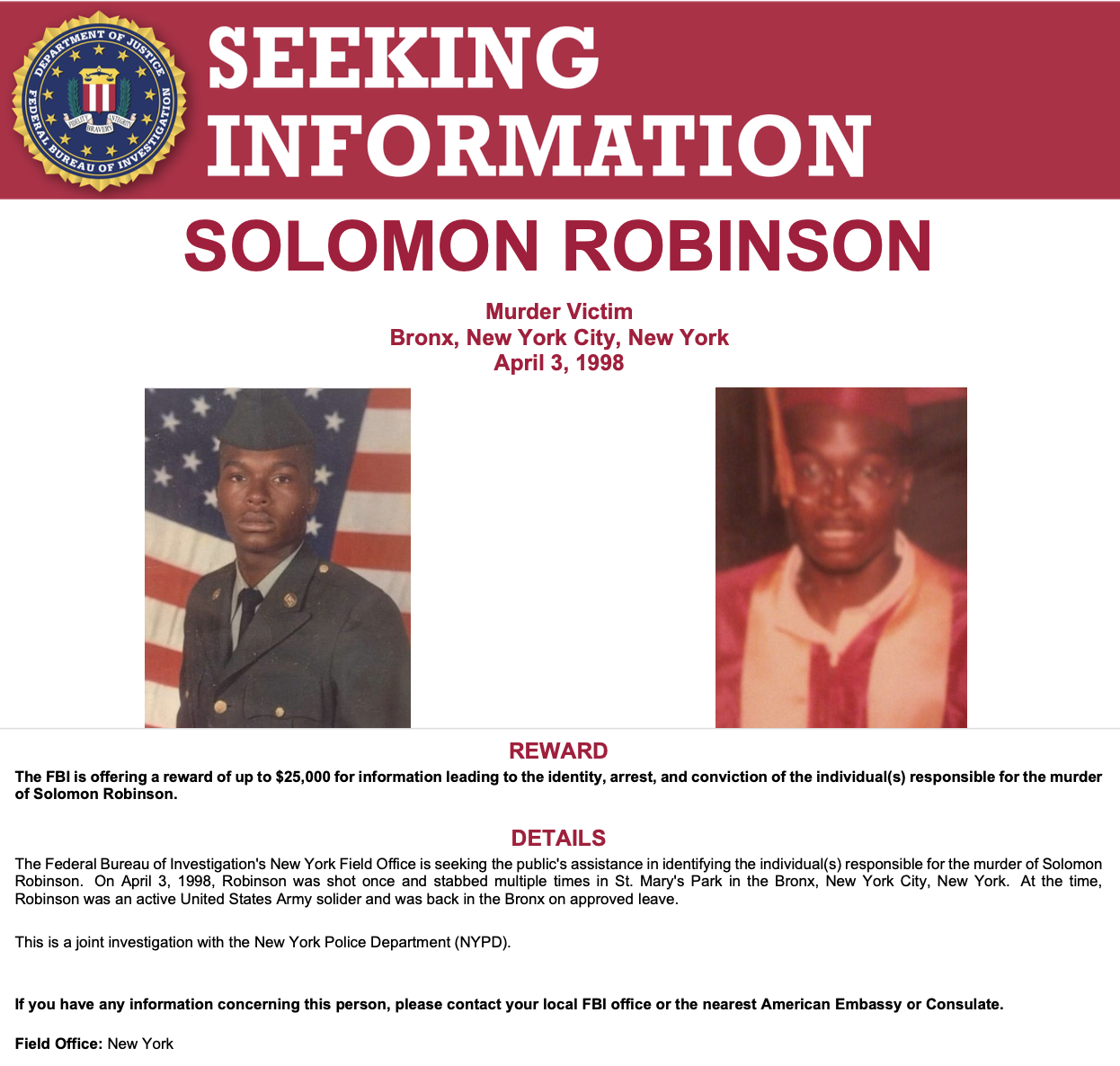
Murder Victim Bronx, New York City, New York April 3, 1998
Reward:
The FBI is offering a reward of up to $25,000 for information leading to the identity, arrest, and conviction of the individual(s) responsible for the murder of Solomon Robinson.
Details:
The Federal Bureau of Investigation’s New York Field Office is seeking the public’s assistance in identifying the individual(s) responsible for the murder of Solomon Robinson.
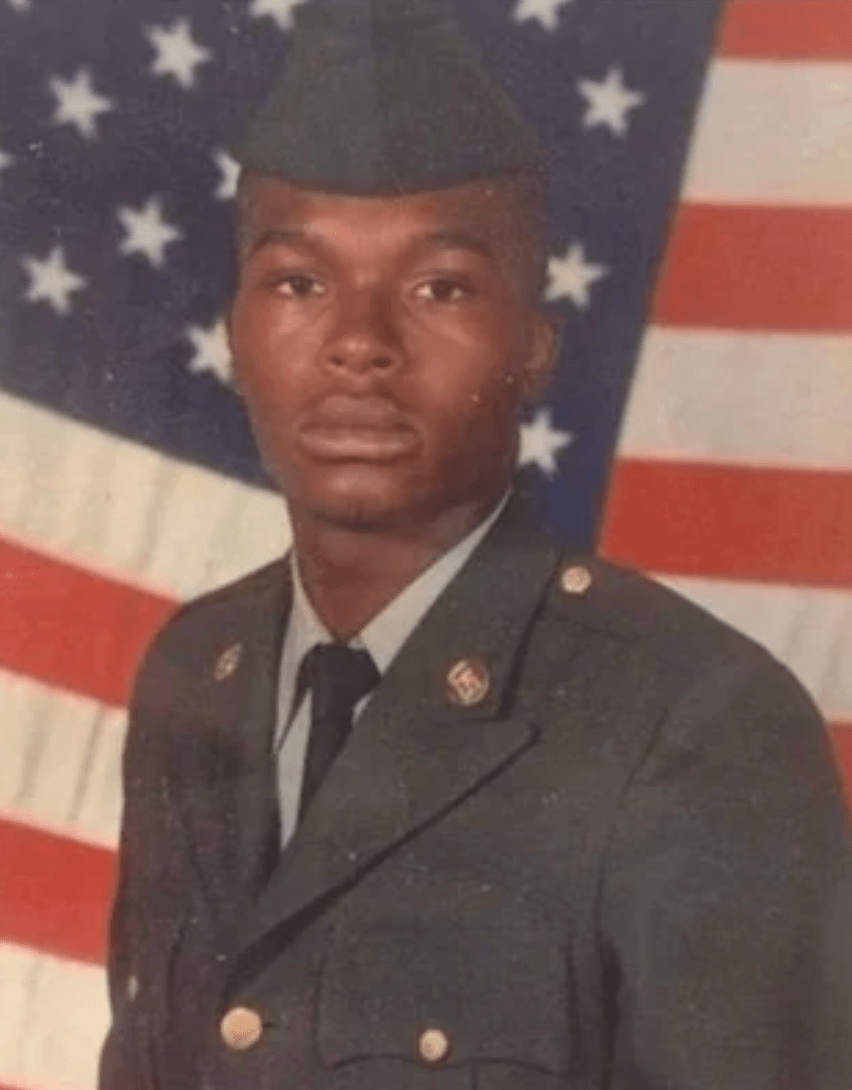
On April 3, 1998, Robinson was shot once and stabbed multiple times in St. Mary’s Park in the Bronx, New York City, New York. At the time, Robinson was an active United States Army soldier and was back in the Bronx on approved leave.
This is a joint investigation with the New York Police Department (NYPD).
New development brings hope for relatives of 1998 Bronx murder victim | A teenager from the Bronx who was committed to serving in the Army was attacked and killed in a local park 26 years ago. The murder of Solomon Robinson still hasn’t been solved. But now, detectives say they’ve learned new information that has led to a new development in the cold case. | NBC New York
Judy Buenoano was executed by the State of Florida on March 30, 1998.
Air Force Sergeant James Goodyear, 37, died on September 16, 1971 in Orlando, Florida. Sergeant Goodyear died just three months after completing a year long tour of duty in Vietnam. He left behind his wife Judy Buenoano Goodyear and her son Michael Buenoano. Judy received $28,000 in military life insurance benefits and military death benefits to help support the family. When her son Michael turned eighteen, he joined the US Army. On his way to his post in Georgia, he stopped in to visit his mother Judy, she fed him, and afterwards he became ill. The illness led to a crippling condition that left him paralyzed in his lower extremities and he was subsequently discharged from the Army as a Private. Michael was disabled and Judy was taking care of him. On May 13, 1980 Judy took Michael for a canoe ride. Judy reported to local authorities that her canoe capsized and her son Michael had drowned. She collected $125,000 in military life insurance benefits for her son’s death.
In June 1983, Judy was suspected in the car bombing of her fiancé John Gentry of Pensacola, Florida. She stood to gain $500,000 in life insurance money for this death. Judy Buenoano was first convicted of the attempted murder of John Gentry. As a result of her involvement in the attempted murder of John, investigators looked into the ‘accidental deaths’ of her husband James Goodyear and her son Michael. They exhumed John’s body a decade later and an autopsy revealed he had been poisoned with arsenic. Testimony revealed long-term arsenic poisoning had actually caused her son Michael’s disability. And when Judy drowned him, he was wearing an extra 15 pounds of weighted braces. Judy reportedly admitted to being involved in the 1978 death of her boyfriend Bobby Joe Morris as well. She received $50,000 in life insurance benefits for his death. Judy Buenoano was found guilty of first degree murder and sentenced to death. She was executed by the electric chair in Florida on March 30, 1998. Judy Buenoano was motivated by money, profit, and greed.
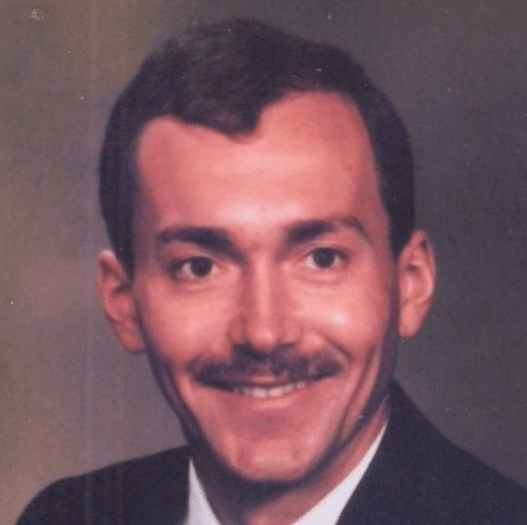
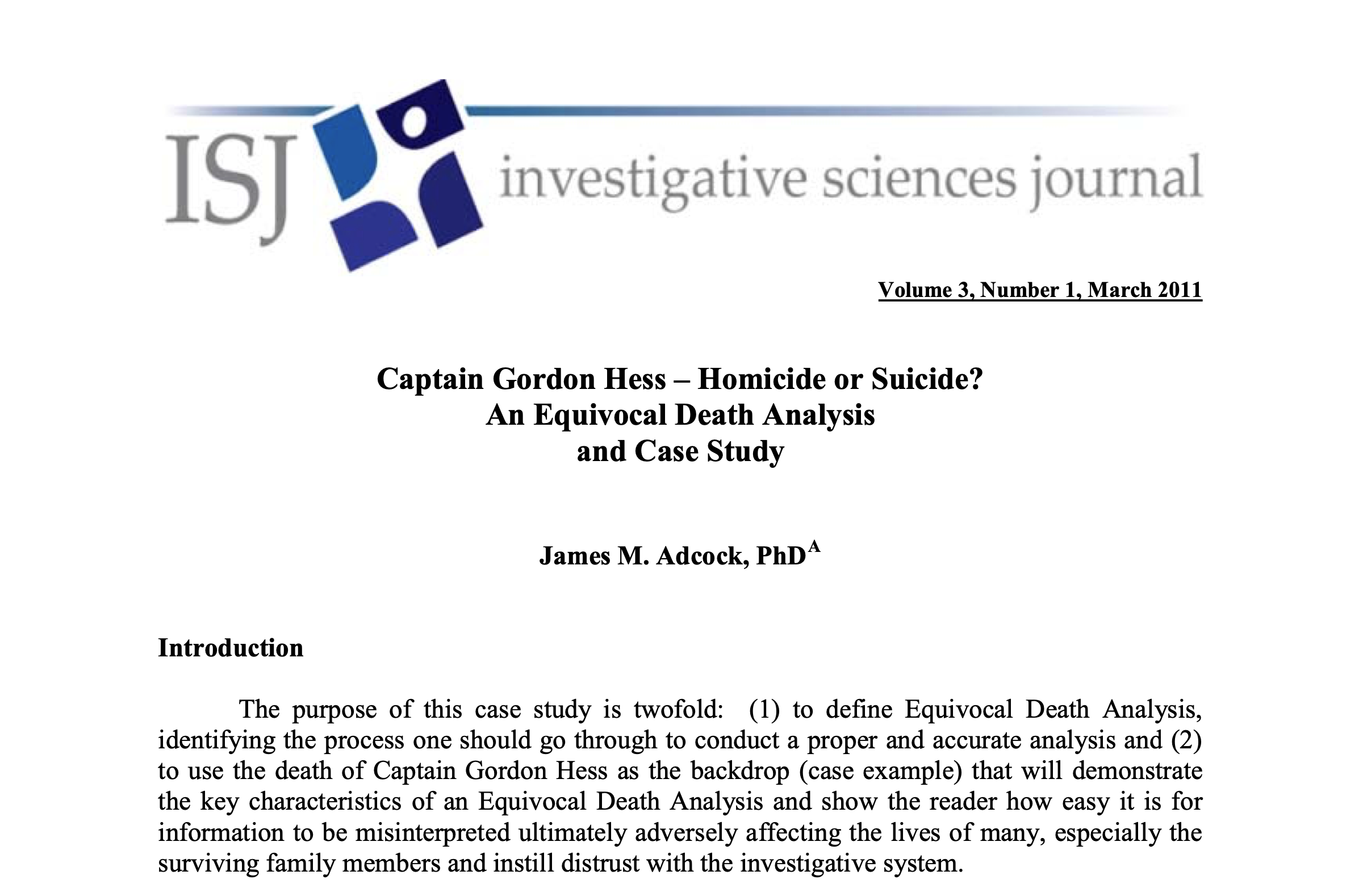
Army Captain Gordon Hess was found dead in a creek bed at Fort Knox, Kentucky on March 4, 1998 while there on temporary duty with the New York Army National Guard. Army investigators ruled the cause of death was ‘suicide’ but the family and an outside forensic pathologist dispute those findings given the autopsy revealed that Captain Hess had twenty-six stab wounds to the neck and chest area.
Doreen Hess shared with the LA Times: “Even as we attempted to bury his mutilated body, the Army stabbed him again with a suicide ruling.” The Army claims that it fully investigates all undetermined deaths as a homicide initially but after a thorough investigation of this case, including hundreds of interviews, they determined that Captain Hess died by suicide.
The family vehemently disagrees with the Army investigator’s findings based on the forensic evidence and a history of the Army ruling a soldier’s death a suicide when in fact it was most likely a homicide. An important fact to remember is that if an Army investigation determines the cause of death is suicide, they never have to investigate it again despite the impact on the families left behind.
“Absolutely no way did this man commit suicide. This gentleman was murdered.” -Charles DeAngelo, Esq.
“In time the historic aspects or victimology relating to Hess began to unveil itself to the investigators. That, coupled with the Psychological Autopsy, provided much needed data. Gordon Hess was dedicated and devoted to his family, friends and community. He loved his family and children and was a dedicated father and husband. Hess had been described by many as a ‘Perfectionist.’ He consistently strived to be the best and to do things better. “He was competitive and struggled to be number one while he begrudgingly tolerated second best.” According to the report his career path was erratic and frustrating. For a competitive and dedicated man he struggled early in his career after leaving the Army, working at several jobs.”
“Although he was personally successful, this all led to financial strain due to the failures of several employers. He always wanted to be on a winning team which finally seemed to have happened when he became a fireman. Hess appeared at this time to excel at all his endeavors and likely expected nothing less from himself. It was indicated that earlier in his life Hess loved the Army and initially did not want to get out but family issues and concerns made it happen. Therefore, his affiliation and participation with the National Guard was probably one of the most cherished endeavors in his life. He enjoyed status and achievement in a structured environment that was team oriented and was a respected leader.”
“It also reflected that becoming a company commander was viewed by him as a significant achievement. The Army and this status was a big part of his identity; one that he did not just turn off after a training cycle because he continued to be involved by being at the Armory frequently well beyond the expectations of his supervisors and his stated responsibilities. The Army was a part of him. Yet he was not depressive and did not appear to suffer from any psychiatric disorder or medical problem. While he had conquered much adversity in the past, Hess was a man who struggled with feelings of inferiority that ‘fueled his drive to prove to others and to himself that he was competent and worthy of his achievements.’ He strongly identified with his roles as a fireman and an Army Captain. However, he had difficulty tolerating self perceived failure in the audience of those he sought and received affirmation.”







 MILITARY JUSTICE FOR ALL