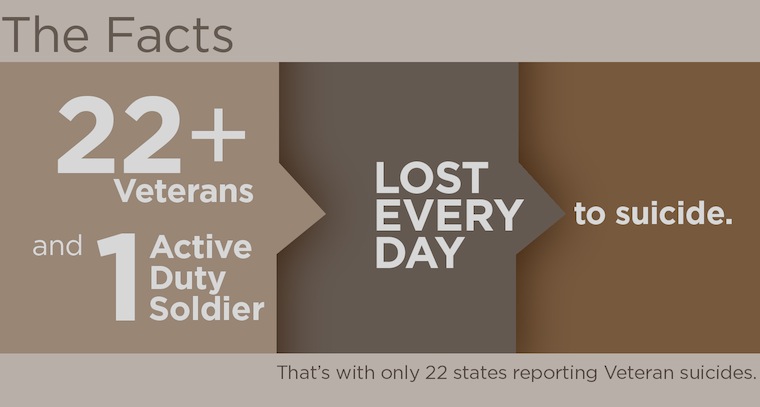
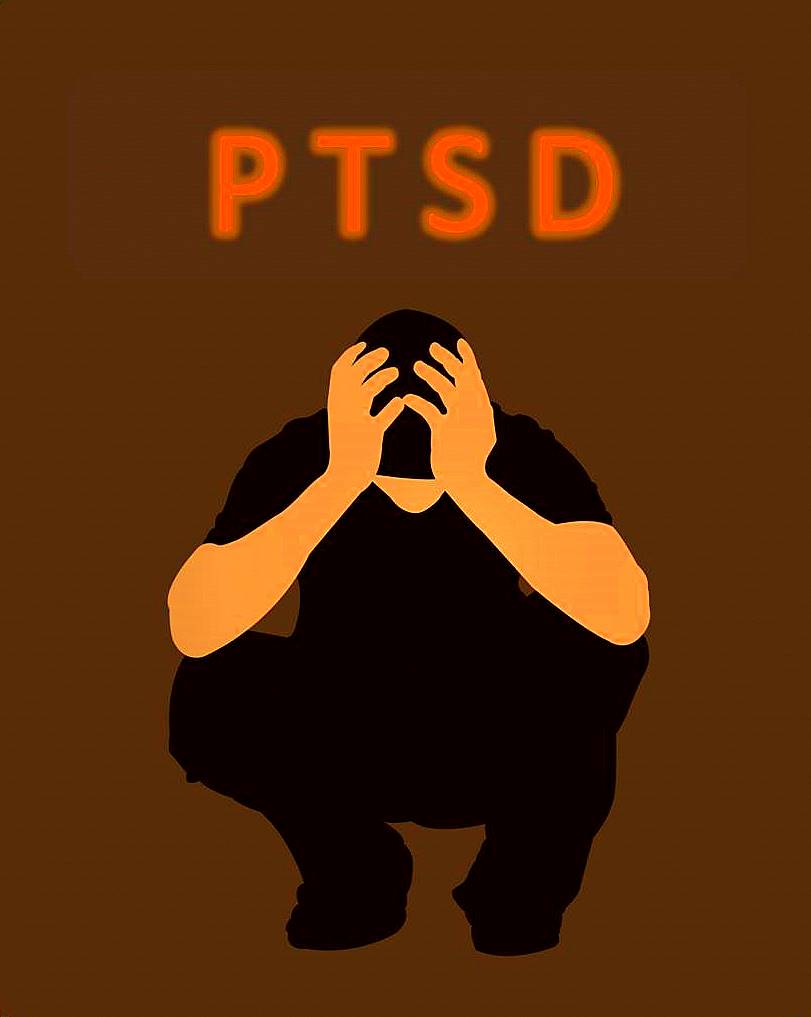
In 2009 and 2010 the suicide rates among US troops continued to climb. Twenty percent of suicides in the US are by veterans which many find it are to believe. Liz Wahl takes a deeper look into why soldiers are choosing to take their own lives. -RT (2011)
“The US Military’s suicide rate grew a startling 15 percent in 2012. The Pentagon, which has put great effort into lowering military suicide rates, has acknowledged that battle casualties are no longer the primary reason for soldiers’ deaths. Modern US warfare is Internet-centric and relies heavily on drones and robots, which has helped bring combat losses to historic lows; suicide now accounts for more deaths of US soldiers than battlefield conflict.”
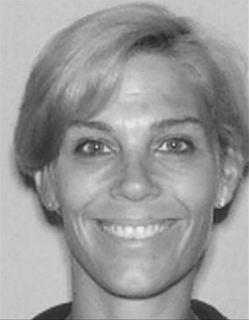
Air Force Major Melissa Birtzer, 42, went missing from the Fort Walton Beach area in Florida on November 17, 2012. A few days later on Nov 20th, Major Birtzer was found dead at the Eglin Air Force Base range. The Air Force reported that the case was under investigation and then updated the public with the announcement that there was no foul play suspected. The official cause of death is unknown but was not ruled a homicide. Co-workers shared she may have been ‘depressed’ prior to her disappearance. Major Birtzer served honorably for 18 years first as an enlisted Intelligence Specialist and then as a Nurse. She also completed two tours in Afghanistan. Melissa is survived by a spouse and two children.
The U.S. military is grappling with a disturbing trend—soldiers are killing themselves at an alarming rate. So far this year, an average of one soldier a day is committing suicide. The suicide rate is outpacing the number of soldiers killed in Afghanistan this year by some 50-percent. -Fox 31 Denver
DENVER – The U.S. military is grappling with a disturbing trend—soldiers are killing themselves at an alarming rate. So far this year, an average of one soldier a day is committing suicide.
The suicide rate is outpacing the number of soldiers killed in Afghanistan this year by some 50-percent. And there have been high-profile cases here in Colorado.
It’s gotten so bad, that the defense department has even set up a suicide prevention office. Soldiers we talk to say the reasons for their life-threatening depression are many.
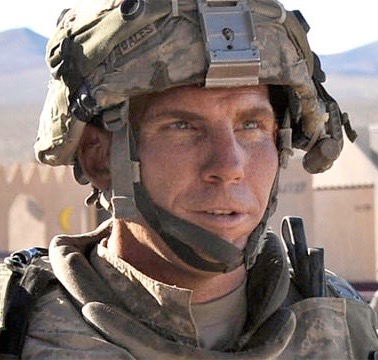
According to early reports by media, Afghanistan citizens reported that on March 11, 2012 multiple US military members were involved in what is now referred to as The Kandahar Massacre. This was considered the worst war crime ever committed by a US soldier since Vietnam. First the media claimed that 17 then 16 Afghanistan civilians were murdered in their homes in the middle of the night. Shortly after military authorities learned of the murders, SSG Robert Bales was swiftly flown back to the United States despite protest by Afghanistan citizens who wanted him tried in Afghanistan. They wanted him to hang. The US Army transferred SSG Bales to Fort Leavenworth two days after arriving back in the US. They eventually charged SSG Bales with the murder of 16 Afghanistan civilians and announced that they were seeking the death penalty.
Prior to the courts martial, Bales lawyer negotiated with the prosecution and asked that they take the death penalty off the table in exchange for Bales pleading guilty to the crimes. It was accepted and Bales was sentenced to life in prison without the possibility of parole. Since then the media has examined the court documents and deduced that the Army missed the warning signs. Bales was on his fourth deployment when this incident occurred. There were previous concerns about his mental health but no real follow up. Others noticed that his behavior was erratic. And Afghanistan officials were concerned that the Army was not monitoring their personnel and equipment. And after examining all the media accounts, one can’t help wonder if SSG Bales was a lone gunman or a scapegoat. In response to this case, the Army announced in 2015 they came up with a new plan to help soldiers with PTSD.
Court documents show triple murder suspect, Roy Murry, an Iraq war veteran, suffered from post traumatic stress disorder, and now local veterans coping with PTSD are speaking out, wanting to clear the air that, just because you have it, it does not make you a threat to the community. -KXLY 4
“A man opens fire in a national park, killing a ranger who was attempting to stop him after he blew through a vehicle checkpoint. A second man is suspected in the stabbing deaths of four homeless men in Southern California.
Both men, U.S. military veterans, served in Iraq — and both, according to authorities and those who knew them, returned home changed men after their combat service.”
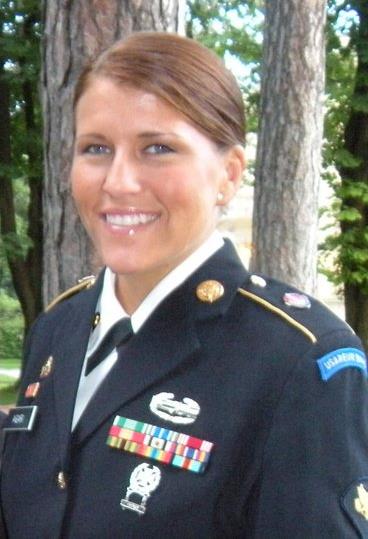
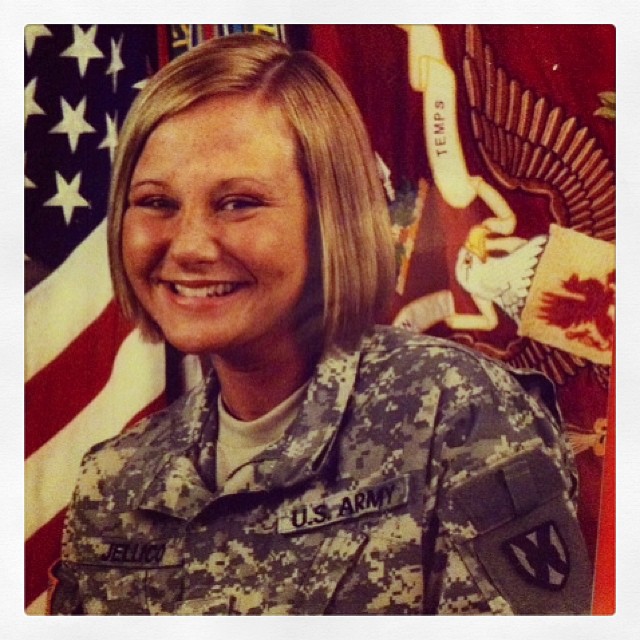
According to the U.S. Army Europe Public Affairs, unit officials conducted a health and welfare inspection of Sgt. Kimberly D. Agar’s barracks room after Agar missed a medical appointment. The corporal was found unresponsive and German emergency medical personnel were contacted. A German doctor pronounced Kimberly dead at the scene on October 3, 2011. An investigation into the cause of death determined Kimberly died by suicide. Kimberly’s mother has since dedicated her life to raising awareness of active-duty suicide rates in an effort to prevent suicide within the active-duty ranks.
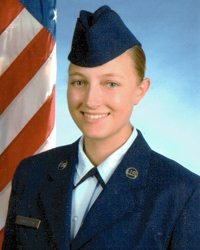
Airman First Class Kelsey Anderson was found dead of an apparent self-inflicted gunshot wound at Andersen Air Force Base in Guam on June 9, 2011. According to media reports, she was found in a locked stall in a second-floor women’s bathroom inside an aircraft maintenance hangar at the base. The military investigation indicated that a few months after Kelsey arrived at Guam, she was stripped of her service revolver over mental health concerns. Although Kelsey’s weapons privileges had been restored about a month prior to her death. The reports stated that Kelsey may have been unhappy after trying and failing to be transferred from Guam or released from military service. Kelsey’s parents had to file a lawsuit in U.S. District Court to get the Air Force to turn over its investigation records. They simply wanted answers for their daughter’s tragic and unexpected, untimely death yet the Air Force concealed the details. Chris and Adelia Sue Anderson received the mostly redacted investigation reports almost two years after their daughter’s death. The final court settlement with the Air Force in September 2013 was for the cost of the attorney they had to hire in their quest to get the information they were entitled to have. It’s unfortunate that this family had to wait two years for answers and even more unfortunate that they were forced to go to court during one of the most difficult times of their life.
What could have been done to prevent this? What kind of mental health services were offered to Kelsey? Why did Kelsey want to leave Guam and/or get out of the military? Why was she upset after finding out that she was not able to transfer or get out of the military? What were the extenuating circumstances that made Kelsey feel like she had no options other then suicide? Is this a suicide? After so many families have come forward with concerns that their loved one was murdered despite a ruling of suicide, do we know for sure that this was a suicide? It happened in Guam. There is absolutely no one to hold the Air Force accountable in that setting. There is no way to ensure that the Air Force investigated the scene as both a potential homicide or suicide. It’s as simple as what the Air Force says happens is what happened. Every government entity should have a mechanism by which they are held accountable. Where does a grieving parent turn to when they do not agree with the military investigator’s or medical examiner’s findings? Who holds the individual branches or Department of Defense accountable? The only body of people that can hold the military industrial complex accountable is the US Congress and even they struggle. Time and time again we hear accounts from service members and families that contacting their congressional Representative or Senator did not help. Some help, some don’t, and some never call you back. Every level of government should have accountability of some kind because this country was founded on the principles of checks and balances in our system.
“Enlisting U.S. Sen. Jim Risch‘s office for help still didn’t yield results.” -Chris & Adelia Sue Anderson
In an interview the Andersons’ lawyer emphasized that the prolonged wait and anxiety of suing the federal government in a last-ditch effort for information intensified the couple’s pain after the loss of their daughter. He empathized as a father of three and shared that he could not imagine losing a child thousands of miles away and not knowing what happened to her. No parent should have to wait nearly two years before the government decides to produce the information they deserve to have.
The grieving parents of a 19-year-old Idaho woman who died serving her country thousands of miles from home say the U.S. Air Force won’t give them information about the circumstances of her death. -NewsMedia24
A profile of Clay Hunt, a Marine who recently took his own life while waiting for upgraded benefits from the VA. (May 31, 2011)
“Clay had the world at his fingertips,” a friend recalls. Why did the Marine combat vet take his own life? -CBS News (March 3, 2013)
President Obama makes remarks before signing the Clay Hunt Suicide Prevention for American Veterans Act. -CBSN (February 12, 2015)
On February 12, 2015, President Obama signed the Clay Hunt Suicide Prevention for American Veterans Act into law at the White House. -The Obama White House (February 12, 2015)
President Obama signed the Clay Hunt Suicide Prevention for American Veterans Act. -C-Span (February 12, 2015)
The Clay Hunt Suicide Prevention for American Veterans Act is law tonight. -WGAL TV (February 12, 2015)
Clay Hunt, U.S. Marine Corps Veteran
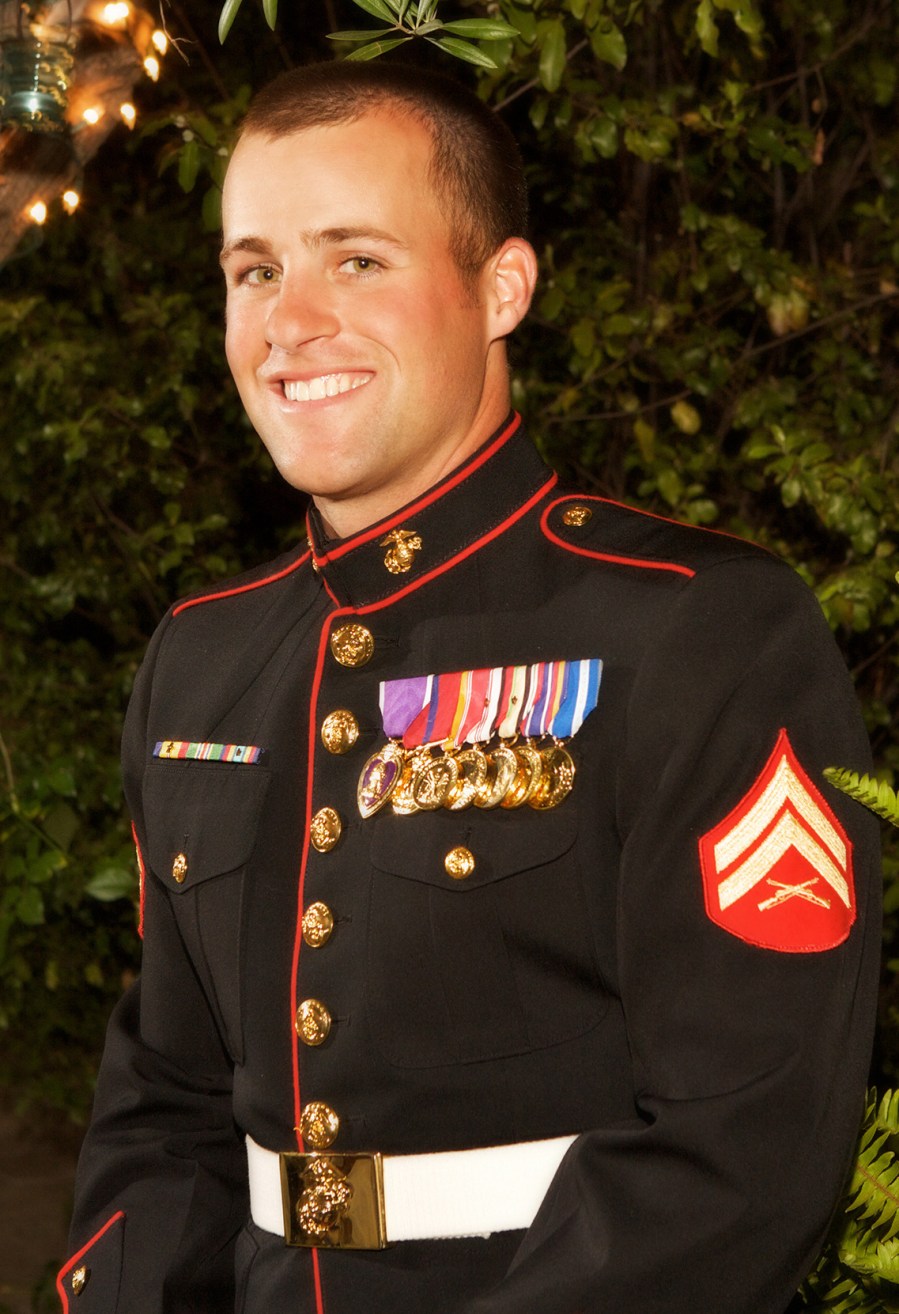
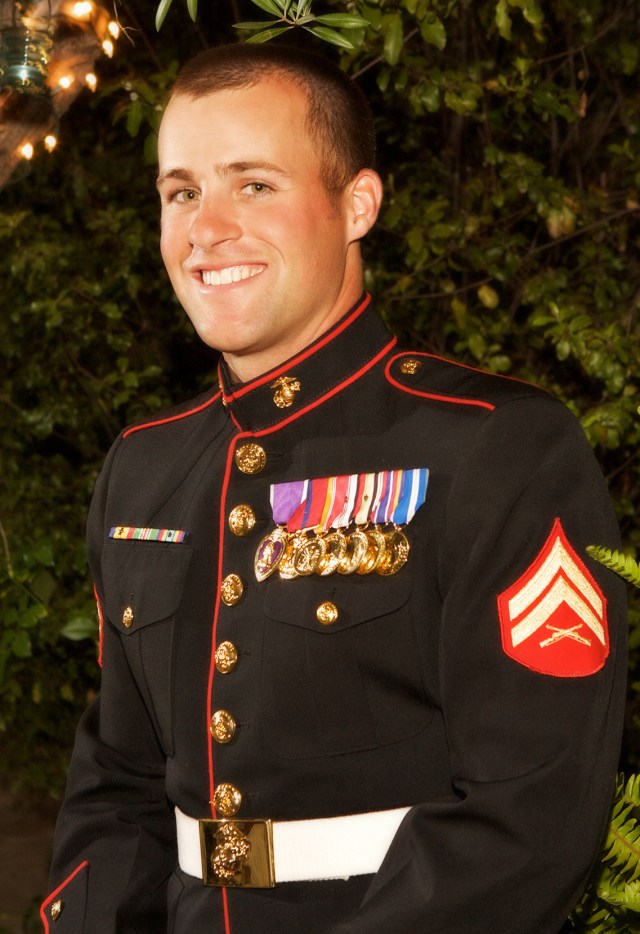
Marine and veteran advocate Clay Hunt died by suicide in his Sugar Land, Texas home on March 31, 2011. Clay Hunt was open about his journey with Post Traumatic Stress Disorder from combat and used his advocacy to help other service members and veterans struggling with the invisible battle. His unexpected death prompted his family to speak out and they shared that his perceived ill treatment by the Department of Veterans Affairs was part of the reason he took his own life. In their quest to get justice for their son, they were able to inspire the Clay Hunt Suicide Prevention Act for Veterans passed by Congress and signed by President Barack Obama on February 12, 2015. According to President Obama’s website, the bill would require annual third-party evaluations of VA’s mental health care and suicide prevention programs; create a centralized website with resources and information for veterans about the range of mental health services available from the VA; and require collaboration on suicide prevention efforts between VA and non-profit mental health organizations. On March 13, 2019, AMVETS published a press release revealing their outrage with the Department of Veterans Affairs Clay Hunt Report. They requested a new report from the Veterans Affairs immediately, one that utilizes an outcomes based approach.
Army Sgt. Amanda Sheldon, 24, took her own life while stationed with the 82nd Airborne Division at Fort Bragg in North Carolina. Sgt. Sheldon was found unresponsive at her off-post home in Fayetteville and was pronounced dead at the local hospital on October 7, 2010. Sgt. Sheldon’s mom, Renee Orcatt, went public with Amanda’s story in an effort to raise awareness, change policy, and save lives. Renee told the local media that Amanda was a victim of rape in the military at the hands of a superior officer. Amanda reported the crime to the Army and informed them she had been drugged and raped. As a result, the suspect was criminally convicted and discharged from the Army. Initially, Amanda sought help from military counselors and the family reported that she was getting better, yet still struggled with depression. Amanda wanted to deal with it and move on to serve her country as she had originally intended to do.
Unfortunately, according to Renee, this wasn’t the last time Amanda would have to confront her past while serving in the Army. When Amanda was up for promotion, she was asked why she was going to counseling. She would go on to get her promotion, but this line of questioning was something she never wanted to experience again. After making the realization that her past and seeking help was not confidential, counseling was out of the question in her future if she wanted to preserve her career. Sgt. Sheldon felt judged for seeking treatment for military sexual trauma. Her mom reported that Amanda recognized she needed counseling again and was planning on getting out of the military. When she died, she was serving out her final year of enlistment, had plans to go to college, and wanted to start a new life outside the military, with her new love. But her unit got tasked with a deployment to Afghanistan and she set about making plans to go to Afghanistan with her unit before she was discharged from the Army.
Amanda would learn that in order to accomplish this, she would need to re-enlist for two more years. Amanda didn’t want to stay in for two more years and made the devastating decision to stay back. She felt like no matter what decision she made, she was letting someone down. Renee observed that Amanda never came to grips with this decision and entered into depression. Amanda’s mom begged her to get counseling but to Amanda that was no longer an option. Sgt. Sheldon was attached to the 18th Fires Brigade, 82nd Airborne Division at Fort Bragg. She joined the Army in October 2005 and was assigned to Fort Bragg in February 2010. The family of Sgt. Amanda Sheldon hopes the circumstances surrounding her untimely death will spark military-wide change. In 2010, the Department of Defense was concerned about the increase in active duty suicides and since then the number of suicides in the military has increased.
Editor’s Note: CNN reported the suicide rates among active-duty Marines and the Navy are at a 10-year high on January 28, 2019. Task and Purpose reported Army suicides reached a five-year high on January 31, 2019. Military.com reported Active-Duty military suicides are at Record Highs in 2018.
“Just like any other soldier, whether she died in combat or some other way, she’s still a fallen soldier. She served her country and she served it well.” -Renee Orcatt (Amanda Sheldon’s mom)
Source: Soldier’s Mom speaks out on suicide, WOOD TV8 (October 14, 2010)
The family of Sgt. Amanda Sheldon hopes her death may spark change. The 2004 Belding graduate’s body will return to West Michigan on Thursday night, about one week after Sheldon took her own life while serving at a Fort Bragg, N.C., military base. -WOOD TV8 (October 14, 2010)
My original efforts were inspired by Carri Leigh Goodwin, LaVena Johnson, and the many other servicemembers who did not survive as a result of their service to this country. In honor of these men and women, we pledge to fight for justice on their behalf, amplify their voices, and support the families who deserve to know the truth.
In August 2007 at the age of eighteen (18), Carri Leigh Goodwin of Alliance, Ohio enlisted in the United States Marine Corps to make her Marine Corps veteran father proud. During her short time in the Marine Corps, Carri was sexually assaulted by two different men while serving, reported the crimes, and instead of being taking seriously was discharged with a mental health diagnosis and misconduct discharge. Like most rape survivors, Carri had acute Post Traumatic Stress (PTSD) from the brutal assaults she endured. Carri Leigh Goodwin died on February 28, 2009 from alcohol poisoning only a few days after being discharged from the U.S. Marine Corps. Gary Noling wants to honor her and all the families who have lost their child to the sexual assault and violence epidemic in the U.S. military. Gary wrote about his experience with the tragic loss of his daughter in the New York Times in August 2016: What the Military Owes Rape Survivors Like My Daughter.