Navy Petty Officer James Kuenn, 40, was found guilty on February 9, 2000 for the first-degree murder of his teen girlfriend Carol Hutto on December 13, 1976 in Largo, Florida. Carol Hutto’s half-brother found her dead in a pond in the neighborhood; she was weighed down with cement blocks. An autopsy revealed Carol was hit and strangled, lost consciousness, and then thrown in the water alive. Initially, police suspected Carol’s half-brother committed the crime but they did not have enough evidence to charge him so the case went unsolved for nearly two decades. Then in 1994, two Largo Police Department investigators reopened the cold case.
The detective’s determination to find the killer led them to a former Largo resident who by then was an eleven year Navy veteran stationed at U.S. Naval Submarine Base in Groton, Connecticut. In 1996, DNA testing was making it’s way into police departments across the country so the investigators submitted several unknown hairs to the FBI lab. But they needed a sample of Kuenn’s DNA to see if it was a match. Investigator’s obtained a search warrant to get the DNA via a blood sample and used the interrogation to elicit a confession while they waited for the results. Since Kuenn was active duty Navy, detectives brought in the Naval Criminal Investigative Services (NCIS) in Mayport, Florida to assist with the interrogation.
On July 15, 1998, the NCIS used the interrogation to push Kuenn into a confession. Investigators had no physical evidence linking Kuenn to the scene but that didn’t stop them from bluffing and hoping Kuenn would cave. Kuenn eventually admitted to investigators that the whole thing was an accident and he brought Carol to the lake to cover up the crime. Kuenn claimed that Carol tripped and fell and became unconscious so he took off her clothes to make it look like someone else did it. Despite Kuenn’s tears, detectives believed he was lying because Carol’s injuries did not come from an accidental trip and fall; they came from blunt force trauma and strangulation. Kuenn was charged with murder, convicted, and sentenced to life in prison without the possibility of parole for twenty-five years.
“Kuenn recalled the fateful night when he and Carol met at the house under construction. They kissed but the young woman was reluctant to have sex with him. As she struggled, her screams rang out through the foggy night air. Kuenn, under the influence of alcohol and marijuana, hit her with a 2 by 4 to quiet her. He then dumped her in the pond, where she drowned, according to the autopsy.” –Tampa Bay Times
16-year-old Carol Hutto is a dependable friend, daughter and sister. She’s a good student, loves wrestling and hanging out with friends. So when she misses her curfew one evening, her mother knows something awful has happened. -Swamp Murders
Disabled Army veteran Jack Irwin, 71, went missing from Upland, California on September 13, 1999. About nine months earlier, Jack sold his cabin at Mt. Baldy to Judy Gellert and Marcia Johnson who also befriended him. Apparently he let them make payments on the mortgage at the cabin because they were low on cash and he wanted to move to a warmer climate. At one point he had confided in some close family friends that the couple were no longer making payments and the whole situation was making him feel uncomfortable. Then Marcia reported Jack missing. She told police he went on a trip to Seattle, Washington to visit the Space Needle.
Jack’s other friends informed police they suspected Judy and Marcia because of their large purchases since moving to Mt. Baldy, including a corvette. At the time of Jack’s disappearance in 1999, he had about $230,000 in the bank. By January 2000, his bank account was down to $14. Police learned the couple sold Jack’s home in Upland and bought a luxury home in San Diego. And the cabin at Mt. Baldy burned to the ground in August 2000 resulting in an insurance pay out of $170,000. The pair had access to half a million dollars and spent almost all of it. Detectives also discovered Marcia sued a therapist for emotional distress and was awarded a $30,000 settlement.
Marcia became involved in a sexual relationship with another therapist after claiming she broke up with her girlfriend. Her partner Judy found out about the affair and convinced Marcia to file yet another lawsuit against a therapist. In the course of the depositions for the lawsuit the therapist claimed Marcia was delusional because she admitted to killing her brother and sister and an old man who lived on Mt. Baldy. As a result of this information, detectives put a wire tap on Marcia and Judy’s phones and started turning up the heat. As a result, Judy Gellert was arrested for accessory to murder because she admitted to knowing about what happened.
Marcia Johnson was arrested for murder after acknowledging she murdered Jack Irwin. Marcia told detectives Jack Irwin showed up to the Mt. Baldy cabin, mostly likely to confront Marcia about the money she owed him. Marcia admitted that she got angry and just wanted him to shut up. So she went into the house, grabbed a gun, and shot him in the back of his head. She then grabbed a chainsaw and cut off his head, hands, and feet. Afterwards, Marcia sealed the body parts in plastic bags and dumped them in a remote location on Mt. Baldy. On November 2, 2004, Marcia Johnson was found guilty on twenty-six counts including first degree murder, arson, grand theft, elder abuse, and insurance fraud.
On December 15, 2004, Marcia Johnson was sentenced to life without the possibility of parole. Judy Gellert accepted a plea bargain in exchange for her testimony against Marcia Johnson and was sentenced to 180 days in jail, five years probation, and ordered to pay $150,000 in restitution. The detectives considered this one of the most cold blooded crimes they had ever heard of. Marcia Johnson was a con. She was greedy and didn’t care about anyone but herself. She is the type who does not accept responsibility for their actions and everything is always someone else’s fault. Jack Irwin was an unsuspecting victim who didn’t realize that he had been targeted for his disability benefits, bank account, and assets from the get go.
Four years after a 71 year-old Korean War hero goes missing near Upland, California, a DA’s investigator picks up a trail of clues that seem to lead to the victim’s closest friends. -Come Back Jack, Murder Book (S2, E13)
Editor’s note: With a cable subscription, you can download the free ID Go app and watch all of the Investigation Discovery programming at your convenience. And for those who do not have cable, you can watch “unlocked” episodes on the ID Go app including the latest premieres. Download the ID Go app and binge away. For those who prefer commercial free programming during your binge session, Prime Video has an ID channel: ‘True Crime Files by Investigation Discovery” available for $2.99 a month. It’s a compilation of older seasons but totally worth the cost if you are a true crime addict.
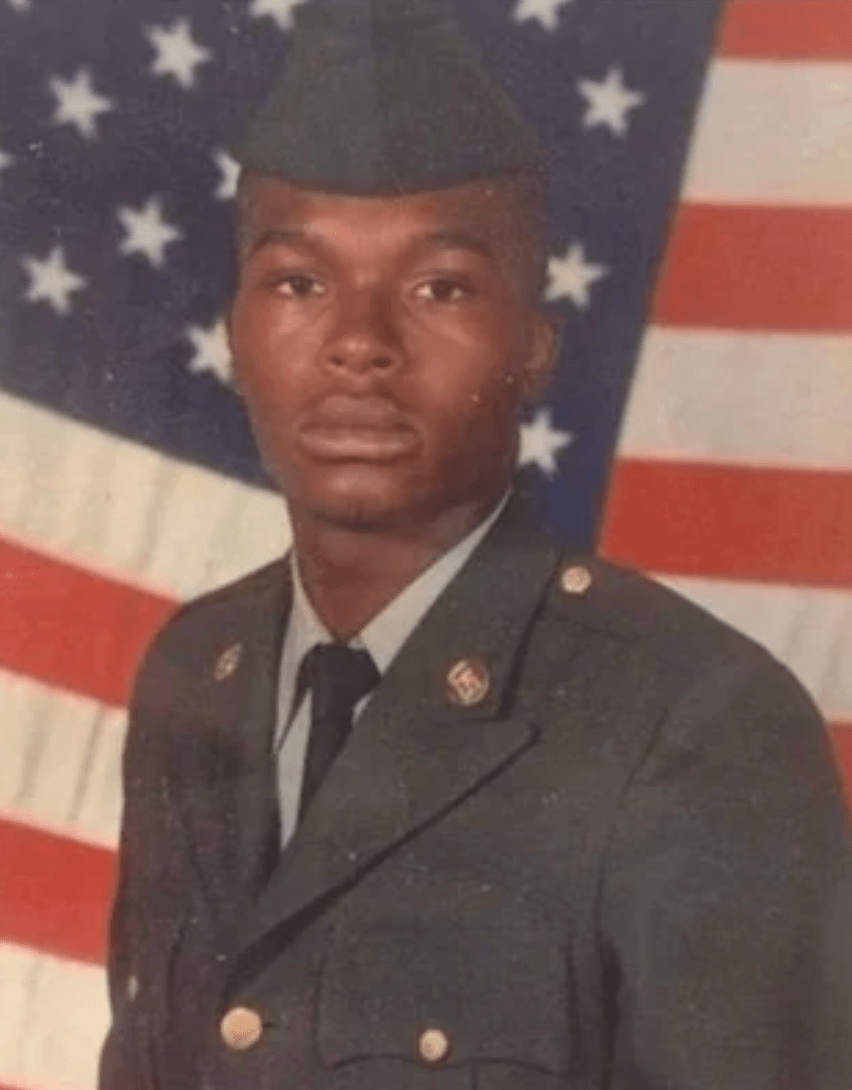
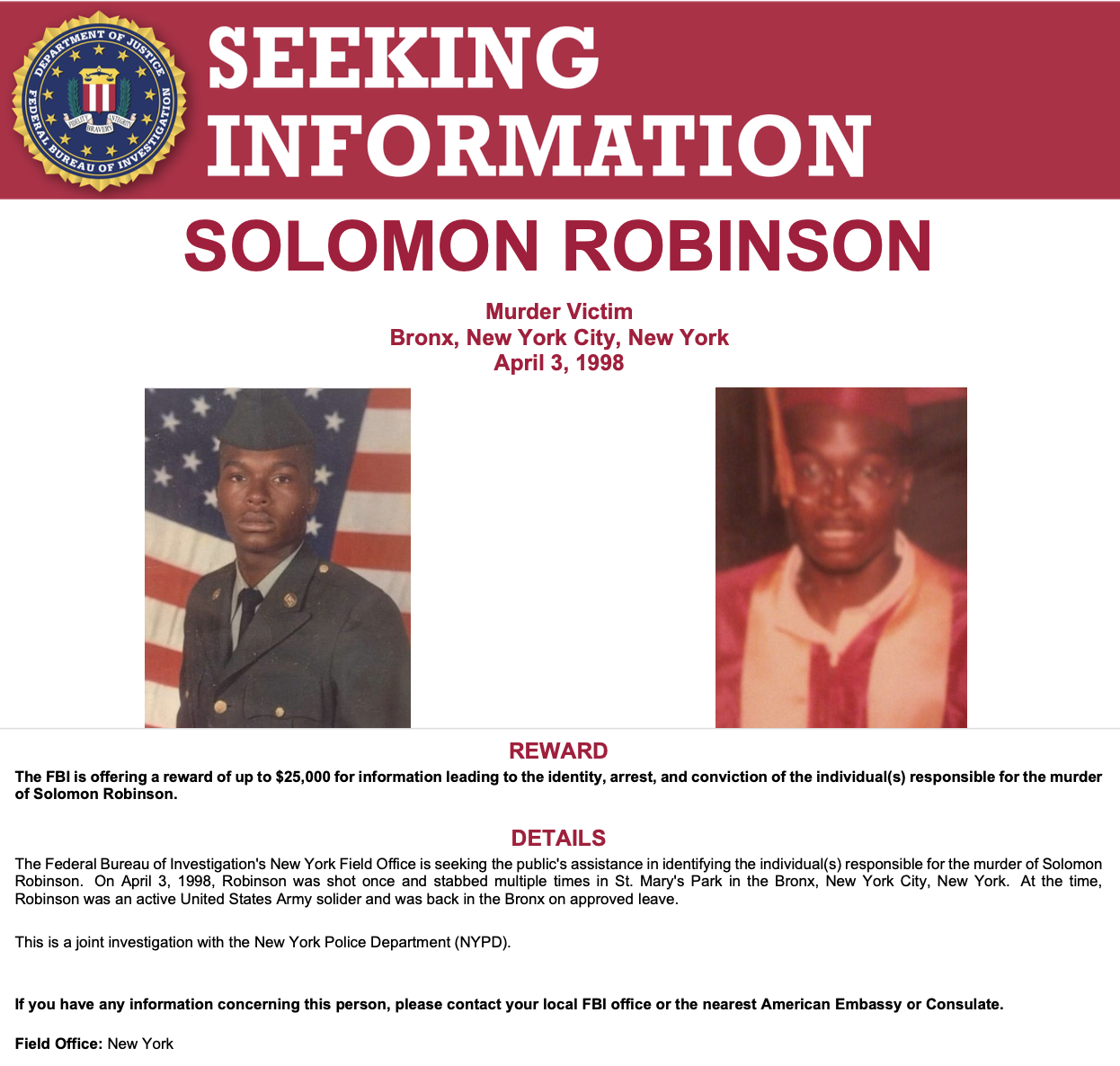
Murder Victim Bronx, New York City, New York April 3, 1998
Reward:
The FBI is offering a reward of up to $25,000 for information leading to the identity, arrest, and conviction of the individual(s) responsible for the murder of Solomon Robinson.
Details:
The Federal Bureau of Investigation’s New York Field Office is seeking the public’s assistance in identifying the individual(s) responsible for the murder of Solomon Robinson.
On April 3, 1998, Robinson was shot once and stabbed multiple times in St. Mary’s Park in the Bronx, New York City, New York. At the time, Robinson was an active United States Army soldier and was back in the Bronx on approved leave.
This is a joint investigation with the New York Police Department (NYPD).
New development brings hope for relatives of 1998 Bronx murder victim | A teenager from the Bronx who was committed to serving in the Army was attacked and killed in a local park 26 years ago. The murder of Solomon Robinson still hasn’t been solved. But now, detectives say they’ve learned new information that has led to a new development in the cold case. | NBC New York
Judy Buenoano was executed by the State of Florida on March 30, 1998.
Air Force Sergeant James Goodyear, 37, died on September 16, 1971 in Orlando, Florida. Sergeant Goodyear died just three months after completing a year long tour of duty in Vietnam. He left behind his wife Judy Buenoano Goodyear and her son Michael Buenoano. Judy received $28,000 in military life insurance benefits and military death benefits to help support the family. When her son Michael turned eighteen, he joined the US Army. On his way to his post in Georgia, he stopped in to visit his mother Judy, she fed him, and afterwards he became ill. The illness led to a crippling condition that left him paralyzed in his lower extremities and he was subsequently discharged from the Army as a Private. Michael was disabled and Judy was taking care of him. On May 13, 1980 Judy took Michael for a canoe ride. Judy reported to local authorities that her canoe capsized and her son Michael had drowned. She collected $125,000 in military life insurance benefits for her son’s death.
In June 1983, Judy was suspected in the car bombing of her fiancé John Gentry of Pensacola, Florida. She stood to gain $500,000 in life insurance money for this death. Judy Buenoano was first convicted of the attempted murder of John Gentry. As a result of her involvement in the attempted murder of John, investigators looked into the ‘accidental deaths’ of her husband James Goodyear and her son Michael. They exhumed John’s body a decade later and an autopsy revealed he had been poisoned with arsenic. Testimony revealed long-term arsenic poisoning had actually caused her son Michael’s disability. And when Judy drowned him, he was wearing an extra 15 pounds of weighted braces. Judy reportedly admitted to being involved in the 1978 death of her boyfriend Bobby Joe Morris as well. She received $50,000 in life insurance benefits for his death. Judy Buenoano was found guilty of first degree murder and sentenced to death. She was executed by the electric chair in Florida on March 30, 1998. Judy Buenoano was motivated by money, profit, and greed.
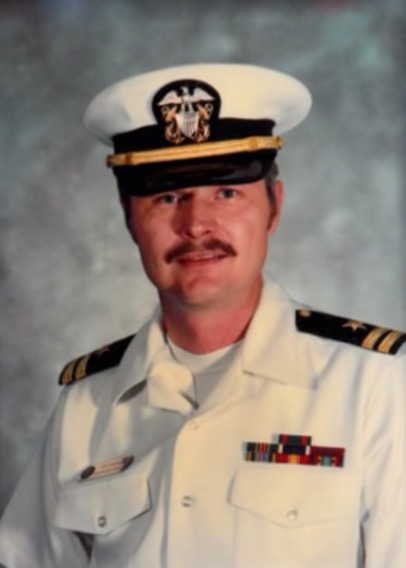
Army Captain Gordon Hess was found dead in a creek bed at Fort Knox, Kentucky on March 4, 1998 while there on temporary duty with the New York Army National Guard. Army investigators ruled the cause of death was ‘suicide’ but the family and an outside forensic pathologist dispute those findings given the autopsy revealed that Captain Hess had twenty-six stab wounds to the neck and chest area.
Doreen Hess shared with the LA Times: “Even as we attempted to bury his mutilated body, the Army stabbed him again with a suicide ruling.” The Army claims that it fully investigates all undetermined deaths as a homicide initially but after a thorough investigation of this case, including hundreds of interviews, they determined that Captain Hess died by suicide.
The family vehemently disagrees with the Army investigator’s findings based on the forensic evidence and a history of the Army ruling a soldier’s death a suicide when in fact it was most likely a homicide. An important fact to remember is that if an Army investigation determines the cause of death is suicide, they never have to investigate it again despite the impact on the families left behind.
“Absolutely no way did this man commit suicide. This gentleman was murdered.” -Charles DeAngelo, Esq.
“In time the historic aspects or victimology relating to Hess began to unveil itself to the investigators. That, coupled with the Psychological Autopsy, provided much needed data. Gordon Hess was dedicated and devoted to his family, friends and community. He loved his family and children and was a dedicated father and husband. Hess had been described by many as a ‘Perfectionist.’ He consistently strived to be the best and to do things better. “He was competitive and struggled to be number one while he begrudgingly tolerated second best.” According to the report his career path was erratic and frustrating. For a competitive and dedicated man he struggled early in his career after leaving the Army, working at several jobs.”
“Although he was personally successful, this all led to financial strain due to the failures of several employers. He always wanted to be on a winning team which finally seemed to have happened when he became a fireman. Hess appeared at this time to excel at all his endeavors and likely expected nothing less from himself. It was indicated that earlier in his life Hess loved the Army and initially did not want to get out but family issues and concerns made it happen. Therefore, his affiliation and participation with the National Guard was probably one of the most cherished endeavors in his life. He enjoyed status and achievement in a structured environment that was team oriented and was a respected leader.”
“It also reflected that becoming a company commander was viewed by him as a significant achievement. The Army and this status was a big part of his identity; one that he did not just turn off after a training cycle because he continued to be involved by being at the Armory frequently well beyond the expectations of his supervisors and his stated responsibilities. The Army was a part of him. Yet he was not depressive and did not appear to suffer from any psychiatric disorder or medical problem. While he had conquered much adversity in the past, Hess was a man who struggled with feelings of inferiority that ‘fueled his drive to prove to others and to himself that he was competent and worthy of his achievements.’ He strongly identified with his roles as a fireman and an Army Captain. However, he had difficulty tolerating self perceived failure in the audience of those he sought and received affirmation.”
Preview: Seeking freedom from his controlling wife, Dennis Hawley begins seeing drug-addicted prostitute Brandita Taliano and supporting her financially. In 1993, when Joan receives an inheritance and makes plans to divorce, Dennis, fearing financial ruin, enlists his lover to help murder his wife. -Second Best, Deadly Women (S8, E10)
Air Force retiree Dennis Dawley, 61, with the help of prostitute and mistress, Brandita Taliano, bludgeoned to death his wife Joan Dawley of 35 years for financial gain in Van Nuys, California. Joan wanted a divorce and Dennis and Brandita wanted her inheritance money. The 1991 case went cold for years until DNA technology under Joan’s fingernails yielded a match to Brandita Taliano. Both Dennis and Brandita were charged with murder, conspiracy & solicitation and faced the death penalty. On April 15, 1997, a California jury sentenced Dawley and Taliano to life in prison without the possibility of parole. The pair were spared the death penalty because they didn’t have any prior violent felony records and the jury heard the emotional pleas from Dawley’s daughters.
Investigation Discovery:
Being the other woman’ is a lonely life. Some turn rejection into rage. A call girl craved the high life, a teen mom eradicated her rival, and a lesbian love affair ripped a family apart. These Deadly Women refused to play Second Best’. -Second Best, Deadly Women (S8, E10)
In suburban California, an intruder brutally attacks and kills Joan Dawley. As the Dawley family grieves, it’s up to LAPD detectives to crack the case. Secret home movies uncover a shocking tale of deceit, and a monster lurking behind the scenes. -Stages of Grief, American Monster (S3, E1)
Editor’s note: With a cable subscription, you can download the free ID Go app and watch Investigation Discovery programming at your convenience. And for those who do not have cable, you can watch “unlocked” episodes on the ID Go app including the latest premieres. For those who prefer commercial free programming during your binge session, Prime Video has an ID channel: ‘True Crime Files by Investigation Discovery” available for $3.99 a month. It’s a compilation of older seasons but totally worth the cost if you are a true crime addict. Download the ID Go app or purchase ID True Crime Files & binge away.
Just off the coast of Spain, the U.S.S. Forrestal cruised through open waters on the Mediterranean Sea. This particular aircraft carrier had the ability to unleash total devastation on the enemy. But below deck, one Navy sailor was fighting off an enemy in his body. Lt. Lee Hartley was complaining of diarrhea and lethargy. He also experienced excessive weight loss and there was a grayness to his skin. Hartley was a career Navy sailor, having served nineteen years, and the Lt. in the ship’s disciplinary office. A month into his current deployment, Lee became violently ill with severe stomach pains and a strange tingling in his hands and feet. He was treated by the ship’s medics for gastrointestinal problems. A couple weeks went by and the symptoms reappeared, each time getting progressively worst. The onboard medics thought maybe he was exposed to something in a foreign port.
Lee Hartley also assumed it was food or water he consumed while visiting one of the foreign ports. Whatever the cause, Lee’s symptoms were spiraling out of control. He endured nearly two months of agony. When Lee wasn’t getting better, the Navy decided to ship him off to a hospital so he was medi-vaced to Jacksonville, Florida. Lee’s wife Pamela rushed to his bedside. Pam and Lee were newlyweds; they were married a year earlier. Doctors ran a battery of tests to help make a diagnosis. Some believed he might have liver disease or hepatitis or even some kind of poisoning but they couldn’t come up with a definitive diagnosis. Lee commented to multiple people that he thought he was dying because he was so gravely ill. On November 18, 1982, after nearly five months of terrible suffering, Lt. Lee Hartley succumbed to massive organ failure.
Before he set out on his final deployment, Lee Hartley was living the life he had always dreamed of. Lee loved the Navy and his family was very proud of him. He joined the Navy as an enlisted man and then became an officer. Lee was happy with Pam and was looking forward to the end of long deployments so he could spend more time with her. They didn’t have children of their own but Lee had a daughter from a previous marriage. Pam was now a devastated widow and waited for the autopsy to determine the cause of her husband’s death. When the results came back, they revealed Lee died from arsenic poisoning, nearly 1000 times the normal level. His liver, kidneys and blood was full of arsenic and Lee had enough arsenic in him to kill several people. Arsenic is a odorless, colorless, and tasteless chemical. This information led to a murder investigation.
An investigation was immediately launched to find out how that much arsenic entered Lee’s body. Investigators could not imagine how Lee came into contact with that much arsenic aboard a ship. Special Agents Jerry Whitaker and Walter O’Brien of the Naval Criminal Investigation Services (NCIS) were assigned to the case. The two actually knew Lee Hartley and served side by side on the U.S.S. Forrestal with him. They start with the simplest possibility: was this an accidental poisoning? They checked to see if there were large amounts of arsenic on the ship but that theory was instantly put to rest. The supply officer on the ship maintained records of everything that was onboard the ship and according to him, there was no substance on board the ship that contained arsenic. This meant there was no way Lee came into contact with arsenic onboard the ship, at least not by accident. Agents wondered if someone deliberately dosed Lt. Lee Hartley.
The NCIS agents broke the news to Lee’s family. When Pam found out about the arsenic poisoning, she reacted with shock. Pam’s mother-in-law was the one to break the news to Pam that someone may have killed her husband. The agents didn’t know who killed Lee but they knew how so they launched a search for suspects. They looked at who had something to gain if Lee died and one main suspect emerged, his wife Pamela Hartley. Pam had the motive because she stood to inherit a lifetime of military benefits but how did she poison her husband while he was on a ship thousands of miles away? When agents checked her travel itinerary, they discovered Pam traveled to port in Spain to spend time with Lee. Quite often, when a ship visits a foreign port, it’s common for a group of wives to visit that port. One of those wives was Pam Hartley.
Pam traveled to Spain and met with Lee and another military couple. On one of those days, Pam offered to cook breakfast for everyone and she even made drinks too. Soon after that visit, Lee got violently ill, along with his friend who had eaten breakfast with him. At the time, they both thought they got sick from drinking Spanish water, the friend recovered but Lee kept getting worse. Over the next two weeks, Lee had severe cramps, diarrhea, nausea, and vomiting so he reported to the ship’s medical department. Agents wondered if Pam laced her husband’s food and drink with arsenic during that Spanish shore leave. It was a chilling scenario but one that became more plausible as agents found out about Pam’s unique job experience. They learned that Pam worked at the Department of Energy facility in Akon, South Carolina for one year.
Pam used to be an environmental technician and one of her job duties was to analyze water samples to determine heavy metal levels. At her job site, she came in contact with a range of toxic chemicals, including arsenic. Was Pam the victim of circumstantial evidence or heartless black widow? Agents wanted to perform a polygraph because they were convinced she wouldn’t pass. She was their prime suspect because she had the opportunity to spike her husband’s food and drinks when she went to Spain at his port of call. On the surface, there was nothing suspicious about Pam so agents conducted interviews of Hartley’s neighbors. The pair appeared to have a normal family and were described as nice people. But gossip soon found its way from officer’s wives club and this information painted another picture.
With their husbands overseas, the Navy wives would get together at parties and drink. And after a few drinks, they weren’t afraid to say anything. There was talk among the wives that life was so much better when the men were at sea. Some even suggested they get rid of them. But it was a party atmosphere so nobody really took it seriously, except maybe Pam. In one interview, Pam made a comment to a friend about hiring a hitman to kill Lee but was taken as a joke by the witness because they had been drinking. As special agents dug deeper, they found out Pam and Lee were having some marital problems. Pam was a free spirit who liked to go to the officer’s club and dance with other men. Apparently, this made Lee extremely jealous. And Lee may have had reason to be jealous because Pam admitted to friends that while Lee was off at sea, she found it to be difficult to be faithful.
For NCIS agents, it all added up to a classic scenario: a bored wife feels trapped in her marriage so she poisons her husband… Under questioning, Pam insisted that she loved Lee and swore she has nothing to do with his death. And she agreed to take a polygraph test to prove her innocence. Agents were convinced she wouldn’t pass the polygraph but the results indicated that she wasn’t being deceitful. The agents concluded Pam didn’t have anything to do with Lee’s death. In addition, lab results blew a hole in their theory because the toxicology analysis on Lee’s hair pinpointed the dates he was exposed to the arsenic. His first dose was before Pam’s trip to Spain. Hair grows about a centimeter a month and testing of the hair provided a timeline of when the poison entered his body. The hair samples indicated that Lee was poisoned 5-6 months prior to his death.
The arsenic timeline showed Lee Hartley was first poisoned while Pam was thousands of miles away in Jacksonville, she had a persuasive chemical alibi. Armed with the new evidence that Lee was poisoned while on board the U.S.S. Forrestal, NCIS agents confronted a massive crime scene. The U.S.S. Forrestal was a floating city with 5000 potential suspects. And like any large city, the carrier had personnel dedicated to maintaining law and order. As the ship’s discipline officer, when sailors ran afoul with Navy regulations, it was up to Lee to administer punishment. This likely didn’t make him a lot of friends on board. Because of his work, Lee was exposed to people who might have had a grudge or an axe to grind against the Navy or the legal office or a person. As agents conducted more interviews, they learned of a disturbing rumor involving Lee.
During the investigation, there was an indication that Lee had received an anonymous death threat. The rumor about the death threat was backed up by Lee’s parents. They told agents what Lee shared with them while he was home in Mayport. Lee told them he was walking about the ship when someone angrily confronted him. Now Agents wanted to eliminate or find somebody who may help them understand what happened. A search of Lee’s cabin revealed a clue. They found a collection of letters written by Lee himself. In one of those letters, Lee described a near death confrontation with another sailor aboard the ship. He described how he came across someone who had a sword. But, if there was an altercation, Lee never reported to his superiors. Why would Lee choose to keep it secret but share it with his parents? Was Lee leaving a trail of evidence?
Pamela and Verle Lee Hartley, U.S. Navy (photo: CBS)
In an effort to track down subjects, agents used Lee’s toxicity reports which showed a continuous pattern of poisoning over a 5-6 month period of time. Agents shared when investigating poisoning deaths, you need to establish an opportunity of who during that time would have had access to both Lee and poison. There were spikes in Lee’s arsenic levels during his deployment at sea, at the port of call in Spain, and even when he was at the hospital in Jacksonville. One person who was at Lee’s side throughout his months of agony was his cabin mate Lt. Samuel Yates. They seemed to get along well but tension builds up month after month when living in close proximity together trapped on a ship. Lee was also in direct competition with his roommate for advancement.
Both Lee Hartley and Lt. Yates wanted desperately to be promoted to Lt. Commander. Was there a feud simmering between them, a rivalry that turned deadly? As agents developed information on the roommate, rumors began to circulate that had already been rampant on the ship. After Lee’s death, Lt. Yates allegedly waisted no time going after his roommate’s young wife who was grieving and vulnerable. At Lee’s funeral, he paid his respects by reportedly seducing the pretty widow. Agents knew they needed to take a closer look at Yates. And when they did, they found a chilling piece of evidence. Lee’s cabin mate was asked to give them a blood sample to see if it tested positive for arsenic or other heavy metals. As a result, they learned Yates had some elevated amounts of arsenic in his blood stream, the same poison that killed Lee.
Lt. Yates’ low level arsenic exposure was consistent with someone who had handled the substance. But the test results were not remarkable because Yates would have been exposed to all the same environmental factors as Lee. If someone was trying to harm Lee, Yates could have easily been exposed to the same food and drinks in foreign ports. Although a lot of circumstantial evidence pointed to the roommate, a thorough search of Yates’ belongings showed no traces of arsenic. They could only conclude that Yates was a collateral victim of whoever was poisoning Lee. As suspects were eliminated one by one, agents had to consider the possibility that the suspect they were looking for may be Lee Hartley himself. One of the NCIS agents said when they don’t have anymore theories, they have to think outside the box. The agents considered that Lee may have ingested the arsenic intentionally.
It appeared Lee Hartley had everything going for him and he loved his job on the U.S.S. Forrestal. He also had a beautiful young wife waiting for him in Florida. But NCIS agents wondered if the image of that perfect life was just a sham. The two agents knew Lee while serving with him on the carrier. When they reflected back on their time with him, they did observe some unusual behavior. After lunch, Lee regularly met up with a small group and he always appeared disgruntled. They learned Lee was drinking heavily before his deployment and thought maybe he was going through some depression. Was Lee suicidal? Did he deliberately consume the arsenic to poison himself? The pair thought the odds were high that Lee ingested the poison and brought in in a psychologist to analyze Lee’s life and letters; they found no suicidal ideation in any of his writings.
The medical evidence in this case didn’t fit the pattern of someone trying to kill themselves. Typically in a suicide case, it would be a major ingestion of poison and then it would drop off. Lee was poisoned consistently over several months. He was in horrible condition to the point that he had an ulcerated esophagus, open sores in his mouth, couldn’t talk, and could’t eat. Would Lee have voluntarily chosen to kill himself in such a slow, agonizing way? They ruled out suicide and wondered if the poisoning was an attempt to help get him off the ship. Lee made some statements to family members that he really didn’t want to go on this last deployment and his heart wasn’t in it anymore. He was upset about having more sea duty. He wanted a stateside desk job close to his wife. Did he use the arsenic to get himself off the ship? Would they send him home?
Agents considered that maybe Lee wanted to take just enough of the poison to get himself sent back home. But arsenic doesn’t leave the body and instead builds up over time. The agents theorized Lee may not have understood its cumulative effect over time. Maybe, Lee didn’t realize it made him sicker and sicker with every dosage. Did his scheme backfire by taking one dose too many? This theory didn’t hold water though because there were no tell tale signs in Lee’s belongings that led anyone to believe he had handled arsenic. And toxicology evidence showed that the poisoning continued even after he got back to Jacksonville. NCIS had no choice but to put the latest theory to rest. At this point, they ran out of theories, suspects, and direction and chose to close the case.
Thirteen years later in 1995, NCIS formed a cold case homicide unit. Lee Hartley’s poisoning case was one of the first cases brought to their attention. Lee’s death was reviewed at headquarters and a new team of special agents were assigned. They quickly learned that all of the physical evidence in the Lee Hartley case had been destroyed. The team had to work the case the old fashioned way so they started re-interviewing people involved in the initial investigation. Agents said its helpful to go back and talk to people because their stories change and some are more willing to tell the truth after 10-15 years has passed. Agents spoke with family, friends, and neighbors and the same name that kept coming back up was the original suspect in the case, Pam Hartley. But their big break came when Lee Hartley’s brother-in-law helped them uncover the truth.
Pam’s brother knew the dynamics of Pam and Lee’s relationship so agents wanted to speak with him. The fact the case had been reopened after all these years, caught Pam’s brother by surprise and he dropped a bombshell no one expected. He shared that Pam tried to hire him to kill Lee and offered him some of the insurance money if he did it. He kept this secret for years and when agents interviewed him this time, he told them the truth. NCIS was now convinced Pam was the killer but building a case against her wasn’t going to be easy. After all, she passed a polygraph test that indicated no deception. When NCIS had the results re-examined by current staff, they found the findings of ‘no deception’ were probably erroneously reached. The results should have been inconclusive. It was more evidence of Pam’s involvement in Lee’s death.
But after so many years, they had no physical proof, no eyewitnesses, and no way to tie Pam to the actual crime. She also had what seemed to be an ironclad alibi. She was on the other side of the world when her husband was poisoned. If she was the killer, how did she do it? Could they get her to confess? They only had one shot and needed to get Pam alone, because thirteen years ago her controlling mother was beside her running interference. The cold case team placed Pam under surveillance and tracked her every move. They learned the years since Lee’s death had not been good to her. Having squandered her inheritance, she lived with her mother and struggled with substance abuse. She treated her addiction at a hospital on a military base. On one of those occasions, she arrived alone for the appointment. The NCIS used the structured environment of the Army base to conduct the interview.
This approach allowed NCIS to conduct an interview without Pam’s mother being there. Pam nervously agreed to answer their questions. They told her there was no doubt in their mind that she did it and most of the problems in her life were most likely attributed to what she had done to her husband. They played on her guilt and told her to put it behind her and tell the truth. Pam Hartley broke down and told them what she did. She told them everything and filled in the missing puzzle pieces. She didn’t want to be married anymore. She said she was miserable and hated how possessive Lee was. But, she really liked the status of being an officer’s wife and didn’t want to lose that lifestyle. She wanted him gone but wanted to maintain her status. It was almost the perfect murder. The last time she saw Lee, she bid him farewell and then ran to a feed store to purchase rat poison. Pam sent Lee poisoned treats while he was deployed at sea.
Like a model wife, Pam created treats for Lee because she knew he had a sweet tooth. Agents learned that both Lee and his cabin mate sampled some whiskey cake that she sent Lee. Yates said he ate one piece, it was too strong, and didn’t like it. Pam wanted Lee to die at sea but the call never came so she upped the anti and traveled to Spain to poison him in person at breakfast. But it still didn’t do the job. When Lee was airlifted to the hospital in Jacksonville, Pam rushed to his side. This time, she poisoned his apple juice. Pam gave Lee the lethal dose the night before he died while pretending to care about him. After Lee died, Pam took the rest of the poison and dumped it in a pond behind their house. Her persistence finally paid off; she collected on a lifetime of military benefits minus the annoying husband. How could she have hatched such a diabolical plot? When asked why poison, she said “ladies have been using poison for years.”
Pam’s confession sealed her fate. On October 16, 1996, Pamela Hartley pleaded guilty to second degree murder in a Florida state court. Agents reminded us that Pam had a psychotic personality. She didn’t think about the cause and effect on other people; she only thought of herself and the effect on her. After nineteen years of service, Lee Hartley didn’t die in battle, his mortal enemy was the one person he loved most. Not long before Lee’s death, Lee and Pam’s brother had a conversation where Lee told him if anything happened to him, his sister would be well taken care of. He died thinking he still needed to take care of Pam. Pamela received $35,000 in life insurance money, $10,000 a year in veterans benefits, and free military medical benefits for life. Lee was a good man and the pain from the loss endures. Pamela Hartley was sentenced to 40 years in a state prison and served 16 years when she was paroled.
When a Navy lieutenant onboard a US aircraft carrier falls victim to a rare case of arsenic poisoning, NCIS investigators must scour both land and sea for his killer. With no crime scene and little physical evidence, agents must separate rumor from truth and use their best interrogative know-how to solve a deadly crime. Follow real NCIS agents as they hunt down suspects on one of the world’s largest ships and after a long 13 years finally uncover the bizarre truth behind the poisoning death of a Lt. Lee Hartley. -Dark Minds in Crime
Investigation Discovery:
John Prudhont as NCIS Special Agent Tom Assimos and John Bridell as NCIS Special Agent Dave Early and Mocean Melvin as the Narrator in an edited clip from Season 4, Episode 13 of the Discovery ID TV show “Unusual Suspects.”
ID Go:In 1982, a Naval Officer dies from a mysterious illness. When toxicology reports reveal he was poisoned, Naval Investigators sift through a ship of thousands, and countless theories before the truth behind the victim’s painful death is revealed. -Maritime Murder, Unusual Suspects (S4,E13)
[CANNOT LOCATE UNUSUAL SUSPECTS SEASON 4 ON-LINE ANYWHERE]
Editor’s note: With a cable subscription, you can download the free ID Go app and watch all of the Investigation Discovery programming at your convenience. And for those who do not have cable, you can watch “unlocked” episodes on the ID Go app including the latest premieres. Download the ID Go app and binge away. For those who prefer commercial free programming during your binge session, Prime Video has an ID channel: ‘True Crime Files by Investigation Discovery” available for $2.99 a month. It’s a compilation of older seasons but totally worth the cost if you are a true crime addict.
July 14, 1996: Cassandra Corum, 21, Pontiac, Illinois
Marine veteran Andrew Urdiales is accused of murdering eight women from 1986 to 1996, five in California and three in Illinois, and raping and abducting 19 year old Jennifer Asbenson who escaped and survived. Urdiales was indicted for three murders in Illinois and was sentenced to death but the death sentence was commuted after Governor Pat Quinn of Illinois abolished capital punishment in 2011. Instead he received three life sentences for the murders of Laura Uylaki, Cassandra Corum, and Lynn Huber. A gun confiscated in a separate incident linked the three murders in Illinois together and during an interrogation, Urdiales admitted in detail to five cold case murders in California too.
After years of legal wrangling, Urdiales was eventually extradited to California and indicted in 2009 on five counts of first degree murder. He was accused of killing Robbin Brandley, Julie McGhee, Mary Ann Wells, Tammie Erwin, and Denise Maney while stationed at Camp Pendleton Marine Corps base. On May 23, 2018, Andrew Urdiales was convicted of five murders by a jury that deliberated for about a day before recommending in June 2018 that he be sentenced to death for each of the five murders. On November 2, 2018, corrections officials said they found Urdiales unresponsive during a security check at San Quentin State Prison; former Marine and serial killer Andrew Urdiales died by suicide.
In the News:
The murders occurred when Andrew Urdiales was stationed at various Marine Corps facilities in Southern California. -CBS Los Angeles (October 5, 2018)
April 14, 1996: Laura Uylaki, 25, Hammond, Indiana
Marine veteran Andrew Urdiales is accused of murdering eight women from 1986 to 1996, five in California and three in Illinois, and raping and abducting 19 year old Jennifer Asbenson who escaped and survived. Urdiales was indicted for three murders in Illinois and was sentenced to death but the death sentence was commuted after Governor Pat Quinn of Illinois abolished capital punishment in 2011. Instead he received three life sentences for the murders of Laura Uylaki, Cassandra Corum, and Lynn Huber. A gun confiscated in a separate incident linked the three murders in Illinois together and during an interrogation, Urdiales admitted in detail to five cold case murders in California too.
After years of legal wrangling, Urdiales was eventually extradited to California and indicted in 2009 on five counts of first degree murder. He was accused of killing Robbin Brandley, Julie McGhee, Mary Ann Wells, Tammie Erwin, and Denise Maney while stationed at Camp Pendleton Marine Corps base. On May 23, 2018, Andrew Urdiales was convicted of five murders by a jury that deliberated for about a day before recommending in June 2018 that he be sentenced to death for each of the five murders. On November 2, 2018, corrections officials said they found Urdiales unresponsive during a security check at San Quentin State Prison; former Marine and serial killer Andrew Urdiales died by suicide.
In the News:
The murders occurred when Andrew Urdiales was stationed at various Marine Corps facilities in Southern California. -CBS Los Angeles (October 5, 2018)
March 11, 1995: Denise Maney, 32, Palm Springs, California
Marine veteran Andrew Urdiales is accused of murdering eight women from 1986 to 1996, five in California and three in Illinois, and raping and abducting 19 year old Jennifer Asbenson who escaped and survived. Urdiales was indicted for three murders in Illinois and was sentenced to death but the death sentence was commuted after Governor Pat Quinn of Illinois abolished capital punishment in 2011. Instead he received three life sentences for the murders of Laura Uylaki, Cassandra Corum, and Lynn Huber. A gun confiscated in a separate incident linked the three murders in Illinois together and during an interrogation, Urdiales admitted in detail to five cold case murders in California too.
After years of legal wrangling, Urdiales was eventually extradited to California and indicted in 2009 on five counts of first degree murder. He was accused of killing Robbin Brandley, Julie McGhee, Mary Ann Wells, Tammie Erwin, and Denise Maney while stationed at Camp Pendleton Marine Corps base. On May 23, 2018, Andrew Urdiales was convicted of five murders by a jury that deliberated for about a day before recommending in June 2018 that he be sentenced to death for each of the five murders. On November 2, 2018, corrections officials said they found Urdiales unresponsive during a security check at San Quentin State Prison; former Marine and serial killer Andrew Urdiales died by suicide.
In the News:
The murders occurred when Andrew Urdiales was stationed at various Marine Corps facilities in Southern California. -CBS Los Angeles (October 5, 2018)














 MILITARY JUSTICE FOR ALL