On January 2, 2003, Jessica Brakey, a female cadet at the US Air Force Academy, contacted media and congressional representatives asking for help with sexual assault at the Academy. As a result of her coming forward, Senator Wayne Allard’s office was contacted by 38 former cadets, 23 current cadets, and one civilian, all of whom said they had been raped by Air Force Academy men. During the investigation into the scandal, the air force admitted that 16 graduates who were accused of sexual assaults were currently serving as officers in the military. Like every scandal before and since, the USAFA leaders at the time took the fall for the ‘scandal’ and the USAF promised they made sweeping changes in regards to how they will handle allegations of sexual abuse. They also claimed ‘the problem was isolated’ at the Academy in Colorado.
“It’s a terrible feeling when someone does this to you and gets away with it, and then you report it and the system punishes you. It’s almost worse than the actual act, that the system failed you.” ~Sharon Fullilove
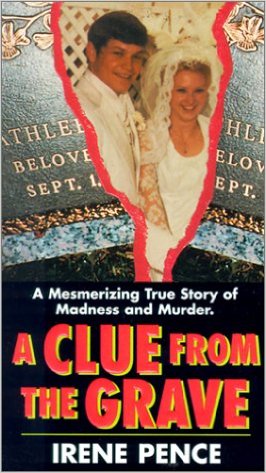
‘A Clue from the Grave’ by Irene Pence is a fascinating look into the investigation of US Air Force wife Kathleen Lipscomb’s murder in San Antonio, Texas in 1986. Her husband MSgt William Lipscomb, who was stationed at Lackland Air Force Base as a Military Training Instructor, would eventually be accused of her murder and stand trial at Langley Air Force Base in Virginia in 1989. This book shows the difficulties the detectives face when it comes to investigating crimes perpetrated by a transient military member.
If not for the persistence of Kathleen’s mom Nadine and her sister Darlene, Bill Lipscomb almost got away with murder. Kathleen’s family did not want to believe that Kathleen’s estranged husband committed this crime but nonetheless wanted to find out who killed Kathleen. Kathleen was found battered and nude on the side of the road outside the city limits of San Antonio. It appeared that she had been raped and murdered elsewhere and her body was dumped at this location. As a result, the Bexar County Sheriff’s Department had jurisdiction of the investigation of Kathleen’s murder. The book revealed that Air Force leadership was not aware that Bill Lipscomb was even considered a suspect by the local Sheriff’s Department. In the meantime, Bill Lipscomb requested a humanitarian transfer to Langley Air Force Base, Virginia so that he would be near his parents who would help him care for Kathleen and Bill’s two children.
After the investigation stalled at the Sheriff’s Department and it looked like no one would be held accountable for Kathleen’s death, Nadine and Darlene decided to hire two private investigators to find out who killed Kathleen. The private investigators carefully went through the list of suspects to rule people out but they could not rule out Bill Lipscomb after what they discovered. These investigators learned that Bill had plenty of motive to kill Kathleen including the fact that Kathleen threatened to turn Bill and his Air Force colleagues in to Air Force leadership for their role in a WAPS test promotion cheating scandal. Bill also wanted custody of the two children so Kathleen used her knowledge of this cheating scandal as leverage in the divorce proceedings so she could keep custody of the two children. In addition, Bill Lipscomb had over $300,000 worth of life insurance on Kathleen, one policy was purchased after Kathleen decided to divorce him. Coincidentally, Kathleen was murdered just days before the final divorce proceedings. Nadine and Darlene began suspecting Bill more and more as time went on because of statements made by Bill and Kathleen’s children and the controlling behavior he exhibited after Kathleen died.
It would be the private investigators that Kathleen’s family hired who convinced the Air Force Office of Special Investigations (AFOSI) to get involved. Bill was no longer in the San Antonio area so no one but the AFOSI had jurisdiction over him. The crime was committed in Texas yet Bill had been conveniently transferred to Virginia. Thanks to the thorough work by the two private investigators, the AFOSI had probable cause to investigate Bill Lipscomb. The AFOSI used both their knowledge of the WAPS test cheating scandal and what they learned from the private investigators to begin their own investigations. They would learn from others involved in the cheating scandal that Bill did in fact cheat on his promotion testing which is how he was able to achieve the rank of MSgt so soon. They would also learn from Kathleen’s date book that she was fully aware of the cheating scandal and knew that Bill was having an affair with another Air Force member he worked with. It would be this date book that gave the investigators involved in the case a reason to suspect Bill Lipscomb of her murder. In the end this information would become ‘A Clue from the Grave’ that helped Kathleen solve her own murder.
Julie Snodgrass and MSgt Joseph Snodgrass, U.S. Air Force (Photo: Forensic Files)
Military spouse Julie Snodgrass, 33, was found stabbed to death near Clark Air Force Base in the Philippines on February 26, 1991. Julie was discovered in the cab of her pickup truck on an isolated road off base and an autopsy revealed that she was stabbed more than 42 times. The Air Force Office of Special Investigations (AFOSI) had jurisdiction of the case. During the investigation, they found evidence on Air Force Sgt. Joseph Snodgrass’ work computer that linked him to the crime. AFOSI found a letter addressed to his mistress asking for help with the murder of his wife. He also talked about the life insurance policy he had purchased in the event his wife died. The letter disclosed that Snodgrass elicited the help of his housekeeper (and lover), a Philippine native, to hire three hitmen to carry out the crime. The pair could then be together and live off the $400,000 life insurance pay out. During an interview with AFOSI, Sgt. Snodgrass grabbed the floppy disks and cut them to pieces with some shears.
Computer forensic scientists were able to find a way to put the disks back together so the data was readable again. This was the evidence the Air Force needed to make their murder-for-hire case. In the meantime in June 1991, Mount Pinatubo erupted resulting in layers of volcanic ash falling on Clark Air Force Base and Naval Base Subic Bay. Amidst the chaos, Snodgrass attempted a jail break in August 1991 while awaiting trial but lost his bearings in the ashy mess and eventually surrendered. The eruption’s aftermath triggered the decision to withdraw all American Forces from the Philippines. Joseph Snodgrass pleaded guilty to the solicitation of his wife’s murder and was sentenced to life with no parole in a military prison. As a result of the forensic history made by piecing the floppy disk back together making it usable again, the military changed the policies pertaining to the destruction of classified data on floppy disks. The AFOSI’s “catastrophic blunder” was made right and secure communications destruction policy was changed as a result of the lessons learned when forensic scientists made history.
When the wife of a serviceman was brutally murdered in the Philippines, the Air Force Office of Special Investigators swung into action. Clues led to the victim’s husband, but he insisted he was innocent. Investigators would have to do something unprecedented: Reassemble a 5 1/4 inch computer disk which had been cut to pieces with pinking shears. -Shear Luck, Forensic Files (S10,E9)
Editor’s Note: Full episodes of Forensic Files are available on a variety of media platforms. Medical Detectives Channel features full episodes of Forensic Files on YouTube. You can also find full episodes of Forensic Files on both Netflix and Amazon Prime Video. On Netflix, the seasons are grouped as collection 1-9. On Amazon Prime Video, you can find Season 1-10 here; Season 11; Season 12; Season 13; Season 14; Season 15; Season 16; Season 17; Season 18; Season 19; Season 20; and Season 21. Start bingeing and see for yourself why Forensic Files is such a hit!
Update (April 11, 2021:
Today, we were informed that Forensic Files got the narrative wrong and Air Force OSI did not commit a “catastrophic blunder.” MJFA reminded said person that if they weren’t hiding all the crime and death from the public, we’d know more about the case details. We simply are repeating what the crew at Forensic Files said. First this person reminded us, the floppy disk was destroyed in their presence because according to Forensic Files, they were “momentarily distracted.” Then they failed to address the fact an accused killer had a pair of scissors on his person, both a danger to OSI and other Air Force personnel. And finally, Joe Snodgrass worked with AFOSI and knew prior to his interview he was going to be questioned about the floppy disks, so he came prepared to destroy them.
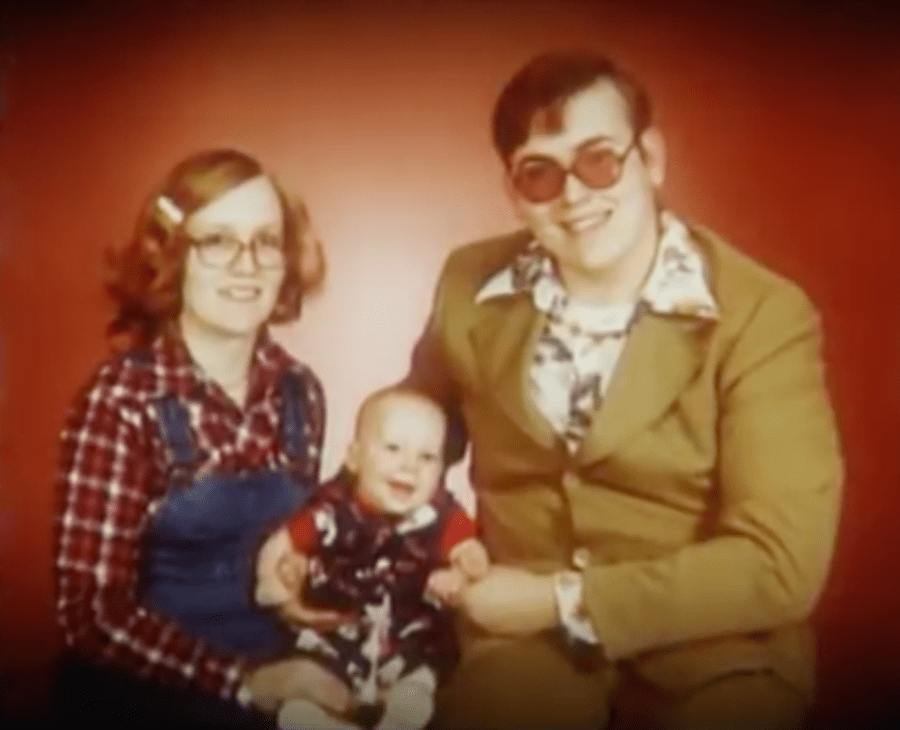
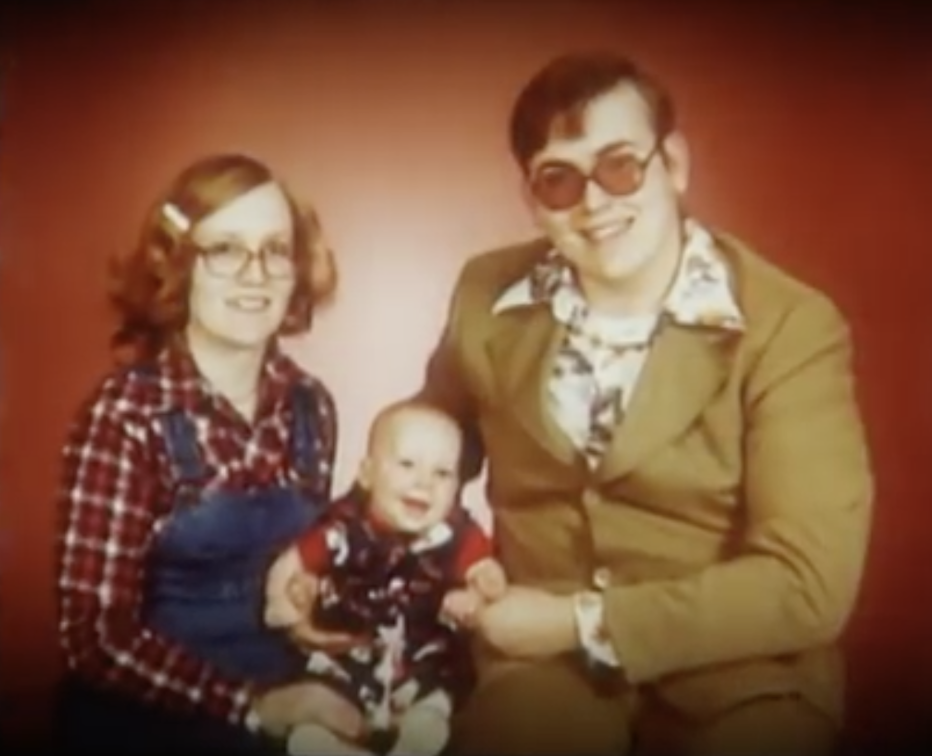
Kathleen Lipscomb and MSgt William Lipscomb, U.S. Air Force (Photo: Forensic Files)
Air Force spouse Kathleen Lipscomb, 30, was found dead on the side of a highway in San Antonio, Texas on June 9, 1986. She was murdered and the case went unsolved for years. Kathleen was a nurse and she had two children with her husband William ‘Bill’ Lipscomb. Bill, 33, was a MSgt in the Air Force and was stationed at Lackland Air Force Base. They were married for eight years but had recently separated. Their arrangement was for Bill to spend time with the two children on the weekends. But one Sunday night, Kathleen never showed up to pick up the children. Bill went to Kathleen’s apartment but she wasn’t there. The next morning there was no sign of her. One of her co-workers contacted a family member because she didn’t show up to work and they were worried. Later that day, Kathleen Lipscomb was discovered nude and dead on the side of the highway. Based on the evidence, police deduced she had been murdered elsewhere.
Bill Lipscomb was immediately called in for questioning. The police wanted to check for any wounds that might be on his body. The children told police their father was with them the entire weekend and confirmed his alibi. An autopsy revealed Kathleen had sex 24 hours before she was found dead. During the investigation, detectives learned Kathleen was dating a married man. His name was Dr. David Pearl and Kathleen was in love with him. Dr. Pearl admitted he was with Kathleen over the weekend but insisted he had nothing to do with her murder. One week after Kathleen’s murder, her car was found in a restaurant parking lot not far from her apartment. Investigators found no useful forensic evidence in the car. Based on the food contents in her stomach, investigators determined she was most likely murdered on Sunday night and dumped in the field during the early morning hours on Monday.
For two years, investigators searched for Kathleen’s killer. Kathleen’s family suspected her estranged husband Bill had something to do with her murder. Seven months before the murder, Bill had increased Kathy’s life insurance to $300,000. Kathleen’s family hired a private investigator to look into the case. The PI learned of the name Shannon Gilbert from Kathleen’s day planner. She was in the Air Force with Bill and it was rumored she was having an affair with him. Shannon Gilbert would not speak with the PI without an attorney present. The PI also found a note about WAPS (Weighted Airman Promotion System) testing and it said Bill had all the answers to the test. Kathleen was accusing Bill of cheating. The Air Force Office of Special Investigations (AFOSI) joined the investigation because it involved allegations of cheating. Dr. Charles McDowell believed the scene had been staged to look like a rape and murder.
McDowell also suspected someone else dumped the body. Kathleen’s daughter revealed another important piece of information to the family. She told family members she thought her father killed her mom because he wasn’t home the entire weekend. One of his friends Anthony ‘Tony’ Barello took them out for dinner on Sunday and when they woke up in the middle of the night, they realized their father was gone. Investigators ordered forensic DNA testing but the biological evidence had been mislabeled then mishandled. Forensic testing was not possible. Investigators needed more than circumstantial evidence to corroborate the children’s story. During the investigation, detectives learned Bill cheated on the military promotion testing and Kathleen knew it. During the divorce proceedings, Bill wanted custody of the children and Kathleen was not going to let that happen. Was Kathleen using this information as blackmail during the custody battle?
At the crime scene, Kathleen’s clothing was neatly rolled which suggested someone with military training dumped the body. When investigators caught up with Tony Barello, he was eager to talk. Tony immediately acknowledged he dumped Kathleen’s body in the field. He told them Bill Lipscomb was the killer. Tony still had evidence directly linking Bill to the crime and investigators confirmed it was Kathleen’s blood in a small chest she was stored in after she was murdered. OSI took over the homicide investigation. Bill’s former girlfriend also admitted that Bill told her he was going to kill his wife. OSI brought Bill Lipscomb in for questioning but Bill denied everything. They believed he sought revenge for Kathleen’s threats to expose him for the military promotion scandal. They believed Bill asked his friend Tony to take the children out for dinner so he could kill Kathleen while they were out.
When Kathleen arrived and noticed the children missing, the two most likely argued. At some point, Bill strangled Kathleen and then stored her in a chest in the house. Once the children were asleep, Tony retrieved Kathleen’s body and dumped her on the side of the highway to stage it as a sex crime. MSgt Bill Lipscomb was charged with the rape and murder of Kathleen Lipscomb in July 1989. Bill Lipscomb pleaded guilty to avoid the death penalty and in 1990 a Langley Air Force Base military judge sentenced Bill Lipscomb to life in prison. Although under the terms of the plea agreement, Bill Lipscomb will spend no more than 60 years at the Disciplinary Barracks at Fort Leavenworth, Kansas, a reduction in rank and a dishonorable discharge. In return for their cooperation, Tony Barello and Shannon Gilbert were not charged. Shannon Gilbert changed her name and is now in the federal witness protection program.
“Although his wife was not killed on government property or in Virginia, the Air Force tried Lipscomb here under a law that gives the military authority to handle any criminal transgressions by an active-duty serviceman.” –Daily Press (August 22, 1990)
Full episode: Kathleen Lipscomb’s body was found on a deserted street outside of San Antonio. Months passed, then years, and the crime went cold. Then Kathleen’s family hired a private investigator who discovered a diary among her personal effects. Two of the diary entries helped police to piece together what had happened to Kathleen Lipscomb, and why. -True Lies, Forensic Files (S8,E27)
Investigation Discovery:
Preview: When a wife begins an affair behind her domineering husband’s back with a coworker, he soon finds out and begins an affair of his own. Little do they realize that the relationships they have entered into are not what they seem. -Sex, Secrets & Sergeants, Scorned: Love Kills (S5,E5)
While Kathy Lipscomb spends late nights at the hospital with the handsome Dr. Pearle, her husband’s career in the Air Force is taking off, but so is his relationship with a hot young officer. When the affairs are exposed the consequences are fatal. -Sex, Secrets & Sergeants, Scorned: Love Kills (S5,E5)
Editor’s note: With a cable subscription, you can download the free ID Go app and watch Investigation Discovery programming at your convenience. And for those who do not have cable, you can watch “unlocked” episodes on the ID Go app including the latest premieres. For those who prefer commercial free programming during your binge session, Prime Video has an ID channel: ‘True Crime Files by Investigation Discovery” available for $3.99 a month. It’s a compilation of older seasons but totally worth the cost if you are a true crime addict. Download the ID Go app or purchase ID True Crime Files & binge away.
ID Go: After Lourdes Riddle in found strangled to death in the trunk of her car, homicide detective Joe Kenda follows the trail through a twisting maze of military and cultural secrets. Just what was Lourdes doing behind her husband’s back? -Secret Life, Homicide Hunter (S1, E5)
Investigation Discovery featured back to back episodes of Homicide Hunter with Lt. Joe Kenda. Kenda is a retired detective from the Colorado Springs Police Department. Colorado Springs is also the home of US Army base Fort Carson and Peterson Air Force Base. As a result, Lt. Kenda worked closely with investigating authorities at both bases throughout the years when one of his murder cases involved a member of the military or their dependents. If a crime against a military member or their dependents occurred off-base within the jurisdiction of Colorado Springs, Lt. Joe Kenda had the legal authority to investigate the strangling death of an Air Force wife found in the jurisdiction of Colorado Springs.
Construction workers found an abandoned car that had been set on fire on their property on March 26, 1985. The scene looked suspicious so they contacted the police to investigate the situation. The police found Air Force spouse Lourdes Riddle strangled to death in the trunk of her own car. Lt. Joe Kenda was called to the scene to investigate the crime further and determined that whoever killed Lourdes also tried to cover up their crime. They found that an accelerant (gasoline) was used to burn the car and a brick was on the driver’s side floor of the car (as if it was used to hold down the gas pedal). As Kenda was processing the crime scene, two Air Force Office of Special Investigations (AFOSI) personnel showed up and claimed they were taking charge of the investigation. They informed Kenda they had the husband, TSgt Mark Riddle, who worked at NORAD, Cheyenne Mountain, in custody on Peterson AFB.
Kenda’s response to the Air Force Office of Special Investigations personnel was priceless and proves that he truly is a fierce detective that all law enforcement should emulate. He was not intimidated by the feds in the least bit when the crime occurred in his jurisdiction. He shared that even it was their house, how dare they walk into his crime scene. Kenda was absolutely shocked when they shared they had enlisted soldier, Mark Riddle, in their office at Peterson AFB. Their attitude was that it was obvious who did it because in most cases it was the husband or boyfriend. When in fact, Kenda was disappointed that they may have tainted the case by initiating an ‘immediate arrest’. He was afraid that this outside agency, who had no jurisdiction, had advised Mark Riddle of his rights and he would want a lawyer now. His guilt was not obvious to Kenda who did not automatically assume that the husband committed the crime. He simply wanted to talk to him, not accuse him. Kenda felt that their actions may prevent him from doing an interview which could really damage the case. Kenda admitted to making mistakes in his lifetime but he also shared that he gets really upset when someone else makes them for him. If all investigators operated like Kenda and made assumptions based on fact finding, we could better protect the due process rights of individuals.
Kenda gains access to Mark Riddle and learns that Lourdes is a 31 year old from the Philliphines who has been married to him for nine years. There was in fact trouble in paradise and Mark admitted that his wife had been spending time with and maybe even sleeping with other men. They were not happily married. He claimed he was home the night of the murder and had no alibi. Mark asked for a polygraph test to prove his innocence and passed it, then let the investigators search his home. Although adultery is a motive for murder, Kenda determined that Mark Riddle was honest, credible, and was no longer considered a suspect. This case was not a sex crime but it was a personal and angry crime as evidenced by the ligature strangulation. Kenda felt that this person wanted to punish her and wanted to feel her die. This person was deemed the “Pantyhose Strangler” in the media. After talking to Lourdes family, Kenda learned that Lourdes was threatened by more then one person. Kenda wasn’t sure if she was a target because of Mark’s work at a secret military base or if it was because of her own secret life.
The Air Force couple lived on Peterson AFB. Kenda learned that Lourdes went to night clubs that soldiers frequented. She was into the nightlife, partying, and dancing. Her neighbors reported that she was in and out of the house all the time, usually dressed up with high heels, short skirts and make-up. During Kenda’s investigation into the circumstances of Lourdes secret life, rumors began to circulate at the enlisted men’s club on Fort Carson that she was extorting Army soldiers. In the meantime because of media coverage, an eye witness came forward with a description of a suspect that was found near the scene of the crime that night. He was a black male about 6’8. Kenda asked those who frequented the enlisted club on base if she was dating anyone matching the description. He learned that she only dated Phillipino men and wouldn’t give any other guy the time of day. The rumor was that she draws soldiers in like a Venis flytrap. She specifically sought out Phillipino soldiers. She would have a relationship with them, claim that she was pregnant, and threaten to go to their military Commander if they did not give her money for an abortion.
Lt. Kenda learned of blackmail accusations involving Nolly Depadua, a Phillipino soldier stationed at Fort Carson. Nolly had a friend named Brian Hawkins, also a Fort Carson soldier, who matched the description of the suspect described near the scene of the crime the night Lourdes was murdered. Kenda spoke to Brian with the approach that the facts would give him a theory. Initially Hawkins denied any involvement but Kenda believed that he was lying based on his body language during the interview. He requested he undergo a polygraph test and Hawkins failed miserably. When confronted with the results, Hawkins begins to cry. Hawkins told Kenda that Lourdes wanted money from Nolly Depadua. She claimed she was pregnant and was going to contact the Commander if he didn’t give her money. Nolly was concerned that his family would be ashamed of him if he got kicked out of the military. Nolly strangled Lourdes with the pantyhose.
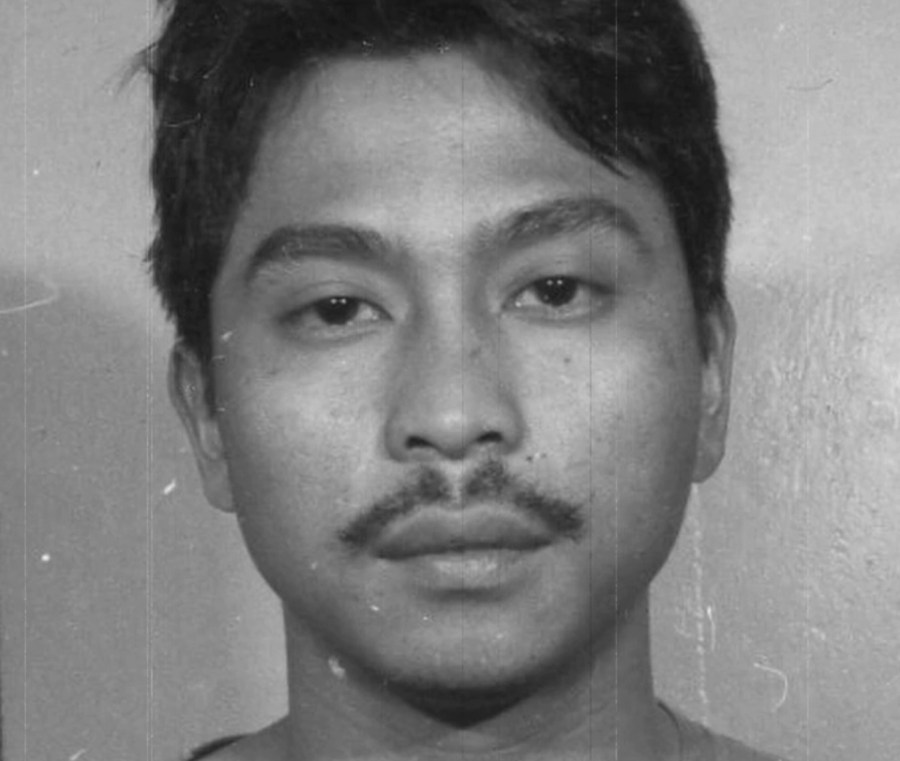
Nolly Depadua, U.S. Army
Kenda arrested Nolly and learned from him that they had sex, and she wanted $1000 for an abortion. According to Nolly, Lourdes took his Army dress uniform, used it as ransom, and threatened to burn it if he didn’t give her the money. His career and that uniform meant everything to him. The night of the murder, Nolly asked Lourdes to meet him and give him back his uniform. Lourdes showed up without the uniform. He snapped and strangled her to death in an effort to solve his extortion problems and save his career. Nolly elicits the help of Brian to help him get rid of the body. Unlike in the movies, the car did not explode in a ball of flames like the pair was expecting. The evidence at the scene of the crime was mostly unharmed. According to Kenda, both of the soldiers appeared to show remorse for the crime. Although Lourdes Riddle was a participant in her own death and her behavior caused this reaction, she did not deserve to die. Nolly Depadua made a decision to take a life and you can’t do that. Due to the circumstances surrounding the homicide, he was found guilty of second degree murder and sentenced to fourteen years in prison. He was released after seven. Lt. Kenda ended the show with: “saying she got what she deserved is not fair.”
A couple issues come to mind when it comes to the way the military handles investigations of felony crimes. Why did the Air Force Office of Special Investigations want to take jurisdiction of this case? Why did they do an ‘immediate arrest’ instead of investigating the circumstances and basing their decisions on fact finding? Why don’t they realize that their actions actually hinder the thorough investigations of cases. Research does in fact support that most spouses are murdered by their significant others but we have this thing called due process in the civilian world. The way Kenda felt about OSI interfering and possibly damaging the case was legitimate. And Kenda approached the investigation of the case in the way that detectives should move forward. He simply wanted to talk to the spouse, not accuse of him of the crime. So far there was no evidence to prove that Mark Lourdes had committed the crime. The way the Air Force OSI handled this case is part of the reason that the military justice system is under fire. They have been accused of overreach to include not affording due process rights to both victims of crime and those accused of a crime. They have been accused of railroading military members with an iron fist and as Joe Kenda would say ‘draconian and ruthless’ tactics. They have been accused of making a victim fearful of coming forward if they were involved in a military crime, like adultery or drinking underage. Nolly Depadua is yet another example of a crime involving the motive of fear when someone threatens to go to a military commander.
This is the heart of the military justice system debate. A commander hears each person’s story and determines who is guilty and who is not guilty based on that evidence alone usually. Commanders make the decision whether to prosecute someone in the military. If felony cases were handled by prosecutors who understood the modus operandi of sociopaths, psychopaths, and predators, would our soldiers feel more comfortable reporting a crime without the fear of damaging or losing their own career. It’s a theme that comes up over and over in military cases and needs to be examined. Are soldiers hesitant to report crimes perpetrated against them to their Commander if they have engaged in illegal behavior of any kind to include drinking under age and adultery? If this is the case, we must remove this barrier so that our soldiers feel safe to report felony crimes perpetrated against them without fear of losing their careers because they committed a misdemeanor.
If Nolly had a safe place to report that Lourdes was extorting him despite the adultery issue, could we have prevented this murder? We don’t want our soldiers to feel like they have nowhere to turn if they are targeted by those who know how to manipulate unsuspecting Commanders. It’s important to recognize that both male and female soldiers can be targeted by male or female sociopaths and predators. Reporting crimes to your commander is currently a battle of whose story is more believable and what they feel or don’t feel like dealing with. Commanders hold the key to moving forward with a case or not in our current military justice system. Do they have the skills necessary to investigate and determine who should be prosecuted for crimes? Commanders may not realize that they could tip people off who need to be questioned simply by prematurely inquiring into something which creates an opportunity for collusion.
In the civilian world, you most likely will not lose your career for adultery. Yet in the military, adultery is treated like any other crime in the courts martial process and soldiers can and do lose their careers. It’s not worth a life when people feel that they have to take matters into their own hands to protect what should never been taken from them to begin with. This is why the reporting of felony crimes needs to be moved away from the Commander and to a trained investigator who can help the prosecution determine whether a crime has been committed or not. Prosecutors cannot win cases if the defendants are not afforded due process rights. And this is what gives civilian law enforcement the advantage because they are forced to work within a justice system that protects the constitutional rights of the accused. We want to respect those rights in our pursuit of justice because that is how we will get justice. We should ensure our soldiers that if a felony offense is committed against them that they can safely report the crime without the fear of losing their career.
Editor’s note: With a cable subscription, you can download the free ID Go app and watch Investigation Discovery programming at your convenience. And for those who do not have cable, you can watch “unlocked” episodes on the ID Go app including the latest premieres. For those who prefer commercial free programming during your binge session, Prime Video has an ID channel: ‘True Crime Files by Investigation Discovery” available for $3.99 a month. It’s a compilation of older seasons but totally worth the cost if you are a true crime addict. Download the ID Go app or purchase ID True Crime Files & binge away.






 MILITARY JUSTICE FOR ALL