“Brannan Vines has never been to war. But she’s got a warrior’s skills: hyperawareness, hypervigilance, adrenaline-sharp quick-scanning for danger, for triggers. Super stimuli-sensitive. Skills on the battlefield, crazy-person behavior in a drug store, where she was recently standing behind a sweet old lady counting out change when she suddenly became so furious her ears literally started ringing. Being too cognizant of every sound – every coin dropping an echo – she explodes inwardly, fury flash-incinerating any normal tolerance for a fellow patron with a couple of dollars in quarters and dimes. Her nose starts running she’s so pissed, and there she is standing in a CVS, snotty and deaf with rage, like some kind of maniac, because a tiny elderly woman needs an extra minute to pay for her dish soap or whatever.”
In 2009 and 2010 the suicide rates among US troops continued to climb. Twenty percent of suicides in the US are by veterans which many find it are to believe. Liz Wahl takes a deeper look into why soldiers are choosing to take their own lives. -RT (2011)
“The US Military’s suicide rate grew a startling 15 percent in 2012. The Pentagon, which has put great effort into lowering military suicide rates, has acknowledged that battle casualties are no longer the primary reason for soldiers’ deaths. Modern US warfare is Internet-centric and relies heavily on drones and robots, which has helped bring combat losses to historic lows; suicide now accounts for more deaths of US soldiers than battlefield conflict.”
In 1982, a naval officer dies from a mysterious illness. When toxicology reports reveal he was poisoned, Naval investigators sift through a ship of thousands, and countless theories before the truth behind the victim’s painful death is revealed. -Maritime Murder, Unusual Suspects (S4,E13)
Editor’s note: With a cable subscription, you can download the free ID Go app and watch Investigation Discovery programming at your convenience. And for those who do not have cable, you can watch “unlocked” episodes on the ID Go app including the latest premieres. For those who prefer commercial free programming during your binge session, Prime Video has an ID channel: ‘True Crime Files by Investigation Discovery” available for $3.99 a month. It’s a compilation of older seasons but totally worth the cost if you are a true crime addict. Download the ID Go app or purchase ID True Crime Files & binge away.
Georgia Army National Guard Spc. Miranda Nichols, 28, was shot and killed outside of her mother’s home in Vidalia, Georgia two days after Thanksgiving on November 24, 2012. It is believed that her boyfriend of six months Army Spc. Samuel Tellu shot Miranda in an apparent domestic dispute. After Tellu shot Miranda, he jumped in his vehicle and took off. Tellu was later found in his vehicle with a fatal gunshot wound to his head. Tellu was assigned to the 3rd Combat Aviation Brigade, 3rd ID, as a petroleum specialist. Nichols served in the 3rd ID and the Georgia Army National Guard. They had both deployed overseas. The Fort Stewart Criminal Investigation Division (CID) informed the public they were assisting local authorities with the apparent murder-suicide investigation.
72% of all murder-suicides involve an intimate partner
94% of the victims of these murder suicides are female
Air Force Major Melissa Birtzer, 42, went missing from the Fort Walton Beach area in Florida on November 17, 2012. A few days later on Nov 20th, Major Birtzer was found dead at the Eglin Air Force Base range. The Air Force reported that the case was under investigation and then updated the public with the announcement that there was no foul play suspected. The official cause of death is unknown but was not ruled a homicide. Co-workers shared she may have been ‘depressed’ prior to her disappearance. Major Birtzer served honorably for 18 years first as an enlisted Intelligence Specialist and then as a Nurse. She also completed two tours in Afghanistan. Melissa is survived by a spouse and two children.
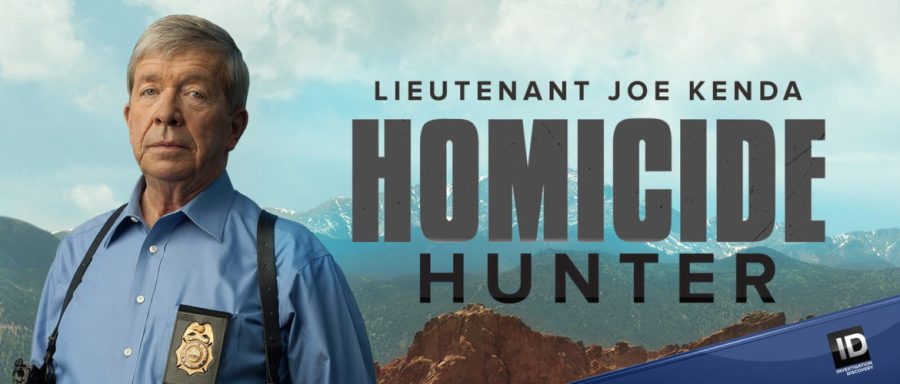
Teen runaway Maggie Fetty is found strangled to death on a mountain road. An anonymous tipster blames Maggie’s best friend, but she accuses a mental patient with multiple personalities. Kenda must turn the suspects against each other to learn the truth. -A Gathering of Evil, Homicide Hunter (S2, E2)
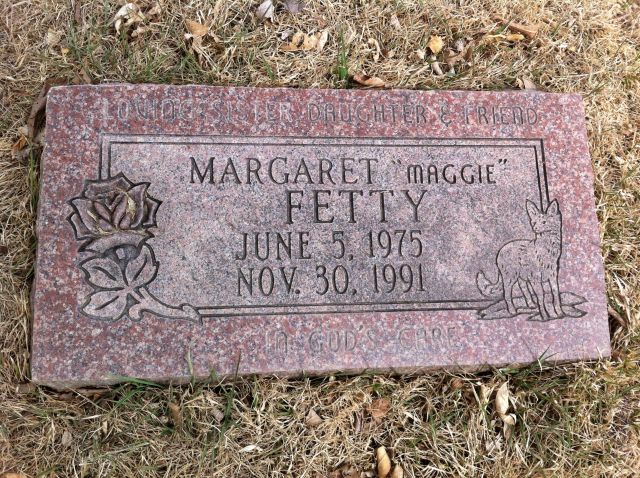
“When the time came to handle funeral arrangements for Maggie Fetty, no one was there to do it so Lt. Joe Kenda and his fellow officers did it themselves. They chipped in and bought her a head stone to assist with the evidence of her passing. The headstone is a reminder for Joe Kenda of why he chose a life in law enforcement. Joe said he can’t stop a murderer or undue the murder once it’s been done but he can certainly find the person responsible and make sure they don’t do it again. Society has a way of forgetting about the most vulnerable but when it comes to Joe Kenda, nobody slips through the cracks, not a culprit, not a co-conspirator, and certainly not Maggie Fetty.” -A Gathering of Evil, Homicide Hunter
Editor’s note: With a cable subscription, you can download the free ID Go app and watch Investigation Discovery programming at your convenience. And for those who do not have cable, you can watch “unlocked” episodes on the ID Go app including the latest premieres. For those who prefer commercial free programming during your binge session, Prime Video has an ID channel: ‘True Crime Files by Investigation Discovery” available for $3.99 a month. It’s a compilation of older seasons but totally worth the cost if you are a true crime addict. Download the ID Go app or purchase ID True Crime Files & binge away.
While on death row, Tim Hennis received an anonymous letter confessing to the murders. The note didn’t produce any leads. -CNN (July 17, 2014)
The star witness in Tim Hennis’ trial had doubts about whether Hennis committed the murders. -CNN (July 17, 2014)
A man tried three times for his life but is he a killer? Find out! Death Row Stories. -CNN (September 5, 2014)
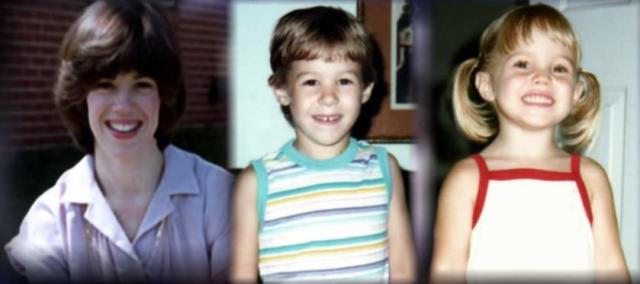
The brutal murder of a U.S. Army wife and her two young daughters. One year later, a mountain of circumstantial evidence sent U.S. Army sergeant Timothy Hennis to death row for the crime, but the case later took a unique turn in legal history. -Timothy Hennis, Death Row Stories (S1,E7)
Victims:
Kathryn Eastburn, Cara Eastburn, and Erin Eastburn
Editor’s note: With a cable subscription, you can download the free ID Go app and watch Investigation Discovery programming at your convenience. And for those who do not have cable, you can watch “unlocked” episodes on the ID Go app including the latest premieres. For those who prefer commercial free programming during your binge session, Prime Video has an ID channel: ‘True Crime Files by Investigation Discovery” available for $3.99 a month. It’s a compilation of older seasons but totally worth the cost if you are a true crime addict. Download the ID Go app or purchase ID True Crime Files & binge away.
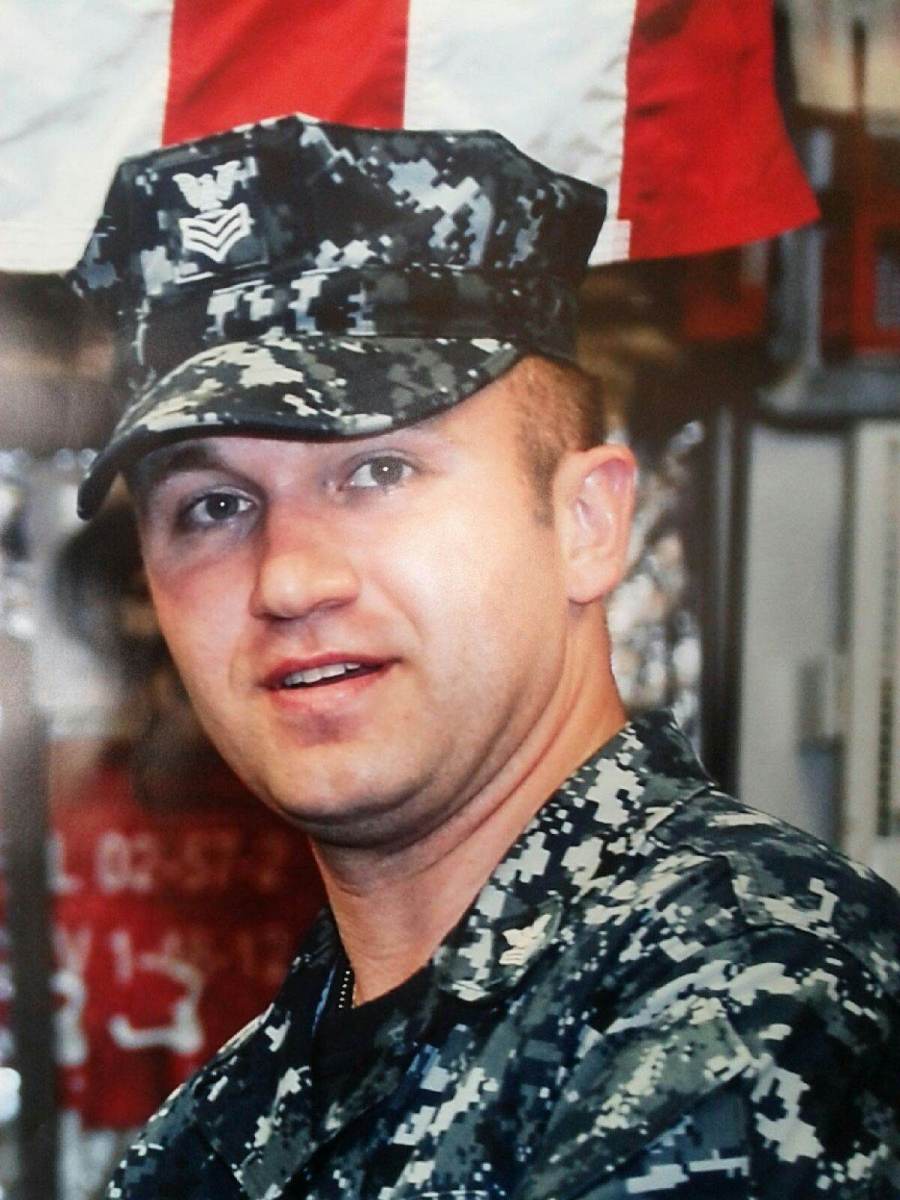
Navy CPO John Keith Bemis, 30, was found fatally shot in his Spring Valley, California residence on August 7, 2012. Keith enlisted in the U.S. Navy in 2000 and was an air conditioning and refrigeration mechanic assigned to the U.S.S. Independence docked in San Diego, California. Although the exact time of death is unknown, Keith was found dead on Tuesday morning, August 7th, by Navy co-workers and the Sheriff’s Department. Keith was found in his bedroom lying on his back in full uniform wearing a motorcycle helmet with a single intraoral gunshot wound. Keith’s death was quickly ruled a suicide but Keith’s parents, Tony and Sue Bemis, who never believed Keith died by suicide, want Keith’s death to be reopened and investigated as a homicide. They have conducted their own investigation and have determined the evidence simply doesn’t add up. Keith was a happy and healthy young man with a stellar military career; he was a suicide prevention advocate for the Navy; there were no medical or mental health issues or stressors noted in Keith’s naval medical records; and he did not leave a note. The San Diego County Sheriff’s Department (Lemon Grove) were tasked with investigating and documenting the incident and the San Diego County Medical Examiner’s office conducted an autopsy. Photos were taken at the scene and at autopsy.
Tony and Sue Bemis elicited the help of the Armed Forces Medical Examiner (AFME) because they wanted a second autopsy conducted. Now both the San Diego County Medical Examiner and the AFME had ruled the cause of death suicide. After the family received a copy of the autopsy reports and photos, they began to notice upon closer examination that there were words like “gay” and “fag” written on Keith’s body. They found other oddities like numbers and words written on Keith’s body and on items in the bedroom where he was found. They found markings consistent with writing on the back of Keith’s neck. They observed two bullet holes in the ceiling; only one bullet was recovered. And were surprised by the damage caused to the motorcycle helmet where the bullet that killed their son apparently exited. They learned Keith was last seen on August 6 around 9 p.m. and suspect Keith was met with foul play shortly after returning home. Neighbors told the family he parked his truck in handicap parking (which he normally would not do) upon returning home. Neighbors also reported hearing a loud thud. After the family examined the evidence known to them (and to police), they found enough compelling evidence to warrant concern. Keith didn’t have any of the associated risk factors with suicide. But Keith did have a recent break up with a woman he had dated off and on for three years.
Keith met his ex-girlfriend in Tijuana and the relationship dynamics and reasons why they broke up are unknown. Those who interacted with Keith prior to his death did not observe any depression associated with the break-up. In the days following the break-up Keith celebrated an upcoming promotion on Sunday August 5, 2012; he spoke with family during a party at his condominium. He had recently purchased some new t-shirts and none of his electronic communications prior to the incident indicated any kind of unusual behavior. Unfortunately, Keith’s computer was of no use; the hard drive was wiped. Some mystery could have been alleviated with gun shot residue (GSR) testing of Keith’s hands but this testing was not conducted by either the San Diego County or Armed Forces medical examiners. The family tested Keith’s three guns for forensic evidence (including the gun allegedly used to take his own life) and no blood, blowback, or remains were found on any of Keith’s guns. The family wants homicide investigators to explore the various motives and theories because they know Keith didn’t die by his own hand. They can’t have peace until there is justice for their son. And none of us are safe if we turn the other way and ignore what quite possibly could be a homicide. Keith was concerned about a missing key to his place. Was a known offender able to gain access with the missing key? Nothing appeared to be stolen from Keith’s residence. Was it a personal crime?
If Keith’s death was a homicide, then a killer roams free. And because of this, we need to make death and missing persons investigations a priority. Every death investigation should be a homicide investigation initially until evidence proves otherwise. And we should always use gun shot residue testing to confirm suicide by gun. We should conduct a victimology, interview family and friends, and look at the totality of the evidence before making premature determinations that control the future of an investigation. The interviews, electronic records, and necessary forensic testing speak for the victim. We should take a look at all the possible theories. Some theories in this case include but are not limited to: ex-girlfriend angry Keith broke off with her, feels rejected, wants revenge; mistaken identity, intruder meant to target roommate; the missing house key was used to enter residence, intruder known; roommate was in Navy, maybe Keith suspected illegal activity and co-workers wanted him to remain silent; was this a national security incident or an act of terrorism? Tony and Sue Bemis created a website in Keith’s name. They are determined to find out what happened to their son because the evidence collected doesn’t support a suicide ruling. Take a look at the evidence for yourself and make your own determination. The more eyes on the case, the better. Please sign the petition, follow Death of Navy CPO John Keith Bemis on Facebook, and for tips, please contact Tony and Sue by e-mail.
CPO John “Keith” Bemis’ death was declared a suicide in August 2012, but the evidence doesn’t add up and his parents need your help. -Unsolved Mysteries (February 27, 2015)
San Diego County Sheriff’s Department Report (August 7, 2012):
San Diego County Sheriff’s Department Report (Download PDF)
Armed Forces Medical Examiner’s Report (August 17, 2012):
Armed Forces Medical Examiner’s Report (Download PDF)
San Diego County Medical Examiner’s Report (September 28, 2012):
San Diego County Medical Examiner’s Report (Download PDF)
Able Legal Investigations Summary Report (January 12, 2014):
Able Legal Investigations Summary Report (Download PDF)
Ryan Forensic DNA Consulting Report (September 2, 2014):
Ryan Forensic DNA Consulting Report (Download PDF)
DNA Diagnostics Center Forensic Report (October 27, 2017):
DNA Diagnostics Center Forensic Report (Download PDF)
The homicides of father and son Duane and Albert Correll in Beaufort, North Carolina were featured on Investigation Discovery. Duane and Albert were both shot on June 2, 2012 in the course of a robbery. Duane was born in Michigan and his love for fishing brought him to North Carolina; shortly after arriving, he met his wife. They had Albert a couple years later and he joined Duane’s wife’s daughter Andrea. Eventually, the couple split and Andrea lived with her mom and Albert lived with his father. Duane hurt his back and was disabled so he had a hard time working. Albert got a job and went to work so his father wouldn’t have too. They were close and bonded over their love for fishing. It was especially tragic that the pair would be discovered together with gunshots. Albert wasn’t breathing and Duane was dying, yet more concerned about the health of his son.
Albert and Duane were rushed to the hospital; Albert was pronounced dead at the scene. They had both been shot in the chest. The police began their investigation and learned that they had just returned from Wal-Mart. Investigators wondered if they got in an altercation and were followed home. They didn’t find any weapons at the scene. They started interviewing the 911 callers but nobody actually saw what went down. One witness said he saw a gray vehicle and two individuals, one was confronting Albert. The confrontation lead to gunshots and the witness ran into their home to call the police. It was too dark to get a good look at the suspects before they took off. Then another witness came forward and said they were dead because of her. A woman claimed that her ex was jealous of Albert and said he was going to kill him. The police wanted to speak to him.
The day before, Kevin Connor sent Albert some threatening texts. It read “you won’t live to see the sunrise” so the police set out to find him. Albert’s girlfriend told police where he lived; he was roommates with Joseph Pirrotta. When police arrived at their home, they located three individuals inside. They cleared the apartment and Kevin wasn’t there. Joseph was home with a couple of his friends. He recently had been in the Navy and was stationed at Camp Lejeune but had been dishonorably discharged due to drug use two weeks prior. Joseph informed the police that Kevin no longer lived at the residence but he had his phone number. He was asked to call him, he answered and informed Joseph where he was at. The police immediately went to apprehend him. Kevin said he didn’t do anything but was willing to cooperate with the police.
Kevin told them he heard that Albert was shot; he used his girlfriend and other friends as his alibi for the day. He acknowledged he had problems with Albert and admitted to sending him a threatening text but denied killing him. Kevin had an airtight alibi and was absolutely cleared. Surveillance video footage at Wal-Mart did not indicate any suspicious activity and like Kevin was another dead end. That same night, Duane Correll didn’t make it and died. The police visited with Albert’s mother the next day and she had just recently learned that Albert and Duane had died; she was not doing well and in complete disbelief. The family couldn’t think of anyone who held a grudge against them and would want to murder them. The police went back to Albert’s girlfriend and learned that she had a brief fling with Jhaden Davis and he may have something to do with it.
Nicki told detectives things didn’t end well with Jhaden because he accused her of taking $300 from his bedroom and for some reason he decided to go after Albert thinking he could get the money out of him. A couple weeks before the homicides, Jhaden called Albert demanding his money. He told him to pay up or it wasn’t going to be pretty. Investigators learned Jhaden lived in the same apartment as Joseph Pirrotta and another guy named Brandon Smallwood. They were all in the Navy and stationed at Camp Lejeune together. Police went back to the residence to speak with Jhaden and learned he was on base. The roommate shared that Brandon and Jhaden stopped by over the weekend to pay rent; he also said no one had any weapons. They reached out to NCIS because they didn’t have jurisdiction on base and needed NCIS agents to assist them.
Local police interviewed Jhaden first and he claimed he was on base all weekend but there was no way to prove or disprove this but Jhaden was off-duty on the night of the murders. Brandon admitted that they did leave base for little while and went into town. Jhaden and Brandon were told not to leave the base. Police subpoenaed the phone records of Pirrotta, Davis and Smallwood. They also reinterviewed the friends hanging out at their apartment that night. During the interview, they suspected one of them was hiding something. They showed her pictures of the victims and were able to push her to the point that she decided to tell them everything. She told them Jhaden used her car prior to the murders. Jhaden left the apartment with Joseph Pirrotta. Jhaden returned a little after 10 p.m., a few minutes after the 911 calls. Jhaden & Pirrotta left the apartment and went back to Camp Lejeune. The next morning Jhaden came back and confessed.
Jhaden Davis told Victoria that he shot both Albert and Duane. It appeared that he was bragging and he implied to her that she better keep it quiet because now she knows what he was capable of. When confronted, Davis wouldn’t budge and said he was on base the whole time. Brandon said Davis and Pirrotta asked him if he wanted to go with them. Pirrotta was confronted and he spilled the beans on everything. He admitted that Davis wanted his $300 and revenge. They surprised Albert and Duane and then ambushed them; the Correll’s had no idea who was behind them. Davis first hit Albert with the butt of the gun, then shot Duane who was trying to protect Albert. Afterward, Davis shot Albert in the chest two times because Albert was the main target. Pirrotta said he thought they were going to rob them, not murder them. Davis took the money out of Albert’s wallet and Pirrotta told them where it was located.
Prosecutors moved forward with cases against Jhaden Davis, Joseph Pirrotta, and Brandon Smallwood. In July 2017, Jhaden Davis was convicted of two counts of first-degree murder and sentenced to two life sentences without the possibility of parole. In December 2017, Joseph Pirrotta pleaded guilty to robbery and accessory after the fact to murder and was sentenced to ten years in prison. In March 2018, Brandon Smallwood pleaded guilty to felony obstruction of justice and was sentenced to five to fifteen months, with credit for time served. Albert and Duane’s family feel like the whole thing was so senseless, all over a girl and $300. Albert and Duane Correll will not be forgotten. The family left behind loves and misses them and still waits for their calls.
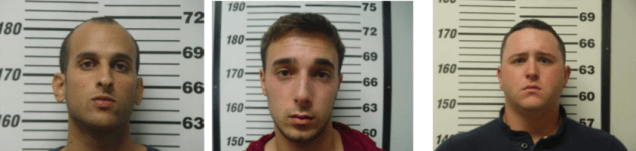
Jhaden Davis, Joseph Pirrotta, Brandon Smallwood
Offenders: Jhaden Davis, 21, US Navy, Camp Lejeune, NC (GUILTY, Sentenced to LWOP) Joseph Pirrotta, 24, Navy Veteran, Beaufort, NC (GUILTY, Accessory to Murder) Brandon Smallwood, 23, US Navy, Camp Lejeune, NC (GUILTY, Accessory After the Fact)
ID Go: A dying man calls 911 saying he’s been shot in the heart, and his son has also been shot dead. The shooter escapes into the darkness, and as detectives investigate, they navigate a complex group of suspects to uncover a tangled web of rage and revenge. -Hearts of Darkness, Murder Calls (S3,E5)
Editor’s note: With a cable subscription, you can download the free ID Go app and watch all of the Investigation Discovery programming at your convenience. And for those who do not have cable, you can watch “unlocked” episodes on the ID Go app including the latest premieres. Download the ID Go app and binge away. For those who prefer commercial free programming during your binge session, Prime Video has an ID channel: ‘True Crime Files by Investigation Discovery” available for $2.99 a month. It’s a compilation of older seasons but totally worth the cost if you are a true crime addict.
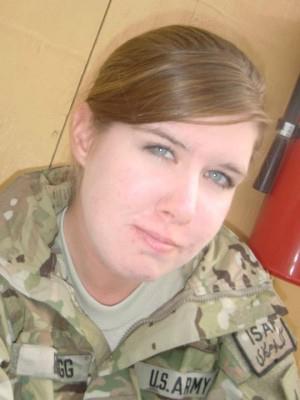
Army Specialist Mikayla Bragg died of a non combat death in Khowst province, Afghanistan on December 21, 2011. Spc. Bragg was supporting Operation Enduring Freedom on behalf of the 201st Brigade Support Battalion, 3rd Brigade Combat Team, 1st Infantry Division in Fort Knox, Kentucky. The Army ruled that Spc. Bragg’s cause of death was suicide. After an investigation it was revealed that commanders at Fort Knox failed to properly track Spc. Bragg as a “high-risk” soldier who could potentially hurt herself or others before she was cleared to deploy to Afghanistan. The Army investigators also made three recommendations in the report.
Mental-health providers stateside should share more information about high-risk soldiers with mental-health providers in war zones. Camp Salerno’s behavioral-health officer said she had been unable to get mental-health records for Bragg because of privacy laws.
Commanders should develop better procedures to ensure personnel data is not lost while transferring soldiers between units.
No soldier, regardless of gender, should be stationed in a guard tower alone.









 MILITARY JUSTICE FOR ALL