House of Representatives Veterans Suicide Prevention Act Debate:
The House debates the Joshua Omvig Veterans Suicide Prevention Act, which directs the Department of Veterans Affairs (VA) to develop and implement a comprehensive program to reduce the incidence of suicide among veterans. The bill is named for an Iraq veteran who took his own life, and recognizes the special needs of veterans suffering from Post Traumatic Stress Disorder and elderly veterans who are at high risk for depression and experience high rates of suicide. The bill follows hearings in the Oversight and Veterans Affairs committees seeking to address the tragic mental anguish experienced by many veterans, and is part of ongoing, comprehensive efforts by the new Congress to make veterans a top priority. Rep. Tim Walz speaks in favor. -Nancy Pelosi (October 23, 2007)
Rep. Bruce Braley speaks in favor. -Nancy Pelosi (October 23, 2007)
Rep. Tim Walz speaks in favor. -Nancy Pelosi (October 23, 2007)
Congressman Boswell’s floor statement before the final passage of the Joshua Omvig Veterans Suicide Prevention Act. (October 23, 2007)
Joshua Omvig Veterans Suicide Prevention Act Signed Into Law:
Iowa Gov. Chet Culver, Congressman Leonard Boswell, Sen. Tom Harkin and Sen. Charles Grassley present Randy and Ellen Omvig with the red line copy of the bill signed by President George W. Bush at a Jan. 25 ceremony at the Iowa Statehouse. Joshua Omvig was an Iowa soldier who committed suicide upon returning home from Iraq. The Joshua Omvig Veterans Suicide Prevention Act, authored by Boswell, is now national law. –
IowaPoliticsDotCom (January 25, 2008)
Part 1 -IowaPoliticsDotCom (January 25, 2008)
Part 2 -IowaPoliticsDotCom (January 25, 2008)
Part 3 -IowaPoliticsDotCom (January 25, 2008)
Rep. Boswell Asks for Increased Funding for Soldier Suicide Prevention:
In 2007, Boswell’s legislation, the Joshua Omvig Veterans Suicide Prevention Act, was the first major legislation passed and signed into law to address and prevent veteran suicide. Since enactment, the Veterans Crisis Hotline and VA Suicide Prevention Coordinators have made more than 21,000 life-saving rescues. -Rep. Leonard Boswell (July 9, 2012)
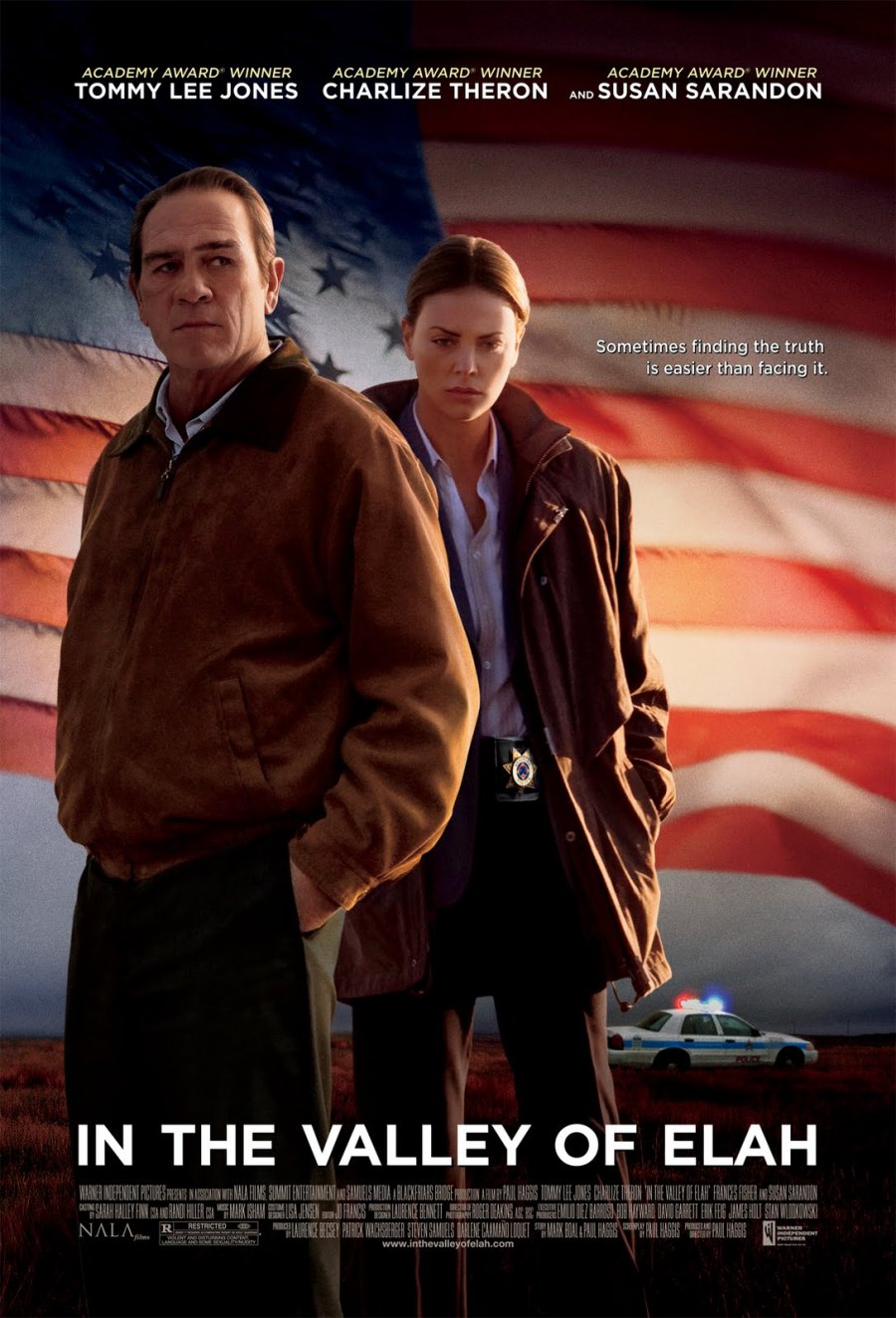
“In the Valley of Elah” tells the story of a war veteran (Tommy Lee Jones), his wife (Susan Sarandon) and the search for their son, a soldier who recently returned from Iraq but has mysteriously gone missing, and the police detective (Charlize Theron) who helps in the investigation. -Warner Bros. (September 14, 2007)
“Your son is missing.” It’s the phone call every soldier’s father dreads. Hank Deerfield (Tommy Lee Jones) had never thought that this call would come whilst his son was in the U.S., home from serving in Baghdad. Facing military indifference to the disappearance, Hank takes matters into his own hands. -YouTube (March 20, 2014)
“In the Valley of Elah” tells the story of a war veteran (Tommy Lee Jones), his wife (Susan Sarandon) and the search for their son, a soldier who recently returned from Iraq but has mysteriously gone missing, and the police detective (Charlize Theron) who helps in the investigation. -YouTube Movies (April 12, 2011)
“Desperate to solve the mystery behind their son’s disappearance, his father, also a war Veteran, and mother seek the help of seasoned police detective to uncover his true fate.” –In the Valley of Elah, Warner Bros.
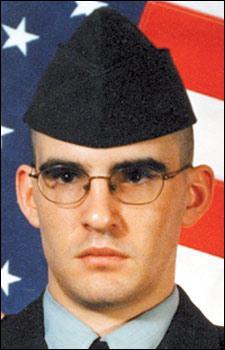
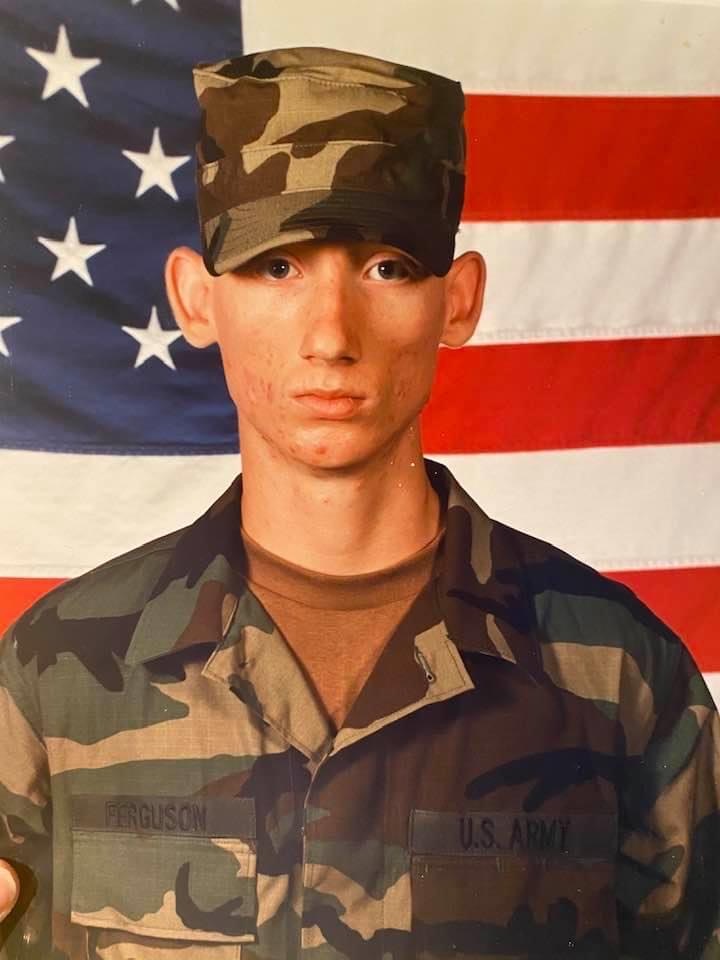
Fort Hood Army Cpl. Christopher Martin Ferguson, 21, died of undetermined causes on March 25, 2007 in Killeen, Texas. Christopher was born and raised in Pataskala, Ohio and enlisted in the U.S. Army in May 2004 after graduating from high school. Cpl. Ferguson worked as a combat infantryman on behalf of the Bravo Company, 3-67 AR Battalion, 4th Brigade Combat Team, 4th Infantry Division at Fort Hood in Texas. Cpl. Ferguson deployed in support of Operation Iraqi Freedom in 2005; he conducted over 200 combat patrols and participated in over 30 joint operations with Iraqi counter-parts in Baghdad.
Christopher Ferguson was born on April 12, 1985, in Columbus, Ohio, the son of Theophil Ferguson of Florida, and Patty Gibson Ferguson of Pataskala. He attended the Watkins Memorial School system, and graduated from the Criminal Justice program at Licking Co JVS, Class of 2004. He was fascinated by security systems and the military since a small child. He was described as a “peacekeeper.” He entered the U.S. Army in 2004, spent one year in Iraq, and was stationed at Ft. Hood at the time of his death. Cpl. Ferguson was survived by his mother and two sisters of Pataskala, Ohio when he passed.
******************************************
July 13, 2020:
“My brother is Corporal Christopher Martin Ferguson…he passed away March 25, 2007 at Scott and White Hospital in Texas…he was stationed at Fort Hood…he had just got back from Iraq and was at a party right off of base with fellow soldiers…story was that he fell from a three-story building on his head (alcohol involved or not, you don’t fall from a balcony to your head and not fracture one other bone, not have anything broken, only have your brain bleeding)…my mom, myself and my sister were flown out to see him and he was never awake…he was on life-support for seven days…everybody that came to the hospital was not allowed to talk to us…they told us that they had been told that they were not allowed to talk about anything that happened that night…we were left with no answers…my brother’s Sergeant brought us his blazer so we had something to drive while there and my sister and myself found a grocery bag in the back of his blazer that had the clothes he was wearing that night…the paramedics had cut them off him…it was just stuffed in the back of his blazer…there was a detectives card in there that was just placed in his shoe so I called and the detective let me know that the army had taken the investigation from Killeen PD…At the same time we found his camera and his blazer, there were fellow soldiers in the pictures with him that night who claimed that they were not there…my brothers death certificate says cause unknown [undetermined]…No one would tell us what happened and it was ruled as an accident years later…One of his fellow soldiers that does surfing for veterans put my brother on national news with his picture, his name along with saying that he committed suicide, but my family was never told that…there’s a lot more to the story…it’s very fishy and there was a lot of no talking or lies and I really want to know what happened to my brother.” -Christina McDonald (sister)
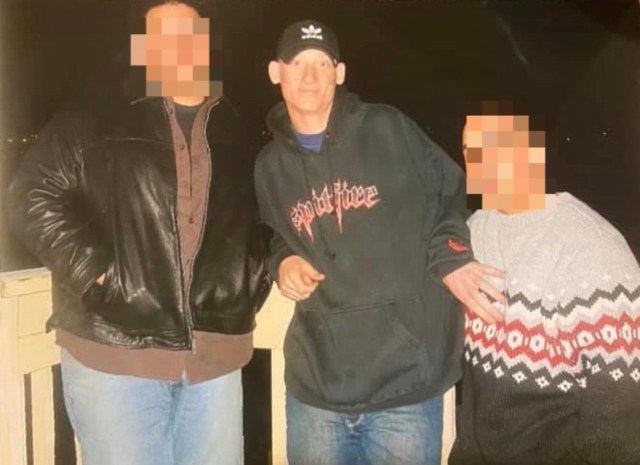
Christopher Ferguson with two Army soldiers. Picture taken on the balcony in question in 2007.
CBS Evening News with Norah O’Donnell:
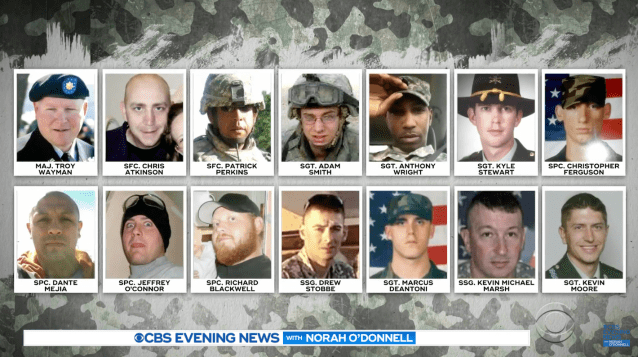
About 20 veterans die by suicide each day. A hotline launched in 2007 has answered more than 3.5 million calls, sending help to thousands of people. Dean Reynolds got an inside look. -CBS News with Norah O’Donnell (August 26, 2019)
Screenshot of the soldiers Army veteran Danny O’Neel claimed died by suicide. (CBS News)
“This is the national news episode that a fellow soldier of my brothers did! He added my brother to posters and news saying he committed suicide! If this was the case, why weren’t we told this?! The Army took the investigation from Killeen Police Department. If there was a real investigation going on, why did my sister and I find my brothers belongings, clothes, and shoes from that night…there’s blood on them, they stuffed everything in a grocery bag, and had it in the back of his blazer…they treated it like it was trash…wouldn’t you think they would need that as part of their investigation? Cpl. Christopher M. Ferguson deserves justice..please help our family find out what exactly happened to him at Fort Hood.” -Christina McDonald (sister)
Under the Sabers: The Unwritten Code of Army Wives or Army Wives by Tanya Biank was an excellent read. I first heard about the book when I was researching the 2002 Fort Bragg murders of Teresa Nieves, Jennifer Wright, Marilyn Griffin, Andrea Floyd and Major David Shannon. I ordered it from Amazon and threw it in a pile with all my other military crime books until I saw a Forbidden: Dying for Loveepisode about the murder of Army spouse Jennifer Wright. The show didn’t mention it but I knew Jennifer’s murder was one of five homicides at Fort Bragg that occurred within a two month period in 2002. I learned more about Jennifer Wright from Investigation Discovery than what’s available on-line. And at the time, the national media was quick to speculate whether war & violence, frequent deployments or anti-malaria drugs were to blame. But after the Army investigated itself, it determined that the high operational tempo after September 11, 2001 placed a great strain on already troubled marriages.
In other words, some form of domestic abuse, financial issues, and adultery in some cases were to blame for stained marriages. I researched the five murders and the motives were similar in four of the cases. Arguments were a pre-cursor to the murders and three out of four of the spouses wanted to leave the relationship. Was rejection the trigger? Domestic violence experts agree leaving the relationship is the most dangerous time. In Major Shannon’s case, it appears that the motive was greed, pure and simple, as greed is one of the most common motives for female killers. Major Shannon’s wife Joan stood to gain a large amount of money from his Serviceman’s Group Life Insurance (SGLI) if he died. This time the Army was most likely correct but unfortunately things haven’t changed to this day. There have been many more victims of domestic violence in the military since 2002 and this book inspired me to honor each and every one of them.
The author Tanya Biank grew up in a military family and covered military issues at Fort Bragg as a reporter for the Fayetteville Observer. Tanya was able to give us a realistic perspective of what was going on at Fort Bragg during the time period right before and after September 11, 2001. Tanya was the one writing about the rash of homicides for the local newspaper during the summer of 2002. As a result of Tanya’s reporting, the main stream media picked up the story and it went national and international. Fort Bragg was forced to answer to a frenzied pack of media outlets and in typical fashion, the Army investigated itself and found themselves not responsible. Although Tanya reported in the book that Congress authorized $5 million for domestic violence programs in the military that year. And on December 2, 2002, President Bush signed into law an act that makes domestic violence protective orders enforceable on military installations.
Tanya was the perfect person to write about Fort Bragg. She had a great understanding of the various perspectives and this was revealed in the book. She talked about how September 11th changed things for both the service member and the families. I found myself feeling thankful for the education about Fort Bragg’s missions and how they fit into the big picture. They train hard for a reason. They are some of the first on the front lines and some of the families have no idea where they are going or how long they will be gone. Unexpectedly, I experienced a myriad of emotions as I read along. Emotions about 9/11, emotions about what was happening at my own squadron, and emotions around the notifications of death. My Commander and a Chaplain informed me of my father’s unexpected death. And my colleagues helped me get home safely. I realized this was standard protocol while reading this book.
I couldn’t put the book down once I started, despite the emotions and memories it triggered. Tanya Biank did a great job of enticing the reader to learn more about the individual and the family, and just when you least expected, the unexpected would happen. It reminded me of my own life and how hard it was to put mission before self year after year when all one was doing was stuffing down the pain. But like those in the book, we don’t seek counseling because it’s considered a career ender. We don’t trust the system so most of us just keep our troubles to ourselves. And for those who want to maintain a security clearance, we know they are going to ask the question about mental health treatment. I understand why the question has to be asked because it’s important to identify someone with suicidal tendencies or anger problems but it prevents the rest of us from asking for the help we need, until it’s too late.
Tanya talked about the unusually high crime rates in Fayetteville and she said its civilians who commit most of the crime. She admitted Fort Bragg was under the shadow of the the murders of Colette, Kimberley & Kristen MacDonald in 1970 because former Captain Jeffrey MacDonald, despite being found guilty, swears he’s innocent. As recently as December 2018, MacDonald was denied a new trial by a federal appeals court and he continues to be the subject of both media and true crime programming. Tanya also talked about the racially motivated murders of Michael James & Jackie Burden in 1995. Army privates James Burmeister and Malcolm Wright were found guilty of the crime. This too made national news and the Army was forced to weed out any perceived Neo-Nazis, white supremacists, and skinheads. The media speculated the Army was full of them; turns out this random attack by Fort Bragg soldiers was an isolated incident.
After researching the five Fort Bragg murders in 2002 on-line, I realized that Tanya’s book was the most comprehensive discussion of the incidents. The book gave us an inside look at the people involved and the way it unfolded real-time. Tanya shared that the military likes to keep their problems under wrap because of the way the media speculates. I can see why they would be annoyed with how scandals are reported. Once the information is out there, it’s hard to fight off the perception. But the bottom line is the acts of a few don’t represent the whole. Unfortunately, I could write book after book about clusters of domestic violence related homicides in the military since 2002. This book made me realize how long the military has known about the problems and that throwing money at the problem doesn’t fix it. We need real solutions that save lives.
Editor’s Note: Tanya Biank’s book Under the Sabers inspired the creation of Army Wives on Lifetime television. After reading the book, I can understand why the series was created in 2007. I included links to the show below if you are interested in watching the series. It was cancelled after seven seasons.
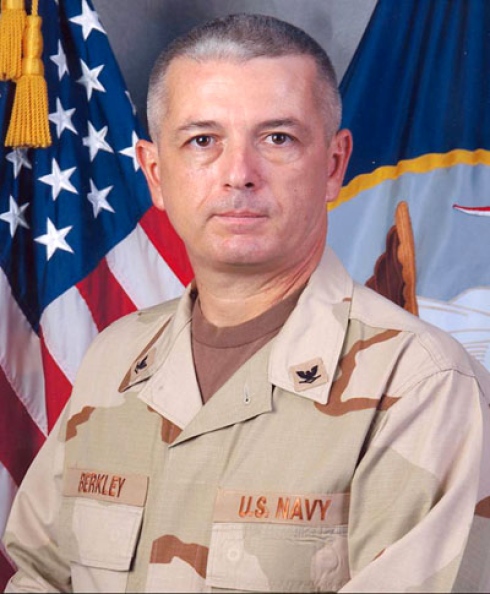
Navy Reservist Paul Berkley was murdered by his wife, Monique Wallace Berkley, her teenage lover, and his friend in Raleigh, North Carolina on December 18, 2005. Paul was home for Christmas on leave from a deployment in the Middle East. Monique, Andrew Deshawn Canty, and Latwon Darrell Johnson were all charged with first degree murder. The motive was the $400,000 Servicemen’s Group Life Insurance payout. Monique pleaded guilty to first degree murder and was sentenced to life without the possibility of parole. The state announced it was going to seek the death penalty if Berkley had gone to trial. Andrew Canty pleaded guilty to first degree murder and was sentenced to life in prison without the possibility of parole. Latwon Darrell Johnson pleaded guilty to second degree murder and conspiracy to commit first degree murder. He was sentenced to 23 years in prison. Johnson appealed his sentence claiming that it was too harsh given his role in the slaying and his cooperation with police and prosecutors.
Paul Berkley survived his deployment in the Middle East without any injury, but he couldn’t survive one week with his wife Monique. -Profiler Candice DeLong
Oxygen:
A military wife is caught in deadly love triangle. -Monique Berkley, Snapped, Oxygen (S8,E8)
Investigation Discovery:
The young and wild Monique Wallace is married to 40-year-old Paul Berkley, a navy reservist and father of two in suburban North Carolina. But with Paul leaving on a mission overseas, temptation and lust will lead them all down a dark path to murder. -Rules of Engagement, Scorned: Love Kills (S2,E7)
Some women like others to do their dirty work. A drama queen brings her love triangle to a permanent end; an intimate betrayal turns friends into deadly foes; and a loose woman will do anything to protect her freedom. -Murder for Me, Deadly Women (S9,E11)
Editor’s note: With a cable subscription, you can download the free ID Go app and watch Investigation Discovery programming at your convenience. And for those who do not have cable, you can watch “unlocked” episodes on the ID Go app including the latest premieres. For those who prefer commercial free programming during your binge session, Prime Video has an ID channel: ‘True Crime Files by Investigation Discovery” available for $3.99 a month. It’s a compilation of older seasons but totally worth the cost if you are a true crime addict. Download the ID Go app or purchase ID True Crime Files & binge away.
“The sergeants and fellow soldiers in A Co., 2nd Battalion, 1st Infantry Regiment, Ft. Wainwright, AK began tormenting and threatening one of their own. A portion of his unit even paid a visit to one of Nick’s friends from college, threatening to beat him up if he did not stop associating with Nick. He was an injured, isolated soldier who wanted to serve his country however he could. He would have done anything in his power to remain one of the elite. But he was no good to his unit and they saw him as an easy target. He feared for his life several times. It became hell for him and Nicholas saw no way to survive other than to leave.”
“Nick went AWOL for the month of February 2005. He was set up by an acquaintance and caught by his company commander and the MP’s. It was reported to me that he was not taken in easily. The MP’s turned their backs while the unit beat him up. It was soon after this that Nicholas attempted suicide. I’ve been told that the mental ward was where my son felt safe. After a couple of weeks he was returned to his unit. In April he left again, this time flying to his home town in West Virginia. He stayed with some friends, got a job and enrolled in college. But Nick was a patriot and knew the commitment he had made. He decided to return to the Army, hoping that he would not be sent back to his unit in Alaska.”
“He was taken to the US Army Personnel Control Facility (PCF), US Army Armor Center, Ft. Knox, KY. The day he arrived. near the end of May, he signed paperwork for a dishonorable discharge in lieu of a court martial. Somehow, the abuse he suffered in Alaska found him at Ft. Knox. On June 15th he was admitted to a hospital in Radcliff, KY for another suicide attempt. Again, he chose the safety of the mental ward. On June 27th his discharge was approved. Nick was released from the hospital on July 12th. He made arrangements to go home on the 14th but he never made it. Nicholas was murdered in the latrine and hung on the back of a latrine door in the 7pm hour of July 13, 2005.”
Hundreds of suspicious deaths occur within our military branches each year. Our military kills their own soldiers to satisfy their needs.
Be careful: if you see too much, they’ll kill you.
If you struggle with something, they will kill you.
If you ask the wrong questions, they’ll kill you.
If you are in the wrong place… even simply by chance… they will kill you.
You are not protected by the government you serve. The people who “stand behind you” are the ones who will stab you in the back. They will give the order to have you killed.
Kim Slapak-Smith
If you have any information about this case, please contact me through this website.
Army Sgt. Ronna R. Valentine, 28, was found shot to death in her Fayetteville, North Carolina home hours after she returned stateside from Iraq on May 21, 2005. The Fayetteville Police Department said Sgt. Ronna Valentine was shot by her Army spouse, James Valentine, 42, who then turned the gun on himself. Reports indicate police received a call from a man who said he just shot his wife and was about to turn the gun on himself. When officers arrived at the apartment, they found the couple dead inside. Sgt. Ronna Valentine’s home of record was listed as Brandenburg, Kentucky and she was an equipment records and parts specialist for the 327th Signal Battalion of the 35th Signal Brigade at Fort Bragg. Sgt. Ronna Valentine enlisted in the Army in 1997 and deployed to Iraq in November 2004; she was home on leave when the murder-suicide occurred.
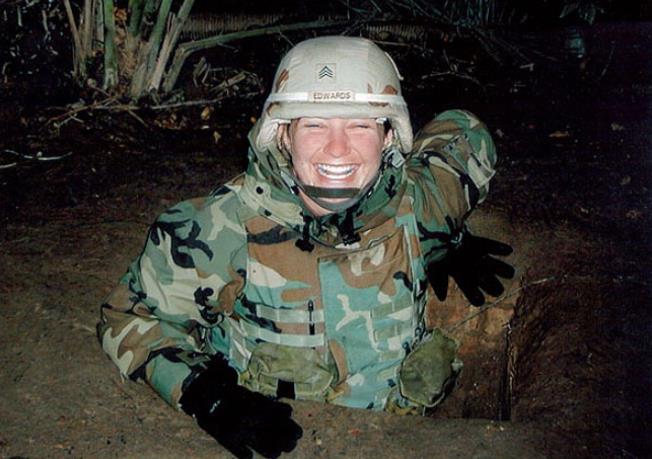
Police found the body of Army Sgt. Erin Edwards, 24, on the front porch of her home in a military community near Fort Hood on July 22, 2004. Erin was shot in the head. A short time later in an apartment complex parking lot across the street, the body of Erin’s estranged husband, Sgt. William Edwards, 24, was found. He suffered what appeared to be a self-inflicted gunshot wound and a gun was recovered at the scene. The couple left behind a 4 year old son and 20 month old daughter who were not home at the time of the shootings. Media reports indicate that the couple had a violent domestic history and neighbors shared that the police were constantly at the residence because of domestic problems. Both Erin and William Edwards served with the 4th Infantry Division in Iraq before returning to Fort Hood in early 2004. The Killeen Police Department investigated the shooting deaths of these two Fort Hood, Texas soldiers as a murder-suicide.
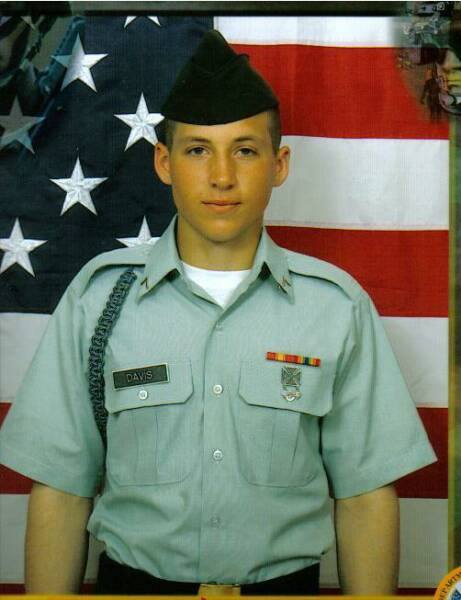
Spc. Richard T. Davis, U.S. Army (photo: CBS News)
“On July 15, 2003, less than two days after returning from deployment to Iraq, Davis was murdered outside Fort Benning, Georgia by a fellow soldier from Baker Company, Alberto Martinez. Three other soldiers were also present and involved in the events that led up to the killing and followed the killing. Initially, the Army concluded that Davis deserted and despite pleas from Davis’ father, would not initiate an investigation into his son’s disappearance for nearly two months. Davis’ remains were not found until November 2003. He had been stabbed in the head, neck, and chest at least thirty-three times. His body was later dismembered, doused in lighter fluid, and burned. Unnamed sources have suggested that Davis was killed because he had planned to make a complaint about a rape of an Iraqi woman by US troops.”
Read more about Richard T. Davis (Wikipedia) here.
Based on a True Story:
“In the Valley of Elah” tells the story of a war veteran (Tommy Lee Jones), his wife (Susan Sarandon) and the search for their son, a soldier who recently returned from Iraq but has mysteriously gone missing, and the police detective (Charlize Theron) who helps in the investigation. -In the Valley of Elah, Warner Bros.
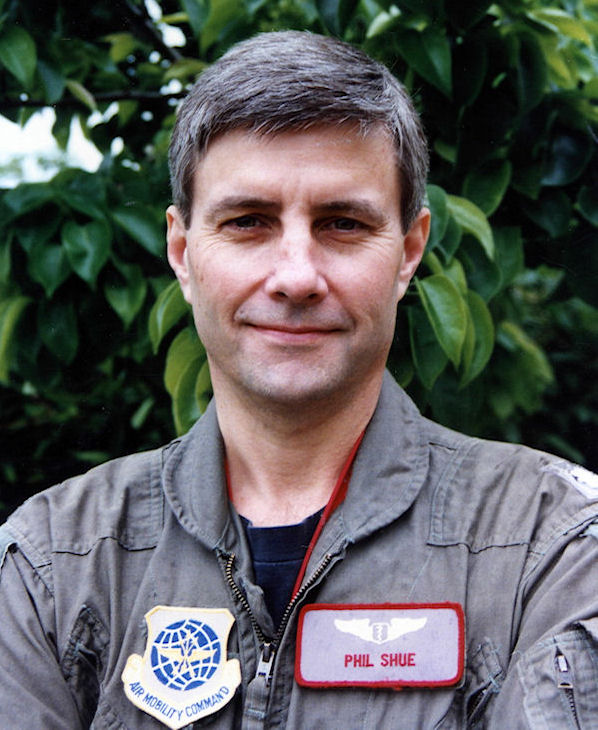
US Air Force Colonel Philip Shue died of what appeared to be the result of a violent car crash until one took a closer look at the scene of the car crash and observed the injuries inflicted on Col. Shue’s body unrelated to the crash. After erratic driving, Col. Shue’s car veered off a highway driving away from San Antonio, Texas in the opposite direction of Lackland Air Force Base where he worked. The car crashed into a tree making impact on the driver’s side and Col. Shue was found dead at the scene with duct tape on his wrists and ankles, a six inch knife wound in his chest, and his nipples were removed. Local investigators and the U.S. Air Force all concluded that this was a deeply troubled man experiencing a psychological breakdown that led to suicide. But Col. Shue’s wife Tracy believes otherwise and shares that her husband was happy and lived life to the fullest until he started getting anonymous, threatening notes. Tracy wants justice for Col. Shue because the incidents leading up to the day in question definitely raise red flags and lead one to believe that this death was in fact more likely a homicide.
Tracy Shue believes that indeed there is a person of interest in the case and that all avenues of justice should be pursued in the death of her husband. Tracy revealed that Philip had been married before and as a stipulation of a divorce agreement, his ex-wife Nancy Shue was granted ownership of a one million dollar life insurance policy in Col. Shue’s name. Prior to Col. Shue’s death, he started receiving alarming letters including one that indicated the writer of the note overheard plans to commit his murder for the life insurance money; this person led the reader to believe they wanted to warn him that he was in danger. This did cause concern for Col. Shue because he knew that his ex-wife had a significant life insurance policy in his name. He attempted to cancel the life insurance policy but was unable to because he didn’t have the authority to do so. It wasn’t until around this time that he started to become stressed because he felt like he had lost control of his very own life. Tracy shared that Col. Shue was not the person that investigators and the Air Force tried to portray. Col. Shue was planning to retire and had paid a down payment on a new home in another state.
Was US Air Force Colonel Philip Michael Shue’s death a suicide or murder? Learn more from LordanArts’ BrainScratchers in depth analysis of this cold case. John Lordan is thorough in his examination and makes some interesting observations. Watch the 48 Hours Mystery ‘The Curious Case of Col. Shue’ on YouTube here. Please follow the case of Colonel Philip Shue with author Cilla McCain here.






 MILITARY JUSTICE FOR ALL