Kathleen Lipscomb’s body was found on a deserted street outside of San Antonio. Months passed, then years, and the crime went cold. Then Kathleen’s family hired a private investigator who discovered a diary among her personal effects. Two of the diary entries helped police to piece together what had happened to Kathleen Lipscomb, and why. -True Lies, Forensic Files (S8,E27)
Editor’s Note: Full episodes of Forensic Files are available on a variety of media platforms. FilmRise Channel and Forensic Files Channel both feature full episodes of Forensic Files on YouTube. You can also find full episodes of Forensic Files on both Netflix and Amazon Prime Video. On Netflix, the seasons are grouped as collection 1-9. On Amazon Prime Video, you can find Season 1-10 here; Season 11; Season 12; Season 13; Season 14; Season 15; Season 16; Season 17; Season 18; Season 19; Season 20; and Season 21. Start bingeing and see for yourself why Forensic Files is such a hit!
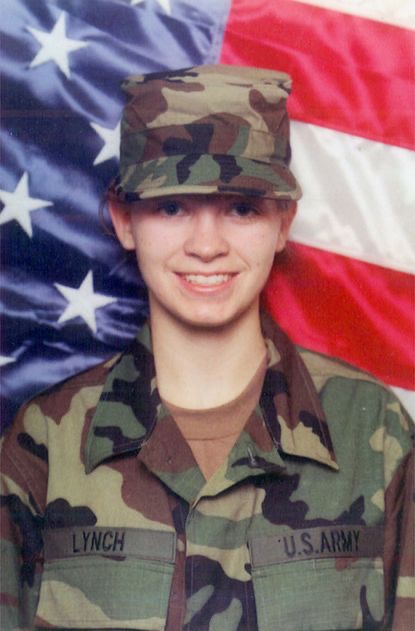
“On July 22, 2003, U.S. Army Private Jessica Lynch, a prisoner-of-war who was rescued from an Iraqi hospital, receives a hero’s welcome when she returns to her hometown of Palestine, West Virginia. The story of the 19-year-old supply clerk, who was captured by Iraqi forces in March 2003, gripped America; however, it was later revealed that some details of Lynch’s dramatic capture and rescue might have been exaggerated.”
In April 2007, Lynch testified before Congress that she had falsely been portrayed as a “little girl Rambo” and the U.S. military had hyped her story for propaganda reasons…“I am still confused as to why they chose to lie and tried to make me a legend when the real heroics of my fellow soldiers that day were, in fact, legendary. The truth of war is not always easy to hear but is always more heroic than the hype.”
On January 2, 2003, Jessica Brakey, a female cadet at the US Air Force Academy, contacted media and congressional representatives asking for help with sexual assault at the Academy. As a result of her coming forward, Senator Wayne Allard’s office was contacted by 38 former cadets, 23 current cadets, and one civilian, all of whom said they had been raped by Air Force Academy men. During the investigation into the scandal, the air force admitted that 16 graduates who were accused of sexual assaults were currently serving as officers in the military. Like every scandal before and since, the USAFA leaders at the time took the fall for the ‘scandal’ and the USAF promised they made sweeping changes in regards to how they will handle allegations of sexual abuse. They also claimed ‘the problem was isolated’ at the Academy in Colorado.
“It’s a terrible feeling when someone does this to you and gets away with it, and then you report it and the system punishes you. It’s almost worse than the actual act, that the system failed you.” ~Sharon Fullilove
Pvt. John Bennett is the Only U.S. Soldier Executed for Rape in Peacetime. He Was Mentally Troubled and Black. Six White Murderers Were Also on Military Death Row. They Were Spared.
Richard A. Serrano is a Staff Writer in The Times’ Washington, bureau. He last wrote for the magazine about the bombing of the Oklahoma, City federal building, which was also the subject of his book, “One of, Ours,” published in 1998 by W.W. Norton
“Rain always frightened him, and on the night he was hanged in a military prison in Kansas, a rolling prairie thunderstorm was kicking up outside. That was four decades ago. Pvt. John Bennett had just turned 26. He went to his death perhaps more terrified of the thunder and lightning than of the gaunt hangman waiting upon the gallows.
News of the hanging scarcely made the papers. Executions then, like today, were commonplace, so much so that his story has never been told. But he is the last member of the U.S. Armed Forces to be executed. And he is the only serviceman hanged for rape during peacetime.
America is once again examining the death penalty, spurred by the most damning evidence in history that innocents have been sentenced to die. Advances in DNA testing and other revelations have overturned scores of death sentences in recent years, raising fresh doubts about American criminal justice, especially for minorities, who make up the majority of death row prisoners.
As a result, the death penalty issue looms larger in presidential politics than it has for a generation. Both major party candidates favor death sentencing, and Republican nominee George W. Bush has given it special emphasis. He expresses confidence in his state’s handling of capital cases and says that not one innocent man has been executed on his watch as governor of Texas.
The issue also has landed in the Oval Office, where President Clinton delayed by four months the federal government’s first scheduled execution since 1963. Juan Raul Garza will now have until Dec. 12–a date notably after the presidential election–to seek clemency. Garza’s attorneys say they will argue that the criminal justice system discriminates against minorities.
Amid the chatter, national opinion polls have found that while most Americans still favor death sentencing, the support is diminishing. Even its proponents question the role that race, mental illness, poverty, politics and the quality of legal representation play in death penalty cases. All those factors were present on that stormy night in April 1961 inside the U.S. Disciplinary Barracks at Ft. Leavenworth. Was the system broken back then? Has it been fixed since?“
Read more from Richard A. Serrano (LA Times) here or here and check out Serrano’s book ‘Summoned at Midnight: A Story of Race and the Last Military Executions at Fort Leavenworth’here.
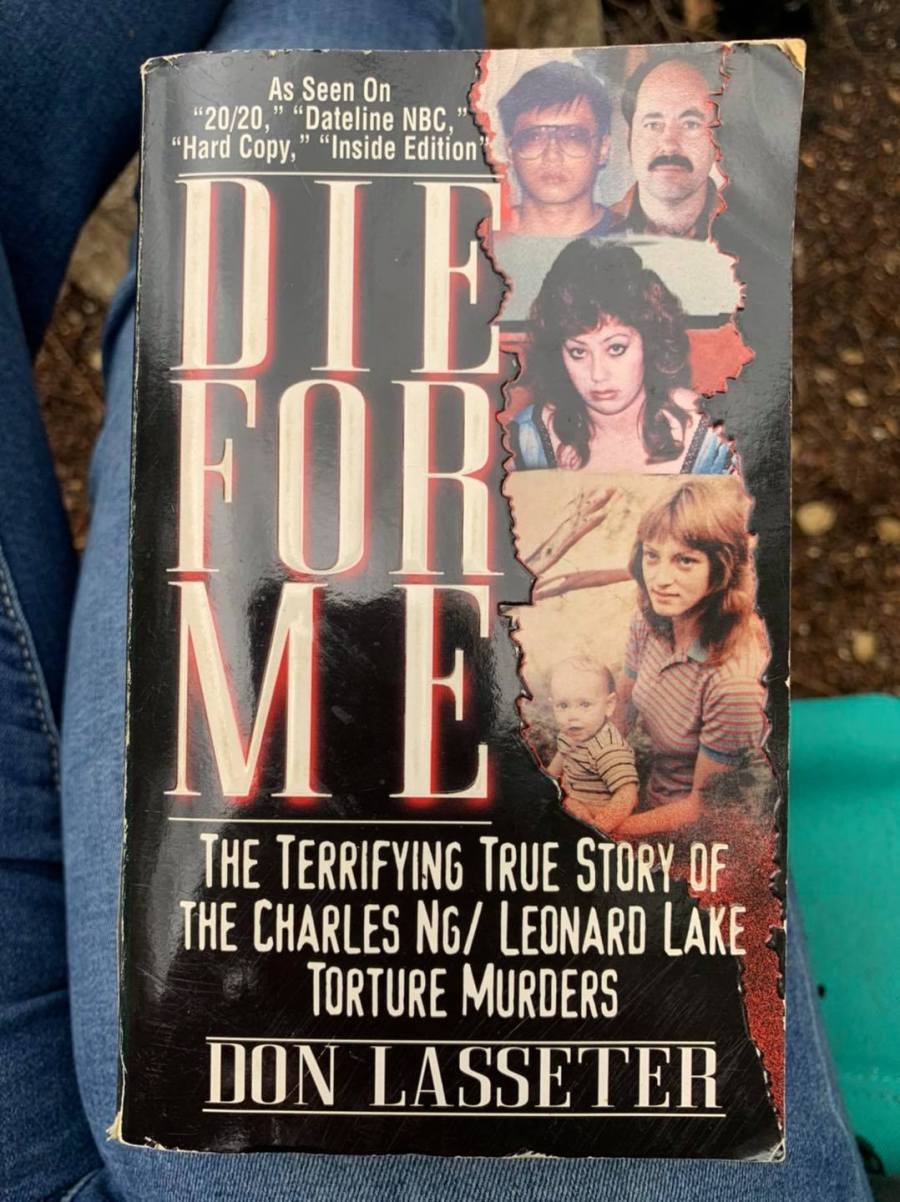
Read “Die for Me” by Don Lasseter while camping this past weekend.
Description:“They killed for thrills… It began with a shoplifting arrest. it led to a search of a remote California hamlet called Wilseyville that yielded six bodies, 45 pounds of burned bone fragments, and a child’s liver. Then, horror-struck investigators made the most chilling discovery of all: the videotape that showed what Charles Ng and Leonard Lake did to their handcuffed female victims before snuffing them out. Here is the the terrifying story of one of the most notorious serial killer teams in American history – a pair of maniacs whose orgy of sex crimes, torture, and murder took the lives of at least sixteen victims. From Charles Ng’s strange Hong Kong childhood to his twisted friendship with co-conspirator Leonard Lake, DIE FOR ME is the graphic portrait of two monsters who walked among us – Lake, who took his own life, and Ng, who will die by lethal injection.”
Here’s my thoughts:
This book was a tough read because both of these guys were manipulative. They lured their victims after gaining their trust. It was nauseating but an educational read. California spent millions of taxpayer dollars prosecuting one of them because the military made a fatal mistake.
Marine Corps Veteran Charles Ng Sentenced to Death for Role in Murdering 11 Californians with Fellow Veteran Leonard Lake; Lake Died By Suicide at Arrest (June 30, 1999): https://wp.me/p3XTUi-63f
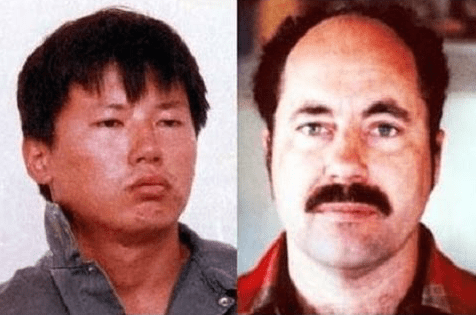
Oxygen premiered It Takes a Killer ‘Partners in Evil” and this episode highlighted the sadistic crimes committed by Marine veterans Charles Ng and Leonard Lake. In the early 1980s, the San Francisco bay area was under siege as more than twelve people vanished without a trace. Police would eventually learn that Ng and Lake were responsible for murdering them and so much more. What police uncovered during their investigation would prove invaluable in the prosecutor’s decision to pursue the death penalty. Charles Ng and Leonard Lake were psychopaths.
In December 1982, Army veteran Donald Lake, 32, was living with his mother in San Francisco, California. At their surprise, his brother Leonard Lake stopped by on a road trip up north and asked Donald to tag along. Donald was described as a very nice, gentle man but Leonard treated Donald terribly when they were growing up and even referred to him as a leech in conversations with his ex-wife Claralyn Balazs. Donald is never seen again and his mother Gloria is concerned so she reports him missing. Leonard Lake is nowhere to be found but he resurfaced on New Years Day in 1983 to rent a room in a house in Golden Gate Park.
Four months later, Lake moved in with his buddy Charles Gunnar of Morgan Hill. They had a lot in common as they both valued survival skills and the weaponry world. On May 22, 1983, Lake invited Gunnar to go on a road trip to Vegas or Tahoe for some much needed rest and relaxation after his divorce. Charles Gunnar decided to go in an effort to cope with his tough times; he left his two daughter’s with a babysitter. A couple days later, Charles Lake returned alone in Gunnar’s van and told the babysitter that Charles ran off with a woman. Charles Gunnar was never seen again.
On July 11, 1984, Donald Giulietti, 36, a radio personality from San Francisco, California was spending time in his apartment expecting a visitor. Donald was an openly gay man who lived with a man named Richard Carrazza. Giulietti placed a personal ad in a low key newspaper offering to give oral sex to straight men. That night a stranger knocked on the door and Giulietti assumed it was someone taking him up on his offer. As soon as Donald opens door, the man whips out pistol and shoots him in the head at close range. Carrazza runs from the back room into the study and finds Giulietti on the floor. Carrazza is immediately shot in the chest and left for dead. The shooter fled and Carrazza survived the attack. Richard Carazza called 911 and when the police questioned him, he was able to give a description of the shooter.
Richard Carrazza described being shot by a small Chinese man wearing prescription glasses. Police searched for an Asian suspect but came up empty. What no one knows is that the killer was already searching the classifieds for his next victim. On July 24, 1984 in San Francisco, California, Harvey Dubs, 29, was home with his wife Deborah, 33, and their 16 month old son Sean. Harvey worked for a printing company but on the side, he videotaped special events and rented out his equipment. There was an individual who responded to the ad and came to his home. The family was never seen again. The following morning, a neighbor went to check on them and found keys in the door and dirty dishes in the sink but no sign of the Dubs family.
When the police did house to house canvassing and questioned the neighbors, they reported seeing a small Asian man leaving the property. The suspect was seen carrying a large duffel bag and a large flight bag both stuffed full and he tossed the bags into the trunk of a car that was waiting. The Asian man gets into the front passenger seat of the car with the burly man with a beard and they speed away. Some witnesses in the neighborhood get a good description of the Asian man. No one could give a good description of the bearded man but an eye witness was able to draw a description of the Asian man.
In San Francisco, California on October 31, 1984, entrepreneur Paul Cosner, 39, was selling his 1980 Honda Prelude which he had recently advertised in the local newspaper. A burly bearded man took the car for a test drive and a couple days later called Paul to tell him that he would like to purchase the Honda from him. On November 2, 1984, Paul drove the car to meet the potential buyer and he was never seen again. When Cosner’s sister Sharon didn’t hear from him for 24 hours, she filed a missing person’s reports and a missing vehicle report. Sharon was relentless and maintained heavy pressure on the police but they really had no clues or suspects at this point.
In San Francisco on January 18, 1985, Cliff Peranteau, 24, was at a local bar tossing back a few drinks with a co-worker. Cliff worked at a moving company and he shared with friends that he was going to work on Saturday. Cliff never showed up for the job but apparently was seen partying on Sunday after a 49er’s super bowl victory. He’s last seen by a bartender after winning a $400 bet. The bartender said he appeared to be going off to celebrate with an Asian friend. He was never seen again.
Investigators would learn that Peranteau’s Asian friend was his colleague Charles Ng who had been at the moving company for about four months. Charles was described as an odd character that Cliff Peranteau normally tried to avoid. Charles Ng wasn’t well-liked at the moving company because he had poor boundaries and said inappropriate things to others. Two weeks after Cliff’s disappearance, his boss received a short typed letter apparently from Cliff informing him that he had a new job. The writer also requested that Cliff’s last check be sent to an address in northeastern California near Wilseyville. The note wasn’t that far fetched until another moving company employee, Jeff Gerald, 25, went missing on February 23, 1985. Jeff got an offer to work with Charles Ng on a small moving job on the side. Jeff went to do the job and this was the last time he was seen.
In San Francisco on April 12, 1985, Kathleen Allen, 18, and her boyfriend Michael Carroll, 23, were spending time in a motel room where they were temporarily living. At 10 pm at night, Michael tells Kathleen that he has to do something and would be back in the morning. Michael never returned. A few days later Kathleen received a horrifying phone call at work. The caller told her that her boyfriend Michael may have been involved in a shooting. She immediately told her boss that she had to leave. She was last seen meeting a bearded man in the parking lot of the Safeway where she worked. Kathleen got into the car and was never seen again.
In April 1985, four more people vanished without a trace. Robert Scott Stapley, 26, lived in San Francisco but frequently took road trips to Wilseyville, California to spend time with friends. Scott Stapley stayed with Lonnie Bond and his live-in girlfriend Brenda O’Connor, and their 18 month old son. Lonnie and Brenda loved living in their cabin in the foothills of the Sierra-Nevada mountains. The only thing they don’t like was their neighbor. He was a burly, bearded man who they felt was extremely obnoxious, rude, and demented. This neighbor constantly fired weapons on his property and Brenda felt really uncomfortable with him because he would not stop asking her to pose naked for him. On April 19, 1985, Scott Stapley was present when Lonnie decided to confront his neighbor. Lonnie decided to deal with the problem once and for all, and none of them were ever seen again.
In San Francisco, California on June 2, 1985, two men entered a lumber yard to buy some building supplies. A burly bearded man and an Asian man with glasses decided they wanted a vice but were not going to pay for it. The Asian man swiped the $75 vice, exited the store, and placed the stolen vice into the trunk of a Honda Prelude in the parking lot. But the Asian man didn’t realize that an off duty police officer spotted him with the stolen merchandise and called in his description. The off-duty police officer approached the Asian man but he took off and disappeared. The officer searched the vehicle and found the stolen vice and a back pack, which contained a pistol with a silencer in it. Just then a stocky bearded man exited the lumber yard and approached the Honda Prelude.
The burly bearded man told the police officer that his name was Scott Stapler (the name of the man who vanished two months prior). He told the officer not to worry about the vice because he paid for it. The officer reminded him there was a gun with a silencer in the trunk of the car and placed the burly, bearded man under arrest. He was taken to the police station for questioning. Back at the station, investigators learned that everything the man was telling them was a lie. A background check on the Honda Prelude revealed that it was registered to Paul Cosner, who went missing months before. Then they learned the license plates belonged to Lonnie Bond, another person who went missing. As the officer confronted the man with this new evidence, the big burly bearded man began to cry and admitted his real name was Leonard Lake. And that his accomplice was Charles Ng.
At one point during the investigation, Lake asked the detectives for a glass of water and a pen and paper to write a letter to his ex-wife. Police uncuffed him expecting a full confession. After he got done writing the letter to his ex-wife, he reached up under his collar where he sewed a cyanide pill into the fabric and quickly shoved it down his throat. He fell onto the floor gagging and seizing. He was rushed to the hospital where he slipped into a coma and died a few days later. In June 1985, Leonard Lake suddenly killed himself with a cyanide pill taking his secrets to the grave with him. But he did leave behind a clue when he gave up the name of his sidekick Charles Ng who was now on the run. Leonard Lake had been on the run since April 1982 when the FBI raided his place on a stolen weapons tip.
Police wanted to know who Leonard Lake was. They learned he was born in San Francisco, California and was bright yet sadistic. He developed an infinity for pornography early on in his life. He apparently took nude photos of his sisters when they were young and used them to extort sexual favors. He joined the US Marine Corps in 1965 at age 19 and served two terms in Vietnam. In Da Nang in 1970, Leonard had a complete mental breakdown and was sent back to the United States. He was admitted to a psychiatric ward for two months and then discharged from the Marines upon his release. Lake spent the next eight years in a hippie commune. In the late summer of 1980, Leonard met his wife Claralyn Balazs and they married in 1981. They both had a love of making pornographic videos of themselves and enjoyed kinky sex.
After Leonard’s death in 1985, Claralyn was the critical piece to help police break the case wide open. Police investigated Leonard Lake and did a complete forensic search of the Honda Prelude in his possession. They found blood spatter in the car, bullet holes in the headliner, IDs of missing persons, and an electric bill with Claralyn’s address. On June 3, 1985, police manage to track down Claralyn. Claralyn told detectives that she and Leonard divorced in November 1982 but maintained a close relationship. She also mentioned to the police that her family owned property in Wilseyville but no one had been living there recently. Police were curious and Claralyn agreed to take them to the property on June 4, 1985. The police found what they could only describe as a compound for killing.
The police found the drivers license of Mike Carroll who disappeared with his girlfriend Kathleen Allen in 1985. They also found possessions of others who were missing including the Dubs family. Police found videotapes of women being tortured, signs of men being killed, and outside in the yard, police came across a tool shed that acted as a false front. There they found a large bunker where tortures had occurred and where Leonard Lake kept his sex slaves. Detectives unearthed Leonard Lake’s hide out and learned that he had this planned since he was a teenager. Lake read a book at age 17 called The Collector which was about a man who had a sex slave named Miranda. Lake became obsessed with a clear plan called Operation Miranda. He wanted to enslave young girls and these fantasies became a reality when Charles Ng entered his life.
The police found overwhelming evidence of Lake and Ng’s barbarism inside in the bunker. There were videotapes of Leonard Lake building the bunker. One tape labeled the M Ladies showed Ng and Lake raping, torturing, and abusing a number of women. Law enforcement didn’t know who any of the M Ladies were until weeks later when they discovered a mass grave on the Wilseyville property. Police found approximately 45 pounds of human remains scattered about the yard. They found many of the human remains of the missing people; they had been killed, burned, tortured, and dismembered. Among the remains, investigators found the IDs of Brenda O’Connor and Kathleen Allen.
Police recognized Kathleen Allen from the M Ladies videotape. Kathleen was selected by Lake as the perfect M Lady and was kept prisoner in his bunker. He treated her as a complete slave in every way. He forced her to dress up, have sex on demand, and pose for him. It took investigators weeks to go through the crime scene and as they do they discover more and more bodies. Then on July 8, 1985 they find two males stacked on top of each other in a make shift grave. They were identified as Lonnie Bond and Scott Stapley. Investigators knew Charles Ng played an integral part in all this and they wanted to find him.
In June and July 1985, investigators learned that Marine veterans Charles Ng and Leonard Lake murdered multiple people and dug them in a mass grave at the property in Wilseyville, California. At this point in the investigation, Leonard Lake had committed suicide and Charles Ng was on the run. Charles Ng was born in Hong Kong. His father was a strict disciplinarian who literally beat him with a cane. Ng didn’t really show any interest in school and was expelled from a number of them. He was described as anti-social and had a history of fire setting and stealing. Ng eventually ended up at Notre Dame University on a student visa but dropped out after getting in a hit and run accident.
Charles Ng joined the US Marine Corps in October 1979 as a means to pay restitution for his hit and run crime in Indiana. Ng told recruiters he was born in Indiana and nobody bothered to check his citizenship status. Ng was trained as a gunner in the Marine Corps and immersed himself in martial arts. Ng was obsessed with violence and boasted that he was born to fight in hand-to-hand combat. Ng said he would kill anyone that was foolish enough to fight him. In October 1981, Ng was court martialed for stealing weaponry from an armory and went Absent without Leave (AWOL).
Ng found out that Leonard Lake, another Marine, was managing a hotel in northern California. He flew to California and in December 1981 moved in with Leonard and his wife Claralyn. Lake was fourteen years his senior and acted as a father figure. They both shared a mutual love of weapons and sexual deviance. Lake realized that Ng was the perfect person to help him make his sexual fantasies become reality.
On July 6, 1985 in Calgary, Canada, Charles Ng attempted to steal food from a department store and got caught. He shot a security guard in the hand and was captured immediately. Charles Ng was charged with attempted murder and theft, and was jailed in the Canadian system. On December 18, 1985, Charles Ng went to court and was found not guilty on the attempted murder charge but guilty of assault and robbery. He was entenced to 4.5 years in an Edmonton prison. US officials petitioned to have him extradited back to America to stand trial. His deportation was held up in court until 1991.
Charles Ng is finally extradited to California to face charges for the horrific crimes he and Lake committed there. Ng didn’t actually go to trial for another seven years. In Santa Ana, California on September 14, 1988, Charles Ng’s murder trial proceeded in the Orange County Superior Court. Prosecutors argued that Ng and Lake stalked and targeted their victims, stole their money, then tortured and killed them. The trial lasts for 8 months. Some of the most compelling evidence came from dozens of cartoons drawn by Ng. The cartoons depicted women being tortured and abused and people being burnt. But the M Ladies videotapes were the prosecutions most disturbing evidence.
The M Ladies videotapes showed women who were tortured and sexually abused. Ng took the stand in his own defense and blamed everything on Lake. He denies any knowledge of the murders. He eventually admitted to being involved in the abduction of some of the women, and some of the rapes and tortures, but did not admit to killing anyone. In late February 1999, Charles Ng was convicted on 11 of 12 counts of murder. Four months later, he was sentenced to death. Investigators agree that both Leonard Lake and Charles Ng were both psychopaths but Leonard was the more dominant and goal oriented of the two. Ng went along with Lake’s plan because it allowed him to carry out his torturous and sexually deviant behaviors.
ID Go: When an off-duty police officer in San Francisco happens upon a minor theft at a lumberyard one Sunday afternoon, he unwittingly jumpstarts an investigation into one of California’s deadliest, most depraved serial killers: Leonard Lake and Charles Ng. -Dungeon of Dread, Pandora’s Box: Unleashing Evil (S1,E1)
Editor’s note: With a cable subscription, you can download the free ID Go app and watch all of the Investigation Discovery programming at your convenience. And for those who do not have cable, you can watch “unlocked” episodes on the ID Go app including the latest premieres. Download the ID Go app and binge away. For those who prefer commercial free programming during your binge session, Prime Video has an ID channel: ‘True Crime Files by Investigation Discovery” available for $2.99 a month. It’s a compilation of older seasons but totally worth the cost if you are a true crime addict.
Offender: Troy Graves, 29, US Air Force service member Victims: Shannon Schieber, 23, University of Pennsylvania student (rape/homicide), multiple rape victims in Pennsylvania & Colorado
Circumstances: Shannon Schieber was enrolled as a Phd. student at the Wharton School of Business, on May 7, 1998, Shannon was studying for exams when a neighbor heard what sounded like cries for help, he called 911 to report that his neighbor was asking for help, the police arrived but no one answered the door and the neighbor backed off his statement, they searched the property and the neighbor said it could have been outside so they left, Shannon’s brother showed up the next day and Shannon didn’t answer the door, the neighbor told her brother what he heard the night before, they broke into the apartment and found Shannon naked on her bed, Shannon was strangled to death and it appeared she tried to fight off her attacker, police found DNA at the scene, DNA ruled out those close to Shannon, Shannon’s parents were outraged that the man who killed their daughter was in the apartment when the police knocked on her door, but the police did their job right and by the book, a few days before the murder, Shannon reported being followed home one night, she was scared, so police started investigating the stranger angle, perhaps this is a serial rapist, they look into sex crimes in the area, they want to match the DNA to other sex crimes in the area.
In February 1999, they got a DNA match, 2 other sexual assaults had occurred but they were coded as misdemeanors, the assaults occurred just a few blocks from Shannon’s apartment, in June and July 1997, two more sexual assaults were connected to the offender bringing the total to 5, the PPD coded these sexual assaults as misdemeanors as well, they downgraded the offenses because it lessoned the load for the police, and made the arrest rate look better than it was, Shannon’s case helped enact change in Philadelphia, if they had investigated these cases, everyone would have known there was a serial rapist, Shannon would not be dead if she knew what was going on, the DNA still didn’t have a match to the offender, in 1997, a sketch was drawn from the recollections of the first victim, they got a new composite, this offender would enter the home, hold the victim down on the bed, rape them or make them perform oral sex, it was about control and domination for this guy and he was also somewhat of a romantic, once they acquiesced, he would treat them like a date, he would get comfortable with the victims, they determined he was a light skinned black male based on information he shared with one victim about his life growing up with bi-racial parents.
He was dubbed the Center City rapist, in August 1999, no other cases were reported since Shannon’s murder, the case went cold, the police got a bulletin in 2001 from Fort Collins, Colorado, the offenders modus operandi sounded familiar to the Philadelphia PD, on June 13, 2001, one victim was home when she was attacked from behind and raped, after she acquiesced, the rapist became gentle as if he was a boyfriend, after he left, she called 911, she was his third victim in Fort Collins, they were all blitz attacked, FC police were investigating a serial rapist, a fourth & fifth rapes were reported, he made a mistake and left behind a ball cap at the fifth victims home, Fort Collins DNA was matched to the rapes in Philadelphia, PPD gave FCPD the composite drawing, police received a letter in the mail from the suspect, he was taunting them, in the fall of 2001, the attacks in Fort Collins stopped, meanwhile the PPD started focusing on cross referencing names of suspects with the two geographic locations, they got a match for Air Force service member Troy Graves, he was in Philadelphia, Fort Collins, and now at Warren AFB in Cheyenne, Wyoming, in 2002, the police had the new suspect in their sites.
The police learned that Troy was also investigated by the Office of Special Investigations, it was over charges of harassing a female colleague, the charges were dropped but there was still something suspicious there, Graves has a clean criminal record and no finger prints on file, the case was circumstantial, they reached out to Graves to come to the police department and do an interview, Troy Graves and his wife showed up to the Fort Collins PD, the police immediately separated the couple, his wife admitted that he had insomnia and went for walks and drives at night and that honestly she thought he was having an affair, meanwhile Troy denied knowing anything about the crimes, the police confronted him about the rapes in Fort Collins, he denied being arrested for any sex crimes, he denied being investigated by the Air Force, he did not want to provide his fingerprints but a warrant was issued to compel him, the fingerprints were a match, Troy Graves was arrested and booked into custody on April 23, 2002, this case changed the PPD policies on sexual assault to include how evidence is handled and how the victims are treated and interviewed.
Disposition: Troy Graves feared a trial would not go in his favor in Fort Collins, Colorado, he pleaded guilty in exchange for a life sentence without the possibility of parole; Pennsylvania wanted to seek the death penalty but Shannon’s family did not want that because Shannon wouldn’t have wanted that, Graves entered into a plea agreement and got life in prison plus sixty years
Notable Quotes: “We have to change the system but not put people to death.” -Vicki Schieber (Shannon’s mom)
In 1998, a gifted Philadelphia graduate student is found murdered in her bed. The hunt for her killer forces police to reevaluate a series of unsolved crimes, turning the city upside down. Will her killer be caught or will he strike again? -Terror in Philadelphia, People Magazine Investigates (S3,E2)
Editor’s note: With a cable subscription, you can download the free ID Go app and watch Investigation Discovery programming at your convenience. And for those who do not have cable, you can watch “unlocked” episodes on the ID Go app including the latest premieres. For those who prefer commercial free programming during your binge session, Prime Video has an ID channel: ‘True Crime Files by Investigation Discovery” available for $3.99 a month. It’s a compilation of older seasons but totally worth the cost if you are a true crime addict. Download the ID Go app or purchase ID True Crime Files & binge away.
In 1999, the television program 60 Minutes reported on the hidden War at Home in the U.S. military. They reported that at the time of airing, Pentagon records showed that 58,000 military spouses were victims of domestic violence and that rate was three times higher than the civilian population rate. The overall concerns were that the military justice system was a system that routinely failed to punish even the most violent and abusive servicemen. As a result, it often left an abused spouse alone without protection to fight a secret war. 60 Minutes highlighted the cases of three Fort Campbell soldiers who were charged with killing their wives or girlfriends (Bill Coffin, Dane Zafari, Tracy Leonard) and one Navy spouse who was a victim of domestic violence.
One of the cases singled out was that of Fort Campbell Sergeant Bill Coffin who murdered his ex-fiance Ronnie Spence after a civilian judge granted her an emergency protection order. In December 1997, Sgt. Coffin murdered Ronnie in front of their baby daughter in a shared home near Fort Campbell, Kentucky. Sgt. Coffin shot her twice through the trailer, entered the home and then shot her in the face and through the heart. While Ronnie was lying dead on the floor, Sgt. Coffin emptied the gun into her. Several weeks before the shooting, court records showed that Sgt. Coffin had repeatedly threatened to kill Ronnie and his superior officers at Fort Campbell knew about the threats.
I think they should have confined him to that army base. They should have gotten him some help. They should have stopped him, they should have intervened. They did nothing. -Kathy Spence (mother)
60 Minutes interviewed Kentucky Judge Peter MacDonald who stated that domestic violence cases involving Fort Campbell soldiers routinely showed up in his courtroom. He said that Army commanders regularly ignored court orders issued to protect the abused spouses. Judge MacDonald issued the emergency protective order requiring Sgt. Bill Coffin to stay away from Ronnie Spence. Sgt. Coffin instead shot and killed her. According to 60 Minutes, Sgt. Coffin pleaded guilty to domestic violence and other charges, and was sentenced. Judge MacDonald felt the readiness of the troops was more important than the protection of the battered and abused spouses.
In an in depth investigation, 60 Minutes learned that the Army’s domestic violence guide for commanders listed a number of things that could have been done in Sgt. Bill Coffin’s case but were not. The guide included restricting an abuser to the barracks or assigning them to the quarters of a superior. They also learned that the military spends millions yearly on a Family Advocacy program designed to treat and prevent domestic violence. But Sherry Arnold, a licensed clinical social worker, who helped run the program for the Marines in Camp Pendleton in California, said the Commanders have preconceived notions. She often witnessed victim blaming, minimization, a hands off approach, an ‘it’s a family matter’ attitude, and indifference to the seriousness of the situation and escalating violence.
Robert Clark, the commanding general of Fort Campbell, Ky., where several particularly violent incidents have occurred, said the military does a good job handling domestic violence cases. But Peter MacDonald, chief district court judge in Kentucky with jurisdiction over Fort Campbell, said the Army routinely ignores his court orders designed to protect abused spouses. “They have no conception of what’s going on in domestic violence.” –Deseret News
After the public learned of the scandalous way the U.S. military handles felony crimes like domestic violence, rape, and stalking, the Pentagon was ordered by Congress to investigate domestic violence in the armed forces. Congress recommended stronger protections for battered spouses and stiffer penalties for the servicemen who abuse them. In 2000, Major Joanne P.T. Eldridge suggested a proposal to add anti-stalking provisions to Article 134 in the Uniform Code of Military Justice. Since 1999 and long before this, domestic violence has continued to be an on-going serious invisible issue in the military. Both military spouses and service members are victims of domestic abuse. The year 60 Minutes aired the ‘The War at Home’ programming, Fort Campbell soldier Barry Winchell was murdered because a couple soldiers suspected he might be gay. Barry’s murder prompted the lift of the controversial Don’t Ask Don’t Tell policy.
The year after 60 minutes aired, civilian spouse Michelle Theer conspired with her lover, Army Ranger John Diamond, to kill her husband Air Force Captain Frank Theer for the life insurance money. In 2002, four wives were slain in six weeks at Fort Bragg in North Carolina. They were Teresa Nieves, Jennifer Wright, Andrea Floyd, and Marilyn Griffin. In 2008, Army Lt. Holley Wimunc was abused, stalked, and murdered by her Marine husband. In 2011, Holley’s father advocated for H.R. 1517 sponsored by Representative Bruce Braley. This law was aimed at protecting both domestic violence and sexual assault victims. This law would have required the removal of Commanders from the investigation and prosecution of felony crimes. The Holley Lynn James Act and any subsequent legislation, like the Military Justice Improvement Act, suggesting the removal of the Commander from the processing of felony crimes have been unsuccessful.
Rep. Bruce Braley introduces the Holley Lynn James Act — a bill to help victims of sexual assault and domestic violence in the military get justice. The bill is named after Holley Lynn James, a constituent of Rep. Braley who was killed by her husband while both were in the service.
Offender: Michael Dean Overstreet Occupation: US Navy veteran (discharged for psychological problems after one month), construction, frequently unemployed Pathology: Stranger abduction, rape, and murder by strangulation, shot victim in forehead Dates: September 27, 1997 Location: Franklin, Indiana, moved body to Atterbury Wildlife Preserve (Brown County) Motive: Hunted prey, lured victim, stranger abduction, rape & murder Victim: Kelly Eckart (18), Franklin College student M.O.: Stalked at work, followed home after work shift, bumped her car while both driving on road, abducted after she pulled over Conviction: Sentenced to death (July 31, 2000), Indiana court ruled not competent to be executed in 2014, still on death row Status: Incarcerated, death row Appearance: Blanket of Evidence (Forensic Files); All-American Sweethearts (Murder Comes to Town); Death Row (Real Stories); First Love, Forever Evil (Evil Lives Here) Red Flags: Deprived and abusive childhood, Schizotypal Personality Disorder, mother failed to seek mental health for him, got in fights, bully in high school, went to jail for having a gun at school, isolated & controlled significant other, stalking, threatening, long history of domestic abuse, obsession with weaponry especially knives, always carried a knife, owned firearms, threatened wife with knife, grabbed wife by throat & pointed gun at her head (shot it next to her head), threatened wife with rifle, unexplained absences, secret life/two lives, hallucinations, volatile temper, unpredictable, paranoid, admitted to wife he killed people (delusional thoughts), psychological deterioration, liked killing animals, spent a lot of time alone in the woods, obsessed with media after crimes committed, wife afraid to call the police with suspicions, one misdemeanor in criminal history, loves his family & two children, model prisoner
In the News:
A northern Indiana judge is nearing a decision on whether a man convicted of abducting and killing a Franklin College student in 1997 should be put to death. -RTV6 The Indy Channel (November 13, 2014)
Overstreet ruled not competent to face death penalty. -WTHR (November 20, 2014)
Full Episode: Housing 1900 inmates, 12 of whom are on death row, Trevor spends two weeks in the dark and forbidding world of Indiana State Maximum Security Prison. He hears from men who know what it is like to live under the shadow of the death penalty and even the date and time they will die. -Indiana Death Row, Part 1, Real Stories (August 28, 2017)
Full Episode: Indiana Death Row | Part 2 | Real Stories (August 30, 2017)
Forensic Files:
Full Episode: A young woman disappeared after working the late shift in a department store. Days later, her body was found in an isolated ravine. Tiny clues told police a great deal about the killer. He would own olive-colored carpeting, a white blanket, and distinctive bullets made from wax, not lead. -Blanket of Evidence, Forensic Files (S11, E38)
Investigation Discovery:
Eighteen-year-old Kelly Eckart disappears one night after finishing up her shift at a local hardware store. Hours later her car is discovered abandoned by the side of the road, still running, but Kelly is nowhere to be found. -All-American Sweethearts, Murder Comes to Town (S1, E3)
Melissa Holland was certain that her high school boyfriend, Michael Overstreet, was the man she’d always dreamed of. But only after they were married did she begin to realize that her determination to live happily ever after had put her in mortal danger. -First Love, Forever Evil, Evil Lives Here (S3, E6)
Editor’s note: With a cable subscription, you can download the free ID Go app and watch Investigation Discovery programming at your convenience. And for those who do not have cable, you can watch “unlocked” episodes on the ID Go app including the latest premieres. For those who prefer commercial free programming during your binge session, Prime Video has an ID channel: ‘True Crime Files by Investigation Discovery” available for $3.99 a month. It’s a compilation of older seasons but totally worth the cost if you are a true crime addict. Download the ID Go app or purchase ID True Crime Files & binge away.












 MILITARY JUSTICE FOR ALL