
Gillibrand Fact Sheet on Sexual Assaults in the Military
Washington, D.C. — U.S. Senator Kirsten Gillibrand’s office released the following facts today. Any of the following can be attributed to Senator Gillibrand’s office:
Today we heard more of the same in opposition to the bipartisan coalition sponsoring the Military Justice Improvement Act. This carefully crafted legislation supported by 44 Senators from both sides of the aisle seeks to reverse the systemic fear that numerous victims of military sexual assault have told us they have in deciding whether to report the crimes committed against them due to the clear bias and inherent conflicts of interest posed by the military chain of command’s current sole decision-making power. According to the 2012 SAPRO Report, 25% of women and 27% of men who received unwanted sexual contact indicated the offender was someone in their military chain of command.
According to DOD, 50% of female victims stated they did not report the crime because they believed that nothing would be done with their report. Even the current top military leadership admits the current system “has failed” and victims do not come forward because “they don’t trust the chain of command.” The bill is supported by the International Federation of Professional & Technical Engineers (IFPTE), and all the leading victim’s advocates groups, including but not limited to, Service Women’s Action Network (SWAN), Protect Our Defenders (POD), Iraq and Afghanistan Veterans of America (IAVA), the National Women’s Law Center, Vietnam Veterans of America, The National Alliance to End Sexual Violence (NAESV), plus former Generals, former JAG officers and survivors of sexual assault across the country.
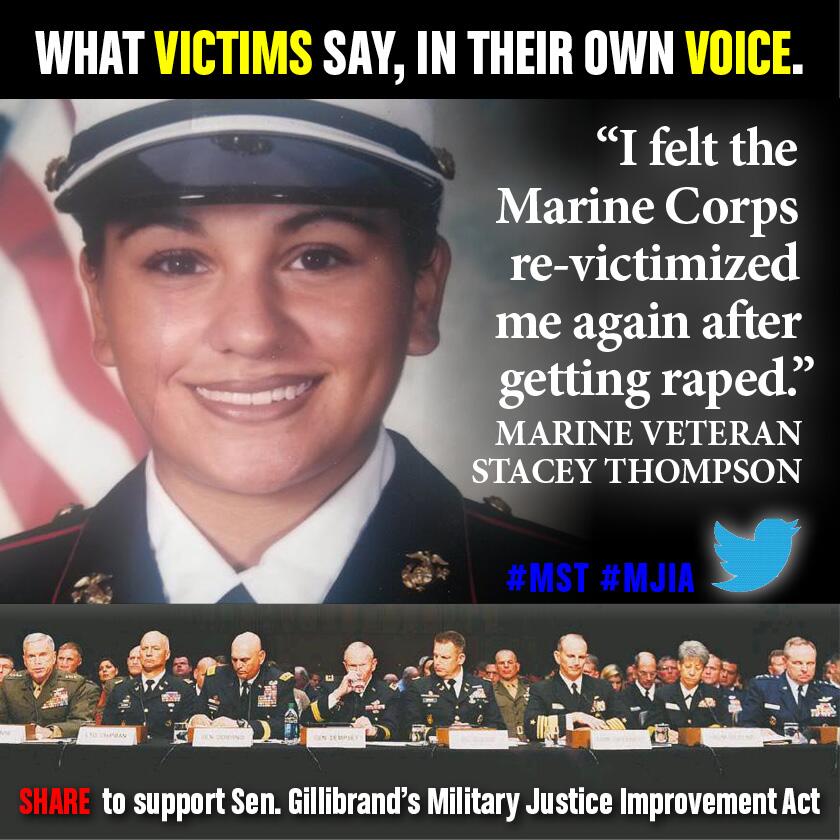
This legislation was drafted in direct response to the testimony heard in the Armed Services Subcommittee on Personnel from victims of sexual assault in the military, and the testimony of the military leadership. Unfortunately, in opposition to the victims, the full SASC committee chose to strike the Military Justice Improvement Act during the mark-up of the NDDA, protecting the current broken system.
The problem of sexual assault in the military is not new, neither are the pledges of “zero tolerance” from the commanders and senior members of the committee, which date all the way back to then-Secretary of Defense Dick Cheney in 1992. Below is a fact sheet correcting some of the misinformation used by opponents of the Military Justice Improvement Act:
Myth: Moving the decision over whether prosecutions move forward from the chain of command to independent military prosecutors will increase retaliation against victims. If an independent prosecutor, and not the commander, moves the case forward others will take it less seriously and retaliation will increase.
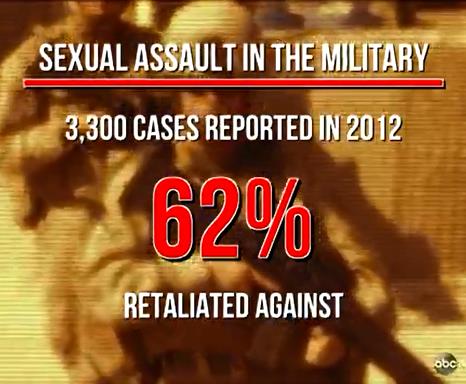
Fact: There is absolutely zero statistical or anecdotal evidence that would lend any credibility to this theory. Contrary to that theory, in the current DoD SAPRO survey, of those who responded they have been victims of USC, 62% say they have already been retaliated against which demonstrates the current chain of command structure some are seeking to protect is not working to protect victims. The idea that a commander putting forth the court martial “protects victims from retaliation” is directly rebutted by victims own reports, and ignores anecdotal evidence that commanders are also sometimes the assailant, or have conflicts of interest when a superior officer victimizes a lower ranking servicemember. Additionally, according to a 7 month investigation by the San Antonio Express, a survey of 1,200 service members who sought help since 2003 at the Military Rape Crisis Center found that 90% of victims who reported sexual assault where involuntarily discharged and diagnosed with mental disorders (an extreme form of retaliation).
Myth: We will have more prosecutions from within the chain of command because commanders move forward cases that civilian lawyers would not. Under the Gillibrand bill, if the lawyer doesn’t want to prosecute a case, it ends. Under the Levin bill, the commander can move forward even if the prosecutor doesn’t want to.
Fact: To claim keeping prosecutions inside the chain of command will increase prosecutions is not supported by the statistics. Of the DoD’s 26,000 estimated cases, only 2,558 victims sought justice by filing an unrestricted report and only an abysmal 302 proceeded to trial. A chain of command orientated system that produces only 302 prosecutions of 2,558 actionable reports is simply not holding enough alleged assailants accountable under any metric. The Military Justice Improvement Act will increase victims perception that they can receive an unbiased chance at justice, increasing unrestricted reporting and the number of successful prosecutions, which will put more sexual predators behind bars unable to victimize men and women in uniform again and again.
While the claim that under the Levin bill a commander can proceed against the lawyers recommendation is true, it omits the fact that rarely does a commander currently disagree with his JAG attorney. Additionally, it omits that in the current structure that the NDAA protects, the JAG making the recommendation to the commander is in the commander’s direct chain of command. Under the Military Justice Improvement Act, the JAG making the decision to proceed to trial would be independent of the commander and any possible bias from within the chain of command, such as the current ability for a commander to choose a jury pool.
Lastly, the argument that we should go all the way in the other direction by reducing the civil liberties of the accused does not adhere to the fundamental values of a fair and independent American justice system.
Myth: Critics say this lets the commanders off the hook. How can you hold them accountable when you reduce their power?
Fact: This is a false choice and just plain inaccurate. There is nothing about this proposal that lets commanders off the hook. Commanders will still be held accountable for setting the command climate whether or not they make this one legal decision. They are still fully responsible for and in control of their troops. In fact, this proposal leaves many crimes within the chain of command, including 37 serious crimes that are unique to the military, such as going AWOL or insubordination, in addition to all misdemeanor type crimes under Article 15. That’s why a law professor and former Air Force officer wrote in the New York Times, “Everything about the proposal takes military needs into account, except for the fact that military leaders don’t like change.”
Myth: Victims can already report the crimes committed against them outside of the chain of command.
Fact: Of course they can, but under the current system, regardless of whom you report the crime to initially, it ultimately ends up on the desk of the commander who becomes the sole decision maker over whether a case moves forward. The commander holds all the cards regardless of where the crime is reported and it is this bias in the system that keeps victims from coming forward and reporting the crime anywhere because they do not believe they can receive justice.
Myth: This proposal will lead to fewer trials since prosecutors are concerned about their win/loss record and will only recommend cases they can win.
Fact: This reflects a fundamental misunderstanding of how the military justice system works. JAGs move back and forth between defense and prosecution assignments, so they are less concerned about their prosecution numbers. Prosecutors are detailed to the billet for 2-3 years and take whatever cases are given to them by their department head. The department head takes the cases that are preferred/referred. Under our new structure the O-6 JAG would have the disposition authority to decide if a case proceeds to trial based on the strengths/weaknesses of the evidence. In the military, prosecutors are professionally graded on a whole host of matters – not just wins/losses. In fact, military prosecutors often receive praise from their superiors for being willing to take tough cases to trial.
Important Facts:
- Of the Active Duty women who indicated experiencing USC and did not report it to a military Authority — 66 percent said they felt uncomfortable making a report.
- Of the Active Duty women who indicated that they experienced USC and did not report it, 50 percent believed that nothing would be done with their report, and 43 percent heard about negative experiences other victims went through who reported their situation.
- Of those women who experienced USC and did not report it, 47 percent indicated fear of retaliation or reprisal as the reason for not reporting.
- Across the services, 74% of Females and 60% of Males perceived one or more barriers to reporting sexual assault.
Original Link: http://www.gillibrand.senate.gov/newsroom/press/release/gillibrand-fact-sheet-on-sexual-assaults-in-the-military











 MILITARY JUSTICE FOR ALL