As Lance Cpl. Gregory Buckley Jr. lifted weights on his small base in Afghanistan in August, a teenage aide to an Afghan police commander walked into the gym and shot Buckley in the chest and stomach with an AK-47. To Buckley’s family, his death in an insider attack wasn’t a casualty of war. It was murder.
“I didn’t want my son to die like this,” his father, Greg Buckley Sr., told news cameras after a memorial service in a seven-minute, teary diatribe against the government. “If it was in battle, I could understand. But he was murdered.”
Marine Sgt. Camella Steedley died while supporting combat operations on October 3, 2012 in Helmand province, Afghanistan. Sgt. Steedley was supporting Operation Enduring Freedom on behalf of the Combat Logistics Regiment 17, 1st Marine Logistics Group, I Marine Expeditionary Force at Camp Pendleton, California. At the time of the Department of Defense press release, the cause of death was under investigation. She is survived by her husband, also in the US Marine Corps, and four children.
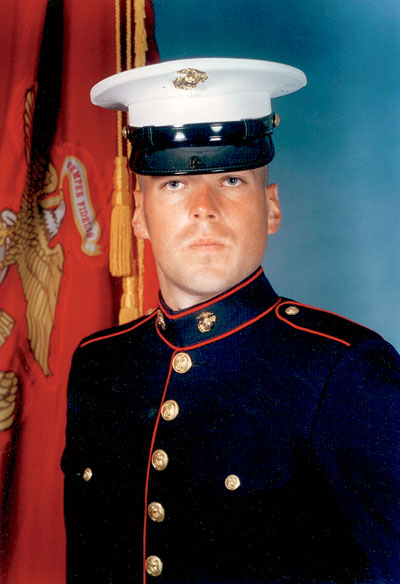
Noah Pippin, U.S. Marine Corps, California Army National Guard
On September 11, 2010, the California National Guard called the parents of Noah Pippin, 31, to ask where he was because he didn’t show up for military duty and that wasn’t like him. Nonetheless, Noah was listed as Absent Without Leave (AWOL). It was this phone call that would set off a series of events for the family of Noah Pippin who also knew that he wouldn’t normally shirk his responsibilities but they were concerned about him. Noah’s parents knew that he once served in the Marines and deployed to Iraq three times. To them, he seemed troubled, preoccupied and depressed the last time they saw him. They wondered if he committed suicide. The family began to trace his steps. Noah left Michigan on August 25, 2010 in a cab to go to the airport to get a rental car. In October 2010, the family remembered they had a picture of the cab and the number. They called the cab company and it was confirmed that Noah did go to airport and rented a car. Records indicate that Noah drove to Kalispell, Montana. The family questioned why Montana instead of California and wondered what happened to him.
At his family’s insistence, Noah visited with them for a week in Traverse, Michigan prior to his deployment with the National Guard to Afghanistan. Noah drove from California to Michigan with a U-haul full of his belongings so he could store them while he was deployed. He had abruptly quit his job 3 months earlier at the Los Angeles Police Department where he had been working for a year a half as a police officer. He decided the job was not working out so he left the position and volunteered to go back on active duty with the Army. Noah volunteered to go on a 13 month deployment to Afghanistan. Noah became a police officer after getting out of the US Marine Corps so when he became disillusioned about the job, he went back to what felt comfortable. Noah got rid of his apartment in California and then when he got to Michigan, he started giving away everything he owned. Noah’s parents questioned his decision to give away all his belongings and told him he could store some of his stuff in their basement. They also knew he deployed to Iraq 3 times and as a result of their observations asked him about his mental health. But he assured them he was okay.
Noah’s parents were already concerned about suicide and worried when Noah didn’t show up for his National Guard duty. They contacted police on September 24, 2010. Initially it appeared the police didn’t share their same concerns about Noah and even made assumptions about his AWOL status as if he was a malingerer. But after the family shared the information they had confirmed with the cab company, the police began to take notice. The police investigated and learned from cell phone records that Noah called a taxi in Hungry Horse but the taxi didn’t know where he went to. On August 31, 2010, all activity stopped on Noah’s cell phone. The family and police wondered if Noah stopped in Montana to do some hiking as a form of rest and relaxation before he was deployed. Credit card activity showed that Noah checked into a hotel on August 28, 2010 and stayed for two nights. Aside from credit card activity at local stores for supplies and a couple restaurants for meals, there was no more activity on his cell phone and credit card and it appears that Noah Pippin disappeared on August 31, 2010. Noah’s dad couldn’t help but wonder if he went to Montana to die. Where Noah went after he left the hotel in Hungry Horse remained a mystery for two years.
In December 2010, the family felt like Noah was probably was dead. His mom continued to send messages to his e-mail but he never responded. Then Noah’s brothers reminded their parents that some of Noah’s stuff was in the basement. The brothers suggested they go through his belongings to see if there were any clues to his disappearance. Noah’s parents admitted it was hard to go through his stuff but they began the process and found a notebook that contained detailed directions to a place called Blue lakes which was south of Glacier National Park in Montana. They also found a list of supplies one would take on a wilderness trek. It appeared that Noah planned on going to Glacier National Park but didn’t mention it to his family. After learning this information, they couldn’t help but assume Noah went there to clear his head. Now the concern was why didn’t he show up for military duty and why haven’t they heard from him. The hotel in Hungry Horse called a month later and informed the police they found some of Noah’s property in the lost and found. This property included cell phone and computer chargers but the cell phone and computer were not present. At this point police thought maybe Noah was a victim of robbery and foul play, maybe even a homicide victim.
The police needed an eye witness who may have seen Noah. In February 2011, the family shared developments in the case with the media while the police contacted the Forest Service. The police talked to people who occupied cabins in the area but no one had seen him. Some witnesses thought they saw Noah walking on the road but couldn’t confirm it was him. At this time, police had no more leads to follow and they all had to wait for the snow to melt before they could begin searching for him. In June 2012, Noah’s parents went to the Blue Lakes to look for him. They noted that they were pleased Noah’s last known location was in such a beautiful place. Eventually witnesses contacted the family to share that Noah showed up to their camping spot. They provided details that he talked about being in the military and deploying to Iraq, therefore he was positively identified. It appears that Noah followed through with his plans to hike to the Blue Lakes and then he headed to the Bob Marshall Wilderness. Noah’s parents were relieved to know he was alive two weeks after his cellphone activity stopped. But now it appears Noah deliberately didn’t go back to active duty with the National Guard. Shirking his responsibilities was not like Noah so why would he go AWOL?
It was September 15, 2010 when the witnesses ran into Noah while they were setting up their camp. They said it appeared that he only had a day pack which wasn’t the norm for someone so far back in the wilderness. Noah said he was going to hike along the Chinese Wall where there was no trail. The family offered Noah dinner and to put him up for the night but he declined and insisted on continuing on his hike. The next day, the weather pattern changed and the family sensed a snow storm was on the way so they left immediately and got caught in blizzard like conditions on the way out. The family thought if Noah got caught up in these conditions, it could be dangerous. A ranger also contacted the family and confirmed that he witnessed Noah sleeping on the trail on September 15, 2010 and it appeared he was heading towards the Chinese Wall. The ranger observed Noah wasn’t equipped for the trip too. Everyone acknowledged that a two day’s hike from civilization could be very dangerous in winter conditions. It was hard to anticipate what could happen in the mountains in blizzard like conditions and the outlook was bleak. Police began a recovery mission after learning this information and a helicopter search team looked for him in August 2011 but he was not spotted. The inconclusive search gave the family hope but they wanted closure.
UPDATE: On August 24, 2012, Noah Pippin’s body was recovered and reports indicate that Noah died from exposure. Noah Pippin froze to death in the Bob Marshall Wilderness.
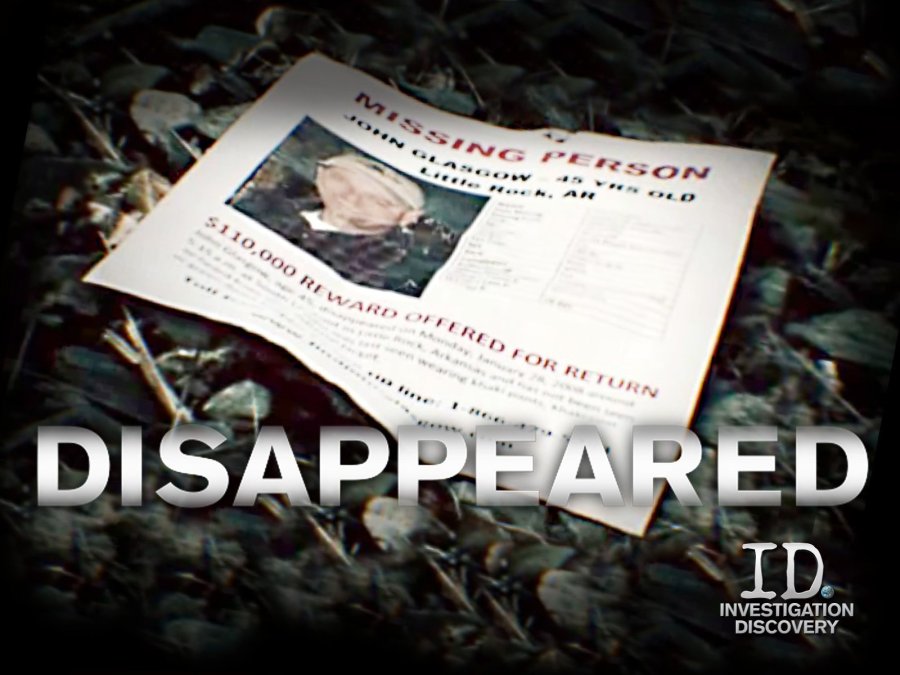
Investigation Discovery:
Former Marine Noah Pippin is reported missing after failing to appear at drill. -A Soldier’s Story, Disappeared (November 21, 2011)
ID Go: In August 2010, 31-year-old ex-marine Noah Pippin left Michigan to report to the California National Guard. But Noah never shows up. Police trace his path to the forests of Montana, leaving Noah’s parents to wonder why he is venturing into the wild. -A Soldier’s Story, Disappeared (S5,E8)
Editor’s note: With a cable subscription, you can download the free ID Go app and watch all of the Investigation Discovery programming at your convenience. And for those who do not have cable, you can watch “unlocked” episodes on the ID Go app including the latest premieres. Download the ID Go app and binge away. For those who prefer commercial free programming during your binge session, Prime Video has an ID channel: ‘True Crime Files by Investigation Discovery” available for $2.99 a month. It’s a compilation of older seasons but totally worth the cost if you are a true crime addict.
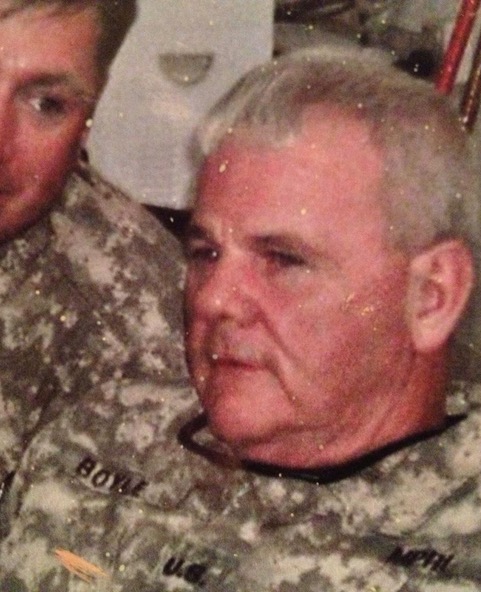
Thomas J. Boyle, Jr. died in Kandahar Province, Afghanistan on June 19, 2012.
“Obviously, suspicions are not proof of wrong doing, but Pauline Boyle has discovered enough evidence to warrant an all-out independent investigation. The problem is that asking the Army to investigate itself is asking the Fox to guard the hen house. The result will always be questionable. The Boyle family does have hard facts that clearly indicates there was an overt attempt to cover-up the circumstances of Thomas J. Boyle’s death.
Was there a military drug cartel that no one wanted to talk about, or was it a conspiracy of some of the soldiers on base to stop the change of command and keep the lieutenant colonel in command for as long as possible.”
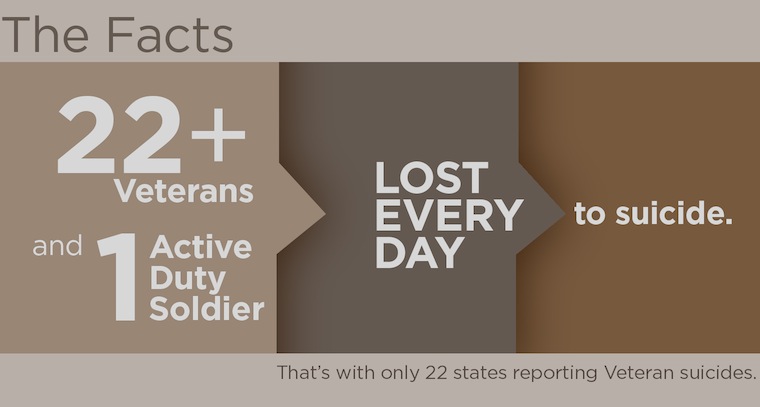
The U.S. military is grappling with a disturbing trend—soldiers are killing themselves at an alarming rate. So far this year, an average of one soldier a day is committing suicide. The suicide rate is outpacing the number of soldiers killed in Afghanistan this year by some 50-percent. -Fox 31 Denver
DENVER – The U.S. military is grappling with a disturbing trend—soldiers are killing themselves at an alarming rate. So far this year, an average of one soldier a day is committing suicide.
The suicide rate is outpacing the number of soldiers killed in Afghanistan this year by some 50-percent. And there have been high-profile cases here in Colorado.
It’s gotten so bad, that the defense department has even set up a suicide prevention office. Soldiers we talk to say the reasons for their life-threatening depression are many.
Photo: “Lance Cpl. Hollye K. Meeks (left) searches Cpl. Roxanne Cox, after receiving a class on the proper procedures from members of a police transition team. Eight female Marines from different units within 3rd Marine Aircraft Wing volunteered for the Lioness Program to conduct security searches of women crossing into Iraq. Meeks is a motor transport vehicle operator, Marine Wing Support Squadron 374, Marine Wing Support Group 37 (Reinforced), 3rd MAW, and a Houston, Texas native. Cox is a maintenance management specialist, with Marine Aircraft Group 16 (Reinforced), 3rd MAW, and a Cincinnati native.” (22 Aug 2006)
Obituary: Marine Corps Lance Corporal Hollye Meeks, 25, was born July 4, 1986 in Richmond to Randy and Becky (Kunz) Meeks. She passed away June 1, 2012 in Houston. She graduated from B.F. Terry High School and was an accomplished basketball player. She also pole vaulted and ran track. Upon graduation she enlisted in the USMC. She spent time in 29 Palms, CA. and proudly served her country in Syria and Iraq. Hollye is survived by her parents, Randy and Becky; aunts and uncles, Carol and Russell Clayton, Bob and Margaret Kunz, Linda and Duane Segers and Danny and Margie Meeks; birth father, William Brown; 4 half sisters and one half brother; and numerous cousins; Godparents, Marvin “Bud” and Shirley Nordt; and a multitude of good friends; and her dog “Boss”.
Brittany Killgore, a civilian married to a man serving in the US Marine Corps, was initially reported missing on April 14, 2012 but was later found dead near Lake Skinner in California in 2012. Her husband was deployed at the time she went missing. They were stationed at Camp Pendleton and Brittany was in the process of getting a divorce and moving out of her home. On her last night at Camp Pendleton, another Marine named Sgt Louis Perez, offered to not only help her move but asked her to go out one last time before she left. Brittany was acquaintances with Perez, his live in girlfriend Dorothy Maraglino, and another woman named Jessica Lopez, who also lived at the residence of Maraglino.
After a lengthy investigation by civilian police in San Diego, it was determined that Louis Perez lured Brittany and eventually took her to his home where he and his girlfriend (Maraglino) lived. Perez, Maraglino, and Jessica Lopez all engaged in what is referred to as BDSM and they decided that Brittany would join them whether she wanted to or not. In the course of sexually abusing and torturing Brittany, Louis Perez strangled her to death. Maraglino and Perez decided that Jessica Lopez needed to take the fall for her death and they coerced Jessica into not only admitting to the murder but also to take her own life. She was found near death in a hotel room after a failed suicide attempt. In 2015, Perez, Maraglino, and Lopez were all sentenced to life in prison without the possibility of parole.
The search for a young missing military wife takes NCIS agents into the dark world of master and slave role playing where they uncover the dual life of a Marine sergeant. -A Date with Evil, 48 Hours NCIS
Tonight’s episode of “48 Hours: NCIS” takes you inside the real-life investigation into a missing Marine wife. “A Date with Evil” follows an agent as he pursues the truth behind her disappearance. -48 Hours NCIS
When the battered corpse of a young woman turns up on the outskirts of Fallbrook, California, detectives unravel a secret world where dominance, sadomasochism, and manipulation reign. -Murder Among Friends, Investigation Discovery
Brittany Killgore’s mother’s first thought is always, “Brittany should have been here. Watch episodes of In Ice Cold Blood, only on Oxygen. -Oxygen Media (April 12, 2018)
Former Marine Noah Pippin is reported missing after failing to appear at drill. -A Soldier’s Story, Disappeared (November 21, 2011)
ID Go: In August 2010, 31-year-old ex-marine Noah Pippin left Michigan to report to the California National Guard. But Noah never shows up. Police trace his path to the forests of Montana, leaving Noah’s parents to wonder why he is venturing into the wild. -A Soldier’s Story, Disappeared (S5,E8)
Editor’s note: With a cable subscription, you can download the free ID Go app and watch all of the Investigation Discovery programming at your convenience. And for those who do not have cable, you can watch “unlocked” episodes on the ID Go app including the latest premieres. Download the ID Go app and binge away. For those who prefer commercial free programming during your binge session, Prime Video has an ID channel: ‘True Crime Files by Investigation Discovery” available for $2.99 a month. It’s a compilation of older seasons but totally worth the cost if you are a true crime addict.
The family of slain Marine Lance Cpl. Maria Lauterbach is hailing recent provisions in the National Defense Authorization Act that profoundly change the way the Department of Defense will handle sexual assault charges.
The Defense STRONG Act has cleared both the House and the Senate and is awaiting President Barack Obama’s signature. Provisions include access to legal counsel for victims and the right to request a base transfer.
Lauterbach’s mother, Mary Lauterbach of Vandalia, said the new law would have made the difference in the case of her daughter, who was denied a base transfer after accusing fellow Marine Cesar Laurean of sexual assault. “Maria would be alive today if the base transfer had been available to her,” she said.
Turner concurred, “In civilian life you have complete control of your movements, and if you’re in an unsafe situation you can remove yourself. In military life, the victim needs permission to take even basic self-preservation actions.”
In the News:
New provisions handed down from the Department of Defense are giving sexual assault victims in the military rights they never had before. It’s all thanks to the fight from Congressman Mike Turner and a local mother Mary Lauterbach. The provisions make certain that a victim has legal counsel throughout the whole process so they understand what their legal rights are and how to protect themselves. The provisions also remove the accused from the situation and not the victim. -WKEF/WRGT (August 15, 2013)
A major hurdle cleared for sexual assault victims in the military. Congress passed a bill that would give victims rights and protection they never had before. The push came after the tragic murder of local marine Maria Lauterbach and her unborn son. Congress approved a bill that would give military sexual assault victims legal counsel and criminalize retaliation against any victim. “If Maria had had this, she would be alive today, it’s very important.” The bill now heads to President Barack Obama for his signature. -WKEF/WRGT (December 20, 2013)
Law protecting military victims of sexual assault discussed. -WDTN-TV (May 1, 2018)
Key changes in military policy
By executive order, communication between victims and victim advocates will now be privileged. Previously conversations between victim and victim advocates can be subpoenaed in court, making victims reluctant to come forward. Pending legislation HR 1540, passed by both the House and Senate, provides for:
Legal assistance for victims of sexual assault. Previously, only defendants in the military have been guaranteed access to a lawyer.
Stricter training guidelines and greater oversight for Sexual Assault Response Coordinators and Sexual Assault Victim Advocates.
Retention of sexual assault records with lifetime access for service members.
The victim’s right to a base transfer or unit transfer. Under the new law, these requests will be expedited, with decisions being made within 72 hours and the bias should be in favor of the victim.


 Insider outrage: Lance Cpl. Gregory Buckley Jr., 21






 MILITARY JUSTICE FOR ALL
