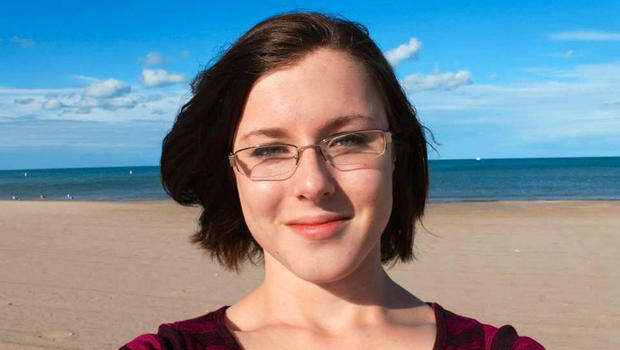
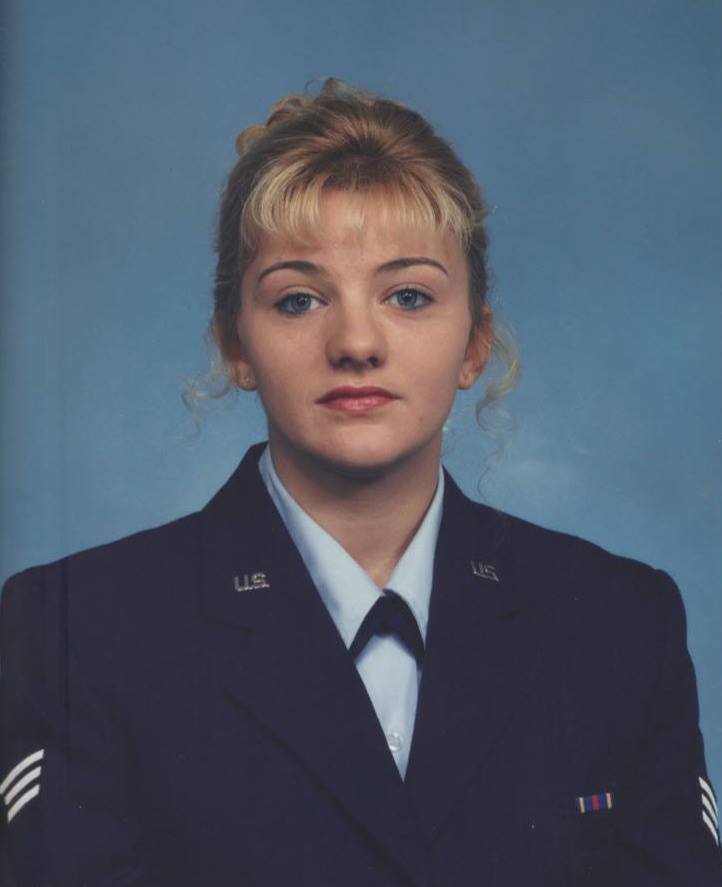
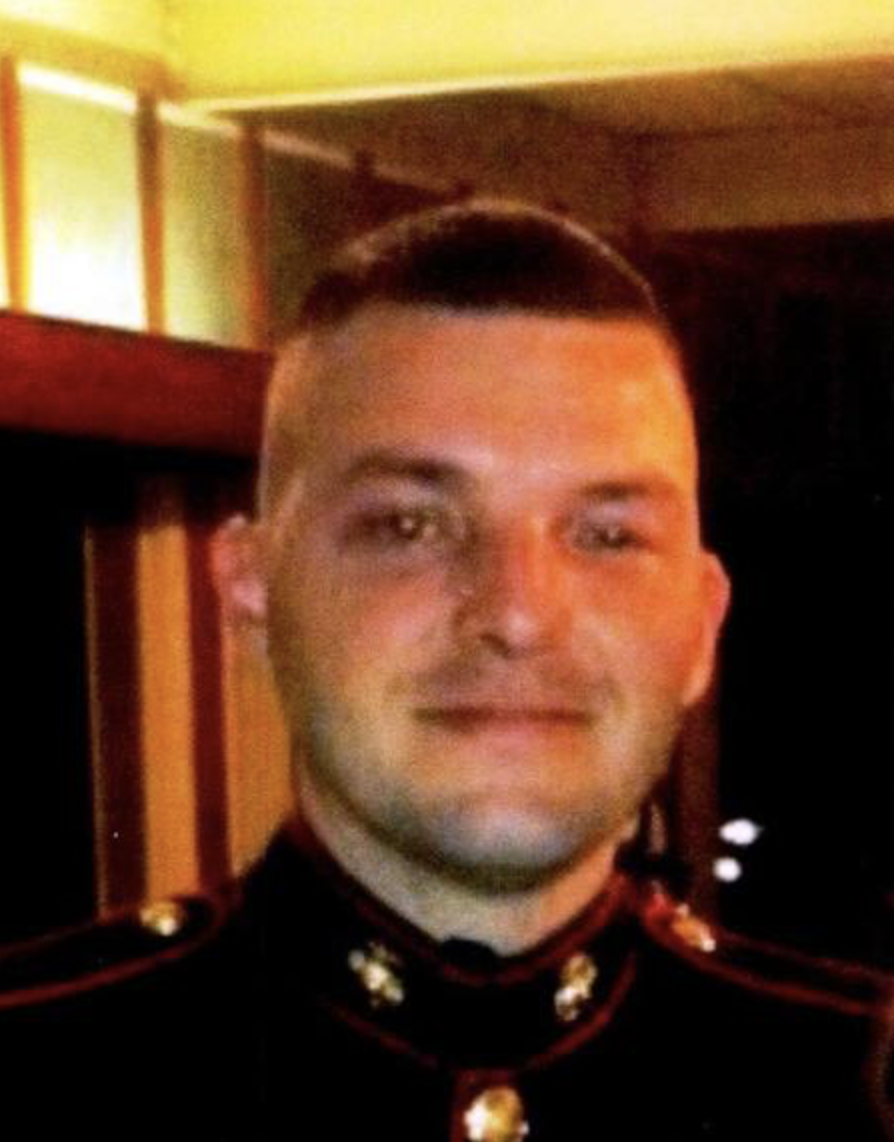
Lance Corporal Joseph Scott Pemberton, US Marine Corps, sentenced to 6-12 years in a Philippine prison for killing Jennifer Laude, a trans Filipina sex worker, in October 2014.
“His sentence was downgraded from the usual 20 to 40 years for homicide under Philippine law, in part because Laude failed to disclose to Pemberton that she was trans.” -Buzz Feed
Marine Corps spouse Erin Corwin, 19, was reported missing on June 29, 2014 by her husband who was stationed at Camp Pendleton near Twentynine Palms in California. After an extensive investigation and search, Erin’s body was found in an abandoned mine shaft on August 16th, 2014. During the investigation, authorities learned that Erin was having an affair with another Marine. This Marine was identified as Christopher Lee, 29, who was arrested in Alaska after Erin’s body was recovered from the mine shaft. Christopher admitted that he killed Erin but said it was because he became angry after she confessed to molesting his daughter.
The prosecution theorized he killed her to silence her and hide the pregnancy from his wife. He tricked her into believing that he was going to propose to her and instead he approached Erin from behind and strangled her for at least five minutes with a garrote made up of two pieces of rebar and a cord. After Lee was satisfied Erin was dead, he dragged her body to a mine shaft in the desert and pushed her in head first. Christopher Lee was found guilty of first-degree murder by civilian authorities and sentenced to life in prison without the possibility of parole.
In the News:
Investigators are searching for the beautiful, pregnant wife of a U.S. marine corporal who was last seen over a week ago. 19-year-old Erin Corwin was reportedly last seen leaving her Twentynine Palms, CA home around 7 a.m. on June 28 to go to nearby Joshua Tree National Park. Her husband of a year and a half Jonathan reported her missing the next day. Days after she disappeared, Erin’s mother Lore Heavilin found out that her daughter was about 3 months pregnant. -HLN (July 7, 2014)
An eyewitness spoke out Wednesday, describing the last time he saw the pregnant Marine wife who’s been missing for more than two weeks.Michael Beasley said he saw Erin Corwin get into a red car with another man and drive away. He added that it didn’t appear she was being forced into the car in any way.Corwin was last seen on June 28 leaving a home she shares with her husband, headed to Joshua Tree National Park. Her husband, Lance Cpl. Jonathan Corwin, reported her missing a day later when she never returned. -HLN (July 16, 2014)
According to a new search warrant affidavit released this week, homicide detectives now believe that — on the day she vanished — missing Marine wife Erin Corwin went on a day trip with a neighbor and ex-Marine whom she was romantically involved with. -HLN (July 22, 2014)
New police documents reveal Erin Corwin was having an affair with her married neighbor and told her friend the two were spending the day together when she went missing. -HLN (July 22, 2014)
Erin Corwin was last seen leaving her home on June 28, and was reportedly heading to Joshua Tree National Park. -HLN (July 22, 2014)
Following the discovery of Erin Corwin’s remains, friends and family father to honor her memory and begin healing. -WATE 6 On Your Side (September 19, 2014)
Part 1: Erin Corwin vanished after having a miscarriage and growing distant from her husband. She was allegedly pregnant at the time of her disappearance. -Crime Watch Daily (May 3, 2017)
Part 2: Erin Corwin vanished after having a miscarriage and growing distant from her husband. She was allegedly pregnant at the time of her disappearance. -Crime Watch Daily (May 3, 2017)
Part 3: Erin Corwin vanished after having a miscarriage and growing distant from her husband. She was allegedly pregnant at the time of her disappearance. -Crime Watch Daily (May 3, 2017)
Dateline (NBC):
When the 19-year old wife of a Marine vanishes without a trace in the California desert, investigators launch a massive search. They soon uncover a secret love triangle and a mystery with multiple suspects. -The Last Day, Dateline (December 1, 2016)
48 Hours (CBS):
Tonight’s episode of “48 Hours: NCIS” takes you inside the real-life investigation of a 19-year-old Marine wife who vanished in the desert. “The Marine’s Wife” uncovers the story of Erin Corwin and her disappearance. – CBS News (June 12, 2018)
The Marine Corps Times shouldn’t be deleting history especially history that includes an individual was cleared of charges and is in fact considered an innocent man. Hastily reporting that an individual has been accused of misconduct has long lasting effects. The accusation will forever stay with Lt. Col. Thomas Jasper hence the reason for this post. Lt. Col. Jasper was cleared of the inappropriate touching charges and the Marine Corps Times didn’t do him any justice when they printed the accusation or deleted the fact that he was cleared of the charges.
Now, what I want to know is why aren’t the national or military media runing with this story? Why were they quick to villify him and report on a mere allegation as if it were gospel?
It’s because he was the Marine sex assault prosecutor. What better way to advance the narrative that sexual assault in the Military is out of control and an epidemic if the persons who are charged with prosecuting sexual assault are committing sexual assault???
And, if your question was not merely a rhetorical one, then how does it change your views when the issue of (1) accuser privacy in the press vs. the presumed innocent accused’s lack of privacy in the press or (2) using the term “victim” to describe a complaining witness before anyone is ever convicted, hits so close to home? I’m sure this is the way Brandon Wright feels right now, but he’s just an Airman first class, so it’s no big deal, right? The Military has a war to win against it’s number one enemy. Not Al Qaeda or the North Koreans, but the enemy called sexual assault.
ALEXANDRIA, Va., March 19 (UPI) — The acceptance of bullying in U.S. culture contributes to sexual assault in the armed forces, experts say.
Mary Ellen O’Toole, editor-in-chief of Violence and Gender and retired FBI profiler and criminal investigator analyst led a roundtable discussion with Christopher Kilmartin of the U.S. Air Force Academy and Col. Jeffery Peterson of Center for Naval Analyses in Alexandria, Va., discussed specific factors that likely contribute to the sexual assault problem.
“The evidence is that the population of people who come into the U.S. military have more experience with sexual assault than the general population, both as offenders and as survivors. Survivors are at statistically increased risk of being revictimized, and offenders are at an increased risk for reoffending,” Kilmartin said at the roundtable.
Jennifer Norris: Senate bill will still keep military sexual abuse cases within the chain of command of the military, leaving victims vulnerable to retaliation
ID Go: When a young college student is abducted from a friend’s home in the middle of the night, the city of Reno lives in fear of who might be next. Dogged investigation leads detectives to a serial rapist who’s just escalated to murder. -Vanished in Reno, Unusual Suspects (S6,E1)
“The bill mandates a DNA cheek-swab whenever a person is booked for a felony arrest. If the arrest is deemed legitimate, the DNA would be cross-referenced with DNA from other crime scenes to see if the arrestee was involved. The proposal is named after Brianna Denison who was raped and murdered by James Biela in Reno in 2008. Proponents believe such a law may have saved Denison because Biela had a prior felony arrest.”
Editor’s note: With a cable subscription, you can download the free ID Go app and watch all of the Investigation Discovery programming at your convenience. And for those who do not have cable, you can watch “unlocked” episodes on the ID Go app including the latest premieres. Download the ID Go app and binge away. For those who prefer commercial free programming during your binge session, Prime Video has an ID channel: ‘True Crime Files by Investigation Discovery” available for $2.99 a month. It’s a compilation of older seasons but totally worth the cost if you are a true crime addict.
Justin Eldridge, U.S. Marine Corps Veteran (Photo: Obituary)
Marine Corps veteran Justin Eldridge was found dead of an apparent self-inflicted gunshot wound in his Waterford, Connecticut home on October 29, 2013. Justin served in the Marine Corps for 8 1/2 years. After a deployment to Afghanistan he battled with both Post Traumatic Stress Disorder and Traumatic Brain Injury. As a result he was medically retired from the Marine Corps in 2008. Justin was married with four children at the time of his death. Justin’s wife Joanna has continued the fight for our soldiers and veterans. Senator Richard Blumenthal (D-CT) honored Justin Eldridge on the Senate Floor and co-sponsored a veteran suicide prevention bill in his name. Joanna attended the 2015 State of the Union and a bipartisan suicide prevention bill was signed into law in March 2015.
His final message, posted on his Facebook Page at about 9 p.m., “theres only so much bashing someone can take before they react………” –Waterford Patch (October 29, 2013)
Senator Richard Blumenthal Honors US Marine Justin Eldridge:
In a Senator Floor speech today, Connecticut Senator Richard Blumenthal honors the heroism of United States Marine Justin Eldridge of Waterford, tragic victim of Post Traumatic Stress Disorder who took his own life two days ago. (October 30, 2013)
Jennifer Norris: Even with 1 out of 3 women facing sexual assault in the military, the Defense Department refuses to hold sexual predators accountable within the military justice system. -The Real News Network (August 8, 2013)
NOOR: One in three–that’s the astounding number of women who have been sexually assaulted in the military, a rate twice as high as civilian numbers. Those are astonishing, especially in light of the fact that only 10 percent of reported incidents go to trial. This harsh reality has put the Defense Department in the hot seat with Congress, pressuring them to make substantive changes. Now Defense Secretary Chuck Hagel is planning a new round of sexual assault policies that include expanding an advocacy program for victims to all military branches and recurring inspector-general audits of all closed investigations. Now joining us to unpack this and respond to this latest news is Jennifer Norris. She has served 15 years in the U.S. Air Force and retired for PTSD due to military sexual trauma. She started working for the Military Rape Crisis Center as a national victim advocate for active duty and veterans in 2011, and she’s testified before Congress to support the passage of the Military Justice Improvement Act and STOP Act. So, Jennifer, you know firsthand what it’s like to deal with being sexually assaulted in the military. Can you share some of your stories? You were drugged and raped by your recruiter and also sexually assaulted by an instructor. Can you describe, as much as, of course, you feel comfortable, what happened in these incidents and the challenges you faced in getting accountability for what happened to you?
NORRIS: Well, I guess you can start out by saying that I was completely naive to what rape or assault or harassment or violence of any kind was. I was a small town girl. I just didn’t get–I didn’t grow up with that kind of stuff. So when I joined the military, it came as quite a surprise to me that I was being randomly targeted by predators who were basically not going to take no for an answer, no matter what. And I was trapped in the situation. And the only way to get out of it was to report. And, of course, we’re too scared to report, because we see what happens to other people that report. And just this past year, it’s been confirmed once again that 62 percent of those folks in the military that don’t report don’t report due to a fear of retaliation, whether it includes losing your career, getting treated like crap, getting isolated from others, whatever it might be. And the reason I’m telling you this is this is what happened to me. I had four different perpetrators approach me within my first two years of service, but I didn’t dare say anything, because I was afraid it would have negative repercussions on my career. But by the fourth predator, who was escalating and becoming more and more abusive–of which I could not escape, because when you’re in the military, you can’t just quit your job; you’ve got to go back to work with these folks the next day, even if he did attempt to rape you the night before, which is exactly what happened to me. And I just got to a point where I said, I can’t do this anymore. I’m either getting out of the military or, you know, something’s got to give. And this whole time, I wasn’t thinking about reporting at all, because I knew if I did that, my career would be over. But in the end I ended up reporting all four of them. And sure enough, I got retaliated against so badly by those in my squadron that I ended up having to transfer to another duty station that was four hours away.
NOOR: One rule under consideration by Secretary of Defense Chuck Hagel would be to expand the role that victims have throughout the court-martial process, including the sentencing phase. In a handful of cases that have come under congressional focus, senior commanders have actually overturned convictions of their subordinates. What do you make of this proposal?
NORRIS: At this point, they’ve had since Tailhook to deal with this situation. All this stuff should have been done back in 1992, when they told the American public it would be done by then. And instead we’ve got 2013, and now it’s become an epidemic that’s not only impacted our soldiers, both males and females, but also civilians, children, wives. They’re all–nobody’s immune. Predators do not discriminate. And if you don’t stop them, they only escalate and progress. And there’s been basically no accountability for these predators. As you stated earlier, a 10 percent conviction rate, a lot of that for charges lesser than what they were originally accused for. And where do they go when they leave the military? Your neighborhood. That’s why we’re at where we’re at today. We don’t want to hear what the Department of Defense has to say anymore. I don’t want to hear zero-tolerance one more time. I can’t take it. As a survivor, I cannot take it, based on what I do every day with my clients and see how badly they’re being treated by their command simply because they reported a sexual assault or harassment. There is a hardcore retaliation happening now. There was in the past. Part of the retaliation that I experienced was I got beat by one of the predator’s friends for reporting. These people are scared to come forward. So the DOD has lost their chance. They’ve lost the trust. Now it’s time for someone else to come in, which is why we’re pushing the Military Justice Improvement Act. We no longer want those commanders to be gatekeepers of justice. They’re not professionals. They don’t know how to investigate. Therefore they should not be involved in any of the process, aside from maybe knowing that there’s a predator within their ranks. We want to give the victim confidentiality. We want them to be able to have an impartial person that’s going to decide whether or not they’re going to push forward with a case and how they can do that without beating up the victim in the process. The only way we’re going to be able to clean this mess up is to move forward with prosecutions and get these people jailed. We certainly don’t want to just start kicking them out and tossing them out, ’cause then they’re moving to your neighborhood. The DOD has got to deal with this. And we don’t trust them at this point, hence the reason we want the STOP Act, which would provide the civilian oversight to hold them accountable on every single move they make when it comes to trying to discharge a soldier or punish one, because we’ve basically been dealing with (A) you’re all of a sudden a bad person if you reported a sexual assault, and then the retaliation begins, and eventually you can lose your career. They’re going to use, like, some mental diagnosis to get rid of you with, right, saying it’s a pre-existing condition, when in fact it wasn’t; it’s PTSD from getting gang raped. Right? We want them to be held accountable to someone when they make these decisions, just decide for themselves that, oh, well, I’ll just get rid of her ’cause I don’t feel like dealing with this, or I’ll just get rid of him because, you know, if I have a rape under my command it’s going to make me look bad. We want to yank these commanders out of this situation and give real justice to the victims and caring.
NOOR: And as you stated, changes to this policy action has been promised for a very long time now. What do you account for these delays? And talk–and so far the White House has been silent. Can you respond to the White House and just the delays that have been going on for years now?
NORRIS: Well, first of all, it’s pretty upsetting as a survivor to know that they knew about this in ’92. And don’t tell me they didn’t have enough money to be able to get experts to tell them that predators, there’s few and far between, but they can do lots and lots of damage if not stopped. Well, now, because they haven’t stopped them, they’re now in our higher-ranking positions like Colonels, like commanders, like SARC coordinators, because they never were held accountable. And so they’ve let it spin out of control like this now. And we’re saying, you’ve had your chance. It’s too late. We need to take care of this, because it’s basically at a point where if these guys just decide, oh, well, we’ll just toss them out as we find out about this stuff, they’re just basically pushing it off to the civilian sector. So Obama not standing up right now, it’s upsetting, because him of all people should know that, you know, if you just toss people out of the military because you don’t want to deal with them, it just becomes someone else’s problem. And so we’re basically–everywhere this predator goes, they’re causing a path of destruction. That’s costing everybody more money, because the people to begin with that should have dealt with it didn’t. We need to go back. We need to find out who was raped, when, by who. And we’ll probably find that these same predators have multiple victims across branches. And then we could possibly move forward with one case against one predator with, you know, ten victims, for example. And I don’t understand why people aren’t talking about this, why they’re not saying, why Obama isn’t saying, I want you to go back and determine who these people are that are being accused. It doesn’t mean they’re automatically guilty. But why can’t we start tracking who’s doing what and when it was done and what the patterns are and start getting these guys so we can move forward with an awesome military?
NOOR: This issue has gained a lot of traction recently, a lot more than it had in the past. You had the documentary The Invisible War that came out. You’ve had hearings in Congress. What more pressure–like, how much more pressure is it going to take to get these changes put in place?
NORRIS: Well, I mean, what it’s going to take is the American people, which is what our country’s all about anyways. So while these guys, while the Department of Defense and Congress are dragging their feet on making these changes, they’re hurting people. Whether they want to admit it or not, they are. And we feel, as survivors, it needs to be dealt with immediately. It needs to be a national emergency where we make sure that everybody is good to go and they’re not trapped under some predator that they can’t escape from, and if they are, that they’re not going to get retaliated against for turning them in. Right? We take it that seriously, that in order–’cause they haven’t done anything since Tailhook. So you go back 25 years and imagine the destruction and amount of damage that’s been done by not holding anyone accountable. They have gotten better and better and better at what they do. And we often see them using alcohol and drugs as their weapons. But then we hear the military saying, oh, well, don’t drink, ’cause you might get raped, or be careful no one puts anything your drink, like it’s somehow the victim’s responsibility to make sure they don’t get raped. We still haven’t even gotten there yet. So the DOD has had their chance. We’ve had it. And, of course, they’re in good with Congress. Some people in Congress, this is how it works. It’s all about the power. And we got shut down by Senator Carl Levin, who has recently promoted three other senators to fight keeping things in the chain of command, which is–basically what they’re saying is, we’re going to keep it in the chain of command even though we know that 62 percent won’t report to this commander because they’re afraid of retaliation. That’s what they’re telling us survivors. And that’s what the American public needs to know. The only way we can get this now is the support of the American public. That’s why we’re out here right now pushing it, trying to get it, and asking people to contact their senators and representatives and ask them to pass the Military Justice Improvement Act, which would remove all violent crimes from the chain of command. And then, once we get that barrier broken down, we’ll start pushing for the civilian oversight that the STOP Act would call for.
NOOR: Jennifer Norris, thank you so much for joining us and sharing that very powerful story.