“Sexual assault in the US military is accelerating toward likely change in the way such cases are handled by senior uniformed officers – which is to say, it may be taken out of their hands. It’s a function of changing public attitudes regarding military service and sexual misconduct beyond ‘he said, she said’ – given greater strength by the growing ranks of women in senior elected positions.
In Congress, women lawmakers are leading the charge, pushing legislation that would take the authority to investigate and punish instances of sexual assault out of the chain of command, away from commanding officers whose potential conflict of interest may favor the military’s ‘good order and discipline’ as it applies to unit cohesion and war-fighting ability over vigorously prosecuting sexual offenders in the ranks, including fellow officers.”
Read more from the Christian Science Monitor here.
Ivanice Harris and Nathaniel Cosby, US Marine Corps
The dead body of tourist Ivanice ‘Ivy’ Harris was discovered at Yokohama Bay on the island of Oahu in Hawaii on May 20th, 2013. Ivy was living in Nevada but was originally a native of Portland, Oregon; she was four weeks pregnant. Ivy’s friends and family initiated a search after she disappeared on May 16th while celebrating her 29th birthday in Hawaii with her boyfriend, also her pimp. According to Ivy’s memorial, she died on May 17th. Ivy’s death was officially ruled a homicide by the medical examiner’s office; she died of a neck injury. Hawaii police conducted a thorough investigation that led to an active duty Marine on temporary duty assignment in Hawaii. Master Sgt. Nathaniel Cosby, 39, was an explosive ordnance disposal technician assigned to Marine Wing Support Squadron-171 in the 1st Marine Aircraft Wing based out of Iwakumi, Japan. Cosby was arrested at the airport (destination unknown) and charged with Ivy Harris’ murder. After released by the Honolulu Police Department, Cosby was temporarily assigned to an aircraft unit in Kaneohe, Hawaii and according to a Marine spokesman, free to come and go as he pleased.
At some point it appears the civilian authorities deferred to the miitary because Cosby was court martialed by the Marines for the second degree murder of Ivy Harris. Cosby was an active duty Marine therefore he could be tried by the civilians, the military, or both. During the course of the legal proceedings, Cosby admitted to a confrontation with Ivy Harris over money in his hotel room after a night of drinking. He claimed Ivy demanded money then pulled out a knife after he attempted to get out of the room so he put her in a chokehold and killed her in self defense. He got rid of her body to avoid embarrassment to his family and to the Marine Corps. According to court testimony, he was unable to give a blow-by-blow description of the struggle, describing the scene as ‘chaos’. An 8-member military panel found Nathaniel Cosby guilty of second degree murder, obstructing justice, and attempting to patronize a prostitute. The panel recommended life in prison and a dishonorable discharge pending final approval by the convening authority, the Marine Forces Pacific commander. Cosby will serve his life sentence at the maximum-security military prison in Fort Leavenworth, Kansas.
“After being released by HPD, he was temporarily assigned to an aircraft unit at Marine Corps Base Hawaii in Kaneohe, where a U.S. Marines spokesman said he will be free to come and go as he pleases like all other Marines.” –Hawaii News Now
The medical examiner confirms the Oregon woman whose body was found in west Oahu was murdered. Ivanice “Ivy” Harris was found dead four days after she went missing in Waikiki. -KITV4
New legislation would make it easier for victims of sexual assaults in the military to come forward.
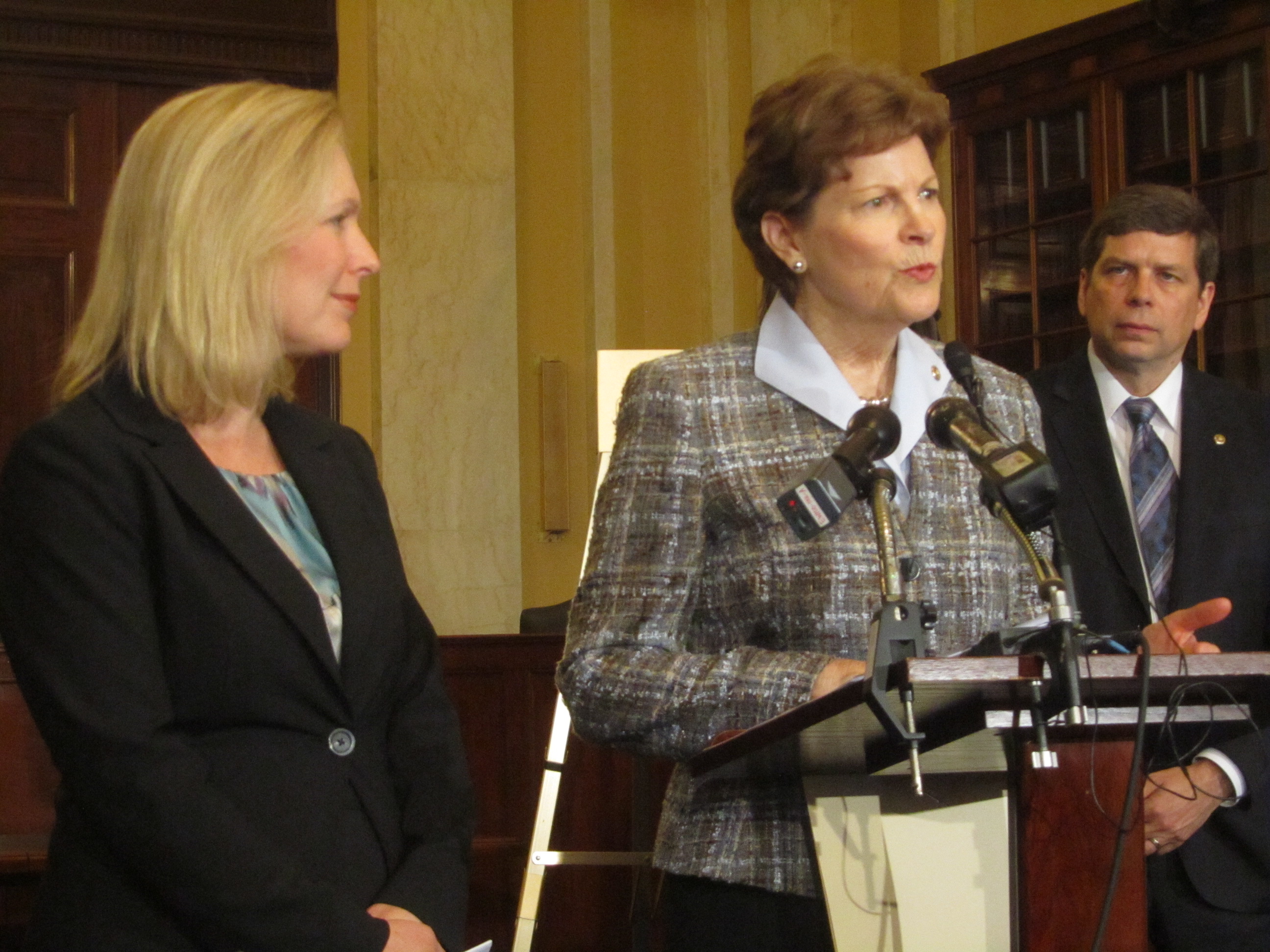
“WASHINGTON, D.C. — A burgeoning scandal over sexual assaults in the military is fueling calls from congressional lawmakers on both sides of the aisle to support a bill that gives victims greater confidence that they’ll get justice. At an emotional press conference on Thursday where former service members spoke of being sexually assaulted while in the military, Sen. Mazie Hirono and Rep. Tulsi Gabbard joined a bipartisan group in both chambers in pushing for reform. The issue was a personal one for Gabbard, who served two tours of duty in the Middle East with the National Guard. Though she was not available for comment Thursday, she told CNN earlier this month that rape culture was prevalent during her first deployment to Iraq, to the point where soldiers were trained on protecting themselves from other soldiers.”
At [the] press conference, Jennifer Norris said she was raped while serving in the U.S. Air Force. “At first I was too afraid to report my assault to my chain of command, but two years later I was forced to report due to the escalation of the behavior and the fear that I would be raped again,” she said. Norris…said she’d been reluctant to report the rape because, “in the Air Force, I witnessed first hand what happens to those who stepped forward to report their assaults. I did not want to be stigmatized for reporting my assault — as I tried to move forward with my career. Instead, the best option for me was to try and endure it, to suck it up and try and make it until I could get transferred somewhere else — only to have it happen over and over again, like a recurring nightmare.” –Honolulu Civil Beat (May 16, 2013)
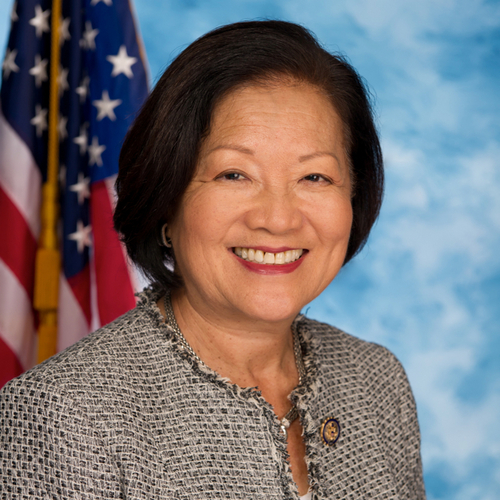
U.S. Senator Mazie K. Hirono was joined today by victims of sexual assault in the military and organizations who assist victims of Military Sexual Trauma (MST) to announce new bipartisan, bicameral legislation that would reform the military justice system by removing the prosecution of all crimes punishable by one year or more in confinement from the chain of command, except crimes that are uniquely military in nature, such as disobeying orders or going Absent Without Leave. -Mazie Hirono (September 25, 2013)
Senator Mazie K. Hirono joined a diverse coalition, led by Senator Kirsten Gillibrand (D-NY), to call for the creation of a fair military justice system to reverse the systemic obstacles that sexual assault victims face. The Military Justice Improvement Act would remove the military’s chain of command’s sole decision-making power over whether cases move forward to trial. -Mazie Hirono (November 6, 2013)
Hirono Speaks In Support Of The Military Justice Improvement Act. -Mazie Hirono (November 14, 2013)
With Vote Looming, Hirono Urges Support For Military Justice Improvement Act -Mazie Hirono (November 20, 2013)
Before Senate Vote, Hirono Urges Colleagues To Pass Military Justice Improvement Act -Mazie Hirono (March 6, 2014)
PBS NewsHour: Hirono Fights For Military Justice Improvement Act -Mazie Hirono (March 7, 2014)
Senator Hirono Calls to Address Military Sexual Assault -Mazie Hirono (May 24, 2016)
Senator Hirono Presses Marine Corps Commandant for Commitment to Address Military Sexual Assualt -Mazie Hirono (March 14, 2017)
A New York senator introduced a bill Thursday that aims to remove sex crimes from the military’s chain of command — a bid to transform an insulated culture that tends to dampen sex-assault reporting, leaving many victims feeling helpless or hopeless.
Under the Pentagon’s current justice system, less than 1 percent of accused sexual perpetrators in the military were convicted last year while during 2012 just 9.8 percent of sex-assault victims reported the incidents, according to a Department of Defense report. Many victims feel powerless because their superiors can control everything from whether a case proceeds to whether a guilty verdict is eventually overturned.
“When the officer in charge of preventing sexual assault in their ranks is himself arrested for sexual assault — clearly, the strategy we have in place is not working. Twice in just the last two weeks this has happened,” Gillibrand said.
Virtually all media attention on a Pentagon report last week focused on an increase in service members’ claims of sexual abuse in an anonymous survey, but unmentioned were statistics showing that a significant percentage of such actually investigated cases were baseless. -Washington Times
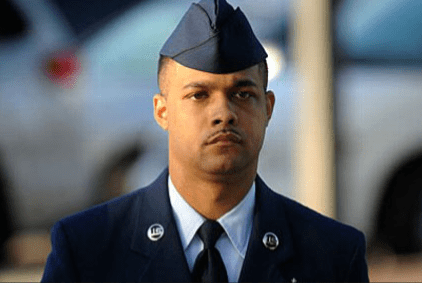
SrA Christopher Oliver was a basic military training instructor at Lackland Air Force Base in Texas. He was one of the 35 instructors courts martialed after a base-wide investigation into what is now referred to as the Lackland Sex Scandal. SrA Oliver was accused of having unprofessional relationships with at least 4 new recruits and was accused of sexual assault and sodomy with one of those trainees. He was also accused of adultery and using his rank and authority to gain sexual favors. SrA Oliver pleaded guilty to unprofessional relationships and adultery. Oliver was found not guilty of aggravated sexual assault. In June 2013, a military judge convicted him of consensual sodomy, wrongful sexual contact, adultery, and unprofessional relationships. He may be listed on the sex offender registry because of the wrongful sexual contact conviction. SrA Oliver was sentenced to two years in prison and was given a dishonorable discharge. Although the actions for which he was found guilty were unprofessional and in fact UCMJ infractions, they were not criminal in nature yet he was sentenced to 2 years in prison for consensual sex and adultery, a law that doesn’t exist in the civilian world. The Air Force gave SrA Oliver the fifth longest sentence in the Lackland Sex Scandal. SSgt Craig LeBlanc had the fourth longest sentence at 2 1/2 years for unprofessional relationships & adultery. SSgt Eddy Soto had the third longest sentence at four years for rape but Soto’s conviction was later overturned by the Air Force Criminal Court of Appeals. The rape charge lacked sufficient evidence to prove beyond a reasonable doubt. SSgt Luis Walker and MSgt Michael Silva both received twenty year sentences for rape and sexual assault.
SSgt Craig LeBlanc was a Basic Military Training Instructor at Lackland Air Force Base in Texas. He is also one of the 35 instructors courts martialed after a base-wide investigation into sexual abuse claims referred to as the Lackland Sex Scandal. He was accused of having inappropriate relationships with recruits, adultery, and sexual assault. He was found not guilty of sexual assault. Nonetheless, SSgt LeBlanc was sentenced to 2 1/2 years in prison in February 2013. Although the actions for which he was found guilty were unprofessional and in fact Uniform Code of Military Justice (UCMJ) infractions, they were not criminal in nature yet he got prison time for consensual sex and adultery, a law that doesn’t exist in the civilian world. The Air Force gave SSgt LeBlanc the fourth longest prison sentence. SSgt Eddy Soto was sentenced to four years for the rape of a trainee but a year and a half later, the Air Force Criminal Court of Appeals overturned the conviction and set aside the original prison sentence. The rape charge lacked evidence beyond a reasonable doubt. SSgt Luis Walker and MSgt Michael Silva were both sentenced to twenty years for rape and sexual assault convictions. SSgt LeBlanc attempted to appeal his sentence but the military appeals court denied it.
“The dismissal of these two specifications does not dramatically change the penalty landscape; in fact, only the maximum confinement authorized would change. Without the convictions on these two specifications, the confinement exposure is reduced from 22 years and 1 month to 18 years and 1 month. The appellant was sentenced to confinement for 30 months. Having considered the totality of the circumstances, we would reassess the appellant’s sentence to the same sentence approved by the convening authority.” -USAF Court of Criminal Appeals (March 2015)
“If Estacio had been convicted of sexual assault or wrongful sexual contact, the Air Force would have been required to notify state officials so he could be placed on a sex-offender registry, said Lt. Col. Mark Hoover, an Air Force training command attorney.” -My SA
SSgt Kwinton Estacio was a basic military training instructor as Lackland Air Force Base in Texas. He was one of the 35 instructors courts martialed in what is referred to as the Lackland Sex Scandal. SSgt Estacio was accused of a sexual assault and wrongful sexual contact with a trainee. The judge found him not guilty of sexual assault as there was not enough evidence to support the charge. A sexual assault conviction carried a maximum sentence of thirty years. A jury found him not guilty of wrongful sexual contact. Sexual assault and wrongful sexual contact indictments could have landed him on the sex offender registry. SSgt Estacio pleaded guilty to an unprofessional relationship, disobeying a direct order, and obstruction of justice. He was sentenced to one year in prison and received a bad conduct discharge. He appealed his sentence but the appeal was denied. Although the actions for which he was found guilty were unprofessional and in fact UCMJ infractions, they were not criminal in nature yet he was sentenced to 1 year in prison. SSgt Estacio had the sixth longest prison sentence in the Lackland scandal. SrA Christopher Oliver had the fifth longest sentence at 2 years for unprofessional relationships and adultery. SSgt Craig LeBlanc had the fourth longest sentence at 2 1/2 years for unprofessional relationships & adultery. SSgt Eddy Soto had the third longest sentence at 4 years for rape but Soto’s conviction was later overturned by the Air Force Criminal Court of Appeals. The rape charge lacked sufficient evidence to prove beyond a reasonable doubt. SSgt Luis Walker and MSgt Michael Silva both received 20 year sentences for rape and sexual assault.
SSgt Luis Walker, U.S. Air Force (Photo: Billy Calzada/San Antonio Express-News via AP)
Air Force SSgt. Luis Walker was a basic training instructor at Lackland Air Force Base in Texas. After an investigation into allegations of improper relationships and abuse of power at the training facility in 2011, SSgt Walker was charged with sexual assault. One of his victims stated under sworn testimony that he had raped her. As a result of the court martial, he was found guilty and sentenced to 20 years in prison as opposed to the original life sentence he was faced with. Shortly after the conviction, his wife spoke out publicly claiming that her husband was innocent and that he did not get a fair trial. SSgt Walker also echoed those sentiments when asked for a statement from the Air Force Times (see quote below). A few months later, one of the victims in the trial went public with her story. Virginia Messick shared that she was raped by SSgt Walker and that it was a harrowing experience. She also later reported that she was facing battles trying to get disability benefits for Post Traumatic Stress Disorder (PTSD) from the Department of Veterans Affairs. SSgt Walker’s attempt to overturn the sexual assault conviction on appeal were eventually denied. It was only a few months later that he would be found dead in his cell at Fort Leavenworth from an apparent suicide.
“These setbacks have discouraged me and at times I have wanted to give up, but because of my family, I can not. I am a human being and an American, I deserve the right to a fair trial. There has been a lot of focus on the number of alleged victims in my case, instead of the charges against me, when in fact each charge should stand on its own.” -SSgt Luis Walker (USA Today, September 3, 2014)