
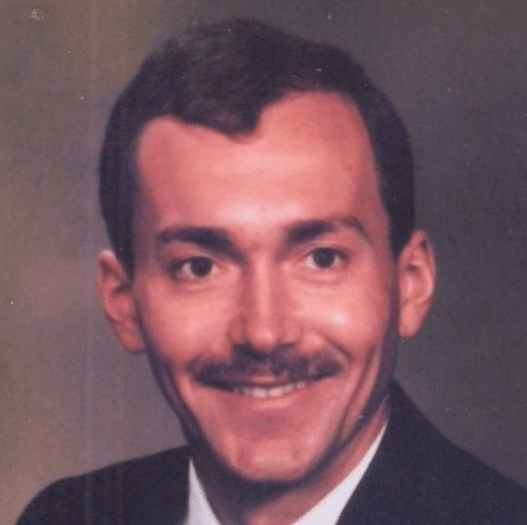
Army Captain Gordon Hess was found dead in a creek bed at Fort Knox, Kentucky on March 4, 1998 while there on temporary duty with the New York Army National Guard. Army investigators ruled the cause of death was ‘suicide’ but the family and an outside forensic pathologist dispute those findings given the autopsy revealed that Captain Hess had twenty-six stab wounds to the neck and chest area.
Doreen Hess shared with the LA Times: “Even as we attempted to bury his mutilated body, the Army stabbed him again with a suicide ruling.” The Army claims that it fully investigates all undetermined deaths as a homicide initially but after a thorough investigation of this case, including hundreds of interviews, they determined that Captain Hess died by suicide.
The family vehemently disagrees with the Army investigator’s findings based on the forensic evidence and a history of the Army ruling a soldier’s death a suicide when in fact it was most likely a homicide. An important fact to remember is that if an Army investigation determines the cause of death is suicide, they never have to investigate it again despite the impact on the families left behind.
“Absolutely no way did this man commit suicide. This gentleman was murdered.” -Charles DeAngelo, Esq.
The Victimology:
“In time the historic aspects or victimology relating to Hess began to unveil itself to the investigators. That, coupled with the Psychological Autopsy, provided much needed data. Gordon Hess was dedicated and devoted to his family, friends and community. He loved his family and children and was a dedicated father and husband. Hess had been described by many as a ‘Perfectionist.’ He consistently strived to be the best and to do things better. “He was competitive and struggled to be number one while he begrudgingly tolerated second best.” According to the report his career path was erratic and frustrating. For a competitive and dedicated man he struggled early in his career after leaving the Army, working at several jobs.”
“Although he was personally successful, this all led to financial strain due to the failures of several employers. He always wanted to be on a winning team which finally seemed to have happened when he became a fireman. Hess appeared at this time to excel at all his endeavors and likely expected nothing less from himself. It was indicated that earlier in his life Hess loved the Army and initially did not want to get out but family issues and concerns made it happen. Therefore, his affiliation and participation with the National Guard was probably one of the most cherished endeavors in his life. He enjoyed status and achievement in a structured environment that was team oriented and was a respected leader.”
“It also reflected that becoming a company commander was viewed by him as a significant achievement. The Army and this status was a big part of his identity; one that he did not just turn off after a training cycle because he continued to be involved by being at the Armory frequently well beyond the expectations of his supervisors and his stated responsibilities. The Army was a part of him. Yet he was not depressive and did not appear to suffer from any psychiatric disorder or medical problem. While he had conquered much adversity in the past, Hess was a man who struggled with feelings of inferiority that ‘fueled his drive to prove to others and to himself that he was competent and worthy of his achievements.’ He strongly identified with his roles as a fireman and an Army Captain. However, he had difficulty tolerating self perceived failure in the audience of those he sought and received affirmation.”
Read more: Captain Gordon Hess – Homicide or Suicide? An Equivocal Death Analysis and Case Study, James M. Adcock, PhD, Investigative Sciences Journal, March 2011
Related Links:
Dead soldier with 26 stab wounds declared ‘suicide’ by Army investigators
Widow Ends Effort to Clear Guardsman’s Name, but Maintains Her Belief in Him
Long-Deserved Honor
Another Suspicious Suicide
Autopsy photos are often used to refute official conclusions
The Death of Gordon Hess
Captain Gordon Hess – Homicide or Suicide? An Equivocal Death Analysis and Case Study
Wolves in Wolf Clothing
Top 10 Questionable Deaths Ruled as Suicides
Unsolved Mysteries and Scary Stuff: Bizarre Cases of the Missing and Murdered
Cold Case Files: Who Killed Captain Gordon Hess?
New Report Calls Suicide By Hess Unlikely
 MILITARY JUSTICE FOR ALL