Army soldiers George York and James Latham went Absent without Leave (AWOL) from Fort Hood in Texas on May 24, 1961. In two weeks, they killed seven people in multiple states:
Edward Guidroz (bludgeoned to near death), Louisiana
Althea Ottavio (robbed and strangled), Georgia
Patricia Hewitt (robbed and strangled), Georgia
John Whittaker (robbed, shot, and killed), Tennessee
Albert Reed (stole car, murdered), Illinois
Martin Drenovac (stole gas, murdered), Illinois
Rachel Moyer (molested and murdered), Colorado
Otto Ziegler (murdered), Kansas
On May 24, 1961, York and Latham deserted for the last time. They set out for York’s Florida hometown. Somewhere along the way, they morphed into indiscriminate killers. -NY Daily News
Maria Ridulph, 7, disappeared on December 3, 1957 in Sycamore, Illinois. She was found stabbed to death a few months later. Air Force veteran John Tessier (aka Jack McCullough) of Seattle, Washington, 17 at the time, was convicted in 2012 of the kidnapping and murder of Maria and sentenced to life in prison. It was the oldest cold case in the country to be solved but soon that victory would be lost and conviction overturned on appeal. A prosecutor found evidence that supported McCullough’s long-held alibi that he had been 40 miles away at the time of the disappearance. As a matter of fact, the former Captain was enlisting in the Air Force and left for active duty service a few days later. A certificate of innocence was issued and Jack McCullough was set free on April 15, 2016. Despite the past sexual abuse of minors allegations, which McCullough doesn’t deny, he wants to clear his name of the homicide. McCullough is suing the State of Illinois for wrongful conviction. The case remains unsolved to this day.
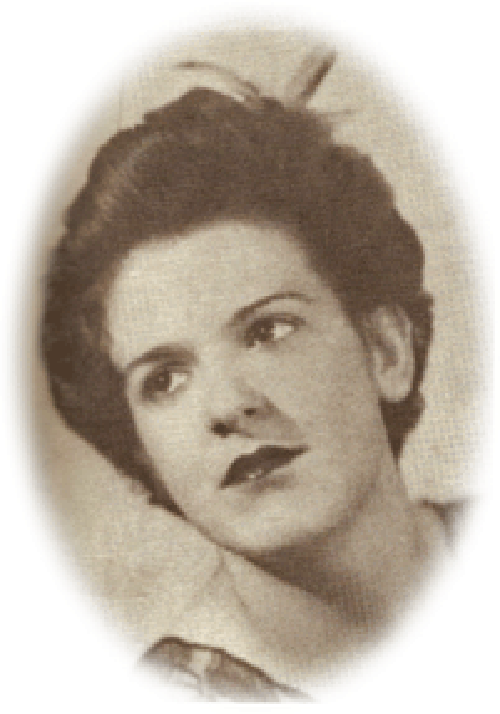
Anjette Lyles, Macon, Georgia (photo courtesy of Soapboxie)
In 1947, Anjette Lyles and WWII Army veteran Ben Lyles ran a successful restaurant in Macon, Georgia. Anjette’s shining personality and beautiful face kept the customers coming back. One judge remembered his experience at the restaurant and claimed she was just a nice person. One day, Ben decides he’s had enough and sells the family restaurant. He said he was sick of it and Anjette was angry because she wanted to keep the restaurant; they also had just gave birth to another child. Ben wouldn’t relent and he would come to regret that decision. At first, Anjette practiced black magic and wished for harm to come to Ben. Then she stepped it up and started using a form of ant poisoning she conveniently put in Ben’s food. Ben Lyles was sick with rheumatic fever since his time in the service but once he sold the restaurant, he rapidly deteriorated. Ben was experiencing bleeding from the nose and mouth, swelling of the eyes, weeping skin lesions, and acute liver failure. Nobody could figure out what was wrong. Ben’s death was painful and the baffled doctors decided it was encephalitis. Ben Lyles died on January 25, 1952.
The pair argued bitterly over [Ben selling the restaurant], and the arguments only got worse when the Veteran’s Administration decided to cut Ben’s pension to a tenth of what it was as they’d decided he was now fit to work. As if to prove the VA wrong, in December of 1951 Ben Lyles fell ill. The doctors were confused. It wasn’t a recurrence of his rheumatic fever, and in fact they weren’t quite sure what it was that was wrong with him. He had nosebleeds and convulsions, and had to be hospitalised. When he went into a coma in January the doctors decided it was encephalitis, but by then it was too late for effective treatment. He never regained consciousness and died on the 25th of January. –HeadStuff
With the life insurance payout and the proceeds from the sale of the restaurant, Anjette bought back the restaurant and it became even more popular. She met Joe ‘Buddy’ Gabbert in the restaurant; he was a pilot from Texas. As soon as Joe met Anjette, he was captivated by her and courted her very energetically. They were married in just a few months. But Joe would quickly learn his new wife is not as she seems. Within three months of walking down the aisle, Joe Gabbert was dead on December 2, 1955. At this point, it is clear that Anjette was a sociopath with no feelings of empathy or love for anyone. Before she was 30, Anjette was widowed twice because the secret to her misfortune was arsenic poisoning. Her first husband Ben died shortly after selling the family restaurant; her second husband Joe died of a mysterious illness shortly after they were married. But instead of mourning, Anjette was happy and thriving in her restaurant. With another life insurance payout, this time Anjette bought herself a new home. But then a complication arose when her mother-in-law, Julia Lyles, announced she wanted to move in with her.
Julia indeed moved in with her but Anjette found a way to eliminate her problem and make even more money. Anjette learned that Julia had lots of money in savings. She attempted to change Julia’s will but one judge would not touch it because he needed to witness Julia sign the document and he knew it wasn’t Julia’s signature. Anjette forged her mother-in-law’s will and began to speed up her demise. When Julia fell ill and was hospitalized, Anjette brought her favorite foods for her and all the nurses thought she was so nice. Instead, Anjette was feeding Julia arsenic poisoning while she was laying in the hospital bed. Julia Lyles died on September 29, 1957. Anjette learned the best way to handle family problems was to simply get rid of them, by murdering. After Anjette’s mother-in-law was dead, she started turning on her daughter Marcia because she was an accessory Anjette didn’t want anymore. Marcia died of another unexplained illness on April 5, 1958 and it was reported that Anjette stood in the corner of the hospital room laughing while she was in pain. The doctors at the time could find reasons for the deaths of her two husbands but not this healthy little girl.
This time the police wanted an autopsy of Marcia Lyles and the autopsy results revealed that Marcia died of arsenic poisoning. After learning this information, the police exhumed both Ben Lyle’s and Joe Gabbert’s bodies and again they found traces of arsenic. Anjette’s secrets were finally revealed; she was a serial killer with no mercy. People were stunned to learned Anjette poisoned both her husbands and her daughter Marcia. It was described as a complete shock as the community always knew the kind, happy, helpful Anjette in the restaurant. Anjette Lyles was convicted of multiple murders and sentenced to death in 1958. But she appealed on the grounds of insanity and was diagnosed with paranoid schizophrenia. Anjette was spared execution and lived out her life in an asylum. She died in 1977 of a heart attack at age 55. And in the end, a lot of people didn’t believe she was evil; they just figured she had some kind of mental quirk. Former FBI Profiler Candice DeLong shared her assessment of the case: “Anjette was a very high functioning, dedicated, driven, successful business women. That is not the definition of a paranoid schizophrenic.”
Anjette Lyles | Macon, Georgia | City Confidential [Full Episode]
Investigation Discovery:
Preview:Anjette Lyles felt the best way to deal with her problematic home life was to poison the people around her. -Secrets and Lies, Deadly Women (S4, E11)
Editor’s note: With a cable subscription, you can download the free ID Go app and watch Investigation Discovery programming at your convenience. And for those who do not have cable, you can watch “unlocked” episodes on the ID Go app including the latest premieres. For those who prefer commercial free programming during your binge session, Prime Video has an ID channel: ‘True Crime Files by Investigation Discovery” available for $3.99 a month. It’s a compilation of older seasons but totally worth the cost if you are a true crime addict. Download the ID Go app or purchase ID True Crime Files & binge away.
On the evening of September 12, 1931, Thalia Massie was walking home from a party she attended in Honolulu when she says she was pulled into some bushes and gang raped by some natives of Hawaii. She told her husband Tommie Massie, a Naval Officer who worked on a submarine, that she was raped. He immediately wanted justice for his young wife and insisted on calling the police. Thalia came from a very prominent family and led a privileged life that honored privacy; she did not want this information to go public. Once the Navy found out, they contacted the police department in an effort to exert pressure to get a conviction so their image was not impacted and the spouses felt safe again. As a result, the allegations were taken very seriously by the police and the case was investigated. Another woman reported that same night that she had been harassed by a group of Hawaiian natives and the police couldn’t help but suspect the two cases were related. After interviewing this woman, they were able to determine who one of the men were because she was able to provide a license plate number. The police brought the first suspect into the station for questioning and were able to find out who the other individuals were.
All of them were placed in a line-up together and Thalia Massie was asked to choose the men she thought were the ones who raped her. She picked two of the five men. Regardless the police charged all five men with rape and took them to trial. In the meantime, Thalia’s mother, Grace Fortescue, came to support her daughter through the trial. In the end, all five of the men were set free due to a hung jury; the jurors were deadlocked six to six. Tommy Massie and Grace Fortescue were especially upset with the outcome of the case and believed these men were guilty and only free because of a technicality. But what they didn’t consider is that Thalia’s identification of the accused was not credible because she could not see well without her glasses, it was dark that night, and she was only able to identify two of five individuals in a flawed police line-up. The other mitigating factors were no semen was found inside Thalia when the doctor’s performed an examination and she had bathed after the alleged rape so that evidence was lost.
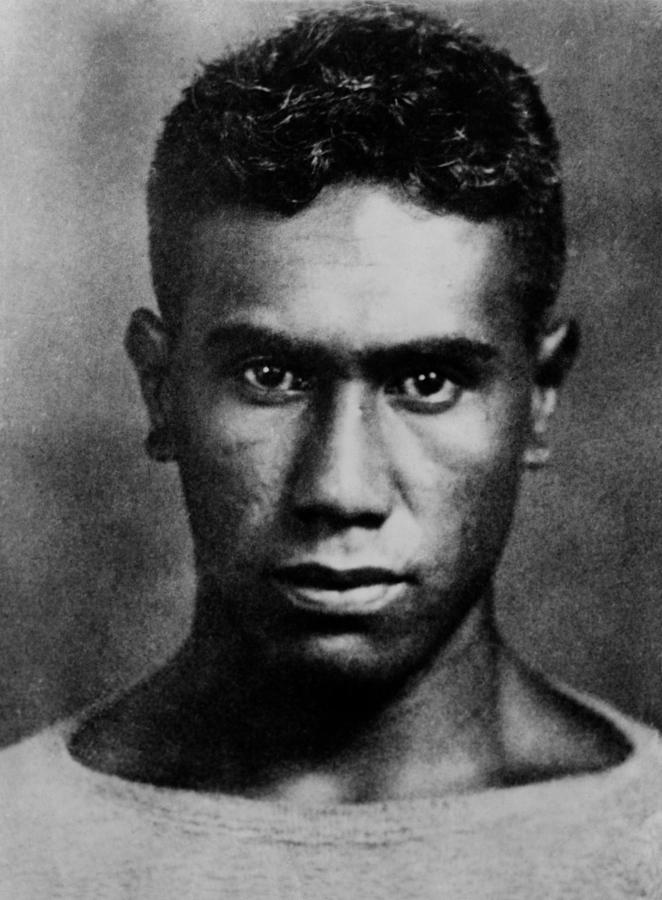
Before Honolulu civilian investigators even initiated a second trial, Tommy and Grace decided they would get confessions from the accused so this time it would ensure a guilty verdict. They decided they would pretend to be the police and abduct Joseph Kahahawai with the help of one of Tommy’s Navy co-workers. They took Joseph back to the Massie home, held him at gunpoint, and asked him to admit to the crime. Joseph refused to admit guilt and would not sign the statement admitting guilt. He also let them know they cannot hold him captive because they are not the police. Joseph attempted to leave and it was at this point that he was shot and killed in a foiled abduction to elicit a confession gone wrong. In the meantime, Joseph’s cousin contacted the police to report that Tommy Massie abducted Joseph. Tommy Massie and Grace Fortescue were caught red-handed with Joseph’s dead body in the car after the Massie vehicle was spotted and police pulled them over. The two were on their way to a location where they could have dumped Joseph’s body and he would never be found again.
Tommy Massie and Grace Fortescue were both arrested for the homicide of Joseph Kahahawai. The Navy personnel, spouses, and other white people treated them as if they were celebrities. The duo never thought the jury would convict but they did. They convicted them of manslaughter and sentenced them to 10 years. Unfortunately, the Governor of Hawaii pardoned them and reduced the sentence to 1 hour in jail. They were freed after abducting and murdering a man they were not even really sure was a perpetrator. Despite evidence that a rape may have never happened, it didn’t matter to Tommy and Grace. They wanted someone to pay for the crimes against Thalia and believed it was the truth. Supporters celebrated the victory with them. It appeared that Joseph Kahahawai’s life didn’t even matter to them, but his life did matter to those native to Hawaii. Hawaiian natives knew that the island was safe prior to Hawaii becoming a territory of the United States. This was the case that changed the image of Hawaii, now a paradise lost to the natives.
Honolulu, HA, 1931: When the young aristocratic wife of a Naval Lieutenant is discovered bruised and beaten by the side of a dark road, a hackneyed scheme and a trigger-happy hand will lead to the most sensational murder trial in Hawaii’s history. -Investigation Discovery





 MILITARY JUSTICE FOR ALL