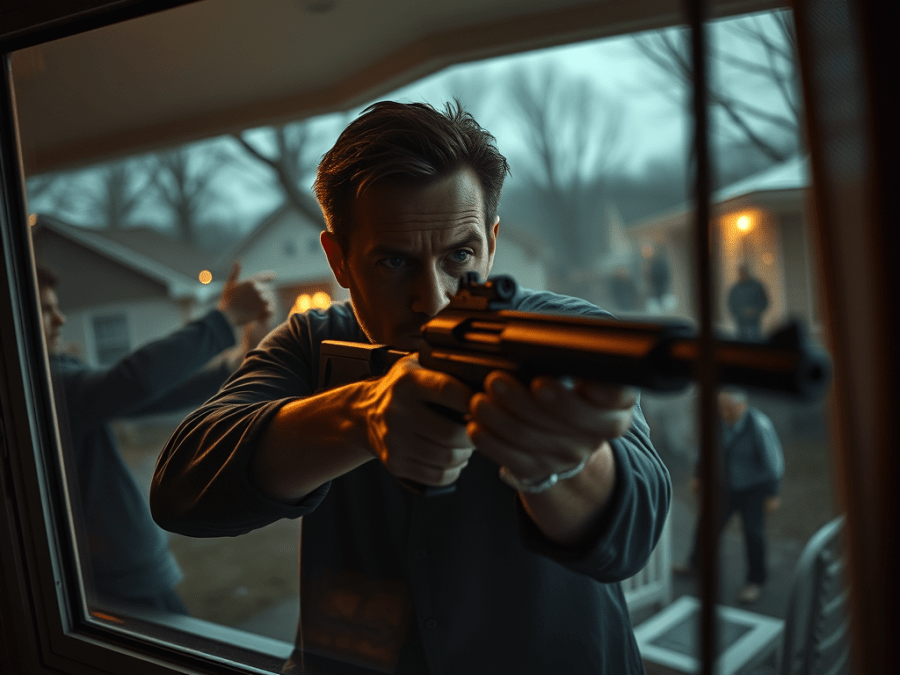
On August 29, 1989, Navy veteran Richard Uffelman and his two sons opened fire from their living room window and shot and killed their neighbors Michael and Florence Phillips in Machiasport, Maine. The Phillips family moved back to Maine so they could be closer to their family and the ocean, and they wanted to escape crime in Indiana. Shortly before they moved to Maine, a murder occurred outside their home and this was it for them; they wanted to raise their son Michael in a safe environment. Richard and Anita Uffelman and their two sons were the new neighbors of the Phillips in Maine. Richard was described as an authoritarian and a believer in good order and discipline. He worked at the local post office and taught his two children to shoot guns. Initially the neighbors were good friends and their boys played together. At some point, family came to visit the Phillips for a week. The happy family reunited outside on the front lawn while they barbecued, drank some beers, and enjoyed one another’s company. Apparently Richard found a broken bottle on his lawn during the event and automatically assumed the Phillips threw the bottle on his lawn. Richard called the police to complain about the incident but there was no proof since the Phillips denied doing it. This was it for Richard; the Phillips home interfered with his view of the ocean and he was going to exact his revenge. Read here.
On April 10, 2008, Navy sailor Chris Shortt discovered his step-daughter Meghan Landowski stabbed to death in their Portsmouth, Virginia home. Meghan was 16 years old and from the looks of the crime scene, there was a struggle; Meghan fought back. Investigators learned the killer used a knife from the family’s kitchen. They found it in a gutter down the street. The police didn’t know who committed the murder but they believed it was personal and Meghan knew her attacker. Chris and Angie Shortt believed Robert Hickey killed Meghan and they called NCIS at Naval Station Norfolk to let them know what happened. NCIS questioned Hickey. Robert Hickey was a military officer who was on his way to the rank of Captain when he was accused of sexual assault by Meghan. Robert was a close friend of the family and NCIS believe he groomed Meghan for a sexual relationship. Meghan said Rob began touching her when she was 14 and by age 15, Meghan was having a sexual relationship with a 30-year-old man. The family supported Meghan as she pressed charges against Robert but they learned from civilian investigators that Hickey’s crimes amounted to a misdemeanor in Virginia; he would spend 12 months maximum in prison. But Robert Hickey was a Navy sailor and subject to the Uniform Code of Military Justice. The Navy was investigating and planning to prosecute the case. Read here.
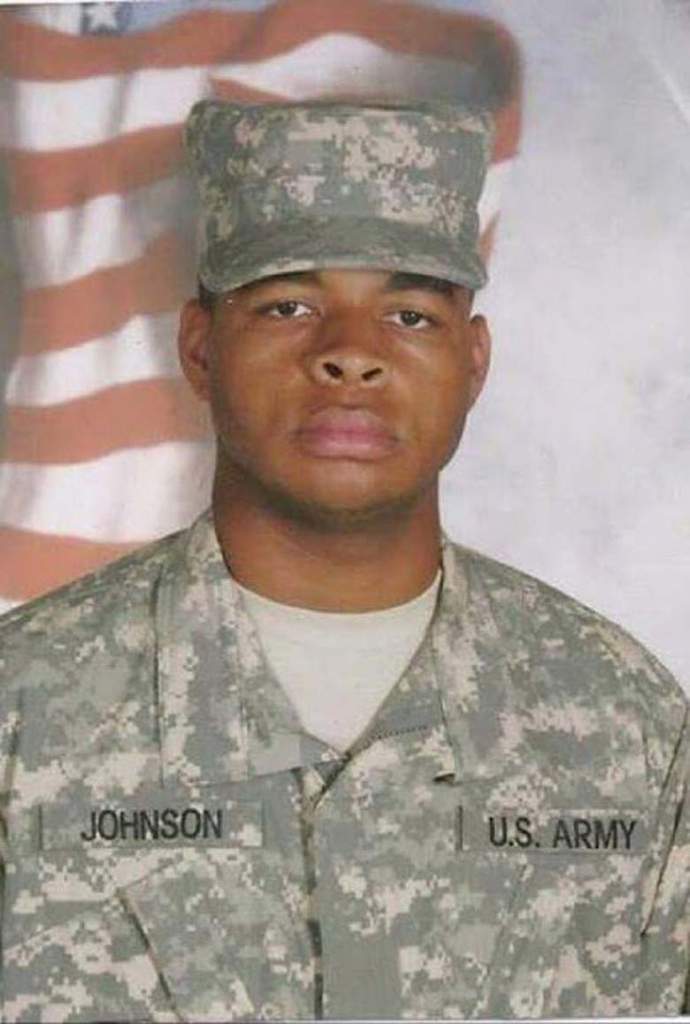
Army Reserve veteran Micah Johnson was accused of gunning down and murdering five Dallas police officers during a Black Lives Matter Event on July 7, 2016. This is considered one of the deadliest attacks on police officers since September 11, 2001. He was eventually killed in a stand off with police. In recent media reports we learned that Micah Johnson deployed to Afghanistan from November 2013 to July 2014. He was accused of sexual harassment while deployed to Afghanistan in May 2014. He was accused of stalking and stealing women’s underwear as well. The victim sought a protection order and told superiors he needed mental health treatment. The protection order was granted and the Commanding officer recommended an Other Than Honorable discharge and sent him home early from his deployment to Afghanistan. Johnson’s military attorney stated that this kind of punishment is unusual for an isolated incident of sexual harassment. As part of a tentative agreement, it was recommended that Johnson receive a general discharge which saves the Army time and resources needed to discharge soldiers under Other Than Honorable conditions. Instead he was eventually released from the Army with a honorable discharge in April 2015.
As a result of his actions while serving, he was not investigated and prosecuted but instead sent back home from overseas and discharged from the US Army Reserves honorably. Although we have limited information in which to base conclusions, at first glance this looks like a case of escalation of predatory behavior that starts with sexual harassment, progresses to stalking, then the individual gets brazen and starts breaking and entering to steal his victims belongings. It would only be a matter of time before the individual escalated to sexual assault, rape and then murder. It’s too early to make a definitive conclusion as we are still waiting for information to come in because this story is developing. But one thing we do know is that the US Army Reserves took the easy way out, booted Micah Johnson from the military to protect it’s service members, and unleashed him on society with no warning or records. This case is another reason why we need the military to investigate and process each and every case through the legal system so we at least have a fighting chance at prevention and escalation of crimes. If the military can’t handle or afford to investigate and prosecute each case to determine the soldier’s danger to society, then maybe they should hand over the investigation and prosecution of crimes to the civilians. This isn’t the first case they let slip through the cracks and it certainly won’t be the last.
This slideshow requires JavaScript.
Why wasn’t the deaths of five Dallas Police Officers enough to warrant an investigation of the way the Army handles crime? Instead the conversation was stifled in the media. The following is a list of questions sent to the Army Times and other media outlets to help them help us find answers.
• What were his behaviors prior to being reported?
• What evidence did the Commander have to grant a protection order?
• Why was the protection order for her home as well?
• Why was he sent back home from Afghanistan?
• Why did the deployed Commander recommend sexual harassment with other than honorable discharge?
• Does the Commander understand the difference between sexual harassment and escalation of a violent criminal? (sex harassment, stalking, stealing victims belongings, sexual assault, rape, murder)
• Did the deployed Commander do any follow up with Army or Army Reserves?
• Where was he sent after leaving Afghanistan?
• Did he process through Fort Hood and was anyone informed of his status?
• Why and when was he assigned an attorney? (usually not necessary for sex harassment)
• Why no follow up on what happened in Afghanistan?
• Why no punishment whatsoever for sex harassment charge, protection order?
• Why no investigation of circumstances to determine if this individual was a danger to fellow soldiers in the US?
• Why no investigation of circumstances to determine if this individual was a danger to society?
• Why only a recommendation for other than honorable discharge?
• Why no concern that this individual may harm others in the community?
• Why no concern for records and informing local community of potential danger?
• Why did Micah Johnson end up getting discharged with a honorable discharge?
• Why is media reporting that the attorney and victim cannot speak to the media?
• Do you have the money to process soldiers through the legal system?
• If you don’t have the money, why not refer the case to the civilian authorities to help you determine if this person is a danger to society?
• Why no follow up with local police after victim got a military protection order?
• Where did the victim live? On base? Off base? Was protection order coordinated between deployed commander and commander in the states?
• Where did Micah Johnson live? On base? Were others informed of the protection order and reasons why?
• Why did it take so long to discharge Micah Johnson from the military after he was sent home from Afghanistan?
• Did he continue to go to work until he was discharged?
• Did he have any other victims or accusations while serving?
• Do you keep records of reports of sex crimes if the allegation cannot be substantiated because it’s a “he said, she said” crime?
• What triggers an investigation by CID? Where are they located?
• Do you investigate if the crime is considered sex harassment?
• Why sex harassment when stalking, stealing panties, protection order, and early return home from Afghanistan?
In the News:
Micah Johnson, the suspect who shot and killed five Dallas police officers, was killed by a police robot with a bomb attached. CBS News transportation correspondent Kris Van Cleave joins CBSN to discuss a new use for the technology. -CBS News (July 8, 2016)
Micah Xavier Johnson, 25, has been identified as one of the suspected gunmen in an ambush Thursday that left five Dallas law enforcement officers dead and seven more officers injured, according to multiple law enforcement sources. -ABC News (July 8, 2016)
Dallas Sniper Micah Xavier Johnson Was Ex-Army Reservist. -ABC News (July 8, 2016)
The gunman who killed five police officers and wounded seven others Thursday night before being killed in a standoff with cops in Dallas has been identified as Micah Xavier Johnson, according to reports. Johnson, 25, was killed in a parking garage at El Centro College after opening fire as demonstrators with the Black Lives Matter movement protested police’s treatment of blacks in America, according to reports. Johnson claimed to be an army vet. -Inside Edition (July 8, 2016)
Micah Xavier Johnson, 25, was killed by robot-detonated bomb after lengthy negotiations. -CBC News (July 8, 2016)
The first family member of the gunman who killed five police officers in Dallas is speaking out. Nicole Johnson, sister of Micah Xavier Johnson, took her shock to Facebook writing, ‘I keep saying it’s not true.’ She has deleted the post and but added another saying the media will show one image of her sibling, while those who knew him will keep another. Her 25-year-old brother shot the officers during a peaceful protest in response to the recent killings of two black men by police. -Inside Edition (July 8, 2016)
Micah Johnson ambushed police during a protest in downtown Dallas Thursday, killing five officers and wounding nine others. We are finding out more about the gunman’s planning and what police found in his home. -CBS This Morning (July 9, 2016)
Five officers were killed and nine others wounded during a protest Thursday, when a gunman targeted them following the deadly shootings of two black men at the hands of police officers this week. Investigators say Micah Johnson, an Afghan war veteran, was amassing an arsenal at his home outside Dallas. His tour of duty ended in 2014 when he was sent back to the U.S. after a female soldier accused him of sexual harassment. Manuel Bojorquez reports. -CBS This Morning (July 9, 2016)
ABC News’ Matt Gutman and Pierre Thomas report the latest news in the deadly sniper attack in Texas. -ABC News (July 9, 2016)
Police said a robot was used to kill Micah Xavier Johnson, the ex-Army reservist suspected of opening fire during a police shooting rally. -ABC News (July 9, 2016)
The parents of Dallas gunman Micah Johnson have spoken out for the first time since their son’s attack on police Thursday night. Speaking to The Blaze, Johnson’s father, James Johnson and his ex-wife, Delphine broke down in tears as they discussed their veteran son’s devastating actions during a protest march. “I love my son with all my heart. I hate what he did,” James said. The astonished father added: “I don’t know what to say to anybody to make anything better. I didn’t see it coming.” -Inside Edition (July 11, 2016)
Jake Hunt said he couldn’t go a day without Micah Johnson “making you laugh at least twice a day.” -ABC News (July 11, 2016)
As the investigations continue into the three police-involved shootings within three days, CNN speaks to a man who claims to have sold a military-style rifle to Micah Johnson, the Dallas sniper attack suspect. -CNN (July 12, 2016)
CBS News’ Manuel Bojorquez discusses the interview with Dallas shooter Micah Johnson’s parents. Bojorquez is in Dallas, where President Obama and George W. Bush will speak at a memorial today. -CBS News (July 12, 2016)
Thousands of people have attended a candlelight vigil outside the Dallas Police Department to honour the five officers shot dead during a protest over the killings of two black men. Micah Johnson killed Lorne Aherns, 48; Michael Krol, 40; Brent Thompson, 43; Mike Smith, 55; and Hispanic officer Patrick Zamarripa, 32. -Euronews (July 12, 2016)
As the funerals for the slain Dallas police officers continue, the investigation into the background and motive of Dallas shooter, Micah Johnson, continues. The US Army has opened an investigation into Johnson’s military service. Johnson reportedly spent six years in the Army Reserves and was accused of sexual harassment while serving. RT America’s Manuel Rapalo reports from Dallas, where police are also investigating claims that Johnson purchased an AK-47 off of Facebook for $600 before the shooting. -RT America (July 14, 2016)
On July 7, 2016, Micah Johnson killed five police officers and injured nine others. This 3d animation shows what we know about the path of his deadly ambush through downtown Dallas at the end of a peaceful march to protest police shootings of black men around the country. -The Dallas Morning News (July 31, 2016)
Honoring the five Dallas Police Department police officers murdered by Micah Johnson, US Army Reserve veteran, on July 7, 2016 in Dallas, Texas. They are Lorne Ahrens, 48; Michael Krol, 40; Michael Smith, 55; Brent Thompson, 43; and Patrick Zamarripa, 32.
If you have any information that could help this family find answers, please contact us at militaryjusticeforall@gmail.com. Thank you.
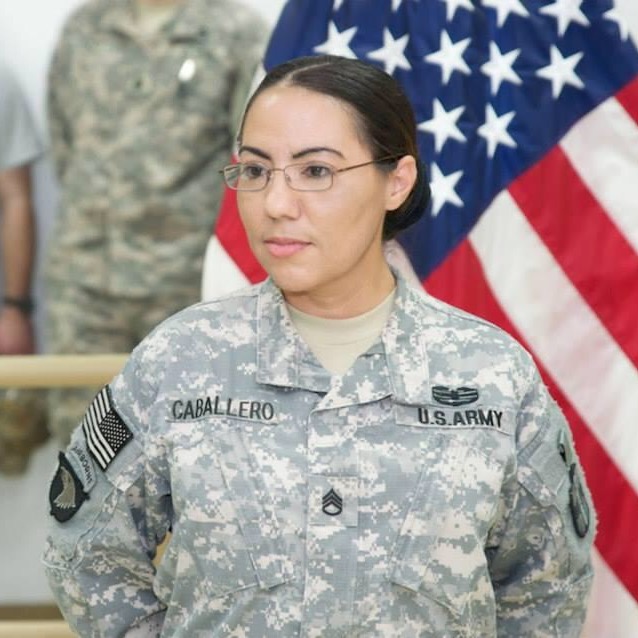
SSG Virginia Caballero, US Army Reserves (2014)
Honoring SSG Virginia Caballero, US Army Reserves, who became ill while en-route from Kuwait and then died unexpectedly shortly thereafter at a hospital in Rockford, Illinois on September 13, 2014. Apparently the commercial plane needed fuel and/or had to do an emergency landing for Virginia in Rockford, Illinois. It appears that they were on their way to Fort McCoy in Wisconsin. According to reports, Caballero was a Reservist stationed with the 452nd Combat Support Hospital, 330th Medical Brigade out of Milwaukee, Wisconsin but trained at Fort McCoy prior to her deployment to Kuwait. She served in Kuwait for roughly eight months and for some reason was coming home a month early with a high ranking travel companion. Media reports claim she wanted to surprise her family in Texas. It is believed Caballero suffered from a blood clot which was exacerbated with the altitude on the flight. She was not listed as a non-combat death by the Department of Defense but this would in fact be considered a non-combat death due to medical. The family admits in newspaper articles that a lot of the details are sketchy.
Here are the questions we have after combing through the below articles. Why was she coming home a month early accompanied by a high ranking travel companion if she was going to surprise her family? Did something happen in country prior to her boarding that plane? Was this an early surprise for family in Texas or an expedited transfer from Kuwait back to the states? The military isn’t in the business of assigning high ranking travel companions unless there is an issue. Were there any concerns about medical health prior to boarding the plane? Where were they flying to? Rockford, Illinois is only a couple hour drive from Fort McCoy. Why did they not land the plane sooner at a larger airport like Chicago when the medical issues began to develop or the fuel began to get low? Why did the DoD not send out an official notification of non-combat death considering she was on active duty orders in support of war efforts in Kuwait? Criminal Investigation Division (CID) was assigned to investigate the cause of death of Virginia. The family was asked to submit a FOIA request for the results of the investigation.
Investigators have identified the man who opened fire on a state trooper during a traffic stop east of The Dalles on Thursday, although they have not said what might have motivated him to start shooting. John Van Allen II, 34, was shot and killed by the trooper who pulled him over, according to state police spokesman Lt. Gregg Hastings…During the traffic stop, Allen shot at Zistel with a handgun, hitting the trooper in the side, according to Hastings. Zistel managed to return fire and hit Allen in the chest. Allen drove away after being hit, but other troopers found him down the highway slumped over dead in his car. –KATU2
In the News:
Oregon State Trooper Matthew Zistel pulled over motorist John Van Allen for speeding on August 29. Dashboard camera footage shows Allen shooting a handgun and Zistel returning fire. -Associated Press (October 4, 2013)
Robert Hansen was a mild-mannered family man with a passion for hunting. A master at his trade, Hansen sought a more challenging prey – his fellow human. Hansen kidnapped women, set them loose in the Alaskan wilderness, and hunted them down for sport. -Hunting Humans, Ice Cold Killers (S1, E1)
Serial killer and Army Reserves veteran Robert C. Hansen confessed to the murder of 17 women and the kidnapping and rape of another 30 women in Alaska. But the authorities believe there are many more victims and their cases are still open. Hansen was officially charged with the abduction and rape of Cindy Paulson and the murders of Joanna Messina, Sherry Morrow, Paula Goulding, and the unidentified body known as “Eklutna Annie.” On February 28, 1984, Robert Hansen was sentenced to 461 years plus life in prison with no parole. Hansen led the police to 17 grave sites he marked on a map but only 12 of his victims bodies were recovered. Robert Hansen’s health was declining for over a year when he died of natural causes on August 21, 2014 at the age of 75.
In 1982, two off-duty police officers were hunting for wild game. As darkness fell and they headed home, they made a gruesome discovery. They knew enough to back away and dispatched the Alaska State Troopers to the scene. The crime scene investigators unearthed the partial bones of a woman buried in a shallow grave. They also found bones scattered around the surrounding area. In Alaska, wild game won’t hesitate to drag off the evidence. They also found a 223 caliber bullet casing. The victim was bound and blind folded at the time of death, and she was shot three times. She was identified as Sherry Morrow; Sherry was drawn to Alaska for the easy money. She worked as an exotic dancer in a seedy area of Anchorage known as ‘Fourth Avenue’. Police looked to see if anyone else in that community had disappeared under similar circumstances. Before the discovery of Sherry’s body, none of the missing persons reports were linked or suggestive of murder. Morrow’s case inspired police to take a look at the cold case files.
Two years before Morrow’s body was found, construction workers found the partial remains of a woman buried in a shallow grave; her body was desecrated by wild life and her bones were scattered. Police couldn’t make an identification and dubbed their Jane Doe “Eklutna Annie”. Nobody ever came forward with information about Annie. Police were concerned they were dealing with a brutal killer so they started canvassing the area where the dancers spent their time. Sherry’s co-workers feared the worst because a number of women had gone missing and they were never heard from again. Over the next several years, five more dancers went missing. Police suspected Sherry and Annie’s cases were connected. They were all victims from the beginning because everyone preyed on these girls, including the bar owners and pimps. Several dancers reported seeing the same man and provided police with a physical description. Police learned of a third body found in a gravel pit near where Eklutna Annie’s body was found.
The victim was identified as Joanna Messina. She was a canary worker who was last seen leaving the dock with her dog and a red haired man her co-workers couldn’t identify. Messina was shot and killed with a 22, not a 223. Two more women vanished and were never seen or heard from again. The blindfolds at the crime scenes told the police a lot about the killer. He was a sexual sadist who wanted complete control. He derived pleasure from his victim’s fear and pain and disposed of their bodies in isolated areas in Alaska. Nine months later, a truck driver found a frantic hand-cuffed woman running in the road; someone with a gun ducked out of site. The trucker took her to a nearby hotel where she was safe and called the Anchorage police. The police found a 17-year-old woman still in handcuffs and in shock. She told the officers she was a topless dancer down on 4th Avenue; she said she was propositioned by a red haired man in his 40s the night before. She confessed that she accepted the stranger’s offer.
Once inside the man’s car, she said the man pulled a gun on her. He kidnapped her, handcuffed her, and told her if she cooperated and did what he wanted, she wouldn’t be harmed. He took her to a middle class house in Muldoon. He held her hostage in a basement filled with mounted heads of animals. He brutalized her for hours. He chained her to beam in the basement and repeatedly sexually assaulted her. She told the police he was going to fly her to his cabin in the woods, promising to release her if she cooperated. Once at the airport, the kidnapper shoved her in a small plane and began loading supplies. The second he turned his back, she made her escape. Hoping to corroborate her account, investigators took her to the airfield to find the plane. She identified a plane owned by Robert Hansen; he was a 50 year-old avid hunter and local business man. Hansen owned a well established bakery, had lot of friends, and went to church. By all accounts, he was an upstanding member of the community.
When questioned by police, Hansen was outraged and insisted the dancer was lying to extort money from him. He also questioned whether it was even possible to rape a prostitute. He claimed he had an alibi and told investigators his wife and children were in Europe and he spent the night playing poker with friends. When questioned, the two men substantiated his story. Hansen allowed authorities to search his home but they didn’t find evidence of what the victim described. She also refused to take a polygraph and this made the police wonder if she fabricated the story. It was a “he said, she said” case because they had no evidence. Citing a lack of evidence, the prosecutor dropped the case. Three months later, Alaska State Troopers discovered the partially decomposed remains of another woman in a shallow grave. She was identified as a missing dancer from the Fourth Avenue district. Investigators found a blindfold buried among the remains. An autopsy revealed Paula Goulding had also been shot by a 223 caliber bullet.
Initially, the police didn’t link the cases but the use of the 223 caliber bullet helped them realize they were dealing with a serial killer who was targeting exotic dancers in Anchorage. Troopers contacted the Federal Bureau of Investigation for assistance; agents created a behavioral profile of the serial killer. The killer believed he was invincible because he picked the perfect victims. He chose the dancers on Fourth Ave because he thought no one would care if they were missing. They started looking into Robert Hansen’s past. They learned he was abused as a child and had very low self-esteem. He was always considered small and had few friends; he was often ridiculed by his peers. After graduating from high school, Hansen enlisted in the Army Reserve and went to basic training at Fort Dix. He later received advanced training as a military police officer at Fort Knox. While enlisted in the Army, he was known to frequent prostitutes. He told fellow soldiers, he found them dissatisfying and yearned to take control of the situation.
Despite his strict up bringing and disciplined military structure, the profilers learned Hansen had a number of run-ins with the law. He served time for arson and theft but he appeared to have long since left that life behind. In 1967, he married and moved to Alaska. He was a functioning member of society. They believe his low self-esteem would drive him to live in a place like Alaska. His former neighbor told investigators he loved the thrill of the hunt; and he was always looking for the bigger hunt. He was an avid trophy hunter. Hansen’s weak point was women because he was unsuccessful with them. He hunted where most of the victims were found. “Perhaps Hansen tired of game and turned to more interesting prey like humans.” Humans create a much greater challenge to the hunter. Police deduced he most likely had trophies from his hunts for humans. The killer was a sexual sadist, proficient, and more successful over time. Authorities threatened the two men who alibied him with jail time if they didn’t come clean about the night the dancer was abducted.
Both friends quickly broke down and said they were covering for him because they thought he was a legitimate guy. They believed him when he said he thought the dancers were trying to extort him. The police asked Hansen to come down to the station and executed a search warrant. An officer searched the attic and in the rafters he found a bag of jewelry. And nestled with his bag of trophies, they found IDs belonging to the victims and newspaper clippings. Authorities also found a trophy map with locations of where he killed his victims. Hansen tracked his kills. The most critical find was a 223 caliber mini 14 rifle. The rifle was sent to the crime lab for further analysis. The 223 matched perfectly with the round they found in Eklutna. Robert Hansen was charged with assault and kidnapping. Despite his pleas of innocence, the evidence was mounting against him. The District Attorney agreed to charge Hansen with four murders: Sherry Morrow, Eklutna Annie, Joanna Messina, and Paula Goulding. Hansen accepted a plea deal. Police believe he chose prostitutes because they represent the evil in humans.
Robert Hansen chose prostitutes because they will go anywhere for anything and when they disappear, no one cares. He admitted he controlled the game from the point of abduction. He was the predator and they were they prey. He killed Eklutna Annie first. Then he abducted Sherry Morrow. He took most of his victims to his remote cabin and brutalized them for hours before he stripped them naked, blindfolded them and then released them in the woods. He turned them loose, gave them a head start, and hunted them down. He was a trophy hunter. He then collected things off the girls so he could re-live the events. Robert Hansen’s killing spree lasted twelve years in Alaska. Hansen confessed to 17 killings but it is believed he had many more victims. He eventually lead police to 15 gravesites unknown to investigators. Unfortunately, investigators only recovered 7 bodies likely due to the veracious animal activity in the Alaskan wilderness. Robert Hansen was sentenced to 461 years plus life in prison with no chance of parole.
A Killer Among Us: Inside the Hunt for an Alaska Serial Killer (June 11, 2017, KTUU-Channel 2, Anchorage, Alaska)
The Frozen Ground Movie (2012)
THE FROZEN GROUND Official Trailer (2013)
The Frozen Ground – Clip 3 | Lionsgate
The Frozen Ground (2012) – Chained Scene (1/10) | Movieclips
The Frozen Ground (2012) – The Lucky One Scene (2/10) | Movieclips
The Frozen Ground (2012) – Pole Dancing Scene (3/10) | Movieclips
The Frozen Ground (2012) – Hunting Her Scene (4/10) | Movieclips
The Frozen Ground (2012) – On the Run Scene (5/10) | Movieclips
The Frozen Ground (2012) – Shock at the Strip Club Scene (6/10) | Movieclips
The Frozen Ground (2012) – The Interrogation Scene (7/10) | Movieclips
The Frozen Ground (2012) – From Bad to Worse Scene (8/10) | Movieclips
The Frozen Ground (2012) – He’s Coming Scene (9/10) | Movieclips
The Frozen Ground (2012) – Truth Comes Out Scene (10/10) | Movieclips
Based on a true story. An Alaskan State Trooper (Nicholas Cage) must partner with a near victim and the only witness to escape the clutches of the serial killer in order to bring the murderer to justice. -The Frozen Ground
Frozen Ground – Examining the Frozen Ground
Editor’s note: With a cable subscription, you can download the free ID Go app and watch all of the Investigation Discovery programming at your convenience. And for those who do not have cable, you can watch “unlocked” episodes on the ID Go app including the latest premieres. Download the ID Go app and binge away. For those who prefer commercial free programming during your binge session, Prime Video has an ID channel: ‘True Crime Files by Investigation Discovery” available for $2.99 a month. It’s a compilation of older seasons but totally worth the cost if you are a true crime addict.