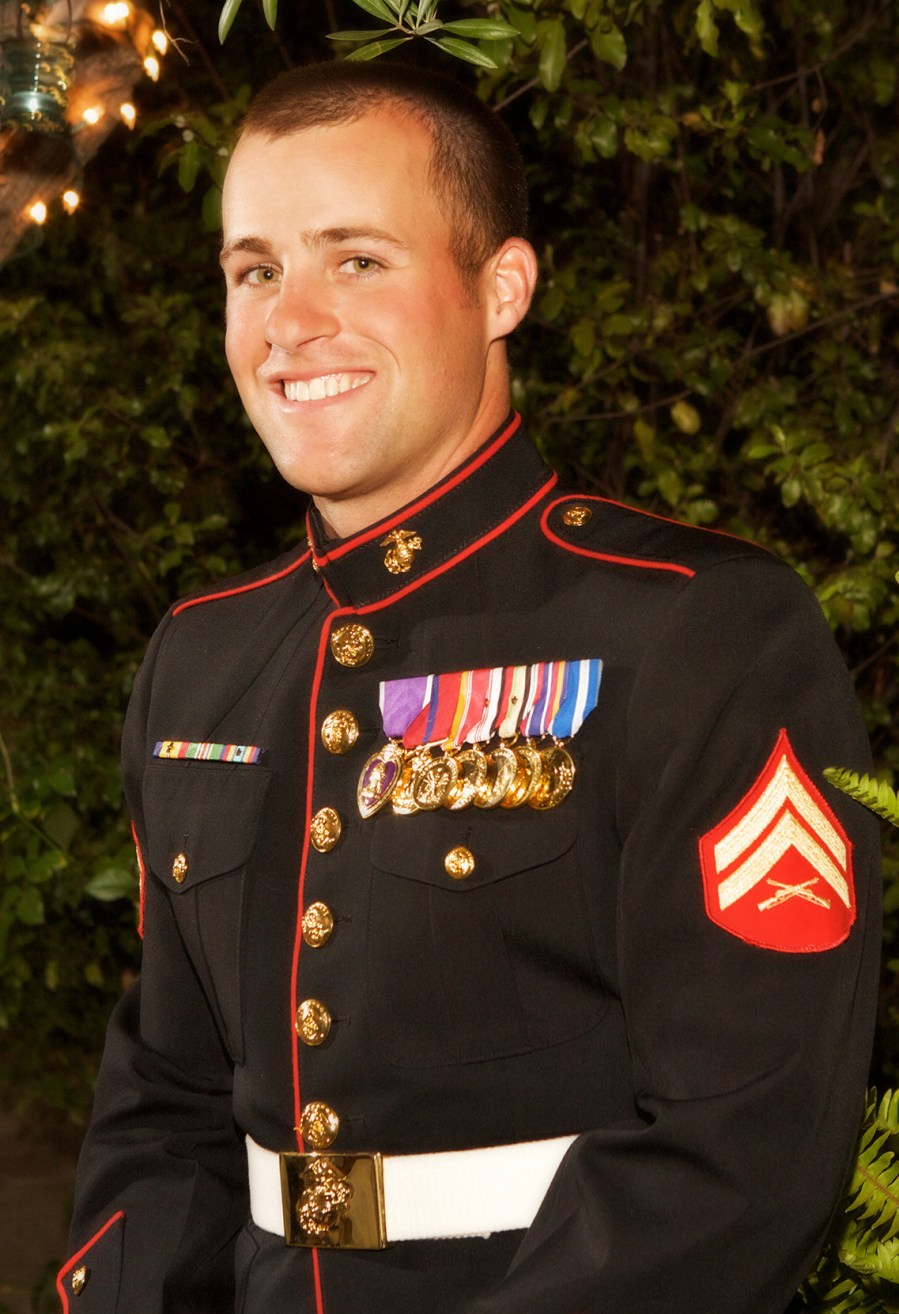
Marine Veteran & PTSD Advocate Clay Hunt Died by Suicide in Texas Home; Death Prompted the Passage of the Clay Hunt SAV Act (March 31, 2011)

A profile of Clay Hunt, a Marine who recently took his own life while waiting for upgraded benefits from the VA. (May 31, 2011)

“Clay had the world at his fingertips,” a friend recalls. Why did the Marine combat vet take his own life? -CBS News (March 3, 2013)

President Obama makes remarks before signing the Clay Hunt Suicide Prevention for American Veterans Act. -CBSN (February 12, 2015)

On February 12, 2015, President Obama signed the Clay Hunt Suicide Prevention for American Veterans Act into law at the White House. -The Obama White House (February 12, 2015)

President Obama signed the Clay Hunt Suicide Prevention for American Veterans Act. -C-Span (February 12, 2015)

The Clay Hunt Suicide Prevention for American Veterans Act is law tonight. -WGAL TV (February 12, 2015)
Deep Forrest Custom Effect refined
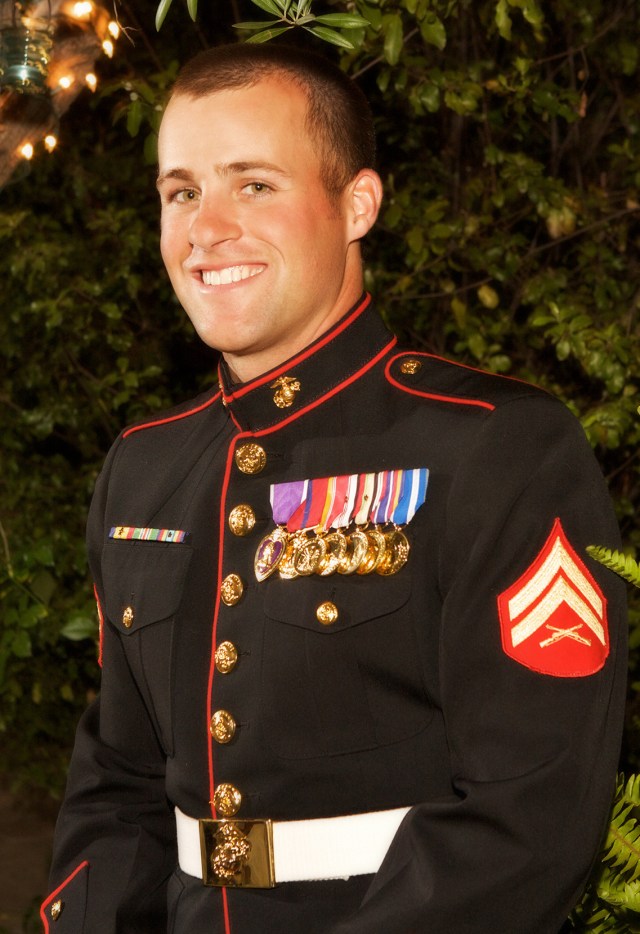
Clay Hunt, U.S. Marine Corps Veteran

Marine and veteran advocate Clay Hunt died by suicide in his Sugar Land, Texas home on March 31, 2011. Clay Hunt was open about his journey with Post Traumatic Stress Disorder from combat and used his advocacy to help other service members and veterans struggling with the invisible battle. His unexpected death prompted his family to speak out and they shared that his perceived ill treatment by the Department of Veterans Affairs was part of the reason he took his own life. In their quest to get justice for their son, they were able to inspire the Clay Hunt Suicide Prevention Act for Veterans passed by Congress and signed by President Barack Obama on February 12, 2015. According to President Obama’s website, the bill would require annual third-party evaluations of VA’s mental health care and suicide prevention programs; create a centralized website with resources and information for veterans about the range of mental health services available from the VA; and require collaboration on suicide prevention efforts between VA and non-profit mental health organizations. On March 13, 2019, AMVETS published a press release revealing their outrage with the Department of Veterans Affairs Clay Hunt Report. They requested a new report from the Veterans Affairs immediately, one that utilizes an outcomes based approach.

Related Links:
Veteran Suicide and Clay Hunt
The life and death of Clay Hunt
Obama: Stigma surrounding veterans and mental health “has to end”
President Obama signs Clay Hunt Suicide Prevention for American Veterans Act (C-SPAN)
President Obama Signs the Clay Hunt Suicide Prevention for American Veterans Act
Obama signs veteran suicide prevention bill into law
Clay Warren Hunt Obituary – Houston, TX – Dignity Memorial
Clay W. Hunt, veterans’ advocate, dead of self-inflicted wound
Ex-Marine, veteran’s advocate kills himself
Veteran Loses Battle With Depression After Helping Others With Their Own
One Marine’s Journey: War, Activism, Then Tragedy
One big question haunts Marine’s suicide: Why?
Survivor’s Guilt Haunting the Military
The life and death of Clay Hunt | 60 Minutes | CBS News
Ms. Selke, Mother of Clay Hunt, Testifies Before Congress on Veteran Suicide & Mental Health Access
Clay Hunt Suicide Prevention for American Veterans
Parents of Veterans Who Died by Suicide Criticize VA’s Mental Health Care
The legacy of Clay Hunt: Marine recalled in new suicide legislation
Military moms: Suicides prove VA must improve services
Clay Hunt Veteran Suicide Bill Blocked in Senate by Coburn
Coburn Has Gone Too Far Blocking Veterans Suicide Bill
Vet Suicide Bill On the Move | AFSA
Clay Hunt veteran suicide bill returns in new Congress
APA Urges Senate Action After House Passes Clay Hunt SAV Act Legislation Would Improve Access to Care for Veterans
This Bill Could Help Veterans With Mental Health
The Other American Sniper: The Tragic Suicide of Former Marine Clay Hunt
Veterans March on Capitol Hill to Bring Suicide Prevention Bill to Floor
Whistle-blowers: VA still endangering suicidal vets
A soldier’s suicide, our second chance
Clay Hunt is a hero — then, now and always
Walz and co-sponsors reintroduce Clay Hunt SAV Act to address veteran suicide
H.R.203 – 114th Congress (2015-2016): Clay Hunt SAV Act
Senate Report 114-34 – Clay Hunt Suicide Prevention for America Veterans Act
Senate to pass first vets bill of 2015 honoring Texas sniper Clay Hunt
The legacy of Clay Hunt: Marine recalled in new suicide legislation
The Clay Hunt Act: What President Barack Obama Just Signed (February 12, 2015)
The Clay Hunt Act: What the President Just Signed
Pelosi Statement on President Obama Signing Bipartisan Law to Prevent Veteran Suicide
Obama signs Walz’s veterans suicide prevention bill
President Signs Clay Hunt Act, Says ‘Stigma Has to End’
Years after his death, Houston vet recognized with law to help prevent suicide
Bill to prevent vets’ suicides raises questions about funding
Blumenthal wins on veteran suicide prevention bill
WWP Applauds Passage of Clay Hunt Suicide Prevention for American Veterans Act
The Fight To Stop Veteran Suicides
Bill requiring VA study of female veterans’ suicide prevention programs heads to President Obama
What Congress Is Doing to Help Lower The Number of Veteran Suicides
The Number 22: Is There A ‘False Narrative’ For Vet Suicide?
Veteran Suicide Prevention: By the Numbers
Clay Hunt Act Serves To Prevent Veteran Suicide
“Call to Action” on Veteran Suicide Yields Policy Shifts
The VA’s Faltering Battle Against Veteran Suicide
Veteran-suicide epidemic has many causes
Remembering Clay Hunt: The Marine, Advocate, And Friend
Hundreds of veterans ride to honor U.S. Marine Corps sniper, Clay Hunt
Campaign to Combat Suicide: Clay Hunt SAV Act Update
President Trump signs bill allocating government funds for veterans’ private medical care
Clay Hunt SAV Act Update | IAVA (2018)
Brown Applauds Executive Order to Reduce Veteran Suicide, Improve Transition from Military Life
Joint Action Plan – Veterans Affairs
VA to award contract for Clay Hunt Act OMH Reporting
AMVETS Outraged by Clay Hunt Report, Calls for Immediate Outcomes Based Approach
This VA report touts ‘positive outcomes’ from its suicide prevention programs — but veteran suicide rates haven’t slowed
VA Grapples With Issue of Veteran Suicide
Serving Those Who Serve: Upstream Intervention And The Uphill Battle Of Veteran Suicide Prevention In The US
Anguish into action on veteran suicide
Timeline of Veteran Suicides, Legislative Efforts, and Nationwide Negligence at the Department of Veterans Affairs
Estevan Maestas Killed After Live Hand Grenade Detonated; Colorado Springs PD Believes Explosive Device Stolen From Fort Carson (November 12, 1978)

When a mysterious explosion rocks a sleepy suburb, it’s up to Kenda to ID a pile of charred remains and find the killer who triggered the blast. Then…a young mother’s murder leads the CSPD on a harrowing car chase that ends in a violent showdown. -Point of No Return, Homicide Hunter (S5,E13)

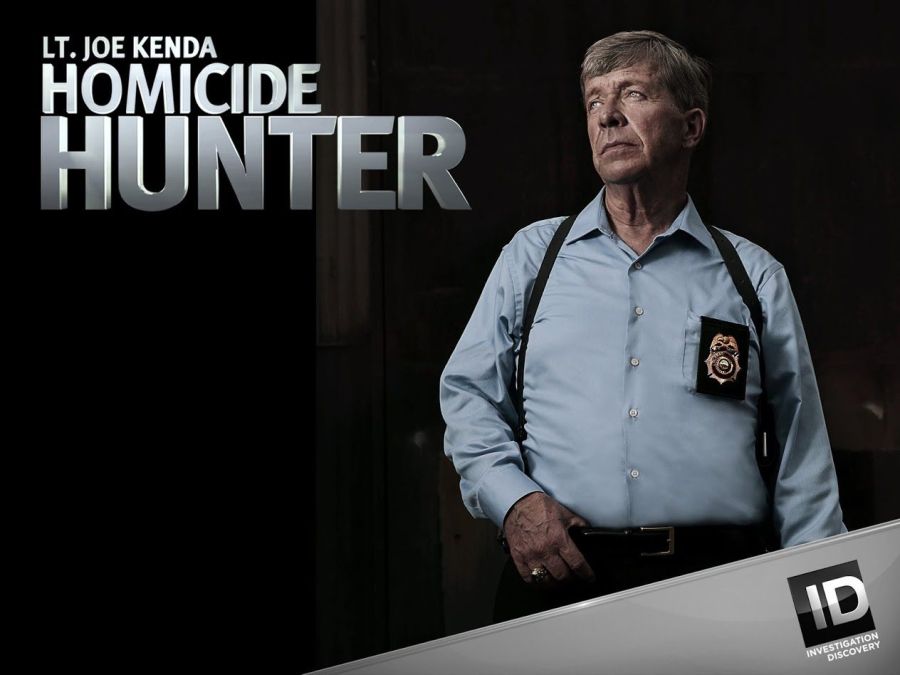
Homicide Hunter is an Investigation Discovery show featuring retired police Detective Lt. Joe Kenda (1973-1996). Lt. Kenda worked for the Colorado Springs Police Department for years and investigated and solved hundreds of cases during his employment. Now in his retirement, he outlines the cases that he encountered on the job and explains how he eventually solved the case. Colorado Springs is home of Fort Carson, an Army base with about 30,000 soldiers. This show is especially interesting given the fact that Lt. Kenda worked in a city with a close proximity to a large base. We have learned over time just how intertwined his job was with a military base known for an active role in fighting wars overseas over the years.

Exercises and deployments continually hone the skills of the Fort Carson Soldiers. When not deployed, Soldiers train annually at Pinon Canyon Maneuver Site and the National Training Center in California. Additionally, units participate in joint exercises around the world, including Central and South Africa, Europe, and Southwest Asia. In 2003, most Fort Carson units were deployed in support of Operations Enduring Freedom and Iraqi Freedom. ~Fort Carson History

Last night, Lt Joe Kenda discussed an explosives case that had been assigned to him. A powerful explosion occurred in a suburban neighborhood of Colorado Springs on November 12, 1978. He was actually working on paperwork on a Sunday when he received a call from police on the scene. They think they found human remains in the remnants of a detached garage near a single dwelling home. Joe was asked to investigate because this could be an intentional act of murder. Joe shared that the scenes he has investigated over the years have been horrific and quite shocking to include this one. As a result, he admitted that he has a hard time eating and sleeping, which are both signs of Post Traumatic Stress of which he admitted he has. This is a normal response for anyone who witnesses these acts of horror, especially over a long period of time.

After Joe arrived on the scene, he deduced that the damage looked like shrapnel damage. But his immediate thought was that it was most likely a gas explosion. He notices in the garage what looks like a large pile of human remains. Based on the remains, he assumed that it was most likely an adult male who was killed. If it’s not a gas explosion, what is it? A couple theories began to emerge including maybe the man lit a cigarette in an area with gas cans and exposed fuel or the victim was booby trapped with hidden wire. This could have been a murder.

Based on his fears of more explosives on scene, he decided to call the Colorado Springs Police Department (CSPD) Bomb Squad to investigate further to determine whether there were any more active munitions. He explained how explosive technicians truly understand explosives and other various devices. As soon as the Bomb Squad arrived at the scene, they immediately recognized the explosive had the smell of a military explosive. Fort Carson had this kind of ammunition on their base since before World War II. The Bomb Squad theorized that somebody from the base most likely smuggled it from Fort Carson and brought it to the current location. A CSPD detective explained how now we have robots to investigate bomb scares but back then we didn’t have that. Explosive technicians put their lives on the line everyday but more so before the advent of robots and other technologies to help minimize the danger of their jobs.

The CSPD Bomb Squad found another hand grenade in the garage that appeared to be live. An ordinance specialist entered the garage and not only found another grenade but he also found evidence of the dead man who was blown up by the first grenade. The second grenade appeared to be untampered with and there were no other explosives found at that location. Police suspected that the victim could have been in the building when someone threw the grenade in. They needed to learn more about the victim to determine if he had any enemies that would do something like this. They learned that the house is a rental and the current tenants only moved in a couple of months ago. The neighbor shared that a man named Estevan had recently retired and moved into this location. While on scene, a police officer found a human index finger quite a distance from the remnants of the garage. This discovery changed the whole direction of the case because the finger was found with a wire around it and this was the pin ring from the hand grenade. The victim may have pulled the pin and detonated the explosive. This could have been an accident.

Joe needed to identify the victim so he started with taking the victim’s finger to the lab so they could attempt to identify him by finger print. The lab technicians told him that without a name, it could take months before they get a match. In the meantime, Estevan’s wife showed up at the police station after learning what happened at her residence. Joe had to tell her that her husband was dead. She shared that his name was Estevan Maestas and he was a custodian at the school with finger prints on file. Estevan was simply going to clean out the garage because the people who lived their before left a bunch of junk in there. She left the house after he went out to the garage. Because his past did not indicate that this could have been a suicide attempt, it was theorized that this was in fact a tragic accident. Estevan most likely found the grenade, had no idea that it was live and maybe he thought it was a toy. He pulled the pin and he never felt a thing, he never knew what hit him.

The CSPD speculated that the grenades had been stolen from Fort Carson and brought into this rental home by a soldier. They assumed that most likely this guy didn’t want to deal with having to dispose of the grenades so he just left them there to become the next person’s problem. This was a hard pill to swallow given a man lost his life over this reckless act. Why was it not followed up on? Given how the military has strict regulations and is supposed to have strict chain of custody records to help them track all explosives, it should be easy to determine whether or not this grenade came from this base. It could have been brought home as a souvenir from World War II, Vietnam, or the Gulf War era. Were they able to cross reference the rental records at the location of the explosion with Fort Carson soldiers? This case revealed more mystery then resolve. If a soldier did smuggle the grenades from the base, why was there no investigation for theft, and now maybe even manslaughter? It is assumed that this person intentionally left them behind because they didn’t want to properly dispose of them.

In theory, no soldier should have been able to get these grenades on a plane or off the base without a search or a documentation trail given how the military usually conducts business. Much like communications security equipment (COMSEC), ammunition is inventoried and kept under lock and key in an effort to prevent compromises with dangerous repercussions. In most circumstances, if Fort Carson recognized that ammunition was missing, they would shut down the base until they found it. If someone dropped the ball at Fort Carson, a man lost his life because of careless documentation and security practices. And the Colorado bomb squad and Lt. Joe Kenda risked their lives in an effort to prevent anyone else from getting hurt or killed. Hopefully, soldiers learn a valuable lesson from this circumstance given it could have been a harmless act that went terribly wrong. Whoever left the grenades behind may not have intended for Estevan Maestas to die but he did. If a military member was responsible, it would be nice to know that the military has implemented safety and security procedures that can help prevent this kind of a tragedy from ever happening in our communities again.

Source: Point of No Return, Homicide Hunter, Investigation Discovery

Editor’s note: With a cable subscription, you can download the free ID Go app and watch Investigation Discovery programming at your convenience. And for those who do not have cable, you can watch “unlocked” episodes on the ID Go app including the latest premieres. For those who prefer commercial free programming during your binge session, Prime Video has an ID channel: ‘True Crime Files by Investigation Discovery” available for $3.99 a month. It’s a compilation of older seasons but totally worth the cost if you are a true crime addict. Download the ID Go app or purchase ID True Crime Files & binge away.

Related Links:
Point of No Return | Homicide Hunter | Investigation Discovery (S5,E13)
Point of No Return | Homicide Hunter | Investigation Discovery (website)
Point of No Return | Homicide Hunter | Investigation Discovery (Amazon)
Point of No Return | Homicide Hunter | Investigation Discovery (Hulu)
Homicide Hunter Premiered ‘Point of No Return’ on ID: Estevan Maestas Killed By Live Hand Grenade Left Behind in Rental Garage (December 1, 2015)
Lessons Learned from a Military Ammunitions Explosion in Colorado Springs
Homicide Hunter: 15 Active Duty Military and Veteran Murder Cases Featured on Investigation Discovery