Allegations of mistreatment persist inside units designed to heal wounded soldiers
“NBC 5 Investigates has learned that the U.S. Army has launched a new investigation inside Fort Hood’s Warrior Transition Unit (WTU), looking at claims of harassment and abuse.
The investigation comes after NBC 5 Investigates partnered with The Dallas Morning News for a six-month investigation that revealed hundreds of complaints from injured soldiers who said commanders harassed, belittled them and ordered them to do things that made their conditions worse at three Warrior Transition Units in Texas: Fort Hood, Fort Bliss and Fort Sam Houston.”
On February 12, 2015, President Obama signed the Clay Hunt Suicide Prevention for American Veterans Act into law at the White House. -The Obama White House (February 12, 2015)
Summary: Learn more about the Clay Hunt Suicide Prevention for American Veterans (SAV) Act and the Administration’s commitment to help veterans.
The new suicide prevention law is named in honor of Clay Hunt, an extraordinary young Texan and decorated Marine who served with distinction in Iraq and Afghanistan. Like too many of our veterans, Clay struggled with depression and post-traumatic stress after he came home. Sadly, Clay’s life ended much too soon when he tragically committed suicide in 2011 at the age of only 28.
This new law builds on a long history of executive actions the President has issued to improve access to mental health services for members of the Armed Forces, veterans, and their families. The Clay Hunt Act will:
Require annual third-party evaluations of VA’s mental health care and suicide prevention programs
Create a centralized website with resources and information for veterans about the range of mental health services available from the VA
Require collaboration on suicide prevention efforts between VA and non-profit mental health organizations
President Obama passes law to prevent suicide among military members. -CNN (March 31,2016)
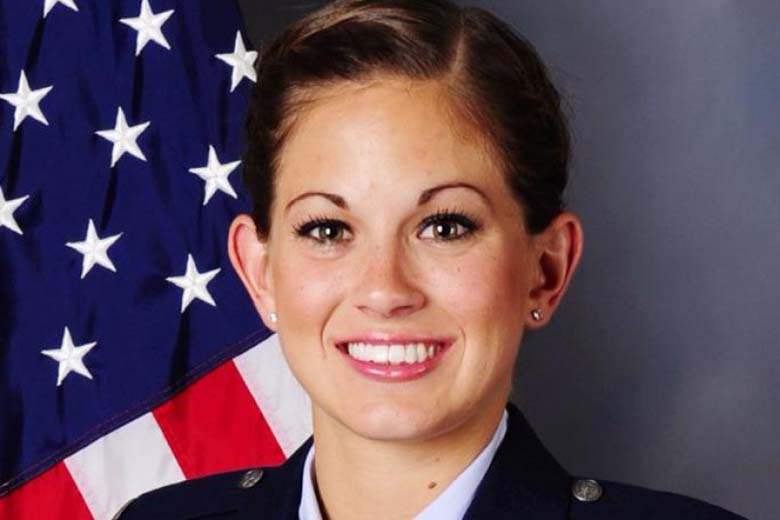
Captain Jamie Brunette, 30, US Air Force, was found dead with a self-inflicted gunshot wound in her car on February 9, 2015 in Tampa, Florida. Tampa police found her in the parking lot of a Harbour Island cafe near her apartment slumped over in the back seat of a locked vehicle. She purchased the hand gun six months earlier. According to friends and family, Jamie didn’t speak much about her time in Afghanistan but her parents believe she may have suffered with Post Traumatic Stress Disorder after a sexual assault while deployed to Afghanistan. The issue sheds light on whether or not military members feel comfortable reporting crimes and asking for help for the aftermath. According to one MacDill Air Force Base official, they actively encourage airman to reach out for help and assured they would not lose their careers. They also reminded airman that reaching out for help early will help prevent the Post Traumatic Stress from getting worse and in the end help save their military career.
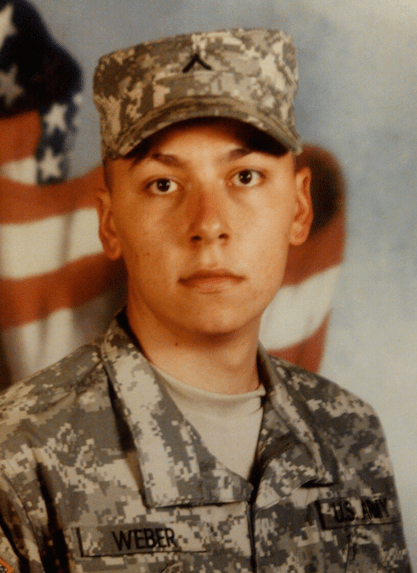
Joseph Weber IV, US Army Veteran (photo credit: Missing Veterans)
Disabled Army veteran Joseph Weber IV, 28, disappeared near the Golden Gate Bridge in San Francisco, California on November 24, 2014. Joseph is an Iraq war veteran who struggled with both Post Traumatic Stress Disorder (PTSD) and Traumatic Brain Injury (TBI). If you have any information, please contact the Sunnyvale Police Department at (408) 730-7100.
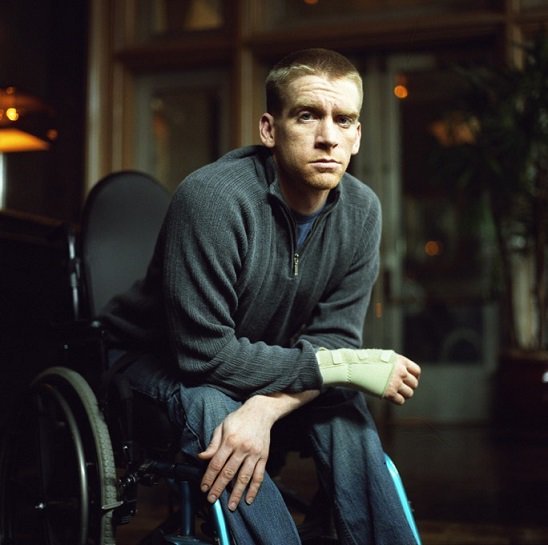
US Army Veteran Tomas Young (photo by Danny Clinch)
“I write this letter on behalf of those veterans whose trauma and self-revulsion for what they have witnessed, endured and done in Iraq have led to suicide and on behalf of the active-duty soldiers and Marines who commit, on average, a suicide a day. I write this letter on behalf of the some 1 million Iraqi dead and on behalf of the countless Iraqi wounded. I write this letter on behalf of us all — the human detritus your war has left behind, those who will spend their lives in unending pain and grief.” -Tomas Young, Disabled Army Veteran
Read the rest of The Last Letter to Bush and Cheney here.
Tomas Young, who joined the Army in the days after 9/11, was deployed to Iraq where he was shot and paralyzed just five days into his tour of duty. He spent ten years battling his injuries and speaking out against war and injustice before his death on the eve of Veterans’ Day, 2014. “Tomas told me that one of the reasons he joined the Army was to obtain GI Bill funding so he could go to college,” said [Mark] Wilkerson (author of Tomas Young’s War). “He wanted to study creative writing or journalism. After his passing, we felt a scholarship would be a perfect way to honor his legacy.” –Pearl Jam
Body of War, a film by Ellen Spiro and Phil Donahue. It is an intimate and transformational feature documentary about the true face of war today. -The Real News
In Photos: The Epidemic of Military Sexual Assault
Some 26,000 women [and men] are sexually assaulted in the military every year. Photojournalist Mary Calvert documented some of their stories.
“Why is this happening? To answer that question, Mary Calvert met with survivors and went to congressional hearings on military sexual assault. The women she met connected her with more women, and she photographed them in their homes and communities. Through her work, she learned that just 1 in 7 victims of sexual assault in the military reported the attack; of those assaults that were reported, just 1 in 10 ever saw a trial.”
“I get emails, and comments from people saying, ‘I was sexually assaulted in the military and I’ve never told anybody and when I saw these pictures and read these stories I felt more courage to go out and get some help.'” -World Press Photo Foundation (May 18, 2017)
ID Go: The Phillips’ family moves to a quiet seafront town in Maine to escape a crime wave in Indiana. But their dream home comes with a not so dreamy ex-military neighbor. A barrage of gunfire between the houses one night shatters both families forever. -Red Picket Fences, Fear Thy Neighbor (S1, E2)
On August 29, 1989, Navy veteran Richard Uffelman and his two sons opened fire from their living room window and shot and killed their neighbors Michael and Florence Phillips in Machiasport, Maine. The Phillips family moved back to Maine so they could be closer to their family and the ocean, and they wanted to escape crime in Indiana. Shortly before they moved to Maine, a murder occurred outside their home and this was it for them; they wanted to raise their son Michael in a safe environment. Richard and Anita Uffelman and their two sons were the new neighbors of the Phillips in Maine. Richard was described as an authoritarian and a believer in good order and discipline. He worked at the local post office and taught his two children to shoot guns. Initially the neighbors were good friends and their boys played together. At some point, family came to visit the Phillips for a week. The happy family reunited outside on the front lawn while they barbecued, drank some beers, and enjoyed one another’s company. Apparently Richard found a broken bottle on his lawn during the event and automatically assumed the Phillips threw the bottle on his lawn. Richard called the police to complain about the incident but there was no proof since the Phillips denied doing it. This was it for Richard; the Phillips home interfered with his view of the ocean and he was going to exact his revenge.
After this first broken bottle incident, Richard continued to call the police complaining that the neighbors were throwing bottles on his property. He would bag them up and give them to the police as evidence. The Phillips continued to deny the allegations. The police were beginning to get concerned for the Phillips. Then Richard’s wife Anita called the Phillips family and told them that Richard did not want their two sons playing with Michael anymore. Florence was confused. Soon Richard began harassing them while they were outside on their lawn. He used a megaphone and yelled at them until they went back into their house. The Phillips became fearful of him because he was quite literally bullying them. Richard upped the anti and put up some bright lights that shined directly on their home. He also shot guns in front of his home with his two boys on a regular basis which to the Phillips began feeling threatening. They called the police to ask Uffelman to stop shooting the guns because it felt like he was flexing his muscles but their was nothing illegal about shooting guns for target practice in Maine. The police couldn’t do anything. They needed evidence so Michael and Florence set up a video camera to start taping the behavior because they were not the gun types.
Tension and fear was building daily. The Phillips called the police on Richard Uffelman and Uffelman called the police on them. Now Richard wanted a protection order. It was obvious to police that Richard was getting paranoid and he had some fear that could not be alleviated by the police. Uffelman wanted to play war. Uffelman began dressing in full military fatigues with his two sons and they all carried guns and marched together as if they were in the military or a militia. The kids were impacted by Richard’s paranoia as well; as a matter of fact the whole family was brainwashed. Eventually the Phillips were afraid of Uffelman and his two sons. The Phillips left the city to get away from violence and now they were in the middle of it. They decided to file a harassment suit to get Richard Uffelman to stop. At this point, they felt trapped in their own home and they continued to videotape because it was their only option. One day Richard and his two sons armed with guns started chasing the Phillip’s son after school as if he was prey. The trio scared the entire Phillips family and they called the police again. The cops took it seriously and knew things were not going to turn out right. The Phillips got a protection order and then went on a vacation to Indiana to visit family in July 1989.
While the Phillips were visiting with family, they began viewing the videotapes. All of them were terrified at what they were witnessing but the Phillips were stuck financially. They assured their family they would be fine but in reality they were afraid Richard Uffelman would kill them when they got back. They asked their family to raise their son Michael if Uffelman killed them. They left for Maine the next day because it was their home and they had no other option. They got back to the war zone and the front lines had moved closer to home. When they got out of their vehicle, they realized that someone had dumped gasoline on their front porch. They witnessed someone running in the shadows from their home to Uffelman’s home. They called the police again but they didn’t have any proof that Uffelman had done it. They all recognized that Uffelman was raising the stakes. Unfortunately the system was at a stand still until someone made an overt act. On August 29, 1989, family visited the Phillips because they were celebrating a pregnancy in the family. The Phillips revealed to them that dealing with Uffelman was very stressful because they hadn’t caught anything of value for their harassment case. In this case, the best evidence would come too late.
Michael and Florence Phillips left the house that evening for a walk, just like every other night. This time Michael was carrying a gun as they walked in an effort to let Richard know that they were not going to take it. Then all of a sudden Richard and both of his sons began shooting at both of them from the living room of their home as they walked. The remaining family in the home were fearful that they were going to kill young Michael next. Meanwhile, Michael and Florence are struggling to move to safety in the woods to escape the barrage of gunfire. Uffelman did go to the Phillips home but turned around and left. After this near miss, the three family members in the home left to protect young Michael. They were not sure how Michael and Florence were doing at this point; they were not sure if they had been murdered or if they were still alive. Police arrived on the scene and knocked on Richard Uffelman’s door. They found him sitting at his kitchen table which was covered with handguns and firearms. The police were worried about their own safety but Uffelman surrendered without incident and he was taken into police custody. Michael and Florence Phillips both died at the scene in the woods where they attempted to escape the gunman.
Richard Uffelman, US Navy Veteran
Richard Uffelman was arrested for murder after the Phillips’ bodies were found. His two sons participated in the shootings as well and together they fired twenty-five rounds or so from the inside of their home. Investigators concluded the two boys were doing what they were told to do; they were victims too and as a result were not charged. Upon search of the property, police learned that Uffelman’s land was rigged with trip wire and his home was riddled with explosives. Bomb technicians were called in to remove the undetonated devices. Police also found secret passageways and tunnels. Uffelman tried to claim self-defense at his trial but the video coverage the Phillips had showed otherwise. The videotapes revealed that Uffelman went outside to check to see if his prey were dead; his murderous intent was all captured on film. Richard Uffelman was sentenced to life in prison for the first degree murders of Michael and Florence Phillips. Young Michael sued Richard Uffelman in Maine Superior Court and was awarded a wrongful death judgement for $513,320 but he has never received a dime. According to a YouTube site called Abandonment of Maine, shortly after new owners moved into the Uffelman home, the house caught on fire and burned to the ground.
Editor’s note: With a cable subscription, you can download the free ID Go app and watch all of the Investigation Discovery programming at your convenience. And for those who do not have cable, you can watch “unlocked” episodes on the ID Go app including the latest premieres. Download the ID Go app and binge away. For those who prefer commercial free programming during your binge session, Prime Video has an ID channel: ‘True Crime Files by Investigation Discovery” available for $2.99 a month. It’s a compilation of older seasons but totally worth the cost if you are a true crime addict.
Preview: In the rolling hills of Lenoir, North Carolina, retired Vietnam veteran Roland Younce sells off a patch of his land to Tony Moore and his young family to build their forever home on. Unfortunately, things turn ugly. -Lies, Lawns & Murder, Fear Thy Neighbor (S1, E1)
“Roland Younce, 63, of Caldwell County, North Carolina, allowed his pit bull to roam free in the small rural neighborhood. This decision would prove to have deadly consequences. In January 2008, Younce’s pit bull bit the two young daughters of his 44-year-old neighbor, Tony Moore. As a result, Moore sued Younce for the cost of the medical bills. The judge ruled in Younce’s favor and dismissed the lawsuit. This caused an 18-month feud between the two men. They called the police on each other over frivolous actions and filed several lawsuits against each other.”
Tony and Amy Moore and their two daughters moved into a new home in Lenoir, North Carolina in 2007. Tony and Amy bought their home from Roland Younce, a Vietnam veteran in his 60s, and also their neighbor. Roland was a single man with a dog he considered family and his daughter and her husband lived with him. Tony survived a tragedy and lost one of his legs in a vehicle accident. As a result, Tony stayed home with the girls and Amy worked full-time to support the family. Tony depended on his 4-wheeler to get around the property. Tony and Amy loved their new home and appreciated all their kind neighbors. They all depended on one another to make it work. At first the Moores were friendly with Roland Younce. The neighbors would occasionally BBQ together but they noticed Roland didn’t leave his home very much. Roland’s daughter Alicia on the other hand was a breath of fresh air. She played with the girls and they had a lot of fun. One day, Alicia invited the two girls over to her home to check out her movie collection. The girls stayed on the porch while Alicia went inside Roland’s home to retrieve the movies. One of the girls admitted to opening the door and Roland’s dog Harley lunged towards them and began biting both of them. They were seriously hurt with puncture wounds and had to be taken to the hospital. Roland agreed to pay the hospital bills.
As the hospital bills started rolling in, Tony brought them over to Roland and Roland paid for the first bill he received. Meanwhile, the kids got back to playing and having fun in their backyard. According to Alicia, Tony brought Roland another hospital bill that was for the exact amount as the first one. Roland thought Tony was trying to get him to pay the same bill twice so he refused to pay it. Tony and Amy didn’t feel they should have to pay for any of the bills so Tony filed a judgement against Roland in civil court. Things only got worse when the court sided with Roland on the matter. Nevertheless, Roland asked his son-in-law to tell Tony he would pay $20 a month until it was paid off. Apparently, Tony said no to the offer and demanded all of it. This was when everything went to hell and the tension continued to simmer between the once friendly neighbors. At this point, the friendship was dead so Tony built a property border using some trees to help create more privacy. Roland didn’t like it because he felt they were getting too close to his property line. One day, Tony discovered his disability checks stopped showing up in the mail. He immediately suspected Roland of taking them from the mailbox but he couldn’t prove it. So in retaliation, he would get on his ATV, drive around the property, and make a bunch of noise.
The ATV noise annoyed Roland because he wanted peace and quiet at his home. Tony was on his ATV almost everyday and the blaring engine was getting on Roland’s last nerves. Alicia said Roland was triggered by the noise and he would have flashbacks from his time in the Vietnam war. His dog Harley helped comfort him but both sides were gearing up for combat and no one was backing down. Tony’s disability checks still hadn’t shown up so he asked Roland about it. Of course, Roland denied having any information about the missing checks. Then Roland started bringing his dog outside in what felt like an intimidation tactic to scare the Moore family. And not only was the Moore’s mail disappearing but some trees they planted on their property were missing too. The Moores put up a surveillance camera to see if they could catch the person who was removing the trees from their property. The video captured what looked like Roland Younce’s figure so they took it to the police. But the video wasn’t clear enough for the police to take action. They needed concrete evidence before they could do anything about it. Then one day, Roland went to his mailbox to get the mail only to discover it had been glued shut. He was not able to get the key in the keyhole to open the mailbox. Roland called the police department but they told him the same thing. If he didn’t see Tony do it then their hands were tied.
The police were frustrated by now because they were unable to get these two neighbors to settle down. It appeared both of them wanted to keep things going. Then in another act of intimidation, Roland would take his dog out when Tony’s two daughters came home from school. They were scared to get off the bus knowing the dog had hurt them in the past. Roland would allow the dog to lunge at them and then pull him back. They literally felt terrorized by Roland and the dog. In response, Tony threatened to kill the dog if the intimidation continued. Roland loved his dog and was deeply attached. Roland’s daughter Alicia felt like Tony was the one pushing buttons. Roland expressed concerned to Alicia and her husband that he was going to explode one day. Just months after Tony and Amy Moore bought their new home, they were locked in a war with their neighbor Roland Younce. In another act of aggression, Tony was out on his ATV one day with his daughters and ran over a board with nails in it. It flew up and hit the back of the ATV. Tony was furious because the nails could have seriously injured one of the girls. Tony reported the incident and once again because Tony didn’t see Roland put it there, there was nothing they could do. The Moore family felt isolated and alone in their battle with Roland because no one could help them. They thought Roland could do whatever he liked with no consequences.
Most thought Tony would back down for the sake of his kids but that’s not how things went down. Tony didn’t like feeling like a prisoner in his own home. The police tried to give them advice but neither side would budge. Then one day, the kids went outside and noticed someone had thrown logs in their yard. They alerted their father and all three of them threw the logs back on Roland’s property. Tony and the girls were caught red handed so Roland and his family started throwing the logs back on Tony’s property. Then Roland’s son-in-law Ricky threw a log that almost hit one of the girls. As a result, Tony pulled out a gun and threatened Ricky. He said if he hurt his daughters, he would shoot him. Ricky didn’t back down and told Tony to shoot him because he wasn’t scared. Tony indeed shot near them so Ricky threw a log at him and it hit and injured Tony. The police were called and Roland and Ricky got arrested for assault on a handicap person and a child. Ricky understood why the police arrested him but he didn’t understand why they arrested Roland. Roland didn’t have anything to do with this incident. It also seemed strange that Roland went to jail but Tony didn’t. Apparently, Tony didn’t get arrested because he was in a wheelchair. The two were jailed with no bond and couldn’t get anyone to help them. It took two weeks for Roland and Ricky to get out of jail and both came home with a new level of anger.
Ricky admitted he wanted to hurt people and eliminate the threat. And each time Roland was arrested, it just made him madder and madder. One day Roland threatened to kill Tony so Tony called 911 and the police suggested he leave the home. Roland blocked him in his driveway with his truck and Tony felt trapped. So he made the decision to back up anyways in an attempt to get out of the driveway and wrecked Roland’s truck. After this, Alicia and Ricky moved out of Roland’s home because the whole thing got to be too much and the situation was escalating. Alicia said Roland felt abandoned and the neighborhood feud with Tony continued. Both men were armed and dangerous. Tony felt like Roland was waiting for a confrontation and as a result Tony was always armed. Roland was pushing Tony’s limits too. The two just didn’t like one another. One day Amy left for an overnight trip with work. She said she hated leaving her family because she couldn’t make sure everything was okay at home. On May 27, 2009, Tony heard something on the back porch and when he looked to see what was going on, he was facing Roland’s angry dog at his door. In response, Tony shot the dog. Roland heard the shot and immediately went looking for his dog. Roland threatened Tony and told him if he shot his dog, he was going to kill him. Amy was in Springfield, Missouri (over 1000+ miles away) when she received a phone call from Tony who told her he shot the dog.
Amy knew right away this was not good because Tony took Roland’s best friend away from him. She knew things were fixing to get really bad. Roland called the police to report that Tony shot his dog and he begged the police to get to the scene as quickly as possible because he was going to kill Tony. Tony had called the police as well. When the police arrived at the scene, they didn’t observe anything unusual initially. When the Moores realized the police were there, they started coming out of the home and immediately they all heard gunfire. Roland was shooting at them with a rifle and Tony and one of the girls had been shot. They ran back into their home. Unbeknownst to them, one of the police officers had been shot as well. Roland continued shooting through the windows of Tony’s home. More police were dispatched to the scene. The unharmed daughter contacted her mom and told her what happened. Amy Moore told her to call the police because Roland was still at large. Once the additional officers arrived at the scene, they immediately started treating the officer who had been shot. Dispatch informed the police that Tony and one of the girls had been shot as well and needed their help. The police decided to chance it so they could get to Tony and Ashley. They did not know where Roland was but time was ticking because Tony and his daughter were losing blood. The police decided to use the car as a shield so they could get to them.
The police went towards the home and Tony’s daughter summoned them from the garage. Roland started shooting at them again and this time he hit another police officer. The police shot back in the dark until all of a sudden the shooting stopped. The Police rescued Tony and his girls and took them to the hospital. Amy Moore got emergency flights back to North Carolina so she could get home to her family. Alicia headed to her father’s place after she heard about the chaos only to learn that her dad had been killed in an officer involved shooting. The police didn’t want to kill Roland but had no choice. The next day, Alicia and Ricky went to Roland’s home to see if they could figure out what happened. They found the dog certificate torn up and could see where he cried on those pieces of paper. Roland was devastated by the loss of his dog and he decided to take justice into his own hands. All those injured on the scene lived but they were seriously harmed with lasting impacts. One of the police officers lost his career because of the injuries. And after about a year on the job, the other injured police officer realized he just couldn’t do the work anymore. This one night of violence impacted all involved. It was traumatizing, preventable, and tragic that anyone had to lose their life because they couldn’t work out their differences.
ID Go: In North Carolina, a retired Vietnam veteran sells off a piece of his land to a young family. No one can predict the modern day Hatfield McCoy neighbor feud that will ensue and the midnight shootout that will end it. -Lies, Lawns & Murder, Fear Thy Neighbor (S1, E1)
Editor’s note: With a cable subscription, you can download the free ID Go app and watch all of the Investigation Discovery programming at your convenience. And for those who do not have cable, you can watch “unlocked” episodes on the ID Go app including the latest premieres. Download the ID Go app and binge away. For those who prefer commercial free programming during your binge session, Prime Video has an ID channel: ‘True Crime Files by Investigation Discovery” available for $2.99 a month. It’s a compilation of older seasons but totally worth the cost if you are a true crime addict.
NOTE: INVOKING CLOTURE REQUIRES A 3/5 MAJORITY OF THE SENATE. IT IS NOT A VOTE ON THE PASSAGE OF THE PIECE OF LEGISLATION, BUT LIMITS FURTHER DEBATE TO 30 HOURS. CLOTURE IS TYPICALLY USED TO END A FILIBUSTER. A FAILED CLOTURE VOTE OFTEN PREVENTS THE LEGISLATION FROM EVER COMING TO A VOTE.
NOTE: THIS LEGISLATION NEEDED A THREE-FIFTHS MAJORITY VOTE TO PASS.
Date: March 6, 2014 Issues: Crime, Military Personnel, Women Bill:Military Justice Improvement Act of 2013 Roll Number: 59 Yea: 55 Nay: 45 Cloture Not Invoked (Senate)
Gillibrand brings victims’ voices to Senate floor in fight for military justice -U.S.Senator Kirsten Gillibrand (March 6, 2014)
Before Senate Vote, Hirono Urges Colleagues To Pass Military Justice Improvement Act -Mazie Hirono (March 6, 2014)
Sen. Paul joined Senate colleagues to urge passage of the Military Justice Improvement Act. This piece of bipartisan legislation will combat sexual assault and other violent crimes in the military by restructuring the way in which they are reported and prosecuted. -Senator Rand Paul (March 6, 2014)
Floor Statement on the Military Justice Improvement Act -Senator Chuck Grassley (March 6, 2014)
U.S. Senator Jeanne Shaheen (D-NH) went to the Senate floor to reiterate her support for the Military Justice Improvement Act of which she is an original co-sponsor and call for its immediate passage. -Senator Jeanne Shaheen (March 6, 2014)
U.S. Senator Susan Collins spoke on the Senate floor today in strong support of legislation coming before the Senate that would address the crisis of sexual assault in the military. -Senator Susan Collins (March 6, 2014)
(Washington, D.C.) — Yesterday on the Senate floor, U.S. Senator Dean Heller (R-NV) spoke in support of Senator Kirsten Gillibrand’s (D-NY) bipartisan Military Justice Improvement Act (S. 1752). -[Former] Senator Dean Heller (March 6, 2014)
The Senate came within five votes of passing a major change to the military’s command structure. An amendment by Sen. Kirsten Gillibrand, D-N.Y., would have stripped commanders of authority over sexual assault cases and put everything in the hands of seasoned military trial lawyers. -CBS Evening News (March 6, 2014)
Senator Ted Cruz speaks out in support of a military sexual assault bill that was blocked in the Senate. -CNN (March 6, 2014)
PBS NewsHour: Hirono Fights For Military Justice Improvement Act -Mazie Hirono (March 7, 2014)
Senator Brian Schatz’s remarks on failure of Military Justice Improvement Act passage -Hawaii247.com (March 7, 2014)
Editors Note: The Senator’s name with a link is a Senator still serving in the U.S. Senate (as of June 24, 2019). You can click on the link and it will take you to their official Senate page. The Senators without a link have been voted out, left, retired, or died. If you click on the Vote link Yea or Nay, it will take you to the Senator’s twitter page. You can thank them for supporting the MJIA or remind those who voted Nay why the MJIA is so important.
WASHINGTON, D.C. – U.S. Senator Susan Collins spoke on the Senate floor today in strong support of legislation coming before the Senate that would address the crisis of sexual assault in the military.
“Since 2004, I have been sounding the alarm over the military’s ineffective response to the growing crisis of sexual assault in the military, including the need to ensure appropriate punishment for the perpetrators, to provide adequate care for the survivors of such reprehensible crimes, and to change the culture across the military so that sexual assault is unthinkable,” said Senator Collins, who first raised this issue during an Armed Services Committee hearing ten years ago.
In her remarks on the Senate floor, she singled out for praise the courage of two Mainers who have come forward to tell their stories.
“I also want to acknowledge the courage and conviction of Jennifer Norris and Ruth Moore – two Mainers who were sexually assaulted while serving and have made it their mission to change the broken system that does not put victims first. Through their advocacy, they have helped to shine a light on this crisis and deserve our gratitude.”


 Allegations of mistreatment persist inside units designed to heal wounded soldiers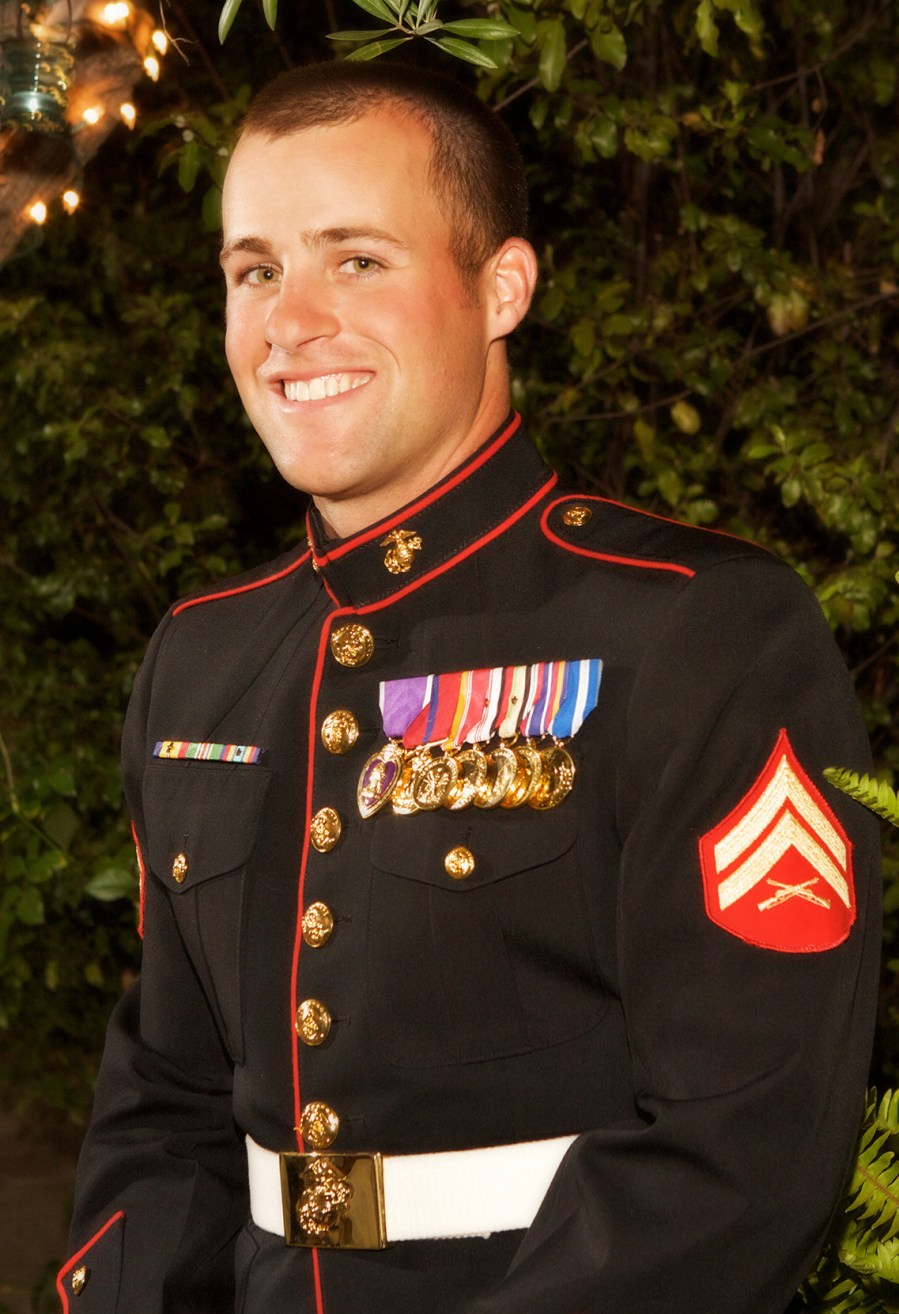






 MILITARY JUSTICE FOR ALL