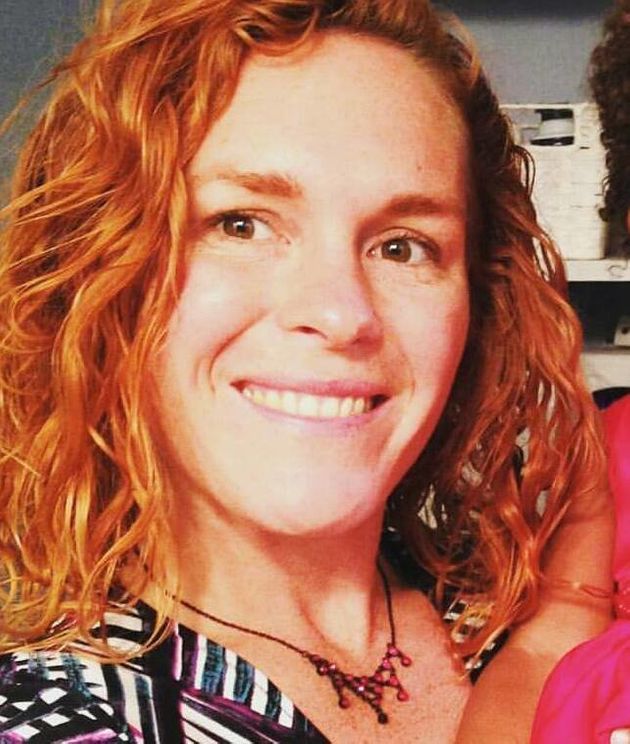
Tricia Todd, U.S. Air Force Veteran (Photo: HuffPost)
SSgt Steven Williams, 30, US Air Force, and USAF veteran Tricia Todd, 30, were married for 11 years and had one child
Williams and Todd divorced on February 2, 2016
Williams was stationed at Seymour Johnson AFB in North Carolina
Tricia Todd lived in Hobe Sound, Florida with their only child
Williams traveled to Florida to visit their only child
Tricia vanished from Florida on April 26, 2016
Williams is accused in May 2016 of murdering Tricia Todd
Williams admitted to getting in an argument about finances & pushed Todd
Williams pleaded no contest to the second degree murder of Tricia Todd
Williams was sentenced to 35 years in prison if he led investigators to the body
Williams led investigators to her mutilated body in Florida
Williams could face additional federal penalties under the Uniform Code of Military Justice (UCMJ) as he was an active member of the armed forces at the time the crime was committed
According to The Object of Murder (Investigation Discovery), civilian prosecutors want the Air Force to try Williams in a military death penalty trial but the Air Force has not taken any action thus far
In the News:
Part 1: Tricia Todd’s life was filled with intense moments of both love and violence. She wrote in great detail about those moments on her online blog. -True Crime Daily (November 11, 2016)
Part 2: Murdered Woman’s Journal Helps Catch Her Killer -True Crime Daily (November 11, 2016)
Part 1: Tricia Todd divorced her husband Steven Williams after more than ten years of marriage. Before Tricia went missing, she wrote in an online journal about falling for another man, and that her husband had a dark side. She was later found dead. -True Crime Daily (March 30, 2017)
Part 2: Murdered Woman’s Diary Helps Catch Her Killer -True Crime Daily (March 30, 2017)
Tricia Todd’s life was filled with intense moments of both love and violence. She wrote in great detail about those moments on her blog. -True Crime Daily (November 16, 2018)
Investigation Discovery:
In 2016, 33-year-old Tricia Todd was reported missing after failing to pick up her daughter from a babysitter. As her family hoped and prayed, investigators found her online journal that revealed the true horror of what had happened. -Beauty for Ashes, The Object of Murder (S1,E1)
Editor’s note: With a cable subscription, you can download the free ID Go app and watch Investigation Discovery programming at your convenience. And for those who do not have cable, you can watch “unlocked” episodes on the ID Go app including the latest premieres. For those who prefer commercial free programming during your binge session, Prime Video has an ID channel: ‘True Crime Files by Investigation Discovery” available for $3.99 a month. It’s a compilation of older seasons but totally worth the cost if you are a true crime addict. Download the ID Go app or purchase ID True Crime Files & binge away.
Catherine Walker [photo: Star-Advertiser]In December 2015, Ailsa Jackson admitted in federal court to stabbing the wife of an Army medic she was having an affair with. Catherine Walker was murdered in her home on the Aliamanu Military Reservation in Hawaii on November 14, 2014. As part of a plea agreement, Jackson is expected to be sentenced to 30 to 33 years in prison in exchange for testifying against Sgt. Michael Walker. Walker is accused of plotting to murder his wife for the life insurance. Meanwhile, he was court martialed by the Army and is serving two years for possessing child pornography and soliciting payment for sex. Walker faced a January 2017 murder trial in civilian court but the trial was delayed because a police interrogation video was thrown out by the judge. In September 2019, Sgt. Michael Walker pleaded guilty to second degree murder. Walker is expected receive a sentence between 24-30 years in prison in February 2020.
In the News:
Michael Walker, 36, was also indicted for a second charge of conspiring to kill his wife. -KHON2 News (November 4, 2015)
Walker was charged with first-degree murder, which carries a punishment of life in prison without the possibility of being released. But in the agreement, Walker will be pleading guilty to aiding and abetting to second-degree murder, meaning he could someday be set free. -KHON2 News (September 23, 2019)
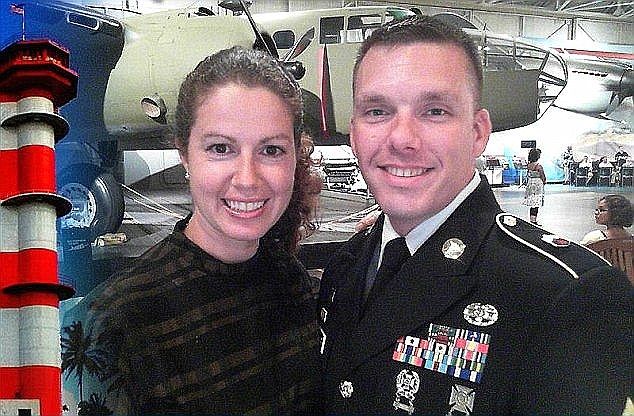
Military Spouse Catherine Walker and Sg. Michael Walker, U.S. Army
“The non-statutory aggravating factors found by the jury were that the Petitioner (1) caused injury, harm, and loss to the victim, and the victim’s family and friends; (2) utilized training, education, and experience gained during criminal justice college courses, his time in the Kansas National Guard, his work as a law enforcement officer, and his experience as a member of the United States Army; (3) engaged in acts of physical abuse towards women; and (4) demonstrated a lack of remorse.” (Runyon v. United States, 2017)
On April 29, 2007, Navy Ensign Cory Voss was discovered dead in his pick-up truck in a bank parking lot in Newport News, Virginia. Initially, investigators thought maybe this was a robbery gone wrong but Cory had been shot five times. Typically, in the course of a robbery, a suspect may shoot at the victim a couple of times in their attempt to flee the scene so this particular crime was suspect right away. Detectives left the scene to notify Cory’s wife Catarina Rose that he was deceased, and had been murdered. Catarina was very, very upset to learn the news although she was able to provide some details about Cory’s movements the night before. Catarina admitted that she was on the phone with Cory while he was at the ATM and warned him to be careful. This was immediately suspicious to detectives because it seemed like too much information. You typically wouldn’t be concerned if your spouse drove 3 miles away from the house.
The next day news spread quick in the Newport News and Naval community. People were in shock that someone they knew was murdered in this way in what normally is a relatively safe community. Detectives were able to get the surveillance video at the bank. It appeared someone jumped in the driver’s side of the vehicle and demanded that he drive away. They stopped in a nearby parking lot and Cory was shot. Unfortunately the quality of the video was not good enough for an identification. One interesting thing police learned was that no money had been withdrawn from the ATM and Cory was not robbed. Meanwhile, Catarina was very distraught and was being supported by Cory’s family and the Naval community. Then one day, police received a phone call from a witness that changed everything. When questioned, Ashley Doyle revealed her identity and was persuaded to meet with the investigators.
When Ashley met with the investigators, they showed her pictures of Cory and the unknown assailant from the bank surveillance video. Immediately, Ashley felt that it was Michael Draven that had killed Cory so she provided police with his name and suggested they look into him. She also told investigators about Michael and Catarina’s ongoing affair while Cory was deployed with the Navy. Investigators started looking at both Michael and Catarina’s social media pages and they were shocked by what they discovered. Michael Draven was seen pictured with Catarina and Cory’s children and he referred to them as his wife and family. Police enlisted the help of Ashley and asked her to meet with Catarina in an attempt to elicit a confession or get any other information that would be helpful to the investigation. When Ashley contacted Catarina she learned she was still very upset and was in the process of planning Cory’s funeral.
Ashley went to visit Catarina with hidden recording devices in tow. She learned that less than three days after Cory died, Catarina received $250,000 in life insurance money and she couldn’t get the full amount until an investigation was conducted. Catarina’s main concern while they visited was why she couldn’t get the second half of the life insurance pay out. Investigators were responsible for the hold on the second payment because it’s standard practice in situations like these, but Catarina was angry and impatient. As a result, she filed complaints that police weren’t doing their jobs and demanded that Cory’s case be solved (so she could get the rest of her money). Three weeks later, Catarina and Michael traveled to the Outer Banks in North Carolina for a vacation. Unbeknownst to them, their every move was being watched by police. And Cory’s family were starting to become uncomfortable with her behavior after she received the insurance money.
As a result of Catarina’s behavior, detectives subpoenaed her bank records. They learned the account Cory used on the night in question had only been opened for six days and never had more than $5 in it. Cory made three attempts to make a withdrawal. The first time was $60, then $40, then $20, all of which were insufficient funds. Police theorized that Catarina didn’t just want Cory to get the money but she wanted him to stay there and struggle. Interestingly enough, the account was co-signed by Michael Draven. A deeper dive into Catarina’s life turned up even more shocking revelations. Catarina wasn’t from the Ukraine like she told people but instead she was a local girl by the name of Cathlene Wiggins. She was also married once before to a man named Steven Larson. Steve joined the Army to support them and soon his testimony started to sound like a familiar pattern: long deployments, manic shopping, and infidelity.
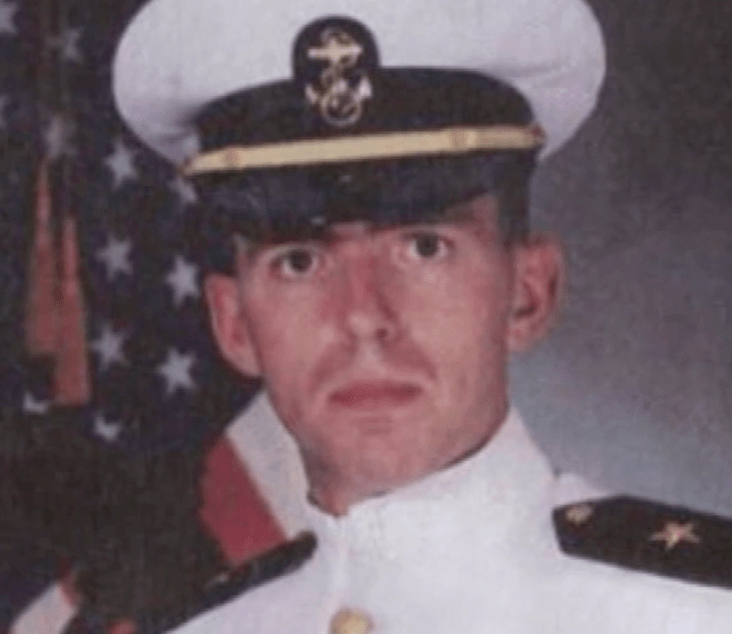
Cory Voss, U.S. Navy
Steve Larson alleged Catarina stood him up at the airport when he returned home from a deployment to Korea and when she did finally show up she told him she was three months pregnant with Cory’s baby. Catarina wanted Steve out of the picture and started fights with him every chance she got. She escalated and became aggressive to the point that Steve wanted to leave the relationship to stop her from hurting him. All this new information about Catarina was helpful circumstantial evidence but she wasn’t the one who pulled the trigger. Investigators believed Catarina and Michael Draven conspired to murder Cory for financial gain but they still needed hard evidence to put the pieces of this conspiracy together. They also believed that someone helped Michael Draven commit the murder so they dug into Draven’s past. A month before the murder, he spent some time in the city jail on a domestic abuse warrant.
Police found a number of recorded calls at the jail, the majority to Catarina, and the pair discussed their future together. In addition, they appeared to be discussing the plan to kill Cory and Catarina mentioned a 2 hour conversation she had with “David” who police suspected was the third party involved in the crime. Investigators combed through Catarina’s cell phone records and determined his name was David Runyon. He lived in West Virginia and was a marksman in the military; he met Michael Draven at a medical research facility. In December 2007, investigators initiated a search warrant for David Runyon’s property in an effort to find evidence tying him to the murder. In the search of his vehicle, they found a map of Newport News, Virginia and there were handwritten notes with the name of the credit union and address and a physical description of Cory’s vehicle. This was enough to arrest all three players.
Michael Draven was reinterviewed by detectives and ultimately he confessed this was a planned murder that he and Catarina had devised. They hired David Runyon to do it. Michael threw both Catarina and David under the bus and sold them out. Apparently, Catarina told Michael that Cory was abusing or mistreating the children and Michael believed her. Investigators believed this is how Catarina coerced and manipulated Michael into finding someone to kill Cory. Police asked Draven to call Catarina and tell her he was outside the police station and about to confess. Catarina asked him not to confess and drove to the police station where detectives were waiting to arrest her. On December 14, 2007, 8 months later, Catarina was charged with the crime. Seven months later, Catarina went to court. In an effort to avoid the death penalty, Catarina agreed to a plea of conspiracy to commit murder-for-hire.
Catarina Voss admitted to investigators that she set the murder-for-hire up by asking Cory to go to the ATM to get some money. She admitted she knew David Runyon was lying in wait. As a result, Catarina was sentenced to four life terms in prison plus twenty additional years. On July 17, 2009, a federal jury convicted Michael Draven and David Runyon of murder, conspiracy to commit murder-for-hire, and carjacking. Michael Draven received two life sentences and David Runyon received the death penalty. For the family, the pain of the loss of Cory Voss endures. Cory had turned his life around, joined the Navy, and went from enlisted to an officer. He was doing all the right things and the only thing he did wrong was love the wrong woman. Catarina Voss never showed any remorse towards Cory, but police say she was remorseful because she got caught.
“NCIS: The Cases They Can’t Forget” returns for its third season. -CBS News (May 29, 2019)
An American hero was shot to death while withdrawing lunch money for his kids. Who killed the young naval officer? It turned out to be a murder-for-hire case, plotted by Cory Voss’ wife, Catherine, who sent a hitman to kill him in what prosecutors said was supposed to look like a botched robbery. -Inside Edition (May 29, 2019)
Investigation Discovery:
Navy man Cory Voss and his wife Catherina “Cat” Voss are a young couple raising two children in Newport News, Virginia. Despite Cory’s love and devotion, Cat secretly falls for another man. But betraying her marriage vows is just one angle in Cat’s complicated web of lies, and eventually she seeks a more permanent solution to finally end her marriage. -The Liars Club, Deadly Wives (S2,E5)
They say opposites attract, that’s how Navy man Cory Voss meets his wife Cat. When money runs dry she seeks the attention of a seemingly wealthier man. But when Cat finds out he isn’t who he says the Voss family falls apart. -Blinding Fantasy, Cold Hearted (S1,E4)
Spc. Richard T. Davis, U.S. Army (photo: CBS News)
“On July 15, 2003, less than two days after returning from deployment to Iraq, Davis was murdered outside Fort Benning, Georgia by a fellow soldier from Baker Company, Alberto Martinez. Three other soldiers were also present and involved in the events that led up to the killing and followed the killing. Initially, the Army concluded that Davis deserted and despite pleas from Davis’ father, would not initiate an investigation into his son’s disappearance for nearly two months. Davis’ remains were not found until November 2003. He had been stabbed in the head, neck, and chest at least thirty-three times. His body was later dismembered, doused in lighter fluid, and burned. Unnamed sources have suggested that Davis was killed because he had planned to make a complaint about a rape of an Iraqi woman by US troops.”
Read more about Richard T. Davis (Wikipedia) here.
Based on a True Story:
“In the Valley of Elah” tells the story of a war veteran (Tommy Lee Jones), his wife (Susan Sarandon) and the search for their son, a soldier who recently returned from Iraq but has mysteriously gone missing, and the police detective (Charlize Theron) who helps in the investigation. -In the Valley of Elah, Warner Bros.
In March 2005, Fort Bragg Army Sergeant Cedric Ramon Griffin, 28, pleaded guilty to murdering his wife Marilyn Griffin and setting her home on fire on July 9, 2002 in Fayetteville, North Carolina. Sgt. Griffin was charged by the Cumberland County Superior Court with the first-degree murder of his estranged wife Marilyn Griffin, first-degree arson, and the attempted murder of Marilyn’s two daughters. Marilyn died as a result of approximately 50 stab wounds to the chest, neck, back and abdomen; the preliminary autopsy results indicated Marilyn died prior to the fire. Marilyn’s daughters, ages 6 and 2, woke up during the fire, escaped, and went to a neighbor’s house for help. According to law enforcement officials, the motive appeared to be “domestic related” and Sgt. Griffin turned violent after Marilyn threatened to reveal his infidelity to his commander. The couple were married for eight years and Marilyn was murdered two months after she left Sgt. Griffin. She moved into her new home only a week before she died. Sgt. Cedric Griffin faced the death sentence in North Carolina if he was convicted of stabbing his wife to death but according to the Army Wives book, former Army Sgt. Cedric Griffin pleaded guilty to murdering Marilyn Griffin and is serving a life sentence in the Central Prison in Raleigh, North Carolina.
This domestic violence related homicide was one of five murders that occurred in a six week period at Fort Bragg in 2002. Rigoberto Nieves fatally shot his wife Teresa after an argument on June 11, 2002; William Wright admitted to strangling his wife Jennifer on June 29, 2002; Brandon Floyd fatally shot his wife Andrea on July 19, 2002; and military spouse Joan Shannon manipulated her daughter Elizabeth to shoot her step-father Major David Shannon on July 23, 2002 while he slept.
All Hell Breaks Loose In Club Brawl Leaving A Young Solider Dead -Victim Zero, Homicide Hunter (Preview)
Lt. Joe Kenda of the Homicide Hunter series on Investigation Discovery discussed the murder of Fort Carson Army soldier Christopher Walton, 21, outside a night club in Colorado Springs, Colorado on November 21, 1991. What started out as a good night out on the town turned deadly after two rival units started a brawl at a local bar in Colorado Springs. The fight spilled outside of the bar and that’s when Christopher Walton was shot with a gun in the neck. Christopher Walton was getting ready to get out of the Army and move back to North Carolina. He was a described by his friends as a really good guy who took care of people.
As Kenda investigates the case, which is in his jurisdiction, he learns that a few months earlier a couple of soldiers got in a fight over a girl and that’s when everyone chose sides and the rival began. The rival was between the artillery unit and the maintenance unit at Fort Carson. An informant told Kenda that she thought Chris Smith may have committed the murder. Kenda pays Chris Smith a visit and in deed finds a gun similar to the gun they were looking for in his possession. It was later determined by ballistics that this gun matched the bullet recovered from Christopher Walton’s body.
Chris Smith was arrested for the murder of Christopher Walton. He never admitted to the murder and told Kenda that he had given the gun to someone else that night but would not give up the name. While Smith was in custody, the Army’s Criminal Investigation Division (CID) called Lt Joe Kenda to tell them they had a witness to the event and they thought he might have the wrong guy. The witness, Eric Walker, identified Leroy Davis as the actual shooter. Leroy was a member of the artillery unit at Fort Carson which was the rival unit to Christopher Walton’s maintenance unit.
As it turns out, Chris Smith was telling the truth. He did give the gun to someone that night outside the bar after shooting it in the air because he didn’t want it on his person. Eric Walker told Kenda that Chris Smith gave the gun to Leroy Davis who eventually returned the gun back to Smith. Chris Smith refused to implicate his Army brother, even after he was arrested and jailed. According to Walker, Christopher Walton pushed one of the artillery unit members and Leroy Davis acted on emotional impulse, pulled the gun out of his jacket, and shot Walton in the neck causing his fatal injuries.
For some unknown reason, Leroy Davis faced a court martial as opposed to a being tried by the civilian courts in Colorado Springs. Lt Joe Kenda described military discipline as a whole different game, sharing that they are “draconian and ruthless.” The military has its own internal justice system and has been at the center of a controversial debate in Congress for the past few years over the way it handles violent crimes. In this case, Davis was sentenced to twenty years at Fort Leavenworth where he will be expected to do hard, physical labor the entire time. We learned from one of the soldiers present at the scene that fifteen military members from Fort Carson got discharged as a result of their involvement in this incident.
Investigation Discovery:
A massive brawl erupts at a local bar ends with the shooting death of a young army soldier. To unravel the murder, Lt. Joe Kenda must infiltrate a revered military institution, and expose a dangerous vendetta. -Victim Zero, Homicide Hunter (S5,E9)
Editor’s note: With a cable subscription, you can download the free ID Go app and watch Investigation Discovery programming at your convenience. And for those who do not have cable, you can watch “unlocked” episodes on the ID Go app including the latest premieres. For those who prefer commercial free programming during your binge session, Prime Video has an ID channel: ‘True Crime Files by Investigation Discovery” available for $3.99 a month. It’s a compilation of older seasons but totally worth the cost if you are a true crime addict. Download the ID Go app or purchase ID True Crime Files & binge away.
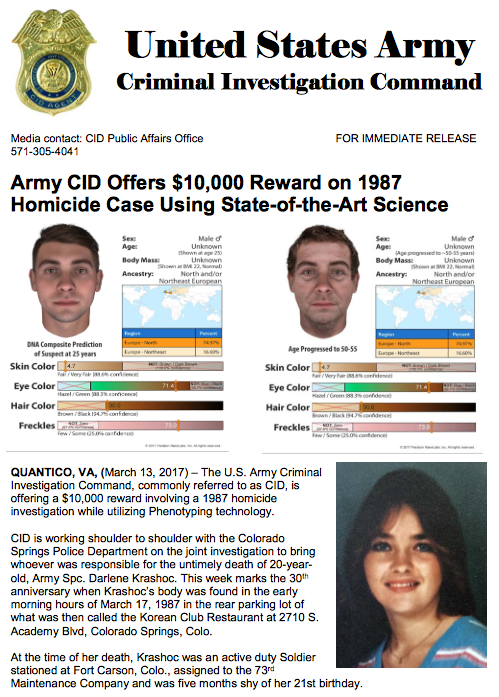
The victim: Darlene Krashoc, 20, a soldier at Fort Carson who worked as a mechanic at the Army post.
The Crime: Two Colorado Springs police officers on routine patrol spotted a partially nude woman laying in the parking lot behind the Korean Restaurant, a nightclub formerly at 2710 S. Academy Blvd., around 5:20 a.m. on March 17, 1987. An autopsy determined that Krashoc had been strangled with a coat hanger and leather thongs after being severely beaten, bitten, sexually assaulted. She may also have been thrown from a moving vehicle.
The investigation: Krashoc’s mother, Betty, last spoke with her daughter a week before her death. Krashoc had changed from a soldier ready to re-enlist to a frightened woman ready to go AWOL to get away from Fort Carson, but wouldn’t tell her mother why.
Colorado Springs Police Department considers a case to be cold if it remains unsolved for more than one year. If you have information that would be of assistance in these investigations, please contact 719-444-7613, by e-mail at CSPDColdCase@springsgov.com or you may remain anonymous and could earn a cash reward by calling Crime Stoppers at 634-STOP (7867). –The Gazette
Thirty years after Krashoc’s body was found, Army Criminal Investigation Command are offering a $10,000 reward to anyone who can lead them to the man they believe killed Darlene Krashoc. If you have any information about the investigation or if the DNA prediction results resemble someone you know or knew at the time, you’re asked to contact your local CID office or CID headquarters in Virginia at (844) Army CID or (571) 305-4375. You can also email army.CID.crime.tips@mail.mil.
Just off the coast of Spain, the U.S.S. Forrestal cruised through open waters on the Mediterranean Sea. This particular aircraft carrier had the ability to unleash total devastation on the enemy. But below deck, one Navy sailor was fighting off an enemy in his body. Lee Hartley was complaining of diarrhea and lethargy. He also experienced excessive weight loss and there was a grayness to his skin. Lee Hartley was a career Navy sailor, having served nineteen years, and the Lt. in the ship’s disciplinary office. A month into his current deployment, Lee became violently ill with severe stomach pains and a strange tingling in his hands and feet. He was treated by the ship’s medics for gastrointestinal problems. A couple weeks went by and the symptoms reappeared, each time getting progressively worst. The onboard medics thought maybe he was exposed to something in a foreign port.
Lee Hartley also assumed it was food or water he consumed while visiting one of the foreign ports. Whatever the cause, Lee’s symptoms were spiraling out of control. He endured nearly two months of agony. When Lee wasn’t getting better, the Navy decided to ship him off to a hospital so he was medi-vaced to Jacksonville, Florida. Lee’s wife Pamela rushed to his bedside. Pam and Lee were newlyweds; they were married a year earlier. Doctors ran a battery of tests to help make a diagnosis. Some believed he might have liver disease or hepatitis or even some kind of poisoning but they couldn’t come up with a definitive diagnosis. Lee commented to multiple people that he thought he was dying because he was so gravely ill. On November 18, 1982, after nearly five months of terrible suffering, Lt. Lee Hartley succumbed to massive organ failure.
Before he set out on his final deployment, Lee Hartley was living the life he had always dreamed of. Lee loved the Navy and his family was very proud of him. He joined the Navy as an enlisted man and then became an officer. Lee was happy with Pam and was looking forward to the end of long deployments so he could spend more time with her. They didn’t have children of their own but Lee had a daughter from a previous marriage. Pam was now a devastated widow and waited for the autopsy to determine the cause of her husband’s death. When the results came back, they revealed Lee died from arsenic poisoning, nearly 1000 times the normal level. His liver, kidneys and blood was full of arsenic and Lee had enough arsenic in him to kill several people. Arsenic is a odorless, colorless, and tasteless chemical. This information led to a murder investigation.
An investigation was immediately launched to find out how that much arsenic entered Lee’s body. Investigators could not imagine how Lee came into contact with that much arsenic aboard a ship. Special Agents Jerry Whitaker and Walter O’Brien of the Naval Criminal Investigative Services (NCIS) were assigned to the case. The two actually knew Lee Hartley and served side by side on the U.S.S. Forrestal with him. They start with the simplest possibility: was this an accidental poisoning? They checked to see if there were large amounts of arsenic on the ship but that theory was instantly put to rest. The supply officer on the ship maintained records of everything that was onboard the ship and according to him, there was no substance on board the ship that contained arsenic. This meant there was no way Lee came into contact with arsenic onboard the ship, at least not by accident. Agents wondered if someone deliberately dosed Lt. Lee Hartley.
The NCIS agents broke the news to Lee’s family. When Pam found out about the arsenic poisoning, she reacted with shock. Pam’s mother-in-law was the one to break the news to Pam that someone may have killed her husband. The agents didn’t know who killed Lee but they knew how so they launched a search for suspects. They looked at who had something to gain if Lee died and one main suspect emerged, his wife Pamela Hartley. Pam had the motive because she stood to inherit a lifetime of military benefits but how did she poison her husband while he was on a ship thousands of miles away? When agents checked her travel itinerary, they discovered Pam traveled to port in Spain to spend time with Lee. Quite often, when a ship visits a foreign port, it’s common for a group of wives to visit that port. One of those wives was Pam Hartley.
Pam traveled to Spain and met with Lee and another military couple. On one of those days, Pam offered to cook breakfast for everyone and she even made drinks too. Soon after that visit, Lee got violently ill, along with his friend who had eaten breakfast with him. At the time, they both thought they got sick from drinking Spanish water, the friend recovered but Lee kept getting worse. Over the next two weeks, Lee had severe cramps, diarrhea, nausea, and vomiting so he reported to the ship’s medical department. Agents wondered if Pam laced her husband’s food and drink with arsenic during that Spanish shore leave. It was a chilling scenario but one that became more plausible as agents found out about Pam’s unique job experience. They learned that Pam worked at the Department of Energy facility in Akon, South Carolina for one year.
Pam used to be an environmental technician and one of her job duties was to analyze water samples to determine heavy metal levels. At her job site, she came in contact with a range of toxic chemicals, including arsenic. Was Pam the victim of circumstantial evidence or heartless black widow? Agents wanted to perform a polygraph because they were convinced she wouldn’t pass. She was their prime suspect because she had the opportunity to spike her husband’s food and drinks when she went to Spain at his port of call. On the surface, there was nothing suspicious about Pam so agents conducted interviews of Hartley’s neighbors. The pair appeared to have a normal family and were described as nice people. But gossip soon found its way from officer’s wives club and this information painted another picture.
With their husbands overseas, the Navy wives would get together at parties and drink. And after a few drinks, they weren’t afraid to say anything. There was talk among the wives that life was so much better when the men were at sea. Some even suggested they get rid of them. But it was a party atmosphere so nobody really took it seriously, except maybe Pam. In one interview, Pam made a comment to a friend about hiring a hitman to kill Lee but was taken as a joke by the witness because they had been drinking. As special agents dug deeper, they found out Pam and Lee were having some marital problems. Pam was a free spirit who liked to go to the officer’s club and dance with other men. Apparently, this made Lee extremely jealous. And Lee may have had reason to be jealous because Pam admitted to friends that while Lee was off at sea, she found it to be difficult to be faithful.
For NCIS agents, it all added up to a classic scenario: a bored wife feels trapped in her marriage so she poisons her husband… Under questioning, Pam insisted that she loved Lee and swore she has nothing to do with his death. And she agreed to take a polygraph test to prove her innocence. Agents were convinced she wouldn’t pass the polygraph but the results indicated that she wasn’t being deceitful. The agents concluded Pam didn’t have anything to do with Lee’s death. In addition, lab results blew a hole in their theory because the toxicology analysis on Lee’s hair pinpointed the dates he was exposed to the arsenic. His first dose was before Pam’s trip to Spain. Hair grows about a centimeter a month and testing of the hair provided a timeline of when the poison entered his body. The hair samples indicated that Lee was poisoned 5-6 months prior to his death.
The arsenic timeline showed Lee Hartley was first poisoned while Pam was thousands of miles away in Jacksonville, she had a persuasive chemical alibi. Armed with the new evidence that Lee was poisoned while on board the U.S.S. Forrestal, NCIS agents confronted a massive crime scene. The U.S.S. Forrestal was a floating city with 5000 potential suspects. And like any large city, the carrier had personnel dedicated to maintaining law and order. As the ship’s discipline officer, when sailors ran afoul with Navy regulations, it was up to Lee to administer punishment. This likely didn’t make him a lot of friends on board. Because of his work, Lee was exposed to people who might have had a grudge or an axe to grind against the Navy or the legal office or a person. As agents conducted more interviews, they learned of a disturbing rumor involving Lee.
During the investigation, there was an indication that Lee had received an anonymous death threat. The rumor about the death threat was backed up by Lee’s parents. They told agents what Lee shared with them while he was home in Mayport. Lee told them he was walking about the ship when someone angrily confronted him. Now Agents wanted to eliminate or find somebody who may help them understand what happened. A search of Lee’s cabin revealed a clue. They found a collection of letters written by Lee himself. In one of those letters, Lee described a near death confrontation with another sailor aboard the ship. He described how he came across someone who had a sword. But, if there was an altercation, Lee never reported to his superiors. Why would Lee choose to keep it secret but share it with his parents? Was Lee leaving a trail of evidence?
In an effort to track down subjects, agents used Lee’s toxicity reports which showed a continuous pattern of poisoning over a 5-6 month period of time. Agents shared when investigating poisoning deaths, you need to establish an opportunity of who during that time would have had access to both Lee and poison. There were spikes in Lee’s arsenic levels during his deployment at sea, at the port of call in Spain, and even when he was at the hospital in Jacksonville. One person who was at Lee’s side throughout his months of agony was his cabin mate Lt. Samuel Yates. They seemed to get along well but tension builds up month after month when living in close proximity together trapped on a ship. Lee was also in direct competition with his roommate for advancement.
Both Lee Hartley and Lt. Yates wanted desperately to be promoted to Lt. Commander. Was there a feud simmering between them, a rivalry that turned deadly? As agents developed information on the roommate, rumors began to circulate that had already been rampant on the ship. After Lee’s death, Lt. Yates allegedly waisted no time going after his roommate’s young wife who was grieving and vulnerable. At Lee’s funeral, he paid his respects by reportedly seducing the pretty widow. Agents knew they needed to take a closer look at Yates. And when they did, they found a chilling piece of evidence. Lee’s cabin mate was asked to give them a blood sample to see if it tested positive for arsenic or other heavy metals. As a result, they learned Yates had some elevated amounts of arsenic in his blood stream, the same poison that killed Lee.
Lt. Yates’ low level arsenic exposure was consistent with someone who had handled the substance. But the test results were not remarkable because Yates would have been exposed to all the same environmental factors as Lee. If someone was trying to harm Lee, Yates could have easily been exposed to the same food and drinks in foreign ports. Although a lot of circumstantial evidence pointed to the roommate, a thorough search of Yates’ belongings showed no traces of arsenic. They could only conclude that Yates was a collateral victim of whoever was poisoning Lee. As suspects were eliminated one by one, agents had to consider the possibility that the suspect they were looking for may be Lee Hartley himself. One of the NCIS agents said when they don’t have anymore theories, they have to think outside the box. The agents considered that Lee may have ingested the arsenic intentionally.
It appeared Lee Hartley had everything going for him and he loved his job on the U.S.S. Forrestal. He also had a beautiful young wife waiting for him in Florida. But NCIS agents wondered if the image of that perfect life was just a sham. The two agents knew Lee while serving with him on the carrier. When they reflected back on their time with him, they did observe some unusual behavior. After lunch, Lee regularly met up with a small group and he always appeared disgruntled. They learned Lee was drinking heavily before his deployment and thought maybe he was going through some depression. Was Lee suicidal? Did he deliberately consume the arsenic to poison himself? The pair thought the odds were high that Lee ingested the poison and brought in in a psychologist to analyze Lee’s life and letters; they found no suicidal ideation in any of his writings.
The medical evidence in this case didn’t fit the pattern of someone trying to kill themselves. Typically in a suicide case, it would be a major ingestion of poison and then it would drop off. Lee was poisoned consistently over several months. He was in horrible condition to the point that he had an ulcerated esophagus, open sores in his mouth, couldn’t talk, and could’t eat. Would Lee have voluntarily chosen to kill himself in such a slow, agonizing way? They ruled out suicide and wondered if the poisoning was an attempt to help get him off the ship. Lee made some statements to family members that he really didn’t want to go on this last deployment and his heart wasn’t in it anymore. He was upset about having more sea duty. He wanted a stateside desk job close to his wife. Did he use the arsenic to get himself off the ship? Would they send him home?
Agents considered that maybe Lee wanted to take just enough of the poison to get himself sent back home. But arsenic doesn’t leave the body and instead builds up over time. The agents theorized Lee may not have understood its cumulative effect over time. Maybe, Lee didn’t realize it made him sicker and sicker with every dosage. Did his scheme backfire by taking one dose too many? This theory didn’t hold water though because there were no tell tale signs in Lee’s belongings that led anyone to believe he had handled arsenic. And toxicology evidence showed that the poisoning continued even after he got back to Jacksonville. NCIS had no choice but to put the latest theory to rest. At this point, they ran out of theories, suspects, and direction and chose to close the case.
Thirteen years later in 1995, NCIS formed a cold case homicide unit. Lee Hartley’s poisoning case was one of the first cases brought to their attention. Lee’s death was reviewed at headquarters and a new team of special agents were assigned. They quickly learned that all of the physical evidence in the Lee Hartley case had been destroyed. The team had to work the case the old fashioned way so they started re-interviewing people involved in the initial investigation. Agents said its helpful to go back and talk to people because their stories change and some are more willing to tell the truth after 10-15 years has passed. Agents spoke with family, friends, and neighbors and the same name that kept coming back up was the original suspect in the case, Pam Hartley. But their big break came when Lee Hartley’s brother-in-law helped them uncover the truth.
Pam’s brother knew the dynamics of Pam and Lee’s relationship so agents wanted to speak with him. The fact the case had been reopened after all these years, caught Pam’s brother by surprise and he dropped a bombshell no one expected. He shared that Pam tried to hire him to kill Lee and offered him some of the insurance money if he did it. He kept this secret for years and when agents interviewed him this time, he told them the truth. NCIS was now convinced Pam was the killer but building a case against her wasn’t going to be easy. After all, she passed a polygraph test that indicated no deception. When NCIS had the results re-examined by current staff, they found the findings of ‘no deception’ were probably erroneously reached. The results should have been inconclusive. It was more evidence of Pam’s involvement in Lee’s death.
But after so many years, they had no physical proof, no eyewitnesses, and no way to tie Pam to the actual crime. She also had what seemed to be an ironclad alibi. She was on the other side of the world when her husband was poisoned. If she was the killer, how did she do it? Could they get her to confess? They only had one shot and needed to get Pam alone, because thirteen years ago her controlling mother was beside her running interference. The cold case team placed Pam under surveillance and tracked her every move. They learned the years since Lee’s death had not been good to her. Having squandered her inheritance, she lived with her mother and struggled with substance abuse. She treated her addiction at a hospital on a military base. On one of those occasions, she arrived alone for the appointment. The NCIS used the structured environment of the Army base to conduct the interview.
This approach allowed NCIS to conduct an interview without Pam’s mother being there. Pam nervously agreed to answer their questions. They told her there was no doubt in their mind that she did it and most of the problems in her life were most likely attributed to what she had done to her husband. They played on her guilt and told her to put it behind her and tell the truth. Pam Hartley broke down and told them what she did. She told them everything and filled in the missing puzzle pieces. She didn’t want to be married anymore. She said she was miserable and hated how possessive Lee was. But, she really liked the status of being an officer’s wife and didn’t want to lose that lifestyle. She wanted him gone but wanted to maintain her status. It was almost the perfect murder. The last time she saw Lee, she bid him farewell and then ran to a feed store to purchase rat poison. Pam sent Lee poisoned treats while he was deployed at sea.
Like a model wife, Pam created treats for Lee because she knew he had a sweet tooth. Agents learned that both Lee and his cabin mate sampled some whiskey cake that she sent Lee. Yates said he ate one piece, it was too strong, and didn’t like it. Pam wanted Lee to die at sea but the call never came so she upped the anti and traveled to Spain to poison him in person at breakfast. But it still didn’t do the job. When Lee was airlifted to the hospital in Jacksonville, Pam rushed to his side. This time, she poisoned his apple juice. Pam gave Lee the lethal dose the night before he died while pretending to care about him. After Lee died, Pam took the rest of the poison and dumped it in a pond behind their house. Her persistence finally paid off; she collected on a lifetime of military benefits minus the annoying husband. How could she have hatched such a diabolical plot? When asked why poison, she said “ladies have been using poison for years.”
Pam’s confession sealed her fate. On October 16, 1996, Pamela Hartley pleaded guilty to second degree murder in a Florida state court. Agents reminded us that Pam had a psychotic personality. She didn’t think about the cause and effect on other people; she only thought of herself and the effect on her. After nineteen years of service, Lee Hartley didn’t die in battle, his mortal enemy was the one person he loved most. Not long before Lee’s death, Lee and Pam’s brother had a conversation where Lee told him if anything happened to him, his sister would be well taken care of. He died thinking he still needed to take care of Pam. Pamela received $35,000 in life insurance money, $10,000 a year in veterans benefits, and free military medical benefits for life. Lee was a good man and the pain from the loss endures. Pamela Hartley was sentenced to 40 years in a state prison and served 16 years when she was paroled.
When a Navy lieutenant onboard a US aircraft carrier falls victim to a rare case of arsenic poisoning, NCIS investigators must scour both land and sea for his killer. With no crime scene and little physical evidence, agents must separate rumor from truth and use their best interrogative know-how to solve a deadly crime. Follow real NCIS agents as they hunt down suspects on one of the world’s largest ships and after a long 13 years finally uncover the bizarre truth behind the poisoning death of a Lt. Lee Hartley. -Dark Minds in Crime
Investigation Discovery:
John Prudhont as NCIS Special Agent Tom Assimos and John Bridell as NCIS Special Agent Dave Early and Mocean Melvin as the Narrator in an edited clip from Season 4, Episode 13 of the Discovery ID TV show “Unusual Suspects.”
ID Go:In 1982, a Naval Officer dies from a mysterious illness. When toxicology reports reveal he was poisoned, Naval Investigators sift through a ship of thousands, and countless theories before the truth behind the victim’s painful death is revealed. -Maritime Murder, Unusual Suspects (S4,E13)
Editor’s note: With a cable subscription, you can download the free ID Go app and watch all of the Investigation Discovery programming at your convenience. And for those who do not have cable, you can watch “unlocked” episodes on the ID Go app including the latest premieres. Download the ID Go app and binge away. For those who prefer commercial free programming during your binge session, Prime Video has an ID channel: ‘True Crime Files by Investigation Discovery” available for $2.99 a month. It’s a compilation of older seasons but totally worth the cost if you are a true crime addict.









 MILITARY JUSTICE FOR ALL